
Distributed Systems COS 418 Distributed Systems Lecture 1
Distributed Systems COS 418: Distributed Systems Lecture 1 Mike Freedman
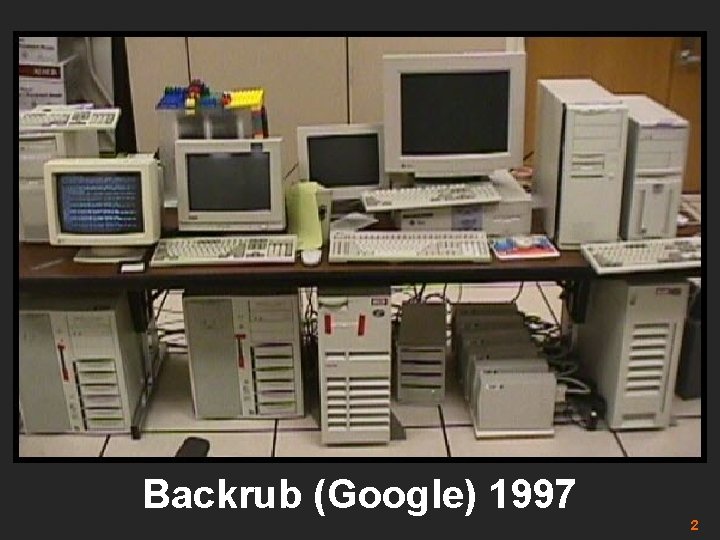
Backrub (Google) 1997 2

Google 2012 3
“The Cloud” is not amorphous 4
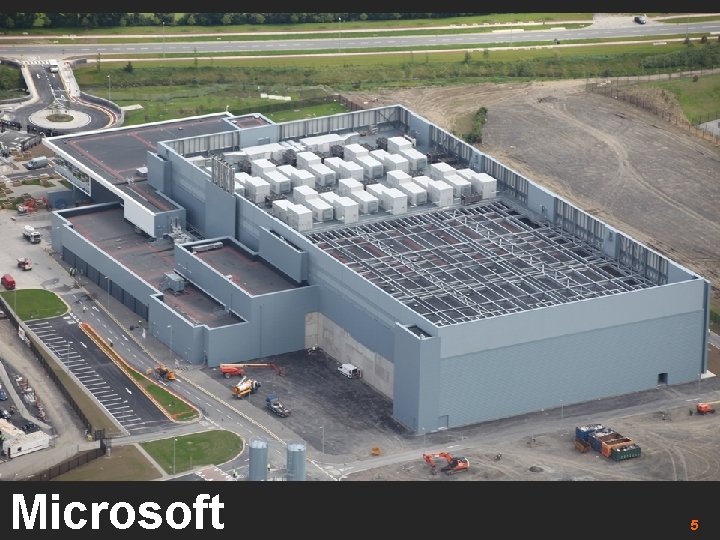
Microsoft 5

Google 6
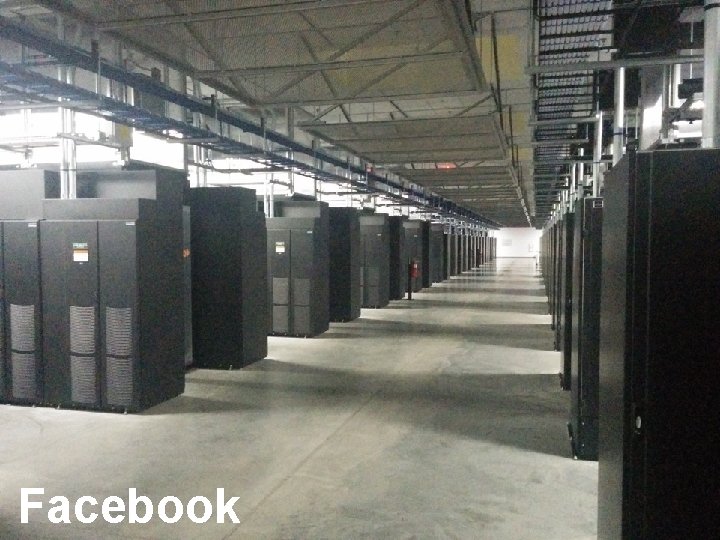
Facebook 7
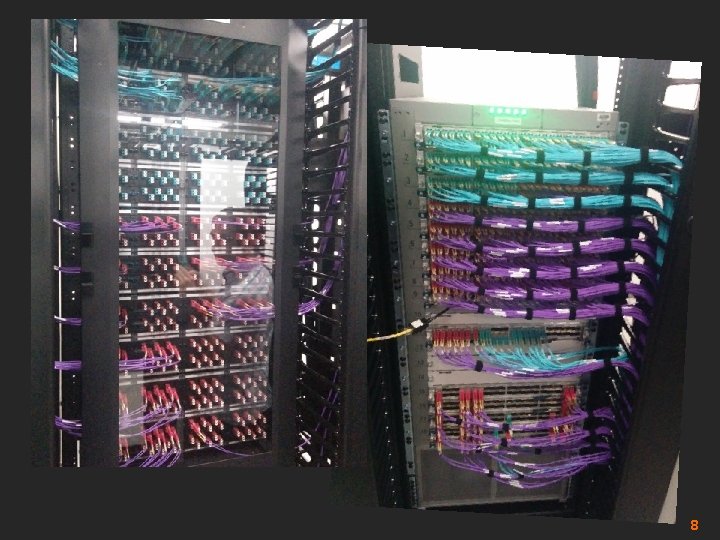
8
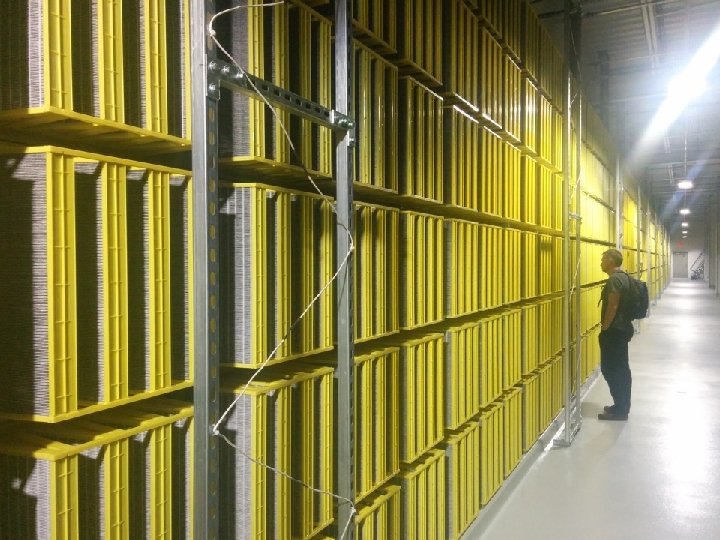
9

100, 000 s of physical servers 10 s MW energy consumption Facebook Prineville: $250 M physical infro, $1 B IT infra
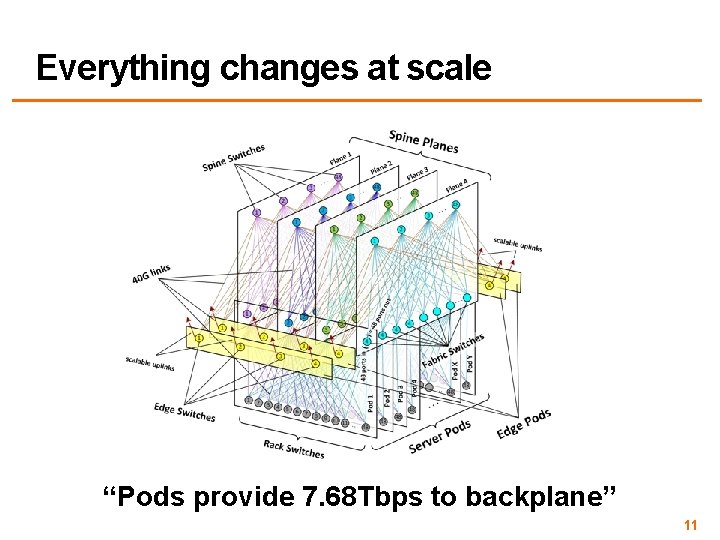
Everything changes at scale “Pods provide 7. 68 Tbps to backplane” 11
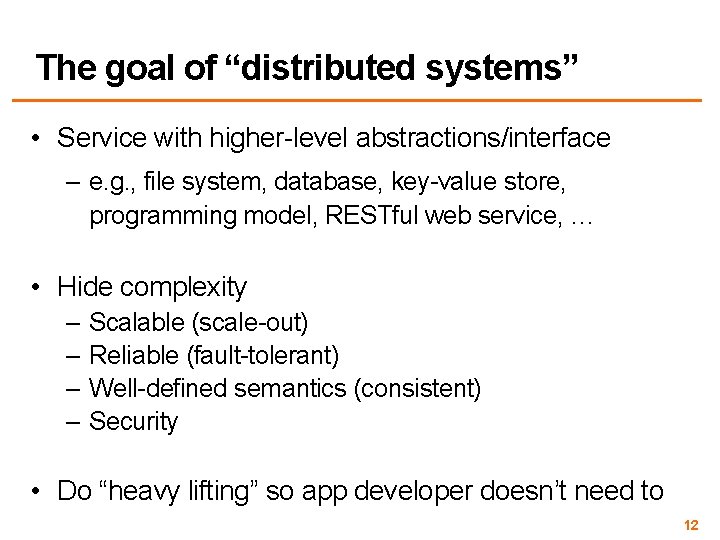
The goal of “distributed systems” • Service with higher-level abstractions/interface – e. g. , file system, database, key-value store, programming model, RESTful web service, … • Hide complexity – Scalable (scale-out) – Reliable (fault-tolerant) – Well-defined semantics (consistent) – Security • Do “heavy lifting” so app developer doesn’t need to 12
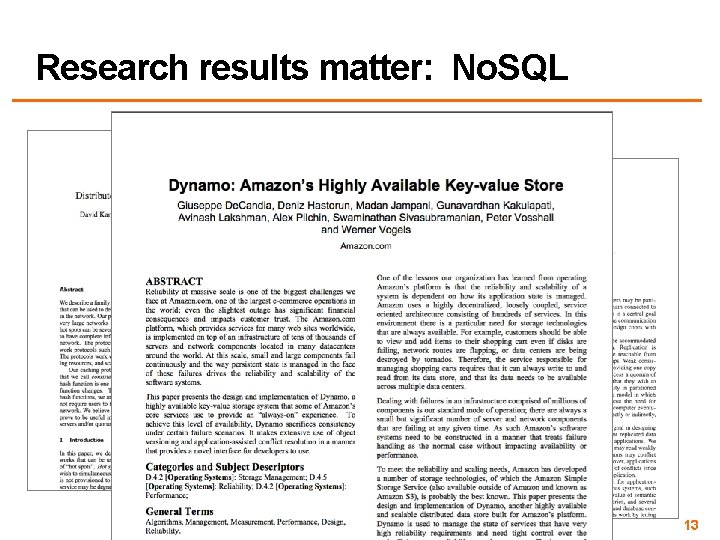
Research results matter: No. SQL 13
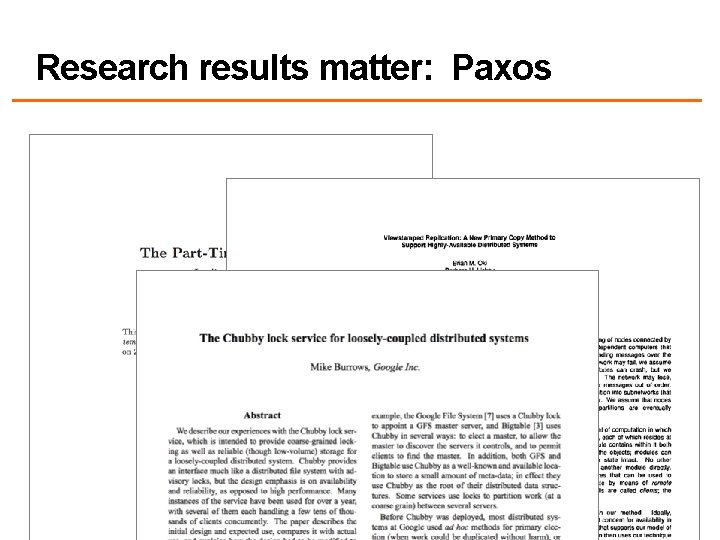
Research results matter: Paxos 14
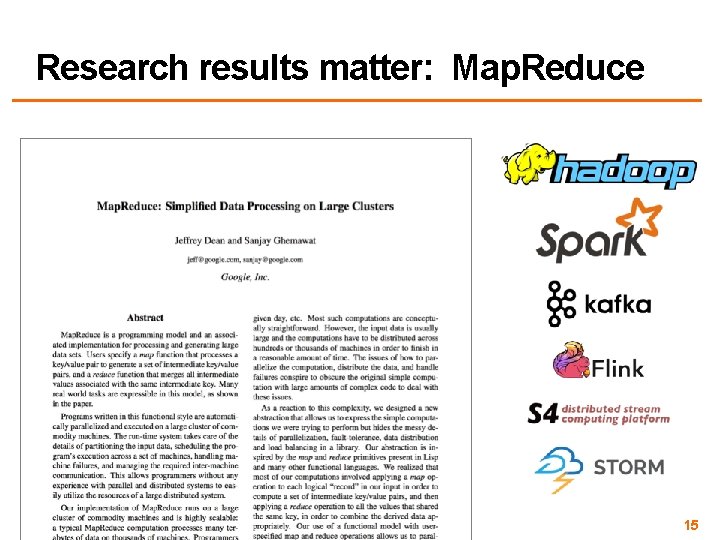
Research results matter: Map. Reduce 15
Course Organization 16
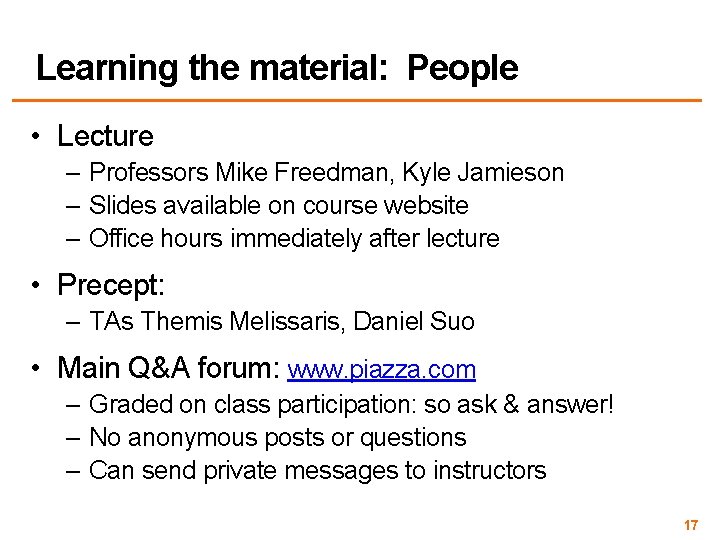
Learning the material: People • Lecture – Professors Mike Freedman, Kyle Jamieson – Slides available on course website – Office hours immediately after lecture • Precept: – TAs Themis Melissaris, Daniel Suo • Main Q&A forum: www. piazza. com – Graded on class participation: so ask & answer! – No anonymous posts or questions – Can send private messages to instructors 17
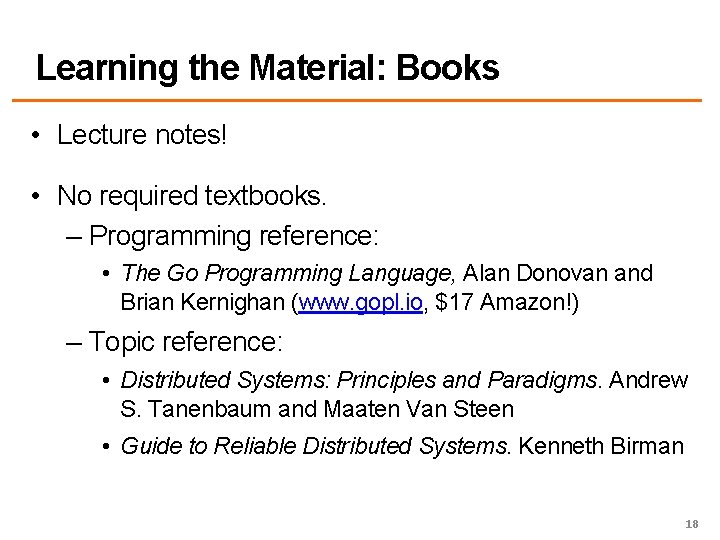
Learning the Material: Books • Lecture notes! • No required textbooks. – Programming reference: • The Go Programming Language, Alan Donovan and Brian Kernighan (www. gopl. io, $17 Amazon!) – Topic reference: • Distributed Systems: Principles and Paradigms. Andrew S. Tanenbaum and Maaten Van Steen • Guide to Reliable Distributed Systems. Kenneth Birman 18
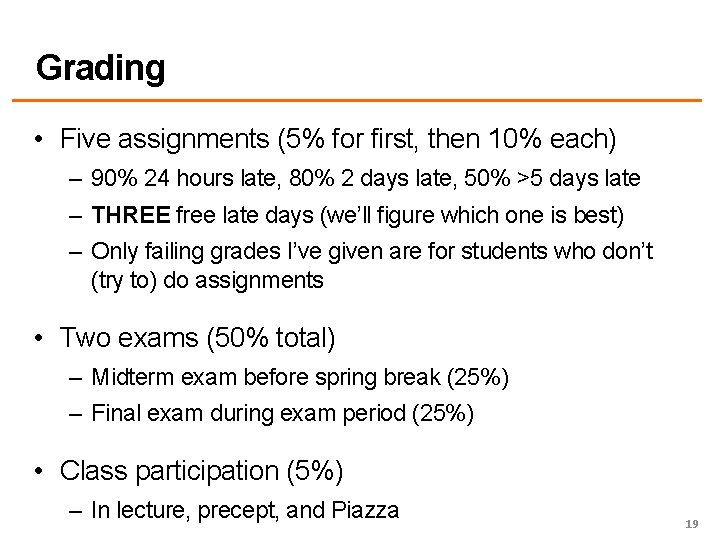
Grading • Five assignments (5% for first, then 10% each) – 90% 24 hours late, 80% 2 days late, 50% >5 days late – THREE free late days (we’ll figure which one is best) – Only failing grades I’ve given are for students who don’t (try to) do assignments • Two exams (50% total) – Midterm exam before spring break (25%) – Final exam during exam period (25%) • Class participation (5%) – In lecture, precept, and Piazza 19
Policies: Write Your Own Code Programming is an individual creative process. At first, discussions with friends is fine. When writing code, however, the program must be your own work. Do not copy another person’s programs, comments, README description, or any part of submitted assignment. This includes character-by-character transliteration but also derivative works. Cannot use another’s code, etc. even while “citing” them. Writing code for use by another or using another’s code is academic fraud in context of coursework. Do not publish your code e. g. , on github, during/after course! 20
Assignment 1 • Learn how to program in Go – Implement “sequential” Map/Reduce – Instructions on assignment web page – Due September 28 (two weeks) 21
me. Clickers®: Quick Surveys • Why are you here? A. Needed to satisfy course requirements B. Want to learn Go or distributed programming C. Interested in concepts behind distributed systems D. Thought this course was “Bridges” 22
Case Study: Map. Reduce (Data-parallel programming at scale) 23
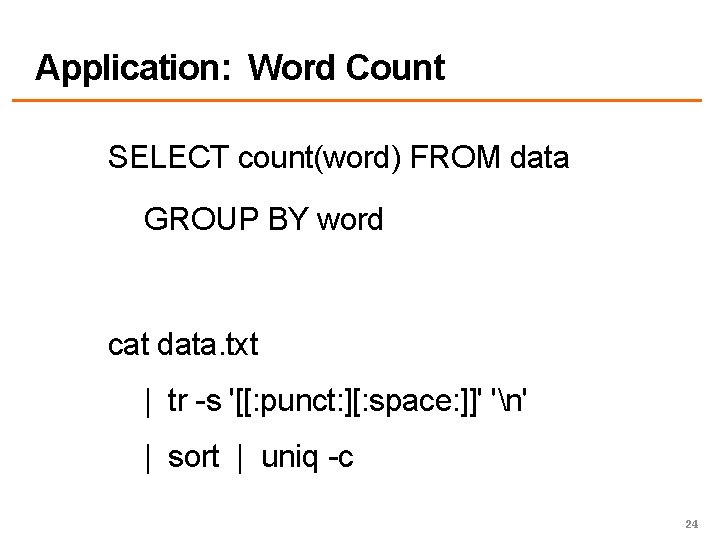
Application: Word Count SELECT count(word) FROM data GROUP BY word cat data. txt | tr -s '[[: punct: ][: space: ]]' 'n' | sort | uniq -c 24
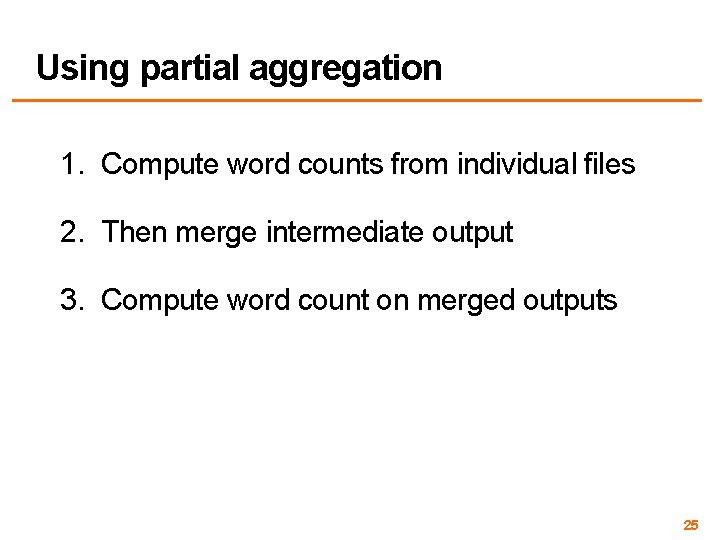
Using partial aggregation 1. Compute word counts from individual files 2. Then merge intermediate output 3. Compute word count on merged outputs 25
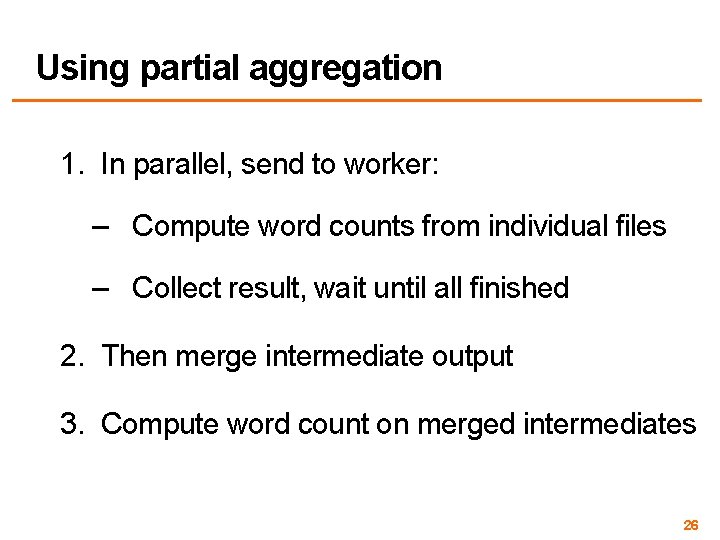
Using partial aggregation 1. In parallel, send to worker: – Compute word counts from individual files – Collect result, wait until all finished 2. Then merge intermediate output 3. Compute word count on merged intermediates 26
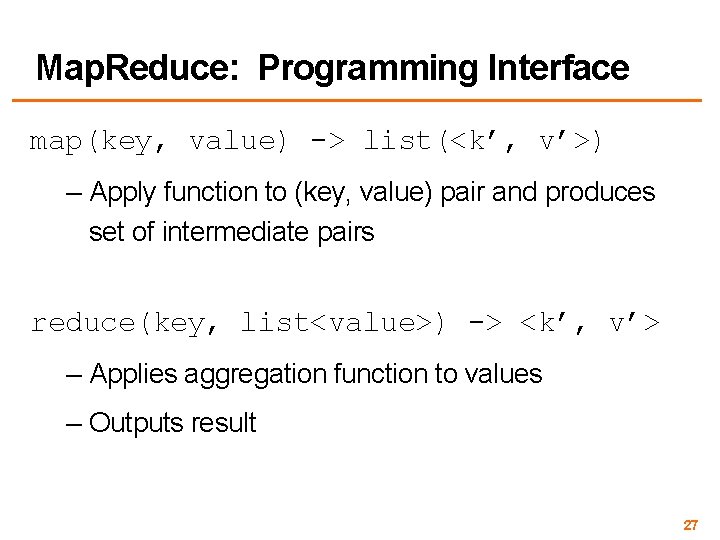
Map. Reduce: Programming Interface map(key, value) -> list(<k’, v’>) – Apply function to (key, value) pair and produces set of intermediate pairs reduce(key, list<value>) -> <k’, v’> – Applies aggregation function to values – Outputs result 27
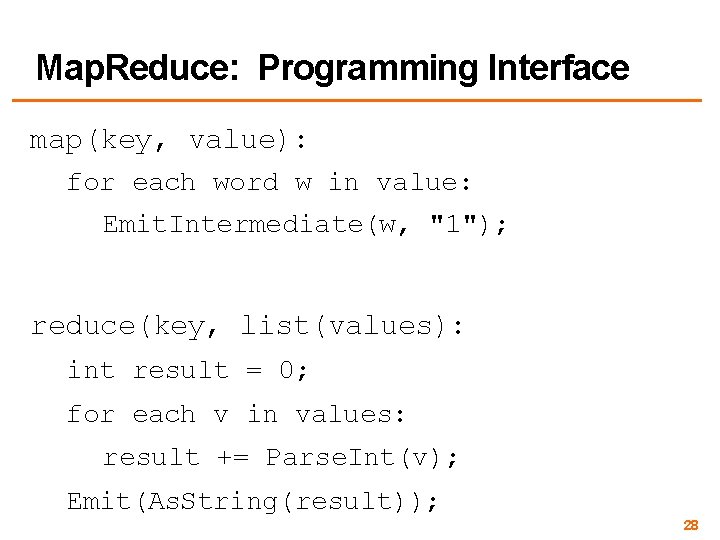
Map. Reduce: Programming Interface map(key, value): for each word w in value: Emit. Intermediate(w, "1"); reduce(key, list(values): int result = 0; for each v in values: result += Parse. Int(v); Emit(As. String(result)); 28
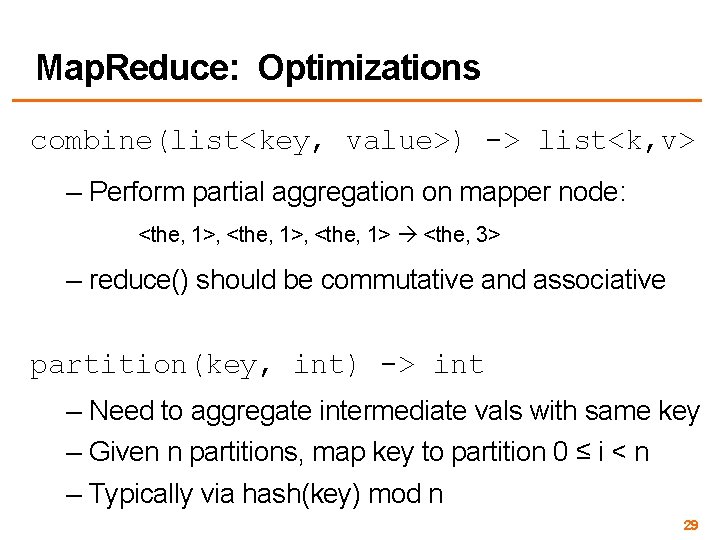
Map. Reduce: Optimizations combine(list<key, value>) -> list<k, v> – Perform partial aggregation on mapper node: <the, 1>, <the, 1> <the, 3> – reduce() should be commutative and associative partition(key, int) -> int – Need to aggregate intermediate vals with same key – Given n partitions, map key to partition 0 ≤ i < n – Typically via hash(key) mod n 29
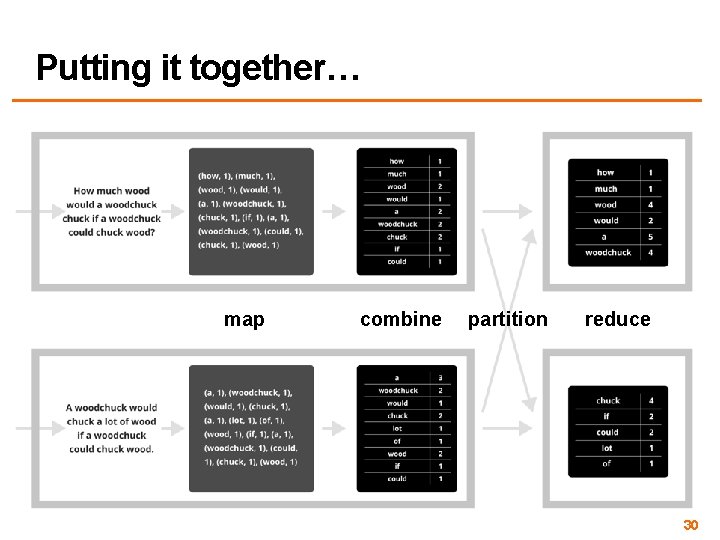
Putting it together… map combine partition reduce 30
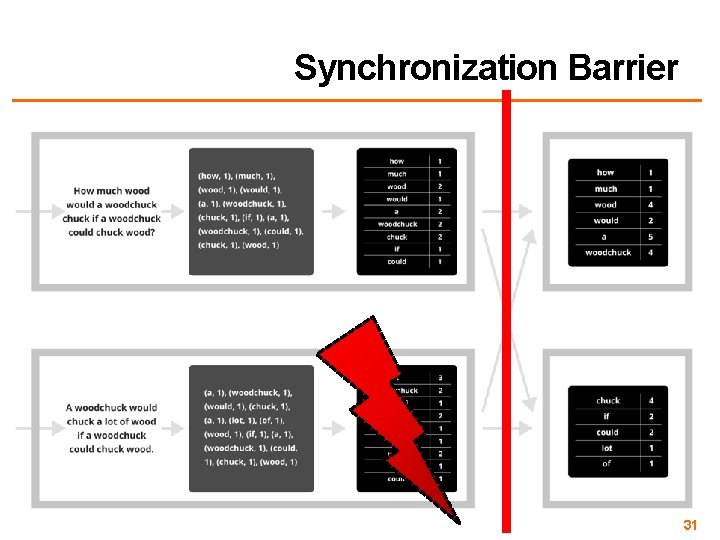
Synchronization Barrier 31
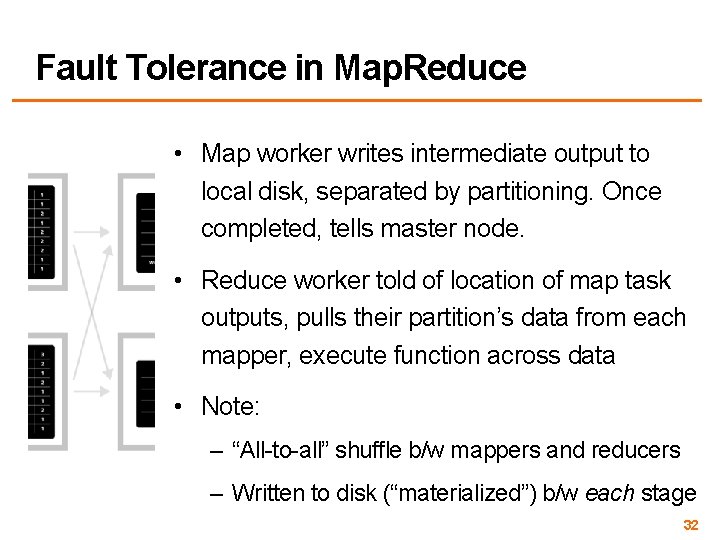
Fault Tolerance in Map. Reduce • Map worker writes intermediate output to local disk, separated by partitioning. Once completed, tells master node. • Reduce worker told of location of map task outputs, pulls their partition’s data from each mapper, execute function across data • Note: – “All-to-all” shuffle b/w mappers and reducers – Written to disk (“materialized”) b/w each stage 32
Fault Tolerance in Map. Reduce • Master node monitors state of system – If master failures, job aborts and client notified • Map worker failure – Both in-progress/completed tasks marked as idle – Reduce workers notified when map task is re-executed on another map worker • Reducer worker failure – In-progress tasks are reset to idle (and re-executed) – Completed tasks had been written to global file system 33
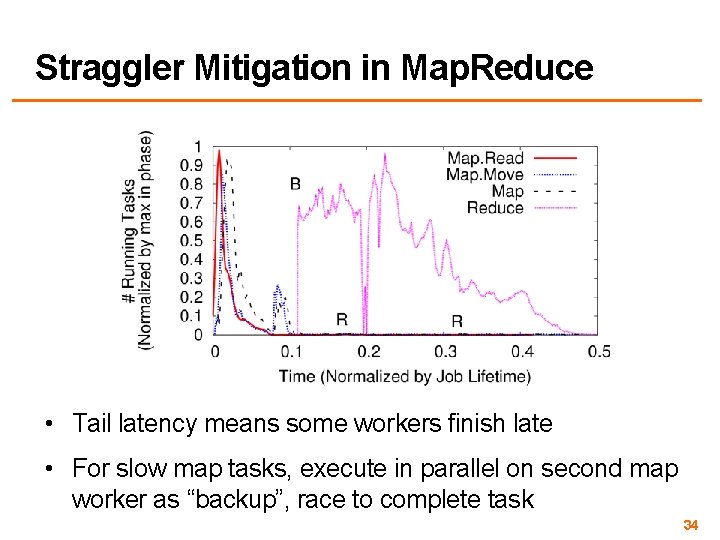
Straggler Mitigation in Map. Reduce • Tail latency means some workers finish late • For slow map tasks, execute in parallel on second map worker as “backup”, race to complete task 34
You’ll build (simplified) Map. Reduce! • Assignment 1: Sequential Map/Reduce – Learn to program in Go! – Due September 28 (two weeks) • Assignment 2: Distributed Map/Reduce – Learn Go’s concurrency, network I/O, and RPCs – Due October 19 35
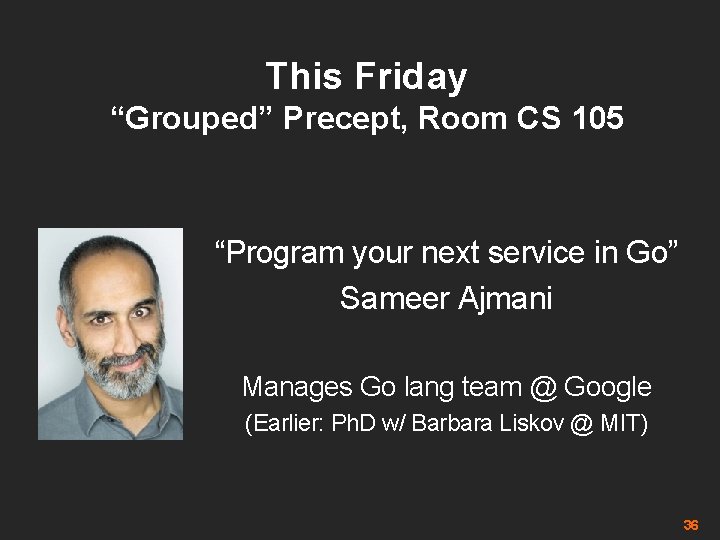
This Friday “Grouped” Precept, Room CS 105 “Program your next service in Go” Sameer Ajmani Manages Go lang team @ Google (Earlier: Ph. D w/ Barbara Liskov @ MIT) 36
- Slides: 36