
Distributed Systems Architectures IS 301 Software Engineering Lecture

Distributed Systems Architectures IS 301 – Software Engineering Lecture # 15 – 2004 -10 -04 M. E. Kabay, Ph. D, CISSP Assoc. Prof. Information Assurance Division of Business & Management, Norwich University mailto: mkabay@norwich. edu V: 802. 479. 7937 1 Note content copyright © 2004 Ian Sommerville. NU-specific content copyright © 2004 M. E. Kabay. All rights reserved.
Objectives Ø To explain the advantages and disadvantages of different distributed systems architectures Ø To discuss client-server and distributed object architectures Ø To describe object request brokers and the principles underlying the CORBA standards Ø To introduce peer-to-peer and serviceoriented architectures as new models of distributed computing. 2 Note content copyright © 2004 Ian Sommerville. NU-specific content copyright © 2004 M. E. Kabay. All rights reserved.
Topics covered Ø Multiprocessor architectures Ø Client-server architectures Ø Distributed object architectures Ø Inter-organizational computing Today we will use 27 of Prof. Sommerville’s slides in class 3 Note content copyright © 2004 Ian Sommerville. NU-specific content copyright © 2004 M. E. Kabay. All rights reserved.
Distributed systems Ø Virtually all large computer-based systems are now distributed systems. Ø Information processing is distributed over several computers rather than confined to a single machine. Ø Distributed software engineering is therefore very important for enterprise computing systems. 4 Note content copyright © 2004 Ian Sommerville. NU-specific content copyright © 2004 M. E. Kabay. All rights reserved.
System types Ø Personal systems that are not distributed and that are designed to run on a personal computer or workstation. Ø Embedded systems that run on a single processor or on an integrated group of processors. Ø Distributed systems where the system software runs on a loosely integrated group of cooperating processors linked by a network. 5 Note content copyright © 2004 Ian Sommerville. NU-specific content copyright © 2004 M. E. Kabay. All rights reserved.
Distributed system characteristics Ø Resource sharing q. Sharing of hardware and software resources. Ø Openness q. Use of equipment and software from different vendors. Ø Concurrency q. Concurrent processing to enhance performance. Ø Scalability q. Increased throughput by adding new resources. Ø Fault tolerance q. The ability to continue in operation after a fault has occurred. 6 Note content copyright © 2004 Ian Sommerville. NU-specific content copyright © 2004 M. E. Kabay. All rights reserved.

Distributed system disadvantages Ø Complexity q. Typically, distributed systems are more complex than centralized systems. Ø Security q. More susceptible to external attack. Ø Manageability q. More effort required for system management. Ø Unpredictability q. Unpredictable responses depending on the system organization and network load. 7 Note content copyright © 2004 Ian Sommerville. NU-specific content copyright © 2004 M. E. Kabay. All rights reserved.
Distributed systems architectures Ø Client-server architectures q. Distributed services which are called on by clients. Servers that provide services are treated differently from clients that use services. Ø Distributed object architectures q. No distinction between clients and servers. Any object on the system may provide and use services from other objects. 8 Note content copyright © 2004 Ian Sommerville. NU-specific content copyright © 2004 M. E. Kabay. All rights reserved.
Middleware Ø Software that manages and supports the different components of a distributed system. In essence, it sits in the middle of the system. Ø Middleware is usually off-the-shelf rather than specially written software. Ø Examples q. Transaction processing monitors; q. Data converters; q. Communication controllers. 9 Note content copyright © 2004 Ian Sommerville. NU-specific content copyright © 2004 M. E. Kabay. All rights reserved.
Multiprocessor architectures Ø Simplest distributed system model. Ø System composed of multiple processes which may (but need not) execute on different processors. Ø Architectural model of many large real-time systems. Ø Distribution of process to processor may be pre-ordered or may be under the control of a dispatcher. 10 Note content copyright © 2004 Ian Sommerville. NU-specific content copyright © 2004 M. E. Kabay. All rights reserved.
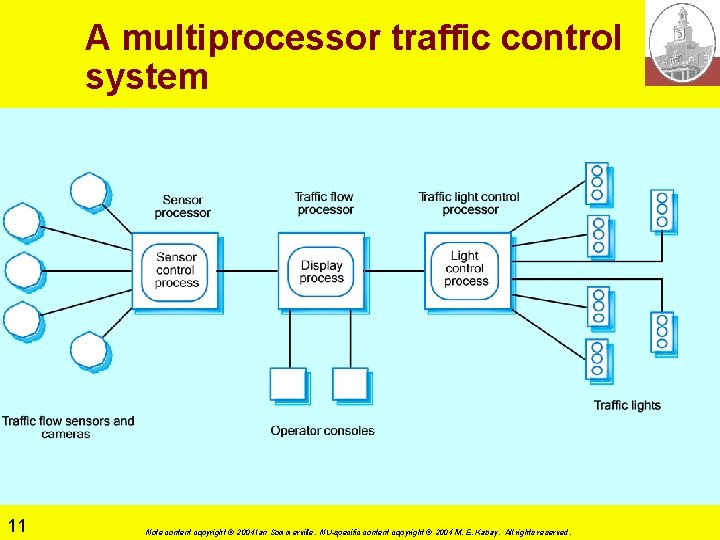
A multiprocessor traffic control system 11 Note content copyright © 2004 Ian Sommerville. NU-specific content copyright © 2004 M. E. Kabay. All rights reserved.
Client-server architectures Ø The application is modeled as a set of services that are provided by servers and a set of clients that use these services. Ø Clients know of servers but servers need not know of clients. Ø Clients and servers are logical processes Ø The mapping of processors to processes is not necessarily 1 : 1. 12 Note content copyright © 2004 Ian Sommerville. NU-specific content copyright © 2004 M. E. Kabay. All rights reserved.
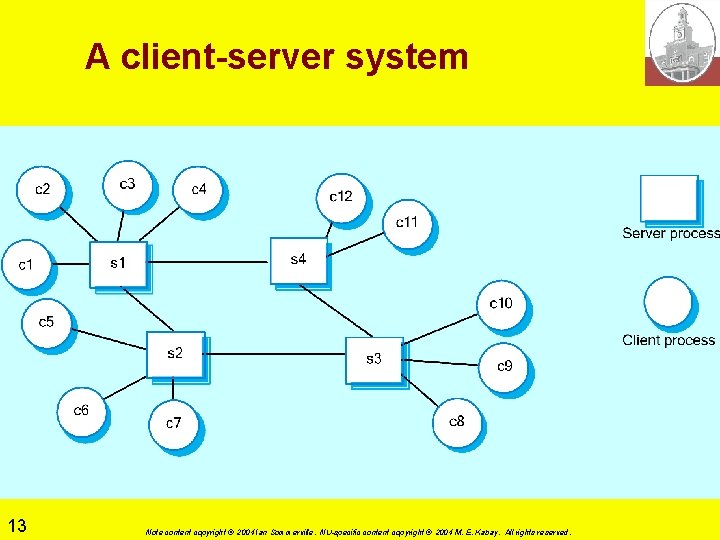
A client-server system 13 Note content copyright © 2004 Ian Sommerville. NU-specific content copyright © 2004 M. E. Kabay. All rights reserved.
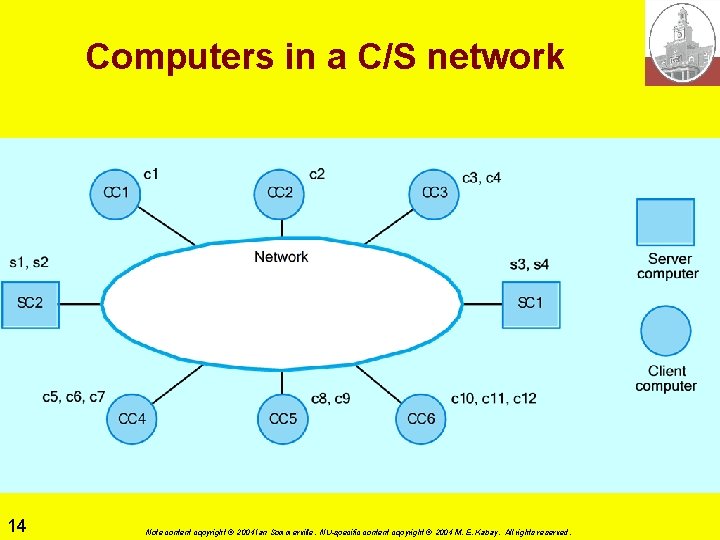
Computers in a C/S network 14 Note content copyright © 2004 Ian Sommerville. NU-specific content copyright © 2004 M. E. Kabay. All rights reserved.
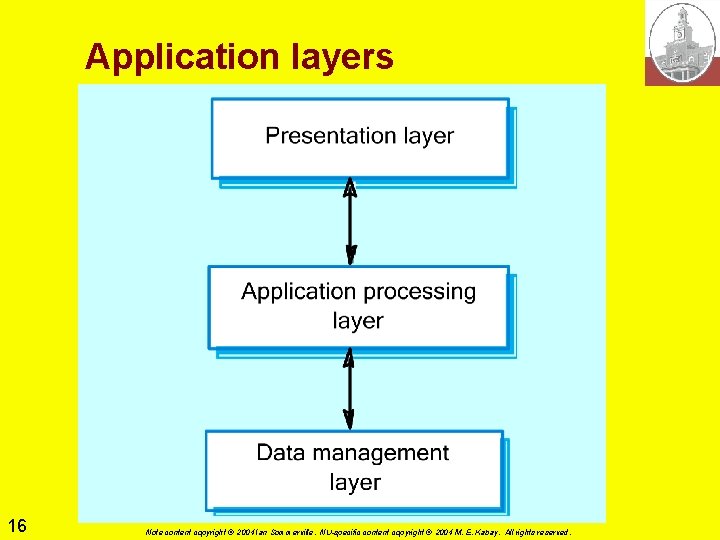
Application layers 16 Note content copyright © 2004 Ian Sommerville. NU-specific content copyright © 2004 M. E. Kabay. All rights reserved.
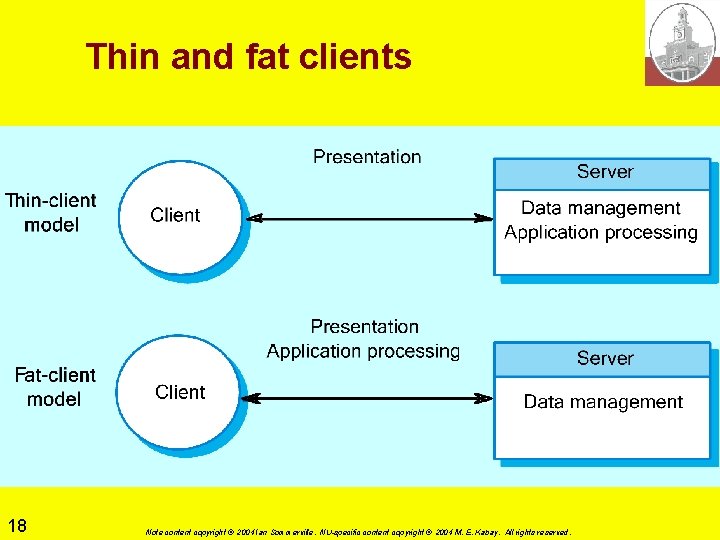
Thin and fat clients 18 Note content copyright © 2004 Ian Sommerville. NU-specific content copyright © 2004 M. E. Kabay. All rights reserved.
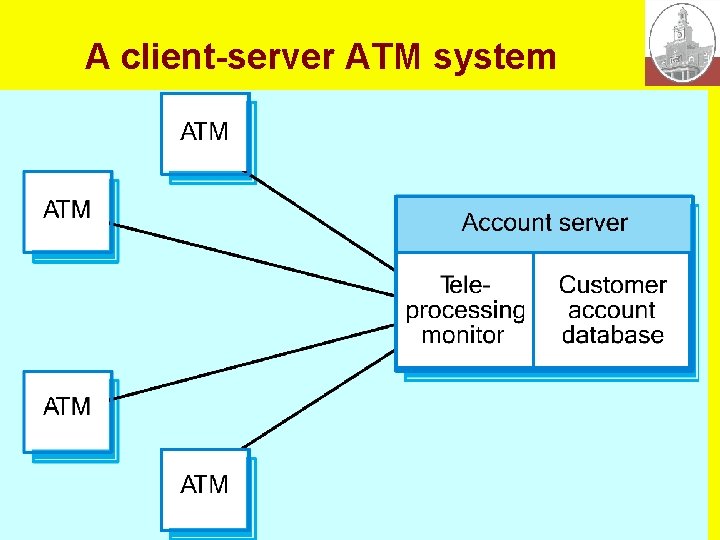
A client-server ATM system 21 Note content copyright © 2004 Ian Sommerville. NU-specific content copyright © 2004 M. E. Kabay. All rights reserved.
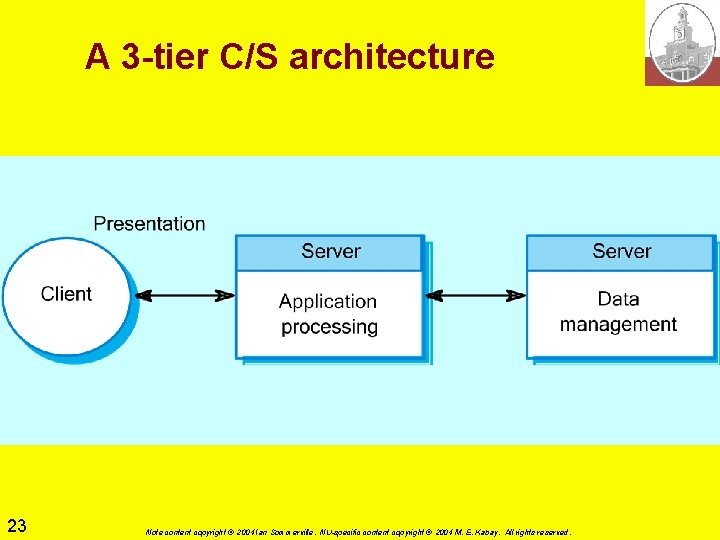
A 3 -tier C/S architecture 23 Note content copyright © 2004 Ian Sommerville. NU-specific content copyright © 2004 M. E. Kabay. All rights reserved.
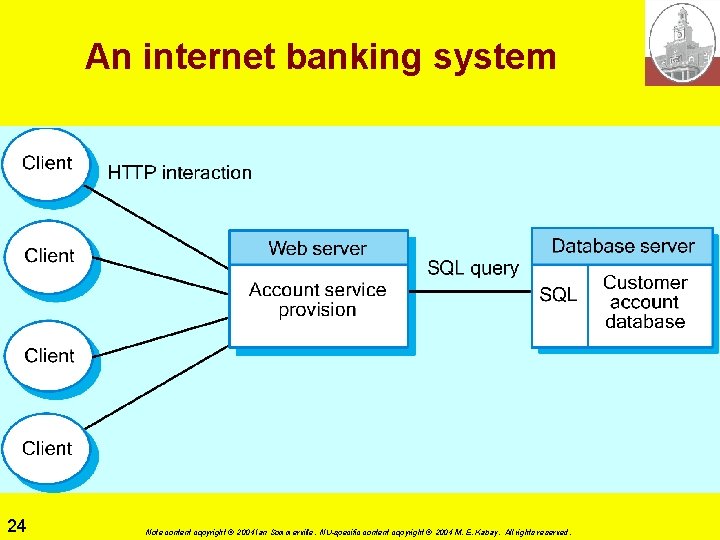
An internet banking system 24 Note content copyright © 2004 Ian Sommerville. NU-specific content copyright © 2004 M. E. Kabay. All rights reserved.
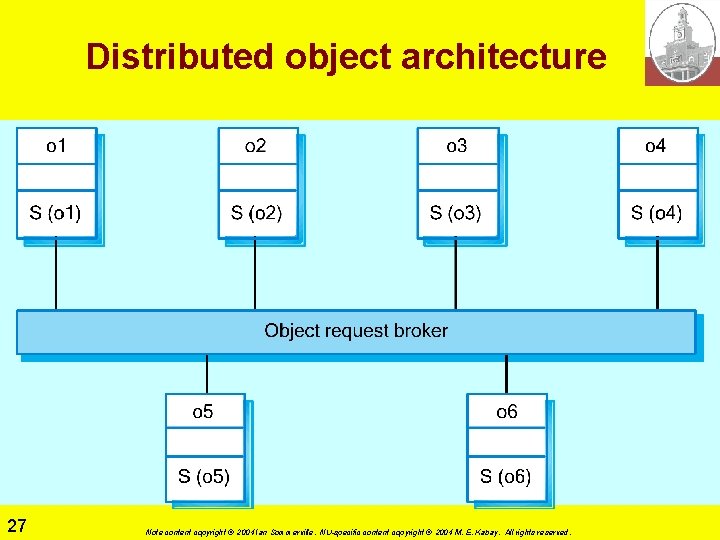
Distributed object architecture 27 Note content copyright © 2004 Ian Sommerville. NU-specific content copyright © 2004 M. E. Kabay. All rights reserved.
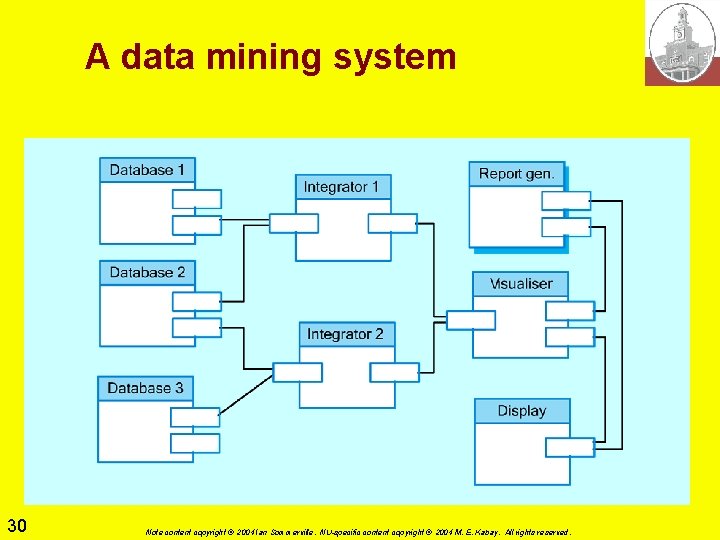
A data mining system 30 Note content copyright © 2004 Ian Sommerville. NU-specific content copyright © 2004 M. E. Kabay. All rights reserved.
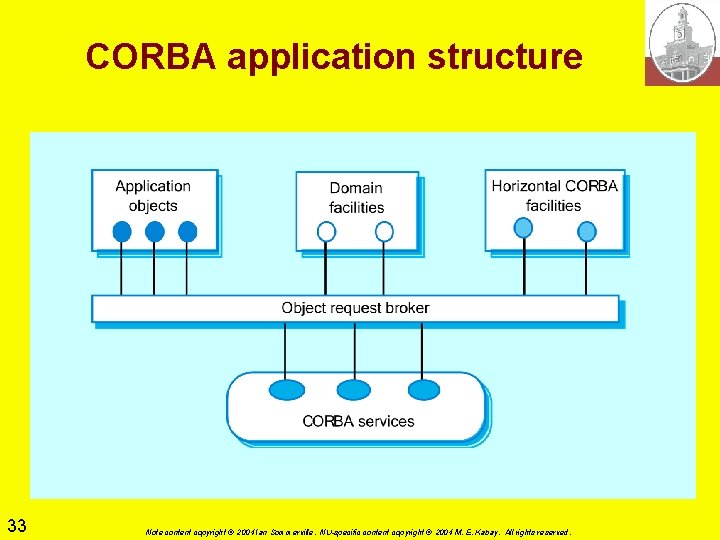
CORBA application structure 33 Note content copyright © 2004 Ian Sommerville. NU-specific content copyright © 2004 M. E. Kabay. All rights reserved.
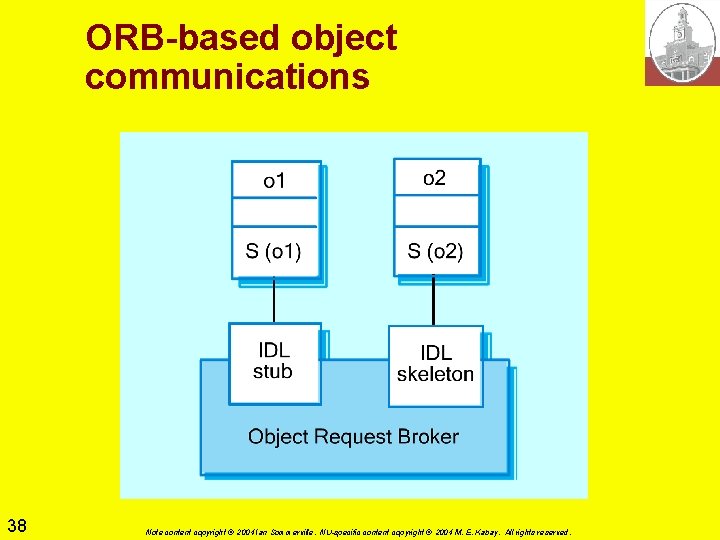
ORB-based object communications 38 Note content copyright © 2004 Ian Sommerville. NU-specific content copyright © 2004 M. E. Kabay. All rights reserved.
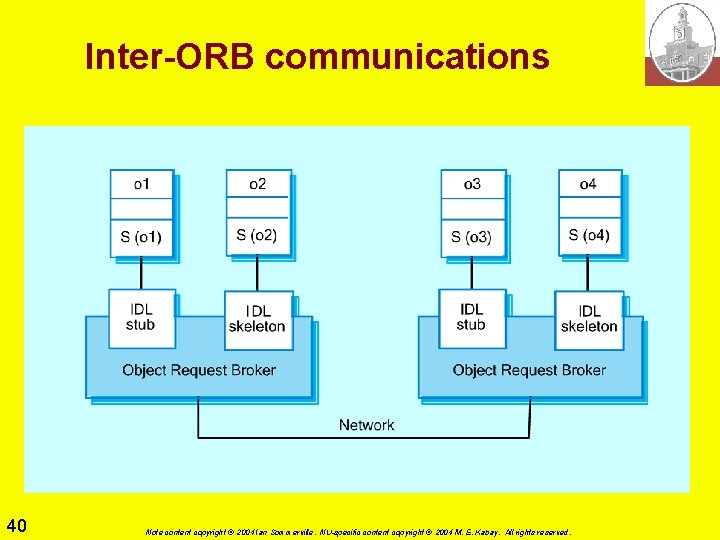
Inter-ORB communications 40 Note content copyright © 2004 Ian Sommerville. NU-specific content copyright © 2004 M. E. Kabay. All rights reserved.
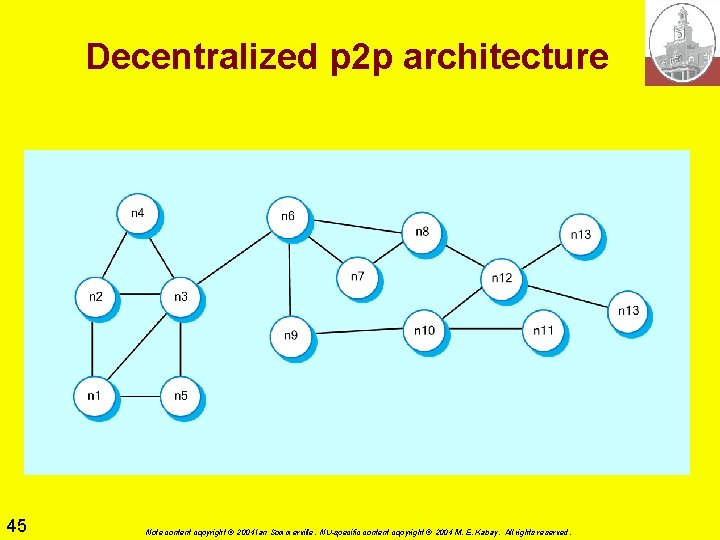
Decentralized p 2 p architecture 45 Note content copyright © 2004 Ian Sommerville. NU-specific content copyright © 2004 M. E. Kabay. All rights reserved.
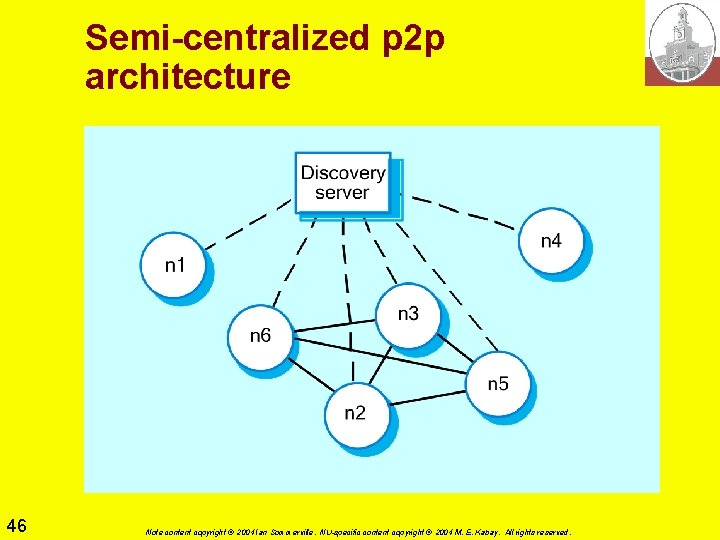
Semi-centralized p 2 p architecture 46 Note content copyright © 2004 Ian Sommerville. NU-specific content copyright © 2004 M. E. Kabay. All rights reserved.
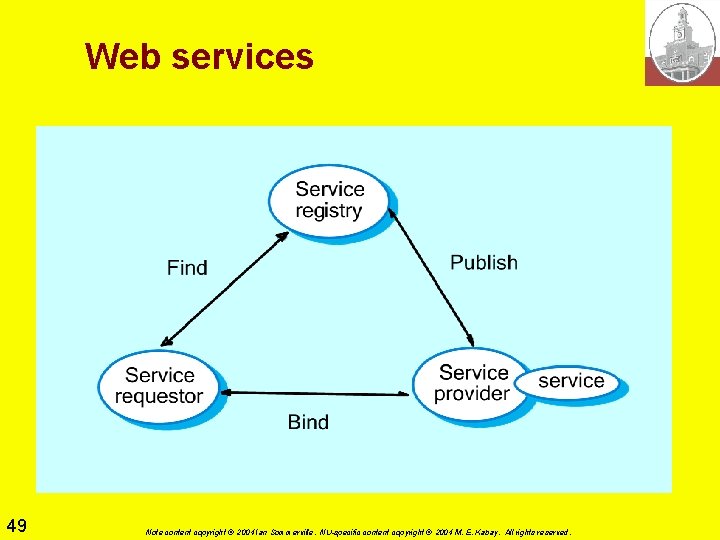
Web services 49 Note content copyright © 2004 Ian Sommerville. NU-specific content copyright © 2004 M. E. Kabay. All rights reserved.
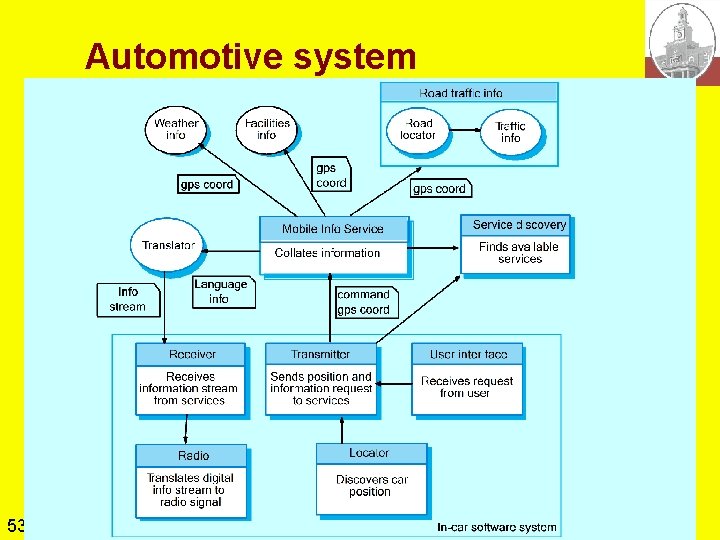
Automotive system 53 Note content copyright © 2004 Ian Sommerville. NU-specific content copyright © 2004 M. E. Kabay. All rights reserved.
Homework Names etc. on upper right, please Ø Required q. By 11 Oct 2004 q. For 20 points, answer in detail ü 12. 3, 12. 8 (@10) [use computer-drawn diagrams for these two] q. For 5 points, answer in detail 12. 5 Ø Optional q. By 18 Oct 2004 q. For a maximum of 8 additional points, answer any or all of ü 12. 1, 12. 2, 12. 4, 12. 6 (@2) 56 Note content copyright © 2004 Ian Sommerville. NU-specific content copyright © 2004 M. E. Kabay. All rights reserved.

DISCUSSION 57 Note content copyright © 2004 Ian Sommerville. NU-specific content copyright © 2004 M. E. Kabay. All rights reserved.







- Slides: 37