
Distributed Systems 7 Network Layer Theory Simon Razniewski
Distributed Systems 7. Network Layer Theory Simon Razniewski Faculty of Computer Science Free University of Bozen-Bolzano A. Y. 2016/2017
Notes • CSMA not slotted • slotting is rather difficult • ALOHA could do it presumably because of long frames
Network Layer 1. Design Issues 2. Routing Algorithms − Distance vector − Link state routing 3. Congestion Control 4. Quality of Service
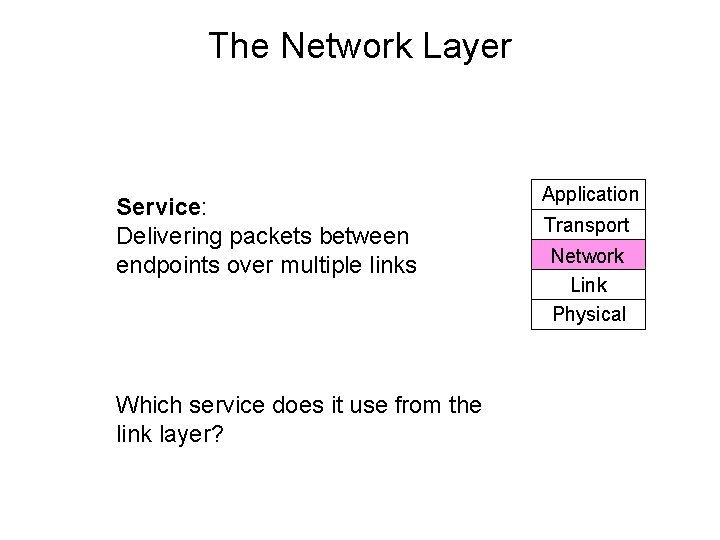
The Network Layer Service: Delivering packets between endpoints over multiple links Which service does it use from the link layer? Application Transport Network Link Physical
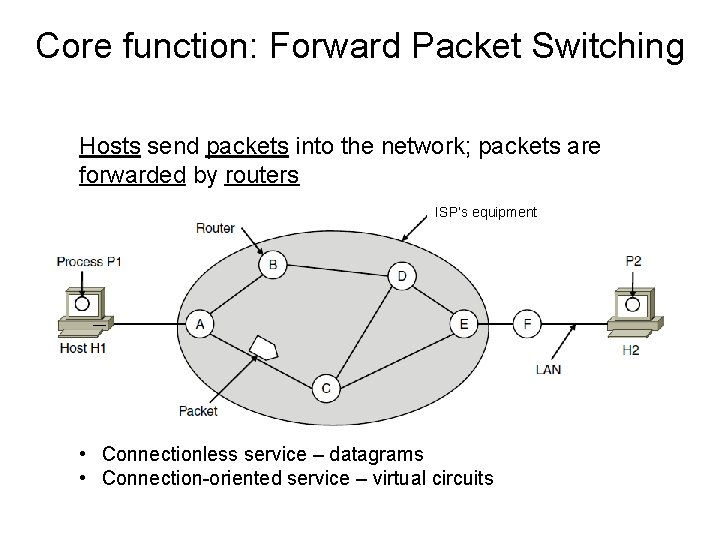
Core function: Forward Packet Switching Hosts send packets into the network; packets are forwarded by routers ISP’s equipment • Connectionless service – datagrams • Connection-oriented service – virtual circuits
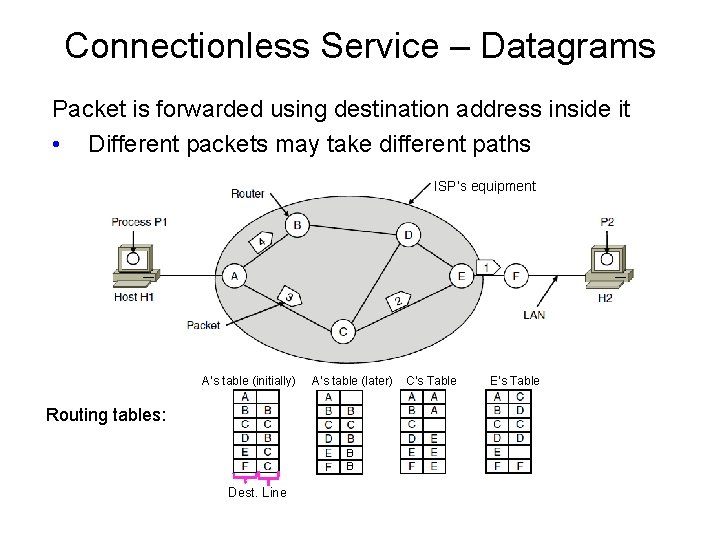
Connectionless Service – Datagrams Packet is forwarded using destination address inside it • Different packets may take different paths ISP’s equipment A’s table (initially) A’s table (later) Routing tables: B B Dest. Line C’s Table E’s Table
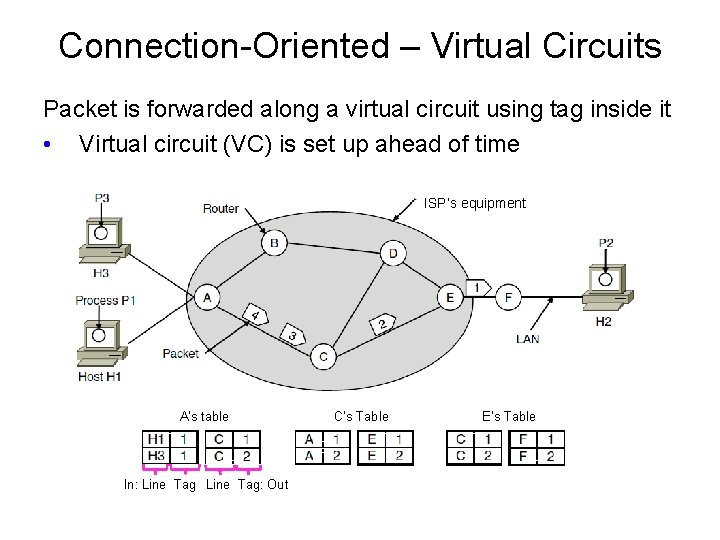
Connection-Oriented – Virtual Circuits Packet is forwarded along a virtual circuit using tag inside it • Virtual circuit (VC) is set up ahead of time ISP’s equipment A’s table In: Line Tag: Out C’s Table E’s Table
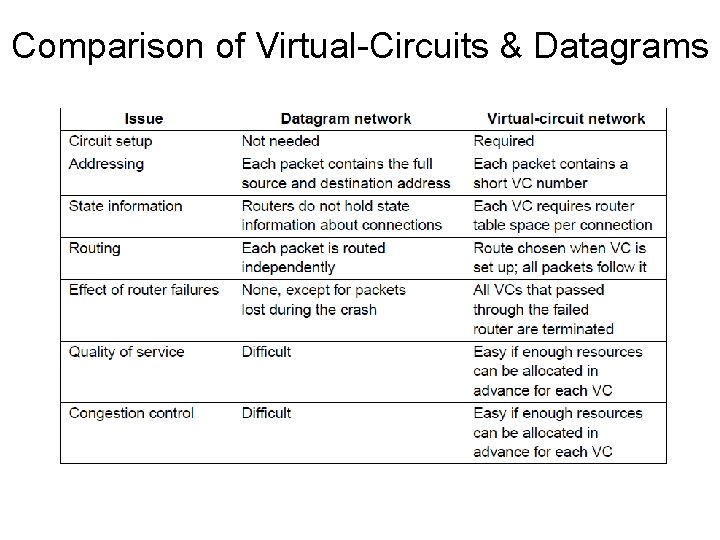
Comparison of Virtual-Circuits & Datagrams
7. Network Layer 1. Design Issues 2. Routing Algorithms − distance vector − link state routing 3. Congestion Control 4. Quality of Service
Routing Algorithms (1) • • • Dijkstra’s Shortest path algorithm Distance vector routing Link state routing Hierarchical routing Routing for mobile hosts
Routing Algorithms (2) Routing is the process of discovering network paths (creating a routing table) • Model the network as a graph of nodes and links • Decide what to optimize (e. g. , fairness vs efficiency, bandwidth vs delay) Forwarding is the sending of packets along a path, using routing tables
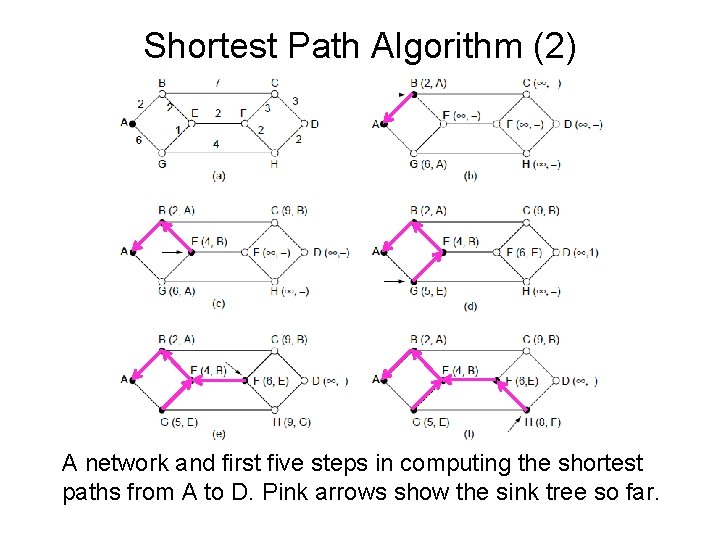
Shortest Path Algorithm (2) A network and first five steps in computing the shortest paths from A to D. Pink arrows show the sink tree so far.
Shortest Path Algorithm (1) Dijkstra’s algorithm computes shortest path to all nodes from one node in a graph Foundations: − Each link is assigned a non-negative weight/distance − Shortest path is the one with lowest total weight − Using weights of 1 gives paths with fewest hops Algorithm: − − Start with source, set distance to other nodes to infinity Update distances to reachable nodes Pick the lowest distance node, add it to set of visited nodes Repeat until all nodes are visited
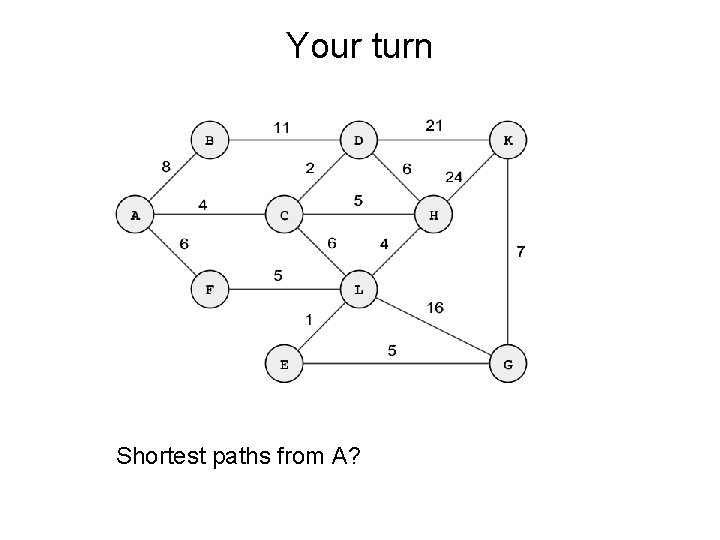
Your turn Shortest paths from A?
Dijkstra’s algorithm is nice, but… …how do we actually compute it? Decentralized (Distance vector routing) Centralized (Link state routing)
Distance Vector Routing (1) Distance vector is a distributed routing algorithm • Shortest path computation is split across nodes Algorithm: • Each node knows distance of links to its neighbors • Each node advertises vector of lowest known distances to all neighbors • Each node uses received vectors to update its own • Repeat periodically
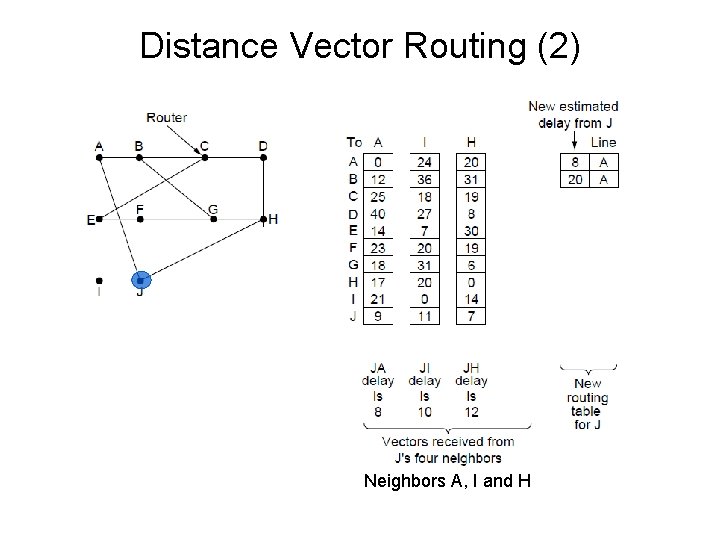
Distance Vector Routing (2) Network New vector for J Vectors received at J from Neighbors A, I and H
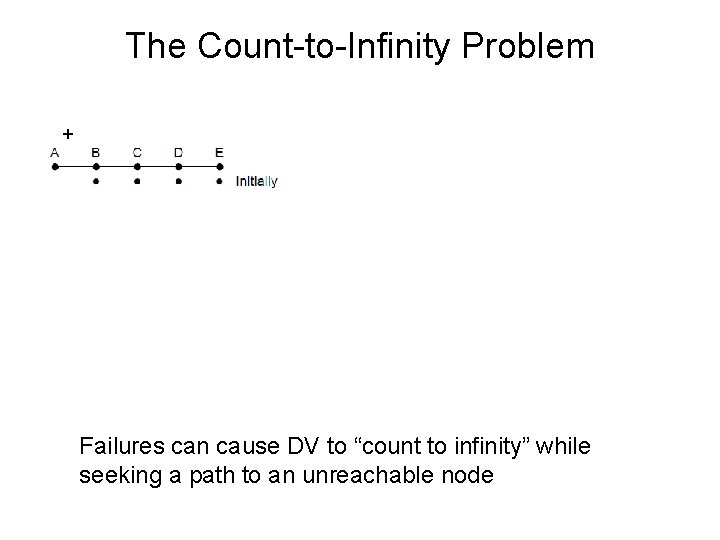
The Count-to-Infinity Problem + X Good news of a path to A spreads quickly Bad news of no path to A is learned slowly Failures can cause DV to “count to infinity” while seeking a path to an unreachable node
Link State Routing (1) Link state is an alternative to distance vector • More computation but simpler dynamics • Widely used in the Internet (OSPF, IS-IS) Algorithm: • Each node floods information about its neighbors in LSPs (Link State Packets); all nodes learn the full network graph • Each node runs Dijkstra’s algorithm to compute the path to take for each destination • How can we send LSPs to all nodes? − No broadcast functionality in WANs − Simple flooding can lead to exponential blowup
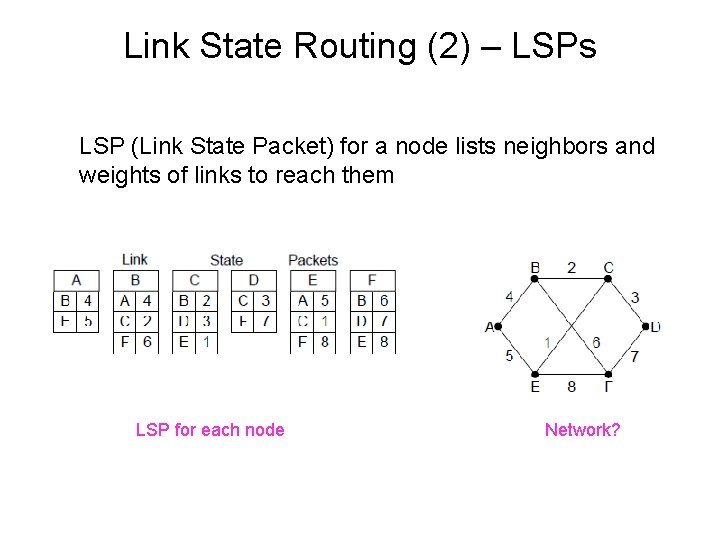
Link State Routing (2) – LSPs LSP (Link State Packet) for a node lists neighbors and weights of links to reach them LSP for each node Network?
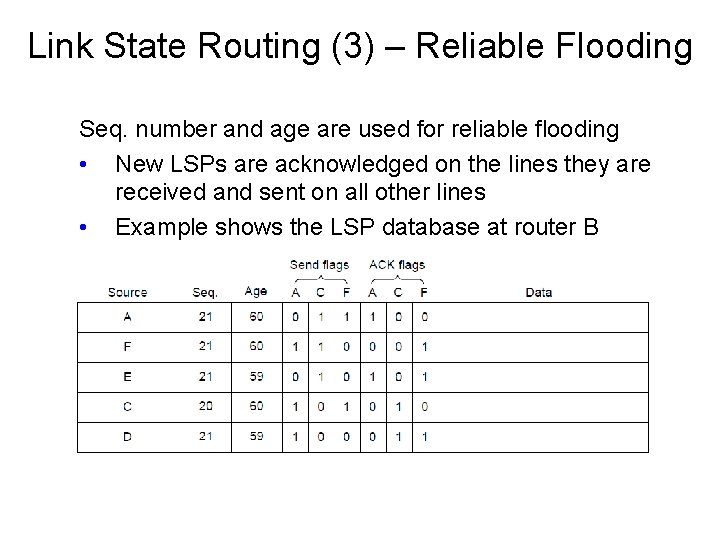
Link State Routing (3) – Reliable Flooding Seq. number and age are used for reliable flooding • New LSPs are acknowledged on the lines they are received and sent on all other lines • Example shows the LSP database at router B
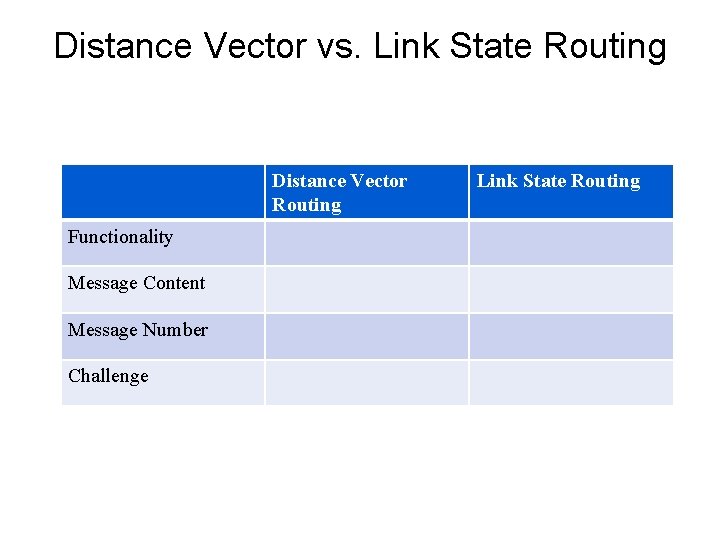
Distance Vector vs. Link State Routing Distance Vector Routing Functionality Message Content Message Number Challenge Link State Routing
Size of routing tables for the internet IPv 4: 32 -bit addresses IPv 6: 128 -bit addresses ?
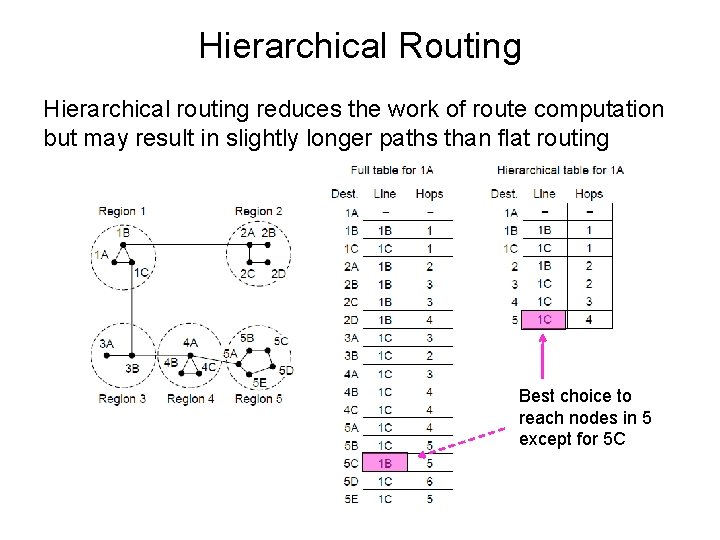
Hierarchical Routing Hierarchical routing reduces the work of route computation but may result in slightly longer paths than flat routing Best choice to reach nodes in 5 except for 5 C
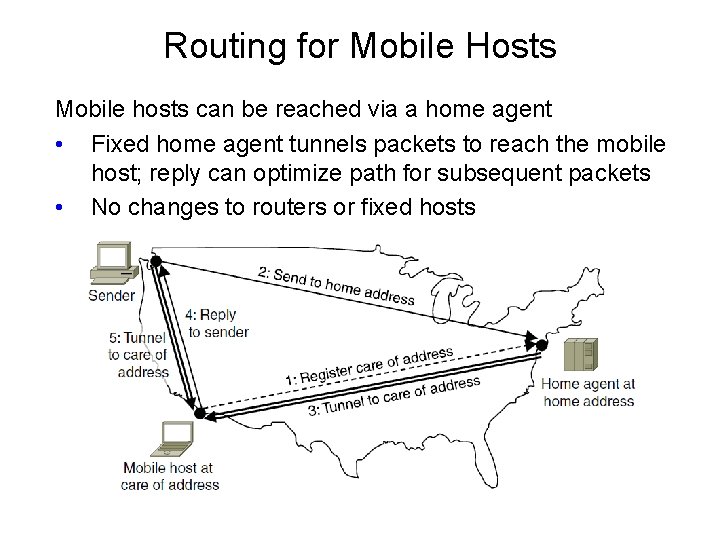
Routing for Mobile Hosts Mobile hosts can be reached via a home agent • Fixed home agent tunnels packets to reach the mobile host; reply can optimize path for subsequent packets • No changes to routers or fixed hosts
Assignment 1 • Limited teamwork • Make PDF • IDE is an overkill • References! • Structuring…
1. Design Issues 2. Routing Algorithms − distance vector − link state routing 3. Congestion Control 4. Quality of Service
Congestion Control (1) Handling congestion is the responsibility of the Network and Transport layers working together − We look at the network portion here
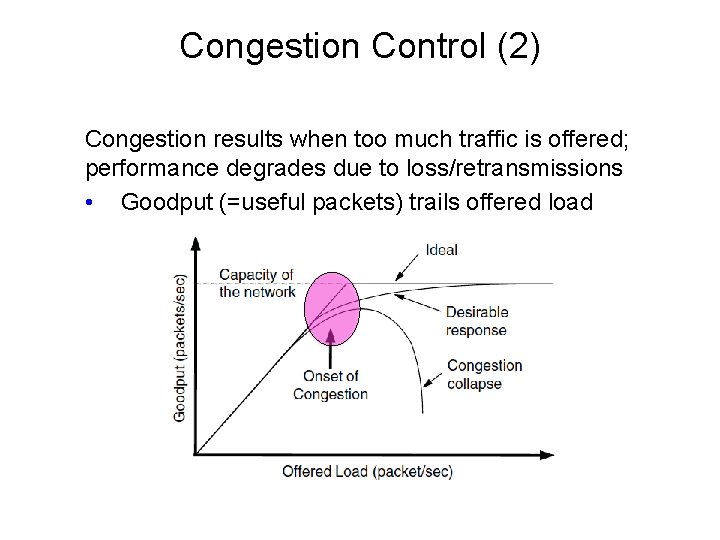
Congestion Control (2) Congestion results when too much traffic is offered; performance degrades due to loss/retransmissions • Goodput (=useful packets) trails offered load
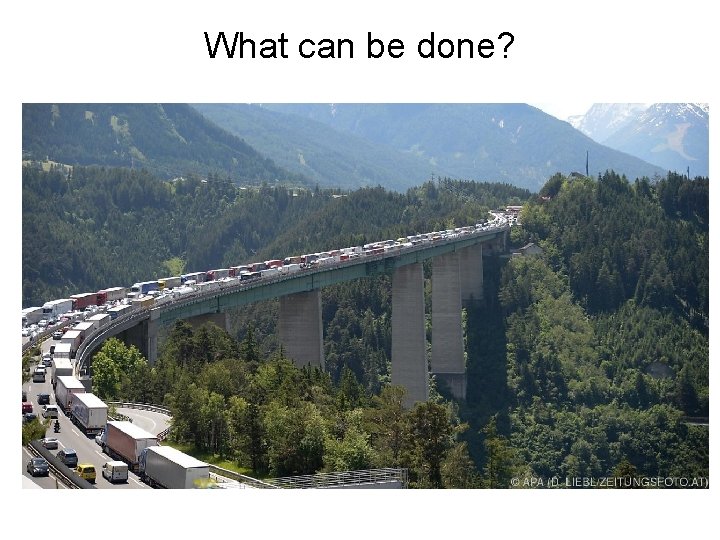
What can be done?
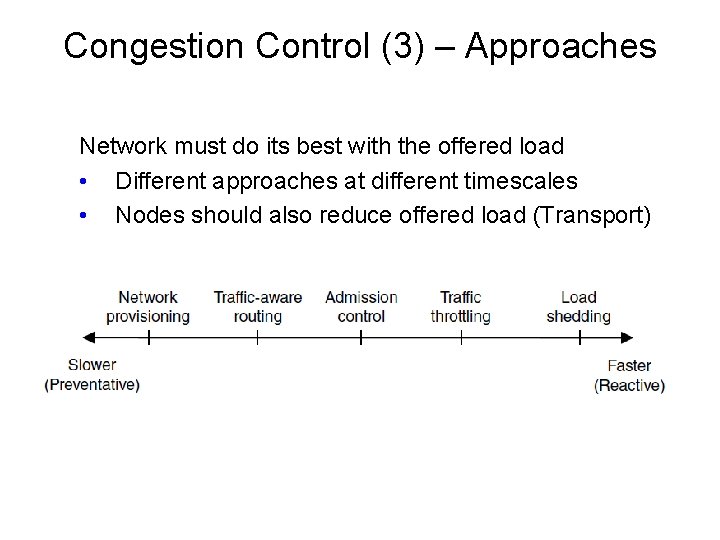
Congestion Control (3) – Approaches Network must do its best with the offered load • Different approaches at different timescales • Nodes should also reduce offered load (Transport)
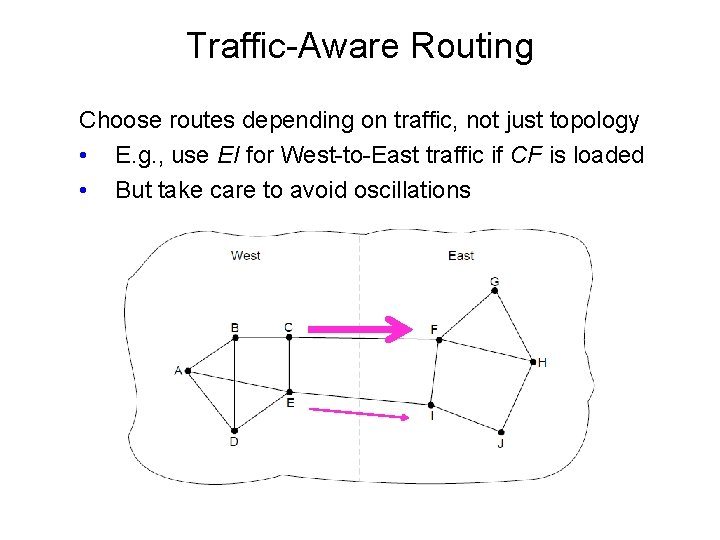
Traffic-Aware Routing Choose routes depending on traffic, not just topology • E. g. , use EI for West-to-East traffic if CF is loaded • But take care to avoid oscillations
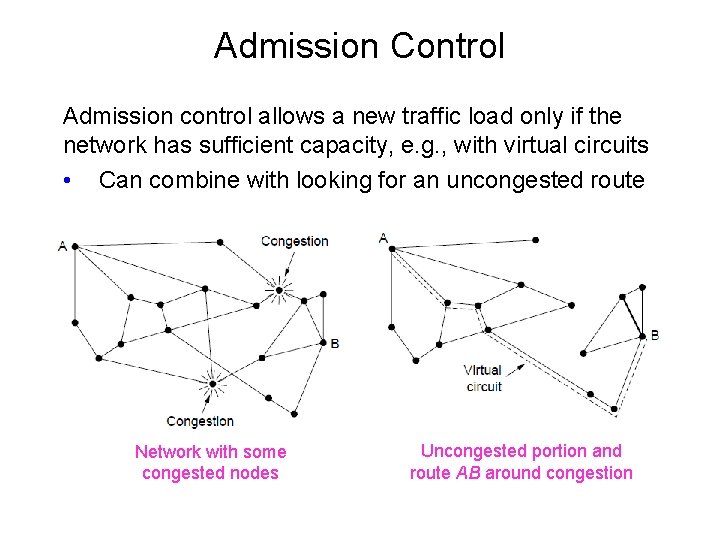
Admission Control Admission control allows a new traffic load only if the network has sufficient capacity, e. g. , with virtual circuits • Can combine with looking for an uncongested route Network with some congested nodes Uncongested portion and route AB around congestion
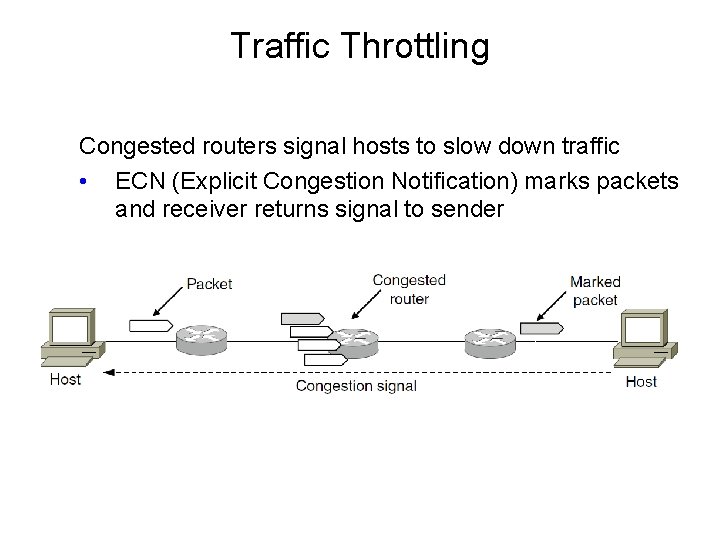
Traffic Throttling Congested routers signal hosts to slow down traffic • ECN (Explicit Congestion Notification) marks packets and receiver returns signal to sender
Load Shedding (1) When all else fails, network will drop packets (shed load) Which packets to throw away? Milk-or-wine problem
1. Design Issues 2. Routing Algorithms − distance vector − link state routing 3. Congestion Control 4. Quality of Service
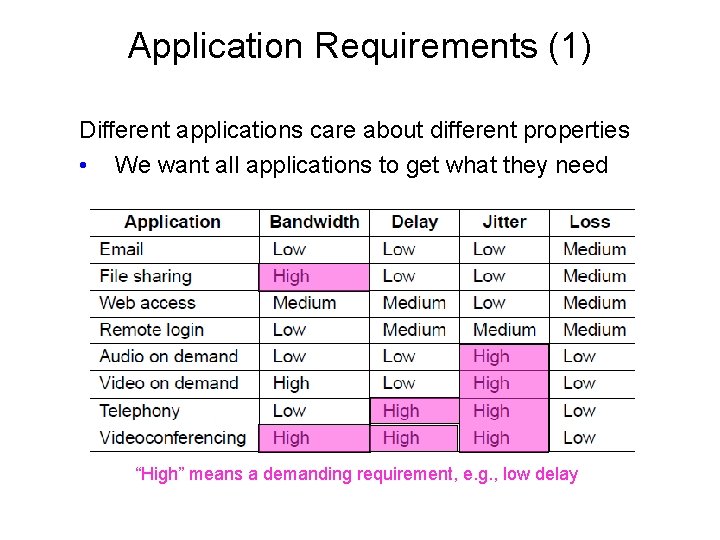
Application Requirements (1) Different applications care about different properties • We want all applications to get what they need. “High” means a demanding requirement, e. g. , low delay
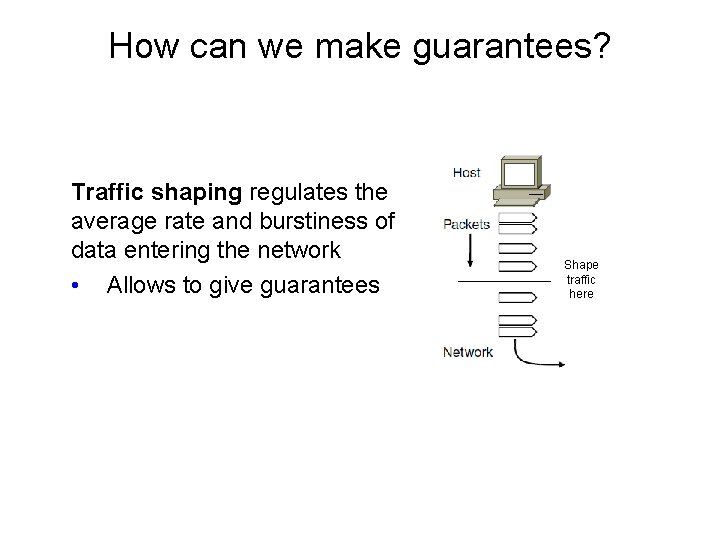
How can we make guarantees? Traffic shaping regulates the average rate and burstiness of data entering the network • Allows to give guarantees Shape traffic here
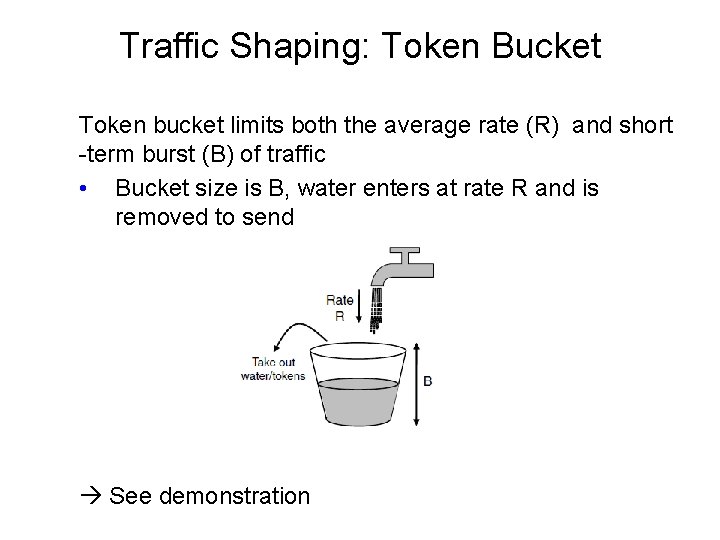
Traffic Shaping: Token Bucket Token bucket limits both the average rate (R) and short -term burst (B) of traffic • Bucket size is B, water enters at rate R and is removed to send See demonstration
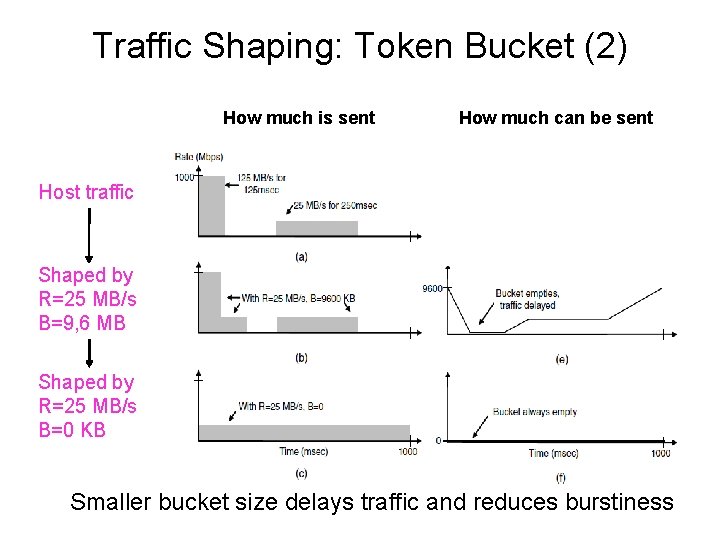
Traffic Shaping: Token Bucket (2) How much is sent How much can be sent Host traffic Shaped by R=25 MB/s B=9, 6 MB Shaped by R=25 MB/s B=0 KB Smaller bucket size delays traffic and reduces burstiness
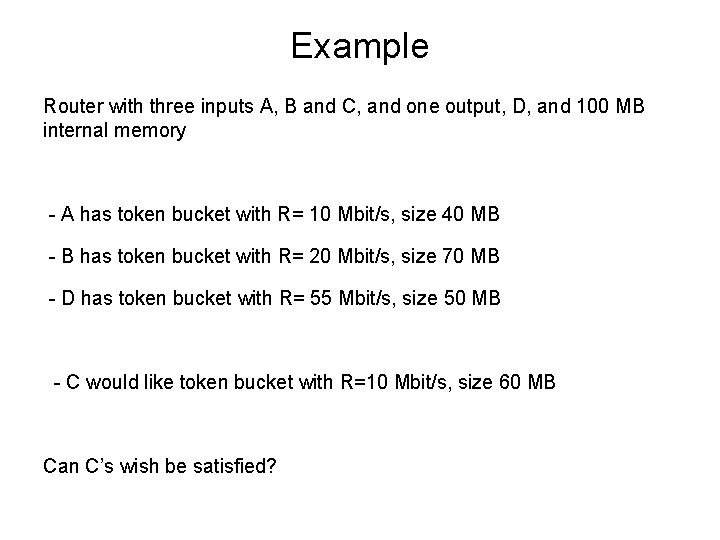
Example Router with three inputs A, B and C, and one output, D, and 100 MB internal memory - A has token bucket with R= 10 Mbit/s, size 40 MB - B has token bucket with R= 20 Mbit/s, size 70 MB - D has token bucket with R= 55 Mbit/s, size 50 MB - C would like token bucket with R=10 Mbit/s, size 60 MB Can C’s wish be satisfied?
Buckets in series A single token bucket may allow strong bursts Put smaller buckets with higher rate behind Token bucket with B=0 is called leaky bucket
Learned today • Connectionless vs connection-oriented routing • Routing • Distance vector − Problem: Count to infinity • Link state − Challenge: Information propagation • Techniques for congestion control • Traffic shaping: Token-bucket
- Slides: 44