
Distributed RealTime Embedded Video Processing Tiehan Lv 1
Distributed Real-Time Embedded Video Processing Tiehan Lv (1), Burak Ozer (2), Wayne Wolf (1) Dept. of EE, Princeton University (2) Verificon Corp.
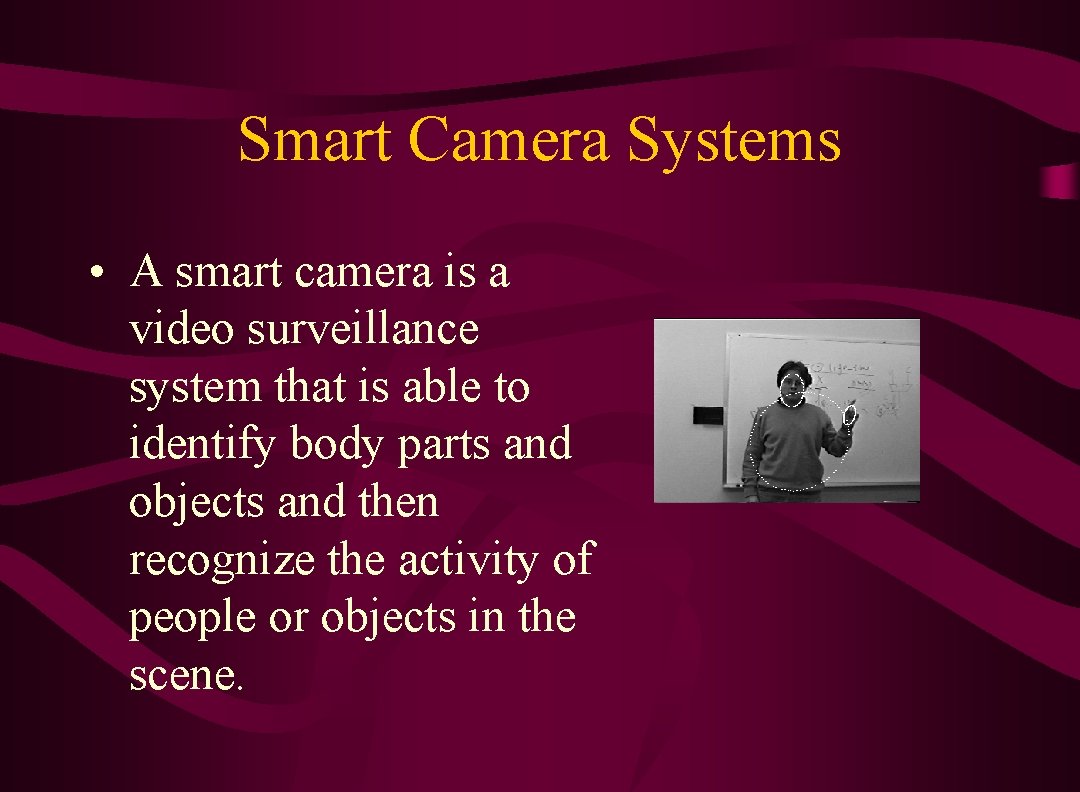
Smart Camera Systems • A smart camera is a video surveillance system that is able to identify body parts and objects and then recognize the activity of people or objects in the scene.
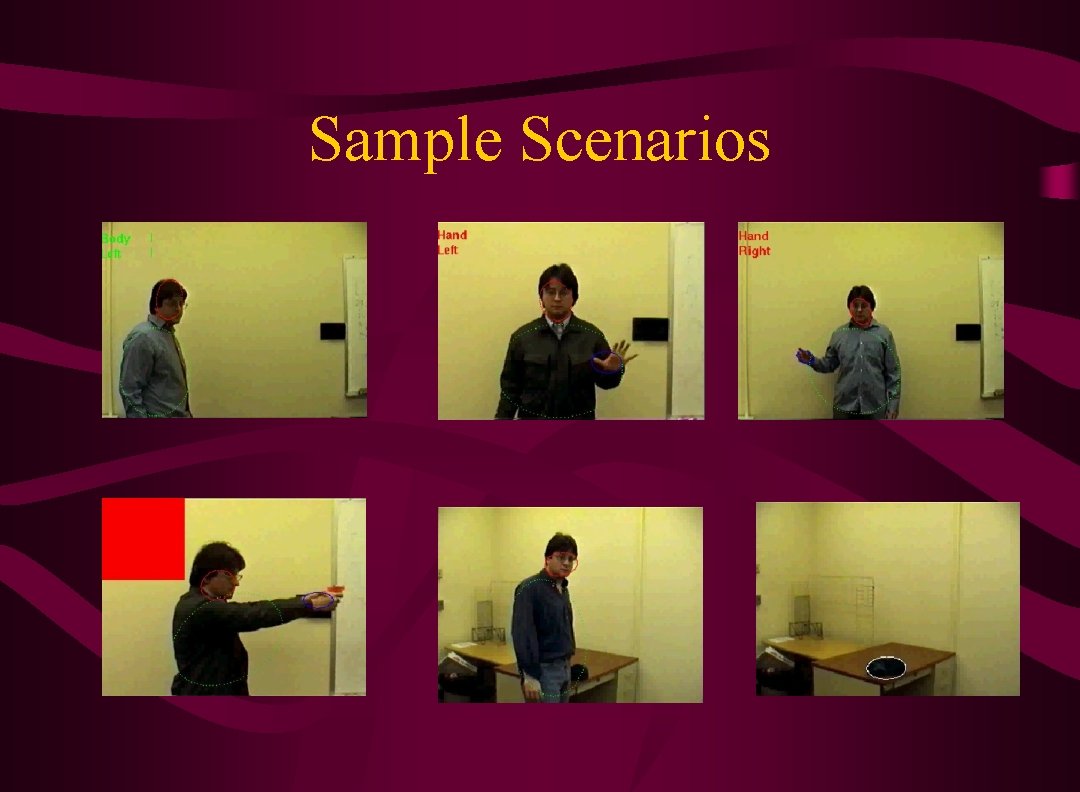
Sample Scenarios

Algorithms
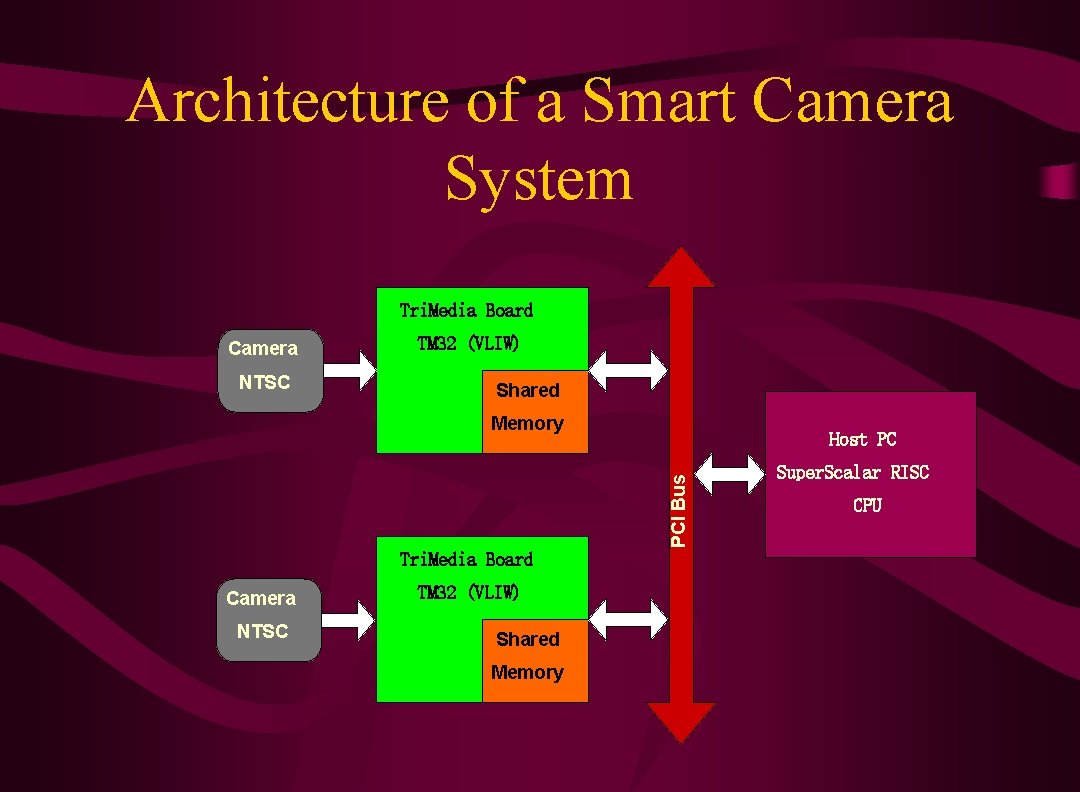
Architecture of a Smart Camera System Tri. Media Board Camera NTSC TM 32 (VLIW) Shared Memory PCI Bus Host PC Tri. Media Board Camera NTSC TM 32 (VLIW) Shared Memory Super. Scalar RISC CPU
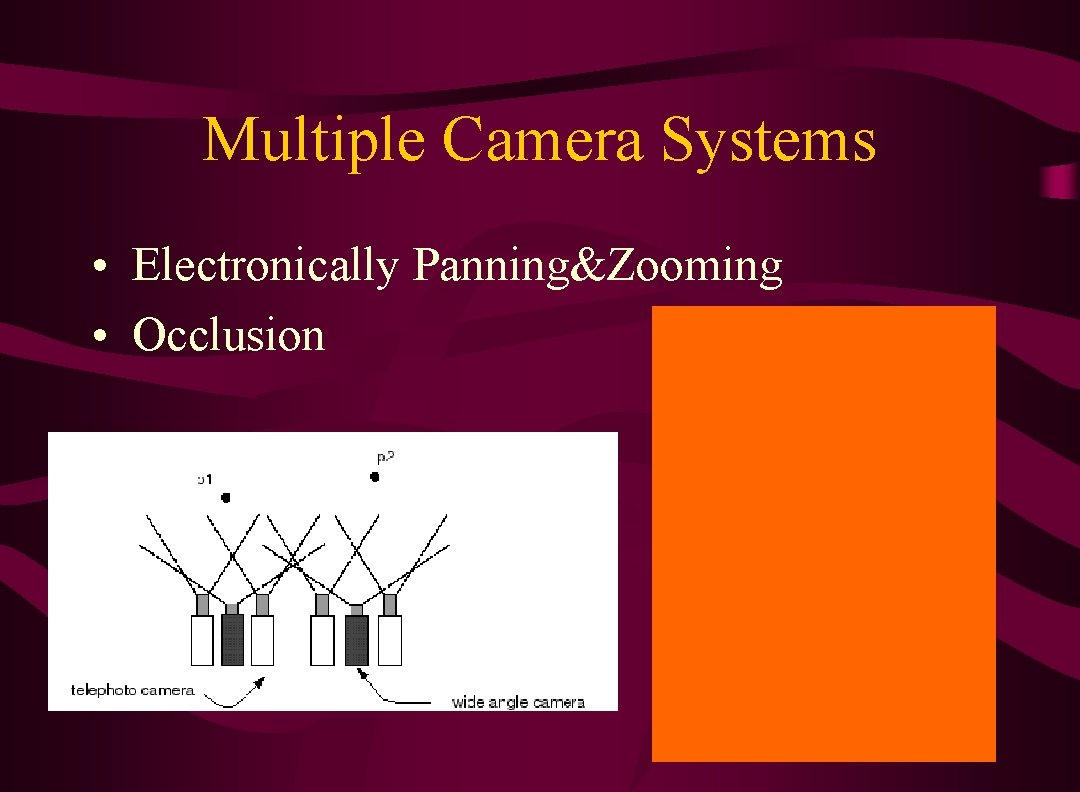
Multiple Camera Systems • Electronically Panning&Zooming • Occlusion
Centralized Processing • • Storage Cost Latency Communication Load Power
Centralized Processing vs. Distributed Processing • Raw Data vs. Abstract Representation – Network Load – Energy • Latency • Processing Power
Design Time Decisions and Runtime Decisions • Configuration – Processor – Special Functional Units – Hardware Architecture – Operating System • Efficiency • Flexibility
Distributed Video Middleware • The Concept of Layers • Trans-platform Development • Trans-platform Communication

Distributed Video Middleware
Distributed Video Middleware • Separate video processing algorithm and operating system • Algorithm researcher focus on video processing • Facilitate porting application to different systems
Conclusion and Future Work • Distributed smart camera systems have advantages over traditional centralized processing systems • Design time decisions and run-time decisions need to be combined to form an optimal solution • Distributed video middleware can facilitate research and application development
- Slides: 13