
Distributed Ledger Technology Blockchain to Transform Healthcare Is
Distributed Ledger Technology (Blockchain) to Transform Healthcare Is The Promise Real? J Kabyemela, MD, MSc, FRCOG EAH&S Conference, Dar es Salaam, Tanzania, March 2019
Distributed Ledger Technology (DLT) • A process of transacting and storing information on a decentralized, distributed ledger; information that is • reliable, • unchangeable, and • readily available to relevant individuals and entities anywhere in the world In other words… A blockchain is a shared, immutable record of peer-to-peer transactions built from linked transaction blocks and stored in a digital ledger The data is in a network of hundreds or thousands of computers (nodes) distributed around the world and, crucially, there is no central entity (server)
Deploying Blockchain in Healthcare Main areas • Health Records • Supply Chain • Research
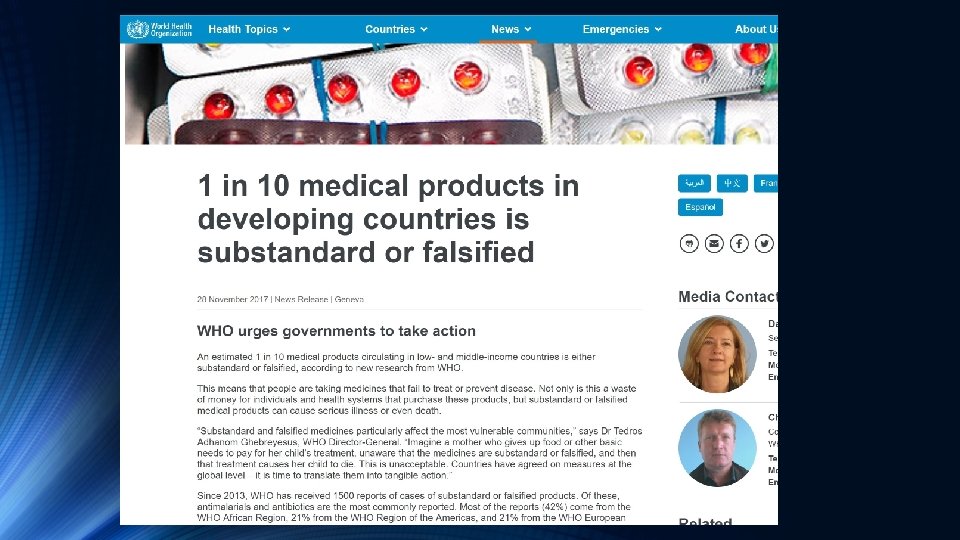
Supply chain in Healthcare Pharmaceutical Ensuring product’s authenticity and integrity is paramount Counterfeit and sub-standard products cause serious harm and thousands of deaths throughout the world The cost is estimated to be approx. $200 billion annually

Video clip
Supply chain • End-to-end traceability by all stakeholders • Ensuring an unalterable auditable records ledger • Mediledger Project currently piloted by Sanofi, Genentech and Pfizer • Blockchain tech combined with embedded sensors to track environmental conditions esp for temperaturesensitive pharmaceuticals during shipment • Data is immutable and permanently available
Health/Medical Records • Fragmentation of medical records is a world-wide problem • Wide adoption of electronic medical records especially over the last 3 decades • 1, 200 EMR systems in North America and Europe. Most of these cannot communicate with each other • One individual = multiple records held by different healthcare providers • In the developing world EMR initiatives have accelerated but records still largely paper-based. • For many esp in rural setting, no records at all
Health/Medical Records • Paper-based records in disparate locations are difficult to access, transfer or share • Even where EMRs are in operation, inter-operability is poor or non-existent • Duplication of tests = increased costs • Where tests unavailable, risk to the wellbeing of the patient • Distant consultations are difficult and often impractical due to inaccessibility of appropriate records
The EMR problem x Inter-operability
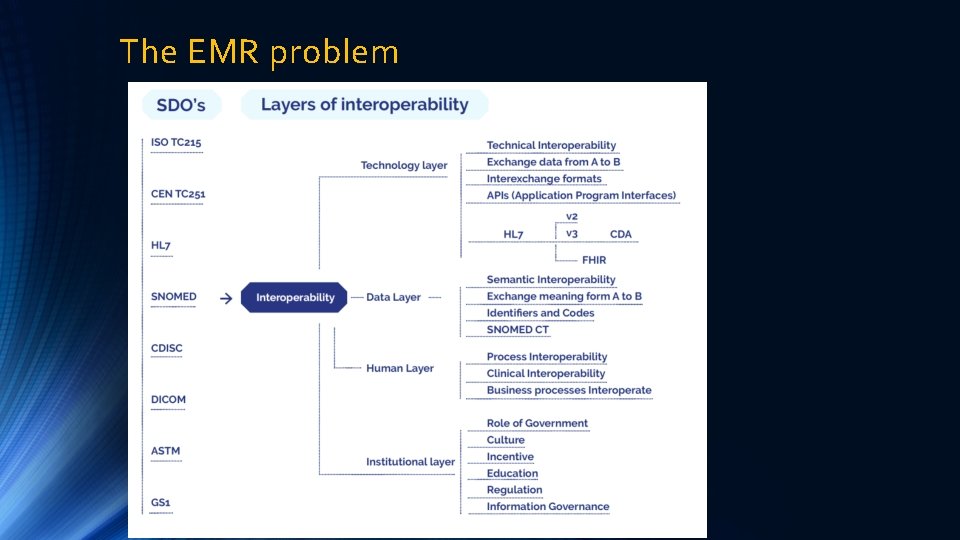
The EMR problem
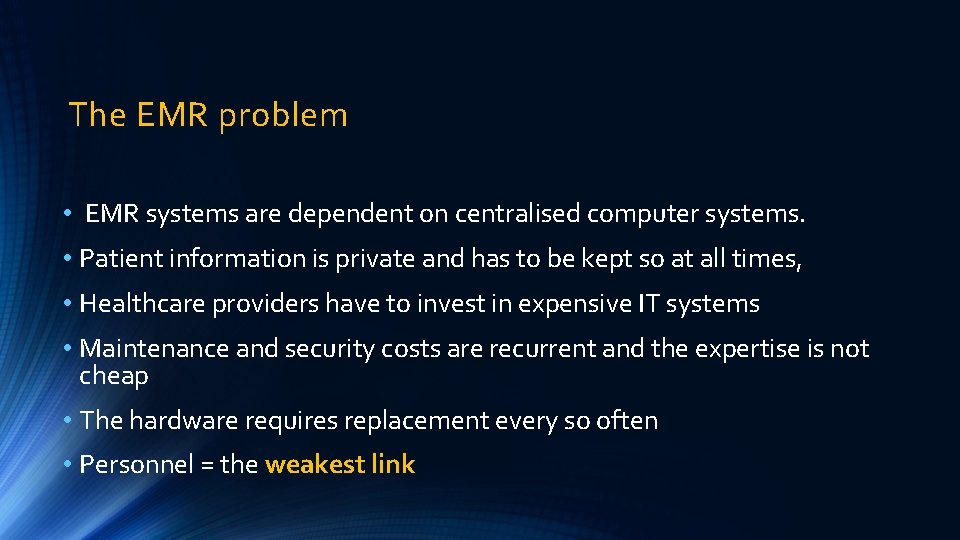
The EMR problem • EMR systems are dependent on centralised computer systems. • Patient information is private and has to be kept so at all times, • Healthcare providers have to invest in expensive IT systems • Maintenance and security costs are recurrent and the expertise is not cheap • The hardware requires replacement every so often • Personnel = the weakest link
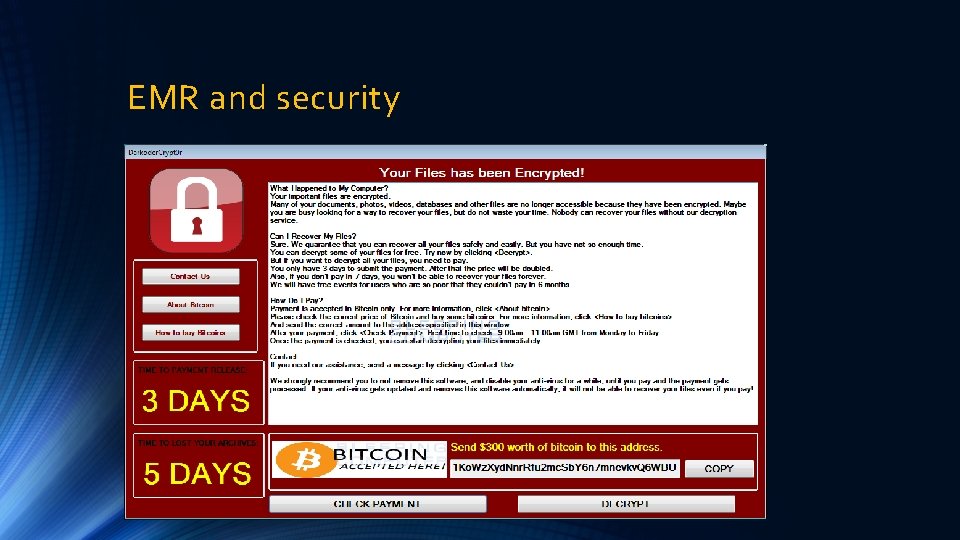
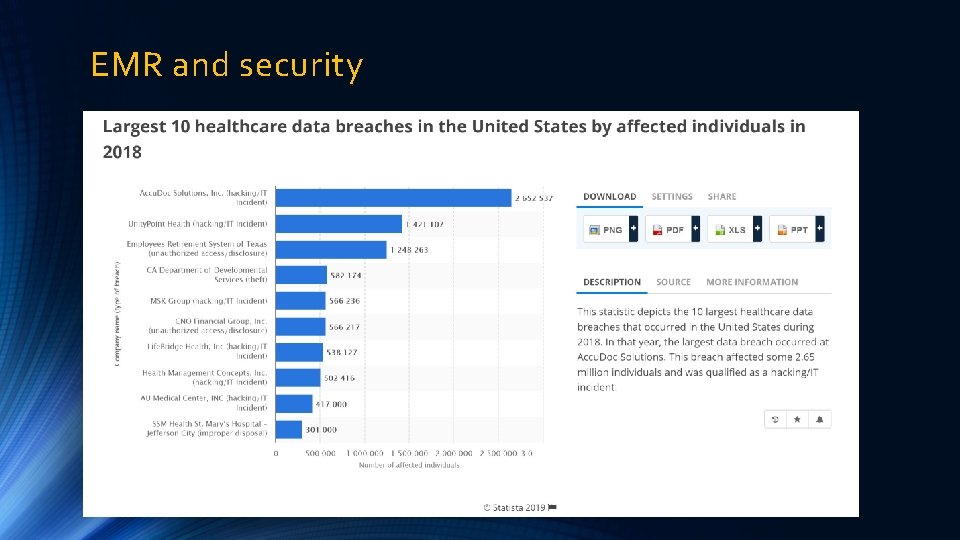
EMR and security • All modern EMR systems depend on these centralised computer systems • Vulnerable to hackers and increasingly targeted • Security breaches particularly devastating for individuals affected • Breaches cripplingly expensive for healthcare providers and/or insurers
EMR and security
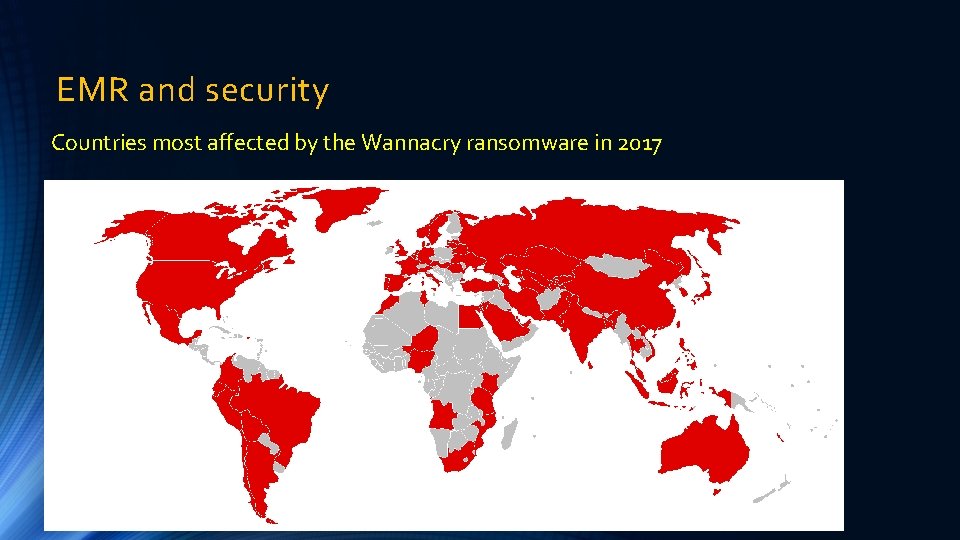
EMR and security Countries most affected by the Wannacry ransomware in 2017
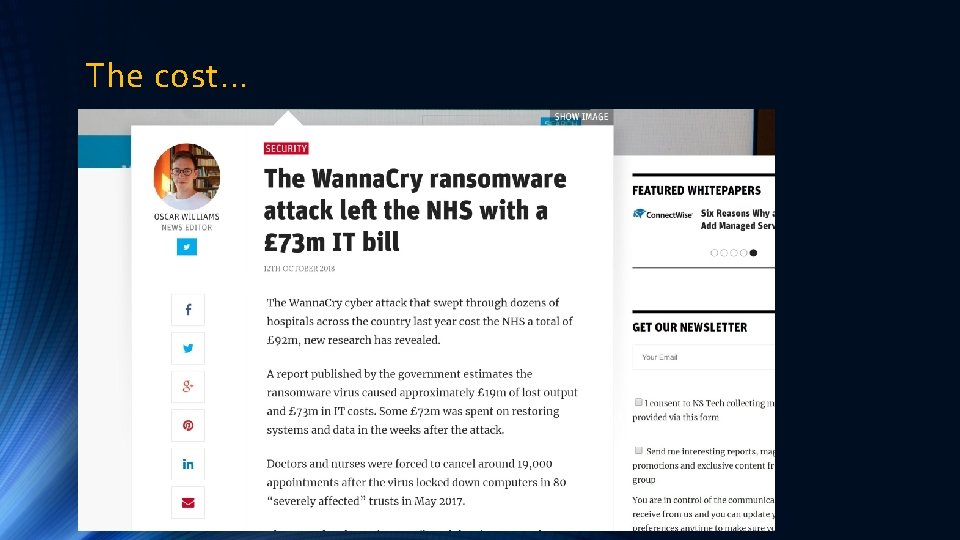
The cost…
EMR and security • Anthem®; 2 nd largest health insurer in the United States • In 2015, a security breach affected records of 80 million clients • 115 million breaches across the US that year alone • Damages paid: $6 billion
EMR and security
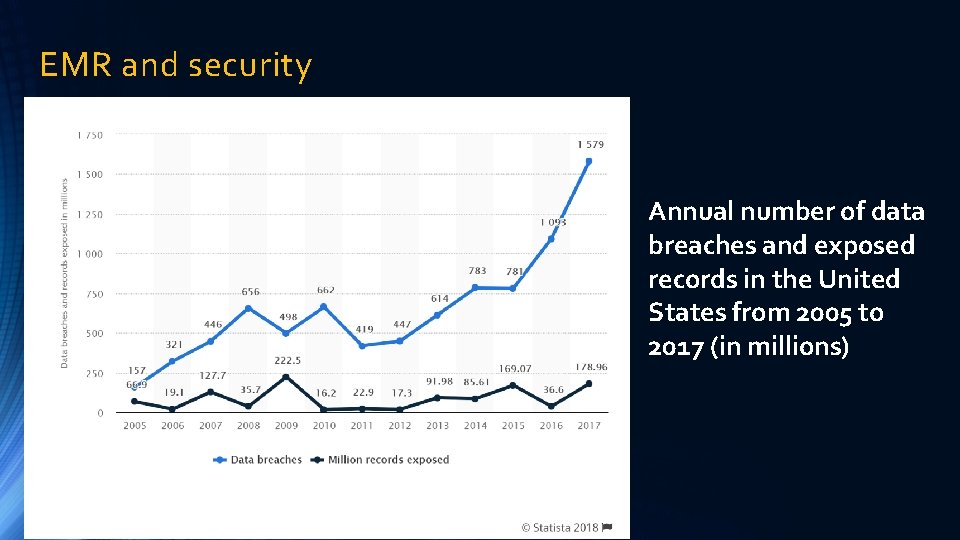
EMR and security Annual number of data breaches and exposed records in the United States from 2005 to 2017 (in millions)
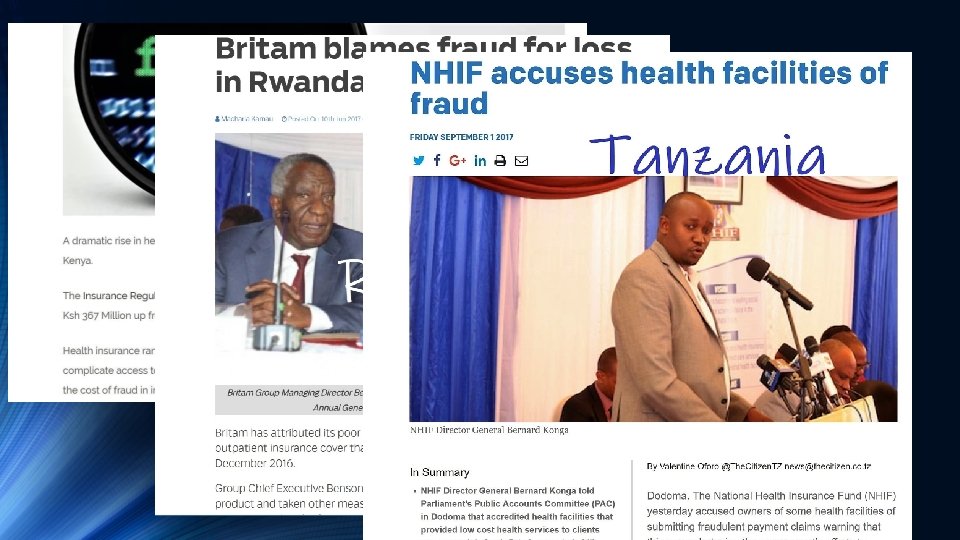
EMR and fraud • Falsification of medical information is a major problem and costs billions annually • Global problem • In the USA, this fraud responsible for up to 20% of all medical expenses • US health insurance fraud $68 billion annually; 3% of total annual healthcare expenditure (2010) • Globally, $260 billion or 6% of total annual health expenditure
EMR and fraud
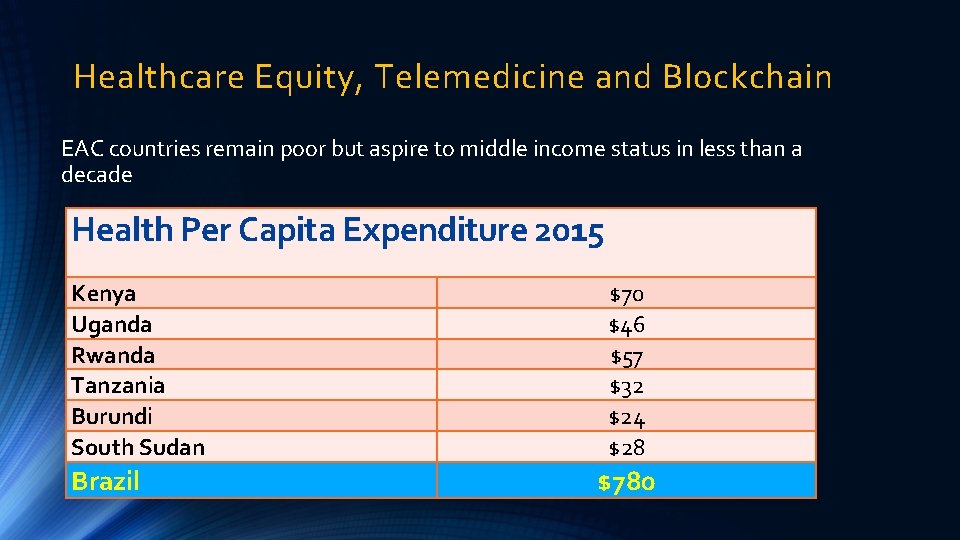
Healthcare Equity, Telemedicine and Blockchain EAC countries remain poor but aspire to middle income status in less than a decade Health Per Capita Expenditure 2015 Kenya Uganda Rwanda Tanzania Burundi South Sudan Brazil $70 $46 $57 $32 $24 $28 $780
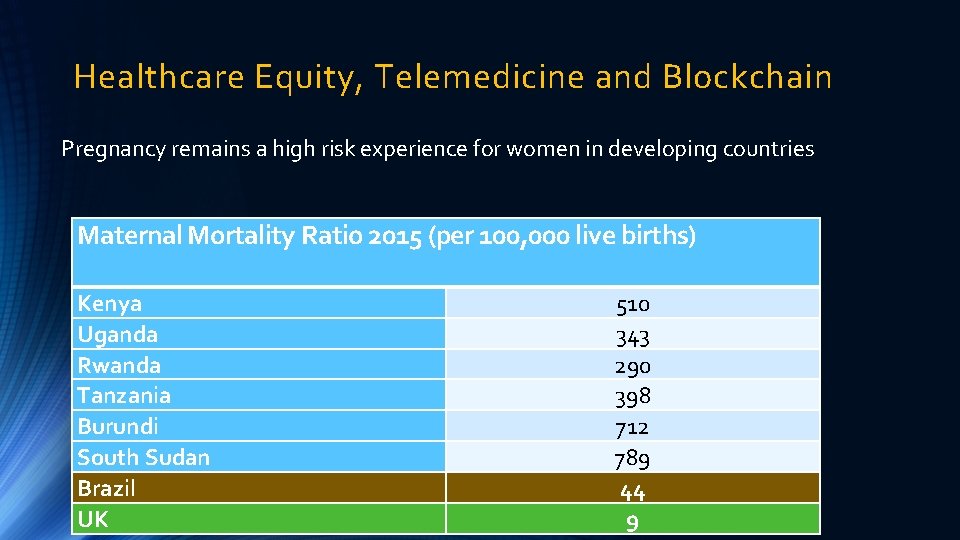
Healthcare Equity, Telemedicine and Blockchain Pregnancy remains a high risk experience for women in developing countries Maternal Mortality Ratio 2015 (per 100, 000 live births) Kenya Uganda Rwanda Tanzania Burundi South Sudan Brazil UK 510 343 290 398 712 789 44 9
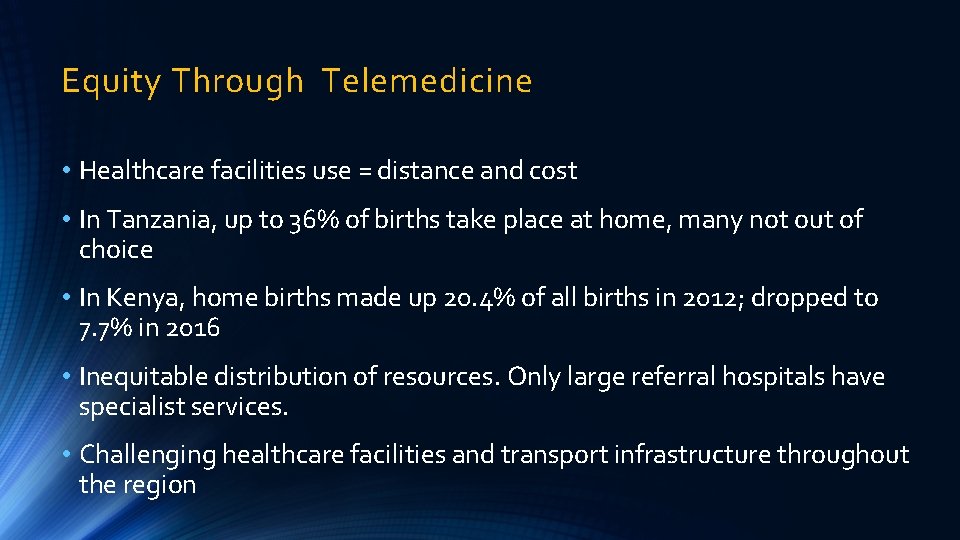
Equity Through Telemedicine • Healthcare facilities use = distance and cost • In Tanzania, up to 36% of births take place at home, many not out of choice • In Kenya, home births made up 20. 4% of all births in 2012; dropped to 7. 7% in 2016 • Inequitable distribution of resources. Only large referral hospitals have specialist services. • Challenging healthcare facilities and transport infrastructure throughout the region
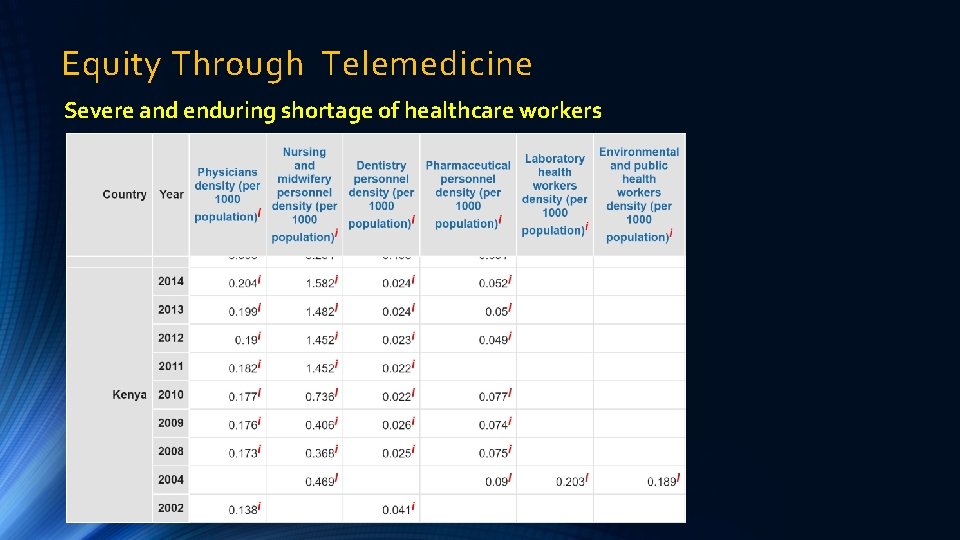
Equity Through Telemedicine Severe and enduring shortage of healthcare workers
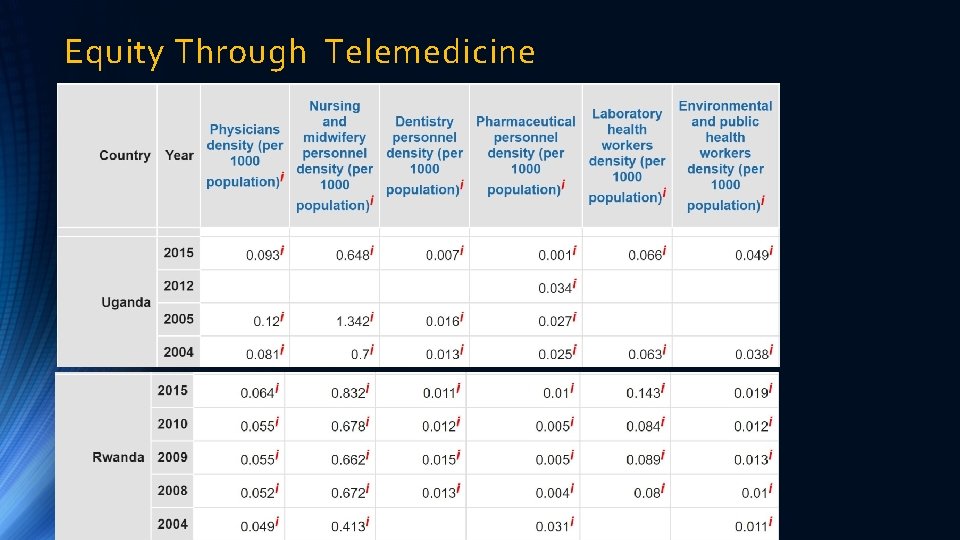
Equity Through Telemedicine
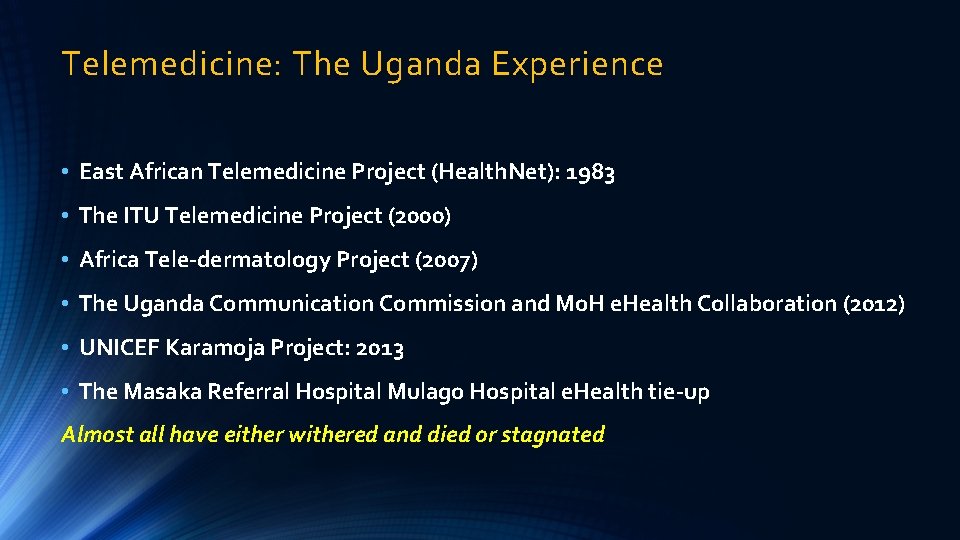
Telemedicine: The Uganda Experience • East African Telemedicine Project (Health. Net): 1983 • The ITU Telemedicine Project (2000) • Africa Tele-dermatology Project (2007) • The Uganda Communication Commission and Mo. H e. Health Collaboration (2012) • UNICEF Karamoja Project: 2013 • The Masaka Referral Hospital Mulago Hospital e. Health tie-up Almost all have either withered and died or stagnated
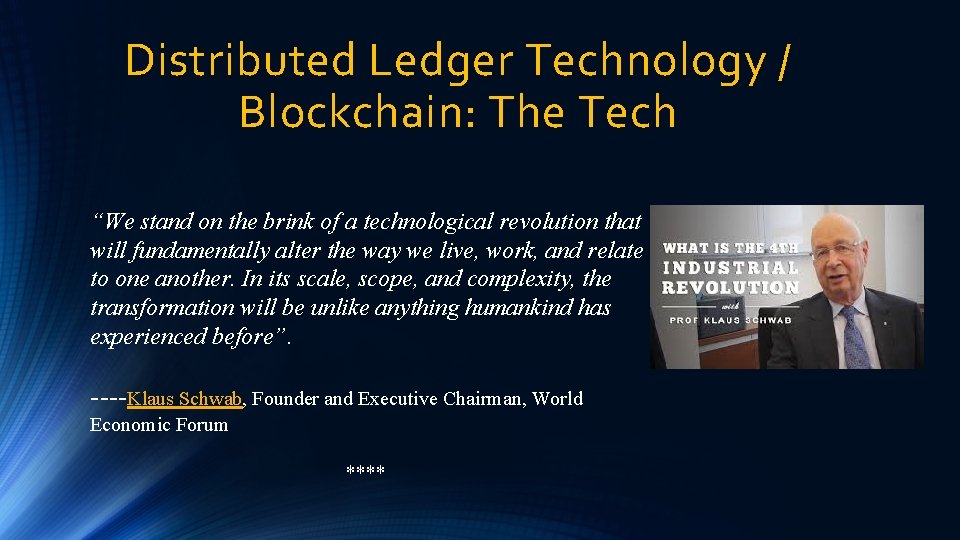
Distributed Ledger Technology / Blockchain: The Tech “We stand on the brink of a technological revolution that will fundamentally alter the way we live, work, and relate to one another. In its scale, scope, and complexity, the transformation will be unlike anything humankind has experienced before”. ----Klaus Schwab, Founder and Executive Chairman, World Economic Forum ****
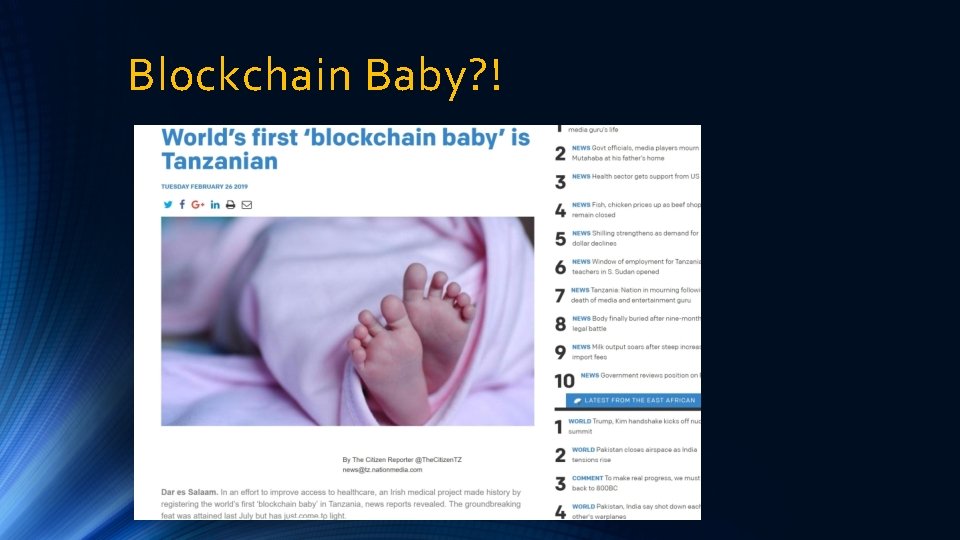
Blockchain Baby? !
Distributed Ledger Technology / Blockchain • A process of transacting and storing information on a decentralized, distributed ledger; information that is • reliable, • unchangeable, and • readily available to relevant individuals and entities anywhere in the world In other words… A blockchain is a shared, immutable record of peer-to-peer transactions built from linked transaction blocks and stored in a digital ledger The data is in a network of hundreds or thousands of computers (nodes) distributed around the world and, crucially, there is no central entity (server)
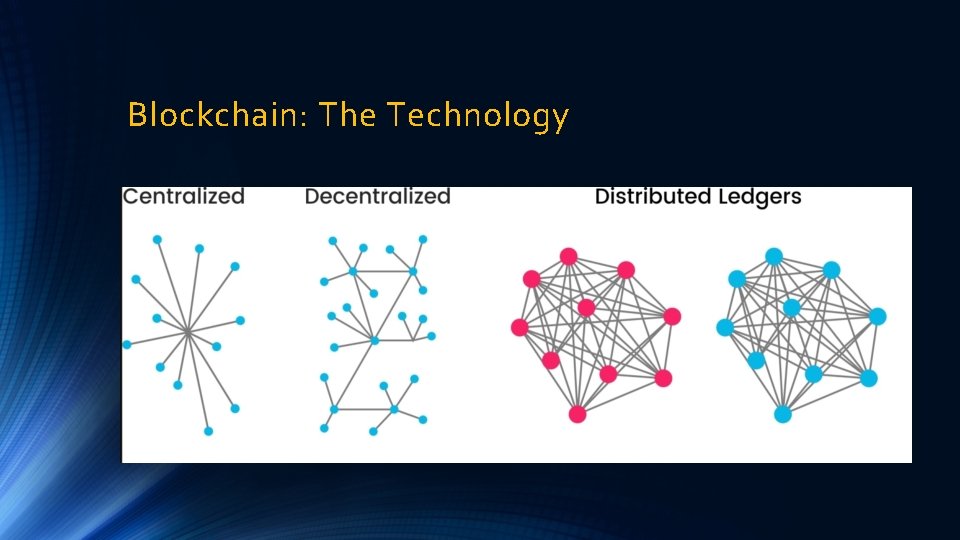
Blockchain: The Technology
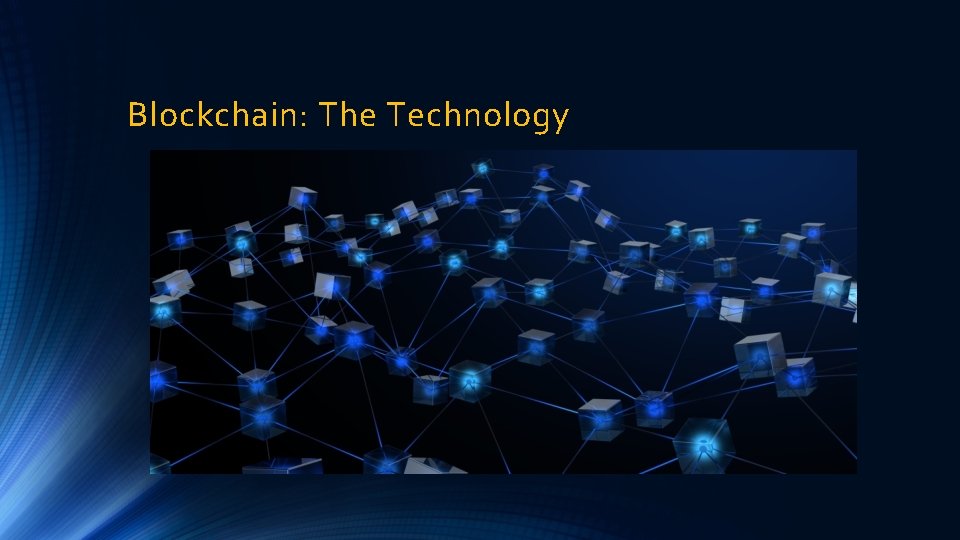
Blockchain: The Technology
Blockchain: The Technology 10 years old There has been three generations 1 st: Bitcoin 2 nd: Ethereum 3 rd: Cardano, EOS, Stellar etc.
DAG: The Technology IOTA is slightly a lot different Utilises the tangle rather than blockchain Based on Directed Acyclic Graph (DAG) DAG may have advantages particularly on scalability
The How… Information input: • Information is put in the system, • run through a secure algorithm and • output with a unique algorithm. That is the HASH
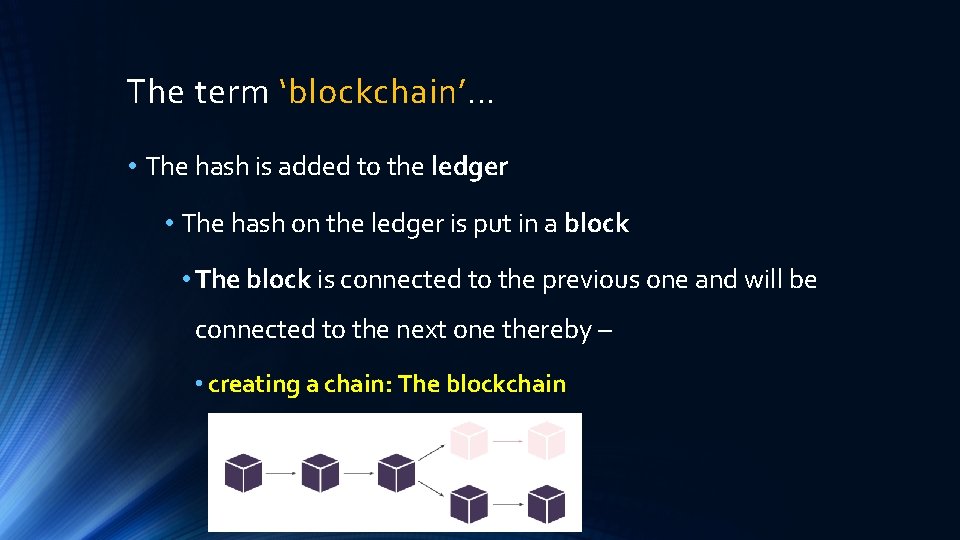
The term ‘blockchain’… • The hash is added to the ledger • The hash on the ledger is put in a block • The block is connected to the previous one and will be connected to the next one thereby – • creating a chain: The blockchain
The Technology Security: Transactions of any kind (data, financial etc. ) are gathered in blocks which are secured on the chain using cryptography i. e. designed to be tamper-proof or, at the very least, extremely tamper-resistant
The Technology Unlike the Internet… …underpinned by TCP/IP technology where intermediaries are integral in the transaction or validation process With blockchain, the P 2 P decentralised network has trust encoded in its protocol, does not rely on any 3 rd party or validation = Trustless.
The Technology Advantages • Much better transparency • Data Integrity • Traceability precision • Enhanced privacy • Reduced cost • Enhanced speed and efficiency
Blockchain deployment • Financial and banking industry – for transactions and cyber-security • Public sector: Estonia: Judicial, legislative, transport, security and NHS. Other countries: Dubai and Georgia – government data and records • Io. T decentralised networks
Blockchain and Healthcare • The US has the highest per capita healthcare expenditure in the developed world despite absence of Universal Healthcare Coverage (UHC) • Most developed countries have some form of UHC • Common challenges include exorbitant administrative, operational and management costs
Blockchain-based EMR applications • A number of Distributed Ledger Technology (blockchain) platforms already available that are fit for e. Health /EMR purposes • Patient retaining control of the information and the sole ability to grant access, fully or partially, to healthcare professionals and/or others when the need arises • Any information entered is unalterable and permanent. It can be updated but cannot be deleted • With the individual’s consent (or from one with Po. A), healthcare professionals or others can access the records. • Details of the access automatically recorded including the identity of the person accessing, the date and time, location, and duration
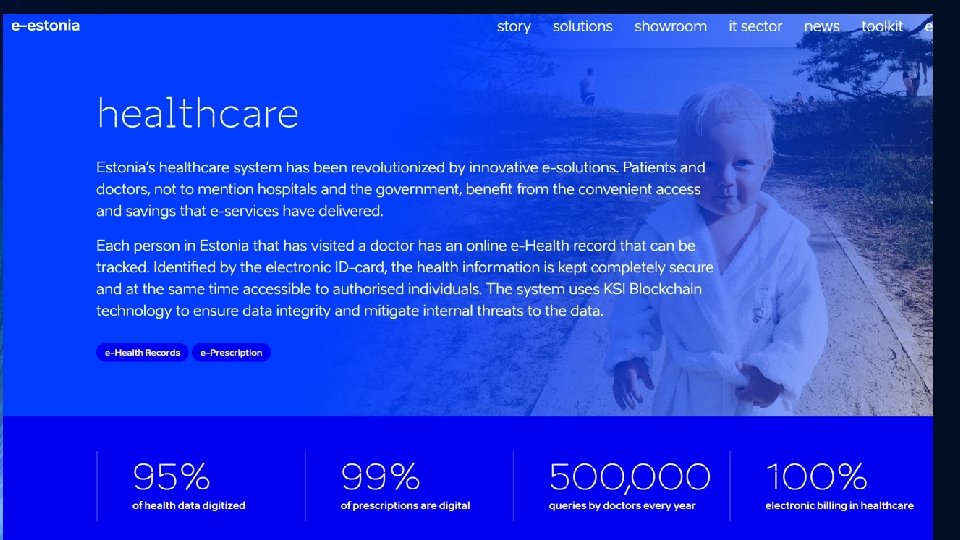
The Estonia experience • Estonia is the first country in the world to deploy blockchain technology to secure health records for each of its inhabitants • Runs a national health service providing universal healthcare to its citizens and residents financed through general taxation • The Estonia e. Health Foundation launched in 2005 runs the ENHIS whose projects include EHR, Digital Registration, Digital Images, and Digital Prescription • Deployed Guardtime’s Keyless Signature Infrastructure (KSI) blockchain technology to secure health records in 2007 • KSI uses hash-function cryptography providing data authentication without reliance on centralised trust authorities
The Estonia experience Access to one’s health records is through the e. Health Patient Portal using the National ID card. Health Records that can be accessed by the individual consists of: • Illness data from healthcare system • Self-monitoring data • Wellness data from third parties • Data from social system • Screening remainders • Decision support • Self-care • Virtual health check
• Blockchain medical records applications are already being launched across the world
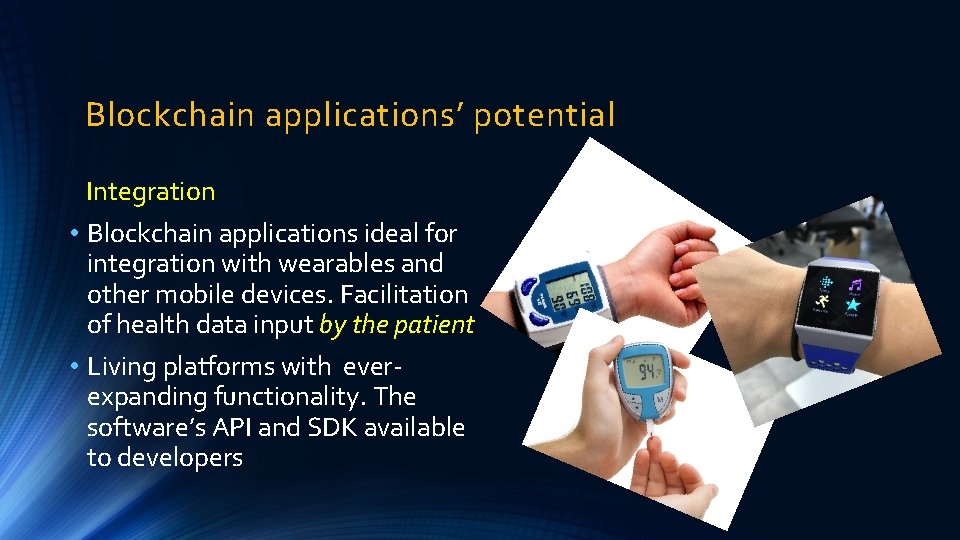
Blockchain applications’ potential Integration • Blockchain applications ideal for integration with wearables and other mobile devices. Facilitation of health data input by the patient • Living platforms with everexpanding functionality. The software’s API and SDK available to developers
DLT/Blockchain and. Telemedicine • At the close of 2017, there were 135 live mobile money services found in 39 sub-Saharan countries with 122 million active accounts. • In Tanzania, as of early 2018, there were 23 M regular internet users (40% of the population) • All 169 districts in Tanzania are connected to the broadband network • Smartphone adoption to reach 50% in sub-Saharan Africa in 2020 • Increased network competition and cheaper smartphones driving transition to mobile broadband
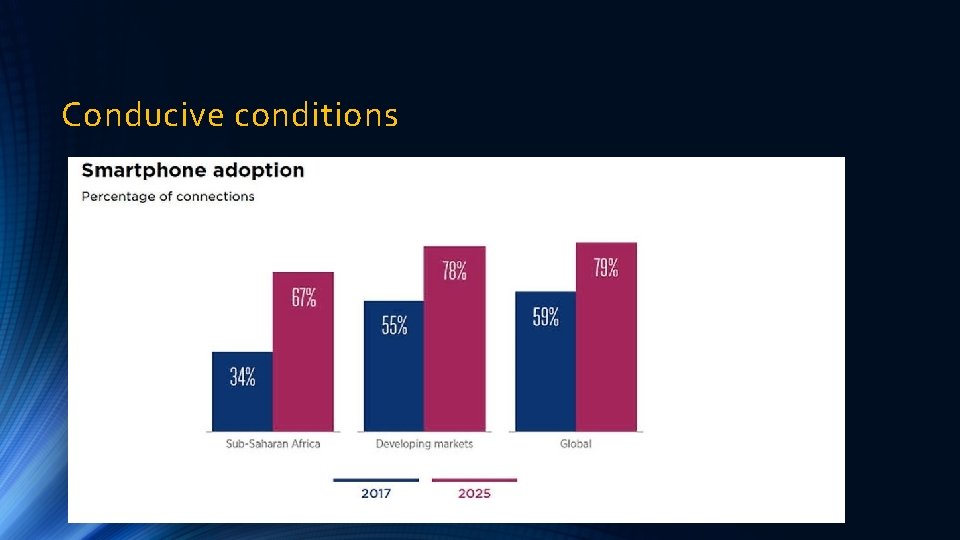
Conducive conditions
Blockchain and Smart Contracts • The blockchain smart contract functionality capable of effectively curbing fraud • A smart contract built on the single ledger shared by all concerned parties means there is transparency and the accuracy is not in dispute • Automation is based on the premise of consensus among all parties on the validity of transactions recorded on the blockchain. • The shared ledger is ‘append only’. The patient, the healthcare provider and the insurer have the same version of facts in the right chronology.
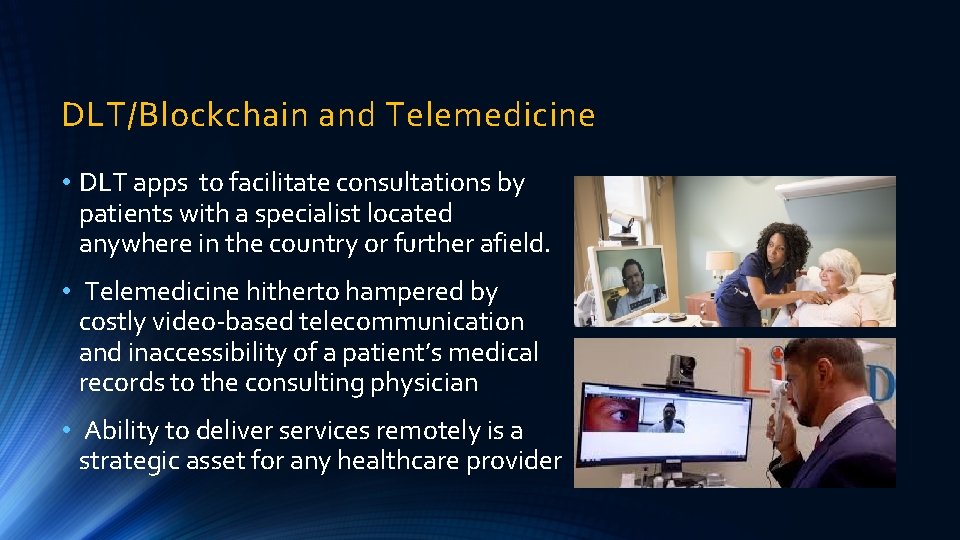
DLT/Blockchain and Telemedicine • DLT apps to facilitate consultations by patients with a specialist located anywhere in the country or further afield. • Telemedicine hitherto hampered by costly video-based telecommunication and inaccessibility of a patient’s medical records to the consulting physician • Ability to deliver services remotely is a strategic asset for any healthcare provider
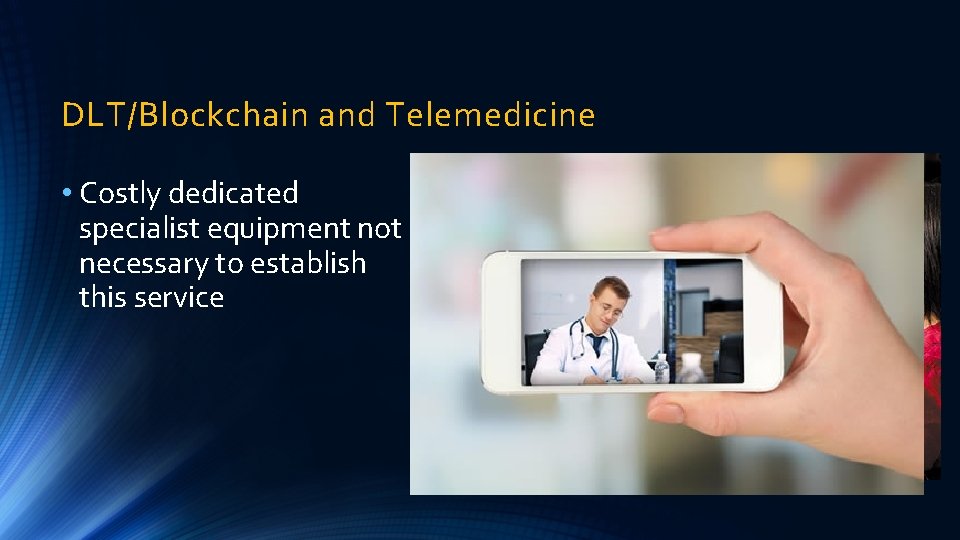
DLT/Blockchain and Telemedicine • Costly dedicated specialist equipment not necessary to establish this service

…to sum up
Benefits: healthcare provider • Instant access of patients’ complete medical records facilitating enhanced care quality • Reduced need for expensive servers and recurrent data security expenses translating into markedly reduced IT capital and maintenance costs • Enhanced quality and reliability of care quality data • Reduced medical errors and delayed intervention • Transformed engagement with partners and enhanced liquidity through automated settlements via smart contracts • Ability to expand reach through telemedicine services
Benefits: Government/Health authorities • Enhanced capacity for public health planning via reliable up to date comprehensive data • Enhanced capability for surveillance of drugs safety and effectiveness • Improved ability to monitor quality of care across service providers • Enhanced ability for more accurate modelling for risk and resource planning and allocation • Ability to reaffirm commitment to accuracy, timeliness, and shared-decision making as achievable care quality standards
Benefits: researchers/developers • Seamless access to real-time anonymised patient health data will save time, money and effort and greatly enhance research efficiency • Increased interoperability with similar d. Apps facilitating merging of data • Improved ability to develop and exploit neural networks • Improved ability to develop and deploy health monitoring Applications and wearables • Significantly improved opportunities for innovation due to reliable and comprehensive data that is instant, dynamic, and up to date
Benefits: patient • Retaining control of own medical records and guaranteed privacy • Enhanced security of own medical records • Portability hence instant access to own medical records whenever and wherever required • Enhanced ability to consult doctors/healthcare personnel of own choice • Ability to access telemedicine services, occasionally eliminating need for unnecessary / inconvenient and/or expensive travel • Potential to document own health information on official records • Potential for reduction of healthcare costs by eliminating need for unnecessary repeat tests

Video clip
Thank you
- Slides: 58