
Distributed IDS The implementation of a Distributed Intrusion
Distributed IDS • The implementation of a Distributed Intrusion Detection System over a medium scale open network where the focus is availability of services. • Darian Jenik - Network Management Queensland University of Technology
What IDS is: • IDS is a combination of methods for determining the presence and location of unauthorized activity on the computer network. • IDS is the detection and reporting of security vulnerabilities. • IDS is the logging and detection of internal users “misdemeanors” to protect liability
What IDS is not: • IDS in NOT security – • For security you need: • Good security policy that is both documented and adhered to. • Good security practice by system administrators. • Hardened perimeter firewalls and “DMZ” firewalls. • IDS is not a product. • IDS is not a sensor.
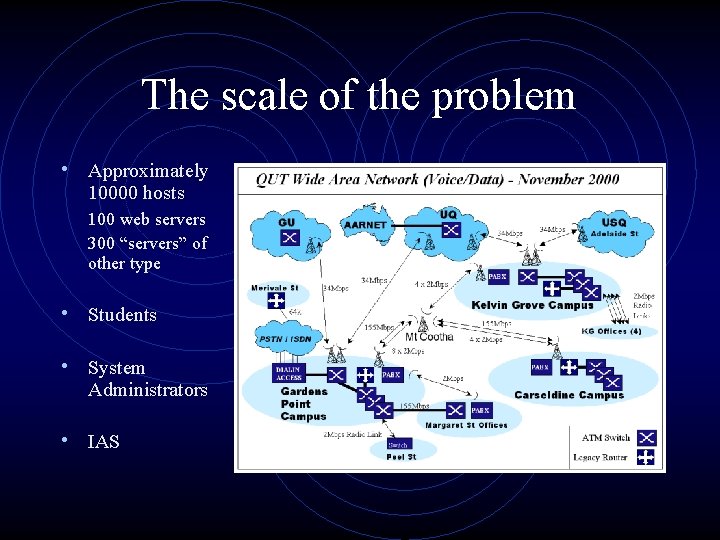
The scale of the problem • Approximately 10000 hosts 100 web servers 300 “servers” of other type • Students • System Administrators • IAS
IDS should perform the following tasks • Detect known violations to host integrity by passively • • • watching network traffic. Respond to attempted violations by blocking external IP addresses. Respond to probes from outside by blocking external IP addresses. Find and report usage inconsistencies that indicate account/quota theft. Detect violations by monitoring information (web pages etc…. ) Help log and establish traffic/host usage patterns for future reference and comparison
Detect known violations to host integrity by passively watching network traffic. • Just one type of sensor? • IDS sensors: • Gateways – Traditionally • Put IDS sensors on hosts to look after specific services running on the hosts and detect port scans.
Respond to attempted violations by blocking external IP addresses. • Make sure the IDS is able to respond and send commands to firewalls and/or hosts. • IDS sends RST packets to both ends of the connection. • IDS is able to insert rules into border firewall.
Respond to probes from outside by blocking external IP addresses. • Attempts to open ports on servers that are not enabled. (Collate multiple servers to report to single location. ) • Make “flypaper” IP addresses that have never been used for anything that serve to pickup slow probes.
Find and report usage inconsistencies that indicate account/quota theft. • Determine that the accounts authorized at the locations (dial in/pc) are the same accounts using other services (mail/proxy/other logins). • Failed attempts to login to services that are not successful. • Accounts being used simultaneously at various locations.
Detect violations by monitoring information. (web pages etc…. ) • Graffiti, DNS spoofing, wares repositories. • Ensure that the monitoring is external as well as internal. • http: //forced. attrition. org/mirror/attrition/
Help log and establish traffic usage patterns for future reference and comparison. • Central syslog collecting and analysis. • Tripwire • Nmap database • Performance and Usage analysis.
• Open Source • Just about any platform(Including windows) • Many plugins and external modules. • Frequent rules updates.
Snort Plugins • Databases • • my. SQL Oracle Postgresql unix. ODBC Spade (Statistical Packet Anomaly Detection engine) Flex. Resp (Session response/closing) XML output TCP streams (stream single-byte reassembly)
Snort Add-ons • • Acid(Analysis Console for Intrusion Detection) - PHP Guardian – IPCHAINS rules modifier. (Girr – remover) Snort. Snarf - HTML Snortlog – syslog “Ruleset retreive” – automatic rules updater. Snorticus – central multi-sensor manager – shell Log. Snorter – Syslog > snort SQL database information adder. • + a few win 32 bits and pieces.
Acid + Snort • • Acid is a Cert project. Pretty simple PHP 3 to my. SQL Quite customizable. Simple GUI for casual browsing.
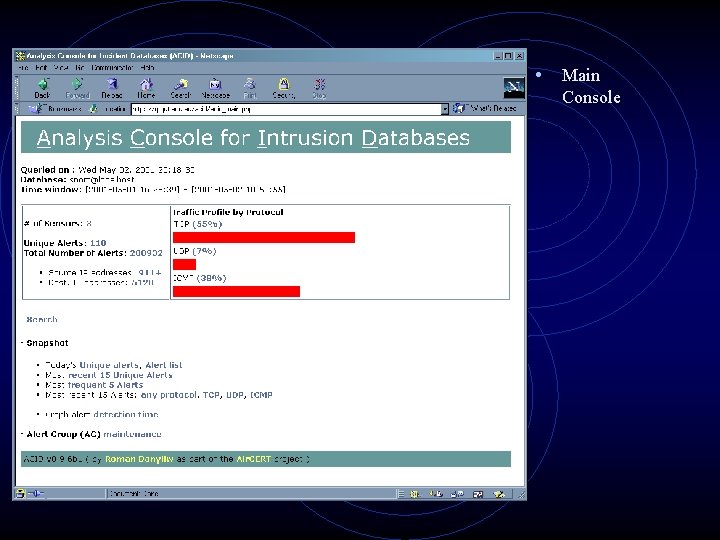
• Main Console
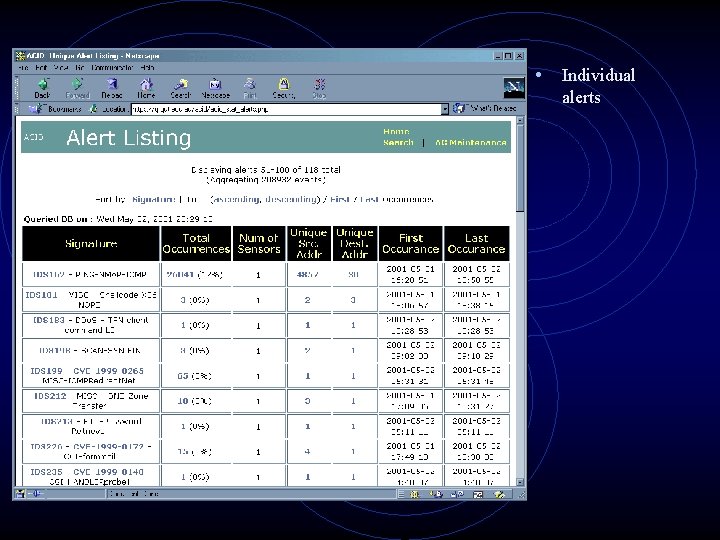
• Individual alerts
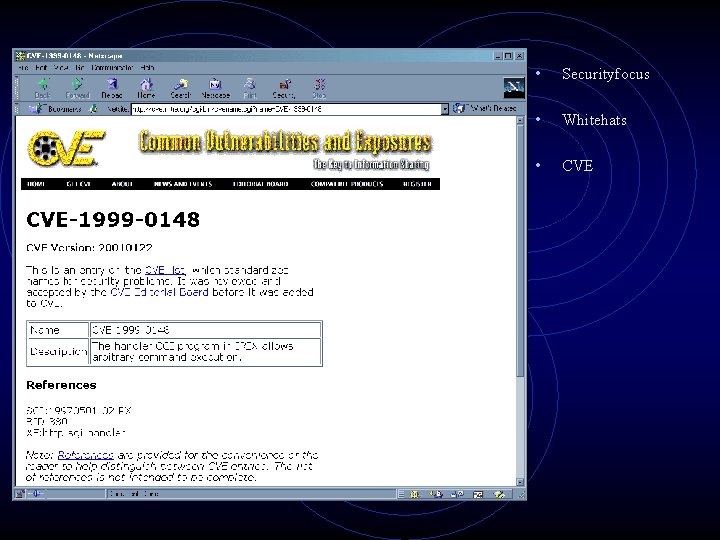
• Securityfocus • Whitehats • CVE
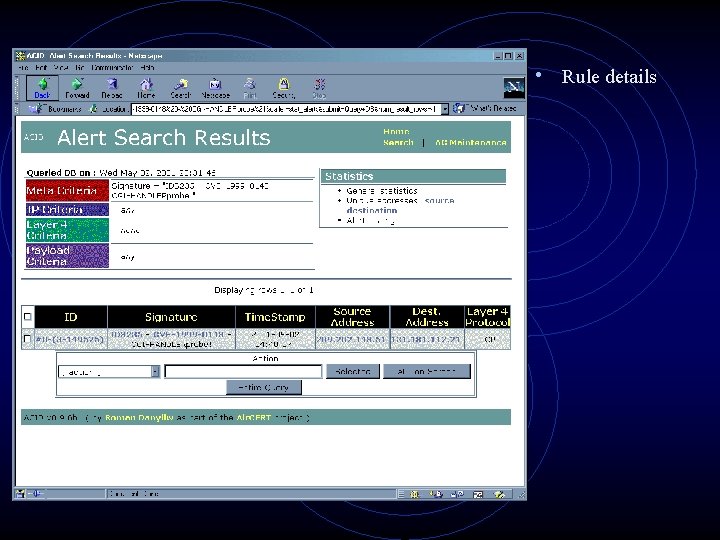
• Rule details
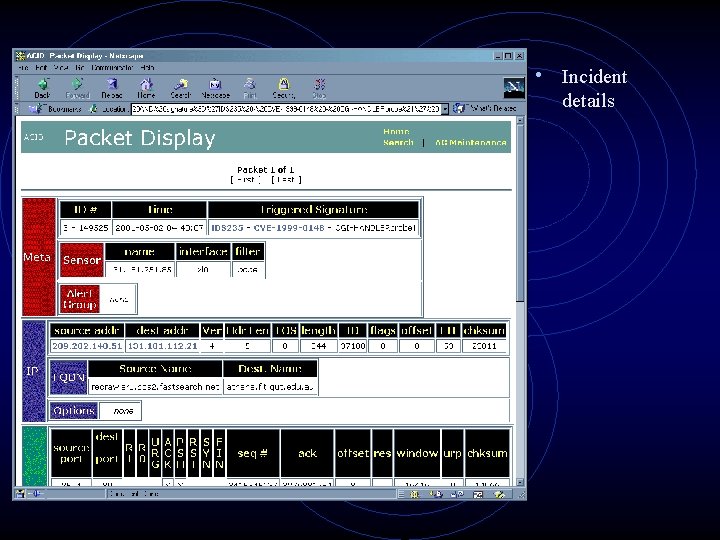
• Incident details
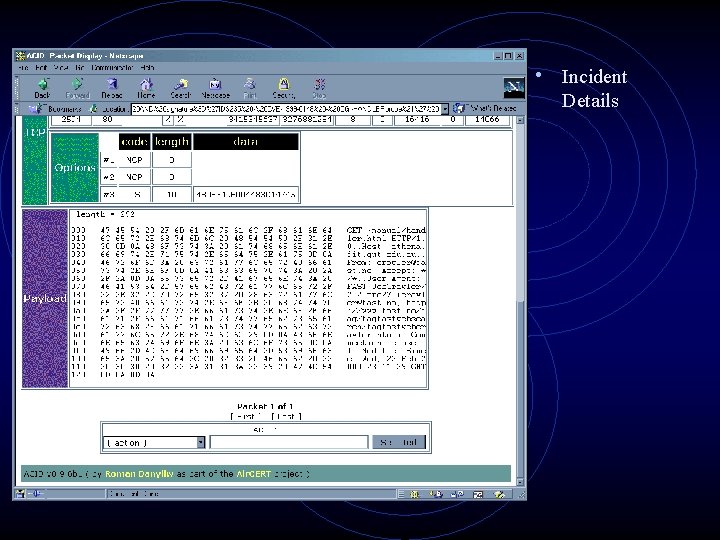
• Incident Details

Questions ?
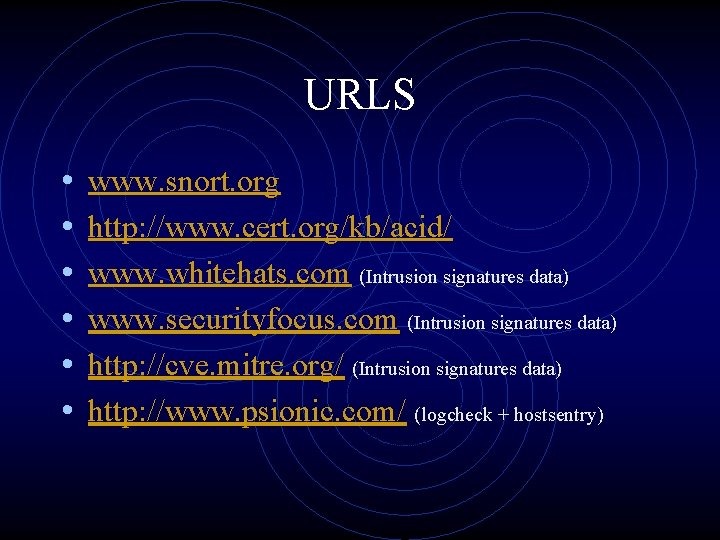
URLS • • • www. snort. org http: //www. cert. org/kb/acid/ www. whitehats. com (Intrusion signatures data) www. securityfocus. com (Intrusion signatures data) http: //cve. mitre. org/ (Intrusion signatures data) http: //www. psionic. com/ (logcheck + hostsentry)
- Slides: 23