
Distributed Control Applications Within Sensor Networks Bruno Sinopoli
Distributed Control Applications Within Sensor Networks Bruno Sinopoli, Sourtney Sharp, Luca Schenato, Shawn Schaffery, S. Shankar Sastry Robotics and Intelligent Machines Laboratory / UC Berkeley Proceedings of the IEEE, VOL. 91, No. 8, August 2003 Seo, Dongmahn
Contents l Introduction l PEGs (pursuit-evasion game) l Implementation l Methodology l Conclusion December 1, 2005 2
Introduction l l Embedded computers Sensor Networks l l Crossbow, Millennial, Sensoria, Smart Dust various fields of research l l l research community l l extensive experimentation of structural response to earthquakes habitat monitoring intelligent transportation systems home and building automation military applications time services, localization services, routing services, tracking services system design and implementations l l longevity, self configuration, self upgrade, adaptation to changing environmental conditions control applications l December 1, 2005 location determination, time synchronization, reliable communication, power consumption management, cooperation and coordination, and security 3
l The goal of our research to design robust controllers for distributed systems l evaluation on a distributed control application testbed l a pursuit-evasion game (PEG) application l l research l problems tracking, control design, security, robustness l multiple-vehicle l distinguish pursuers from evaders l dynamic l tracking routing structure to deliver information to pursuers in minimal time l security features l graceful performance degradation l December 1, 2005 SN can fail 4
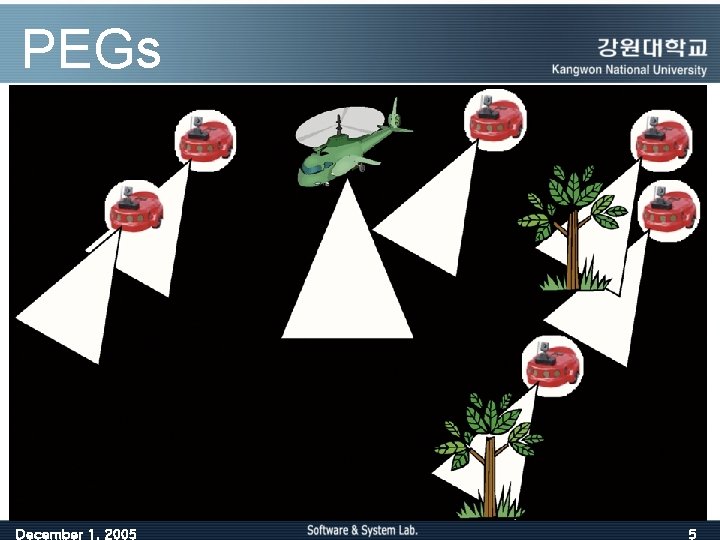
PEGs December 1, 2005 5
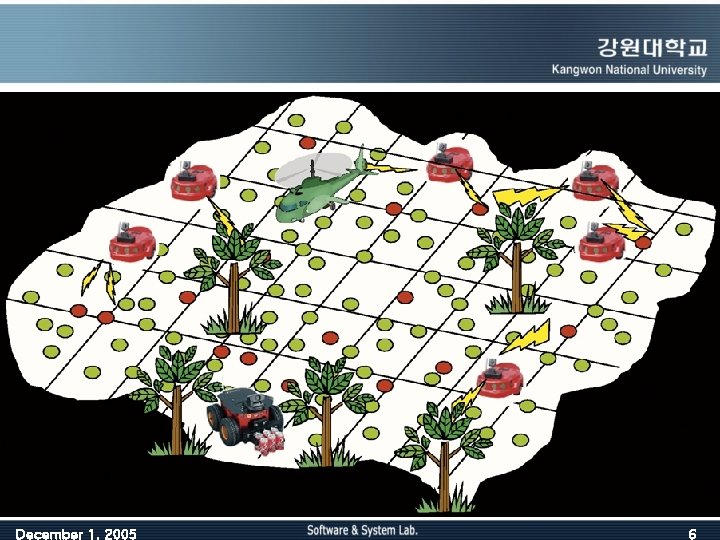
December 1, 2005 6
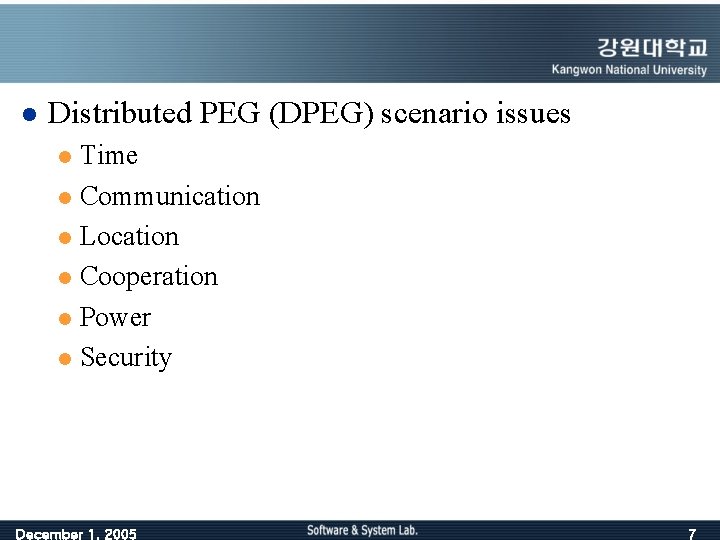
l Distributed PEG (DPEG) scenario issues Time l Communication l Location l Cooperation l Power l Security l December 1, 2005 7
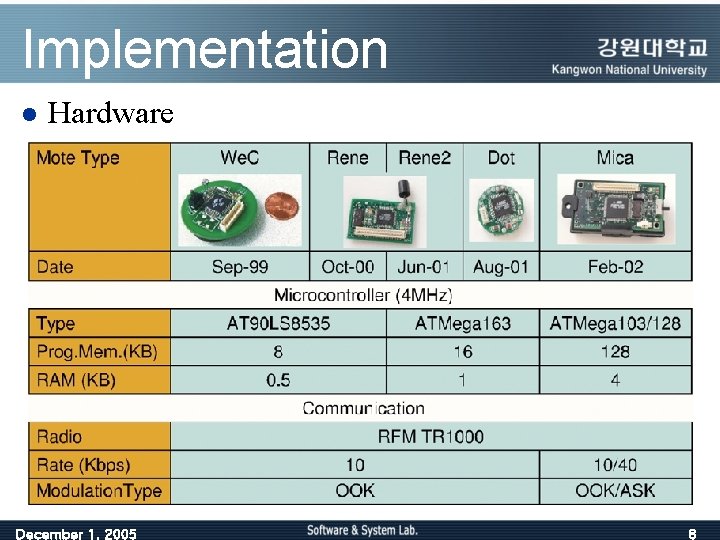
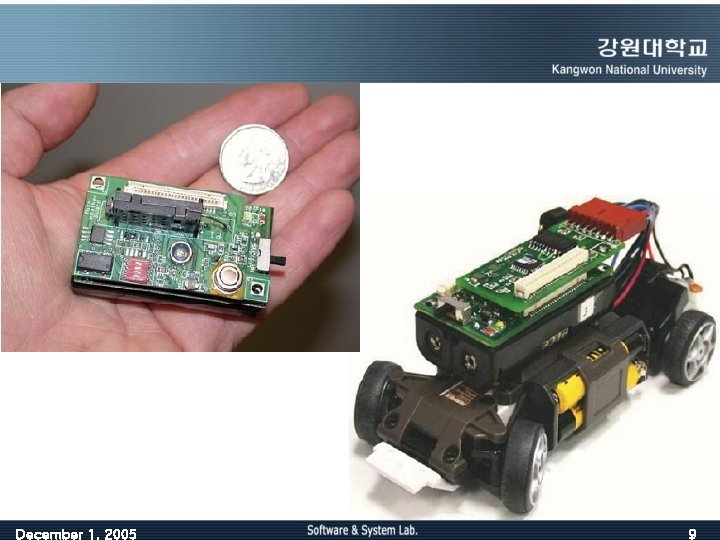
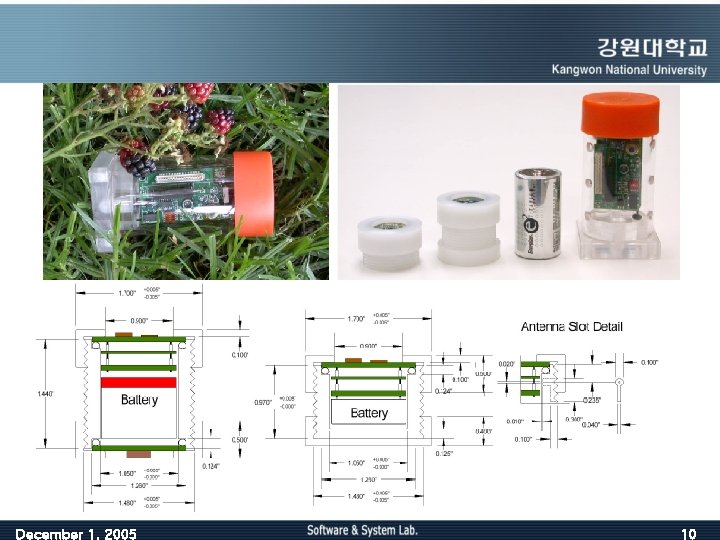
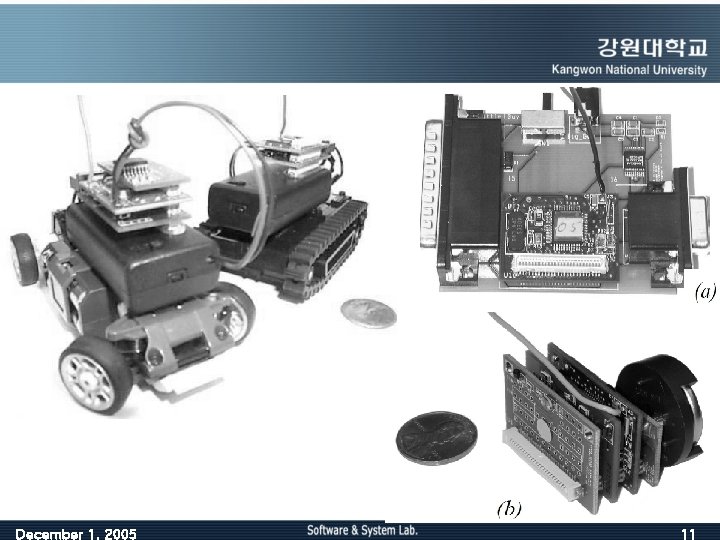
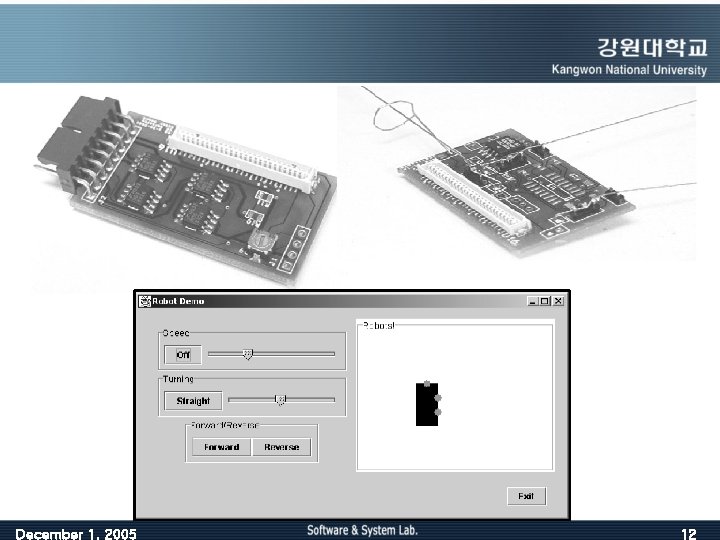
Implementation l Hardware December 1, 2005 8
December 1, 2005 9
December 1, 2005 10
December 1, 2005 11
December 1, 2005 12
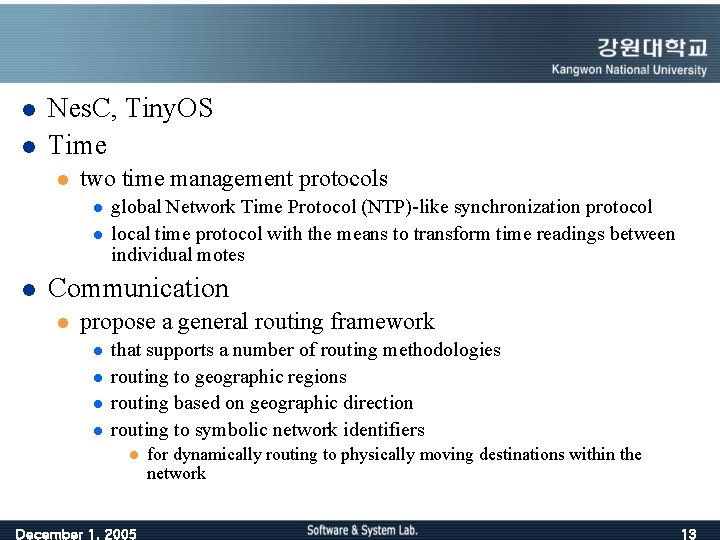
l l Nes. C, Tiny. OS Time l two time management protocols l l l global Network Time Protocol (NTP)-like synchronization protocol local time protocol with the means to transform time readings between individual motes Communication l propose a general routing framework l l that supports a number of routing methodologies routing to geographic regions routing based on geographic direction routing to symbolic network identifiers l December 1, 2005 for dynamically routing to physically moving destinations within the network 13
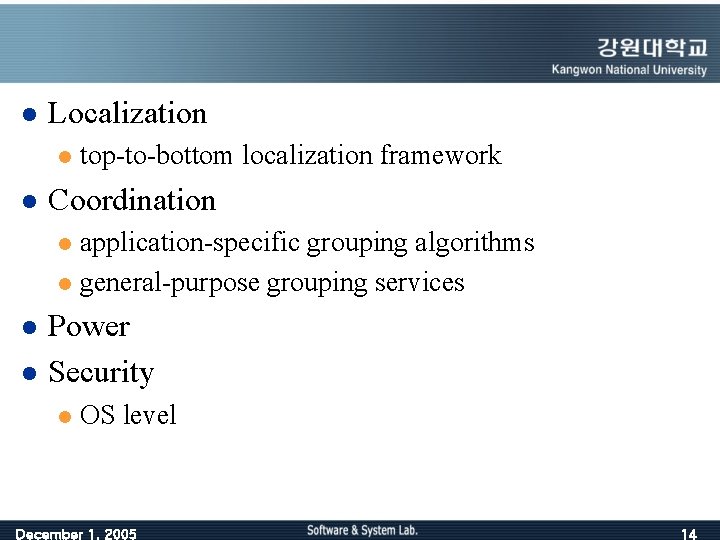
l Localization l l top-to-bottom localization framework Coordination application-specific grouping algorithms l general-purpose grouping services l l l Power Security l OS level December 1, 2005 14
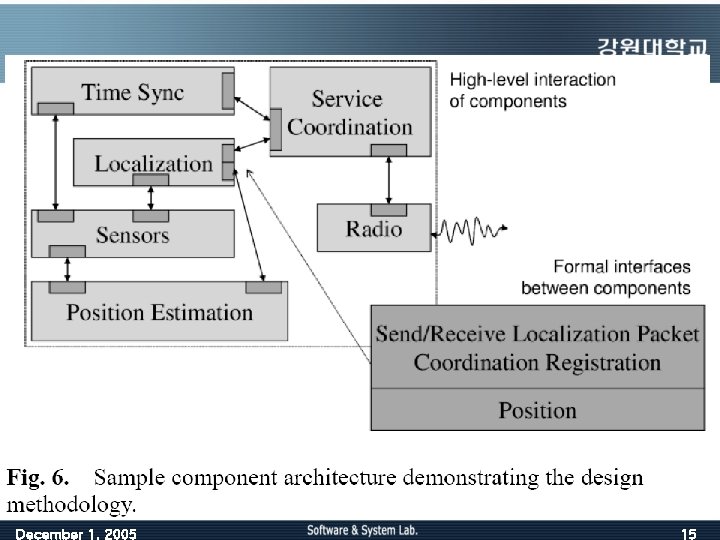
December 1, 2005 15
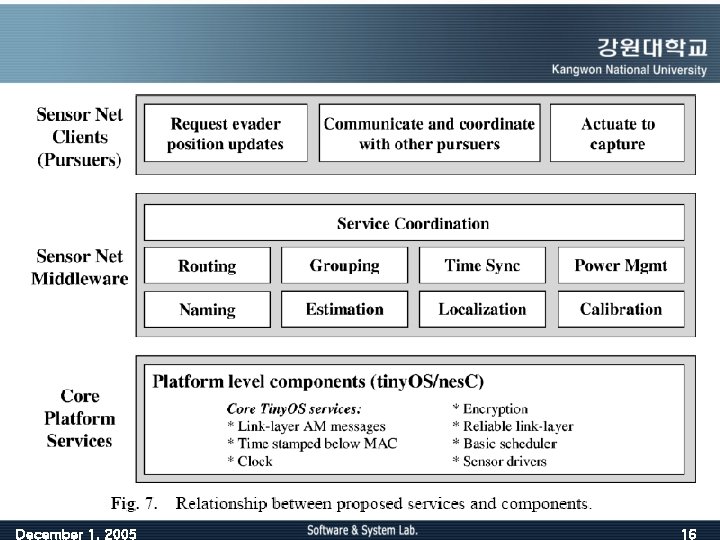
December 1, 2005 16
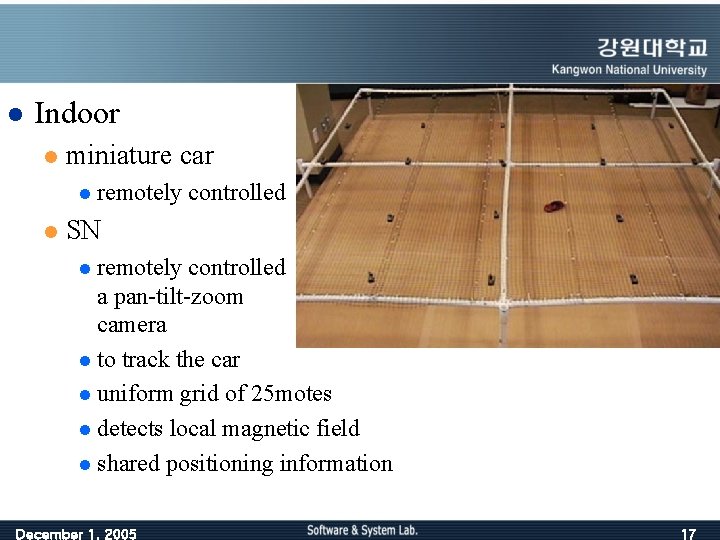
l Indoor l miniature car l remotely l controlled SN l remotely controlled a pan-tilt-zoom camera l to track the car l uniform grid of 25 motes l detects local magnetic field l shared positioning information December 1, 2005 17
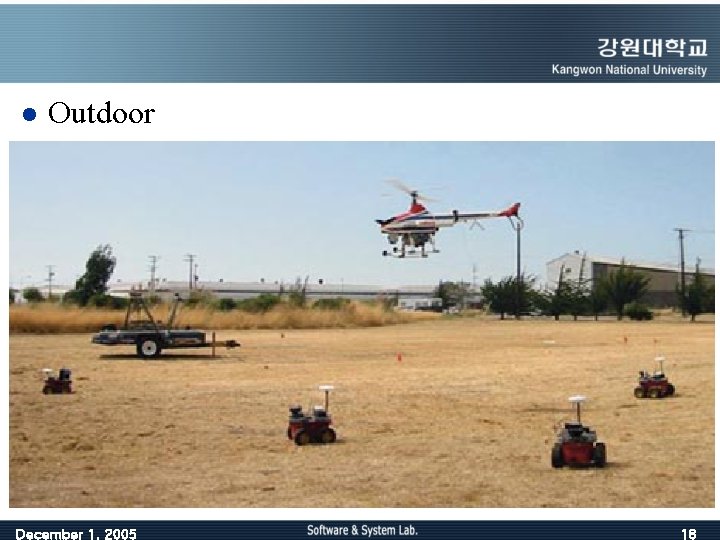
l Outdoor December 1, 2005 18
Methodology l Scalability and Distributed Control l Nature l ants searching for food, bacteria foraging, and flight formations of some birds l schooling in fish & cooperation in insect societies l l food search, predator avoidance, colony survival for the species AI l distributed agents l free market systems l continuous control community l process control, distributed systems, jitter compensation, scheduling December 1, 2005 19
l Models of Computation (MOC) l Continuous time dynamical systems l stability and reachability l for distributed control applications in SNs l l not able to capture l communication delays, time skew between clocks or discrete decision making discrete time dynamical systems l does not directly address sensing and actuation jitter l can be taken into account by augmenting with time delay between the plant and the controller l hybrid automaton l continuous December 1, 2005 flow and discrete jumps 20
l discrete event systems l l dataflow MOCs l l l work well for mode changes or task scheduling and characterizes hardware platform allow for system to be event-triggered not support continuous variables, not correlate time steps of the model with real time useful for characterizing several communicating processes awkward for control synchronous reactive languages l l l support a broad range of formal verification tools to aid in debugging possible to generate code for platform directly from the synchronous reactive language no relation between time steps of the language and real time December 1, 2005 21
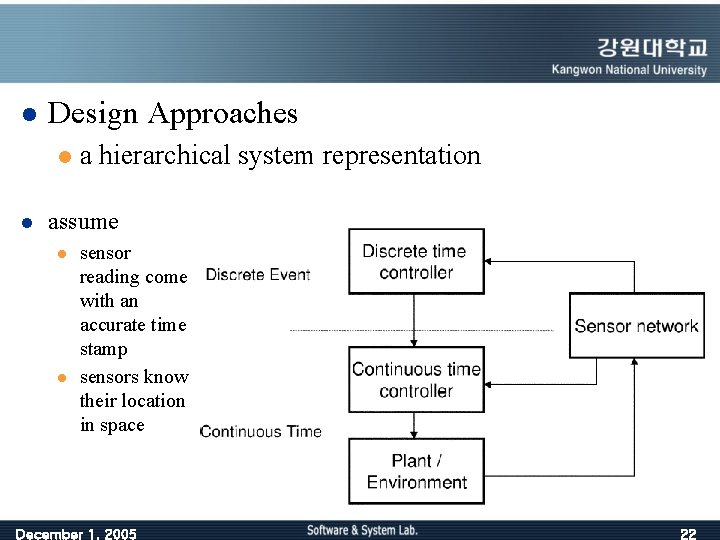
l Design Approaches l l a hierarchical system representation assume l l sensor reading come with an accurate time stamp sensors know their location in space December 1, 2005 22
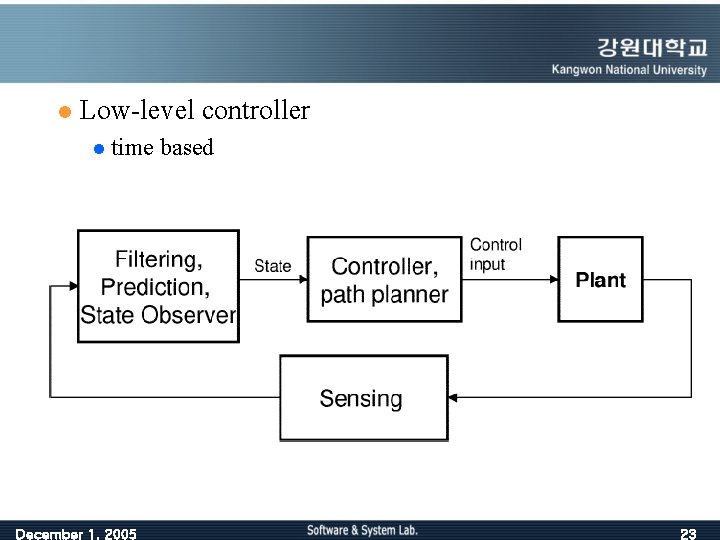
l Low-level controller l time December 1, 2005 based 23
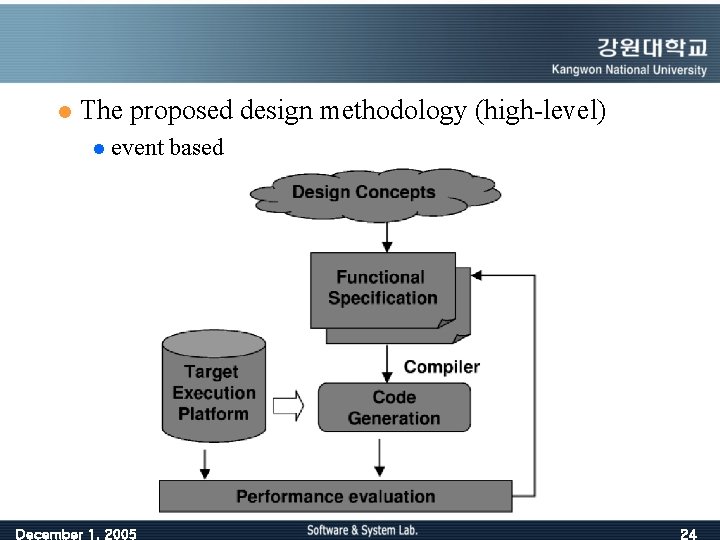
l The proposed design methodology (high-level) l event December 1, 2005 based 24
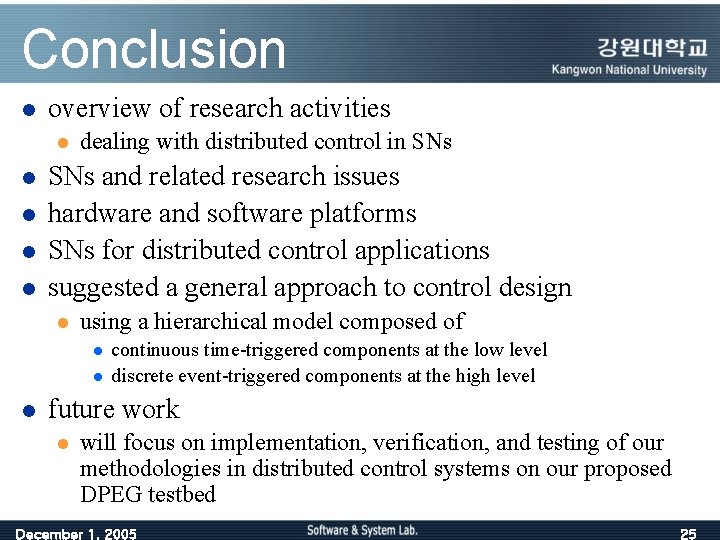
Conclusion l overview of research activities l l l dealing with distributed control in SNs and related research issues hardware and software platforms SNs for distributed control applications suggested a general approach to control design l using a hierarchical model composed of l l l continuous time-triggered components at the low level discrete event-triggered components at the high level future work l will focus on implementation, verification, and testing of our methodologies in distributed control systems on our proposed DPEG testbed December 1, 2005 25
December 1, 2005 26
- Slides: 26