
DISTRIBUTED COMPUTING Sunita Mahajan Principal Institute of Mahajan
DISTRIBUTED COMPUTING Sunita Mahajan, Principal, Institute of Mahajan Computer Science, MET League of Colleges, Mumbai Seema Shah, Principal, Vidyalankar Shah Institute of Technology, Mumbai University © Oxford University Press 2011
Chapter - 2 Network Communication © Oxford University Press 2011

Topics • • LAN and WAN technologies Protocols for Network Systems Asynchronous Transfer Mode Protocols for Distributed Systems – VMTP(Versatile message transfer protocol) – FLIP(Fast local internet protocol) © Oxford University Press 2011
LAN and WAN Technologies © Oxford University Press 2011

LAN and WAN Technologies • Introduction to LAN and WAN © Oxford University Press 2011
Classification of Networks • Based on number of interconnected nodes and type of communication link used – LAN, – MAN, – WAN, – WLAN – Internetwork © Oxford University Press 2011
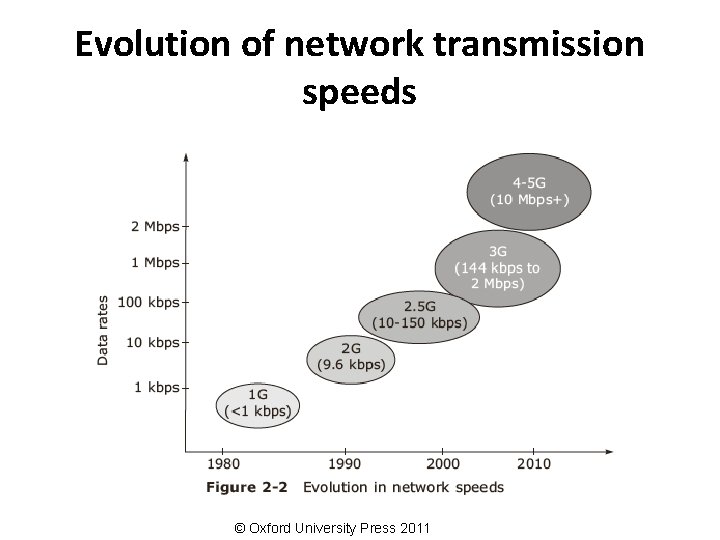
Evolution of network transmission speeds © Oxford University Press 2011
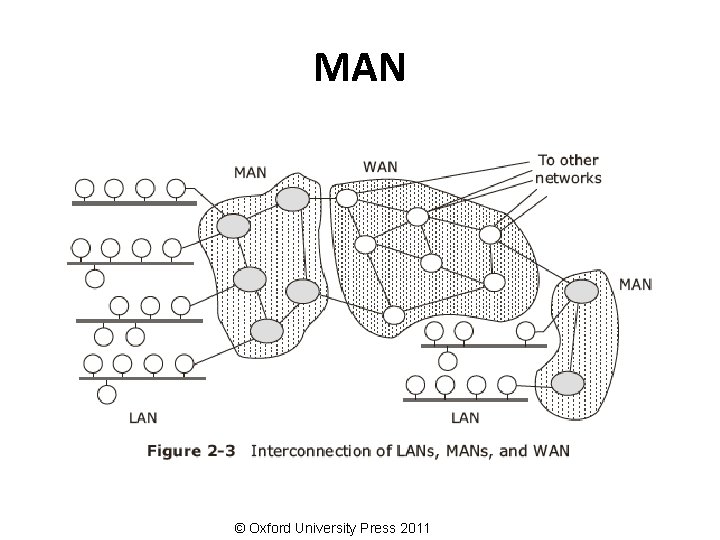
MAN © Oxford University Press 2011
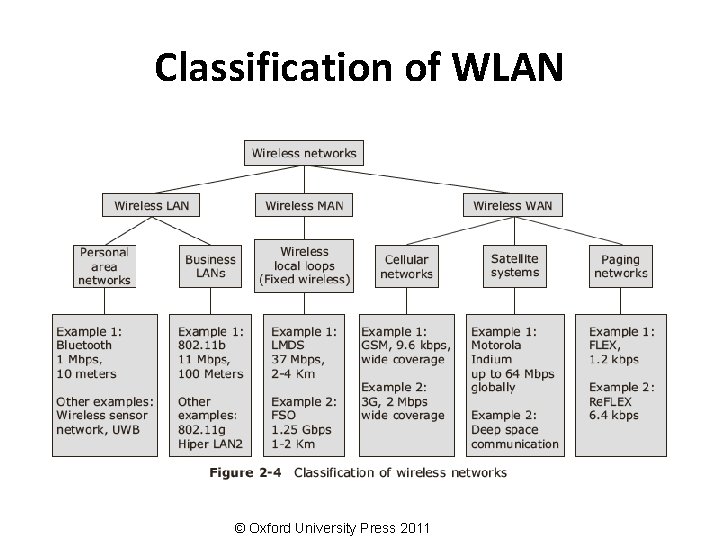
Classification of WLAN © Oxford University Press 2011
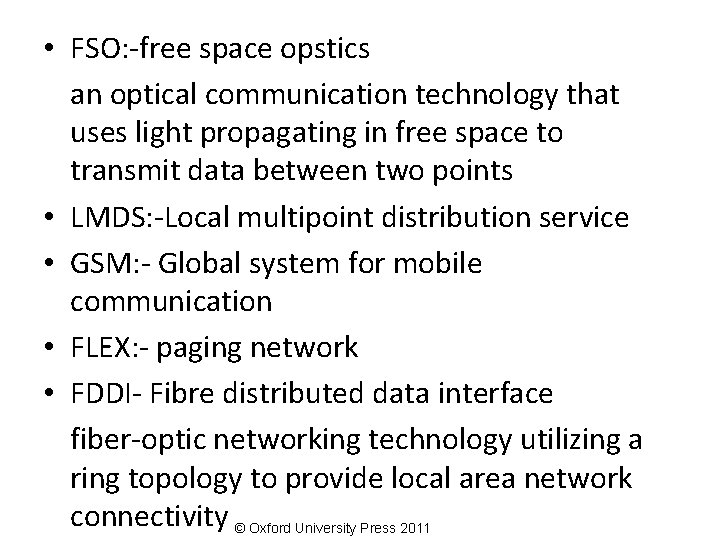
• FSO: -free space opstics an optical communication technology that uses light propagating in free space to transmit data between two points • LMDS: -Local multipoint distribution service • GSM: - Global system for mobile communication • FLEX: - paging network • FDDI- Fibre distributed data interface fiber-optic networking technology utilizing a ring topology to provide local area network connectivity © Oxford University Press 2011
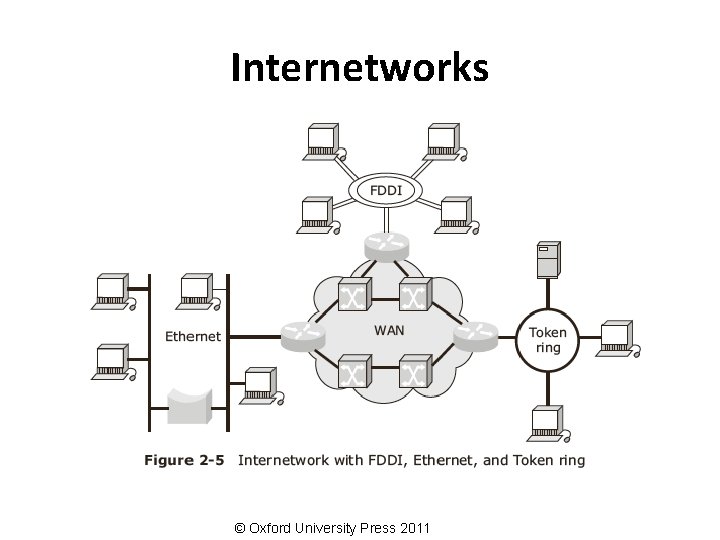
Internetworks © Oxford University Press 2011
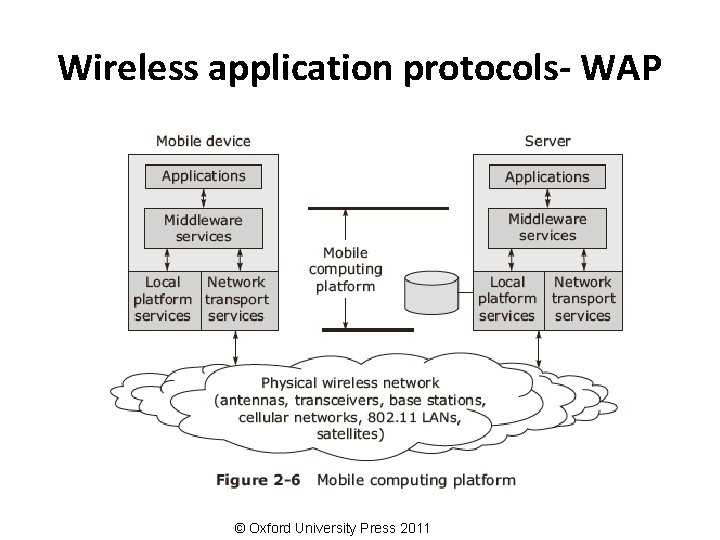
Wireless application protocols- WAP © Oxford University Press 2011
Protocols for Network Systems © Oxford University Press 2011
Protocols for network systems • Protocol is a formal set of rules and conventions that governs how computers exchange information over the network medium. • Protocol supports transparency • Protocols for networks – ISO/OSI – IP © Oxford University Press 2011
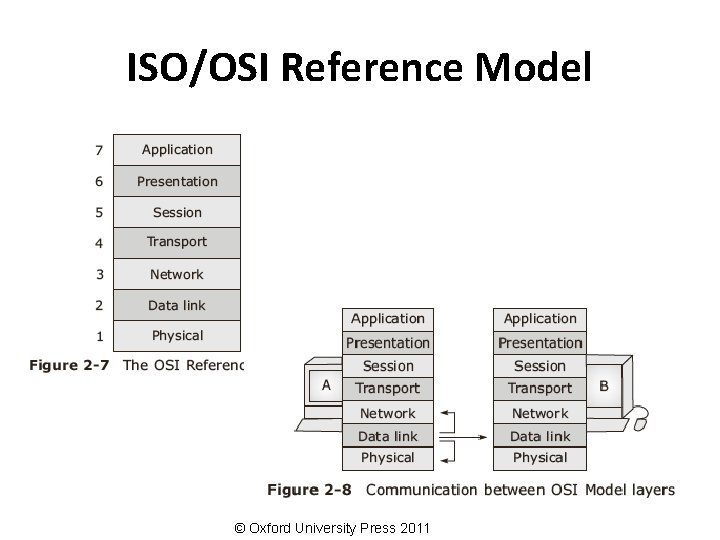
ISO/OSI Reference Model © Oxford University Press 2011
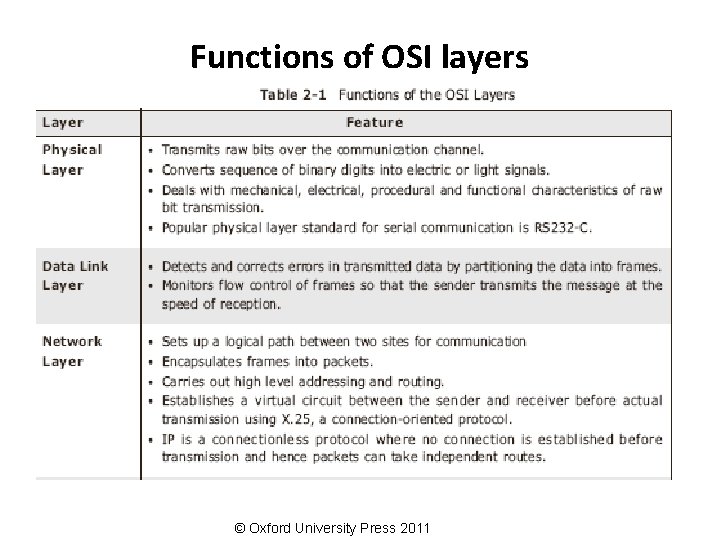
Functions of OSI layers © Oxford University Press 2011
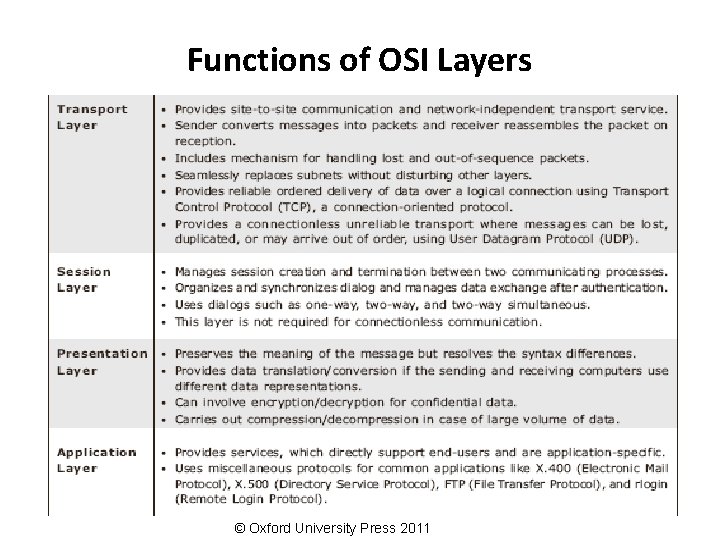
Functions of OSI Layers © Oxford University Press 2011
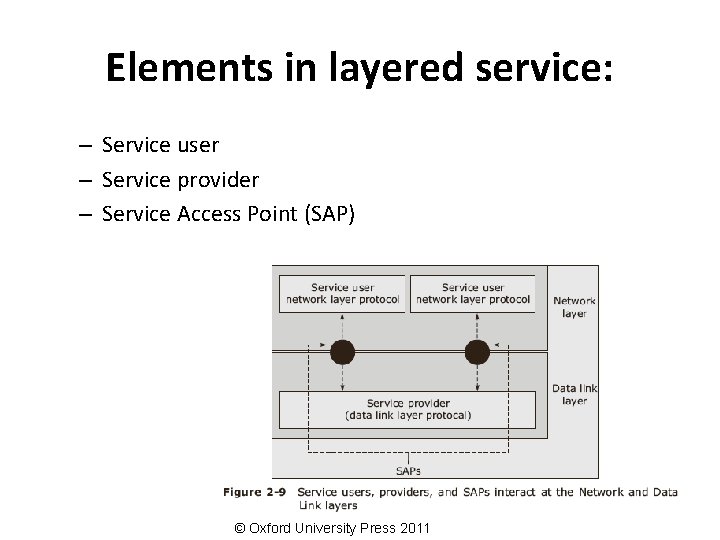
Elements in layered service: – Service user – Service provider – Service Access Point (SAP) © Oxford University Press 2011
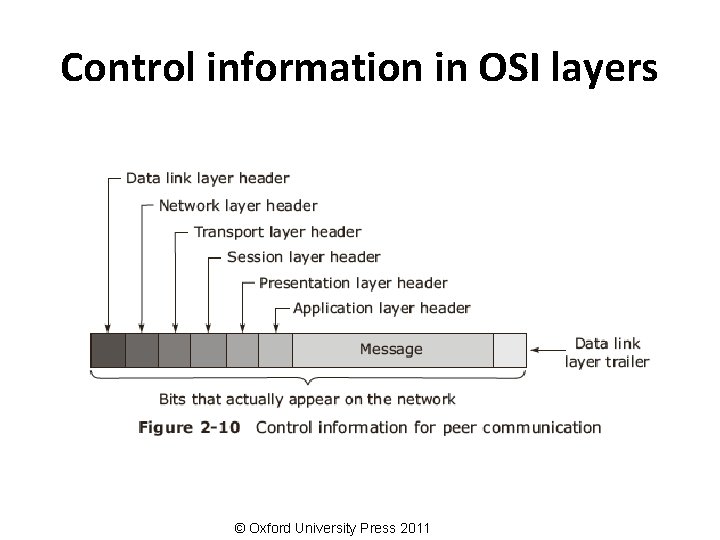
Control information in OSI layers © Oxford University Press 2011
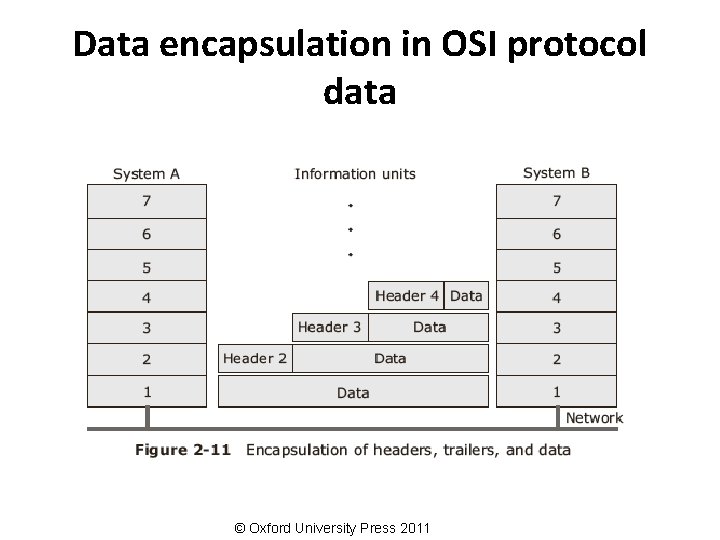
Data encapsulation in OSI protocol data © Oxford University Press 2011
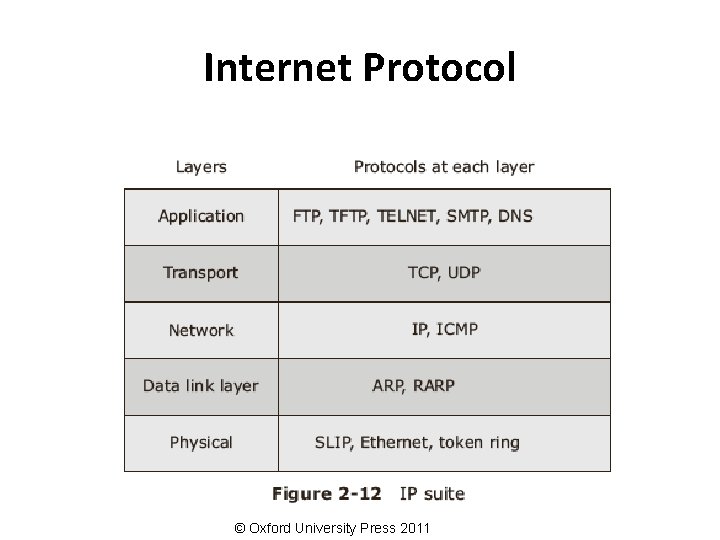
Internet Protocol © Oxford University Press 2011
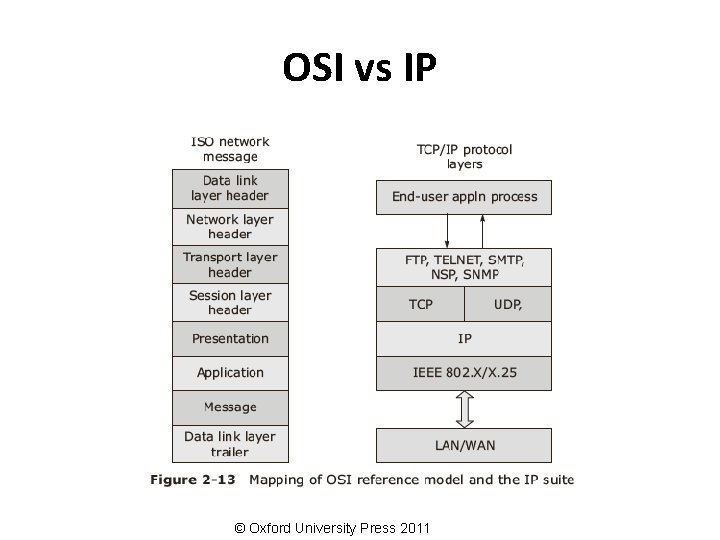
OSI vs IP © Oxford University Press 2011
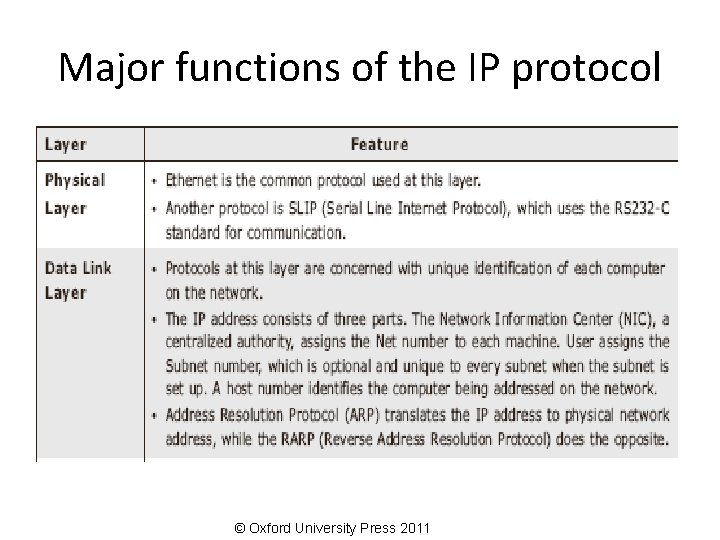
Major functions of the IP protocol © Oxford University Press 2011
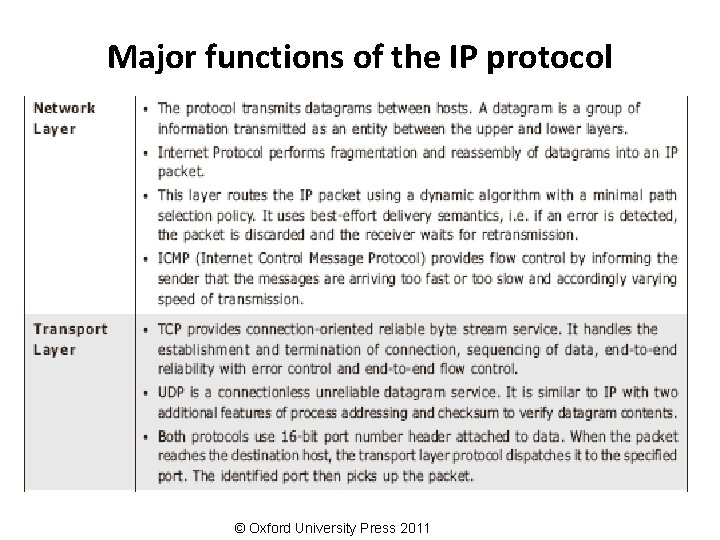
Major functions of the IP protocol © Oxford University Press 2011
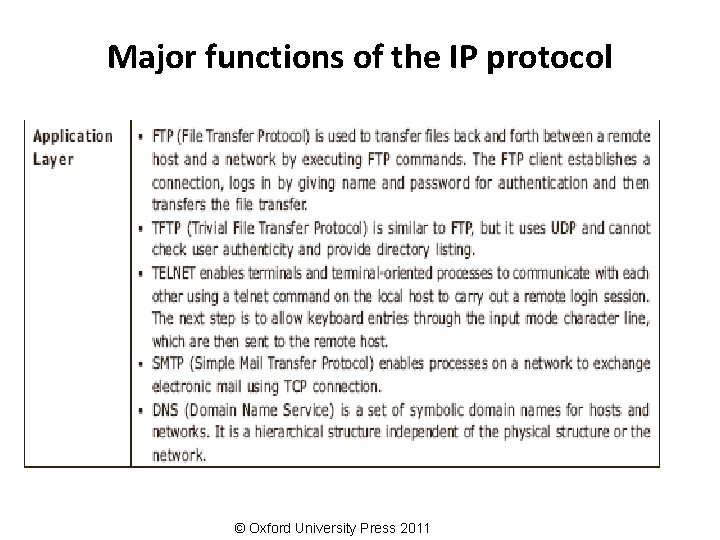
Major functions of the IP protocol © Oxford University Press 2011
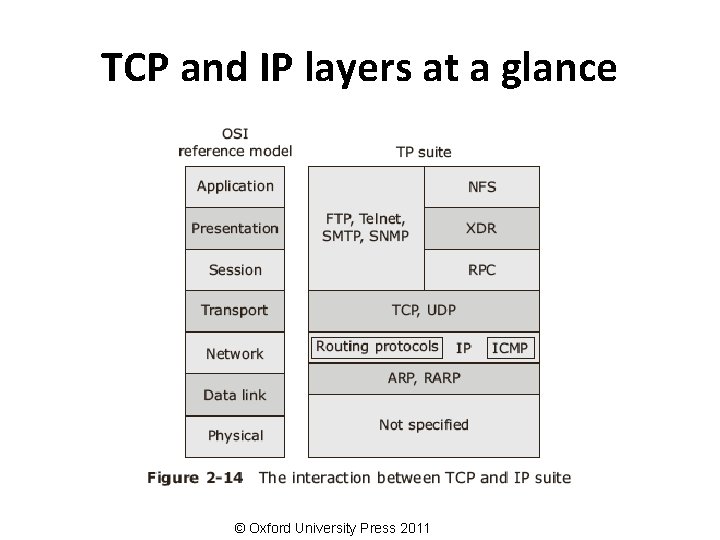
TCP and IP layers at a glance © Oxford University Press 2011
Asynchronous Transfer Mode © Oxford University Press 2011
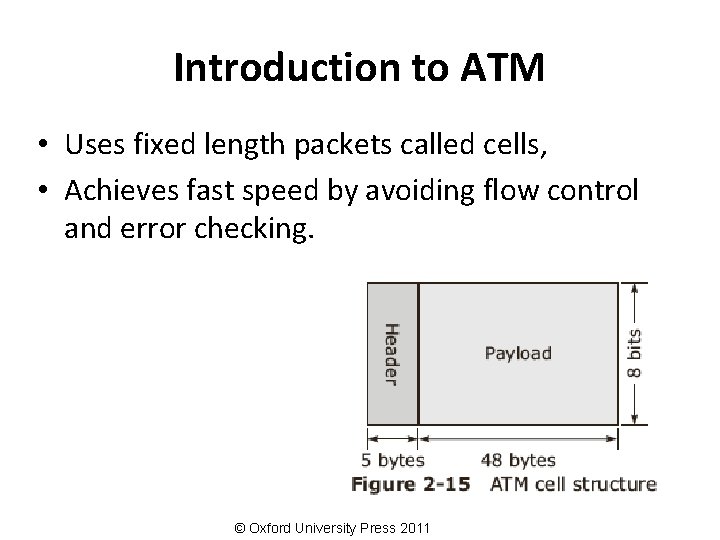
Introduction to ATM • Uses fixed length packets called cells, • Achieves fast speed by avoiding flow control and error checking. © Oxford University Press 2011
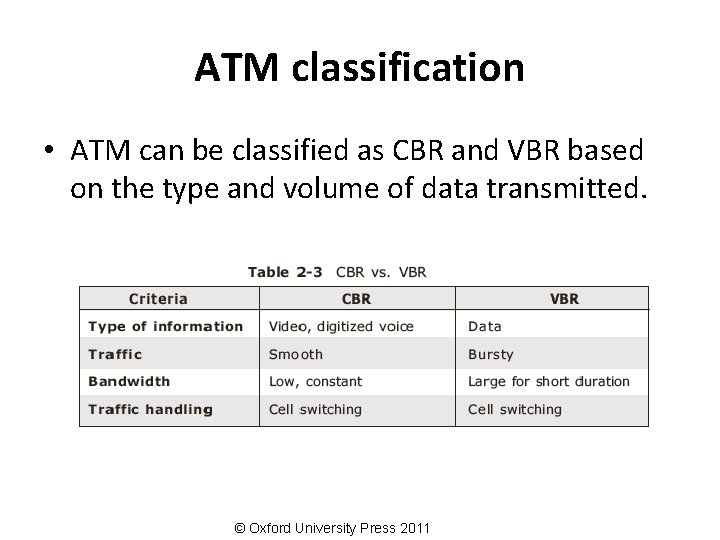
ATM classification • ATM can be classified as CBR and VBR based on the type and volume of data transmitted. © Oxford University Press 2011
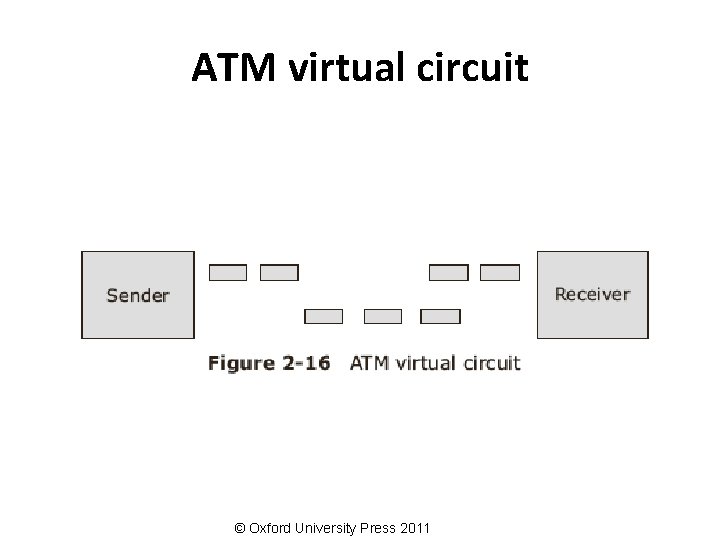
ATM virtual circuit © Oxford University Press 2011
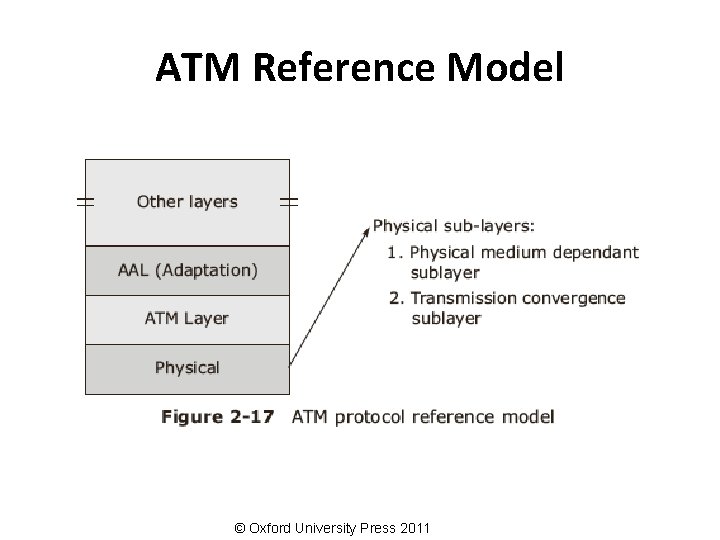
ATM Reference Model © Oxford University Press 2011
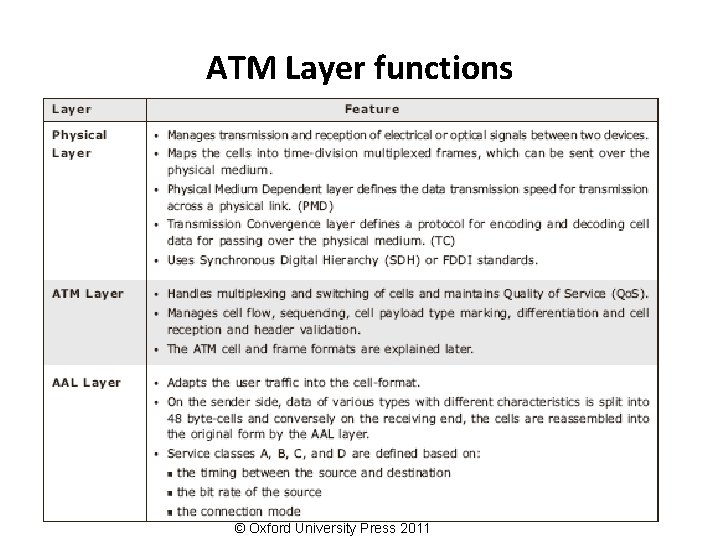
ATM Layer functions © Oxford University Press 2011
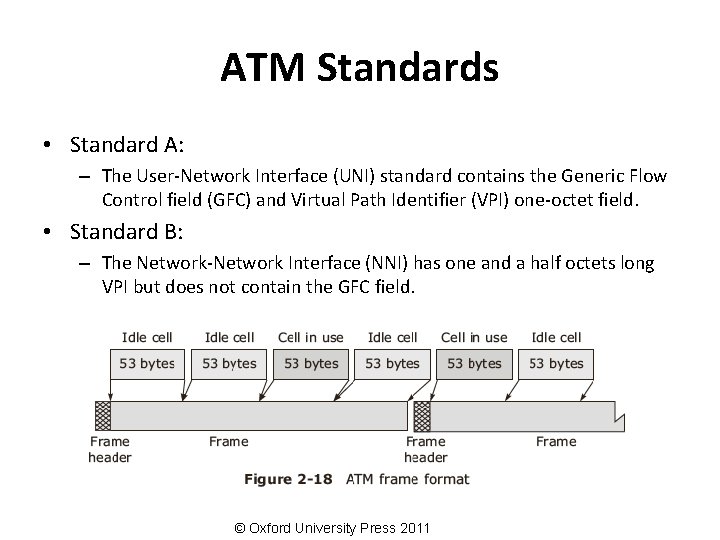
ATM Standards • Standard A: – The User-Network Interface (UNI) standard contains the Generic Flow Control field (GFC) and Virtual Path Identifier (VPI) one-octet field. • Standard B: – The Network-Network Interface (NNI) has one and a half octets long VPI but does not contain the GFC field. © Oxford University Press 2011
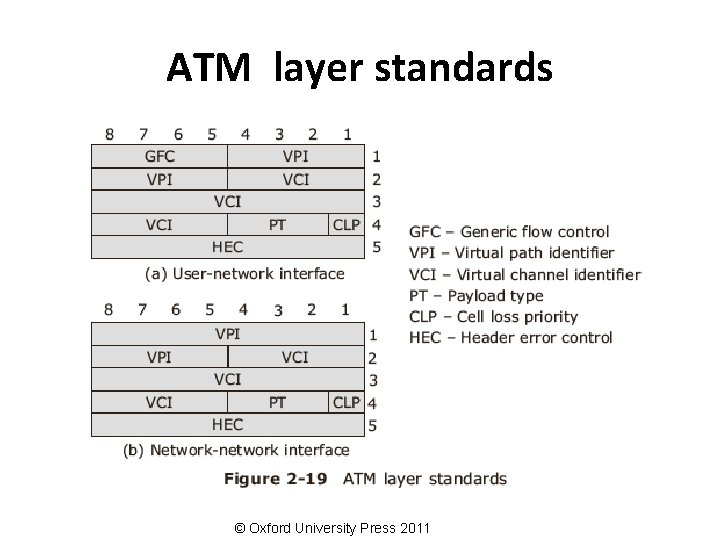
ATM layer standards © Oxford University Press 2011
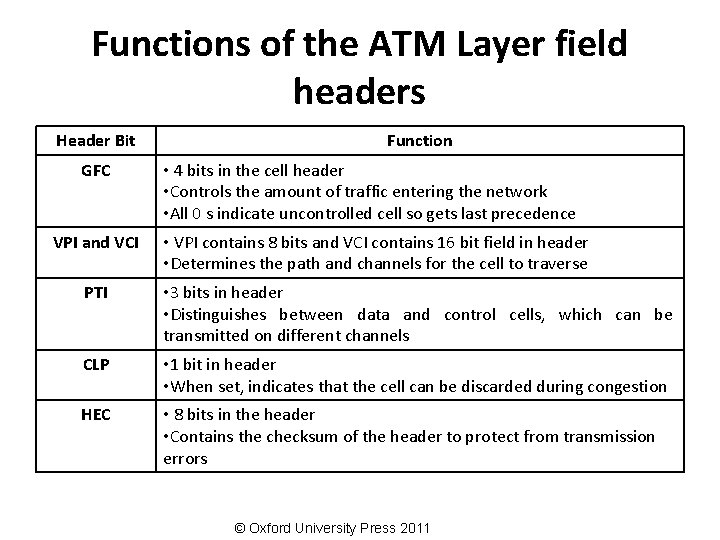
Functions of the ATM Layer field headers Header Bit GFC VPI and VCI Function • 4 bits in the cell header • Controls the amount of traffic entering the network • All 0 s indicate uncontrolled cell so gets last precedence • VPI contains 8 bits and VCI contains 16 bit field in header • Determines the path and channels for the cell to traverse PTI • 3 bits in header • Distinguishes between data and control cells, which can be transmitted on different channels CLP • 1 bit in header • When set, indicates that the cell can be discarded during congestion HEC • 8 bits in the header • Contains the checksum of the header to protect from transmission errors © Oxford University Press 2011
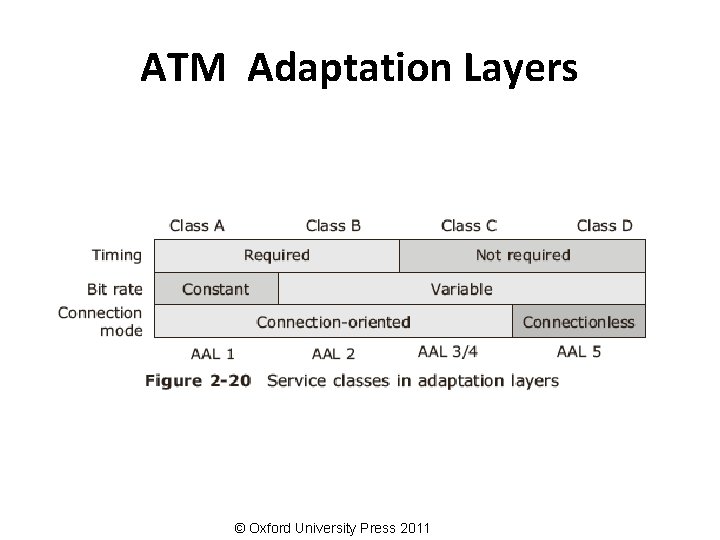
ATM Adaptation Layers © Oxford University Press 2011
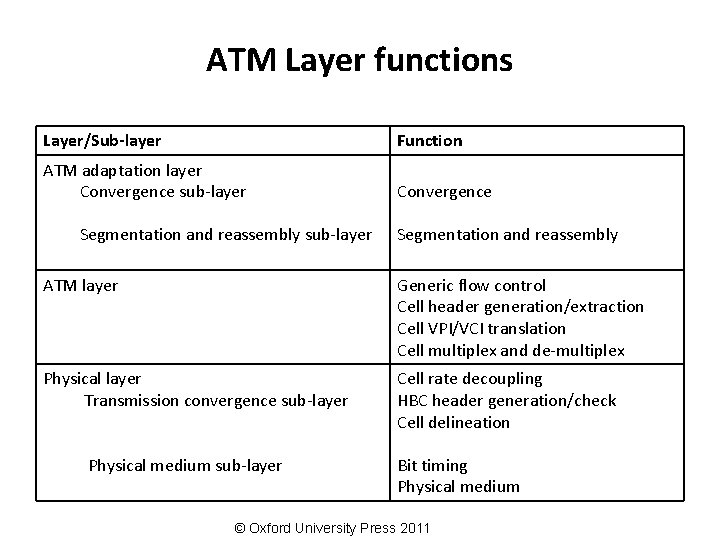
ATM Layer functions Layer/Sub-layer Function ATM adaptation layer Convergence sub-layer Segmentation and reassembly sub-layer Convergence Segmentation and reassembly ATM layer Generic flow control Cell header generation/extraction Cell VPI/VCI translation Cell multiplex and de-multiplex Physical layer Transmission convergence sub-layer Cell rate decoupling HBC header generation/check Cell delineation Physical medium sub-layer Bit timing Physical medium © Oxford University Press 2011
Protocols for Distributed Systems © Oxford University Press 2011
Protocols for Distributed Systems • VMTP– Versatile Message Transfer Protocol • FLIP— – Fast local Internet Protocol © Oxford University Press 2011
Requirements of Distributed Systems • • • Transparency Client server based communication Group communication Security Network management Scalability © Oxford University Press 2011
VMTP- Versatile Message Transfer Protocol • Supports request response behavior • Provides transparency and group communication facility, selective retransmission mechanism, rate based control flow control • Supports execution of non idempotent operations and conditional delivery of real time communication. © Oxford University Press 2011
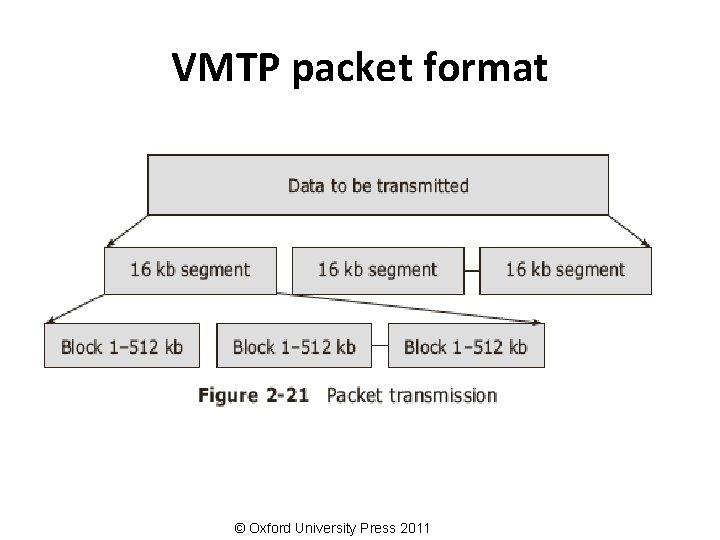
VMTP packet format © Oxford University Press 2011
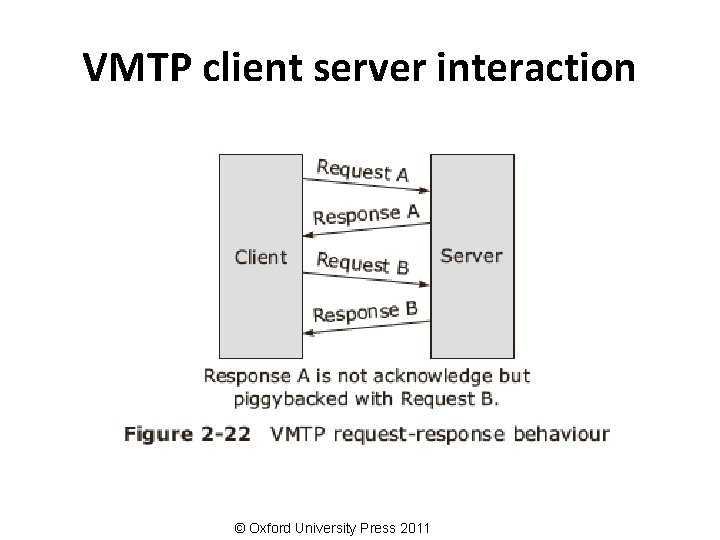
VMTP client server interaction © Oxford University Press 2011
FLIP--Fast local Internet Protocol • Connectionless protocol • Provides – Transparency for process migration – Secure message delivery – Group management- private and public addresses – Network management – Efficient client server based communication © Oxford University Press 2011
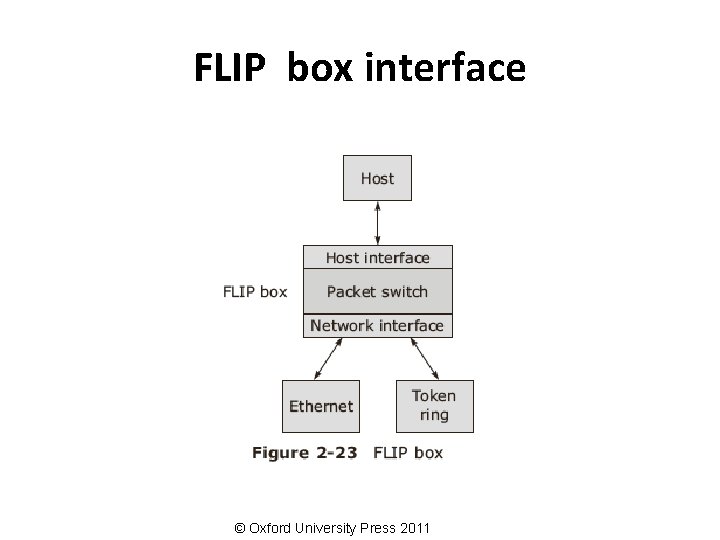
FLIP box interface © Oxford University Press 2011
Summary • • LAN and WAN technologies Protocols for Network Systems Asynchronous Transfer Mode Protocols for Distributed Systems – VMTP – FLIP © Oxford University Press 2011
- Slides: 46