
Distinguishing between language acquisition challenges and learning disabilities

Distinguishing between language acquisition challenges and learning disabilities REDUCING INAPPROPRIATE REFERRALS TO SPECIAL EDUCATION SERVICES Juli Sarris, University of Northern Colorado
Problem English learners over-represented in special education (Artiles, Rueda, Salazar, Higareda, 2005; colorincolorado. org, ) As many as 75% of ELLs identified with a learning disability may be misidentified (Ortiz et al. , 2011) English learners’ needs are not likely to be met in special education unless they truly have a learning disability Are all these referrals accurate? Do these students have a learning disability or a language issue? Teaching practices can help make that distinction
7 categories of teaching practices Culturally responsive pedagogy English language development Differentiation Strategic use of students’ native language Connections Materials Assessment Source: Hoover, J. ; Hopewell, S. ; & Sarris, J. (2013) Core ESL Instructional Practices. (Available for free download from www. buenoenter. org)
Culturally responsive pedagogy Respects, foregrounds, and validates students’ culture Appreciates and celebrates cultural diversity Creates a safe environment for all students Builds connections between home and school Uses different strategies that address different learning styles Includes different cultural heritages and historical perspectives as a routine part of the entire curriculum Transcends content and includes how teachers communicate and interact with students
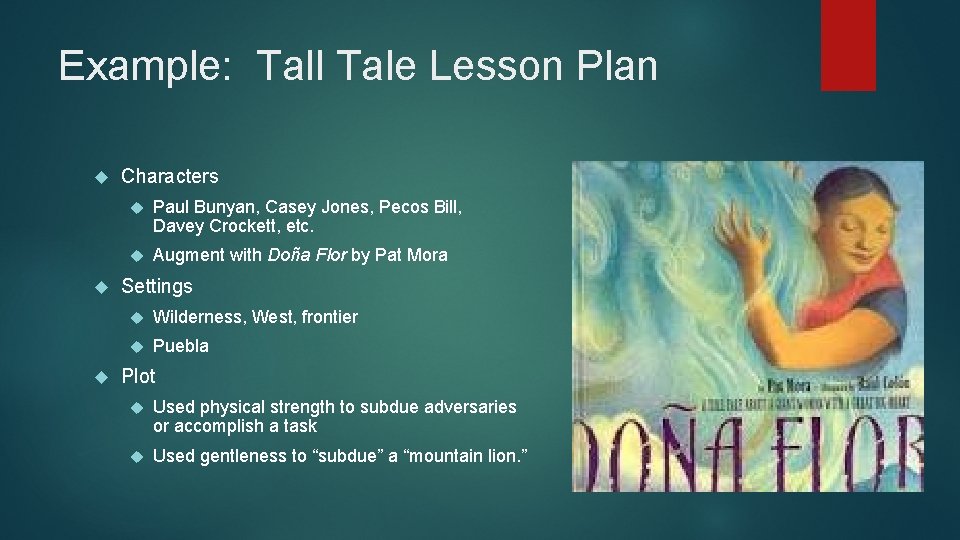
Example: Tall Tale Lesson Plan Characters Paul Bunyan, Casey Jones, Pecos Bill, Davey Crockett, etc. Augment with Doña Flor by Pat Mora Settings Wilderness, West, frontier Puebla Plot Used physical strength to subdue adversaries or accomplish a task Used gentleness to “subdue” a “mountain lion. ”
English language development Practices that specifically address the learning of English Connecting oracy and literacy Speak/discuss prior to writing – oral tradition Think-alouds – explain orally, then in writing Cooperative activities that require speaking and listening/negotiating – group writing, Reader’s Theater, PALS Cloze activities Vocabulary preview/review Providing visible and visual language supports Sentence frames, word walls Visual scaffolding – using pictures and realia Including artwork in assignments and vocabulary development Concrete -> semiconcrete -> abstract Using sufficient wait time Facilitating authentic discourse – think-pair-share
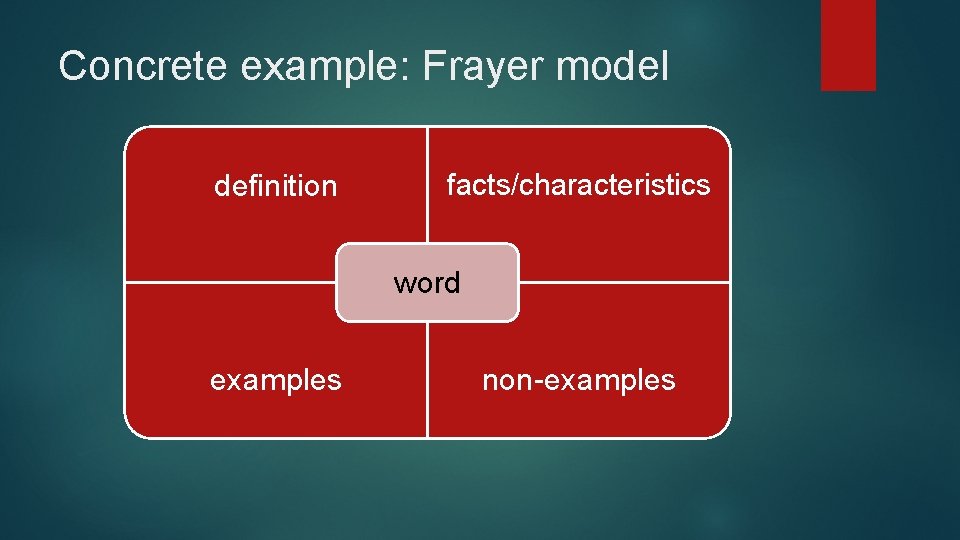
Concrete example: Frayer model definition facts/characteristics word examples non-examples
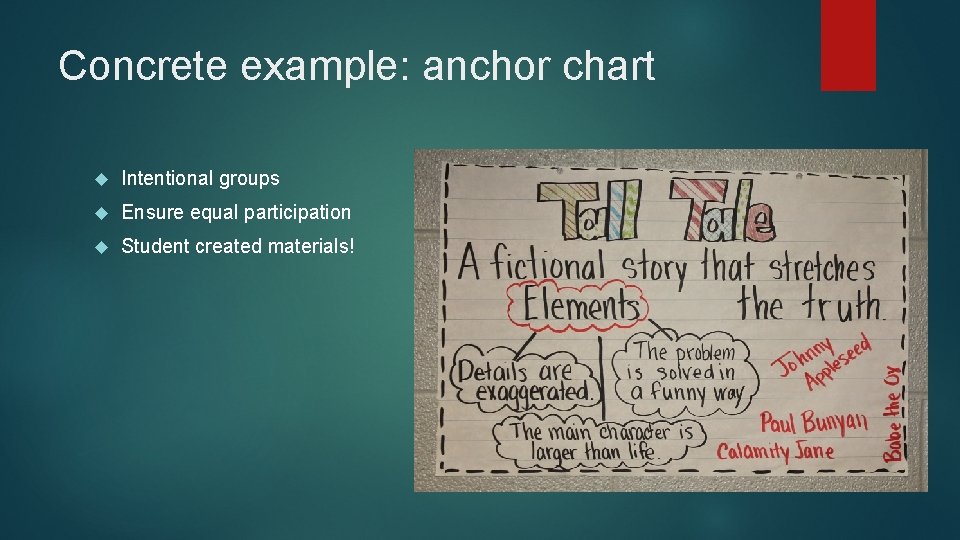
Concrete example: anchor chart Intentional groups Ensure equal participation Student created materials!
Workshop Turn and talk Share examples of how you are currently implementing or could implement any of these ELD items
Differentiation Writing clear, measurable content objectives for all students HOTS & high on Bloom’s taxonomy Writing language objectives Key vocabulary Language structures (grammar) Language skills (rwls) Language functions (describe, explain, orally, in writing, ) Language learning strategies (previewing, summarizing) Provide choices for students Which of two activities will they do? How they will complete an activity Learning Centers with various activities at different levels Using a variety of instructional methodologies Direct instruction, sheltered instruction Multiple intelligences Intentional grouping – peer editing
Examples of differentiation Reader’s Theater Vary length and complexity of speaking parts Vary contributions Dialog with new grammar/vocab vs. dialog with grammar/vocab directly from the text Props Cloze activity More/fewer words removed Different sentence stems First, _____. Then, _______. Next, _____. Last, ______. First, _____. Afterwards, ______. Subsequently, ______. Finally, ______.
Workshop Turn and talk Share examples of how you are currently implementing or could implement any of these differentiation items
Strategic use of students’ native language “Adding English: A Guide to Teaching in Multilingual Classrooms” by Elizabeth Coelho (2004) English/native language dictionary/picture dictionary Websites Omniglot. com Google search (e. g. differences between English and Hmong) On-line dictionaries Leverage the community Family, paraeducators, students, staff Faith community
Workshop Turn and talk Share examples of how you are currently implementing or could implement any of these strategic use of students’ L 1 items
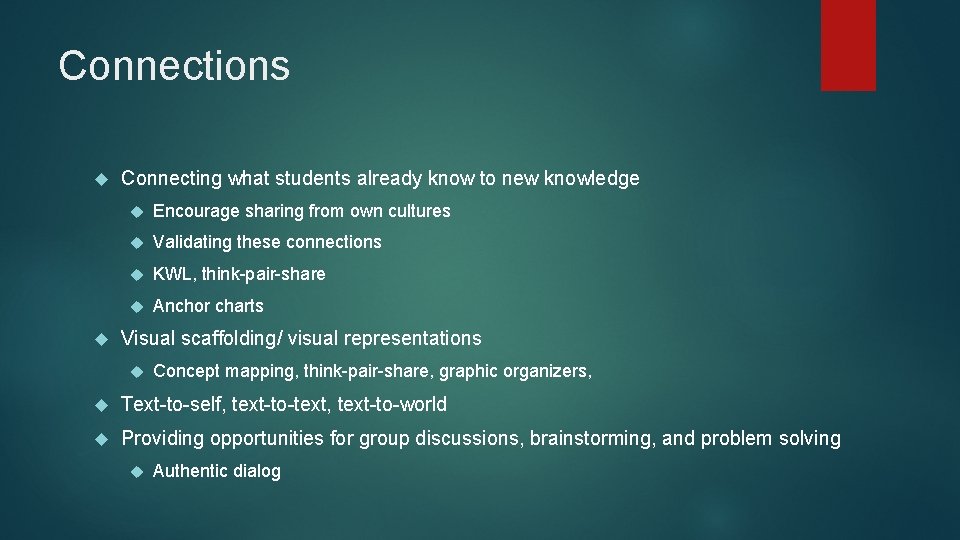
Connections Connecting what students already know to new knowledge Encourage sharing from own cultures Validating these connections KWL, think-pair-share Anchor charts Visual scaffolding/ visual representations Concept mapping, think-pair-share, graphic organizers, Text-to-self, text-to-text, text-to-world Providing opportunities for group discussions, brainstorming, and problem solving Authentic dialog
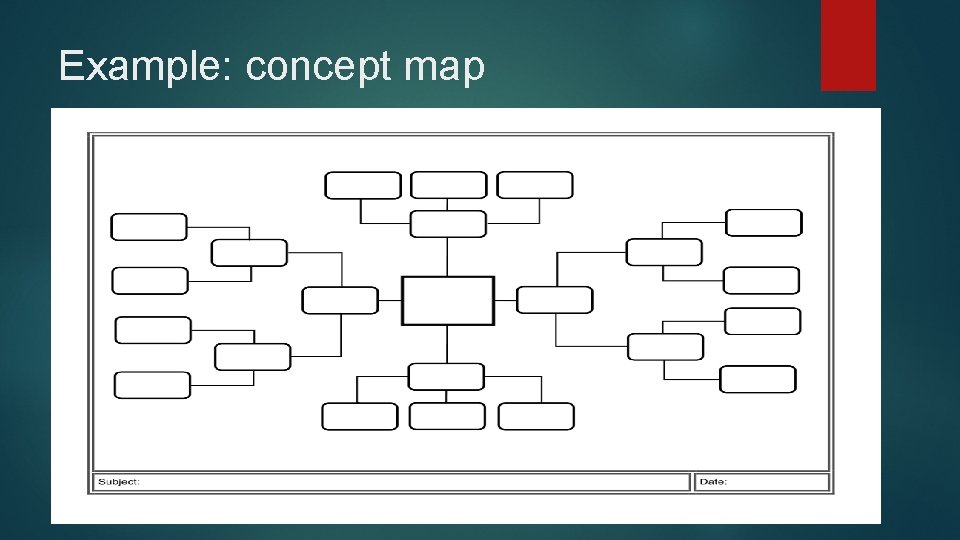
Example: concept map
Workshop Turn and talk Share examples of how you are currently implementing or could implement any of these connection items
Materials Manipulatives, pictures, cut-outs, etc. for sorting/classifying Concrete -> semi-concrete -> abstract Graphic organizers, concept maps, anchor charts created by students Strategic use of video Literacy materials – cross-curricular vocabulary How to use reference materials Let the students create materials!!
Workshop Turn and talk Share examples of how you are currently implementing or could implement any of these materials items
Assessment Both content and language Formative – used to guide your instruction Informal - unplanned – on the fly Often based on student responses and discussions Observing the use of key vocabulary Formal – planned Daily quick writes, running records Feedback Timely, constructive, and specific
Workshop Turn and talk Share examples of how you are currently implementing or could implement any of these assessment items
- Slides: 21