
Distillation Modeling CHEN 4470 Process Design Practice Dr
- Slides: 7
Distillation Modeling CHEN 4470 – Process Design Practice Dr. Mario Richard Eden Department of Chemical Engineering Auburn University Lecture No. 13 – Reboiler Selection and Design February 26, 2013 Material Developed by Dr. Jeffrey R. Seay, University of Kentucky - Paducah
Overview • Purpose of Reboilers – • Provide vapor flow up a column and acts as an additional theoretical stage below the trays/packing Types of Reboilers – – Thermosyphon Forced circulation Kettle Internal reboiler (rarely used in continuous columns) Proper reboiler design is critical to the optimum operation of a column!
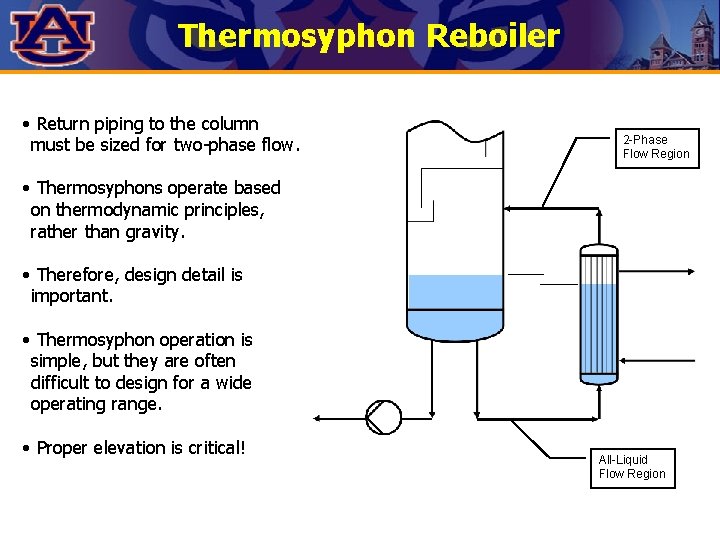
Thermosyphon Reboiler • Return piping to the column must be sized for two-phase flow. 2 -Phase Flow Region • Thermosyphons operate based on thermodynamic principles, rather than gravity. • Therefore, design detail is important. • Thermosyphon operation is simple, but they are often difficult to design for a wide operating range. • Proper elevation is critical! All-Liquid Flow Region
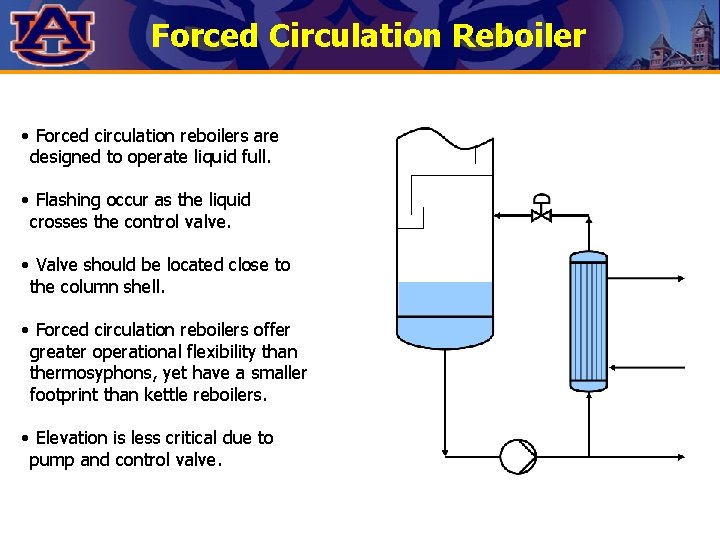
Forced Circulation Reboiler • Forced circulation reboilers are designed to operate liquid full. • Flashing occur as the liquid crosses the control valve. • Valve should be located close to the column shell. • Forced circulation reboilers offer greater operational flexibility than thermosyphons, yet have a smaller footprint than kettle reboilers. • Elevation is less critical due to pump and control valve.
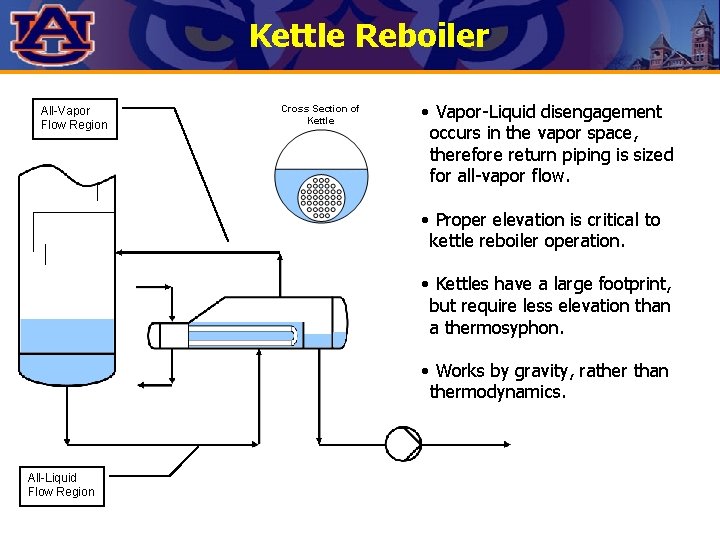
Kettle Reboiler All-Vapor Flow Region Cross Section of Kettle • Vapor-Liquid disengagement occurs in the vapor space, therefore return piping is sized for all-vapor flow. • Proper elevation is critical to kettle reboiler operation. • Kettles have a large footprint, but require less elevation than a thermosyphon. • Works by gravity, rather than thermodynamics. All-Liquid Flow Region
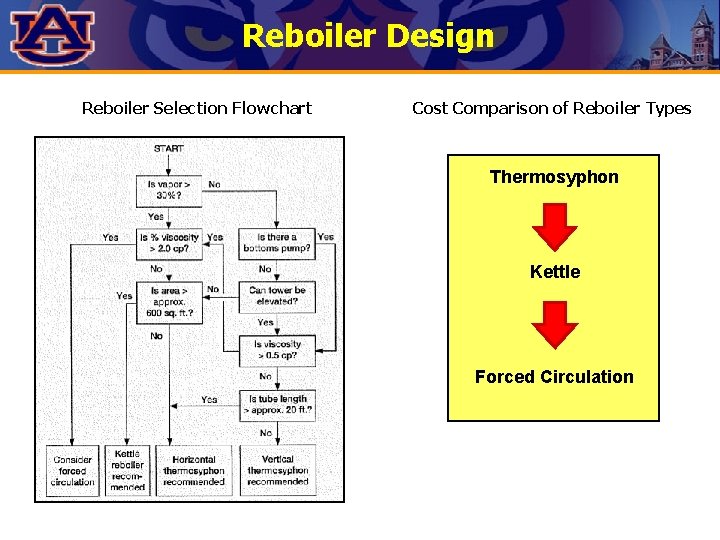
Reboiler Design Reboiler Selection Flowchart Cost Comparison of Reboiler Types Thermosyphon Kettle Forced Circulation
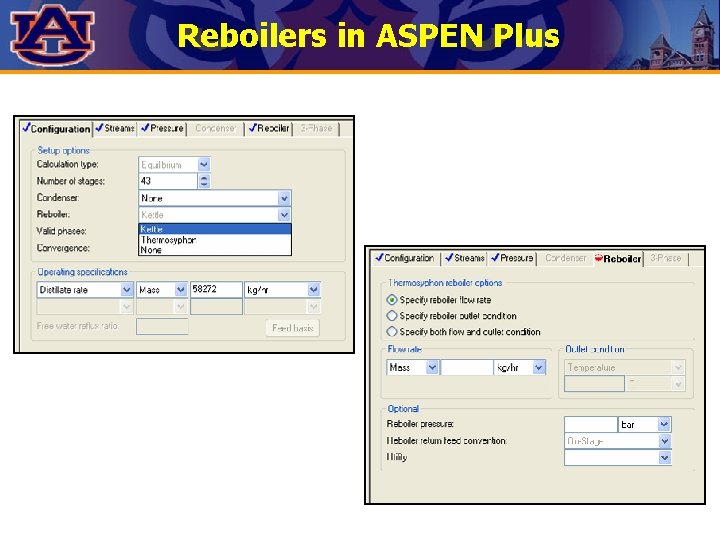
Reboilers in ASPEN Plus