
Distillation in Design Terry A Ring Ch E


- Slides: 36
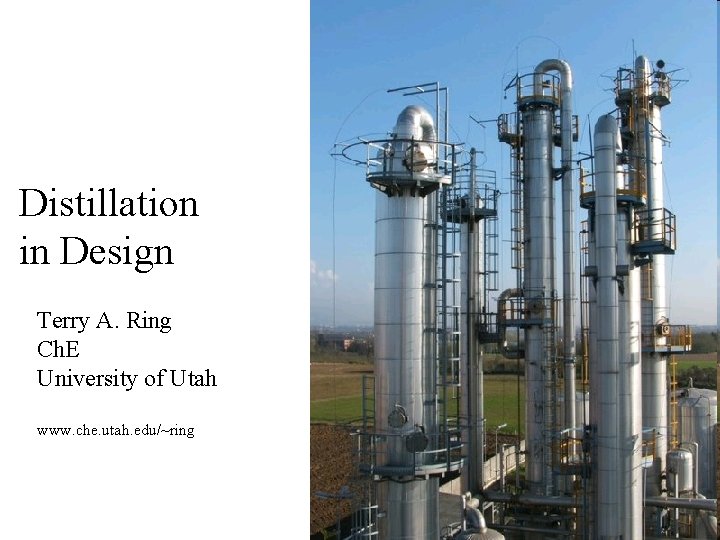
Distillation in Design Terry A. Ring Ch. E University of Utah www. che. utah. edu/~ring
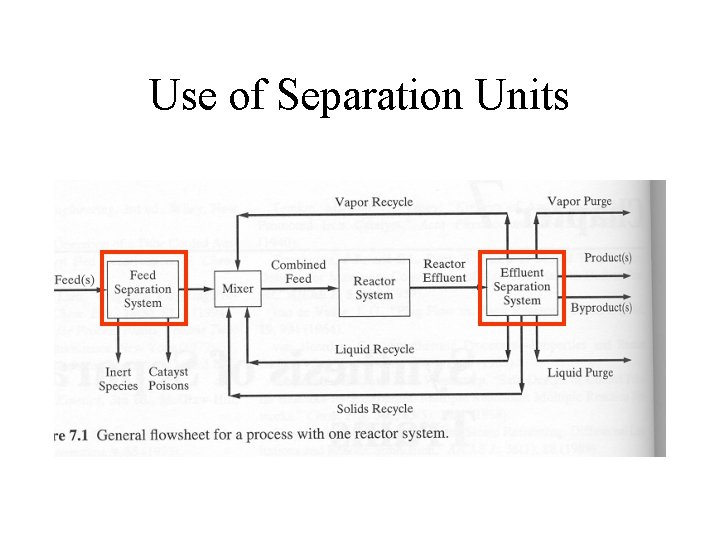
Use of Separation Units
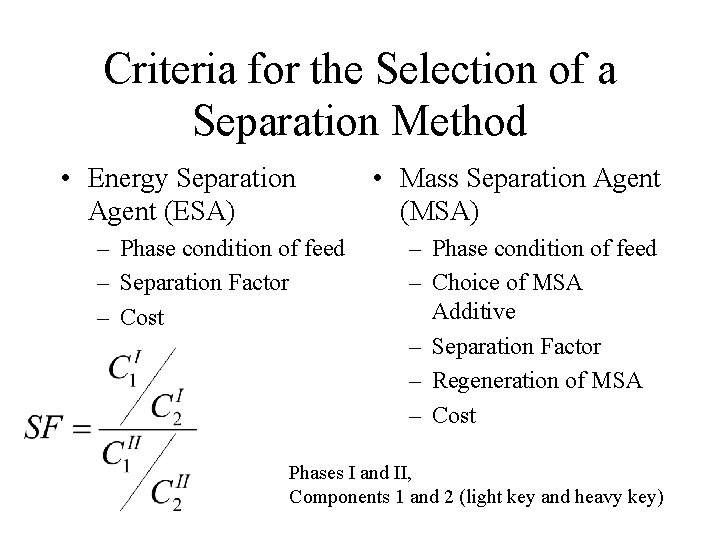
Criteria for the Selection of a Separation Method • Energy Separation Agent (ESA) – Phase condition of feed – Separation Factor – Cost • Mass Separation Agent (MSA) – Phase condition of feed – Choice of MSA Additive – Separation Factor – Regeneration of MSA – Cost Phases I and II, Components 1 and 2 (light key and heavy key)
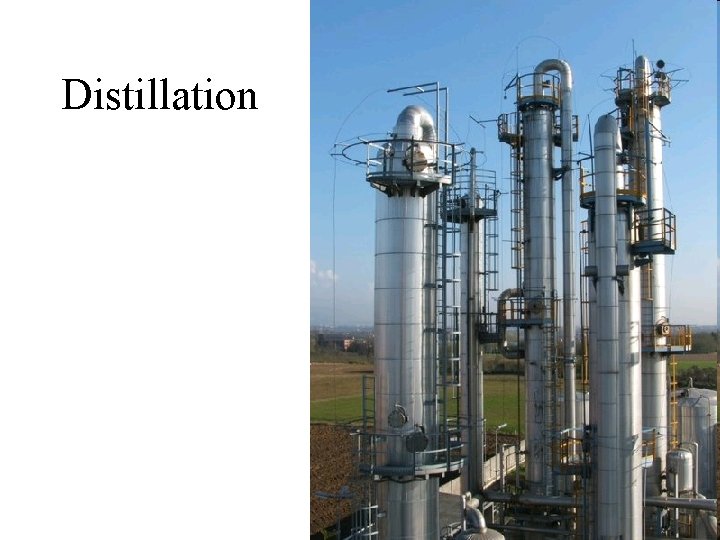
Distillation
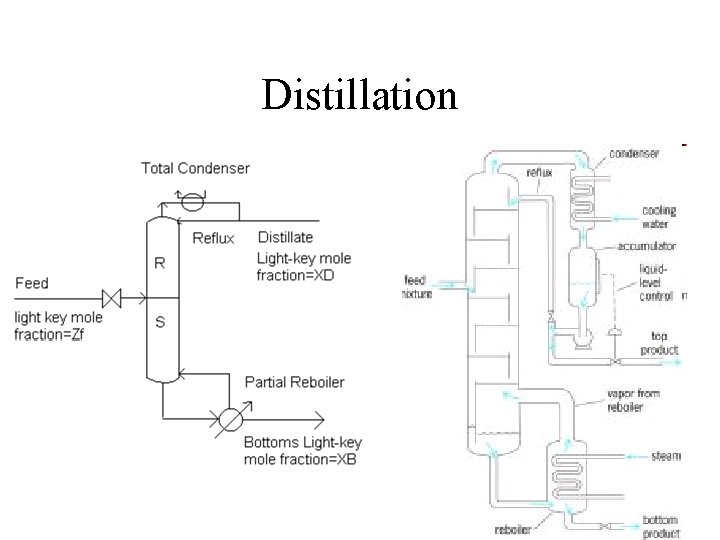
Distillation
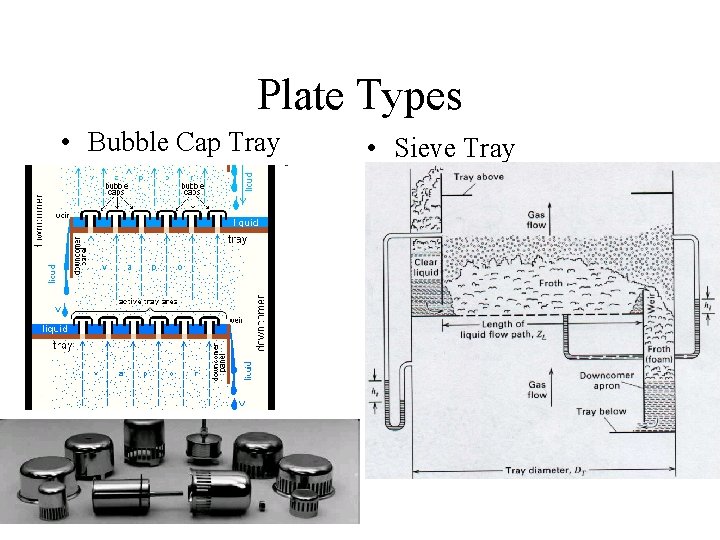
Plate Types • Bubble Cap Tray • Sieve Tray
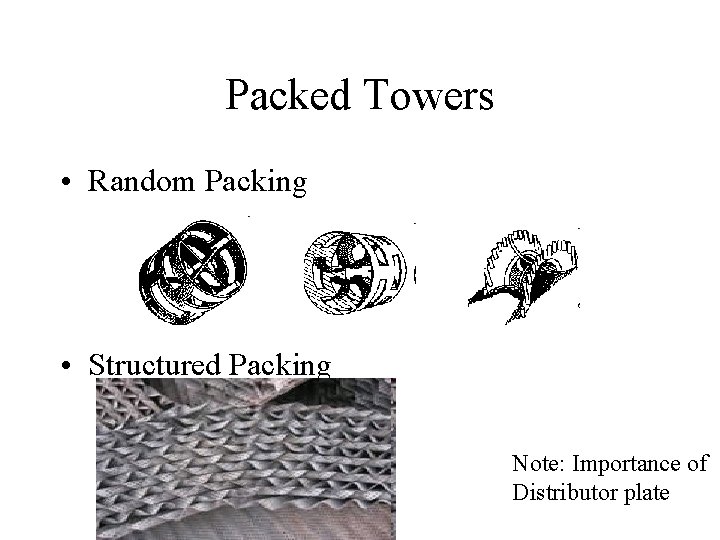
Packed Towers • Random Packing • Structured Packing Note: Importance of Distributor plate
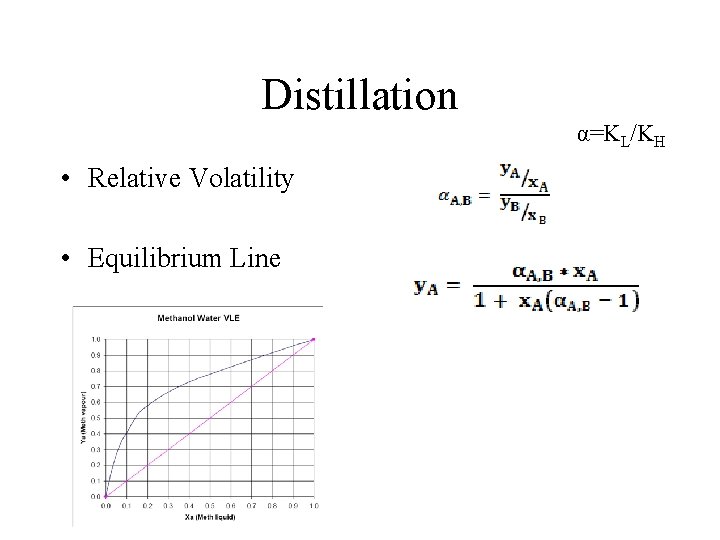
Distillation α=KL/KH • Relative Volatility • Equilibrium Line
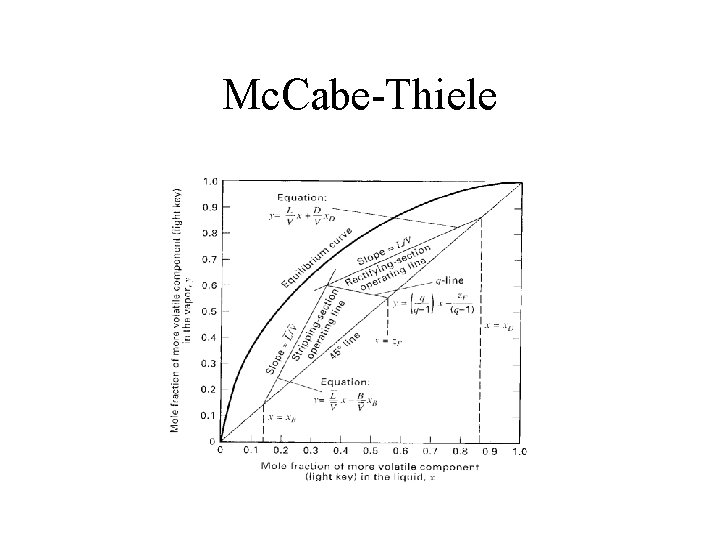
Distillation • Rectifying Section – R= reflux ratio – V=vapor flow rate • Stripping Section – VB= Boil-up ratio • Feed Line
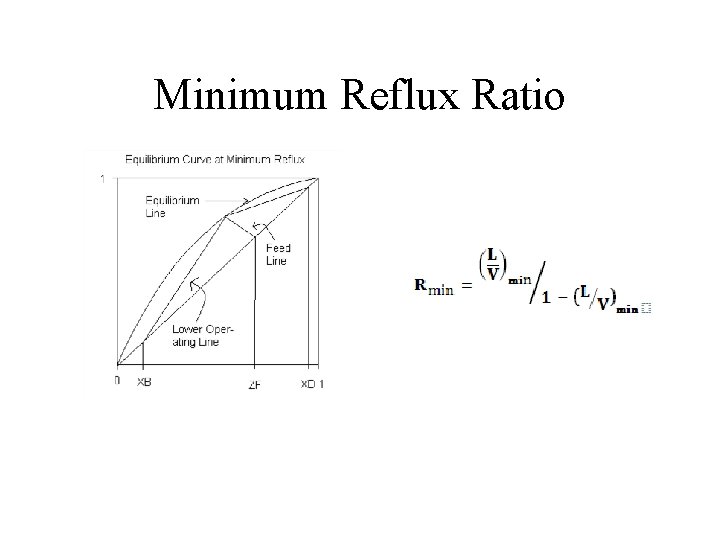
Minimum Reflux Ratio
Mc. Cabe-Thiele
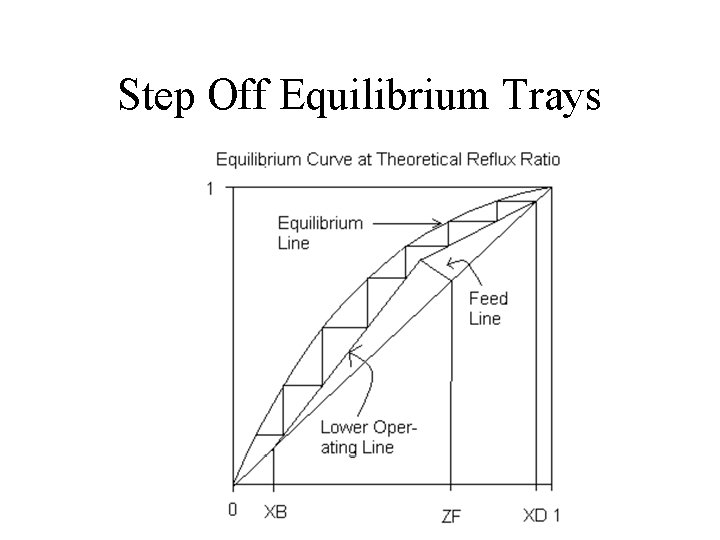
Step Off Equilibrium Trays
What are you going to learn next year? • Column sizing – Diameter of Column – Size of trays – Height of packing • Column Costing • Optimization of column with respect to cost to run (capital cost and operating cost) • How to develop a distillation train. • How to set up side streams in multi-component distillation.
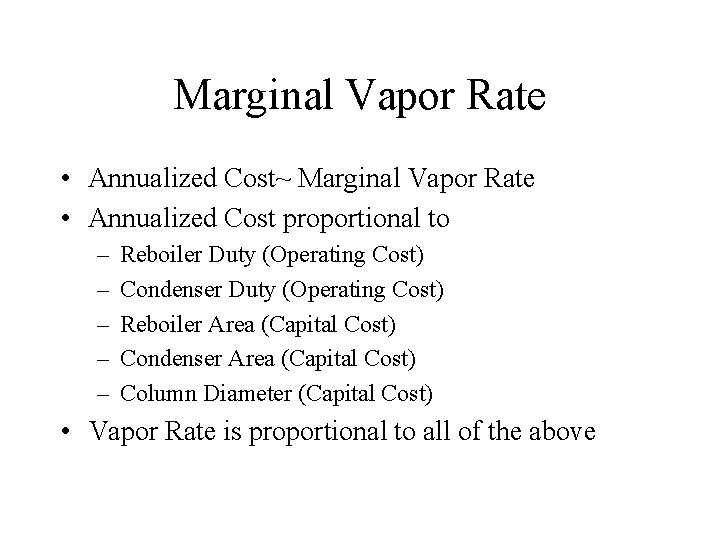
Marginal Vapor Rate • Annualized Cost~ Marginal Vapor Rate • Annualized Cost proportional to – – – Reboiler Duty (Operating Cost) Condenser Duty (Operating Cost) Reboiler Area (Capital Cost) Condenser Area (Capital Cost) Column Diameter (Capital Cost) • Vapor Rate is proportional to all of the above
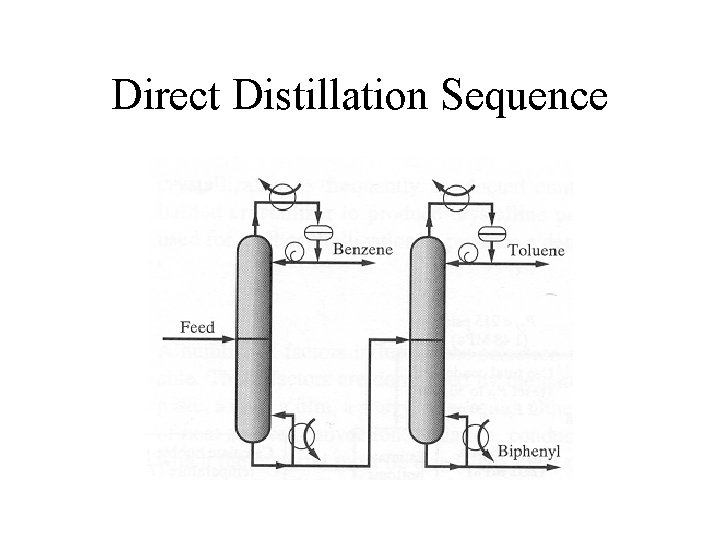
Direct Distillation Sequence
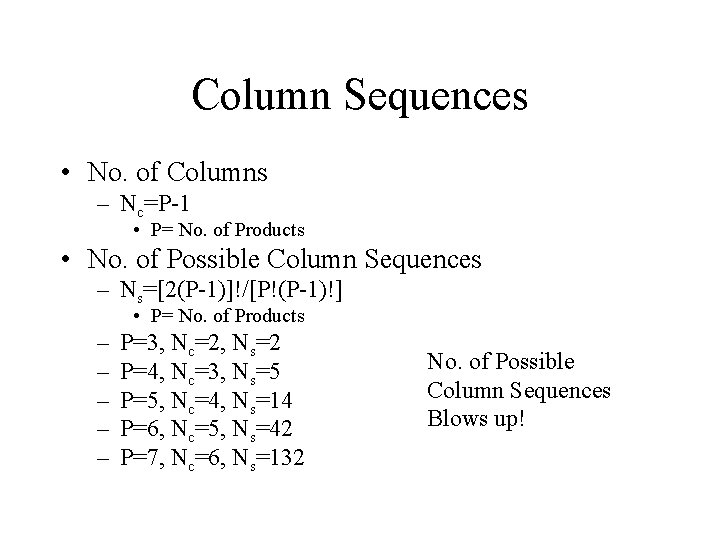
Column Sequences • No. of Columns – Nc=P-1 • P= No. of Products • No. of Possible Column Sequences – Ns=[2(P-1)]!/[P!(P-1)!] • P= No. of Products – – – P=3, Nc=2, Ns=2 P=4, Nc=3, Ns=5 P=5, Nc=4, Ns=14 P=6, Nc=5, Ns=42 P=7, Nc=6, Ns=132 No. of Possible Column Sequences Blows up!
How do I evaluate which is best sequence?
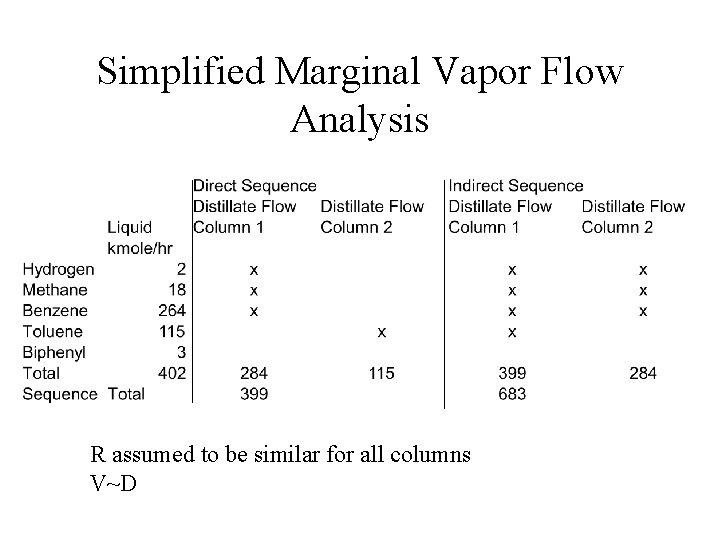
Marginal Vapor Rate • Annualized Cost~ Marginal Vapor Rate • Annualized Cost proportional to – – – Reboiler Duty (Operating Cost) Reboiler Area (Capital Cost) Condenser Duty (Operating Cost) Condenser Area (Capital Cost) Diameter of Column (Capital Cost) • Vapor Rate is proportional to all of the above
Selecting Multiple Column Separation Trains • Minimum Cost for Separation Train will occur when you have a – Minimum of Total Vapor Flow Rate for all columns – R= 1. 2 Rmin – V=D (R+1) • V= Vapor Flow Rate • D= Distillate Flow Rate • R=Recycle Ratio
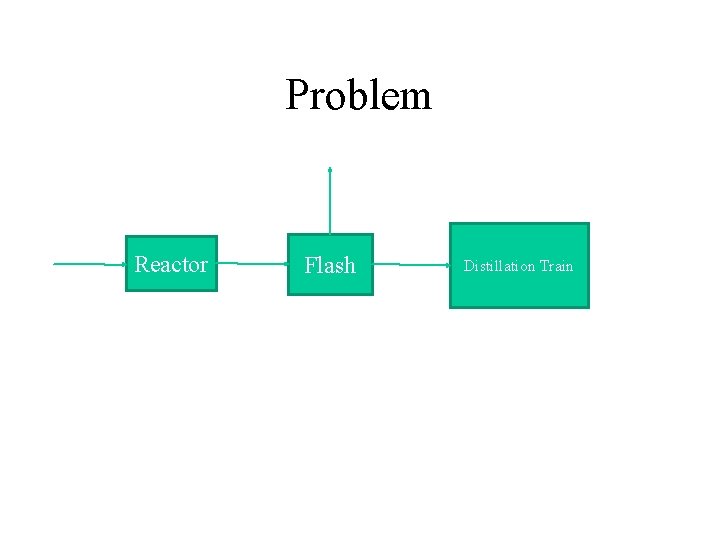
Problem Reactor Flash Distillation Train
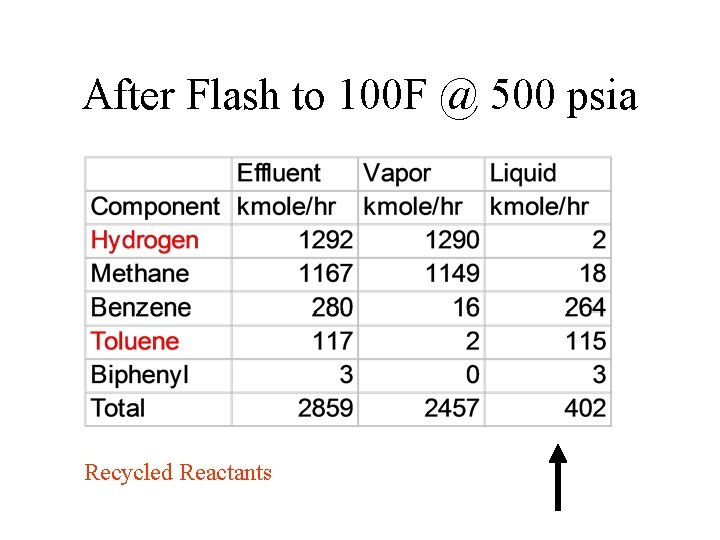
After Flash to 100 F @ 500 psia Recycled Reactants
Simplified Marginal Vapor Flow Analysis R assumed to be similar for all columns V~D
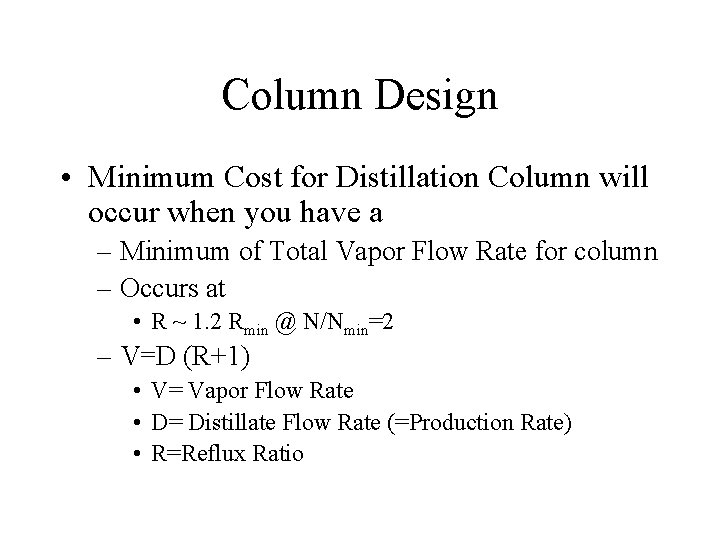
Column Design • Minimum Cost for Distillation Column will occur when you have a – Minimum of Total Vapor Flow Rate for column – Occurs at • R ~ 1. 2 Rmin @ N/Nmin=2 – V=D (R+1) • V= Vapor Flow Rate • D= Distillate Flow Rate (=Production Rate) • R=Reflux Ratio
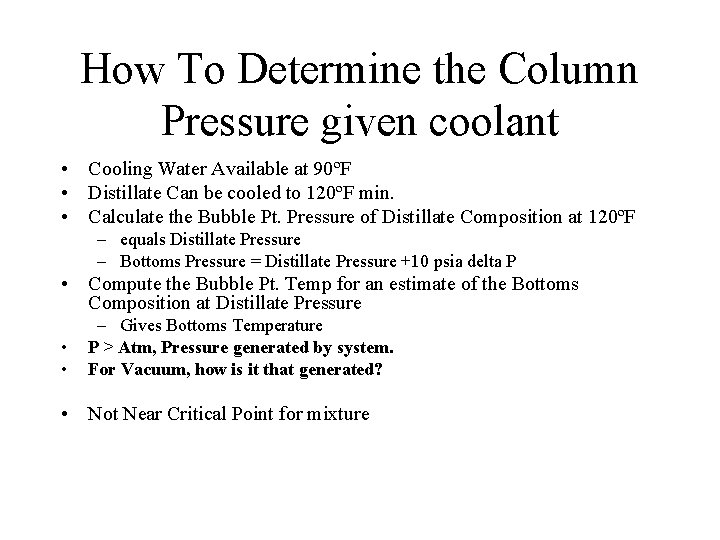
How To Determine the Column Pressure given coolant • Cooling Water Available at 90ºF • Distillate Can be cooled to 120ºF min. • Calculate the Bubble Pt. Pressure of Distillate Composition at 120ºF – equals Distillate Pressure – Bottoms Pressure = Distillate Pressure +10 psia delta P • Compute the Bubble Pt. Temp for an estimate of the Bottoms Composition at Distillate Pressure • • – Gives Bottoms Temperature P > Atm, Pressure generated by system. For Vacuum, how is it that generated? • Not Near Critical Point for mixture
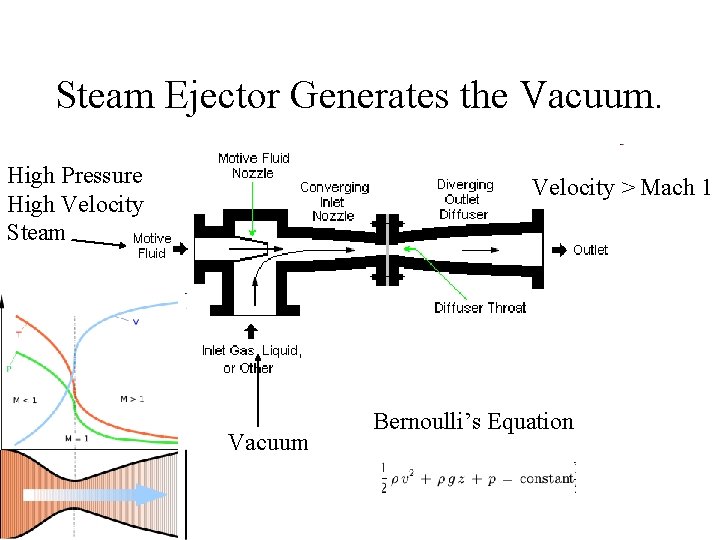
Steam Ejector Generates the Vacuum. High Pressure High Velocity Steam Velocity > Mach 1 Vacuum Bernoulli’s Equation
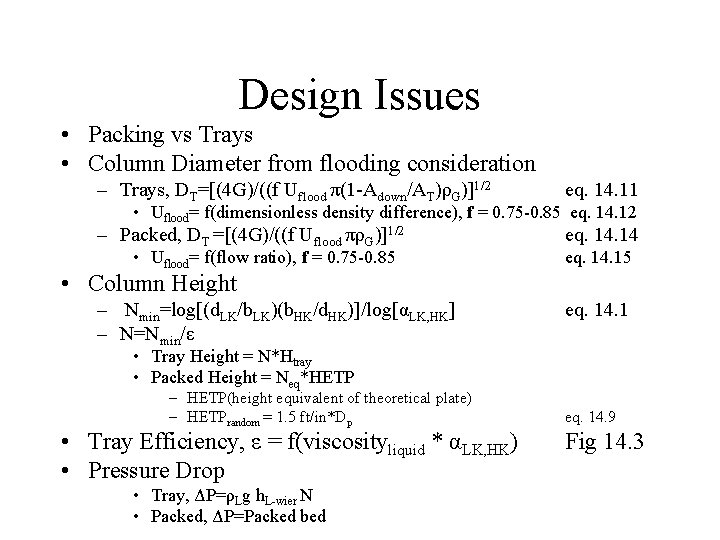
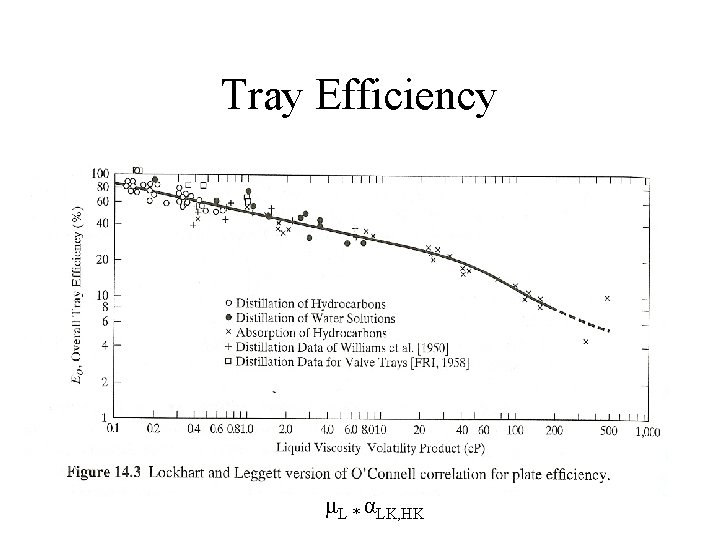
Design Issues • Packing vs Trays • Column Diameter from flooding consideration – Trays, DT=[(4 G)/((f Uflood π(1 -Adown/AT)ρG)]1/2 eq. 14. 11 – Packed, DT =[(4 G)/((f Uflood πρG)]1/2 eq. 14 • Uflood= f(dimensionless density difference), f = 0. 75 -0. 85 eq. 14. 12 • Uflood= f(flow ratio), f = 0. 75 -0. 85 eq. 14. 15 • Column Height – Nmin=log[(d. LK/b. LK)(b. HK/d. HK)]/log[αLK, HK] – N=Nmin/ε eq. 14. 1 • Tray Height = N*Htray • Packed Height = Neq*HETP – HETP(height equivalent of theoretical plate) – HETPrandom = 1. 5 ft/in*Dp • Tray Efficiency, ε = f(viscosityliquid * αLK, HK) • Pressure Drop • Tray, ΔP=ρLg h. L-wier N • Packed, ΔP=Packed bed eq. 14. 9 Fig 14. 3
Tray Efficiency μL * αLK, HK
Costing
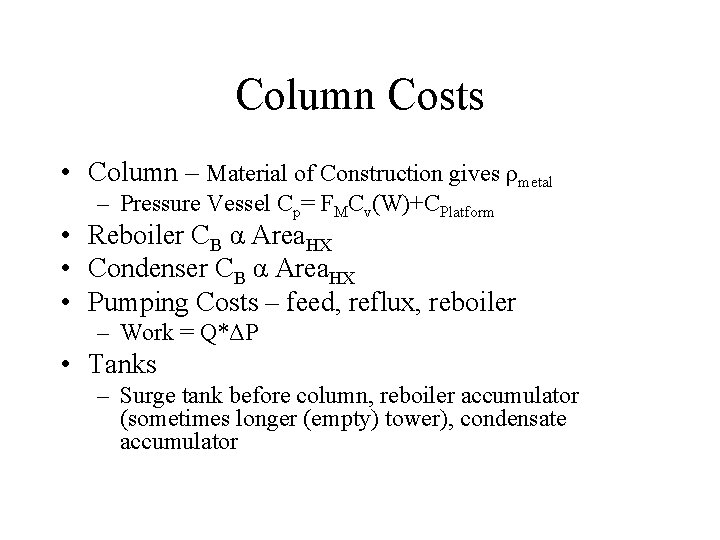
Column Costs • Column – Material of Construction gives ρmetal – Pressure Vessel Cp= FMCv(W)+CPlatform • Reboiler CB α Area. HX • Condenser CB α Area. HX • Pumping Costs – feed, reflux, reboiler – Work = Q*ΔP • Tanks – Surge tank before column, reboiler accumulator (sometimes longer (empty) tower), condensate accumulator
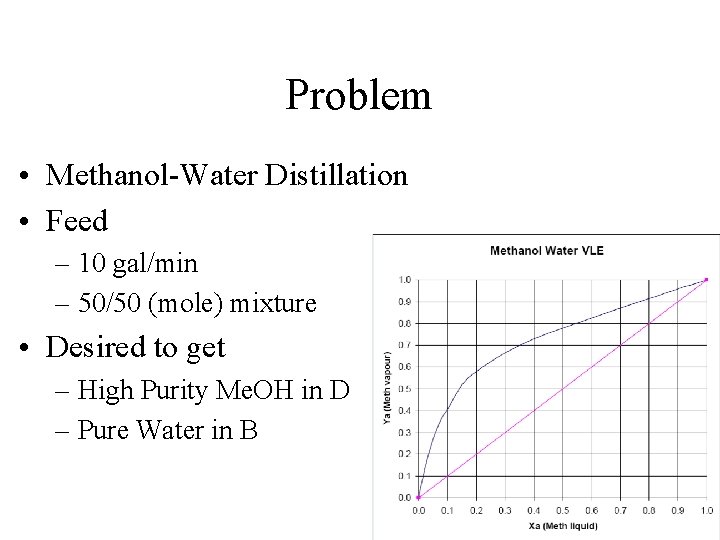
Problem • Methanol-Water Distillation • Feed – 10 gal/min – 50/50 (mole) mixture • Desired to get – High Purity Me. OH in D – Pure Water in B
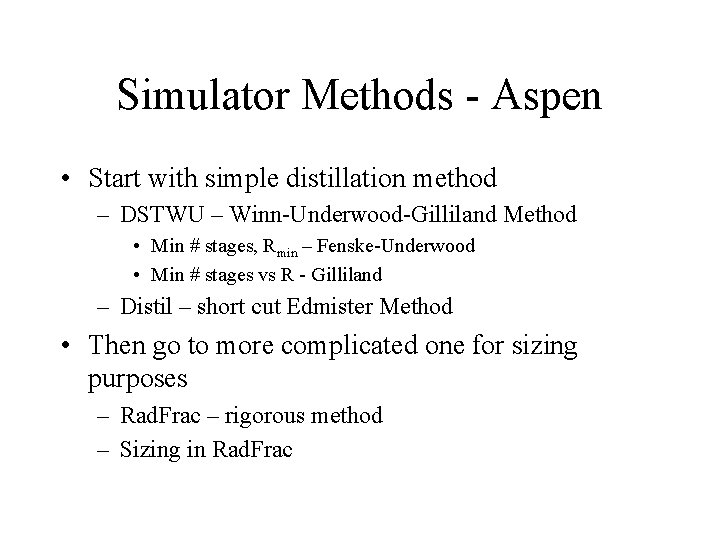
Simulator Methods - Aspen • Start with simple distillation method – DSTWU – Winn-Underwood-Gilliland Method • Min # stages, Rmin – Fenske-Underwood • Min # stages vs R - Gilliland – Distil – short cut Edmister Method • Then go to more complicated one for sizing purposes – Rad. Frac – rigorous method – Sizing in Rad. Frac
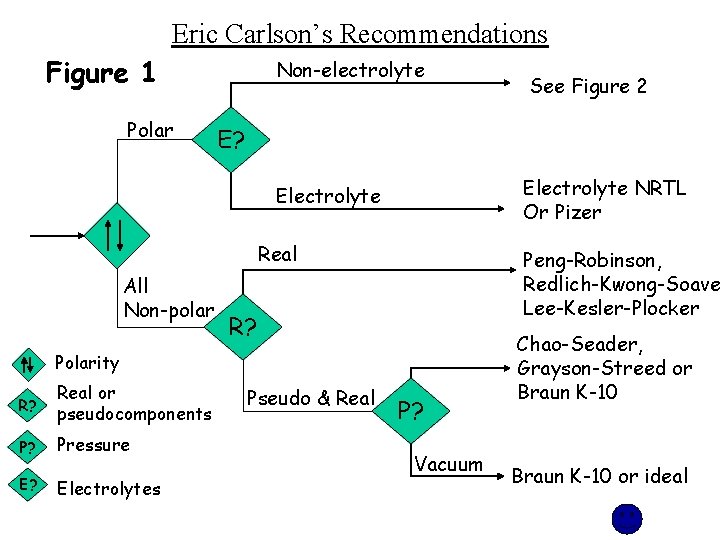
Eric Carlson’s Recommendations Figure 1 Polar Non-electrolyte E? Electrolyte NRTL Or Pizer Electrolyte Real All Non-polar Peng-Robinson, Redlich-Kwong-Soave Lee-Kesler-Plocker R? Polarity R? Real or pseudocomponents P? Pressure E? Electrolytes See Figure 2 Pseudo & Real P? Vacuum Chao-Seader, Grayson-Streed or Braun K-10 or ideal
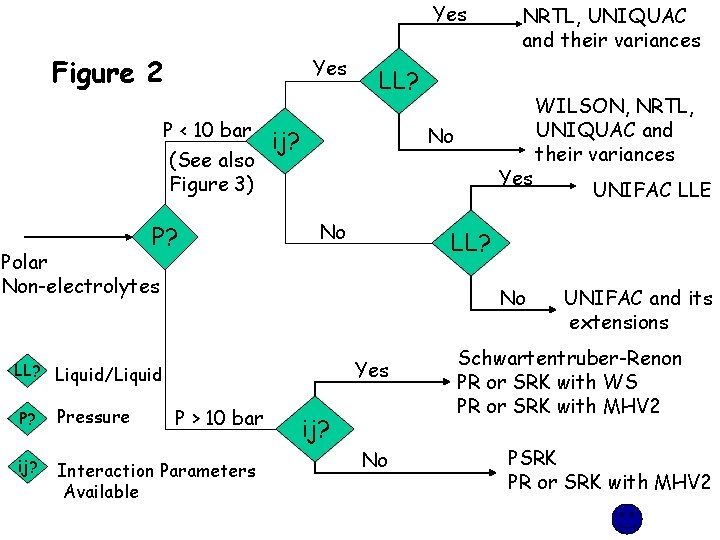
Yes Figure 2 Yes P < 10 bar (See also Figure 3) P? NRTL, UNIQUAC and their variances LL? No ij? Yes No No Yes P > 10 bar P? Pressure ij? Interaction Parameters Available UNIFAC LLE LL? Polar Non-electrolytes LL? Liquid/Liquid WILSON, NRTL, UNIQUAC and their variances ij? No UNIFAC and its extensions Schwartentruber-Renon PR or SRK with WS PR or SRK with MHV 2 PSRK PR or SRK with MHV 2
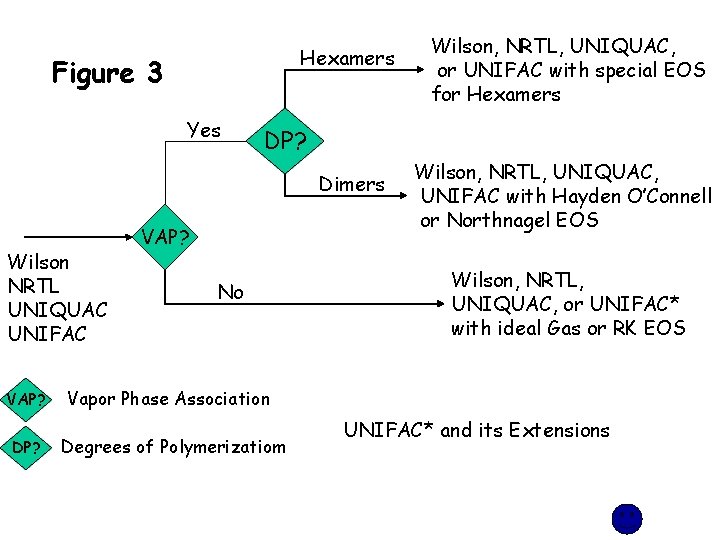
Hexamers Figure 3 Yes DP? Dimers Wilson NRTL UNIQUAC UNIFAC VAP? DP? Wilson, NRTL, UNIQUAC, or UNIFAC with special EOS for Hexamers VAP? No Wilson, NRTL, UNIQUAC, UNIFAC with Hayden O’Connell or Northnagel EOS Wilson, NRTL, UNIQUAC, or UNIFAC* with ideal Gas or RK EOS Vapor Phase Association Degrees of Polymerizatiom UNIFAC* and its Extensions
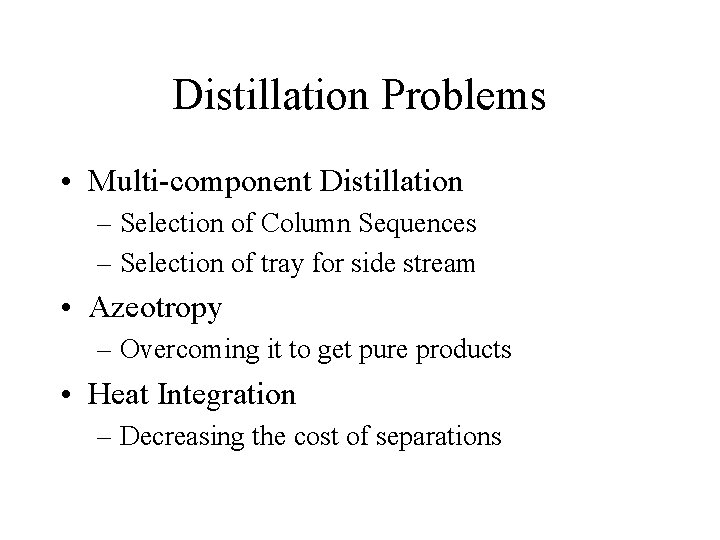
Distillation Problems • Multi-component Distillation – Selection of Column Sequences – Selection of tray for side stream • Azeotropy – Overcoming it to get pure products • Heat Integration – Decreasing the cost of separations