
Distance Measuring 1 Two principles of measuring distance
- Slides: 34
Distance Measuring 1
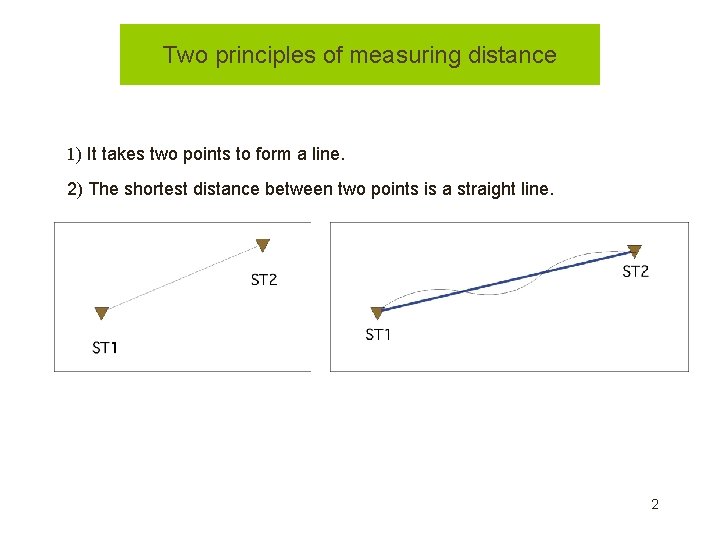
Two principles of measuring distance 1) It takes two points to form a line. 2) The shortest distance between two points is a straight line. 2
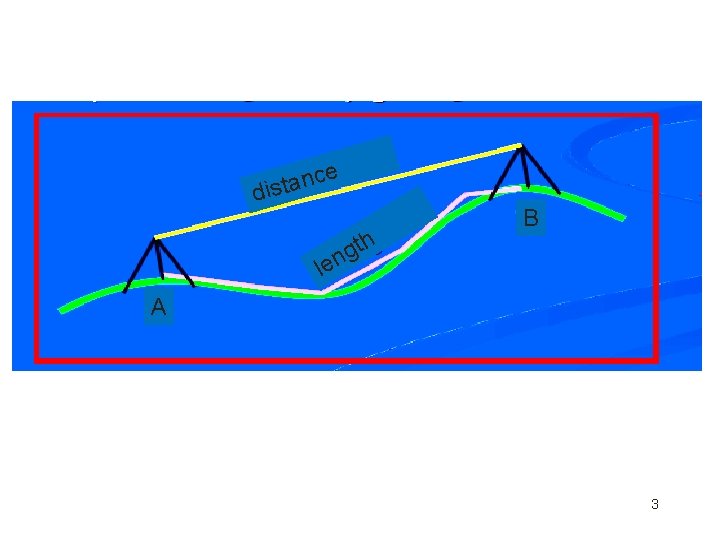
ce n a t dis th g n B le A 3
Selecting The “Best” Method The best distance measuring method/device to use is influenced by many factors. • • Environment Use of the data Equipment available Expertise of individuals • • • Personal preference Topography Client specifications Regulations Standard practice The most important factor is the intended use of the data. 4
Methods of Measuring Distance Direct Methods of Measuring Lengths 1. Pacing 2. Car Odometer 3. Measuring Wheel 4. Chain 5. Tape 5
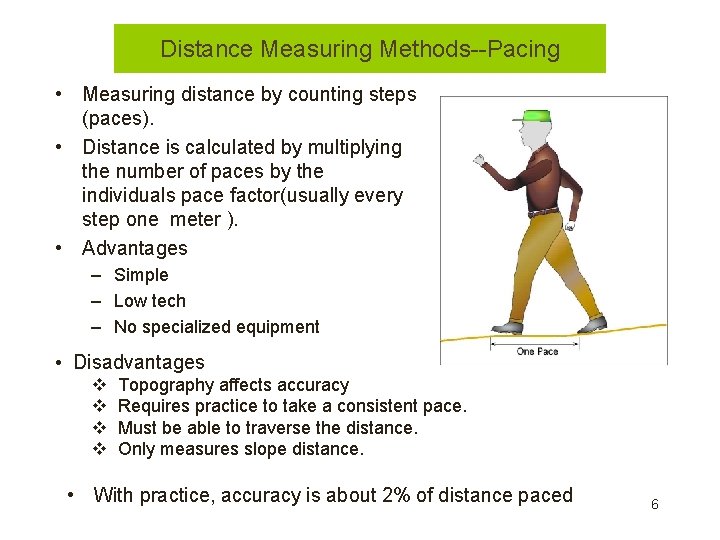
Distance Measuring Methods--Pacing • Measuring distance by counting steps (paces). • Distance is calculated by multiplying the number of paces by the individuals pace factor(usually every step one meter ). • Advantages – Simple – Low tech – No specialized equipment • Disadvantages v v Topography affects accuracy Requires practice to take a consistent pace. Must be able to traverse the distance. Only measures slope distance. • With practice, accuracy is about 2% of distance paced 6
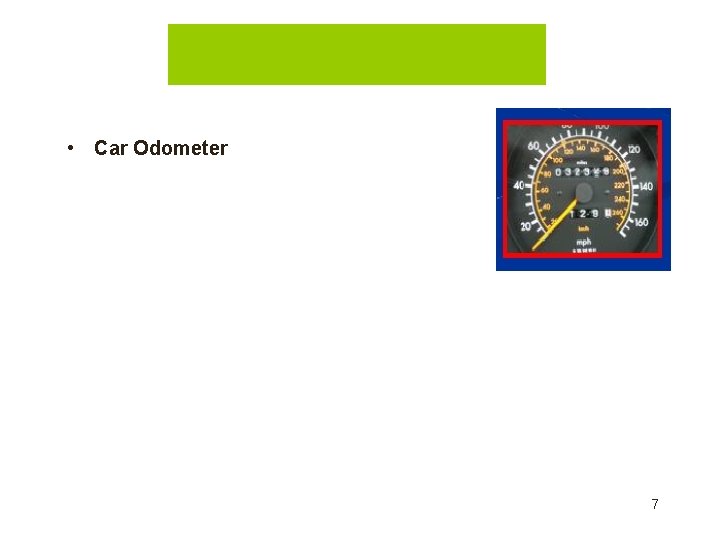
• Car Odometer 7
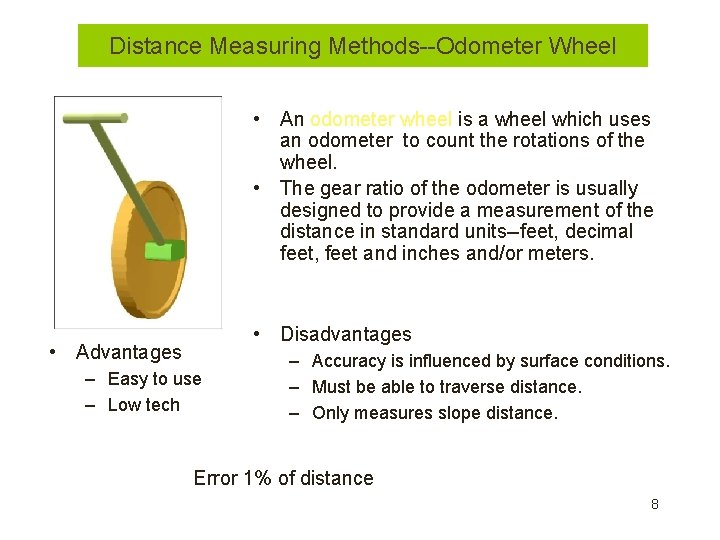
Distance Measuring Methods--Odometer Wheel • An odometer wheel is a wheel which uses an odometer to count the rotations of the wheel. • The gear ratio of the odometer is usually designed to provide a measurement of the distance in standard units--feet, decimal feet, feet and inches and/or meters. • Disadvantages • Advantages – Easy to use – Low tech – Accuracy is influenced by surface conditions. – Must be able to traverse distance. – Only measures slope distance. Error 1% of distance 8
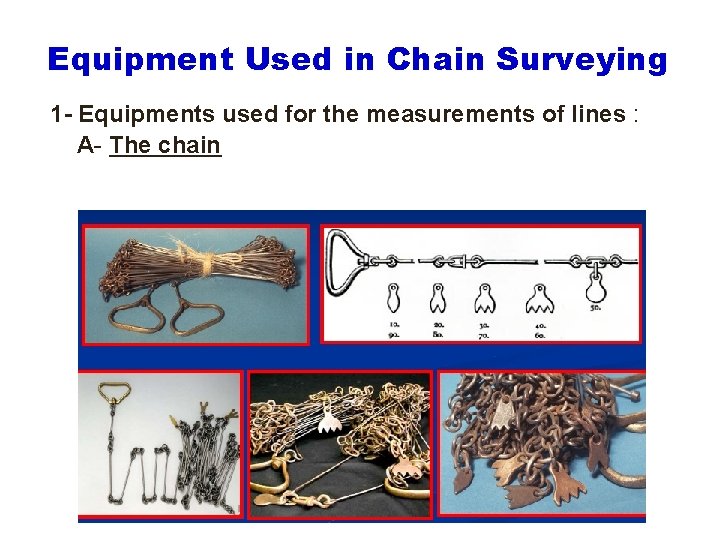
Equipment Used in Chain Surveying 1 - Equipments used for the measurements of lines : A- The chain
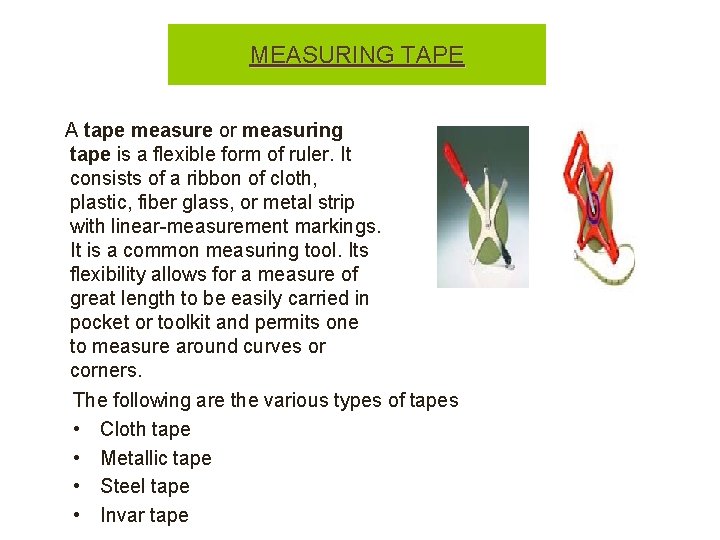
MEASURING TAPE A tape measure or measuring tape is a flexible form of ruler. It consists of a ribbon of cloth, plastic, fiber glass, or metal strip with linear-measurement markings. It is a common measuring tool. Its flexibility allows for a measure of great length to be easily carried in pocket or toolkit and permits one to measure around curves or corners. The following are the various types of tapes • Cloth tape • Metallic tape • Steel tape • Invar tape
Invar Tapes: accurate tape made of steel (65%) & Nickel (35%) but they are very expensive. 11
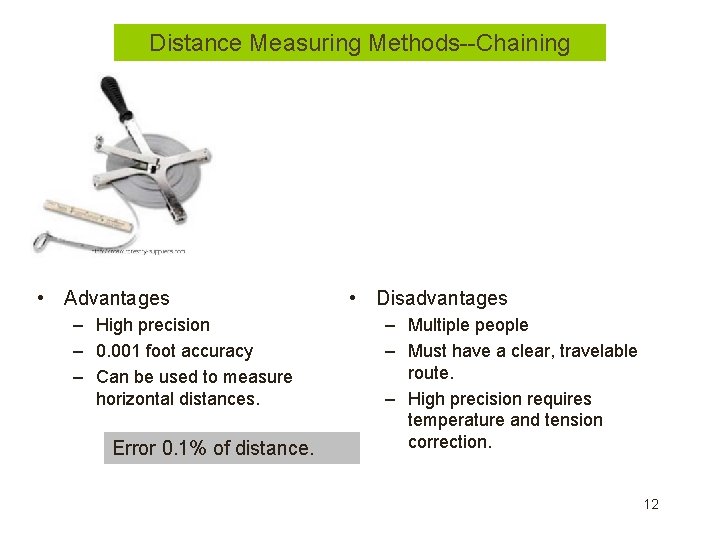
Distance Measuring Methods--Chaining • Advantages – High precision – 0. 001 foot accuracy – Can be used to measure horizontal distances. Error 0. 1% of distance. • Disadvantages – Multiple people – Must have a clear, travelable route. – High precision requires temperature and tension correction. 12
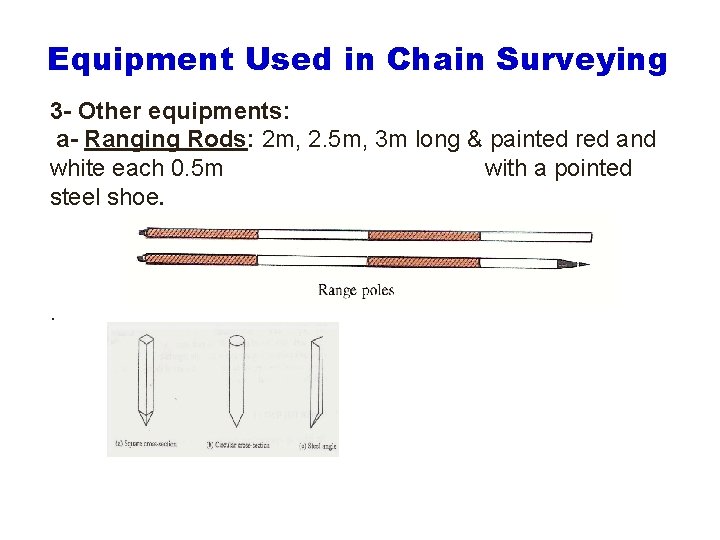
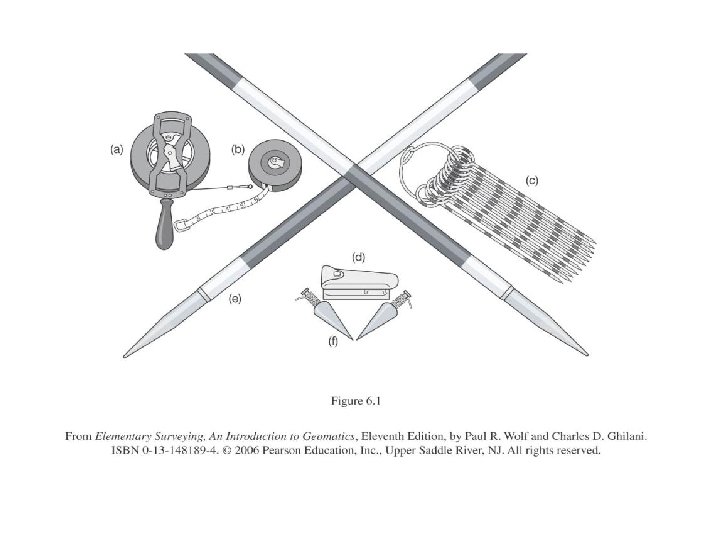
Equipment Used in Chain Surveying 3 - Other equipments: a- Ranging Rods: 2 m, 2. 5 m, 3 m long & painted red and white each 0. 5 m with a pointed steel shoe. .
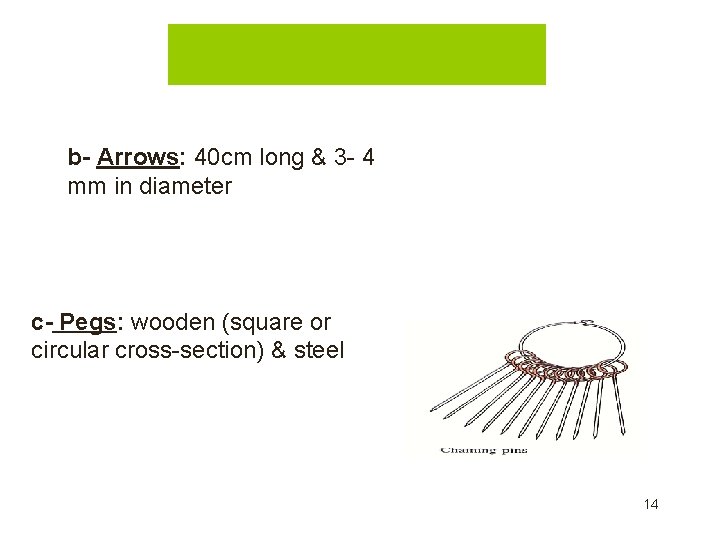
b- Arrows: 40 cm long & 3 - 4 mm in diameter c- Pegs: wooden (square or circular cross-section) & steel 14
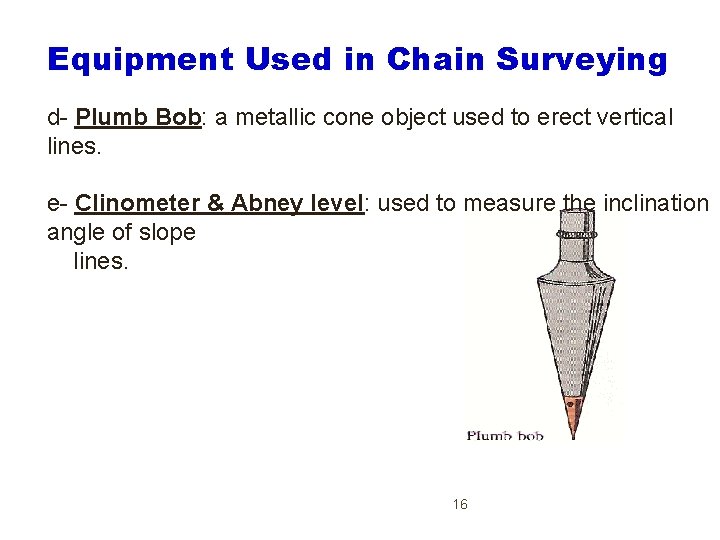
Equipment Used in Chain Surveying d- Plumb Bob: a metallic cone object used to erect vertical lines. e- Clinometer & Abney level: used to measure the inclination angle of slope lines. 16
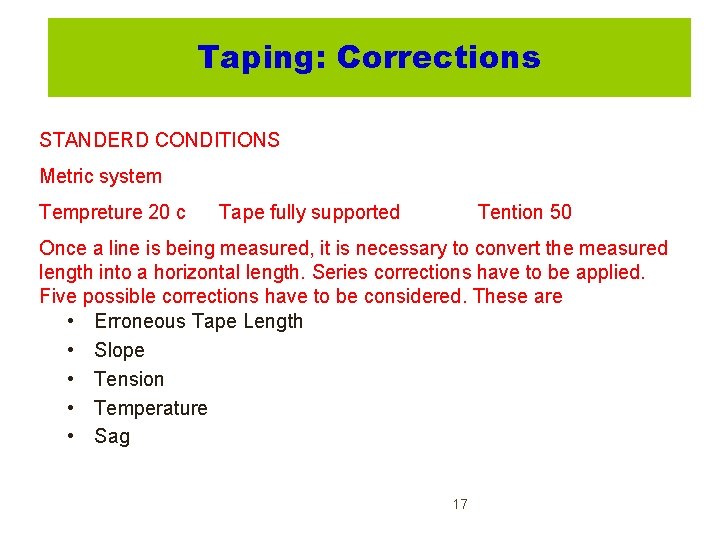
Taping: Corrections STANDERD CONDITIONS Metric system Tempreture 20 c Tape fully supported Tention 50 Once a line is being measured, it is necessary to convert the measured length into a horizontal length. Series corrections have to be applied. Five possible corrections have to be considered. These are • Erroneous Tape Length • Slope • Tension • Temperature • Sag 17
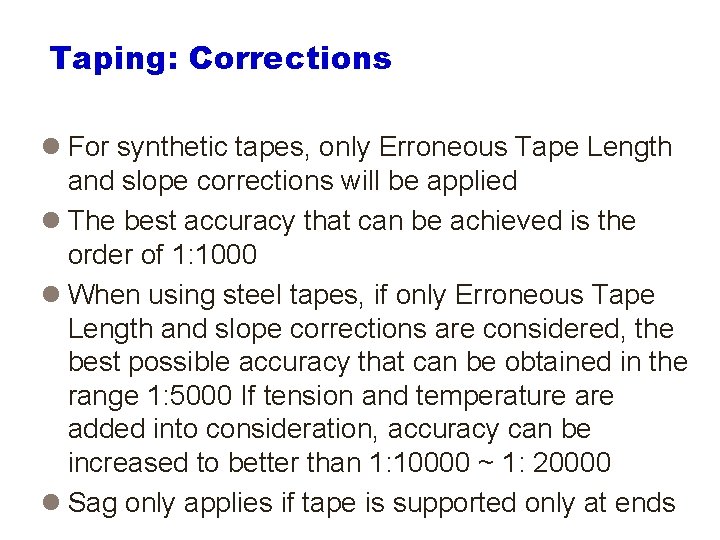
Taping: Corrections l For synthetic tapes, only Erroneous Tape Length and slope corrections will be applied l The best accuracy that can be achieved is the order of 1: 1000 l When using steel tapes, if only Erroneous Tape Length and slope corrections are considered, the best possible accuracy that can be obtained in the range 1: 5000 If tension and temperature added into consideration, accuracy can be increased to better than 1: 10000 ~ 1: 20000 18 l Sag only applies if tape is supported only at ends
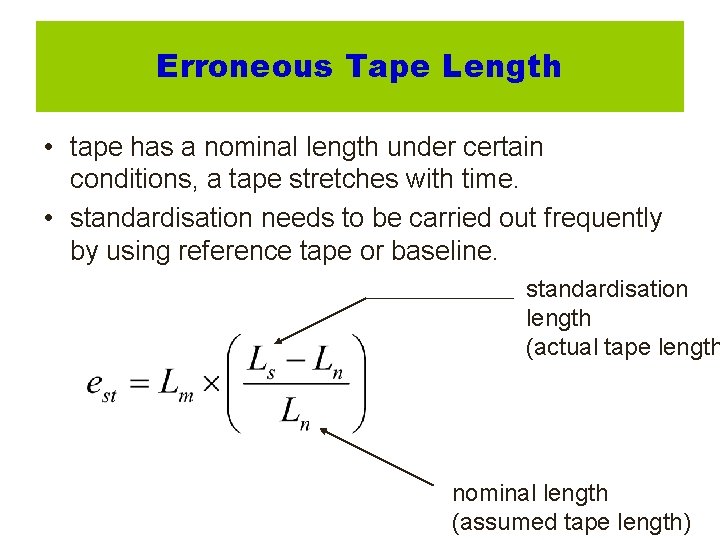
Erroneous Tape Length • tape has a nominal length under certain conditions, a tape stretches with time. • standardisation needs to be carried out frequently by using reference tape or baseline. standardisation length (actual tape length nominal length 19 (assumed tape length)
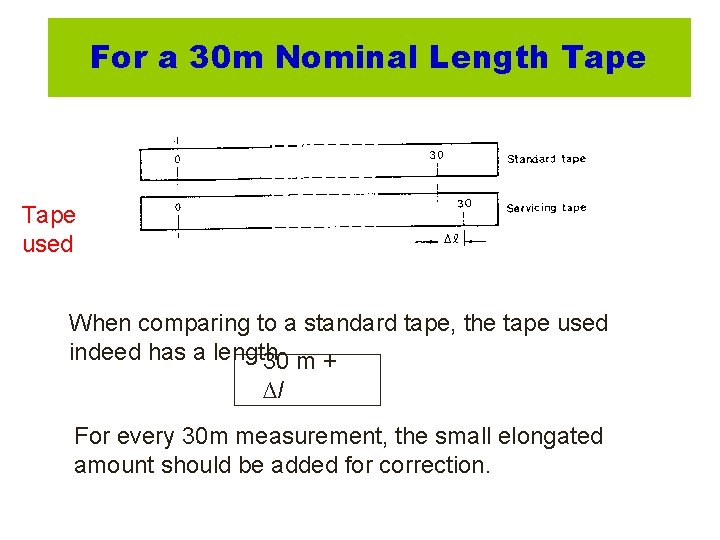
For a 30 m Nominal Length Tape used When comparing to a standard tape, the tape used indeed has a length 30 m + ∆l For every 30 m measurement, the small elongated amount should be added for correction.
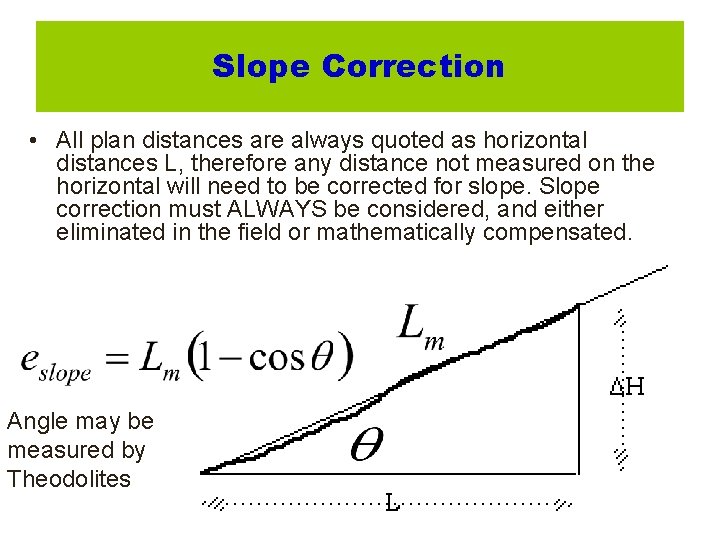
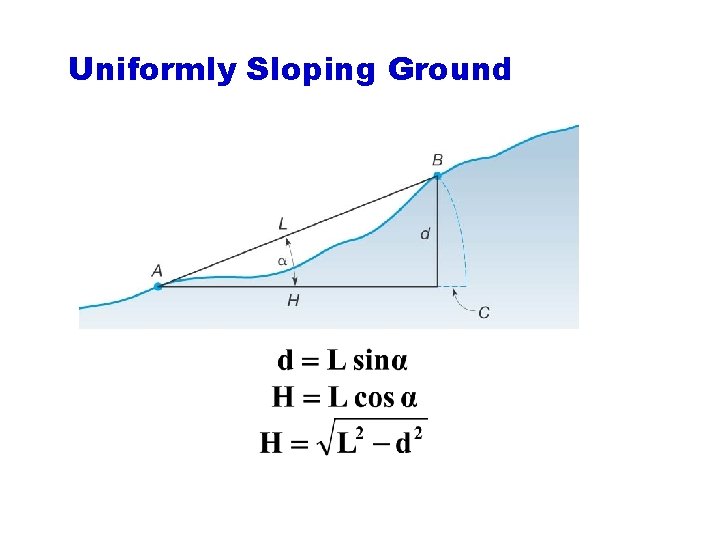
Slope Correction • All plan distances are always quoted as horizontal distances L, therefore any distance not measured on the horizontal will need to be corrected for slope. Slope correction must ALWAYS be considered, and either eliminated in the field or mathematically compensated. Angle may be measured by Theodolites 21
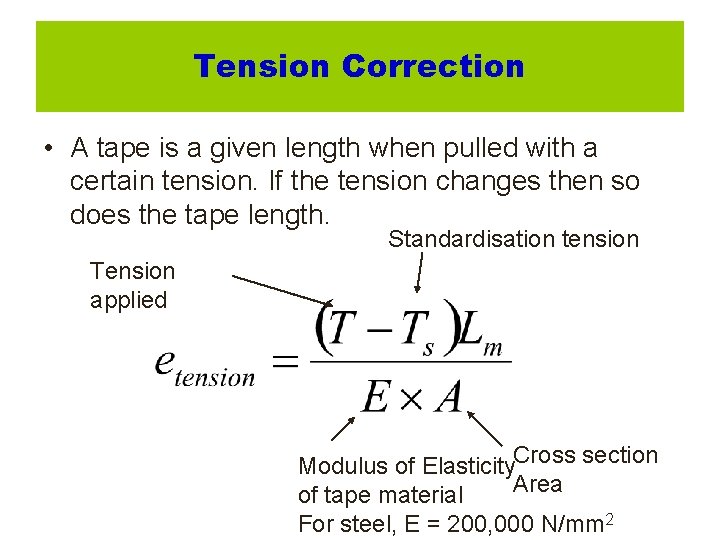
Tension Correction • A tape is a given length when pulled with a certain tension. If the tension changes then so does the tape length. Standardisation tension Tension applied Modulus of Elasticity. Cross section Area of tape material 22 For steel, E = 200, 000 N/mm 2
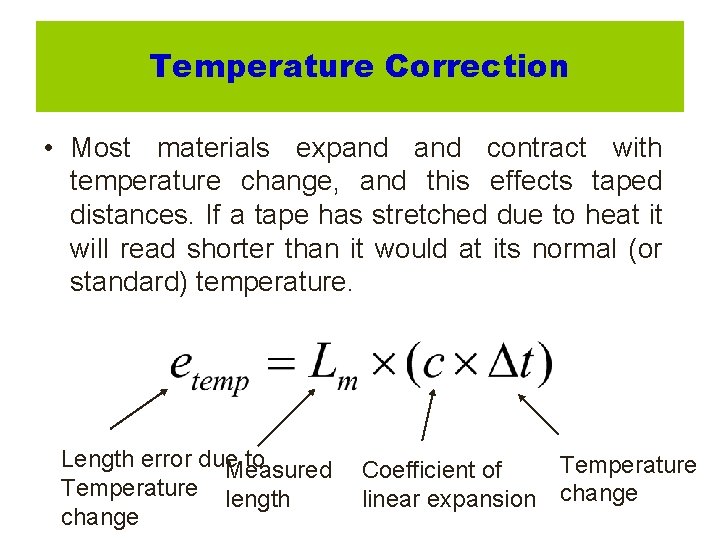
Temperature Correction • Most materials expand contract with temperature change, and this effects taped distances. If a tape has stretched due to heat it will read shorter than it would at its normal (or standard) temperature. Length error due to Measured Temperature length change Temperature Coefficient of linear expansion change 23
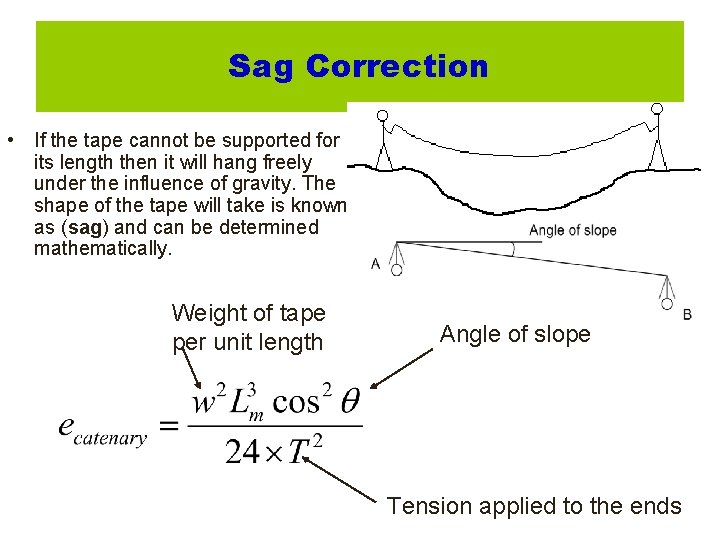
Sag Correction • If the tape cannot be supported for its length then it will hang freely under the influence of gravity. The shape of the tape will take is known as (sag) and can be determined mathematically. Weight of tape per unit length Angle of slope 24 Tension applied to the ends
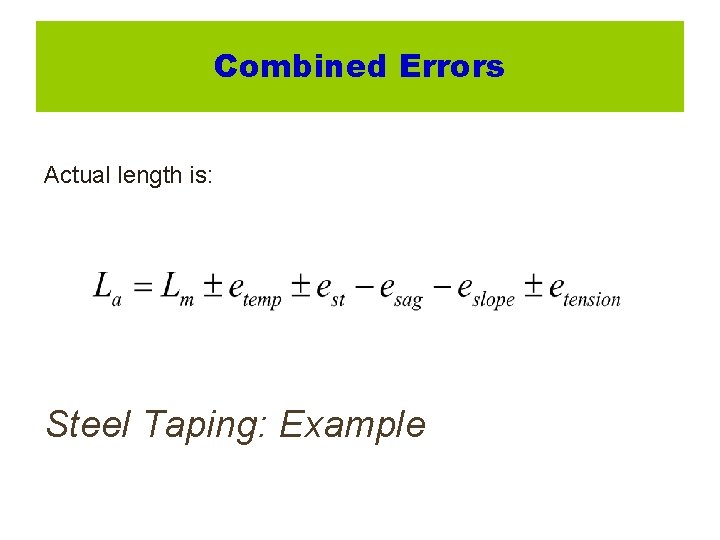
Combined Errors Actual length is: Steel Taping: Example 25
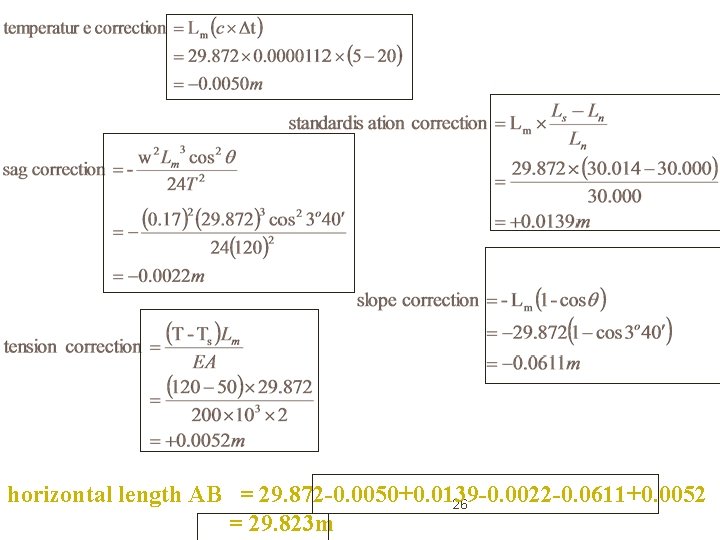
horizontal length AB = 29. 872 -0. 0050+0. 0139 -0. 0022 -0. 0611+0. 0052 26 = 29. 823 m
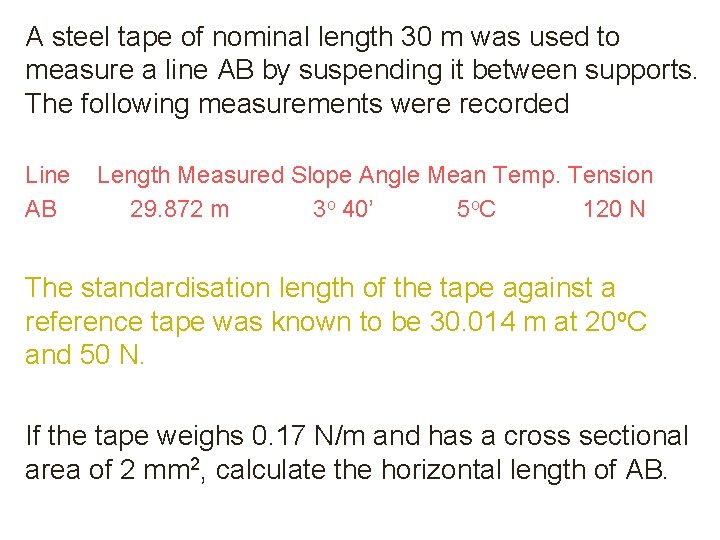
A steel tape of nominal length 30 m was used to measure a line AB by suspending it between supports. The following measurements were recorded Line AB Length Measured Slope Angle Mean Temp. Tension 29. 872 m 3 o 40’ 5 o. C 120 N The standardisation length of the tape against a reference tape was known to be 30. 014 m at 20 o. C and 50 N. If the tape weighs 0. 17 N/m and has a cross sectional area of 2 mm 2, calculate the horizontal length of AB. 27
Processes in Chain Surveying Two Measurement are performed • ranging and measurement of lines • setting out of right angles Take the following points in mind when doing measurements: • the measurement should be in a straight line • the tape should be reasonably pulled • systematic way should be followed
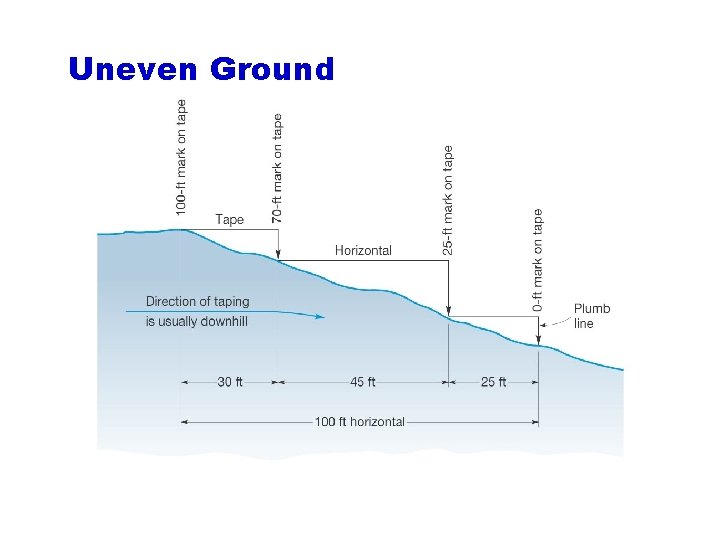
Processes in Chain Surveying Ranging and Measurement of Lines • Level Ground • Uniformly Sloping Ground • Uneven Ground
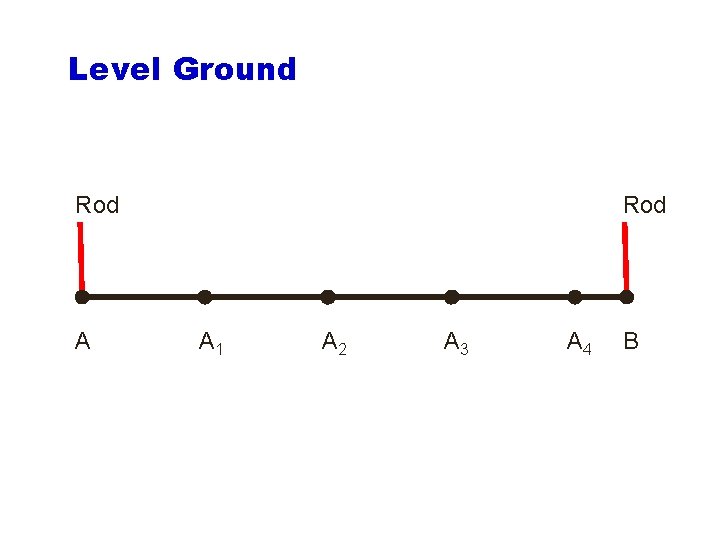
Level Ground Rod A 1 A 2 A 3 A 4 B
Uniformly Sloping Ground
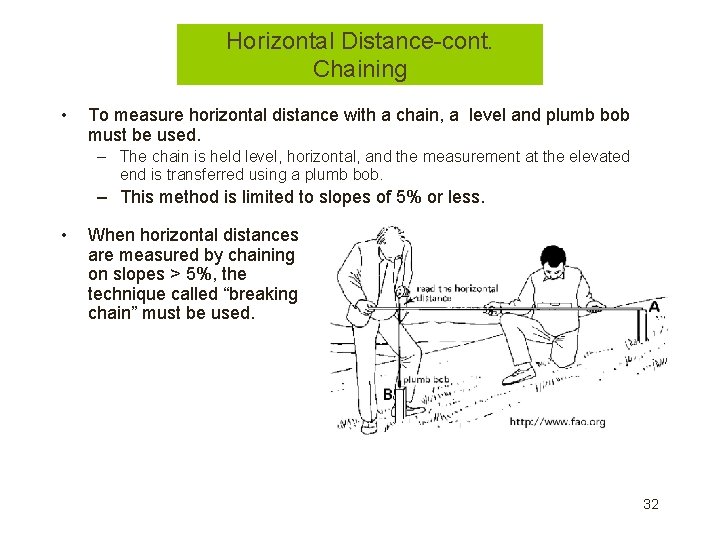
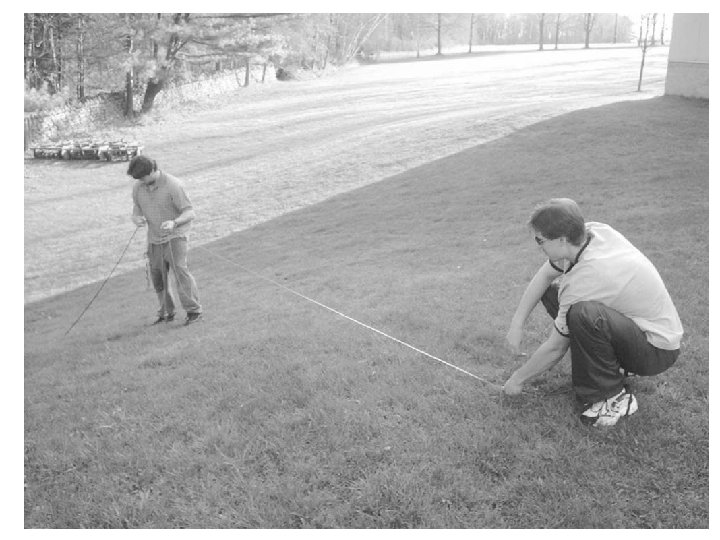
Horizontal Distance-cont. Chaining • To measure horizontal distance with a chain, a level and plumb bob must be used. – The chain is held level, horizontal, and the measurement at the elevated end is transferred using a plumb bob. – This method is limited to slopes of 5% or less. • When horizontal distances are measured by chaining on slopes > 5%, the technique called “breaking chain” must be used. 32
Uneven Ground