
Distance Education Equivalency of Learning Experiences Equal is

- Slides: 19
Distance Education & Equivalency of Learning Experiences Equal is not best Michael Simonson
http: //experts. msn. com/
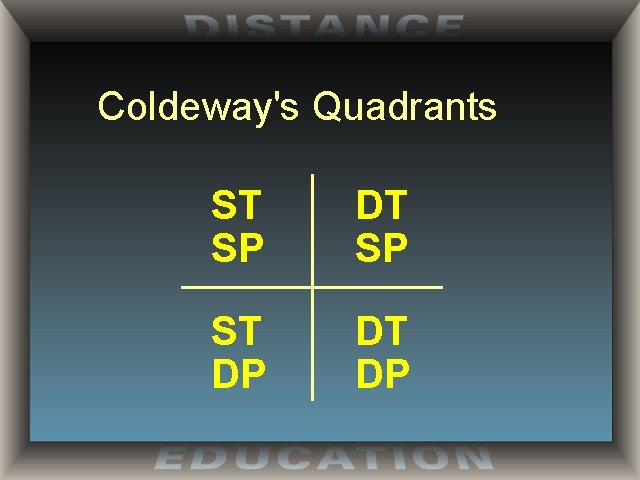
Coldeway's Quadrants ST SP DT SP ST DP DT DP
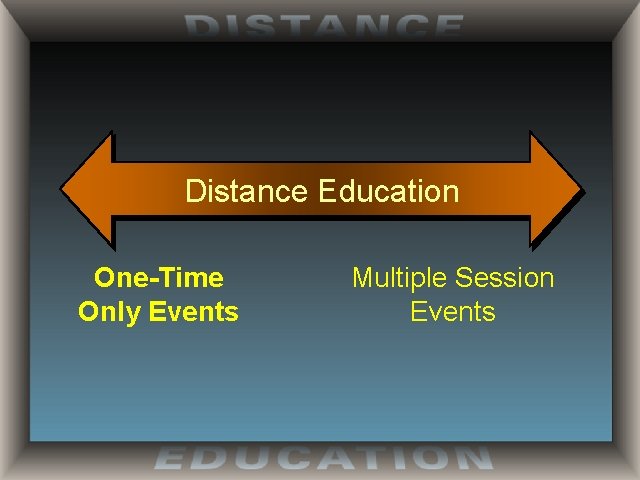
Distance Education One-Time Only Events Multiple Session Events
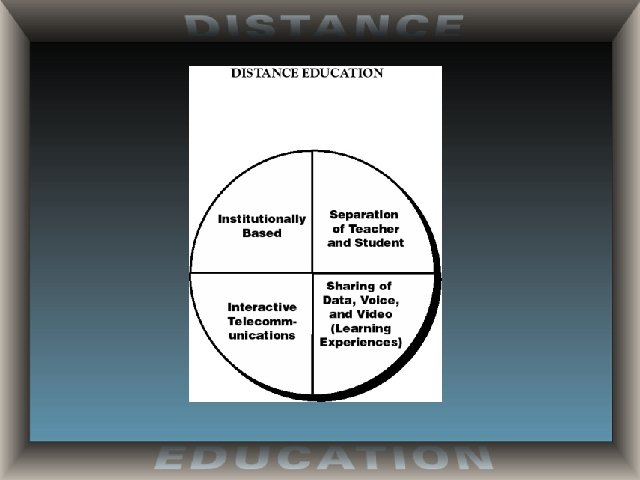
Redefinition of Distance Education Institution based formal education where the learning group is separated, and where interactive telecommunications systems are used to connect learners, resources and instructors.
Equivalency Theory of Distance Education "The more equivalent the learning experiences of the distant learner are to the learning experiences of the traditional learner, the more equivalent are the learning outcomes. "
Learning Experiences Anything that happens to or with a student that promotes learning, including what is observed, felt, heard, or done.
What Works – Distance Education • Carefully planned instruction • Structured note taking - interactive study guides • Visualizations of concepts • Less than 4 remote sites • Almost anything that works in a regular classroom - if it is planned
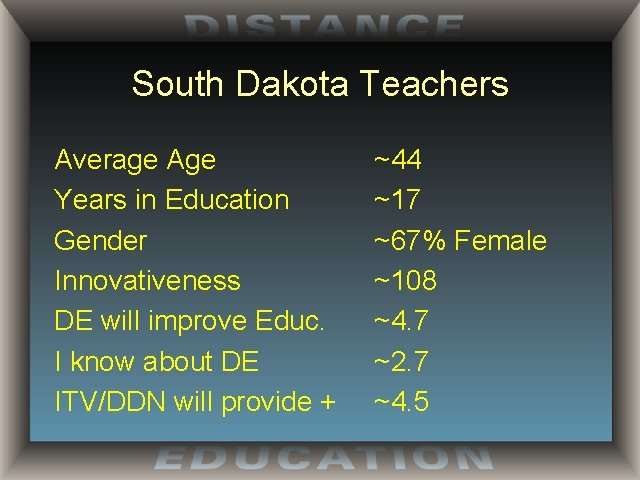
South Dakota Teachers Average Age Years in Education Gender Innovativeness DE will improve Educ. I know about DE ITV/DDN will provide + ~44 ~17 ~67% Female ~108 ~4. 7 ~2. 7 ~4. 5
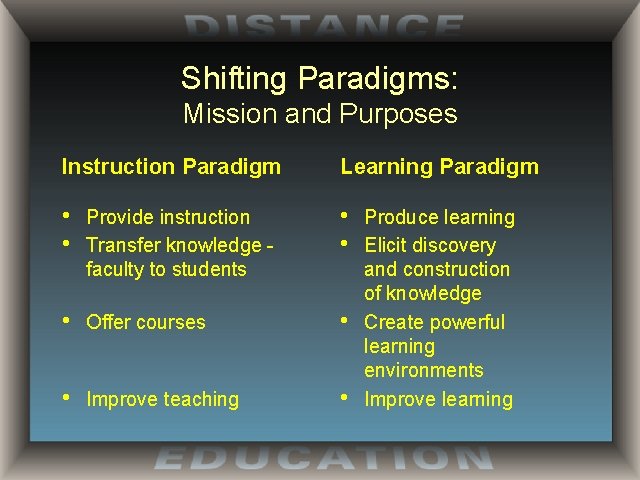
Shifting Paradigms: Mission and Purposes Instruction Paradigm Learning Paradigm • • Provide instruction Transfer knowledge faculty to students • • • Offer courses • • Improve teaching • Produce learning Elicit discovery and construction of knowledge Create powerful learning environments Improve learning
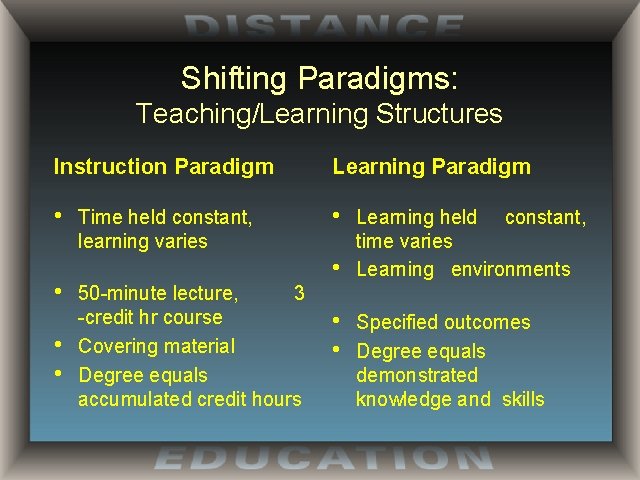
Shifting Paradigms: Teaching/Learning Structures Instruction Paradigm Learning Paradigm • • • Time held constant, learning varies • 50 -minute lecture, 3 -credit hr course Covering material Degree equals accumulated credit hours • • Learning held constant, time varies Learning environments Specified outcomes Degree equals demonstrated knowledge and skills
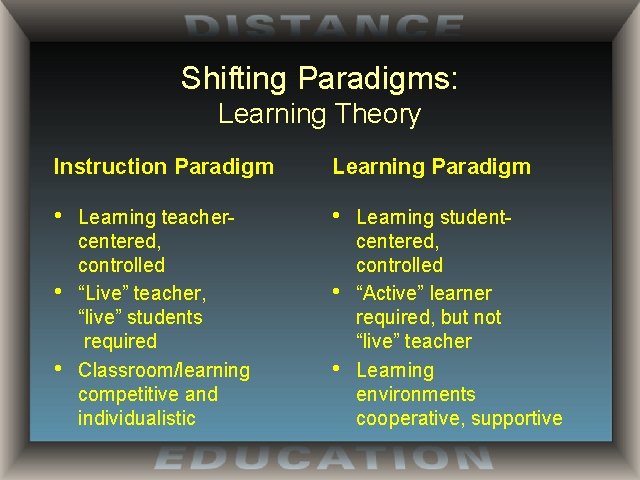
Shifting Paradigms: Learning Theory Instruction Paradigm Learning Paradigm • • Learning teachercentered, controlled “Live” teacher, “live” students required Classroom/learning competitive and individualistic • • Learning studentcentered, controlled “Active” learner required, but not “live” teacher Learning environments cooperative, supportive
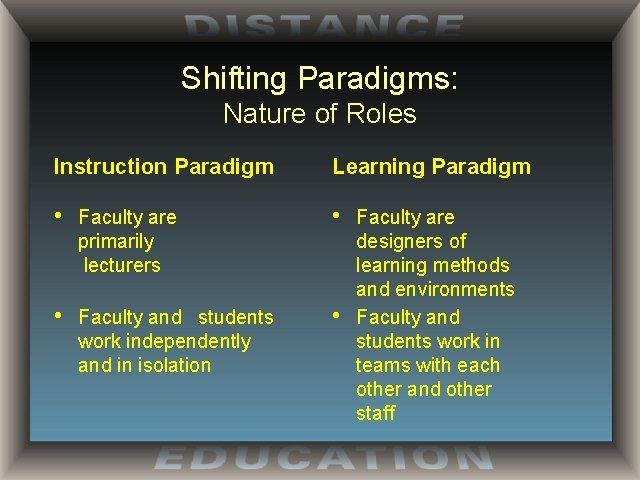
Shifting Paradigms: Nature of Roles Instruction Paradigm Learning Paradigm • Faculty are primarily lecturers • • Faculty and students work independently and in isolation • Faculty are designers of learning methods and environments Faculty and students work in teams with each other and other staff