
Distal femoral fractures treatment options and outcomes AO
- Slides: 31
Distal femoral fractures— treatment options and outcomes AO Trauma Advanced Principles Course
Learning objectives • • • Describe the surgical anatomy of the distal femur and its influence on implant use Explain indirect reduction maneuvers Compare indications and techniques for plating and nailing Outline the management of complicating factors (osteoporosis, severe comminution, periprosthetic fractures) Evaluate key outcome publications
Importance of the osseous anatomy of the distal femur • • • For radiographic evaluation of fracture characteristics For critical assessment of the reduction For deciding the optimal implant choice and position
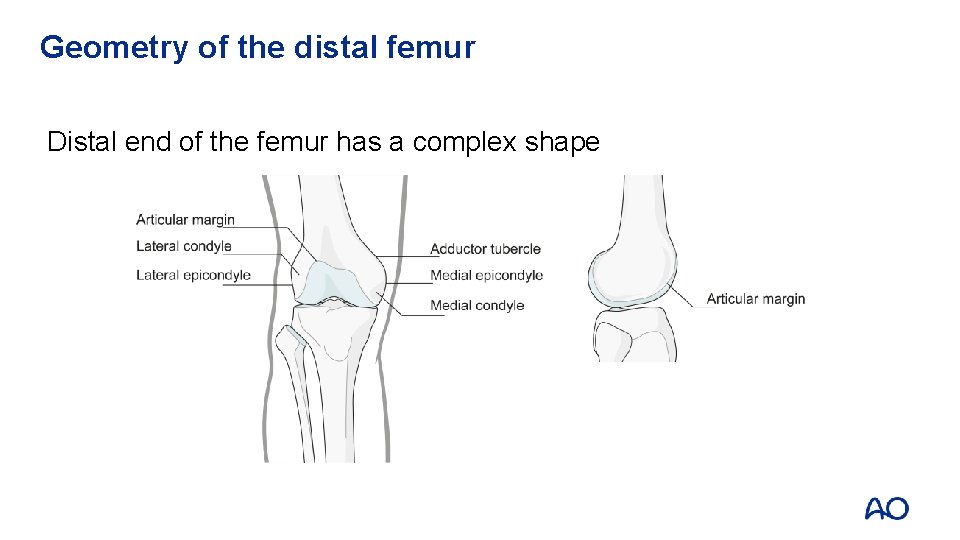
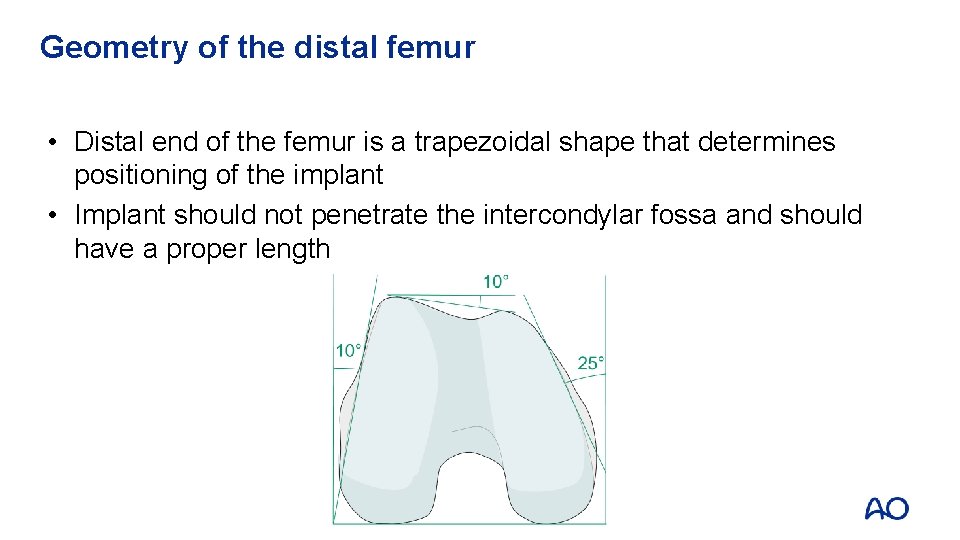
Geometry of the distal femur Distal end of the femur has a complex shape
Geometry of the distal femur • Distal end of the femur is a trapezoidal shape that determines positioning of the implant • Implant should not penetrate the intercondylar fossa and should have a proper length
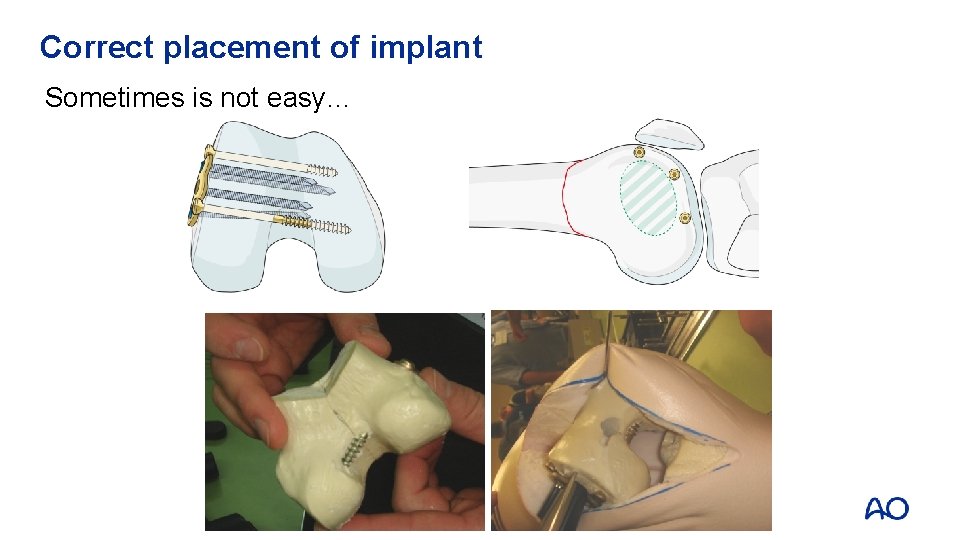
Correct placement of implant Sometimes is not easy…
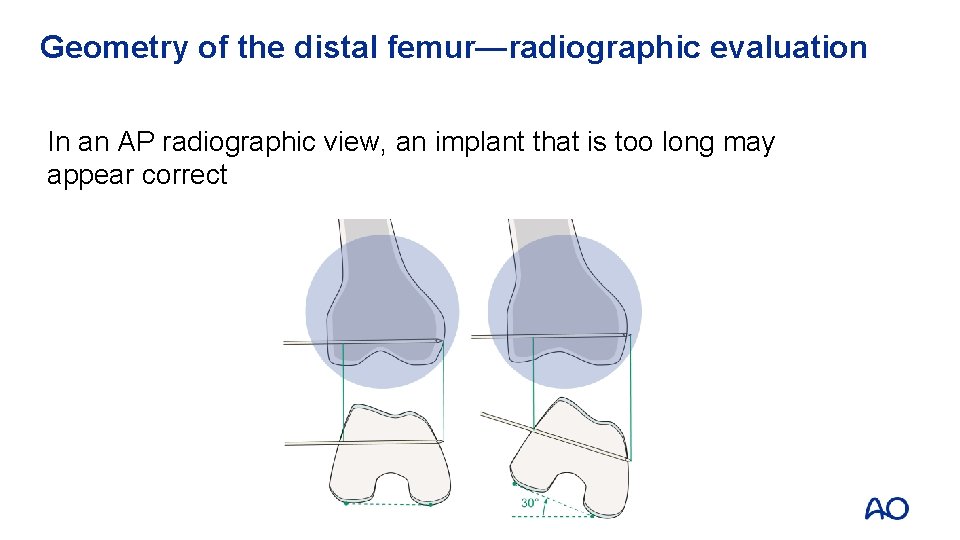
Geometry of the distal femur—radiographic evaluation In an AP radiographic view, an implant that is too long may appear correct • X-ray shadow • Medial hardware protrusion
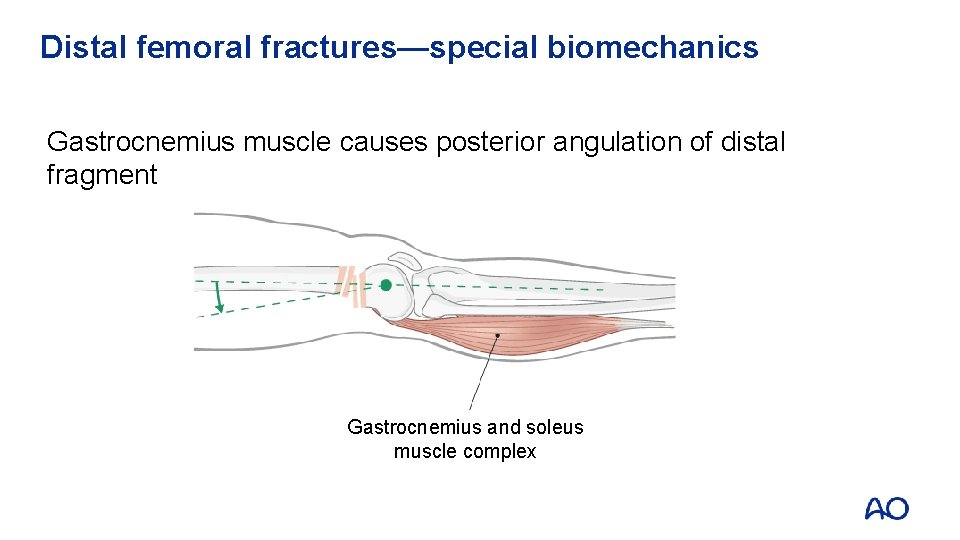
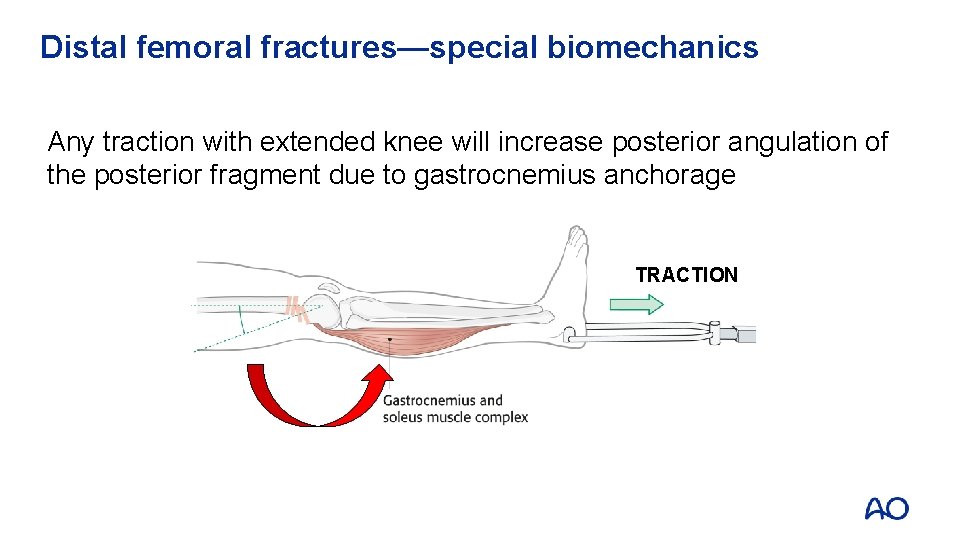
Distal femoral fractures—special biomechanics Gastrocnemius muscle causes posterior angulation of distal fragment Gastrocnemius and soleus muscle complex
Distal femoral fractures—special biomechanics Any traction with extended knee will increase posterior angulation of the posterior fragment due to gastrocnemius anchorage TRACTION
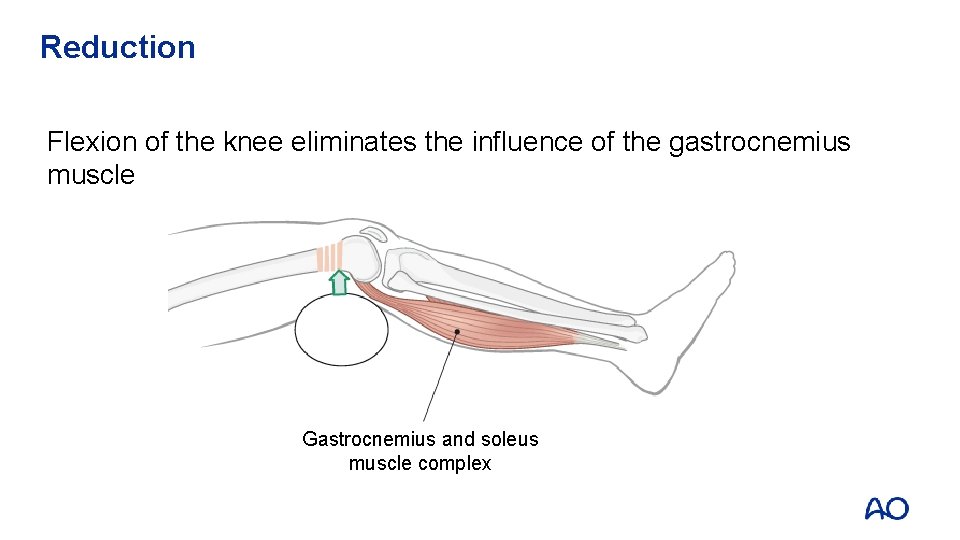
Reduction Flexion of the knee eliminates the influence of the gastrocnemius muscle Gastrocnemius and soleus muscle complex
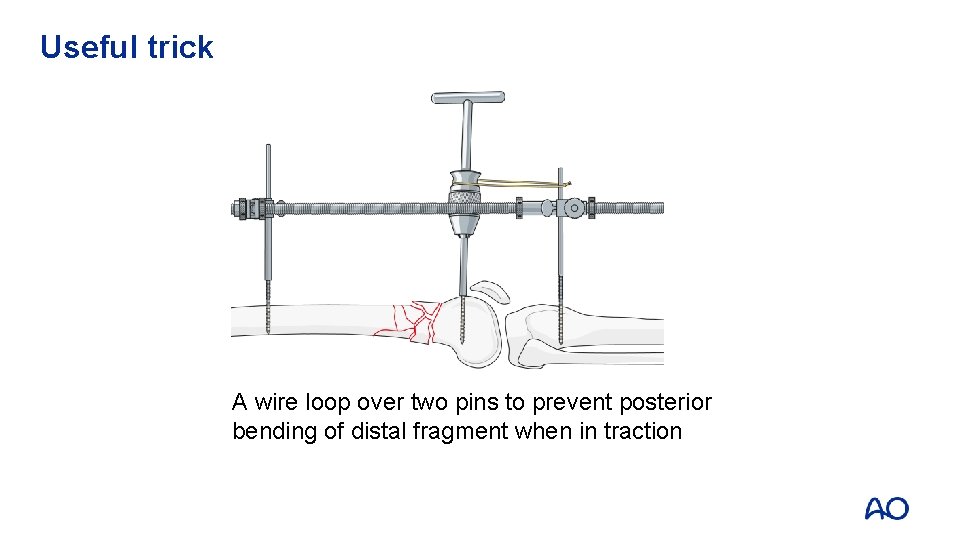
Different options of traction • • Manual Femoral distractor External fixator Fracture table • Different options but one aim: indirect reduction
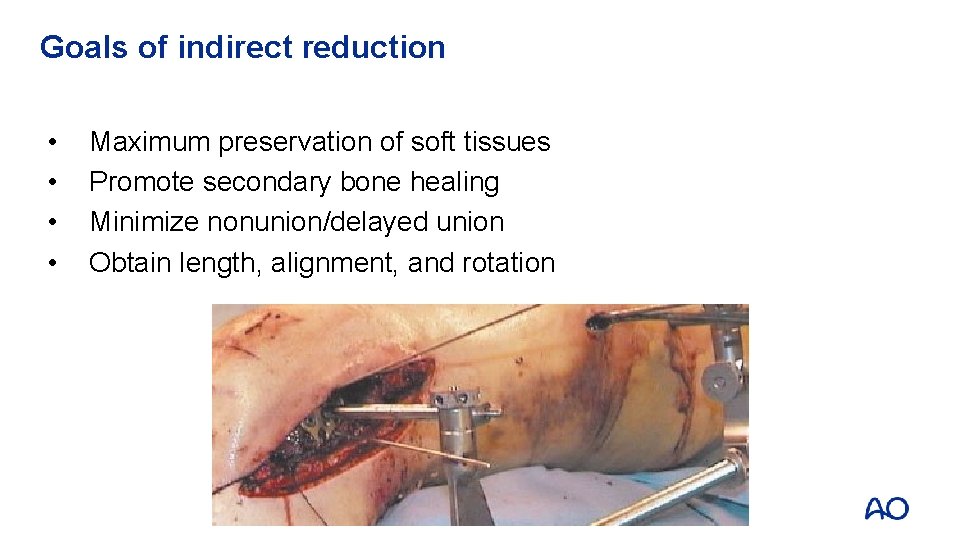
Goals of indirect reduction • • Maximum preservation of soft tissues Promote secondary bone healing Minimize nonunion/delayed union Obtain length, alignment, and rotation
Useful trick A wire loop over two pins to prevent posterior bending of distal fragment when in traction
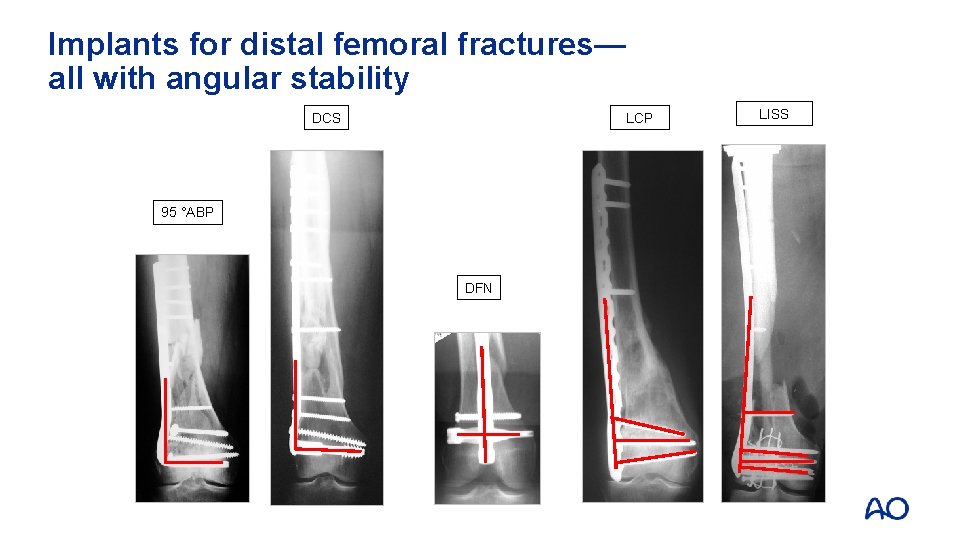
Implants for distal femoral fractures— all with angular stability DCS LCP 95 °ABP DFN LISS
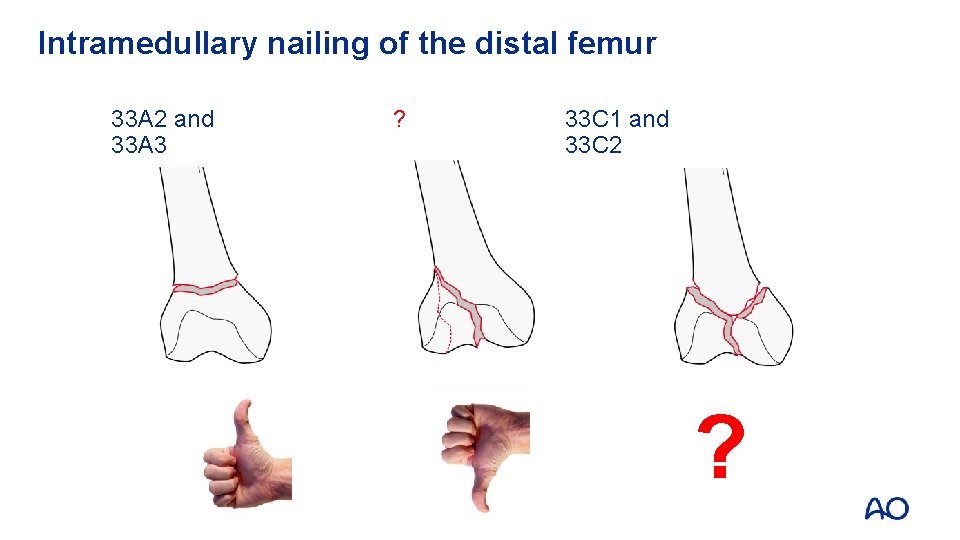
Intramedullary nailing of the distal femur 33 A 2 and 33 A 3 ? 33 C 1 and 33 C 2 ?
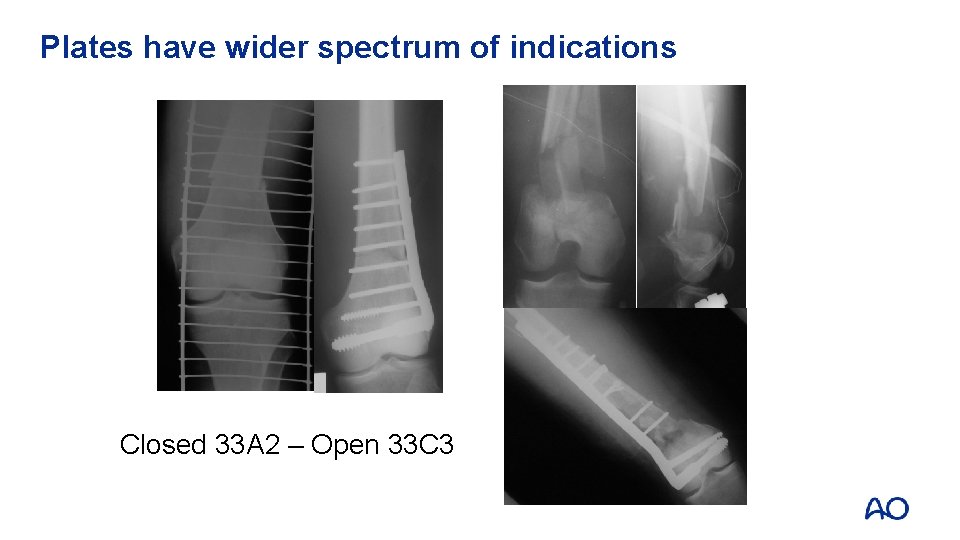
Plates have wider spectrum of indications Closed 33 A 2 – Open 33 C 3
Advantages of intramedullary nailing • • • Smaller incisions Preserves soft tissues around the fracture Percutaneous joint fixation in nondisplaced articular fractures Weight-sharing device Device is more in line with axis of femur
Disadvantages of intramedullary nailing • • • Limited space for nail insertion in articular fractures (patellofemoral joint) Potential issues with proximal locking Question of increased knee infections with open fractures Bone union (unreamed technique) May have more difficulty with removal
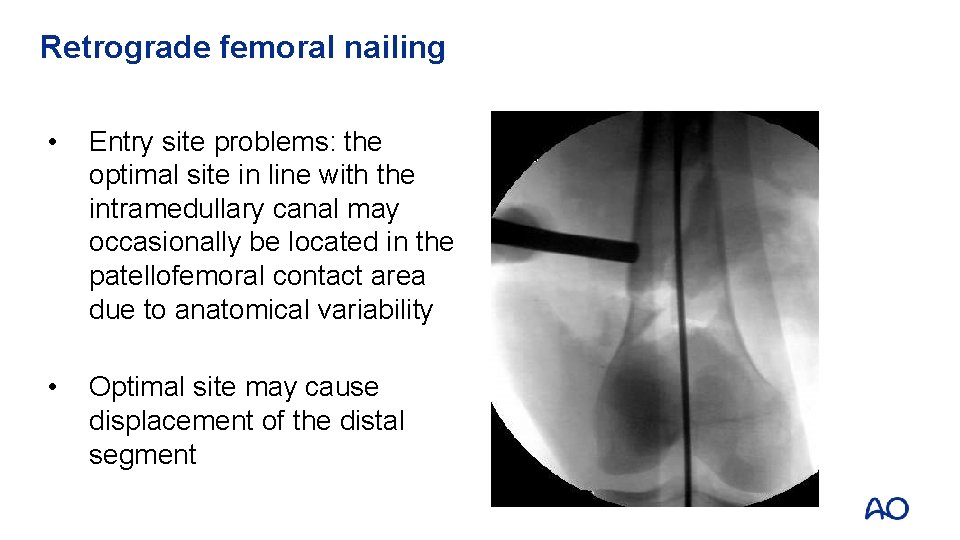
Retrograde femoral nailing • Entry site problems: the optimal site in line with the intramedullary canal may occasionally be located in the patellofemoral contact area due to anatomical variability • Optimal site may cause displacement of the distal segment
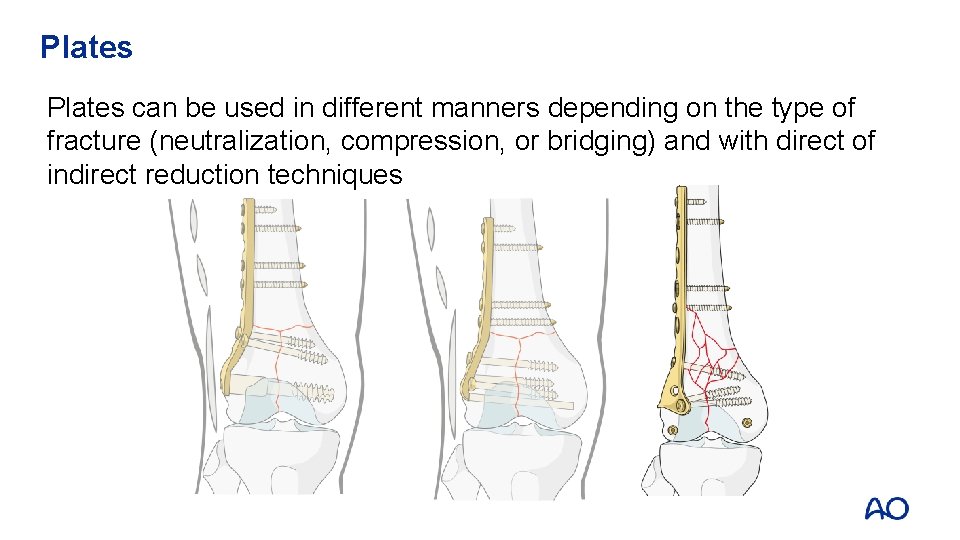
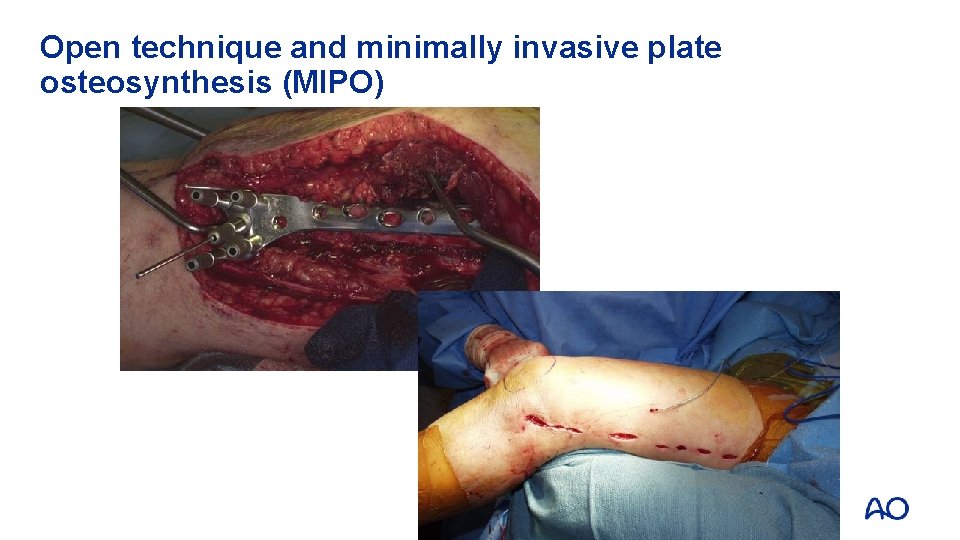
Plates can be used in different manners depending on the type of fracture (neutralization, compression, or bridging) and with direct of indirect reduction techniques
Open technique and minimally invasive plate osteosynthesis (MIPO)
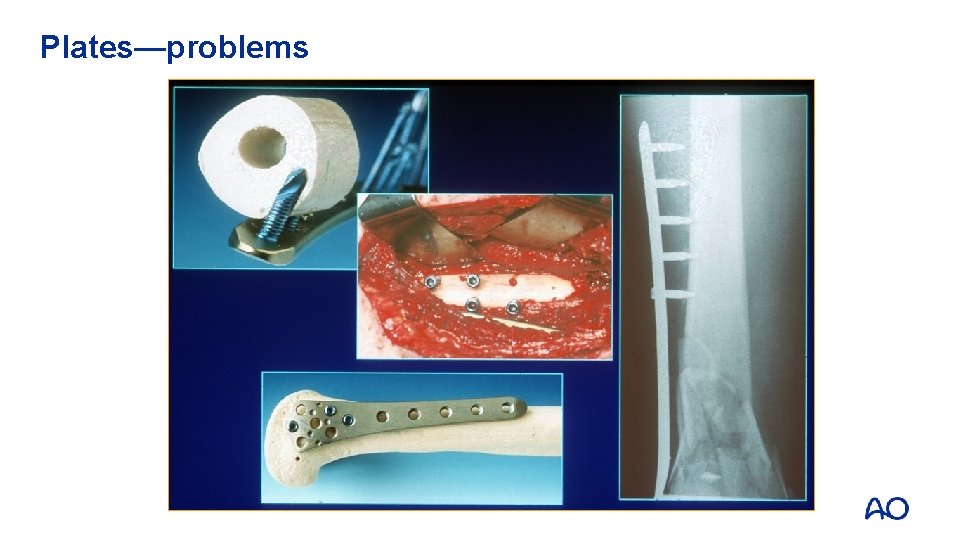
Plates—problems
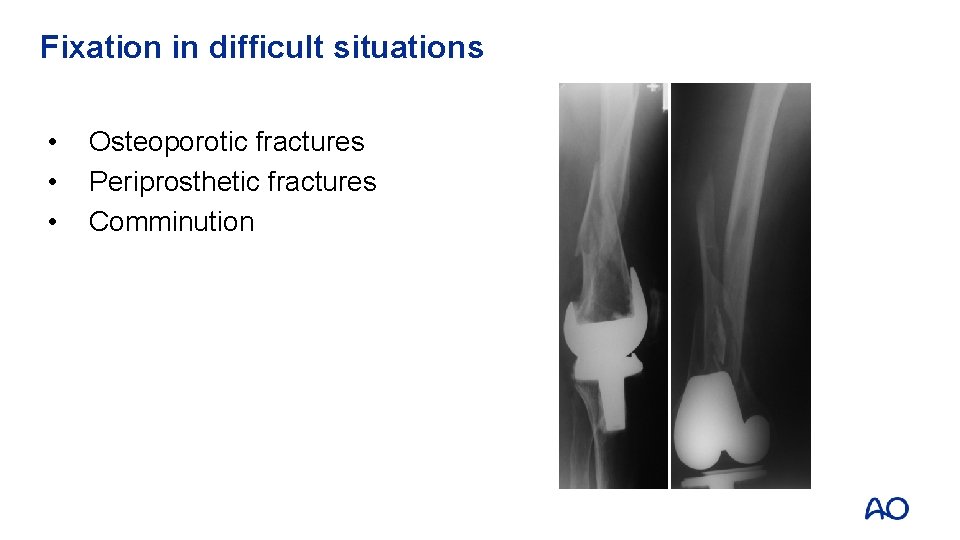
Fixation in difficult situations • • • Osteoporotic fractures Periprosthetic fractures Comminution
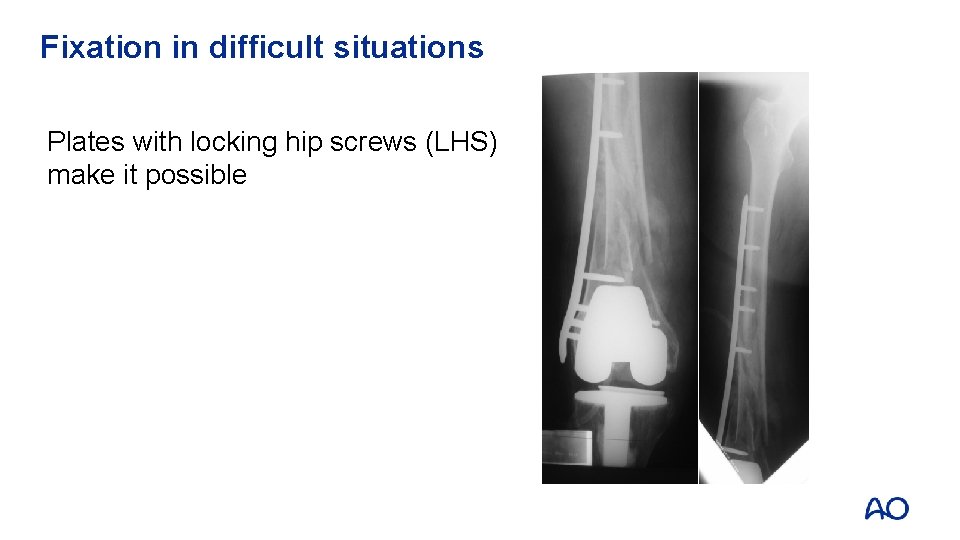
Fixation in difficult situations Plates with locking hip screws (LHS) make it possible
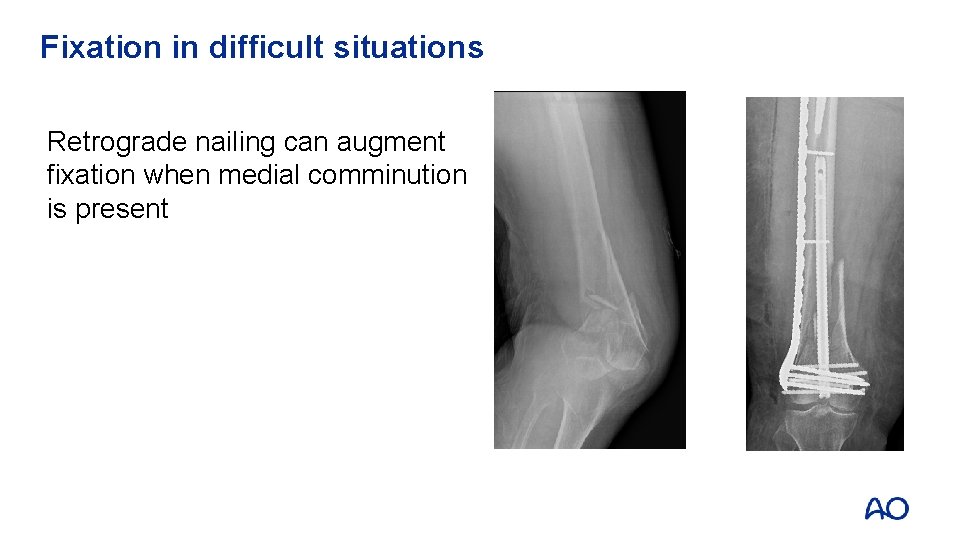
Fixation in difficult situations Retrograde nailing can augment fixation when medial comminution is present
Key publications—less invasive stabilization system (LISS) Zlowodzki et al (J Orthop Trauma. 2004; 18: 494– 502): • • LISS, ABP, and intramedullary nail (IMN) offer enough torsional stability and effective proximal fixation to withstand axial loading Additionally, LISS provides better distal fixation (important for osteoporotic bone)
Key publications—Retrograde intramedullary nail vs dynamic condylar screw (DCS) Christodoulou et al (Arch Orthop Trauma Surg. 2005; 125: 73– 79): • • Prospective randomized trial, level of evidence (LOE) II-III 80 patients, median age 73 72 of 80 patients with adequate union Conclusion: • Two methods have the same percentage of excellent results • Retrograde IMN is preferable to DCS in terms of less blood loss
Key publications—intramedullary nailing = plating • Seifert et al (J Orthop Trauma. 2003; 17: 488– 495): • 45 fractures, type 33 A and C • Retrograde nailing is as effective as plate osteosynthesis • Handolin et al (Injury. 2004; 35: 517– 522): • 48 fractures, type 33 A and C • Retrograde nailing is a reliable technique • Low complication rate
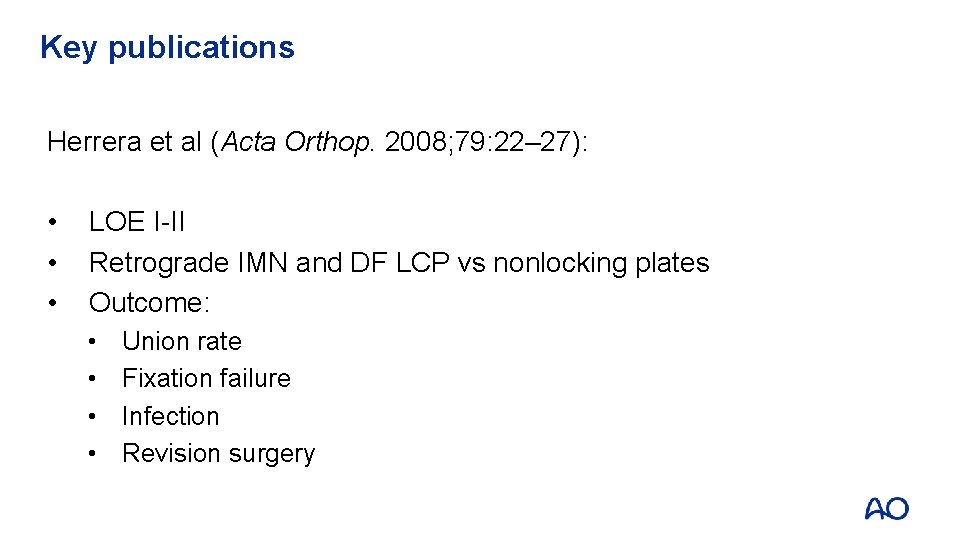
Key publications Herrera et al (Acta Orthop. 2008; 79: 22– 27): • • • LOE I-II Retrograde IMN and DF LCP vs nonlocking plates Outcome: • • Union rate Fixation failure Infection Revision surgery
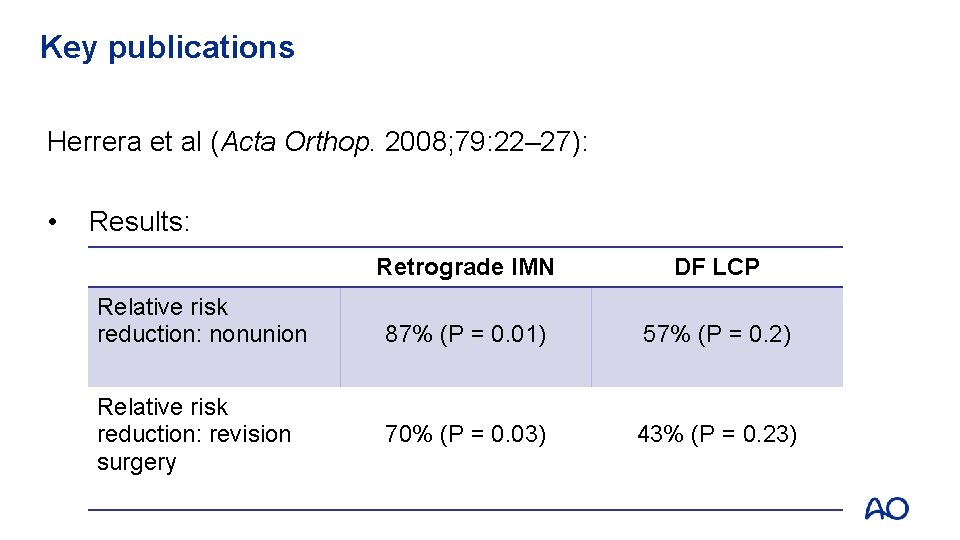
Key publications Herrera et al (Acta Orthop. 2008; 79: 22– 27): • Results: Relative risk reduction: nonunion Relative risk reduction: revision surgery Retrograde IMN DF LCP 87% (P = 0. 01) 57% (P = 0. 2) 70% (P = 0. 03) 43% (P = 0. 23)
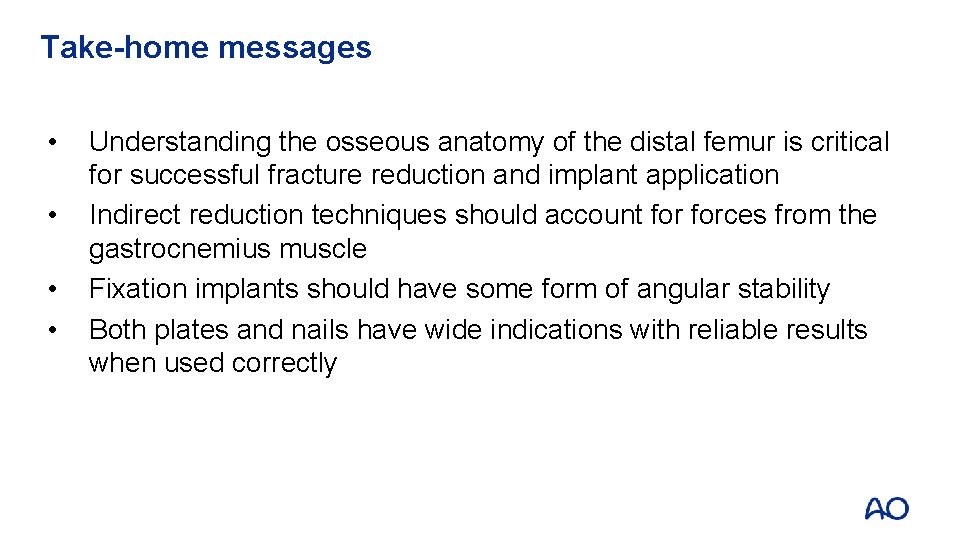
Take-home messages • • Understanding the osseous anatomy of the distal femur is critical for successful fracture reduction and implant application Indirect reduction techniques should account forces from the gastrocnemius muscle Fixation implants should have some form of angular stability Both plates and nails have wide indications with reliable results when used correctly