
Dissociative Disorders Dissociative Amnesia Dissociative Identity Disorder DepersonalizationDerealization
- Slides: 23
Dissociative Disorders Dissociative Amnesia Dissociative Identity Disorder Depersonalization-Derealization Disorder
What is a dissociative disorder? • Someone with a dissociative disorder escapes reality in ways that are involuntary and unhealthy. • The sense of self has become separated (dissociated) from previous memories, thoughts, or identity
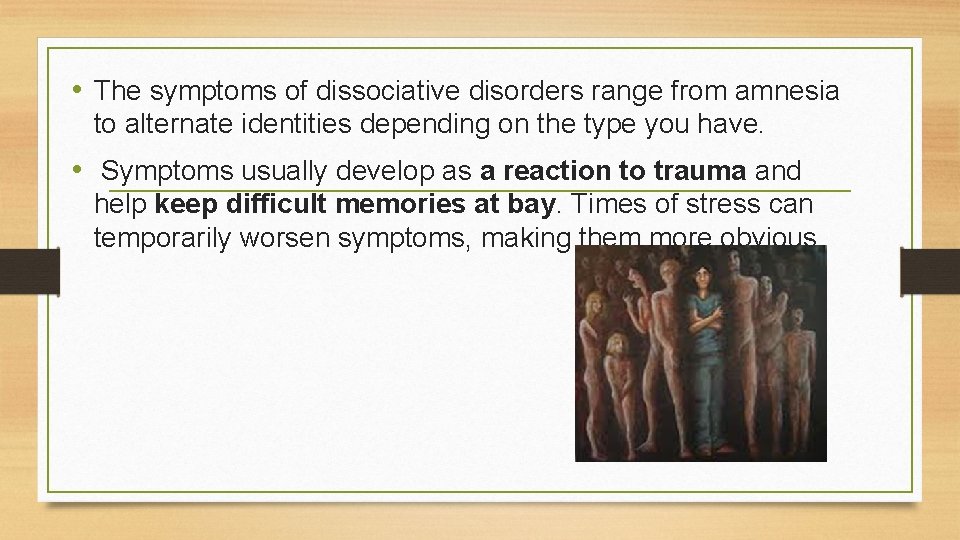
• The symptoms of dissociative disorders range from amnesia to alternate identities depending on the type you have. • Symptoms usually develop as a reaction to trauma and help keep difficult memories at bay. Times of stress can temporarily worsen symptoms, making them more obvious.
• There are three major dissociative disorders defined in the Diagnostic and Statistical Manual of Mental Disorders (DSM), published by the American Psychiatric Association: • Dissociative Amnesia • Dissociative Identity Disorder ( formerly known as Multiple Personality Disorder) • Depersonalization-derealization disorder
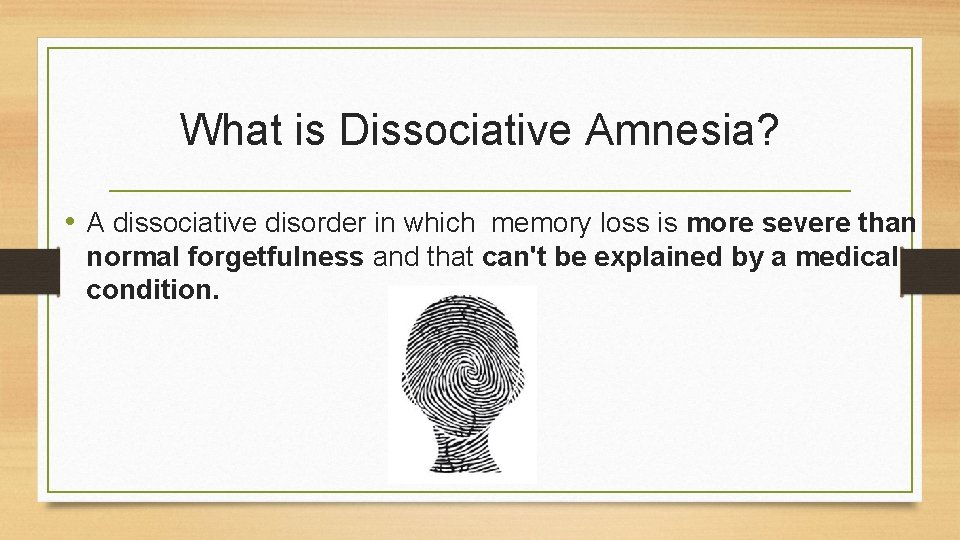
What is Dissociative Amnesia? • A dissociative disorder in which memory loss is more severe than normal forgetfulness and that can't be explained by a medical condition.
Symptoms of Dissociative Amnesia • You can't recall information about yourself or events and people in your life, especially from a traumatic time. • Dissociative amnesia can be specific to events in a certain time, such as intense combat, or more rarely, can involve complete loss of memory about yourself.
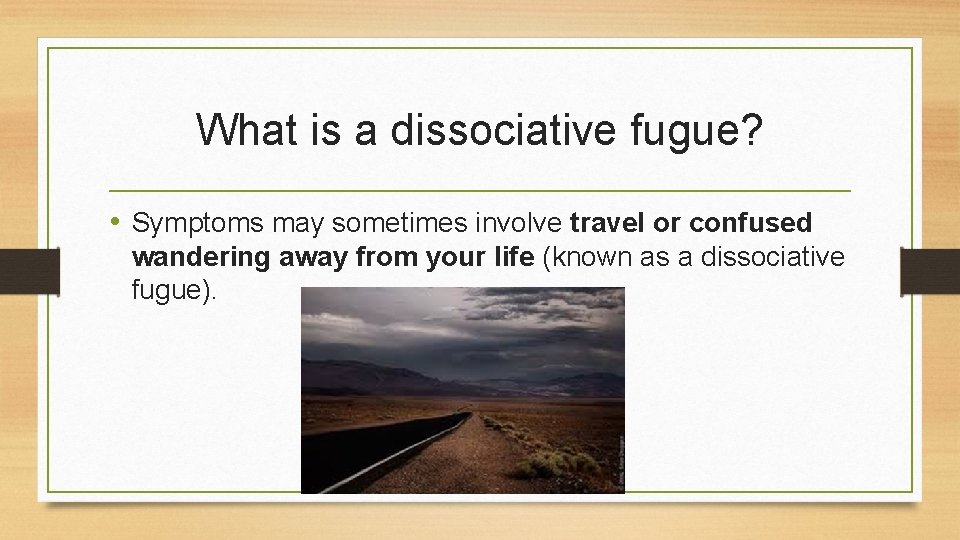
What is a dissociative fugue? • Symptoms may sometimes involve travel or confused wandering away from your life (known as a dissociative fugue).
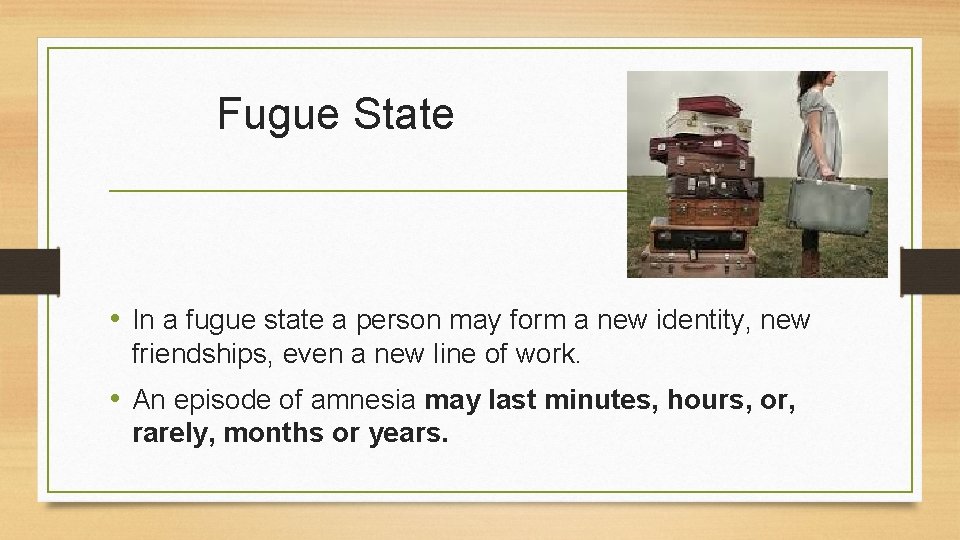
Fugue State • In a fugue state a person may form a new identity, new friendships, even a new line of work. • An episode of amnesia may last minutes, hours, or, rarely, months or years.
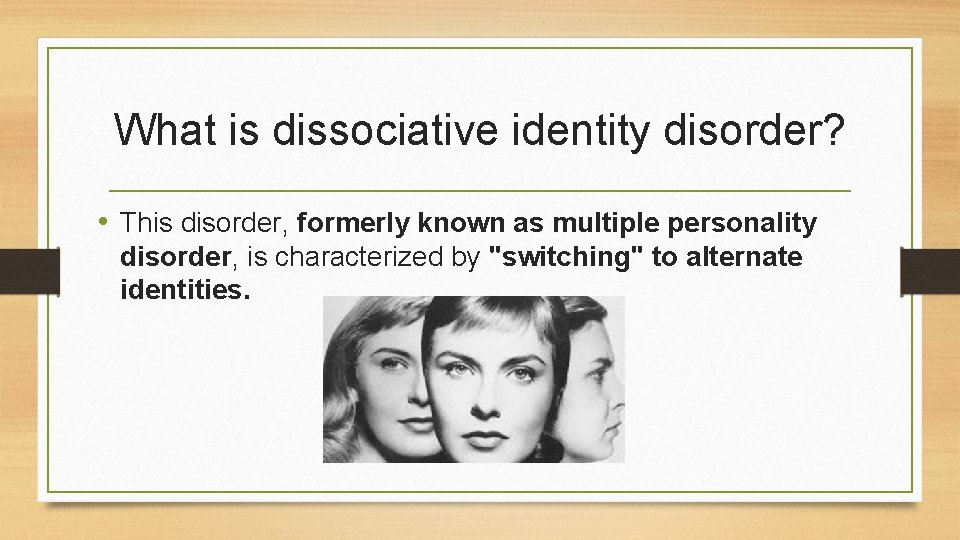
What is dissociative identity disorder? • This disorder, formerly known as multiple personality disorder, is characterized by "switching" to alternate identities.
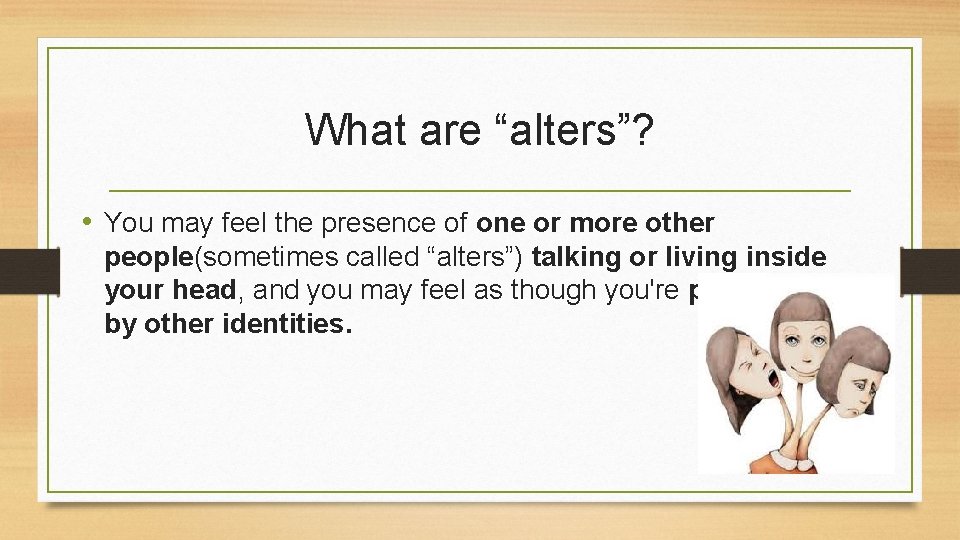
What are “alters”? • You may feel the presence of one or more other people(sometimes called “alters”) talking or living inside your head, and you may feel as though you're possessed by other identities.
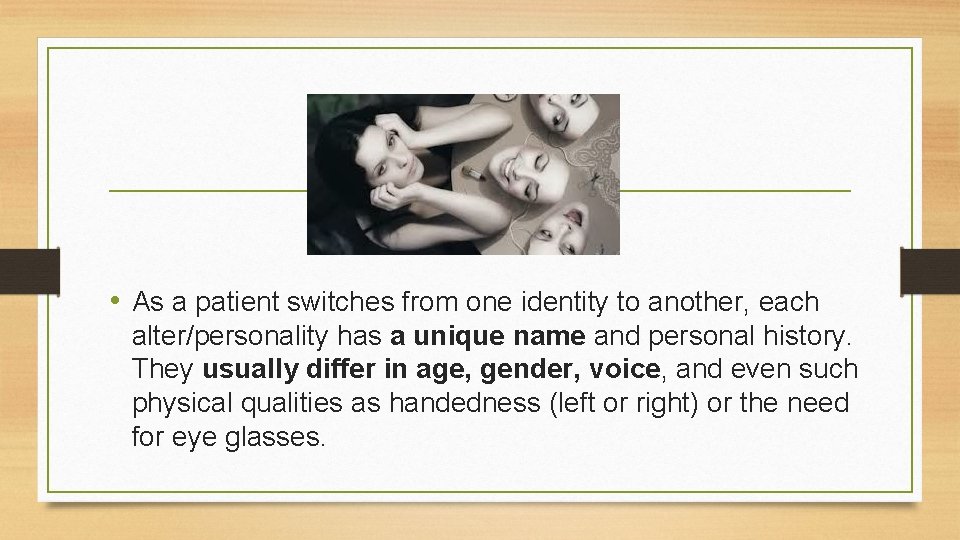
• As a patient switches from one identity to another, each alter/personality has a unique name and personal history. They usually differ in age, gender, voice, and even such physical qualities as handedness (left or right) or the need for eye glasses.
• Sometimes these personalities are aware of each other and sometimes they are not. • People with dissociative identity disorder typically also have dissociative amnesia and often have dissociative fugue.
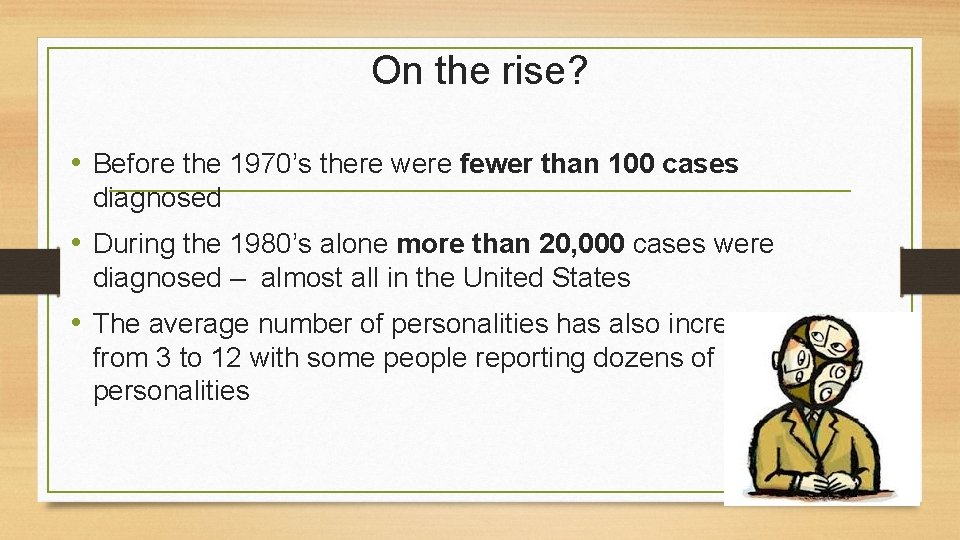
On the rise? • Before the 1970’s there were fewer than 100 cases diagnosed • During the 1980’s alone more than 20, 000 cases were diagnosed – almost all in the United States • The average number of personalities has also increased from 3 to 12 with some people reporting dozens of personalities
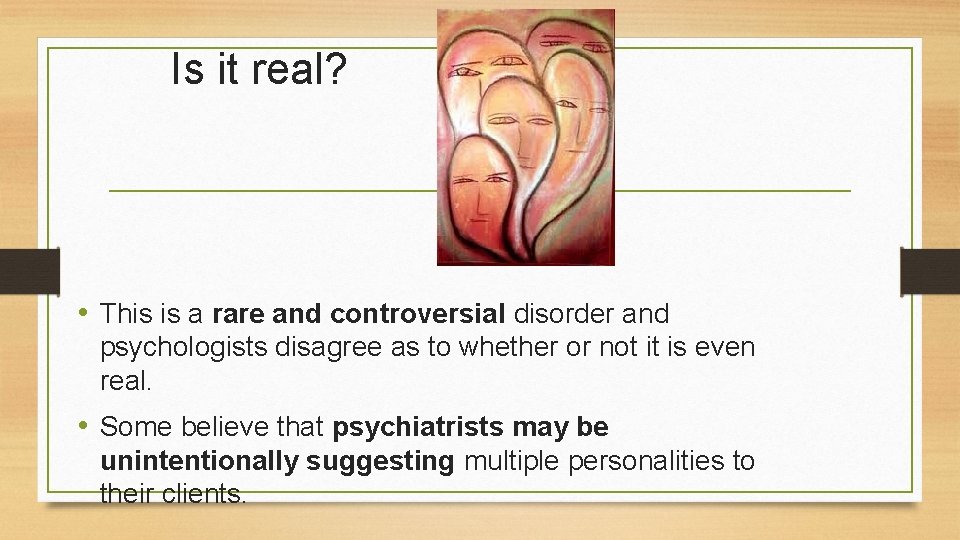
Is it real? • This is a rare and controversial disorder and psychologists disagree as to whether or not it is even real. • Some believe that psychiatrists may be unintentionally suggesting multiple personalities to their clients.
How is it different from schizophrenia? • People with DID experience many personalities living in the same mind. Schizophrenics do not. They are always the same person. • People with DID do not experience the delusions and hallucinations that schizophrenics do. Schizophrenics may hear or see people, but they do not become these people.
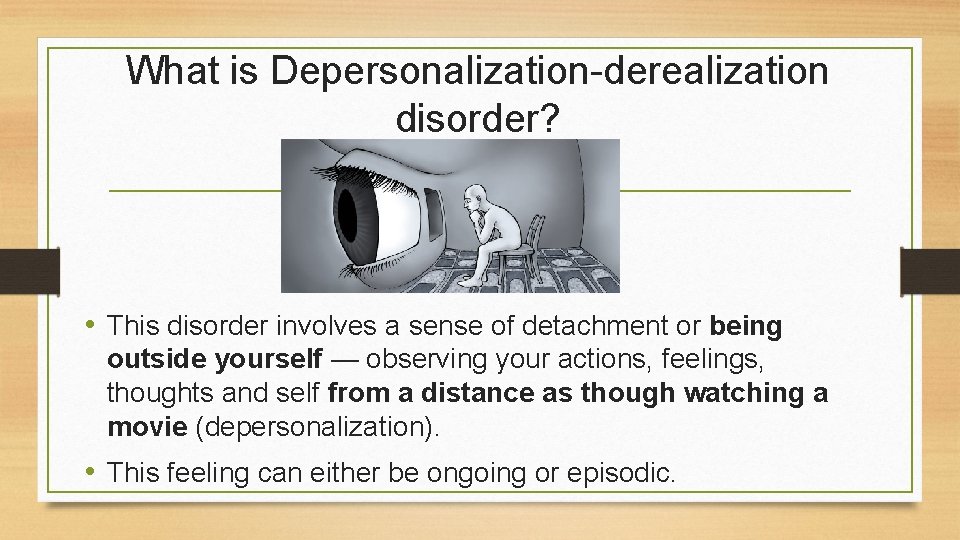
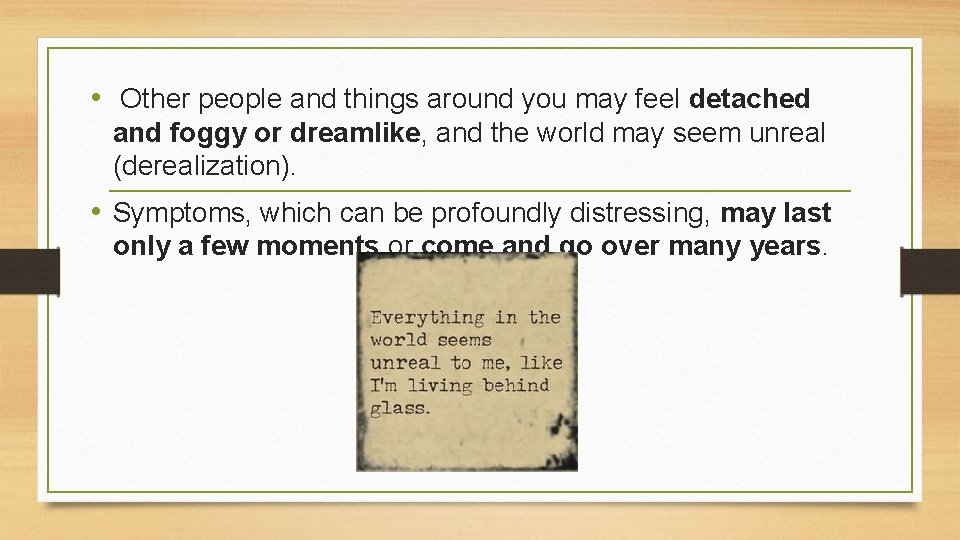
What is Depersonalization-derealization disorder? • This disorder involves a sense of detachment or being outside yourself — observing your actions, feelings, thoughts and self from a distance as though watching a movie (depersonalization). • This feeling can either be ongoing or episodic.
• Other people and things around you may feel detached and foggy or dreamlike, and the world may seem unreal (derealization). • Symptoms, which can be profoundly distressing, may last only a few moments or come and go over many years.
What causes Dissociative Disorders? • Dissociative disorders usually develop as a way to cope with trauma. • The disorders most often form in children subjected to long-term physical, sexual or emotional abuse or, less often, a home environment that's frightening or highly unpredictable. • The stress of war or natural disasters also can bring on dissociative disorders.
Learned in Childhood • Personal identity is still forming during childhood. So a child is more able than an adult to step outside of him/herself and observe trauma as though it's happening to a different person. A child who learns to dissociate in order to endure an extended period of youth may use this coping mechanism in response to stressful situations throughout life.
Negative Effects • • • Self-harm Suicidal thoughts and attempts Alcoholism and drug use disorders Mood, Anxiety or Other disorders Severe headaches
Other Problems • Dissociative disorders are also associated with major difficulties in personal relationships and at work. • People with these conditions often aren't able to cope well with emotional or professional stress, and their dissociative reactions — from tuning out to disappearing — may worry loved ones and cause people at work to view them as unreliable.
Treatment • Psychotherapy is the primary treatment for dissociative disorders. • Although there are no medications that specifically treat dissociative disorders, doctors may prescribe antidepressants, anti-anxiety medications or antipsychotic medications to help control the mental health symptoms associated with dissociative disorders.
Sources • Mayo. Clinic. org • Thinking About Psychology, 2 nd Edit.