
Dissertation Research Preparation Modernism Animation By Andre Parra
Dissertation Research Preparation Modernism & Animation By Andre Parra Graphic Design HND 2
The role of Modernism in Animation • What is Modernism. (In my dissertation I intend to give a brief description and overview of what is modernism and how it influenced animation in the 20 th century) • How modernism transitioned into mainstream Animation. (In my dissertation I will discuss the major studios and animators that adopted modernism. ) • How modernism in animation became popularised and its progression till 1960. (I will outline the impact that the studios and animators had on making animation a children's media rather than adult satire. )
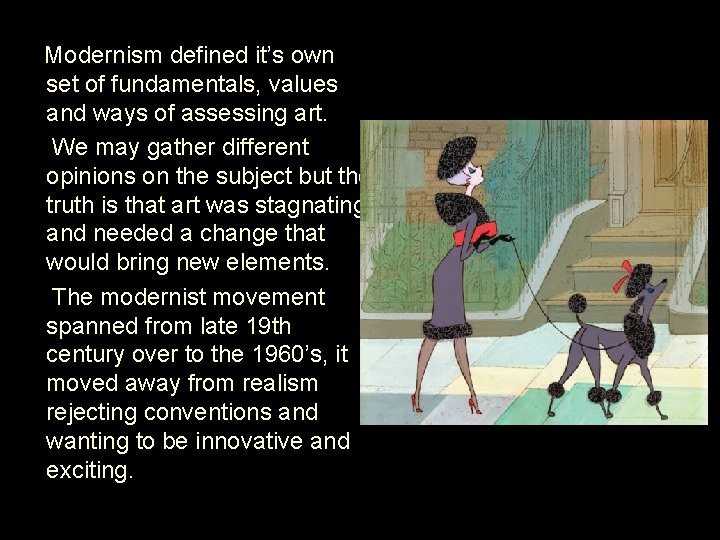
Modernism defined it’s own set of fundamentals, values and ways of assessing art. We may gather different opinions on the subject but the truth is that art was stagnating and needed a change that would bring new elements. The modernist movement spanned from late 19 th century over to the 1960’s, it moved away from realism rejecting conventions and wanting to be innovative and exciting.
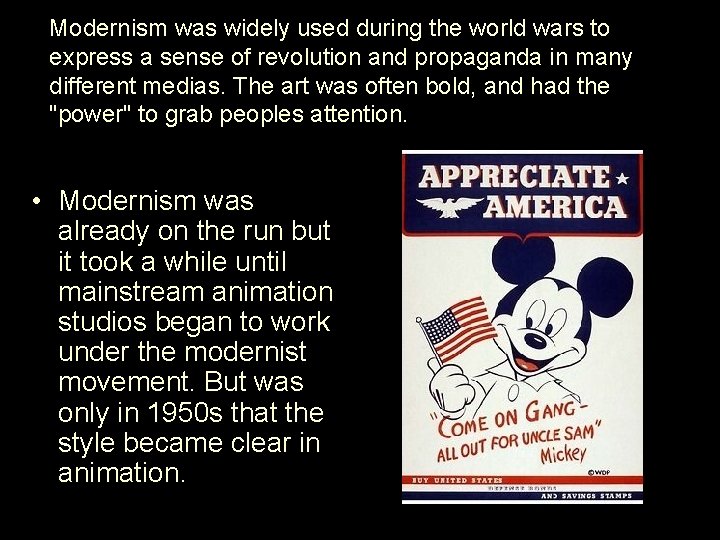
Modernism was widely used during the world wars to express a sense of revolution and propaganda in many different medias. The art was often bold, and had the "power" to grab peoples attention. • Modernism was already on the run but it took a while until mainstream animation studios began to work under the modernist movement. But was only in 1950 s that the style became clear in animation.
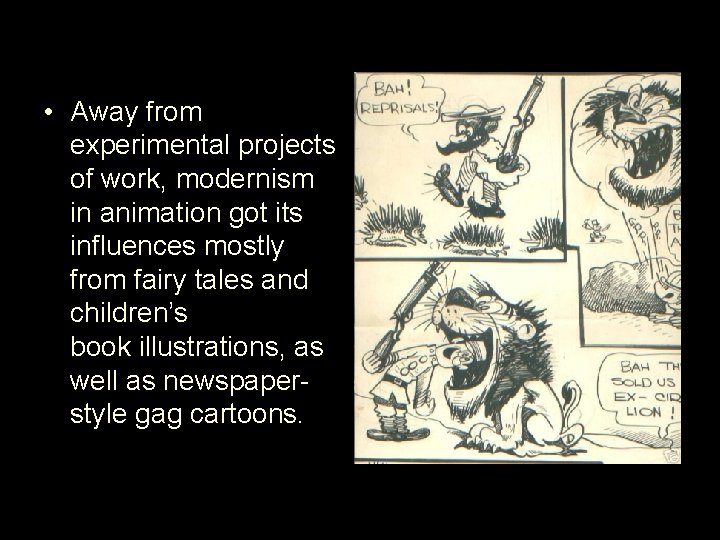
• Away from experimental projects of work, modernism in animation got its influences mostly from fairy tales and children’s book illustrations, as well as newspaperstyle gag cartoons.

• Some mayor studios such UPA (United Productions of America) were active from the 1940 s through the 1970 s. UPA started operating with industrial and World War II training films. UPA also worked with Columbia Pictures producing theatrical shorts and creating the series Mr. Magoo. and One of its must wellknown animators was Grim Natwick's started his career producing cover designs for sheet music, But later he became known for drawing for the Fleischer Studio's.
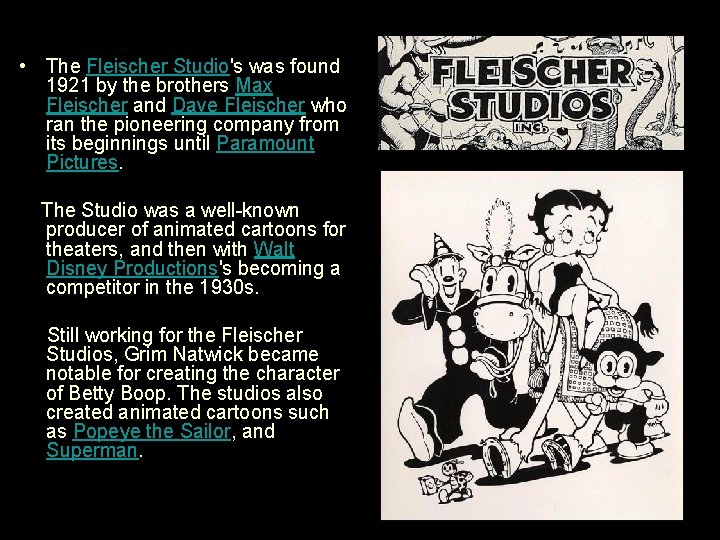
• The Fleischer Studio's was found 1921 by the brothers Max Fleischer and Dave Fleischer who ran the pioneering company from its beginnings until Paramount Pictures. The Studio was a well-known producer of animated cartoons for theaters, and then with Walt Disney Productions's becoming a competitor in the 1930 s. Still working for the Fleischer Studios, Grim Natwick became notable for creating the character of Betty Boop. The studios also created animated cartoons such as Popeye the Sailor, and Superman.
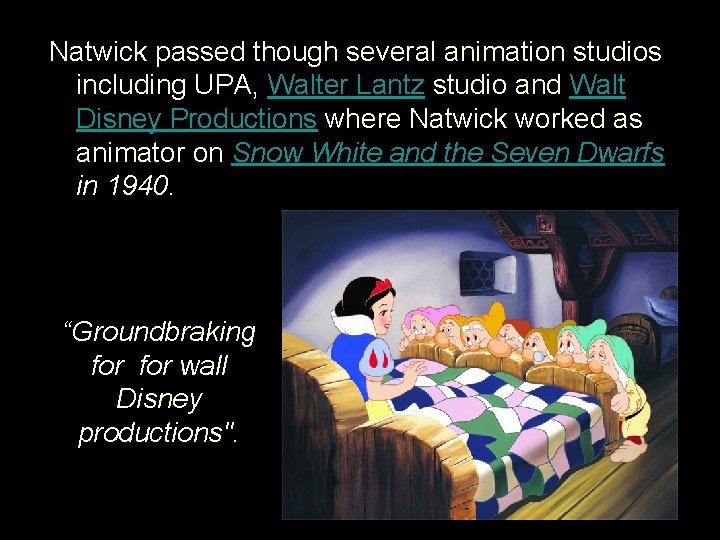
Natwick passed though several animation studios including UPA, Walter Lantz studio and Walt Disney Productions where Natwick worked as animator on Snow White and the Seven Dwarfs in 1940. “Groundbraking for wall Disney productions".
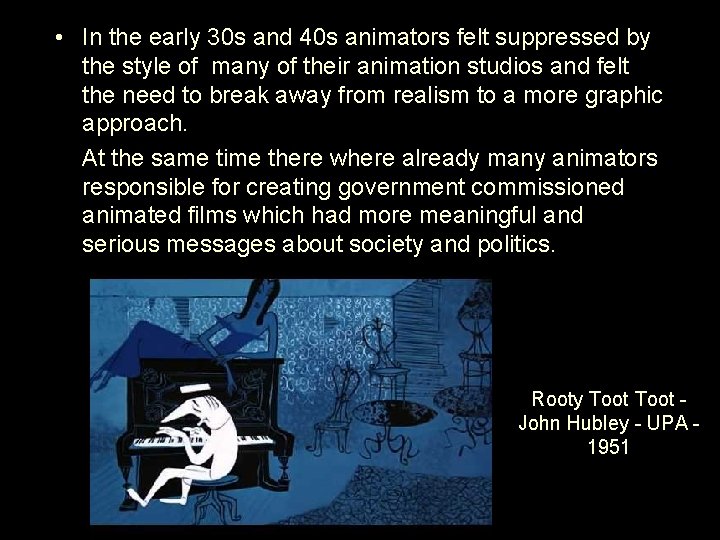
• In the early 30 s and 40 s animators felt suppressed by the style of many of their animation studios and felt the need to break away from realism to a more graphic approach. At the same time there where already many animators responsible for creating government commissioned animated films which had more meaningful and serious messages about society and politics. Rooty Toot John Hubley - UPA 1951
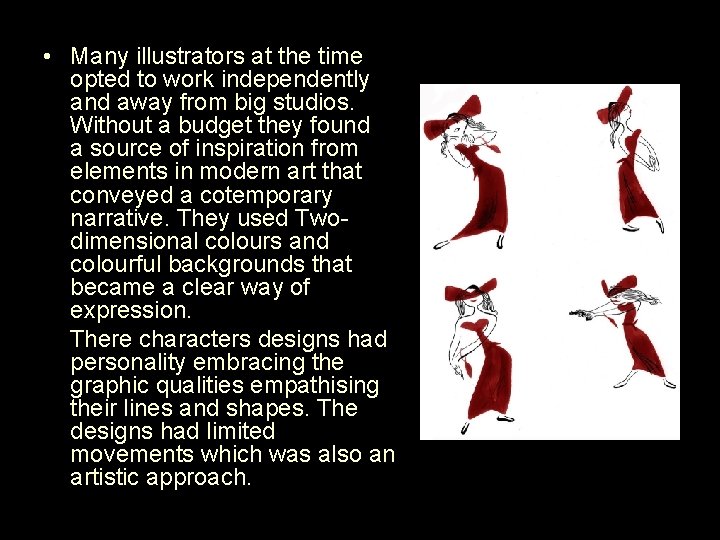
• Many illustrators at the time opted to work independently and away from big studios. Without a budget they found a source of inspiration from elements in modern art that conveyed a cotemporary narrative. They used Twodimensional colours and colourful backgrounds that became a clear way of expression. There characters designs had personality embracing the graphic qualities empathising their lines and shapes. The designs had limited movements which was also an artistic approach.
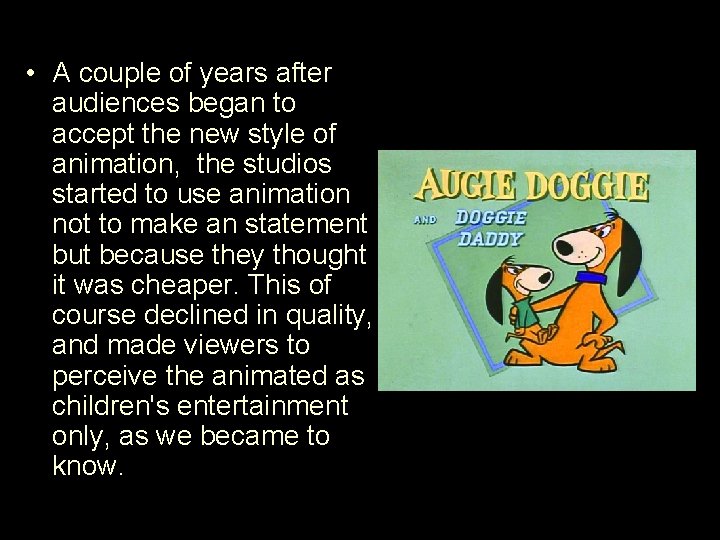
• A couple of years after audiences began to accept the new style of animation, the studios started to use animation not to make an statement but because they thought it was cheaper. This of course declined in quality, and made viewers to perceive the animated as children's entertainment only, as we became to know.
- Slides: 11