
Dissection and Scientific Drawing Learning outcomes You will
- Slides: 11
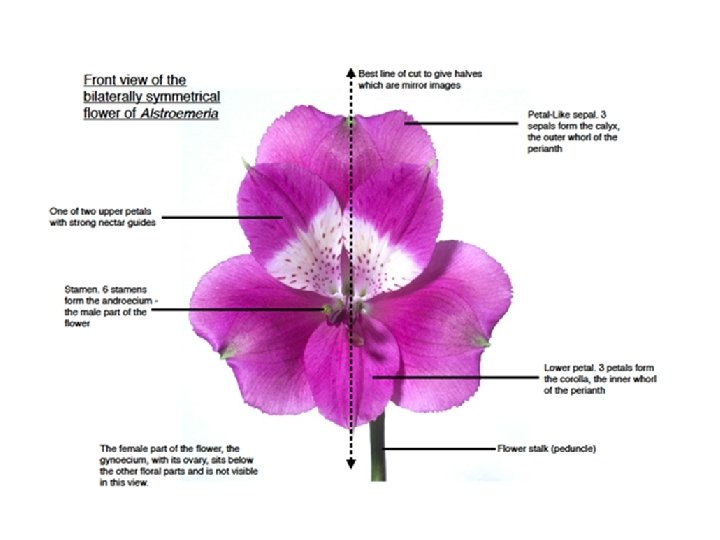
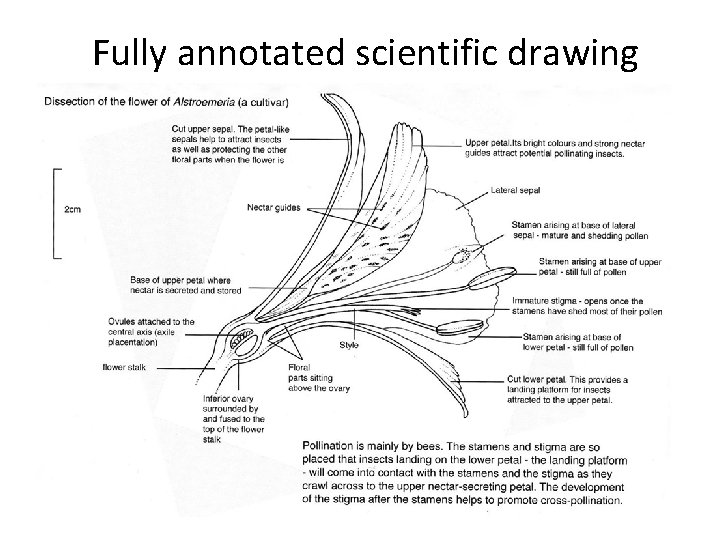
Dissection and Scientific Drawing Learning outcomes You will: Observe the structure of a flower Observe, dissect and record the floral parts of that flower Prepare a longitudinal section of a flower Produce an annotated scientific drawing of the longitudinal section of the flower Understand how the structure of the flower is adapted to its function.
Dissection and Scientific Drawing Health and Safety CLEAPSS Student Safety Sheet 74 provides information about assessing the risk posed by plant material. Many plants contain toxins. To minimize any potential risk, inform your teacher if you are aware of allergies to a particular plant so that it can be avoided. The pollen of some lilies stains clothing. Wear a lab coat to protect your clothes. Take care when using sharp instruments such as single-edged (safety) razor blades, scalpels, scissors and mounted needles and follow the instructions for their safe use that have been given to you by your teacher. When drawing it is important to take regular breaks to avoid eye strain and damage to the wrist and back. A short rest from drawing every half hour is a good idea.
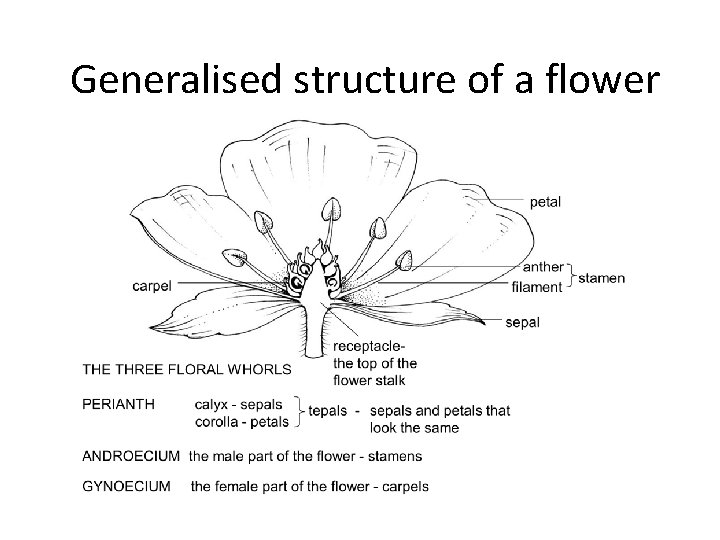
Generalised structure of a flower
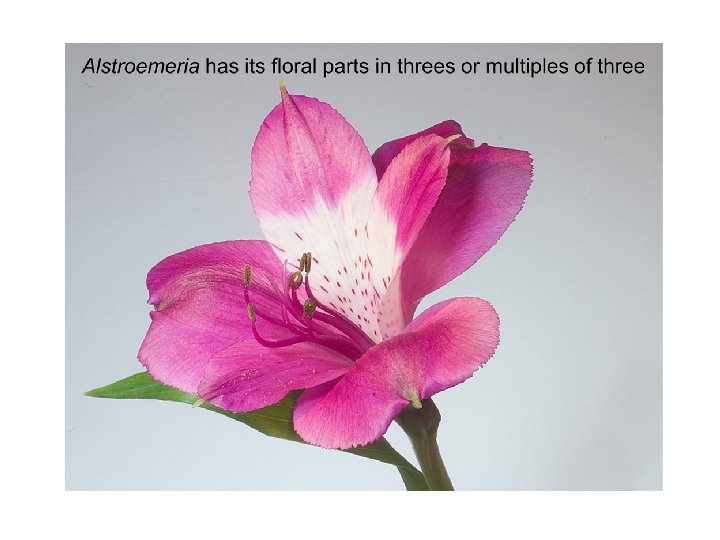
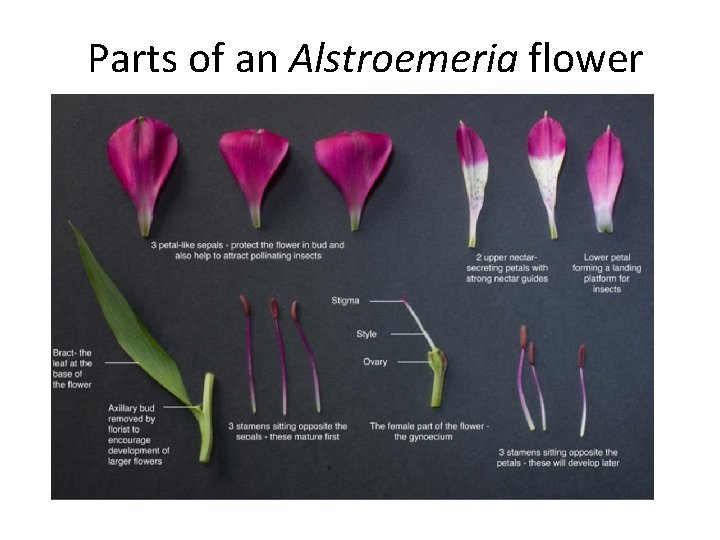
Parts of an Alstroemeria flower
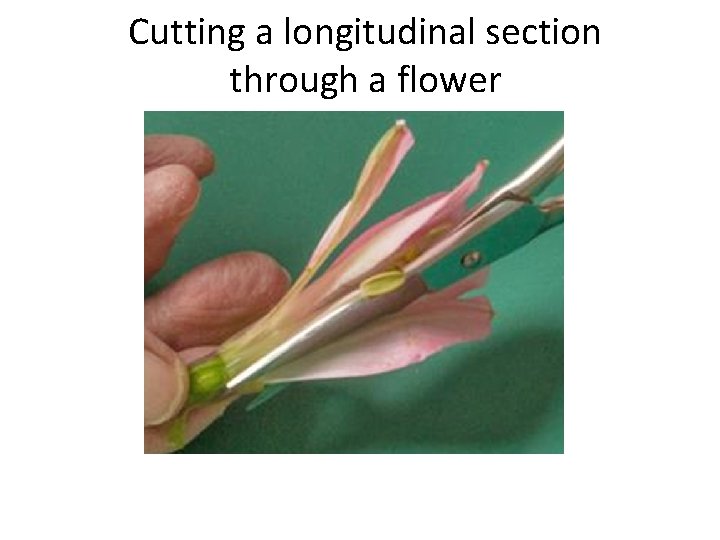
Cutting a longitudinal section through a flower
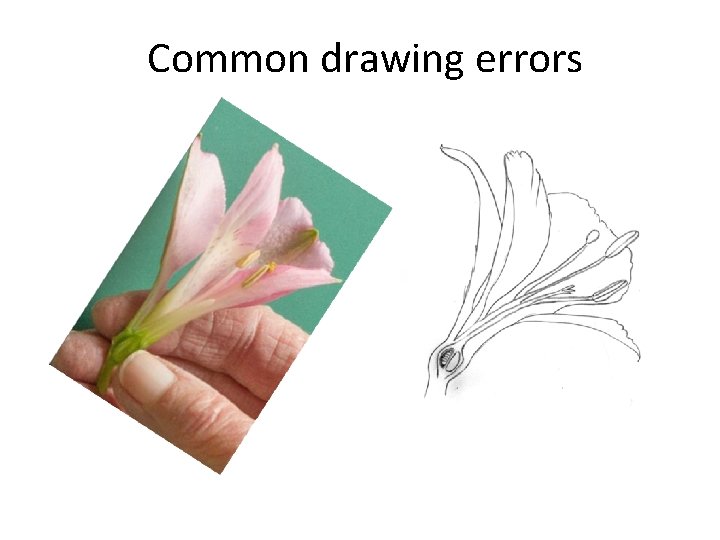
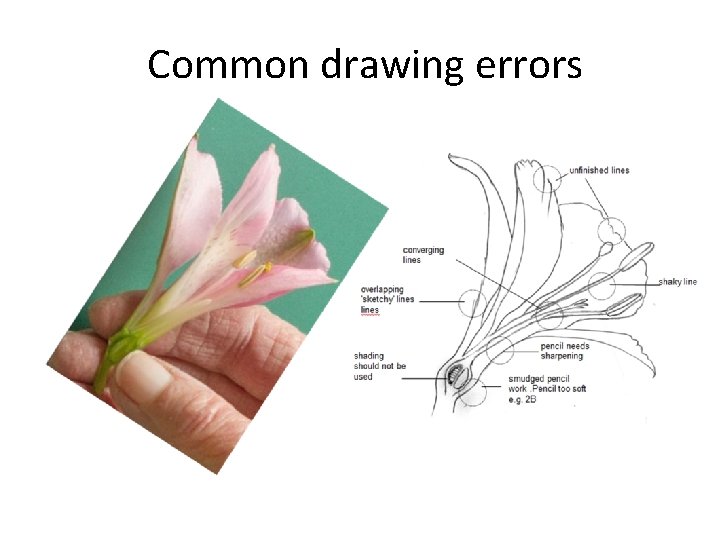
Common drawing errors
Common drawing errors
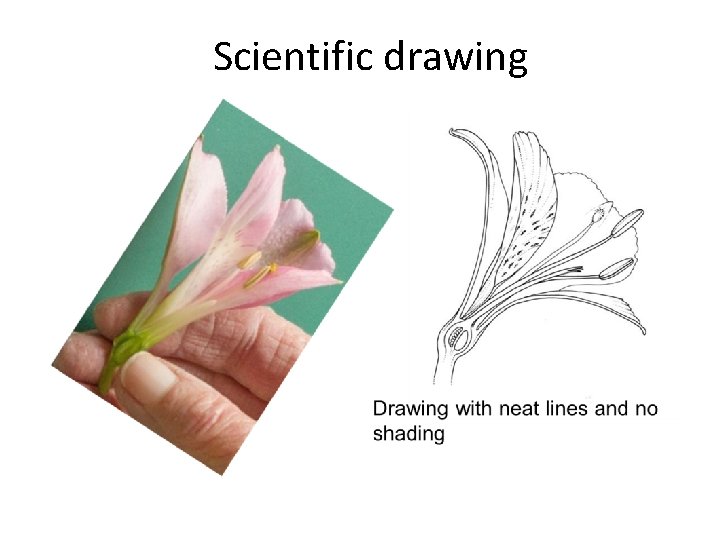
Scientific drawing
Fully annotated scientific drawing