
Disruption in the Life Sciences gene editing synthetic
- Slides: 38
Disruption in the Life Sciences – gene editing, synthetic biology and beyond Rob Annan, Ph. D Vice-President, Public Affairs and Communications Genome Canada
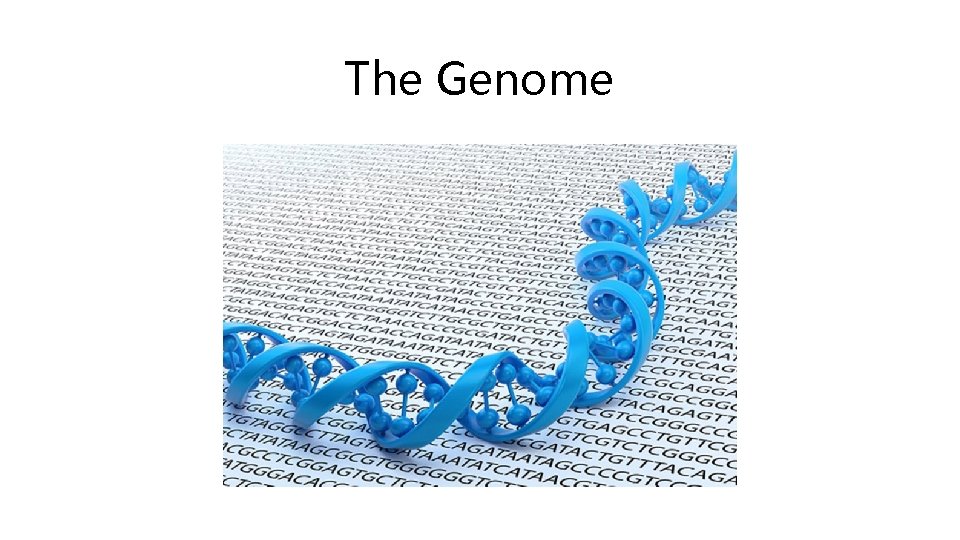
The Genome
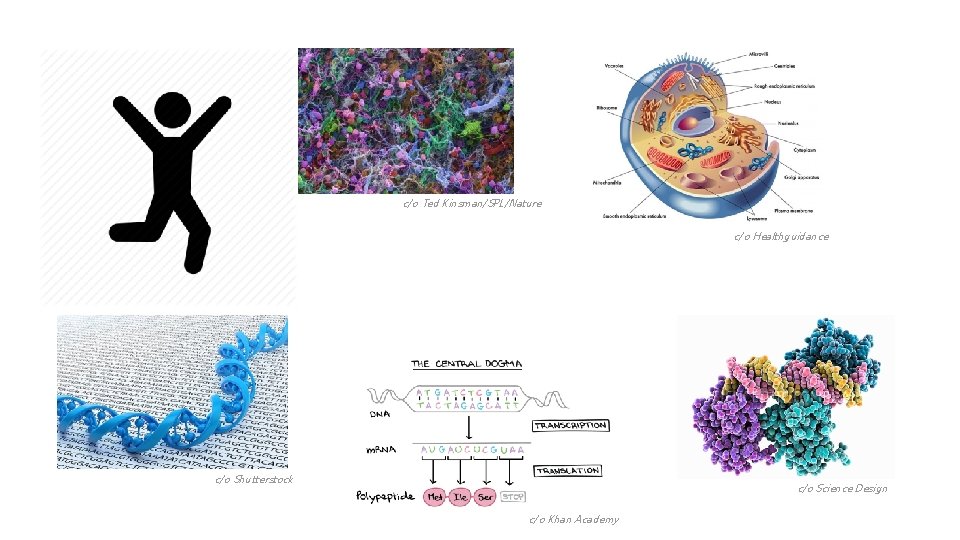
c/o Ted Kinsman/SPL/Nature c/o Healthguidance c/o Shutterstock c/o Science Design c/o Khan Academy
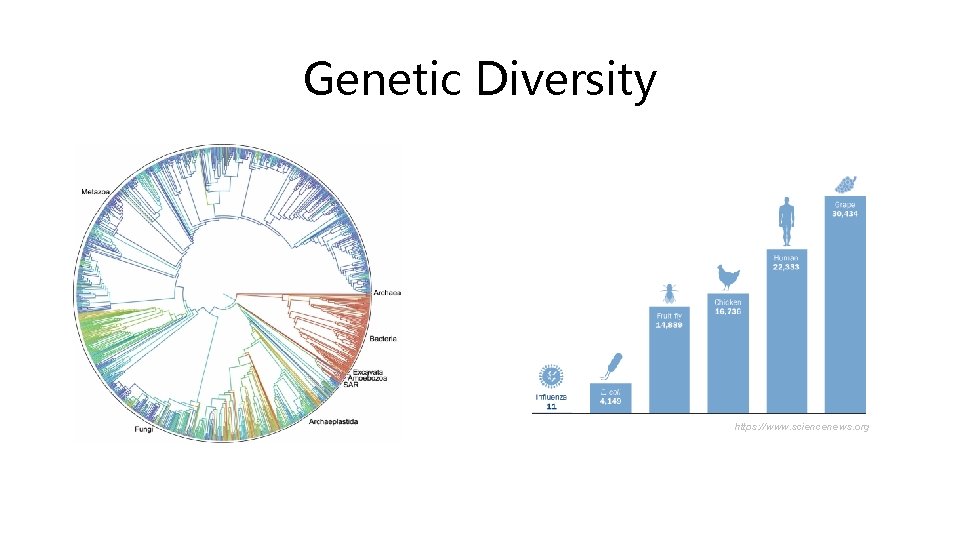
Genetic Diversity https: //www. sciencenews. org
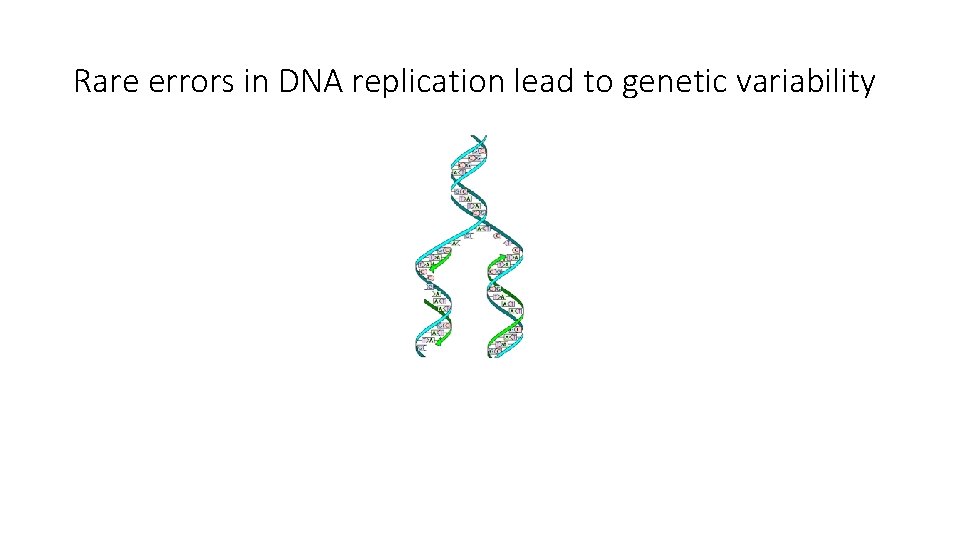
Rare errors in DNA replication lead to genetic variability
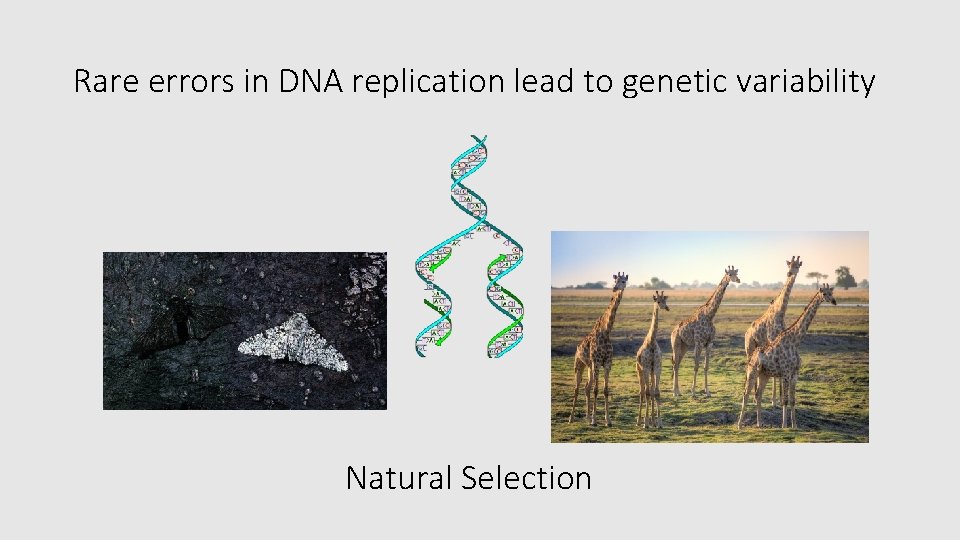
Rare errors in DNA replication lead to genetic variability Natural Selection
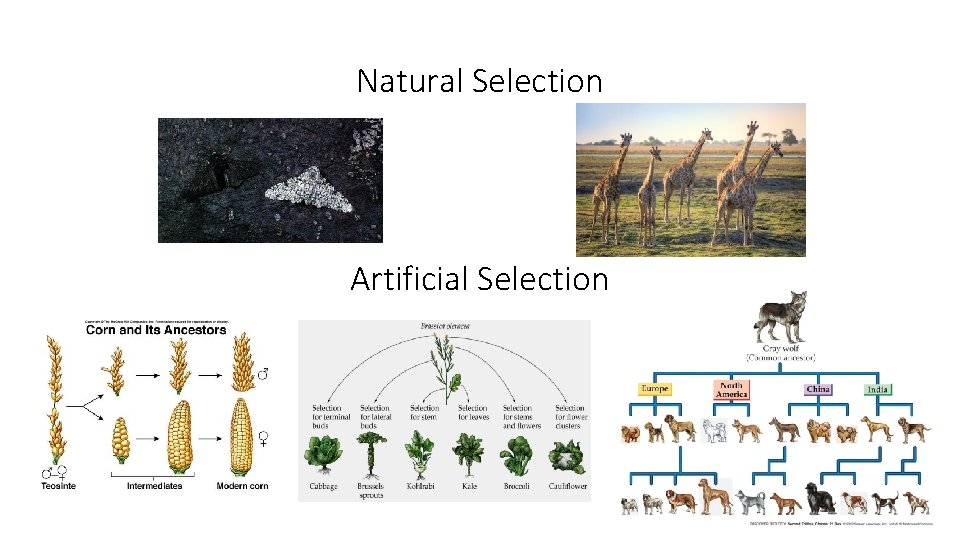
Natural Selection Artificial Selection
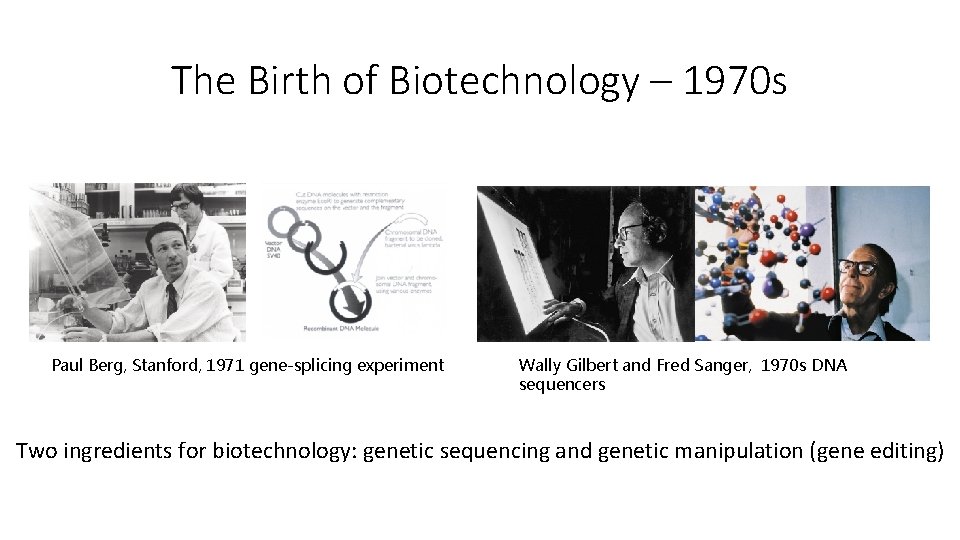
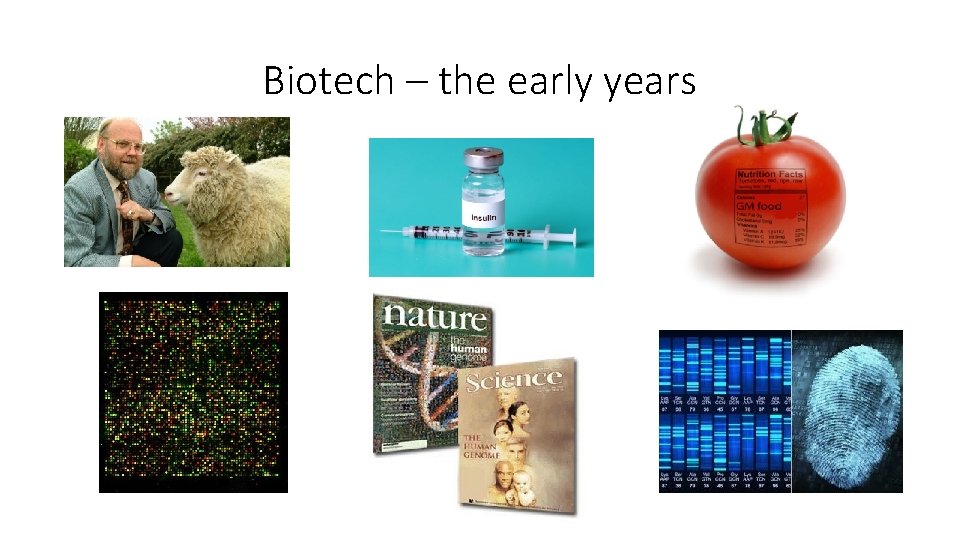
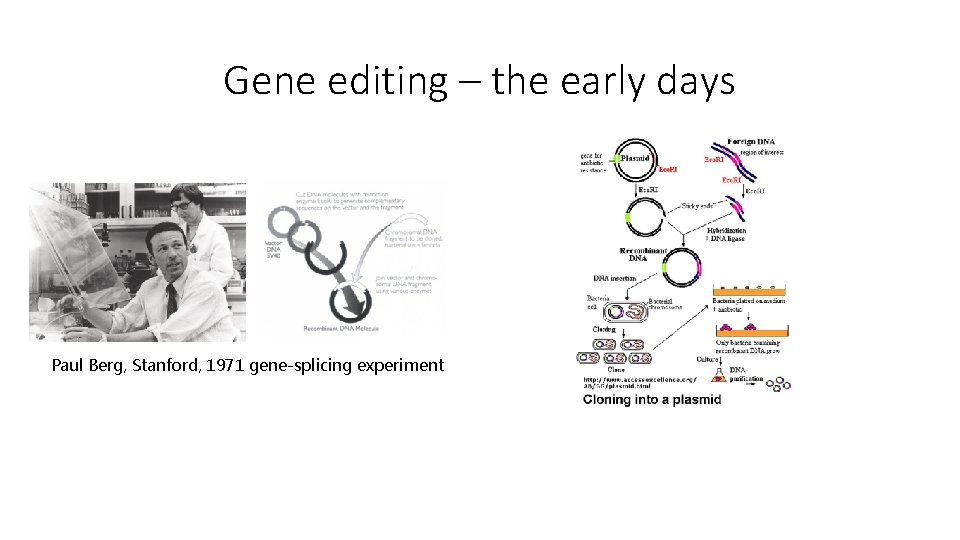
The Birth of Biotechnology – 1970 s Paul Berg, Stanford, 1971 gene-splicing experiment Wally Gilbert and Fred Sanger, 1970 s DNA sequencers Two ingredients for biotechnology: genetic sequencing and genetic manipulation (gene editing)
Biotech – the early years
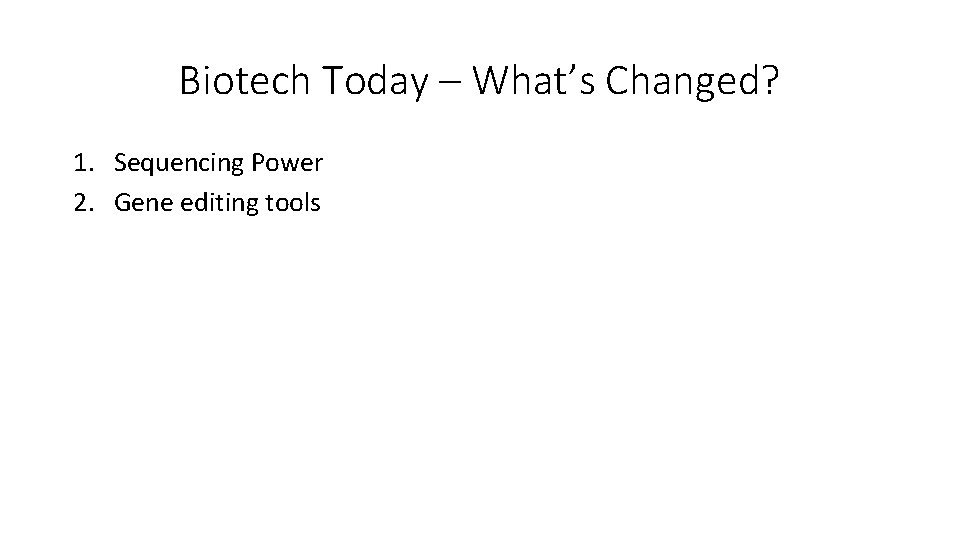
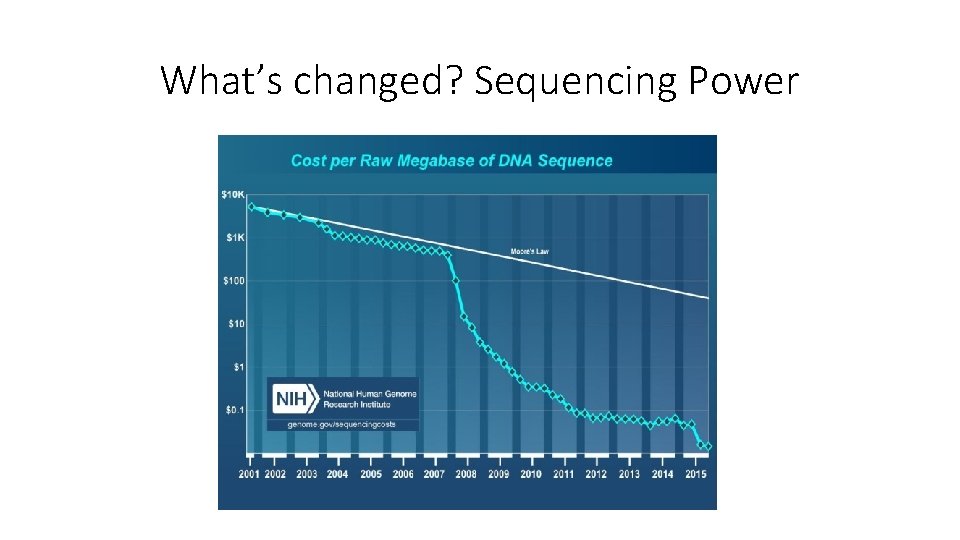
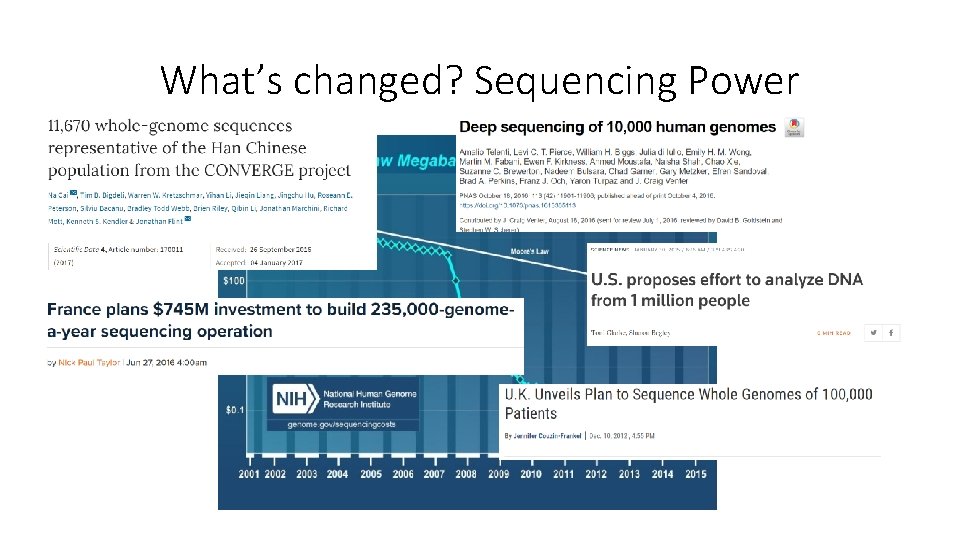
Biotech Today – What’s Changed? 1. Sequencing Power 2. Gene editing tools
What’s changed? Sequencing Power
What’s changed? Sequencing Power
What’s changed? – Gene editing
Gene editing – the early days Paul Berg, Stanford, 1971 gene-splicing experiment
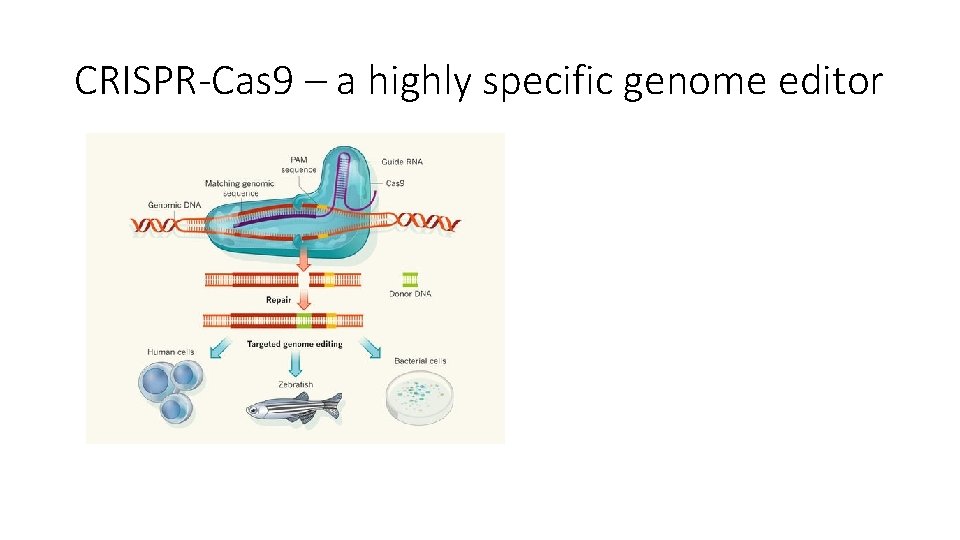
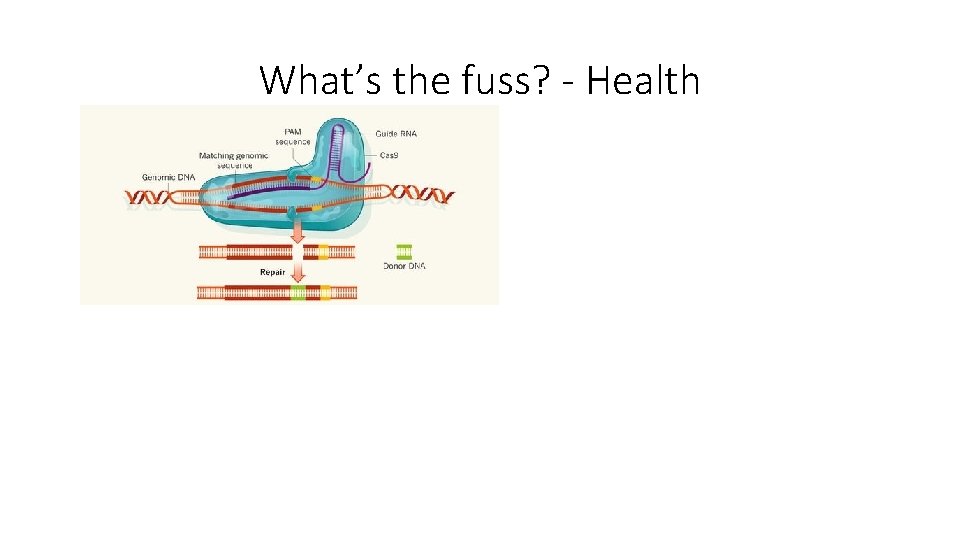
CRISPR-Cas 9 – a highly specific genome editor
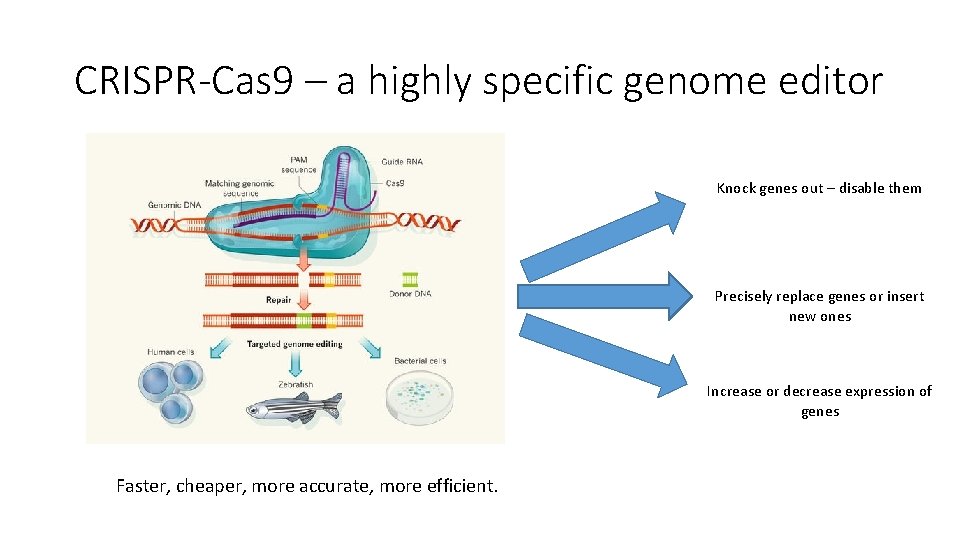
CRISPR-Cas 9 – a highly specific genome editor Knock genes out – disable them Precisely replace genes or insert new ones Increase or decrease expression of genes Faster, cheaper, more accurate, more efficient.
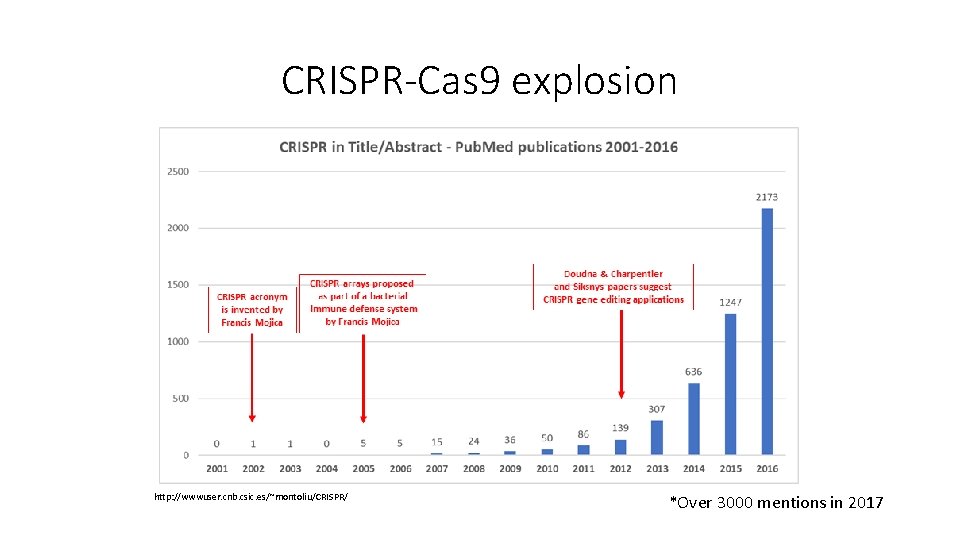
CRISPR-Cas 9 explosion http: //wwwuser. cnb. csic. es/~montoliu/CRISPR/ *Over 3000 mentions in 2017
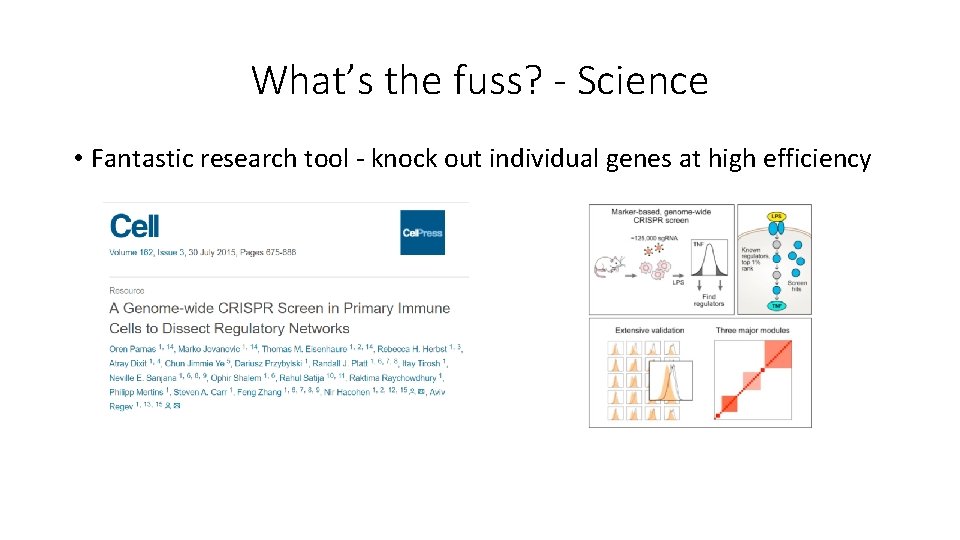
What’s the fuss? - Science • Fantastic research tool - knock out individual genes at high efficiency
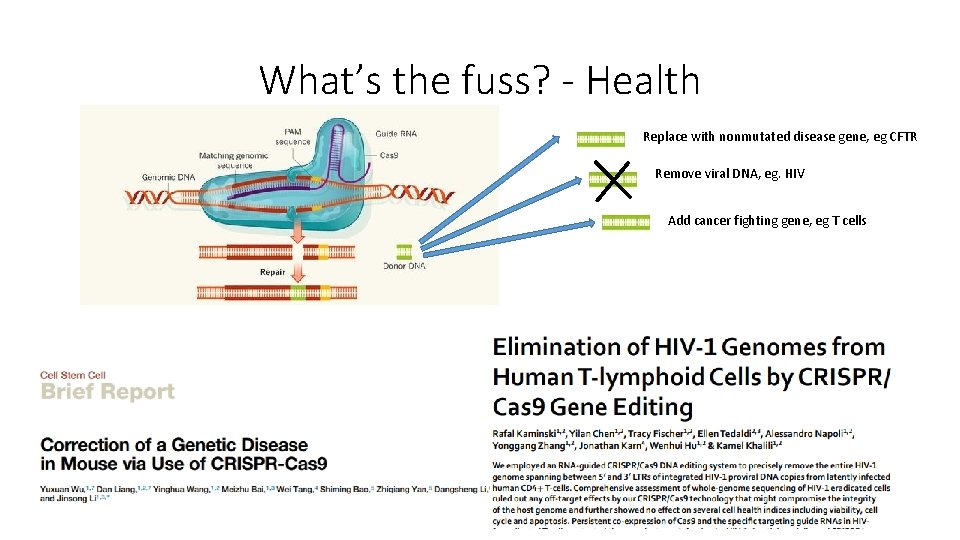
What’s the fuss? - Health
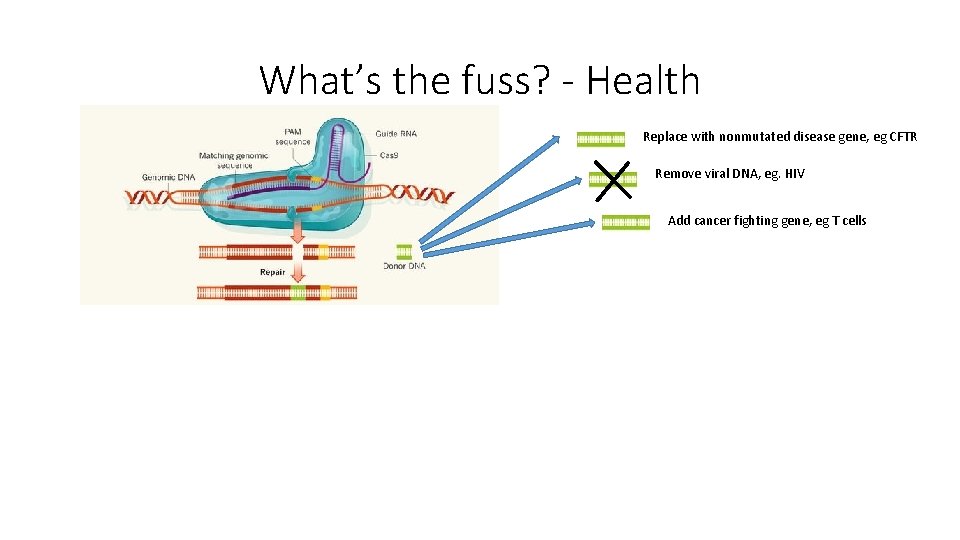
What’s the fuss? - Health Replace with nonmutated disease gene, eg CFTR Remove viral DNA, eg. HIV Add cancer fighting gene, eg T cells
What’s the fuss? - Health Replace with nonmutated disease gene, eg CFTR Remove viral DNA, eg. HIV Add cancer fighting gene, eg T cells
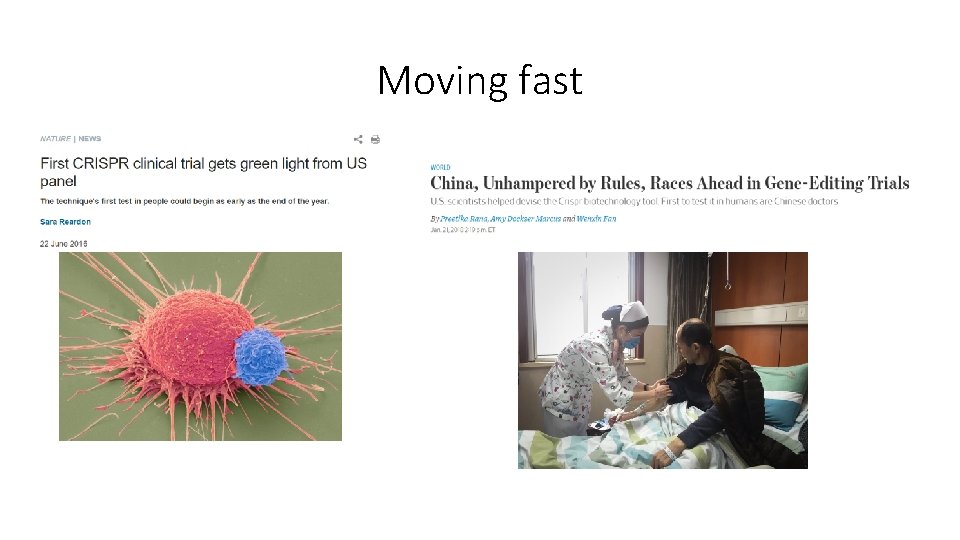
Moving fast
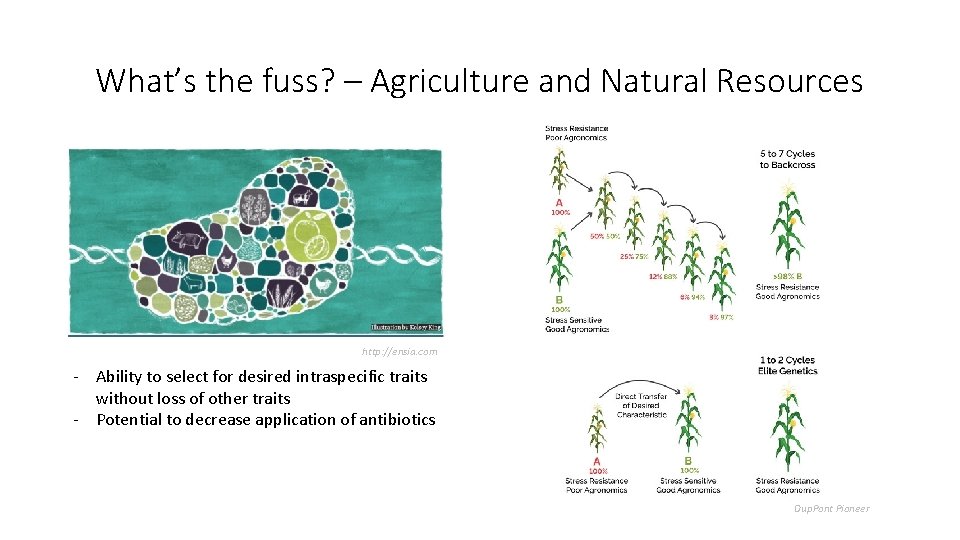
What’s the fuss? – Agriculture and Natural Resources http: //ensia. com - Ability to select for desired intraspecific traits without loss of other traits - Potential to decrease application of antibiotics Dup. Pont Pioneer
The future is here • Genetic diseases • More than 10, 000 diseases are due to mutations to a single gene • Viral diseases • Cancer • Forestry, agriculture, environment • Climate change mitigation and adaptation • Increased yields • Reduced pesticides and antibiotics • Enhanced opportunities for synthetic biology
CRISPR 2. 0 – the future? • What about genetic disease elimination in the germline? • What about ‘vaccines’ for potential diseases? • What happens when we move from disease to vanity traits? • Eyesight? Baldness/greyness? More? • What if we can start to address genetic changes associated with aging? • Gene drive
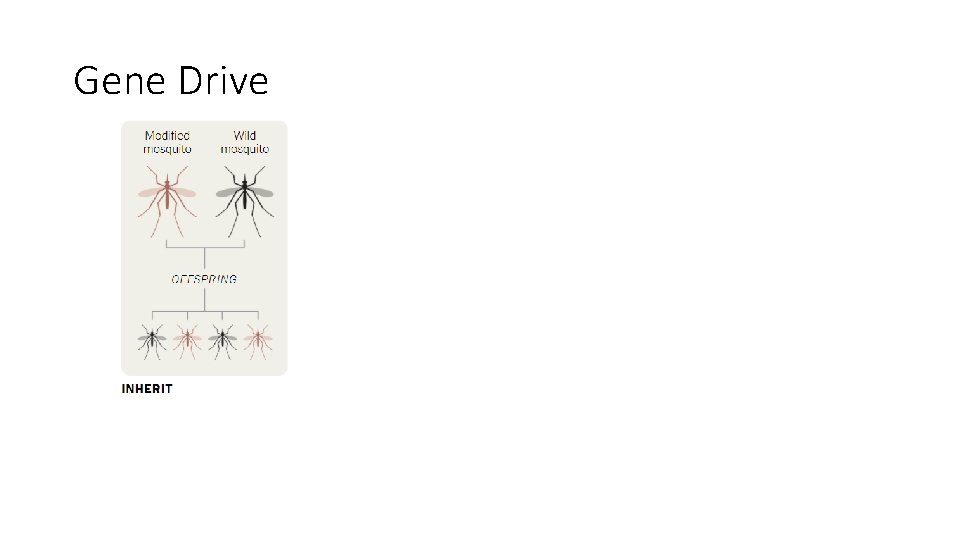
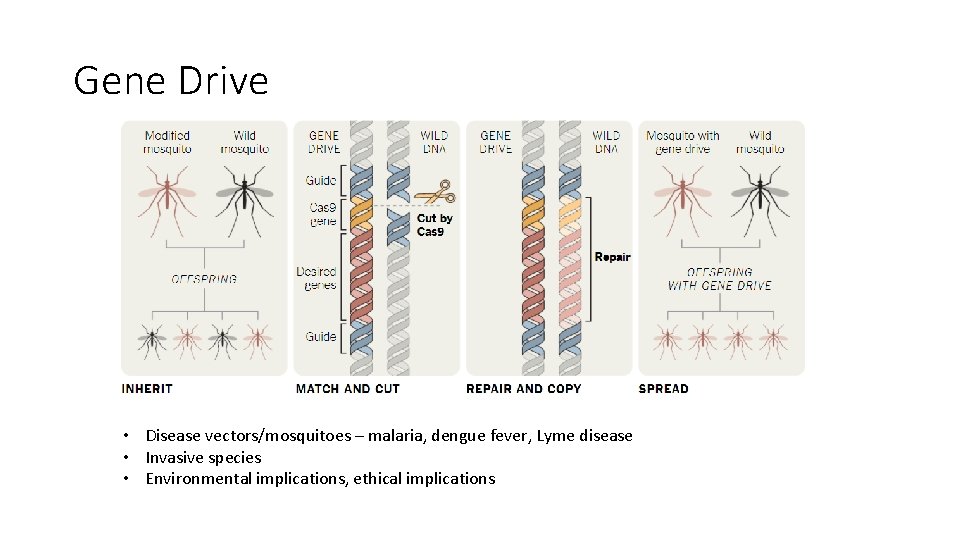
Gene Drive
Gene Drive • Disease vectors/mosquitoes – malaria, dengue fever, Lyme disease • Invasive species • Environmental implications, ethical implications
Policy Challenges • How to stay on top of fast-moving science • Old policies won’t fit new technologies in health, food, environment • Balance between innovation and regulation • Education and public engagement on complicated science
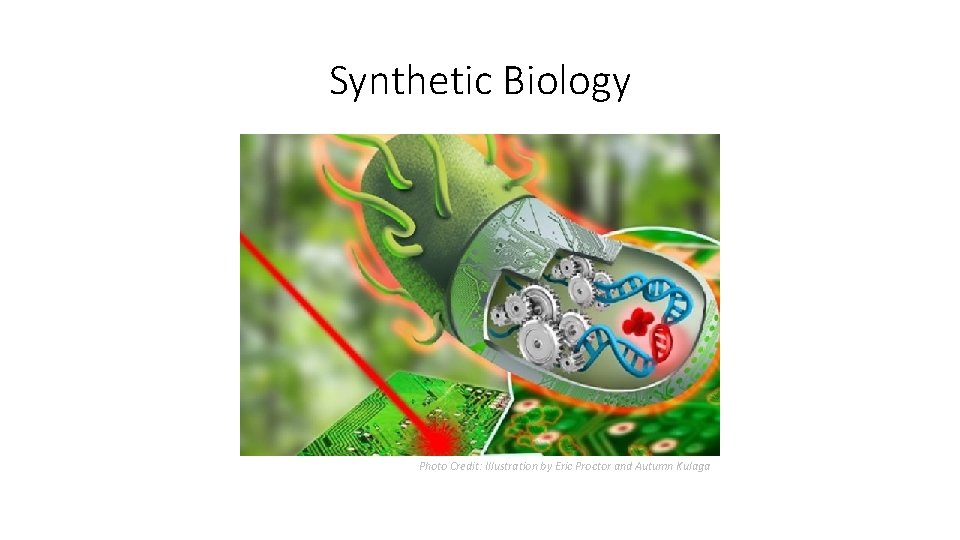
Synthetic Biology Photo Credit: Illustration by Eric Proctor and Autumn Kulaga
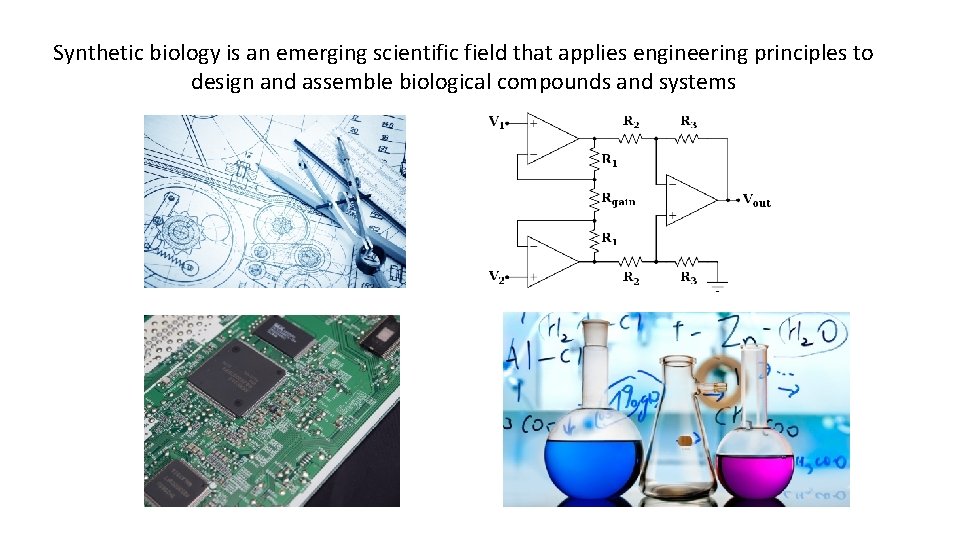
Synthetic biology is an emerging scientific field that applies engineering principles to design and assemble biological compounds and systems
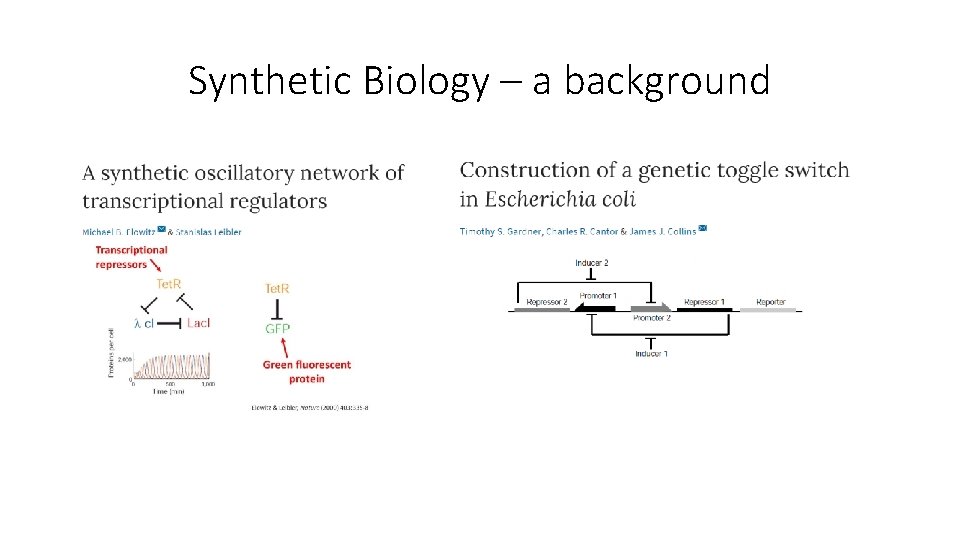
Synthetic Biology – a background
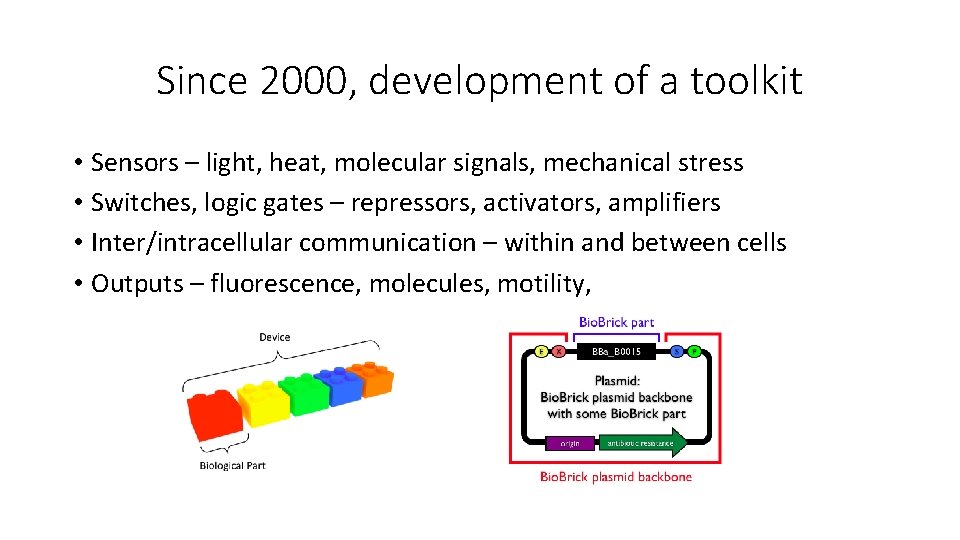
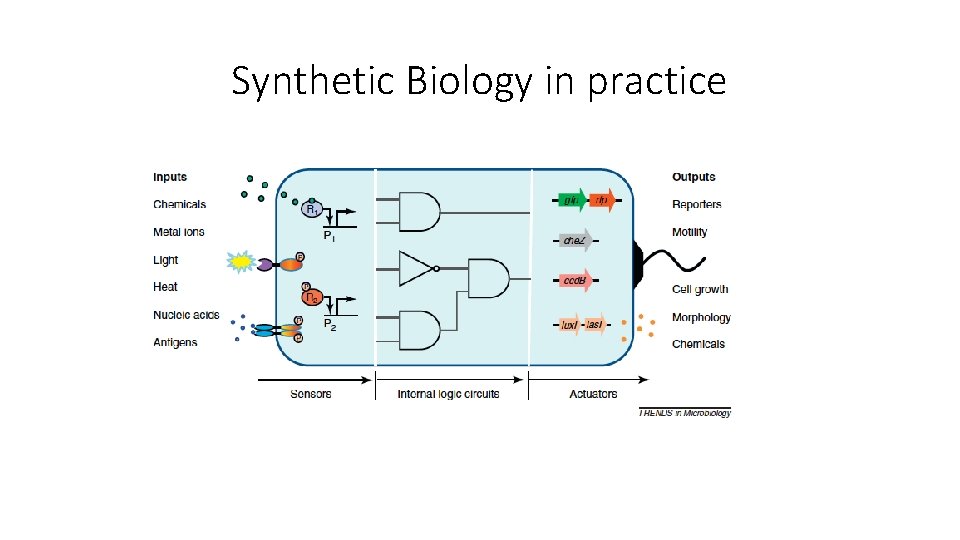
Since 2000, development of a toolkit • Sensors – light, heat, molecular signals, mechanical stress • Switches, logic gates – repressors, activators, amplifiers • Inter/intracellular communication – within and between cells • Outputs – fluorescence, molecules, motility,
Synthetic Biology in practice
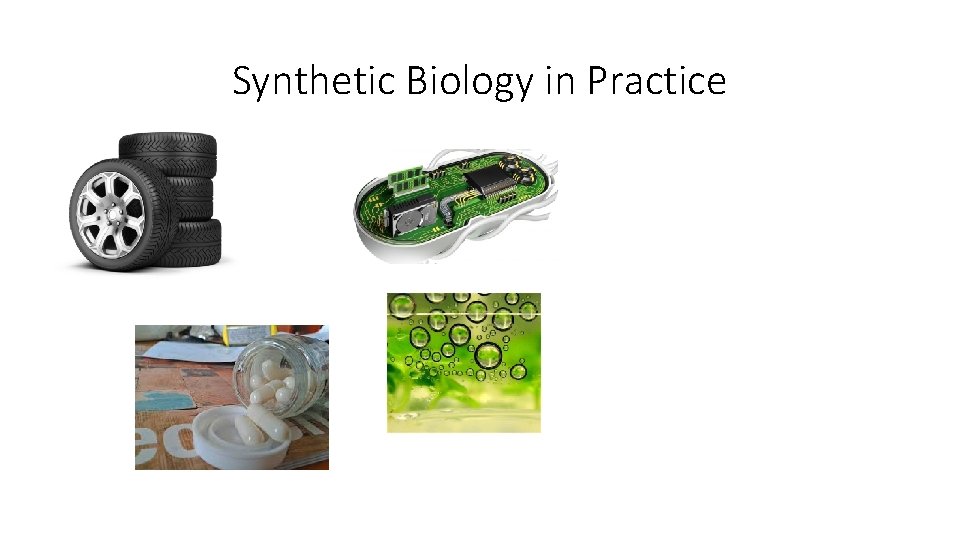
Synthetic Biology in Practice
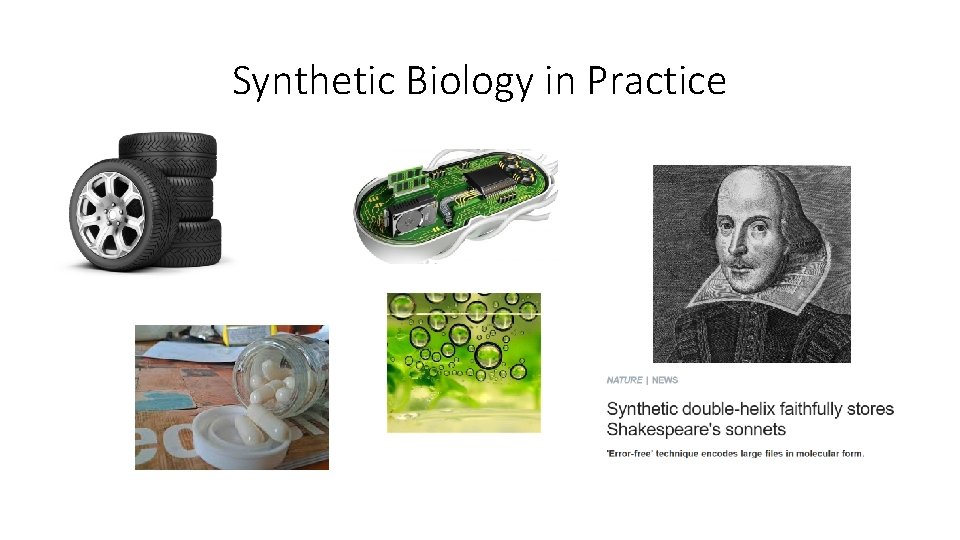
Synthetic Biology in Practice
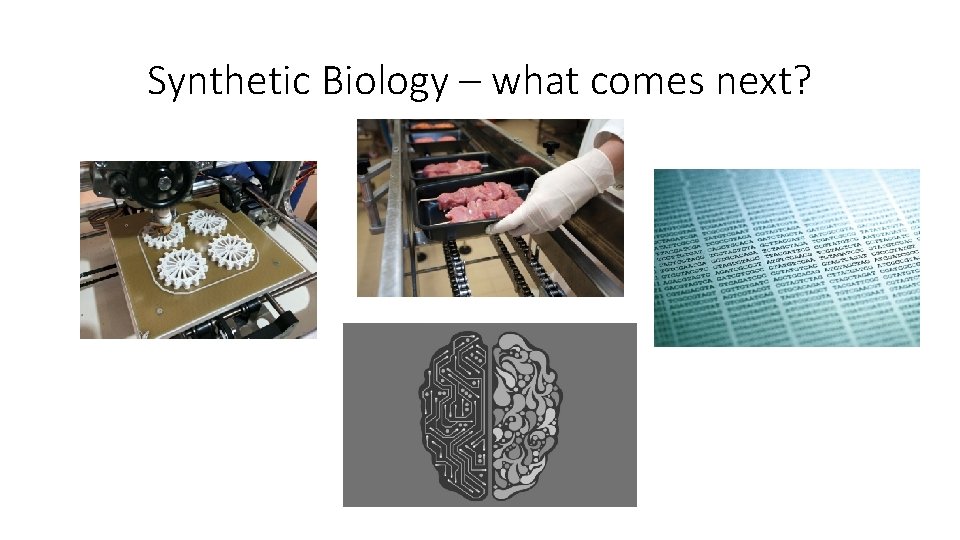
Synthetic Biology – what comes next?
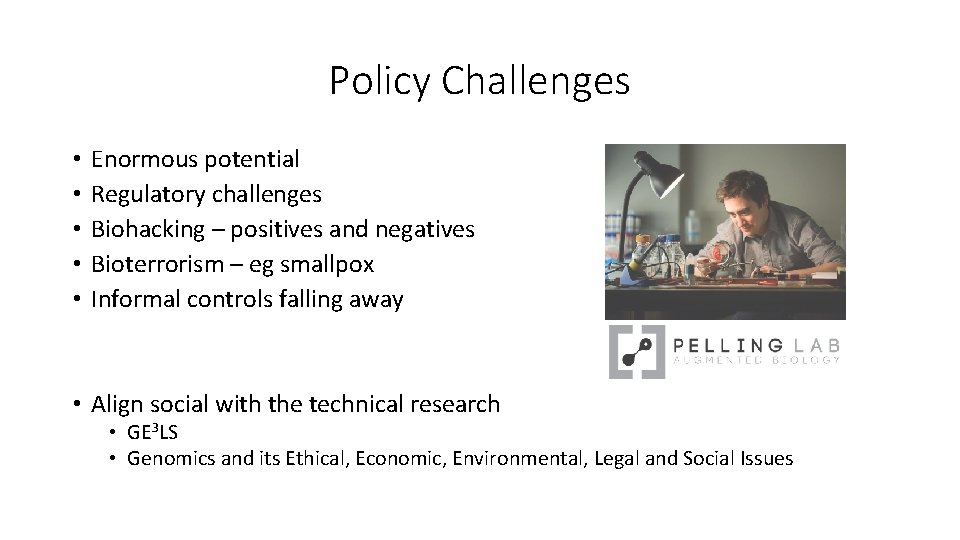
Policy Challenges • • • Enormous potential Regulatory challenges Biohacking – positives and negatives Bioterrorism – eg smallpox Informal controls falling away • Align social with the technical research • GE 3 LS • Genomics and its Ethical, Economic, Environmental, Legal and Social Issues
Thank you and good luck. Rob Annan rannan@genomecanada. ca @robannan