
Dispute Settlement General Aspects of WTO Dispute Settlement

- Slides: 23
Dispute Settlement General Aspects of WTO Dispute Settlement Russian Federation, September 2012 Susan Hainsworth, ITTC, WTO
In this session you will learn about. . . Part 1: The historic roots of the WTO Dispute Settlement System (GATT 1947) Part 2: The basic characteristics of the WTO Dispute Settlement System 2
Part 1 Historic roots of the WTO Dispute settlement System (DS under the GATT 1947, 1947 -1994) 3
How were disputes settled under the GATT 1947? Articles XXII and XXIII of the GATT 1994 Nearly 50 years of dispute settlement under the GATT 1947. . . Positive consensus in the GATT Council to refer a dispute to a Panel, and to adopt a Panel report 4
Challenges under the GATT 1947 dispute settlement system • Rule of positive consensus – Referring a dispute to a panel, adopting a panel report, authorizing countermeasures – Risk of veto – Diplomatic character • Yet, good results – 101 adopted reports / 132 issued reports – Empirical research 5
Part 2 Basic characteristics of the WTO Dispute Settlement System (1995 – currently) 6
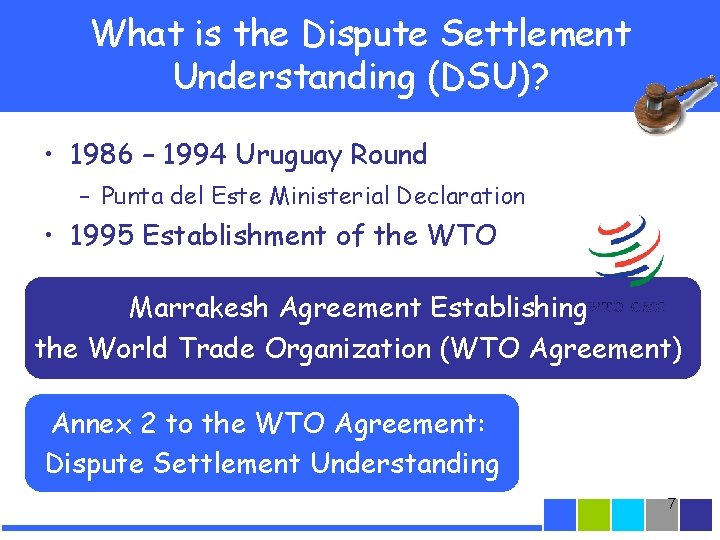
What is the Dispute Settlement Understanding (DSU)? • 1986 – 1994 Uruguay Round – Punta del Este Ministerial Declaration • 1995 Establishment of the WTO Marrakesh Agreement Establishing the World Trade Organization (WTO Agreement) Annex 2 to the WTO Agreement: Dispute Settlement Understanding 7
DSU builds on Articles XXII and XXIII of the GATT 1947 Article 3. 1 of the DSU Members affirm their adherence. . . To the principles for the management of disputes applied under Articles XXII and XXIII of GATT 1947. . . And the rules and procedures elaborated and modified in the DSU as further 8
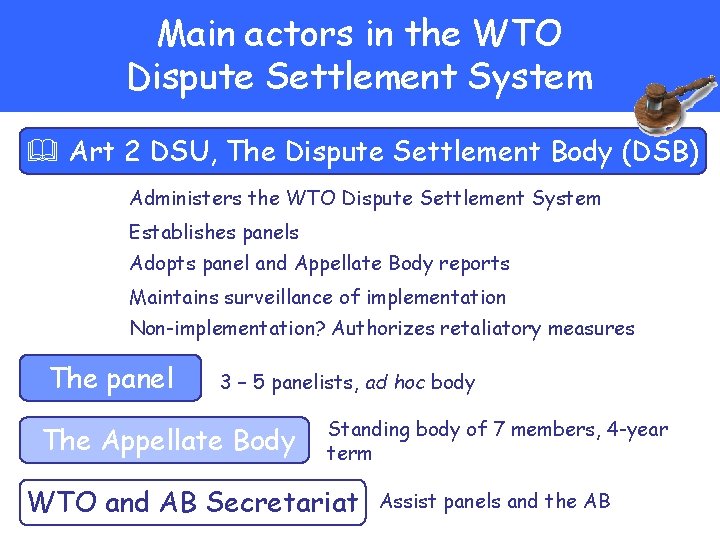
Main actors the WTO Main actors in the in WTO Dispute Settlement System Art 2 DSU, The Dispute Settlement Body (DSB) Administers the WTO Dispute Settlement System Establishes panels Adopts panel and Appellate Body reports Maintains surveillance of implementation Non-implementation? Authorizes retaliatory measures The panel 3 – 5 panelists, ad hoc body The Appellate Body Standing body of 7 members, 4 -year term WTO and AB Secretariat Assist panels and the AB
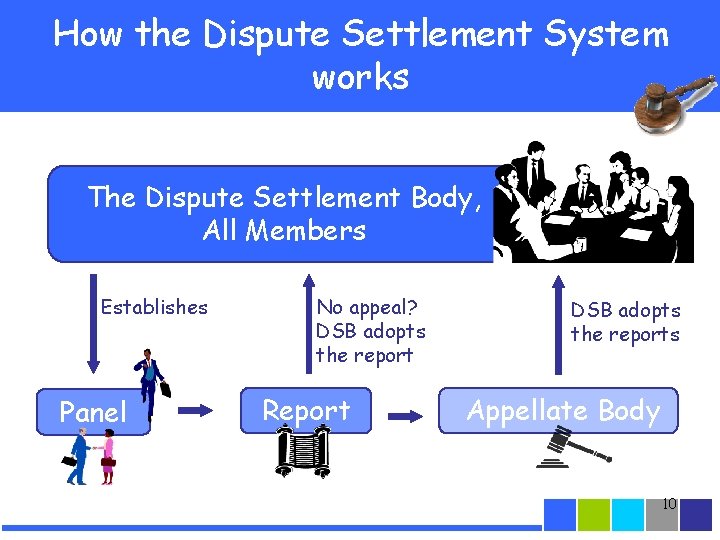
How the Dispute Settlement System works The Dispute Settlement Body, All Members Establishes Panel No appeal? DSB adopts the report Report DSB adopts the reports Appellate Body 10
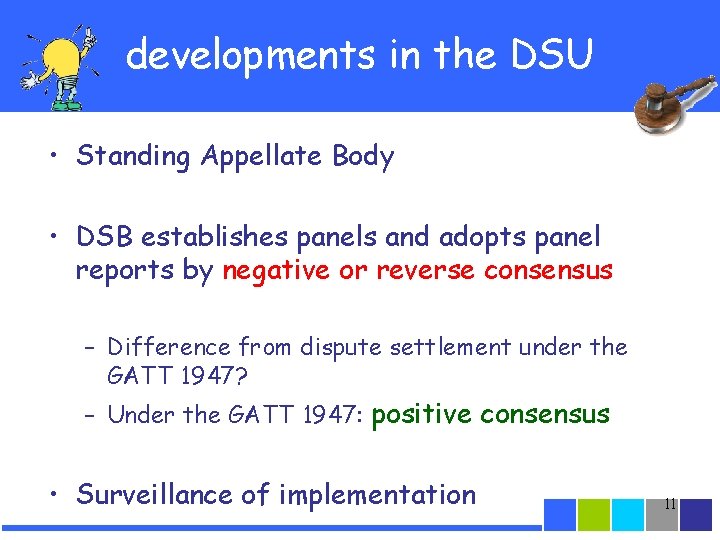
developments in the DSU • Standing Appellate Body • DSB establishes panels and adopts panel reports by negative or reverse consensus – Difference from dispute settlement under the GATT 1947? – Under the GATT 1947: positive consensus • Surveillance of implementation 11
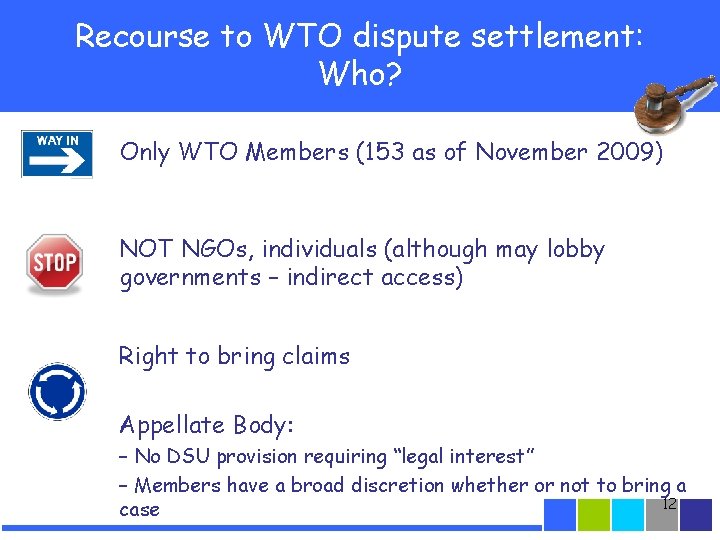
Recourse to WTO dispute settlement: Who? Only WTO Members (153 as of November 2009) NOT NGOs, individuals (although may lobby governments – indirect access) Right to bring claims Appellate Body: – No DSU provision requiring “legal interest” – Members have a broad discretion whether or not to bring a 12 case
Recourse to WTO dispute settlement: Regarding what? Appendix 1 to the DSU Disputes under the following agreements (so-called covered agreements, “CA”), must be resolved pursuant to the DSU ü ü ü WTO Agreement Multilateral Trade Agreements (GATT 1994 + 12 other agreements on trade in goods) GATS TRIPS DSU (Plurilateral Trade Agreements – subject to decision) 13
Recourse to WTO dispute settlement: When? DS provisions of the Covered Agreements When recourse to dispute settlement For example: Article 17 of the Anti-Dumping Agreement. . . Article 11 of the SPS Agreement. . . Article 14 of the TBT Agreement. . . DSU Rules concerning dispute settlement procedure 14
Integrated system for Dispute Settlement Article 23 of the DSU. . . A single set of rules for all disputes Article 1. 2 of the DSU, Appendix 2 to the DSU … Only a few special or additional rules in the covered agreements which prevail over the DSU. For example: Article 4. 4 of the SCM Agreement. . . Consultation period 30 days rather than the standard 60 days 15
Nature • Compulsory jurisdiction – Members obliged to bring disputes under the Covered Agreements to WTO dispute settlement – Accession: Consent to accept jurisdiction • Exclusive jurisdiction – No other fora – No unilateral action 16
Objectives Article 3. 2 of the DSU Security and predictability in international trade Preserving Members’ rights and obligations Clarifying the existing provisions of the CA 17
Objectives Article 3. 7 of the DSU Positive solution to a dispute Preferred outcome: Mutually acceptable solution Withdrawal of measures inconsistent with the covered agreements 18
. . . and if no mutually agreed solution reached • Panel proceedings • (Appellate Body review) • Inconsistent measures. . . Measure – Withdrawal – Compensation / Suspension of concessions 19
Alternative ways to resolve a dispute Article 5 DSU Good offices, conciliation, mediation Informal means of assisting in reaching a mutually acceptable solution. . . At any time after request for consultations, parties’ agreement. . . Article 25 DSU Arbitration Parties’ agreement. . . Notification to all Members. . . 20
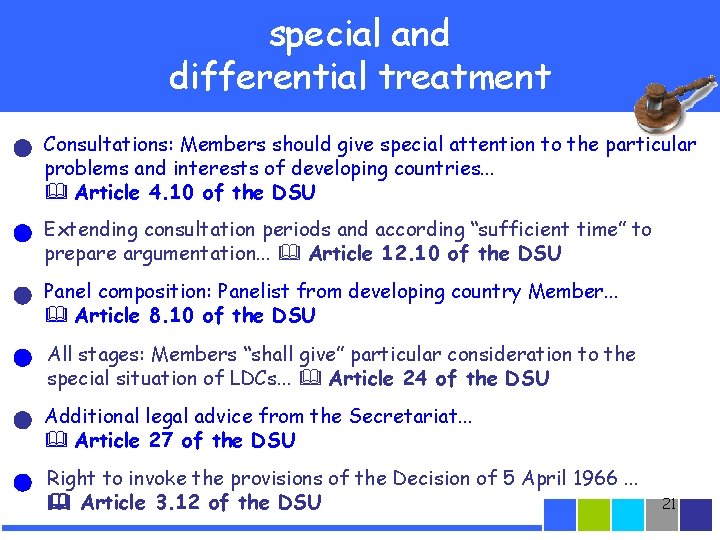
special and differential treatment Consultations: Members should give special attention to the particular problems and interests of developing countries. . . Article 4. 10 of the DSU Extending consultation periods and according “sufficient time” to prepare argumentation. . . Article 12. 10 of the DSU Panel composition: Panelist from developing country Member. . . Article 8. 10 of the DSU All stages: Members “shall give” particular consideration to the special situation of LDCs. . . Article 24 of the DSU Additional legal advice from the Secretariat. . . Article 27 of the DSU Right to invoke the provisions of the Decision of 5 April 1966. . . Article 3. 12 of the DSU 21
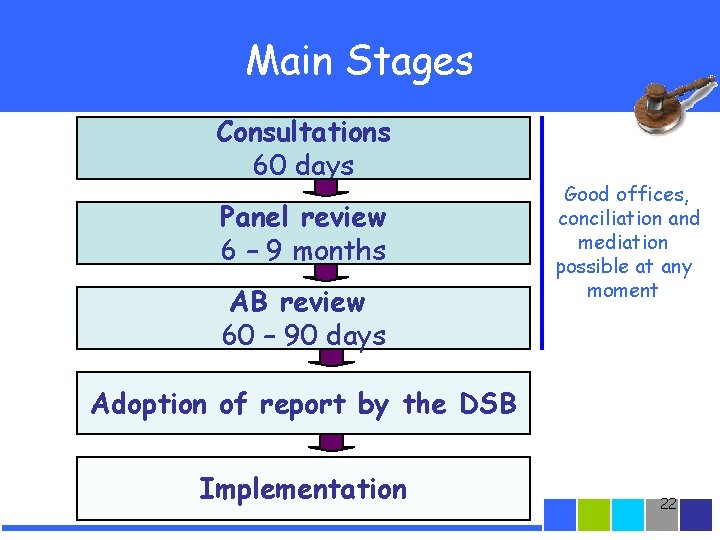
Main Stages Consultations 60 days Panel review 6 – 9 months AB review 60 – 90 days Good offices, conciliation and mediation possible at any moment Adoption of report by the DSB Implementation 22
Thank you! 23