
Dispute Resolution Continuum What is Negotiation Negotiation is
- Slides: 18
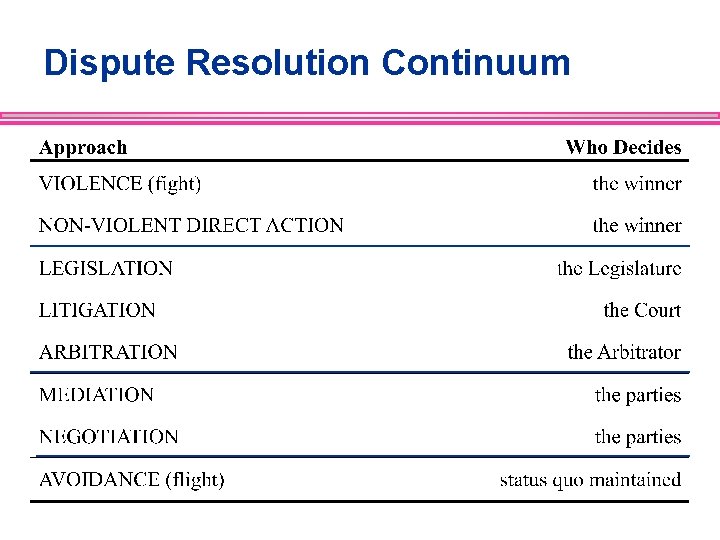
Dispute Resolution Continuum
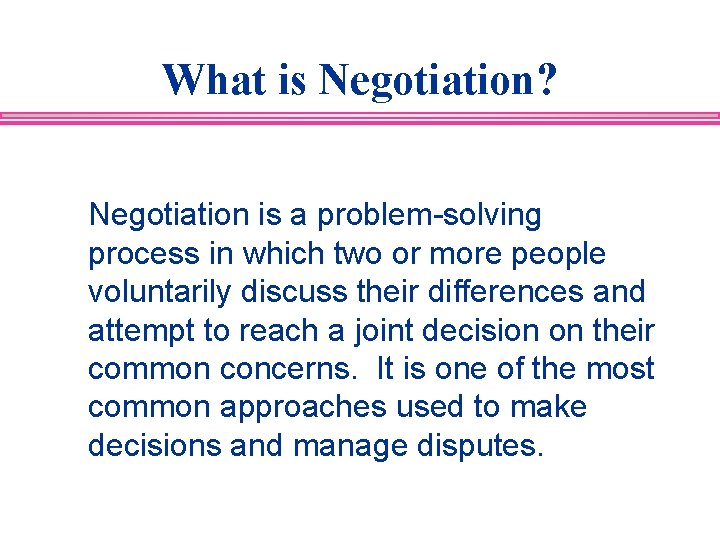
What is Negotiation? Negotiation is a problem-solving process in which two or more people voluntarily discuss their differences and attempt to reach a joint decision on their common concerns. It is one of the most common approaches used to make decisions and manage disputes.
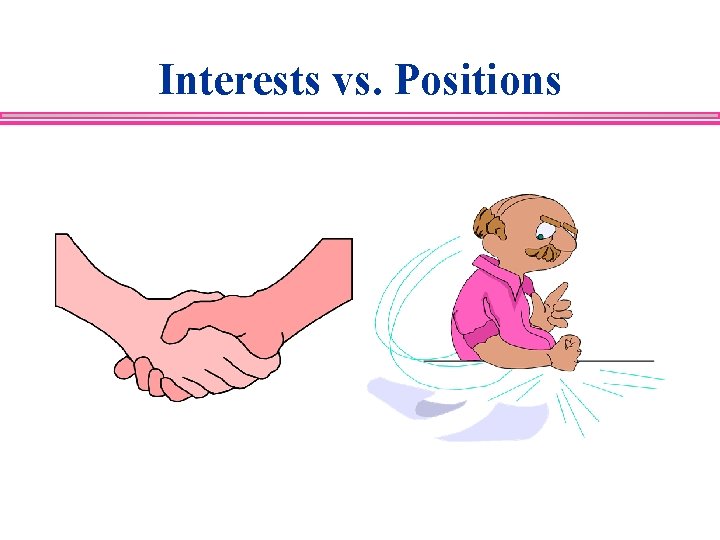
Interests vs. Positions
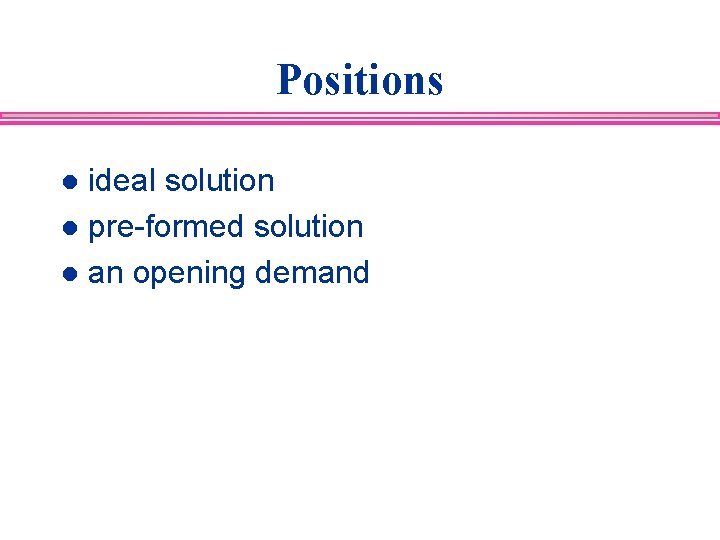
Positions ideal solution l pre-formed solution l an opening demand l
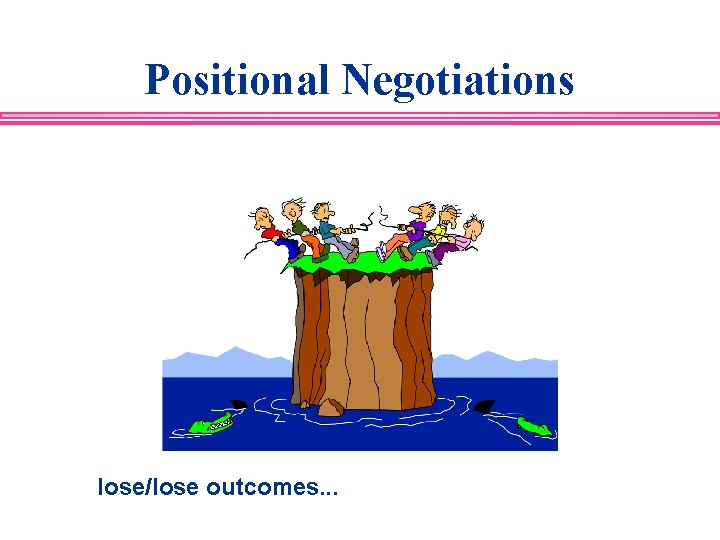
Positional Negotiations lose/lose outcomes. . .
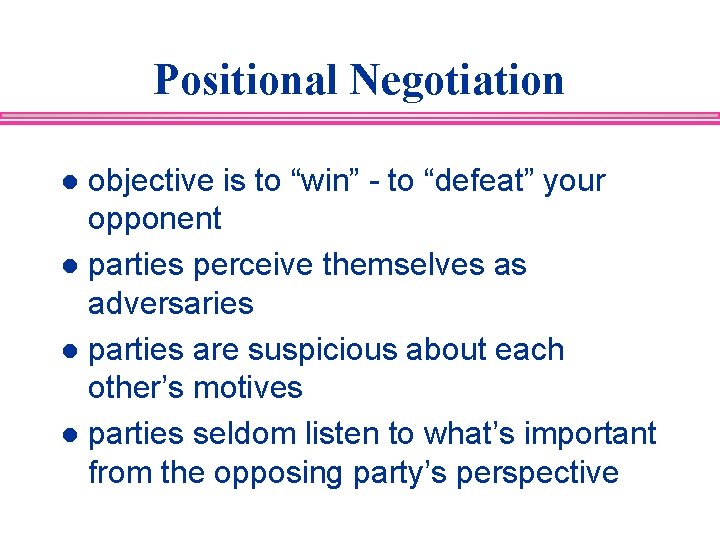
Positional Negotiation objective is to “win” - to “defeat” your opponent l parties perceive themselves as adversaries l parties are suspicious about each other’s motives l parties seldom listen to what’s important from the opposing party’s perspective l
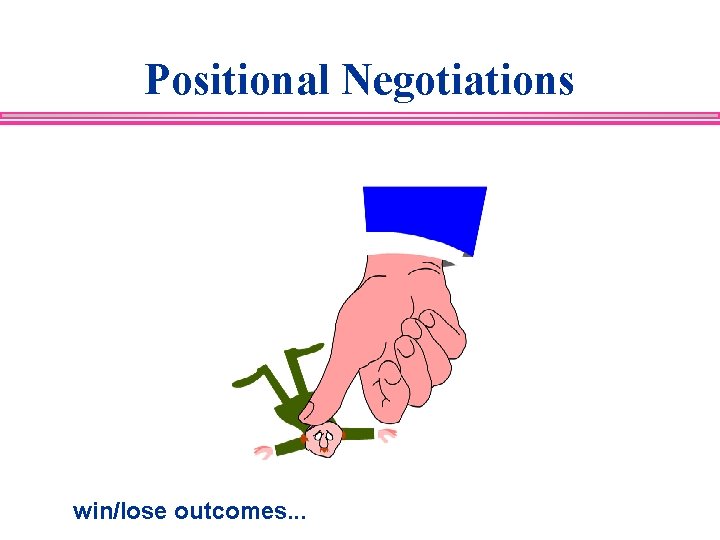
Positional Negotiations win/lose outcomes. . .
Interests l Interests are the needs, hopes, fears, concerns and desires that underlie a position
Interest Negotiation work together to solve the problem l proceed on the basis of common interests l accommodate and collaborate rather than compete and compromise l
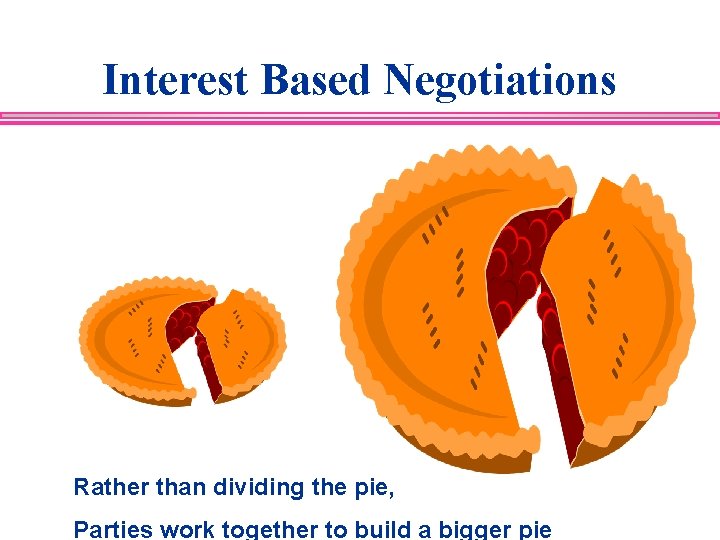
Interest Based Negotiations Rather than dividing the pie, Parties work together to build a bigger pie
Positional Negotiation Strategy play cards close to your chest l demand more than you expect to receive l measure success by what you gain and the other party loses l never ask questions you don’t know the answer to l
Interest Based Negotiation Strategy identify their needs, hopes, fears concerns and desires l parties identify their interests and look for common interests as a basis to begin building agreement l parties work together to build an agreement that accommodates their collective interests l
Communication Skills
Communication Skills Active Listening l Open Questions l Paraphrasing l Acknowledging l Reframing l Summarizing l
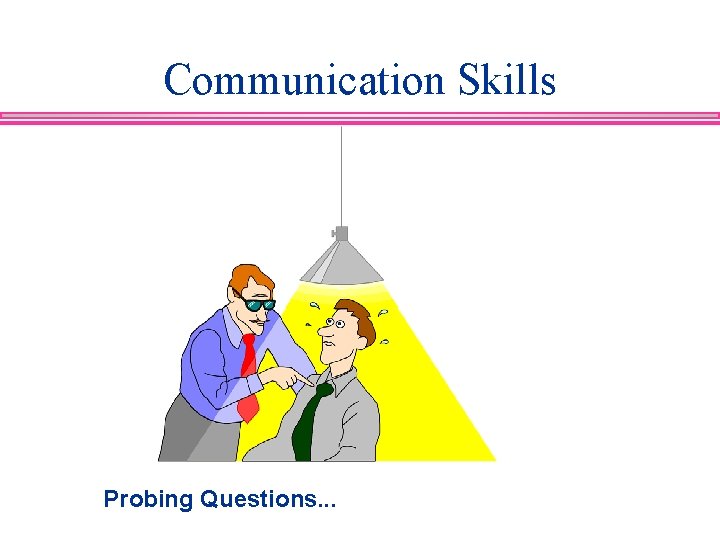
Communication Skills Probing Questions. . .
Active Listening be attentive l concentrate l acknowledge l probe l clarify l paraphrase to ensure understanding l
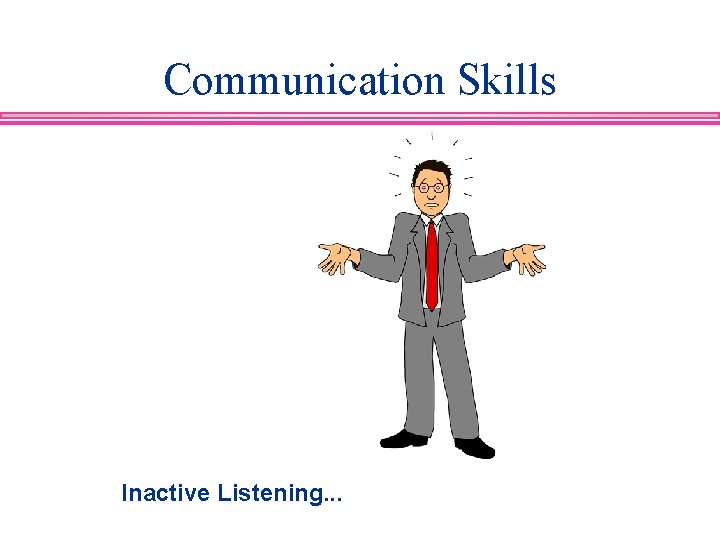
Communication Skills Inactive Listening. . .
Open Questions Who l What l Where l When l If, . . . , then. . . l [Why] l