
Disproportionality and Overrepresentation This module looks at Defining




- Slides: 22
Disproportionality and Overrepresentation
This module looks at. . . • Defining disproportionality • Why disproportionality is on the front burner • IDEA 2004’s provisions • Determination of “significant disproportionality” • Resources for SEAs and LEAs
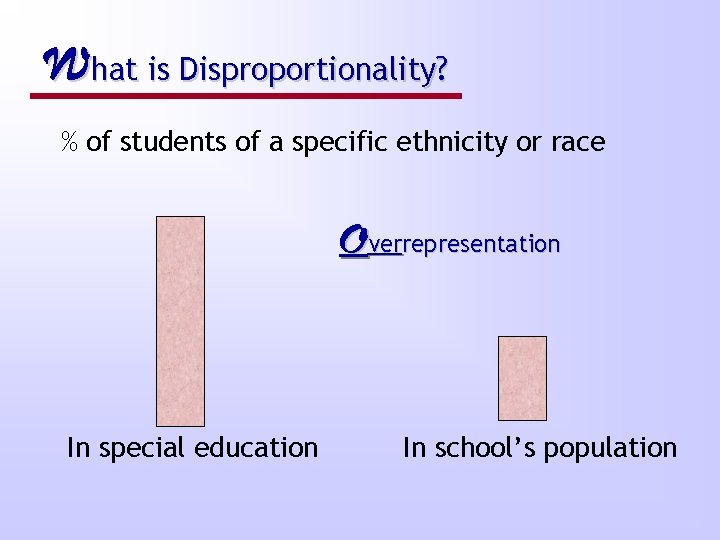
What is Disproportionality? % of students of a specific ethnicity or race Overrepresentation In special education In school’s population
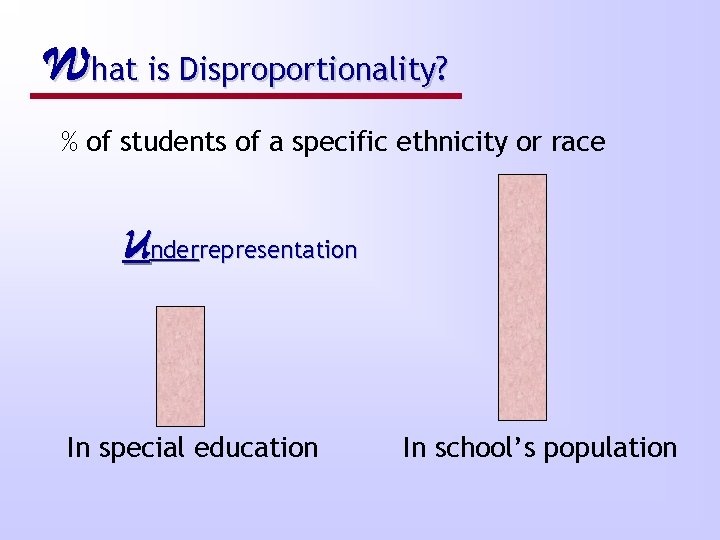
What is Disproportionality? % of students of a specific ethnicity or race Underrepresentation In special education In school’s population
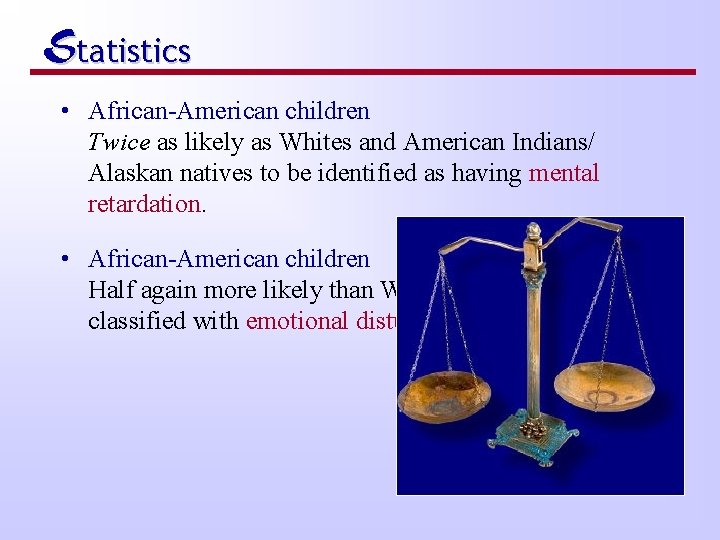
Statistics • African-American children Twice as likely as Whites and American Indians/ Alaskan natives to be identified as having mental retardation. • African-American children Half again more likely than White students to be classified with emotional disturbance.
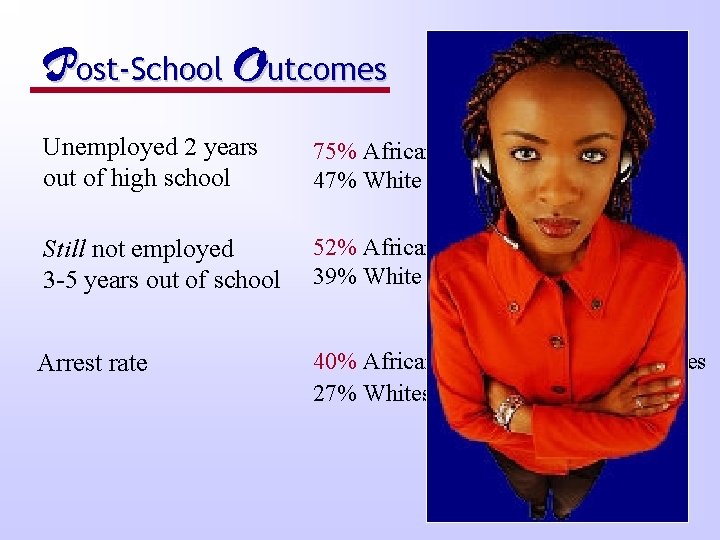
Post-School Outcomes Unemployed 2 years out of high school 75% African-American students 47% White Still not employed 3 -5 years out of school 52% African-American young adults 39% White young adults Arrest rate 40% African-Americans with disabilities 27% Whites with disabilities
Why? Some Hypotheses Failure of general education to educate children from diverse backgrounds Misidentification, misuse of tests Lack of access to effective instruction Insufficient resources Teachers who are less well prepared Poverty
What States Must Do § 300. 173
What States Must Do § 300. 646
Defining “Significant Disproportionality” State defines for LEAs and for state in general State determines criteria for what level of disproportionality is significant
Determining “Significant Disproportionality” Is based on collection and examination of data --- and not on a district’s policies, procedures, or practices.
How do you measure disproportionality? Technical Assistance Guide from U. S. Department of Education: www. ideadata. org/docs/Disproportionality %20 Technical%20 Assistance%20 Guide. pdf
What happens if there’s a determination of significant disproportionality?
For Determinations of Significant Disproportionality States must: q Provide for the review and revision (if appropriate) of policies, procedures, and practices used in identification or placement of children* * Do they comply with requirements of IDEA?
For Determinations of Significant Disproportionality States must: q Require LEAs to use 15% of Part B funds for early intervening services …particularly, but not only, for children in those groups significantly overidentified.
For Determinations of Significant Disproportionality The LEA must: q Publicly report on the revision of policies, practices, and procedures
IDEA 2004 Disproportionality is now 1 of 3 monitoring priorities. States must monitor LEAs’ levels of disproportionality.
Reporting States must annually report under 6 -year State Performance Plan (SPP) on: % of districts with DR of racial and ethnic groups in special education and related services in specific disability categories that results from inappropriate identification.
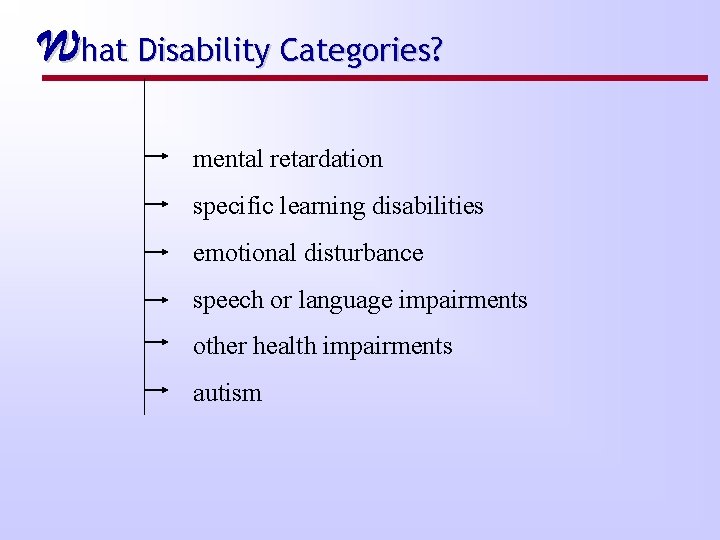
What Disability Categories? mental retardation specific learning disabilities emotional disturbance speech or language impairments other health impairments autism
Sources of Technical Assistance IDEA authorizes and supports: ü Technical assistance ü Demonstration projects ü Dissemination of information ü Implementation of scientifically based research www. nccrest. org
NCCRESt Resources www. nccrest. org “How-to” guides. Practitioner Databriefs. maps.