
Disposal Method Selection Criteria Adapted from the FAD


- Slides: 17
Disposal Method Selection Criteria Adapted from the FAD PRe. P/NAHEMS Guidelines: Disposal (2012)
Environmental and Biosecurity Considerations FAD PRe. P/NAHEMS Guidelines: Disposal - Disposal Method Selection Criteria USDA APHIS and CFSPH
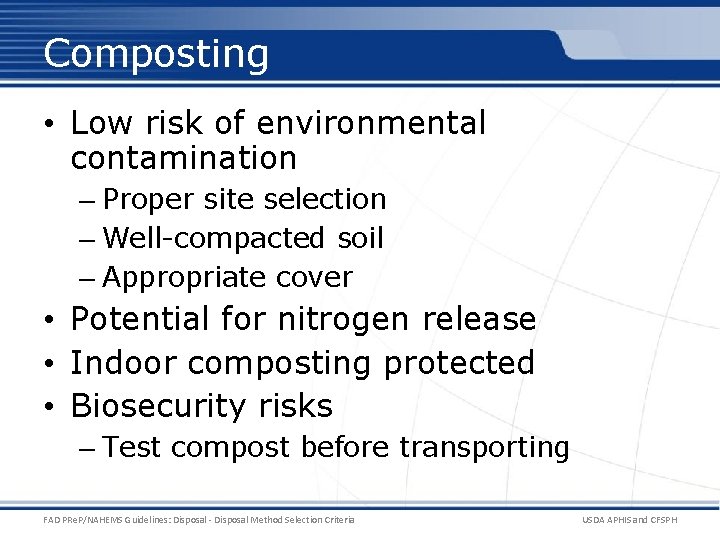
Composting • Low risk of environmental contamination – Proper site selection – Well-compacted soil – Appropriate cover • Potential for nitrogen release • Indoor composting protected • Biosecurity risks – Test compost before transporting FAD PRe. P/NAHEMS Guidelines: Disposal - Disposal Method Selection Criteria USDA APHIS and CFSPH
Rendering • Environmental regulation • Biosecurity risks – Transportation to rendering facility – Handling at rendering facility • End product is generally safe – Some pathogens or toxins may not be completely eliminated • Rendered carcasses not used as feed – May be safe for landfills FAD PRe. P/NAHEMS Guidelines: Disposal - Disposal Method Selection Criteria USDA APHIS and CFSPH
Permitted Landfill • Output: leachate and landfill gas • Landfills – Systems in place for collection – Adjustments may be necessary • Biosecurity risks – Transportation – Carcass handling FAD PRe. P/NAHEMS Guidelines: Disposal - Disposal Method Selection Criteria USDA APHIS and CFSPH
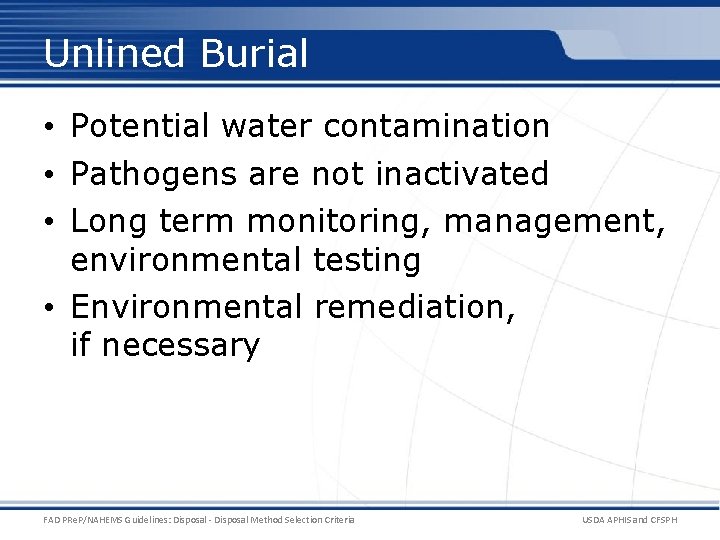
Unlined Burial • Potential water contamination • Pathogens are not inactivated • Long term monitoring, management, environmental testing • Environmental remediation, if necessary FAD PRe. P/NAHEMS Guidelines: Disposal - Disposal Method Selection Criteria USDA APHIS and CFSPH
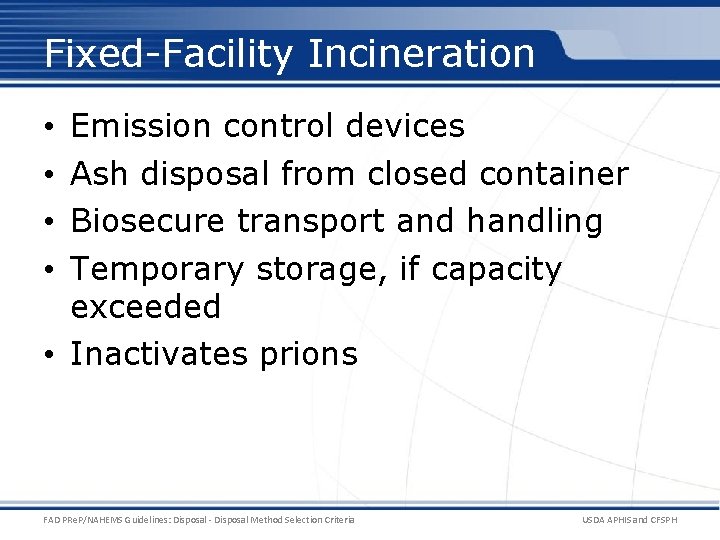
Fixed-Facility Incineration Emission control devices Ash disposal from closed container Biosecure transport and handling Temporary storage, if capacity exceeded • Inactivates prions • • FAD PRe. P/NAHEMS Guidelines: Disposal - Disposal Method Selection Criteria USDA APHIS and CFSPH
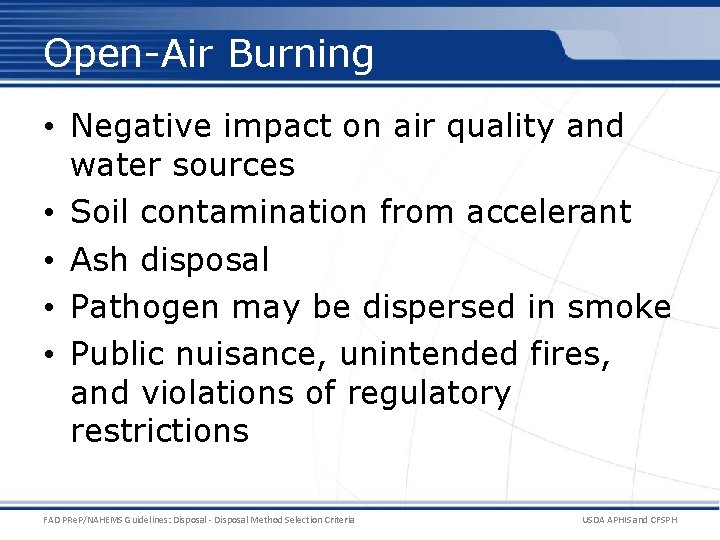
Open-Air Burning • Negative impact on air quality and water sources • Soil contamination from accelerant • Ash disposal • Pathogen may be dispersed in smoke • Public nuisance, unintended fires, and violations of regulatory restrictions FAD PRe. P/NAHEMS Guidelines: Disposal - Disposal Method Selection Criteria USDA APHIS and CFSPH
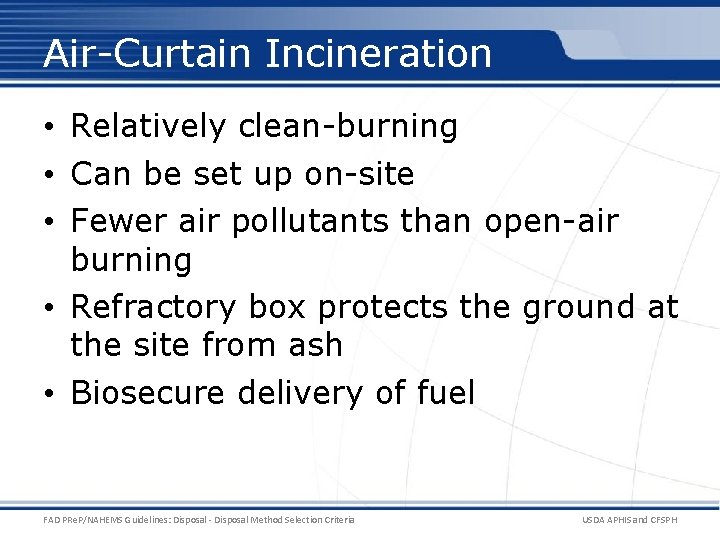
Air-Curtain Incineration • Relatively clean-burning • Can be set up on-site • Fewer air pollutants than open-air burning • Refractory box protects the ground at the site from ash • Biosecure delivery of fuel FAD PRe. P/NAHEMS Guidelines: Disposal - Disposal Method Selection Criteria USDA APHIS and CFSPH
Site-Specific Disposal Method Selection Criteria FAD PRe. P/NAHEMS Guidelines: Disposal - Disposal Method Selection Criteria USDA APHIS and CFSPH
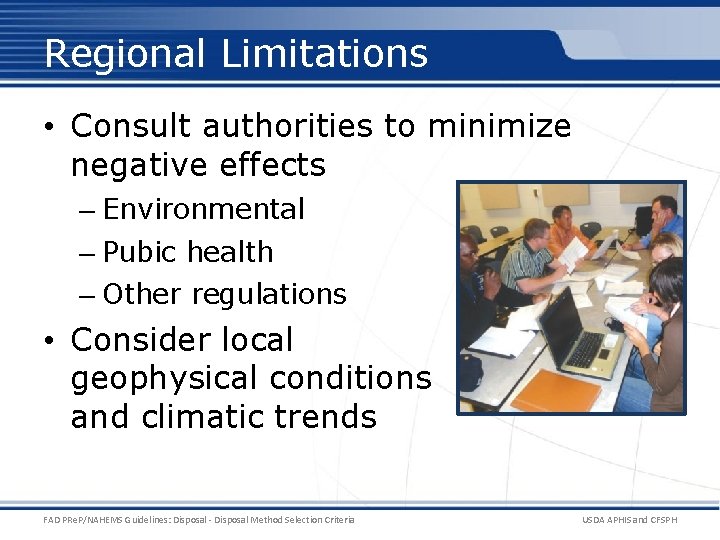
Regional Limitations • Consult authorities to minimize negative effects – Environmental – Pubic health – Other regulations • Consider local geophysical conditions and climatic trends FAD PRe. P/NAHEMS Guidelines: Disposal - Disposal Method Selection Criteria USDA APHIS and CFSPH
Safety Considerations • Safety Officer provides guidance in disposal site selection • All personnel should be trained • OSHA recommendations for people working in hazardous waste operations involving pathogens – CFR, Part 21, Chapter 1910 FAD PRe. P/NAHEMS Guidelines: Disposal - Disposal Method Selection Criteria USDA APHIS and CFSPH
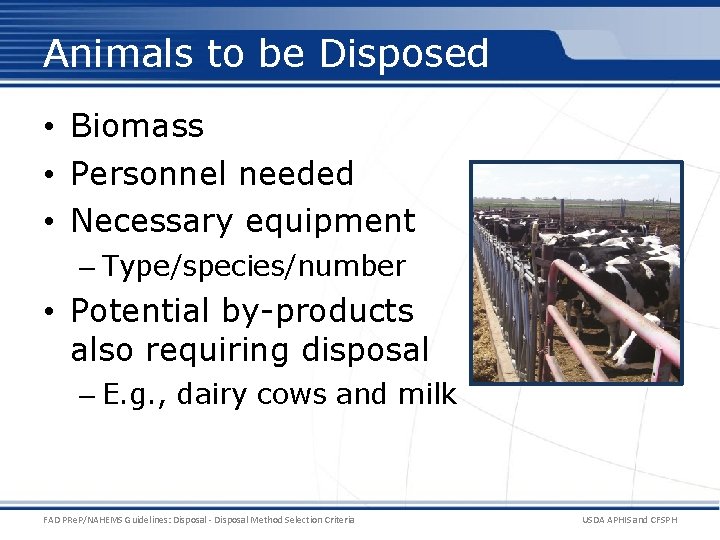
Animals to be Disposed • Biomass • Personnel needed • Necessary equipment – Type/species/number • Potential by-products also requiring disposal – E. g. , dairy cows and milk FAD PRe. P/NAHEMS Guidelines: Disposal - Disposal Method Selection Criteria USDA APHIS and CFSPH
Temporary Storage • Carcass disposal ideally occurs within 24 hours of depopulation – Temporary storage may be necessary in an animal health emergency • EPA regulations may apply • Storage options – Refrigeration in closed building – Grinding and preserving carcasses – Trenches, silos, pits FAD PRe. P/NAHEMS Guidelines: Disposal - Disposal Method Selection Criteria USDA APHIS and CFSPH
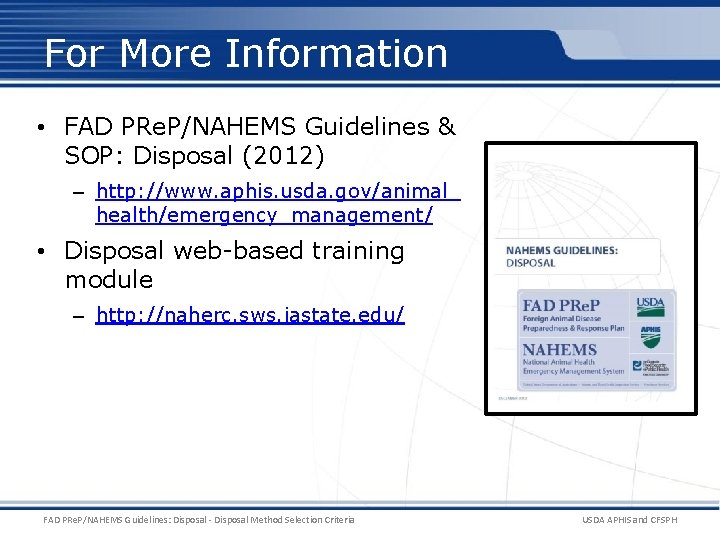
For More Information • FAD PRe. P/NAHEMS Guidelines & SOP: Disposal (2012) – http: //www. aphis. usda. gov/animal_ health/emergency_management/ • Disposal web-based training module – http: //naherc. sws. iastate. edu/ FAD PRe. P/NAHEMS Guidelines: Disposal - Disposal Method Selection Criteria USDA APHIS and CFSPH
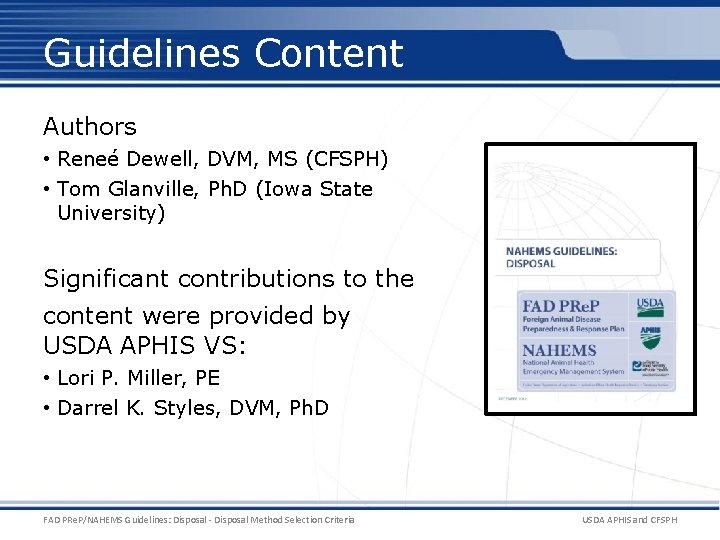
Guidelines Content Authors • Reneé Dewell, DVM, MS (CFSPH) • Tom Glanville, Ph. D (Iowa State University) Significant contributions to the content were provided by USDA APHIS VS: • Lori P. Miller, PE • Darrel K. Styles, DVM, Ph. D FAD PRe. P/NAHEMS Guidelines: Disposal - Disposal Method Selection Criteria USDA APHIS and CFSPH
Acknowledgments Development of this presentation was by the Center for Food Security and Public Health at Iowa State University through funding from the USDA APHIS Veterinary Services PPT Author: Kerry Leedom Larson, DVM, MPH, Ph. D, DACVPM Reviewers: Janice Mogan, DVM; Reneé Dewell, DVM, MS