
DISPERSING BIOFILMS WITH ENGINEERED ENZYMATIC BACTERIOPHAGE 1 Doug

DISPERSING BIOFILMS WITH ENGINEERED ENZYMATIC BACTERIOPHAGE 1 Doug Tischer
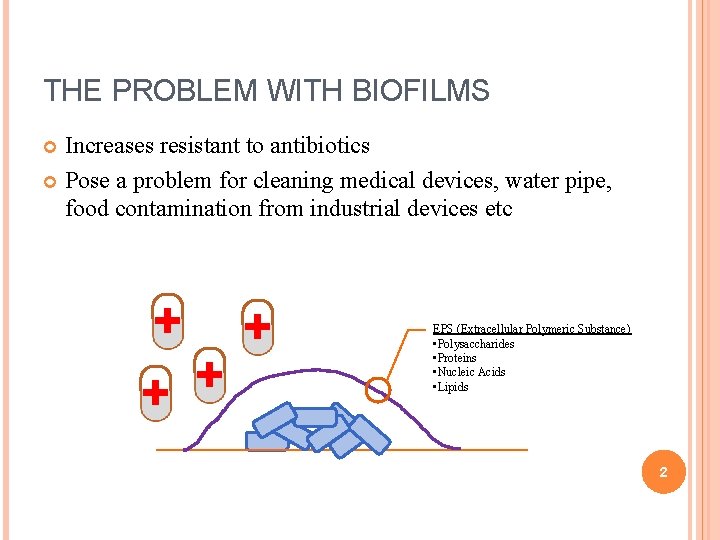
THE PROBLEM WITH BIOFILMS Increases resistant to antibiotics Pose a problem for cleaning medical devices, water pipe, food contamination from industrial devices etc EPS (Extracellular Polymeric Substance) • Polysaccharides • Proteins • Nucleic Acids • Lipids 2
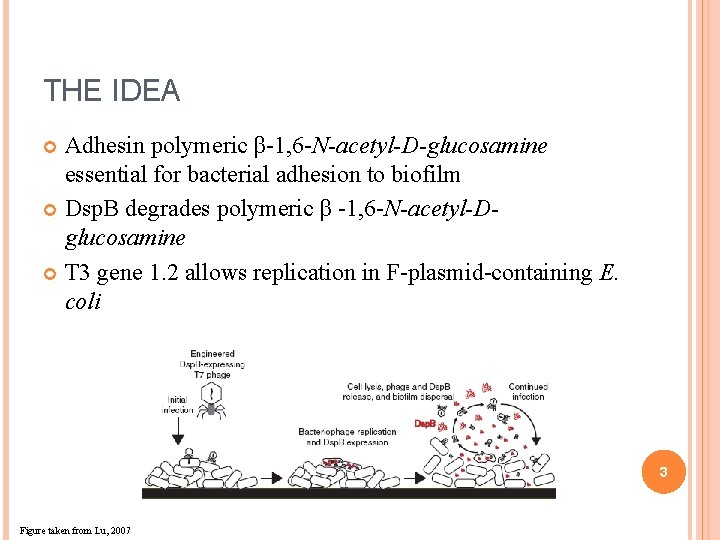
THE IDEA Adhesin polymeric β-1, 6 -N-acetyl-D-glucosamine essential for bacterial adhesion to biofilm Dsp. B degrades polymeric β -1, 6 -N-acetyl-Dglucosamine T 3 gene 1. 2 allows replication in F-plasmid-containing E. coli 3 Figure taken from Lu, 2007
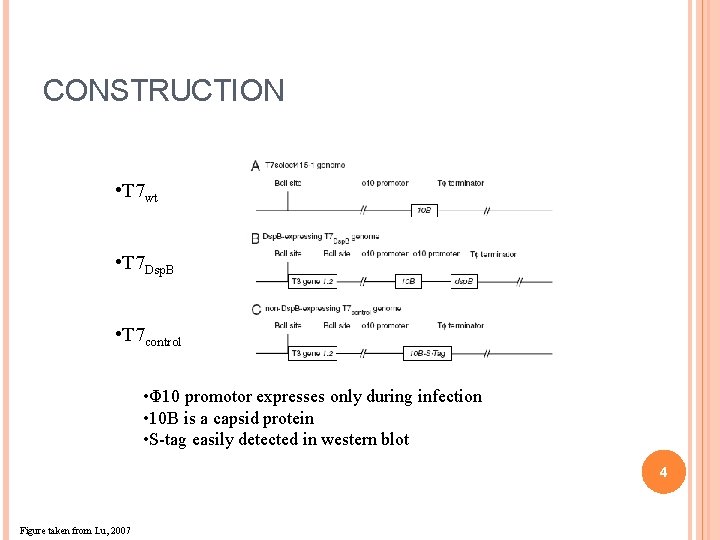
CONSTRUCTION • T 7 wt • T 7 Dsp. B • T 7 control • Φ 10 promotor expresses only during infection • 10 B is a capsid protein • S-tag easily detected in western blot 4 Figure taken from Lu, 2007
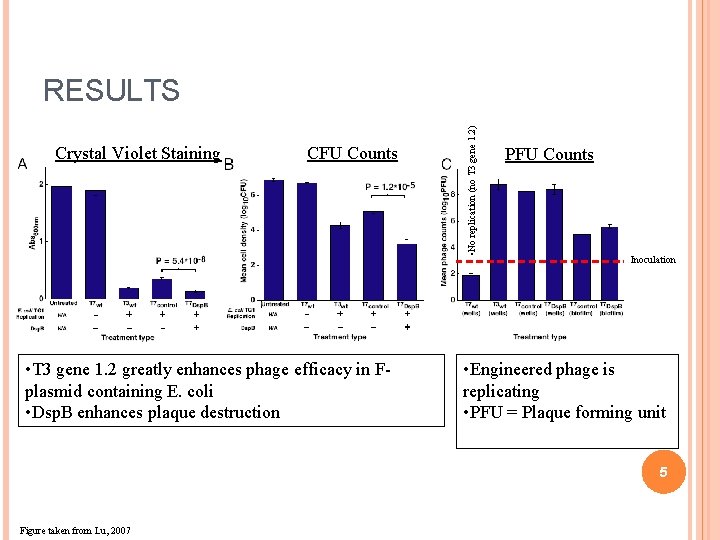
Crystal Violet Staining CFU Counts • T 3 gene 1. 2 greatly enhances phage efficacy in Fplasmid containing E. coli • Dsp. B enhances plaque destruction • No replication (no T 3 gene 1. 2) RESULTS PFU Counts Inoculation • Engineered phage is replicating • PFU = Plaque forming unit 5 Figure taken from Lu, 2007
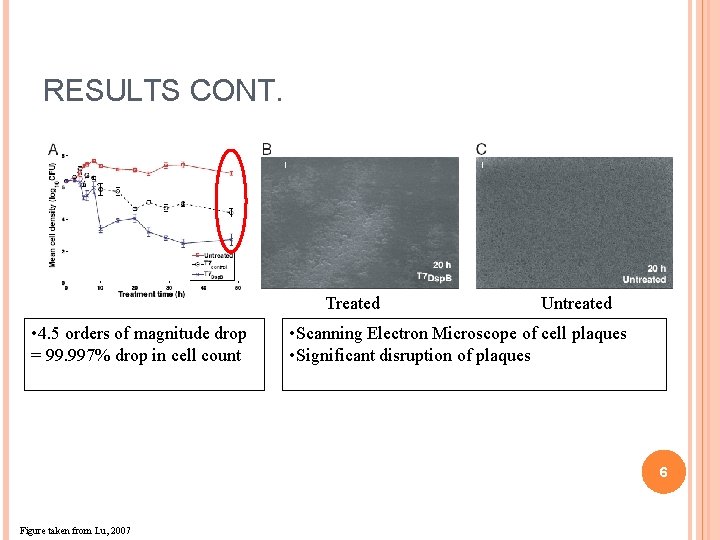
RESULTS CONT. Treated • 4. 5 orders of magnitude drop = 99. 997% drop in cell count Untreated • Scanning Electron Microscope of cell plaques • Significant disruption of plaques 6 Figure taken from Lu, 2007
MY THOUGHTS Liked Disliked Very practical application Showed phages can be engineered with several genes of interest without hindering replication Successful proof of principle Relatively simple construction No new behavioral tricks Only protein expression No use of premade parts 7
REFERENCES Lu TK, Collins JJ (2007) PNAS 104: 11197– 11202 Mark Mc. Cormick and Robert Mierendorf. “S • Tag: A Multipurpose Fusion Peptide for Recombinant Proteins. ” Novagen Inc. 8
- Slides: 8