
Disorders of the Male Reproductive System Disorders of





- Slides: 40
Disorders of the Male Reproductive System
Disorders of the Male Reproductive System There are numerous conditions in the male reproductive system. Many of these are under reported because people are embarrassed or reluctant to discuss it.
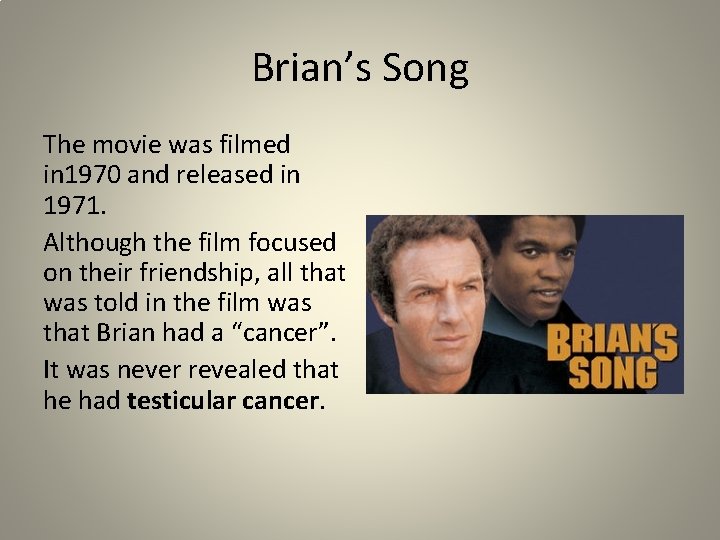
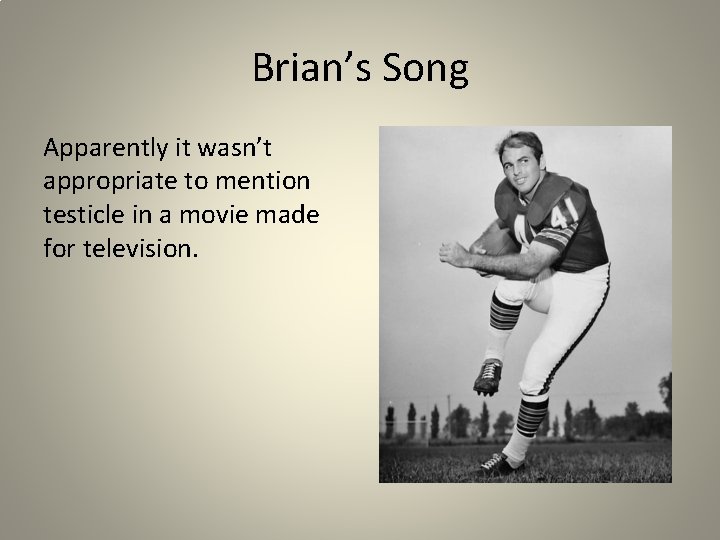
Brian’s Song The story of professional football players Gale Sayers and Brian Piccolo is such an example.
Brian’s Song The movie was filmed in 1970 and released in 1971. Although the film focused on their friendship, all that was told in the film was that Brian had a “cancer”. It was never revealed that he had testicular cancer.
Brian’s Song Apparently it wasn’t appropriate to mention testicle in a movie made for television.
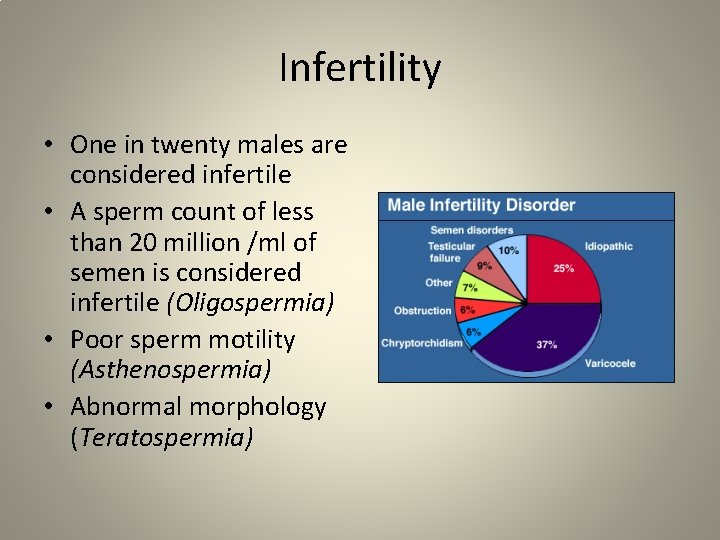
Infertility • One in twenty males are considered infertile • A sperm count of less than 20 million /ml of semen is considered infertile (Oligospermia) • Poor sperm motility (Asthenospermia) • Abnormal morphology (Teratospermia)
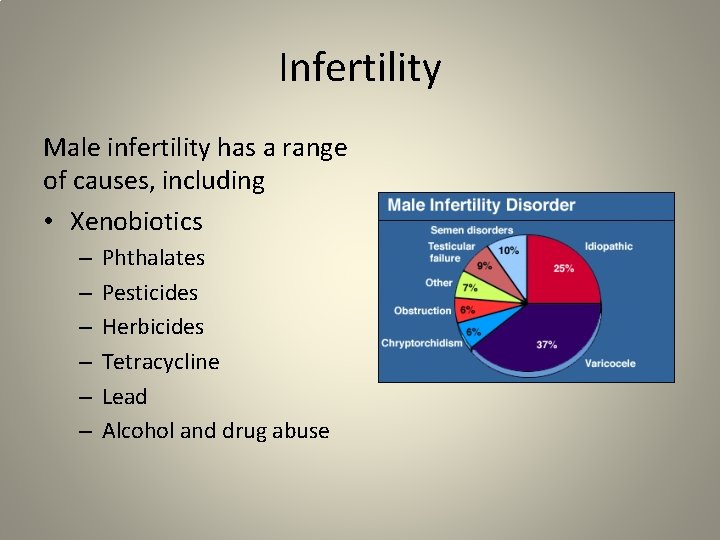
Infertility Male infertility has a range of causes, including • Xenobiotics – – – Phthalates Pesticides Herbicides Tetracycline Lead Alcohol and drug abuse
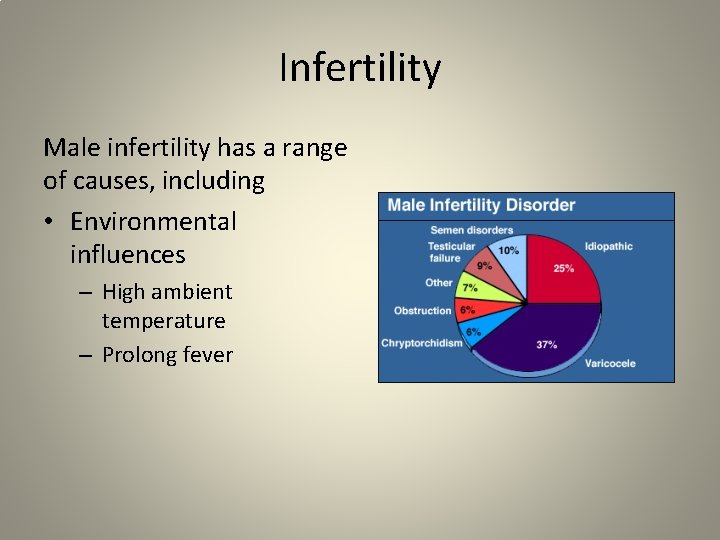
Infertility Male infertility has a range of causes, including • Anatomical anomalies – Cryptorchidism – Varicocele
Infertility Male infertility has a range of causes, including • Environmental influences – High ambient temperature – Prolong fever
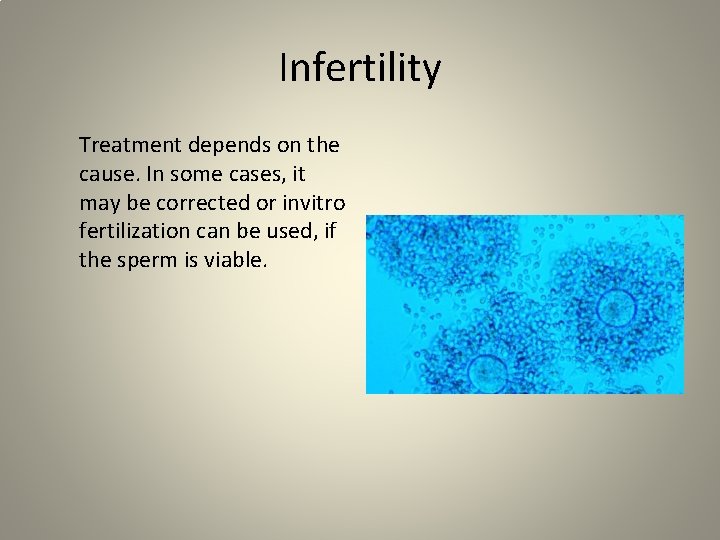
Infertility Treatment depends on the cause. In some cases, it may be corrected or invitro fertilization can be used, if the sperm is viable.
Impotence is a condition that consistently affects a male’s ability to achieve or maintain an erection, or ability to achieve ejaculation. It’s a form of erectile dysfunction (ED).
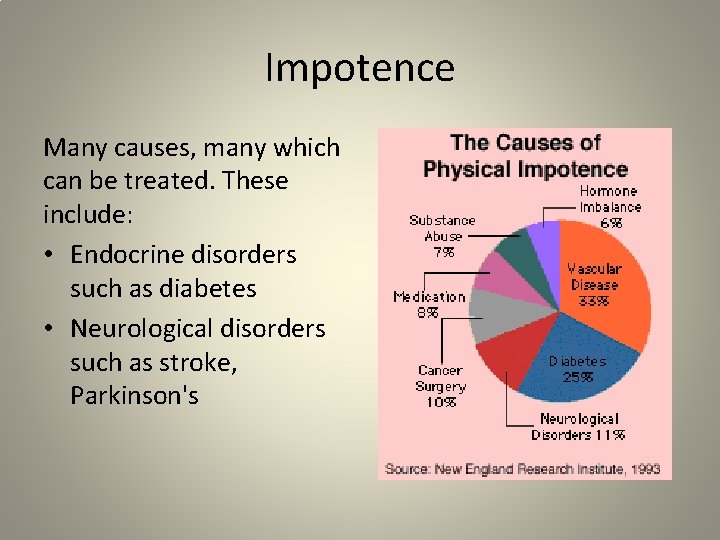
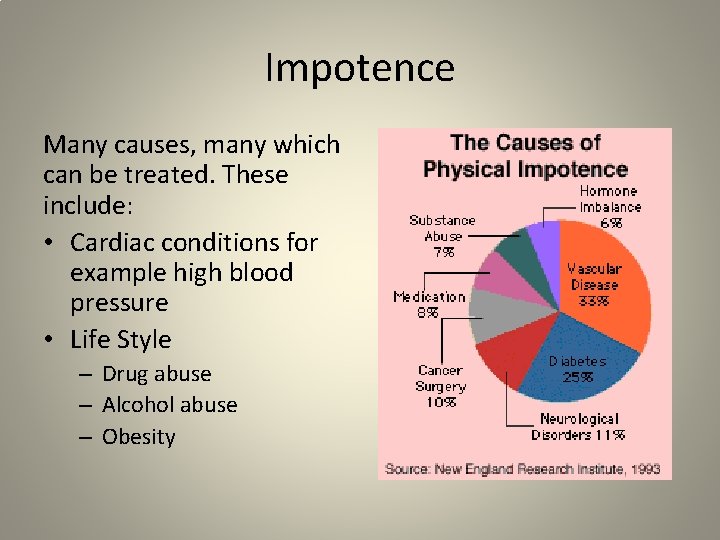
Impotence Many causes, many which can be treated. These include: • Endocrine disorders such as diabetes
Impotence Many causes, many which can be treated. These include: • Endocrine disorders such as diabetes • Neurological disorders such as stroke, Parkinson's
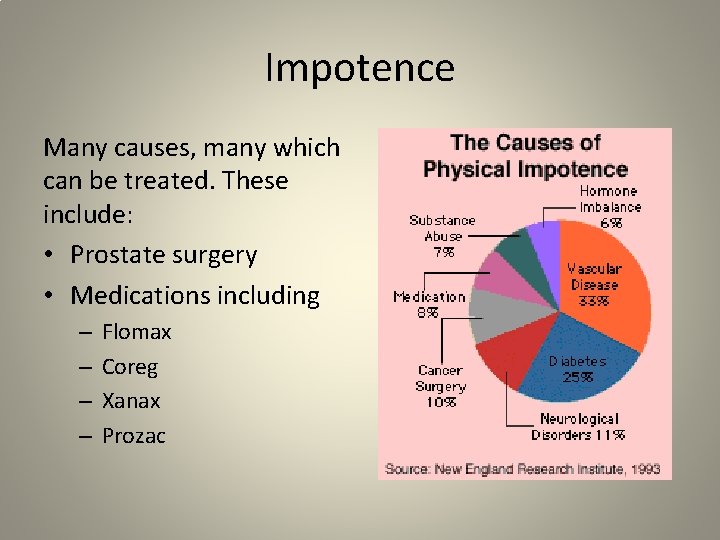
Impotence Many causes, many which can be treated. These include: • Prostate surgery • Medications including – – Flomax Coreg Xanax Prozac
Impotence Many causes, many which can be treated. These include: • Cardiac conditions for example high blood pressure
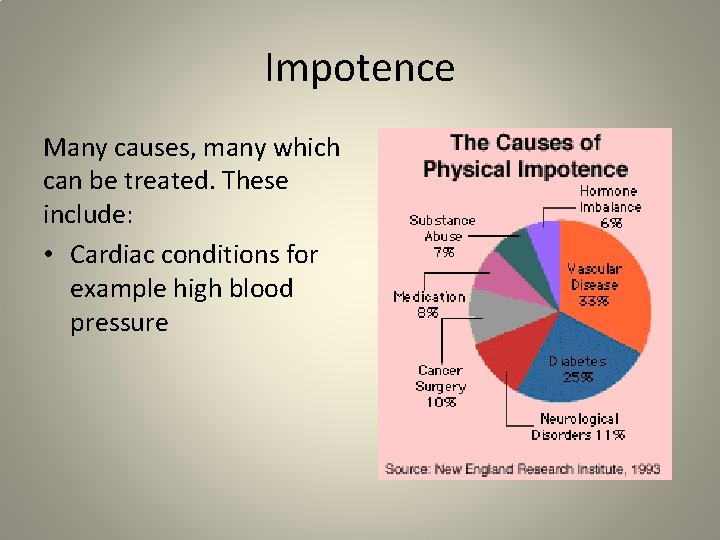
Impotence Many causes, many which can be treated. These include: • Cardiac conditions for example high blood pressure • Life Style – Drug abuse – Alcohol abuse – Obesity
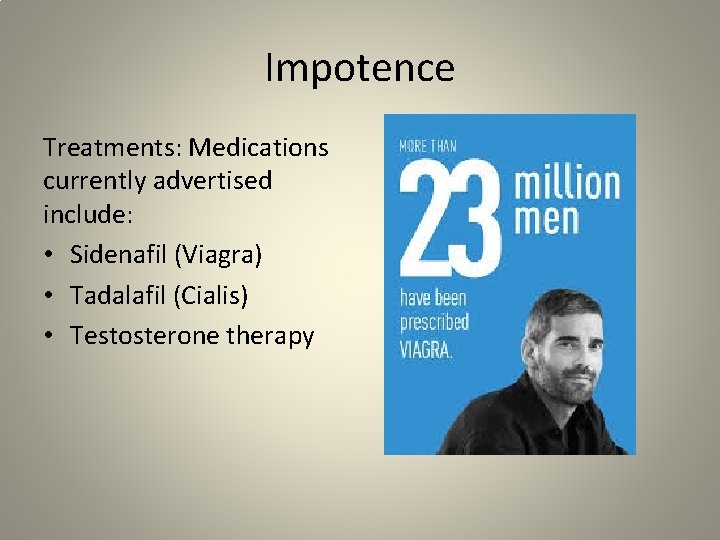
Impotence Treatments: Medications currently advertised include: • Sidenafil (Viagra) • Tadalafil (Cialis) • Testosterone therapy
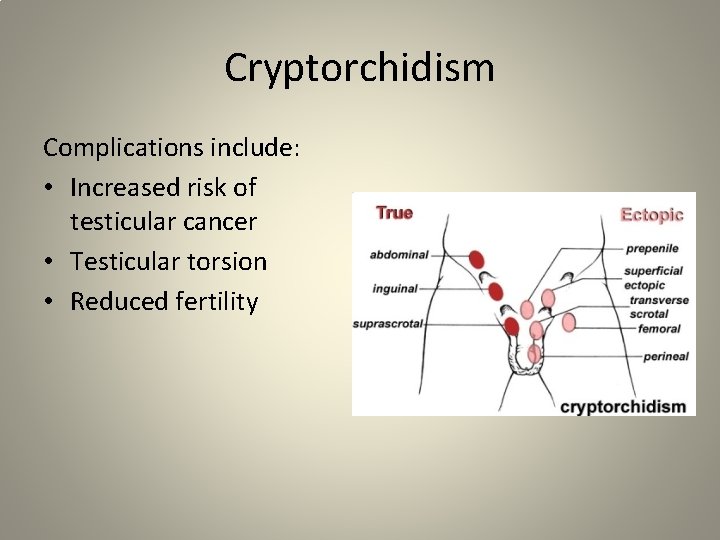
Cryptorchidism, or undescended testicle refers to a testicle (testis) that has not moved into the scrotum before a baby is born. It is estimated that 3% to 5% of newborn boys have undescended testicle(s).
Cryptorchidism Complications include: • Increased risk of testicular cancer • Testicular torsion • Reduced fertility
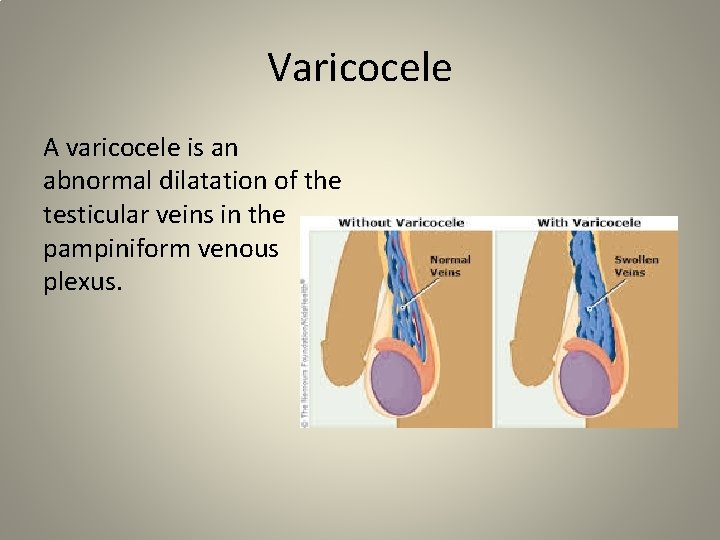
Varicocele A varicocele is an abnormal dilatation of the testicular veins in the pampiniform venous plexus.
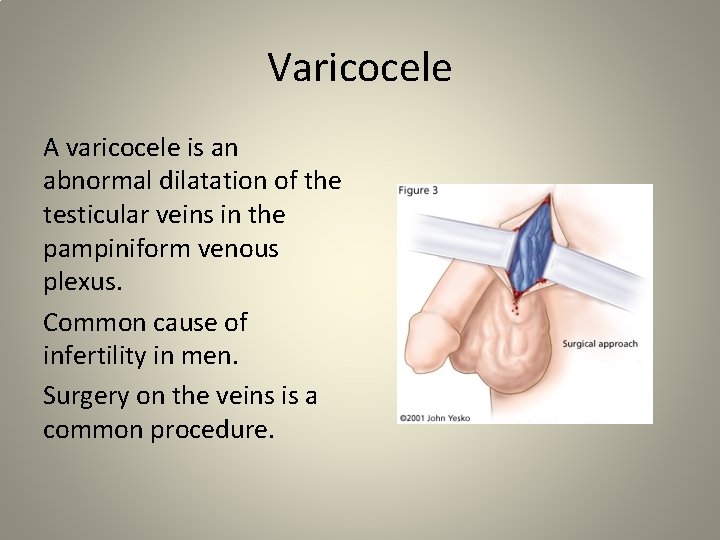
Varicocele A varicocele is an abnormal dilatation of the testicular veins in the pampiniform venous plexus. Common cause of infertility in men. Surgery on the veins is a common procedure.
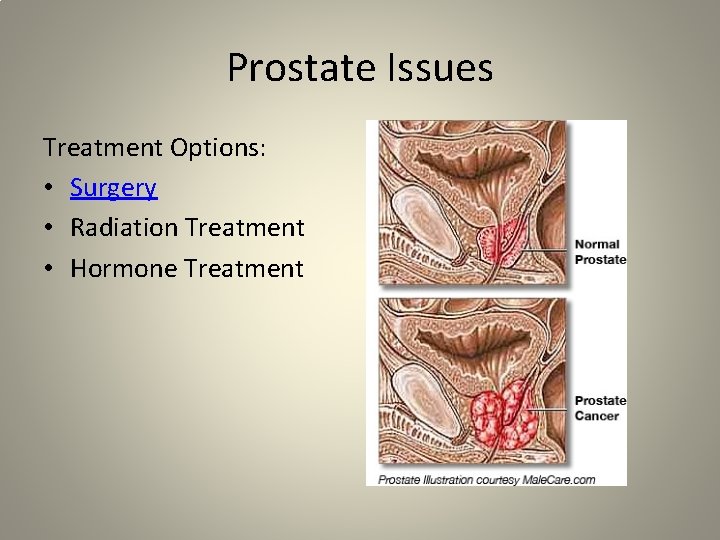
Prostate Issues Anatomically the prostate is a walnut sized gland that lies between the bladder and penis. The urethra runs through it. Three conditions associated with it include: • BHP Benign Prostatic Hypertrophy • Prostatitis • Cancer
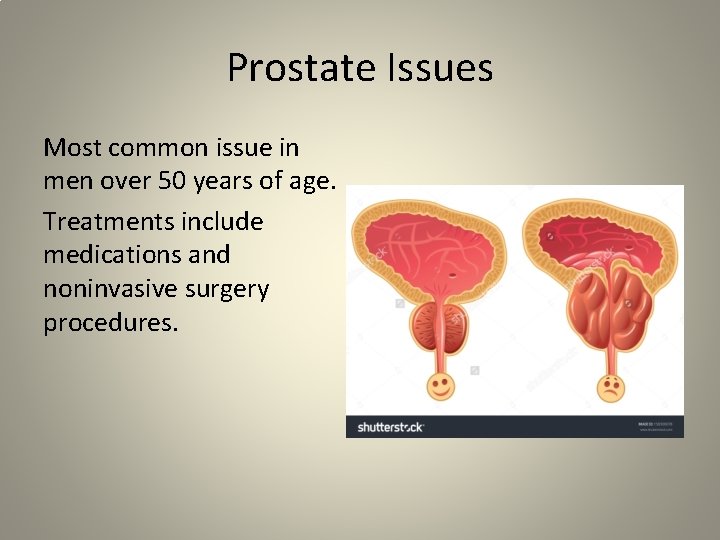
Prostate Issues Benign prostatic hyperplasia is a condition in men in which the prostate gland is enlarged and not cancerous.
Prostate Issues The prostate goes through two main growth periods as a man ages. The first occurs early in puberty, when the prostate doubles in size. The second phase of growth begins around age 25 and continues during most of a man’s life. Benign prostatic hyperplasia often occurs with the second growth phase.
Prostate Issues As the prostate enlarges, the gland presses against and pinches the urethra. Eventually, the bladder may weaken and lose the ability to empty completely, leaving some urine in the bladder, this leads to urinary retention.
Prostate Issues Most common issue in men over 50 years of age. Treatments include medications and noninvasive surgery procedures.
Prostate Issues • Prostatitis is swelling of the prostate gland. Prostate tissue becomes inflamed. This problem can be caused by an infection with bacteria. • Acute prostatitis starts quickly and chronic prostatitis lasts for 3 months or more. • Treated with antibiotics
Prostate Issues Prostate cancer is mostly a very slow progressing disease. Several studies have indicated that perhaps about 80% of all men in their eighties had prostate cancer when they died, but nobody knew, not even the doctor.
Prostate Issues Symptoms • The patient urinates more often
Prostate Issues Symptoms • The patient urinates more often • The patient gets up at night more often to urinate
Prostate Issues Symptoms • The patient urinates more often • The patient gets up at night more often to urinate • He may find it hard to start urinating
Prostate Issues • The patient urinates more often • The patient gets up at night more often to urinate • He may find it hard to start urinating
Prostate Issues • The patient urinates more often • The patient gets up at night more often to urinate • He may find it hard to start urinating • He may find it hard to keep urinating once he has started
Prostate Issues • The patient urinates more often • The patient gets up at night more often to urinate • He may find it hard to start urinating • He may find it hard to keep urinating once he has started • There may be blood in the urine
Prostate Issues Symptoms • The patient urinates more often • The patient gets up at night more often to urinate • He may find it hard to start urinating • He may find it hard to keep urinating once he has started • There may be blood in the urine • Urination might be painful
Prostate Issues Treatment Options: • Surgery • Radiation Treatment • Hormone Treatment
Testicular Cancer • Testicular cancer is the most common cancer in men 15 -34 years of age. • Most often found by self examination
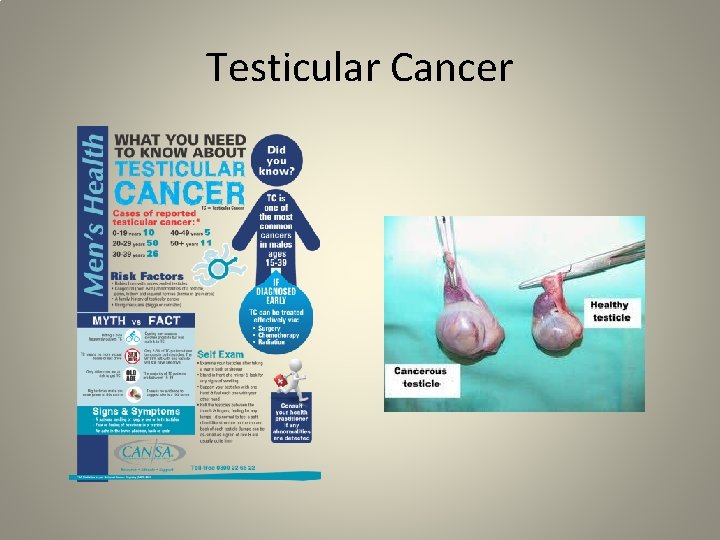
Testicular Cancer • Testicular cancer is the most common cancer in men 15 -34 years of age. • The most common sign of testicular cancer is a lump or swelling in the testicle.
Testicular Cancer • Testicular cancer is the most common cancer in men 15 -34 years of age. • The most common sign of testicular cancer is a lump or swelling in the testicle. • Most testicular cancers can be cured, even if they are diagnosed at an advanced stage.
Testicular Cancer