
Disorders of heme biosynthesis clinical features and laboratory
Disorders of heme biosynthesis, clinical features and laboratory findings in prophyrias Dr. Saman Hosseini 29. 10. 2013, Imam Khomeini University Hospital
Clinical aspects of the acute attack illustrated by two different cases
Case 1: The unknown AIP gene carrier • Stress • Lack of sleep • Alcohol At admission to emergency ward: • 2 days history of abdominal pain • Constipation • Circulatory stable • Free from fever • Laboratory workup: → CRP, Creatinine, B-Hb – within normal range → Hyponatremia 126 -130 mmol/L (137 -147 mmol/L) → ALT 2, 0 µkat/L (<0, 76); AST 3, 2 µkat/L (<0, 61) Sent home
Case 1: continued Day 2 -3 Readmission to emergency ward: ● sever abdominal pain ● CT scan “atypical appendicitis” or “Meckel’s diverticulitis” Admitted to surgical ward for observation Laparascopic appendectomy ● Anesthesia: Thiopental, Sevoflurane, fentanyl, Suxamethonium ● Patholigist assessment: No appendicitis
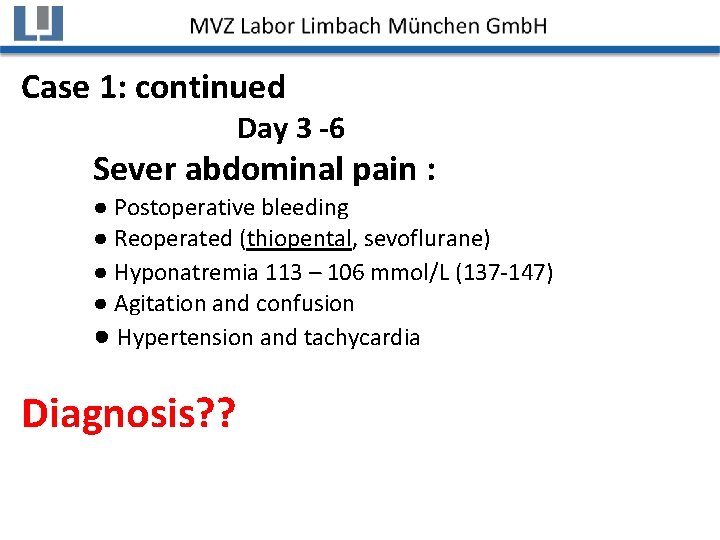
Case 1: continued Day 3 -6 Sever abdominal pain : ● Postoperative bleeding ● Reoperated (thiopental, sevoflurane) ● Hyponatremia 113 – 106 mmol/L (137 -147) ● Agitation and confusion ● Hypertension and tachycardia Diagnosis? ?
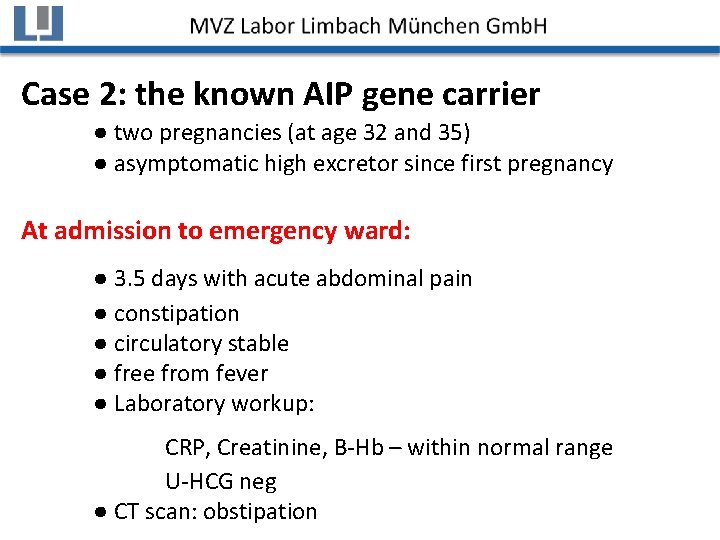
Case 2: the known AIP gene carrier ● two pregnancies (at age 32 and 35) ● asymptomatic high excretor since first pregnancy At admission to emergency ward: ● 3. 5 days with acute abdominal pain ● constipation ● circulatory stable ● free from fever ● Laboratory workup: CRP, Creatinine, B-Hb – within normal range U-HCG neg ● CT scan: obstipation
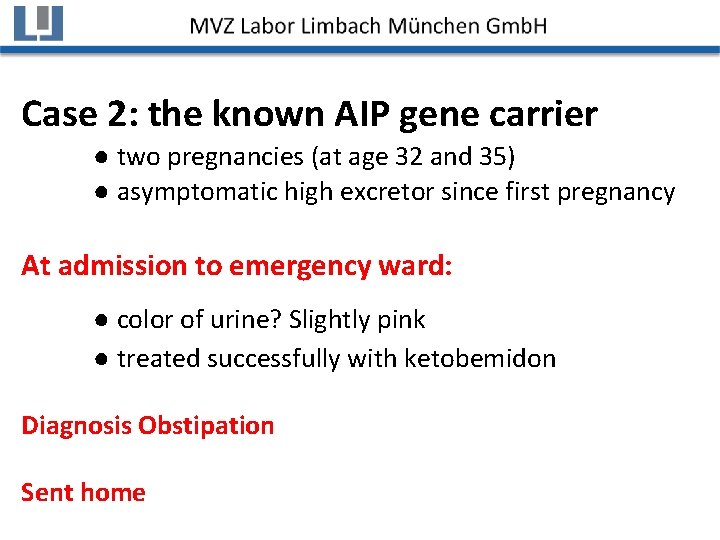
Case 2: the known AIP gene carrier ● two pregnancies (at age 32 and 35) ● asymptomatic high excretor since first pregnancy At admission to emergency ward: ● color of urine? Slightly pink ● treated successfully with ketobemidon Diagnosis Obstipation Sent home
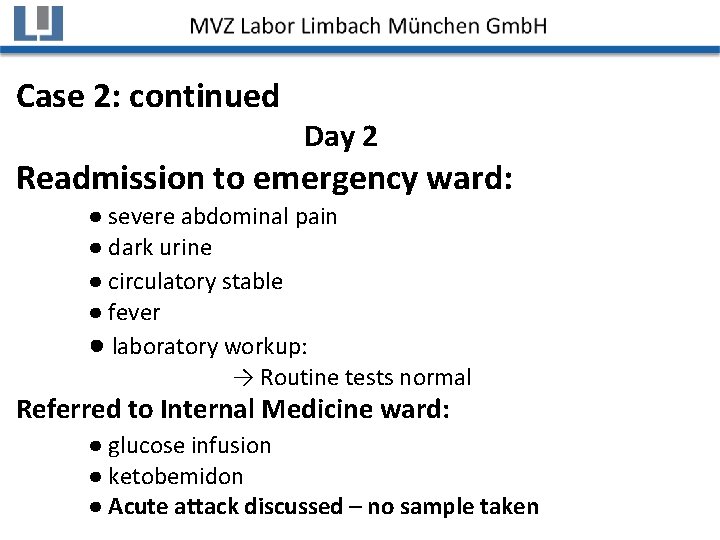
Case 2: continued Day 2 Readmission to emergency ward: ● severe abdominal pain ● dark urine ● circulatory stable ● fever ● laboratory workup: → Routine tests normal Referred to Internal Medicine ward: ● glucose infusion ● ketobemidon ● Acute attack discussed – no sample taken
Case 2: continued Day 3 - 4 Looking for differential diagnosis: ● Referred to gynecologist Diagnosis : “Abdominal pain” ● Referred to surgeon Hyponatremia is observed Diagnosis : “Obstipation” ●Urine sample taken Laboratory workup : high PBG excretion
Human Porphyrias “Obscure diseases with confusing names considered only when the need for a diagnosis is desperate” (Antony Mc. Donagh, 1997)
Why are the porphyrias nevertheless important for the lab? 1) porpyhrias can be diagnosed (and excluded) by biochemical means only (the diagnosis is based on lab results exclusively). 2) clinical chemists and specialists in laboratory medicine are regularly asked for information about porphyria. Important differential diagnosis. 3) There is no clinical discipline to which the porphyrias are clearly allocated. 4) Porphyrias can run undetected while life-threatening. 5) Rare diseases usually less personal clinical experience of the individual clinician
• Human Porphyrias: ……. . from Greek: πορφυρά (porphyrá): purple colour • 8 rare, mainly genetic diseases(prevalence ~ 1/75 000) Due to a partial or total deficiency in one of the enzymes of the heme biosynthetic pathway caused by specific gene mutations • Abnormal accumulation and excretion of porphyrins and precursors ALA and PBG(urine, faeces, blood, organs…) • Acute neurovisceral attacks and/or skin lesions • Anemia present in only 2 • red urine in most • Pathophysiology only partially understood
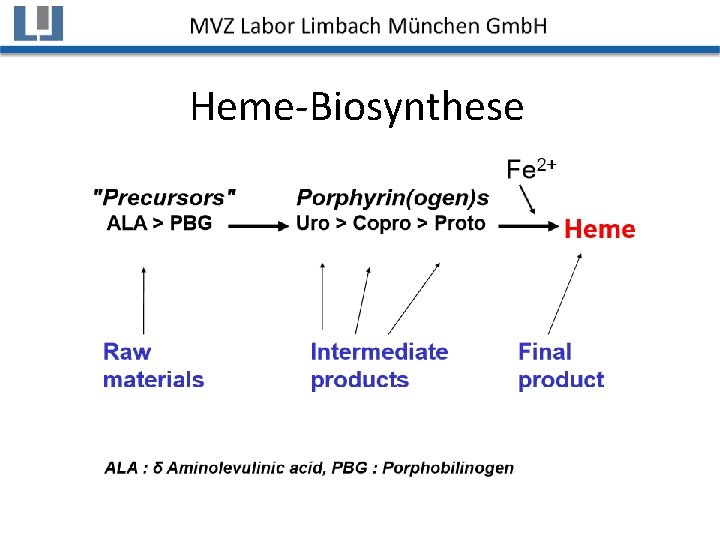
Heme-Biosynthese
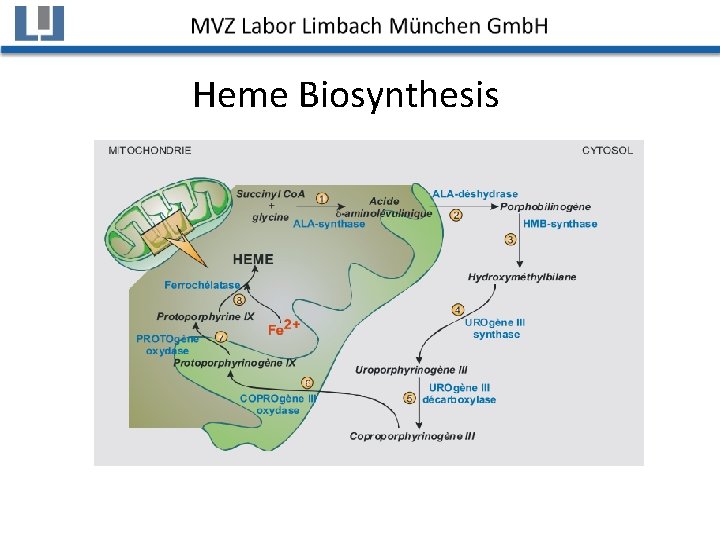
Heme Biosynthesis

Tissue specific heme synthesis 1. Erythroid Heme Synthesis: in Bonne Marrow 85% of body heme production ; Regulation: Fe, EPO (continuous) disregulation : Erythropoeitic porphyrias 2. Hepatic Hem Synthesis: in Liver 14% of body heme Production ; Cytochromes Liver (on demand) Regulation: Heme (feedback inhibitor ) disregulation : Hepatic porphyrias A single biosynthetic pathway that needs 2 tissue-specific regulations: At the level of the first step: ALA-Synthase Two ALAS genes : ALAS 1 ubiquitous(Liver) ALAS 2 erythroid specific (BM)
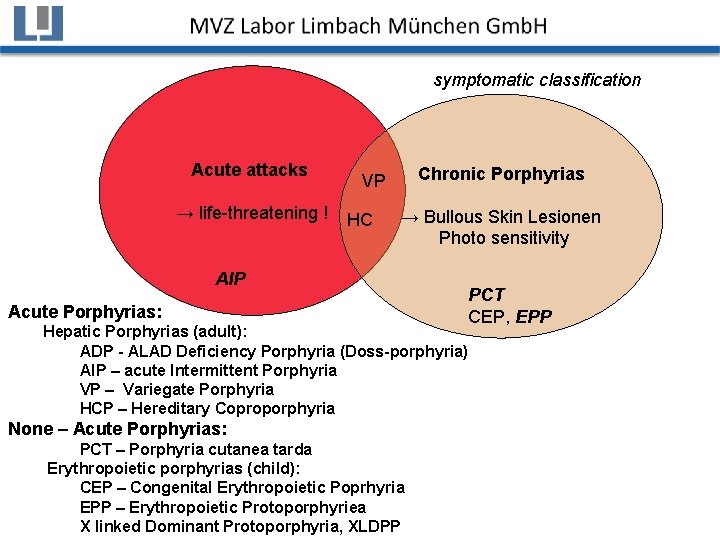
symptomatic classification Acute attacks → life-threatening ! Chronic Porphyrias VP HC → Bullous Skin Lesionen Photo sensitivity AIP Acute Porphyrias: PCT CEP, EPP Hepatic Porphyrias (adult): ADP - ALAD Deficiency Porphyria (Doss-porphyria) AIP – acute Intermittent Porphyria VP – Variegate Porphyria HCP – Hereditary Coproporphyria None – Acute Porphyrias: PCT – Porphyria cutanea tarda Erythropoietic porphyrias (child): CEP – Congenital Erythropoietic Poprhyria EPP – Erythropoietic Protoporphyriea X linked Dominant Protoporphyria, XLDPP
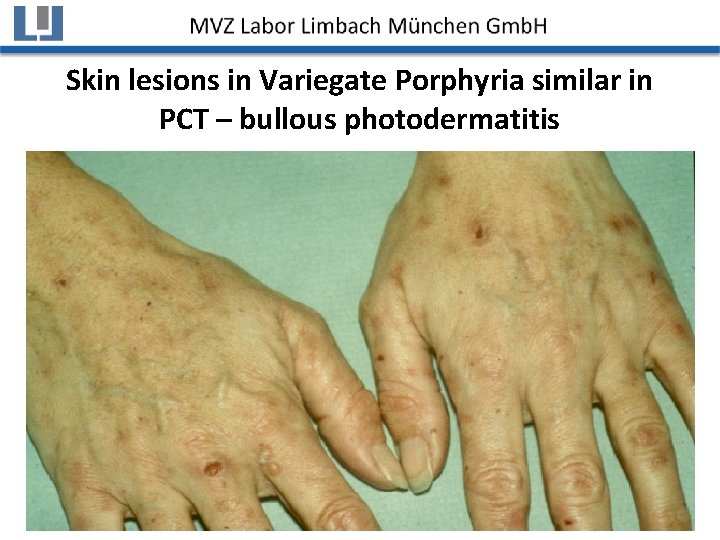
Skin lesions in Variegate Porphyria similar in PCT – bullous photodermatitis

Acute Hepatic Porphyrias
Acute Hepatic Porpyrias ALA dehydrase Deficiency Porphyria (ADP) (Doss-porphyria) is a very rare autosomal recessive disorder that presents with acute attacks. AIP acute Intermittent Porphyria, AD common HCP Hereditary Coproporphyria, AD rare VP Variegate Porphyria, AD common The autosomal dominant acute porphyrias are low penetrant disorders that are characterised by acute neurovisceral attacks wich may be life threatening. Acute attacks affect < 10% of gene carriers.
Pathophysiology of acute attacks 1. reduced heme pool in the liver heme 2. Markedly increased activity of ALA-Synthase 1 in the liver 3. Increased production, accumulation and excretion of precursors (ALA and PBG) 4. Specific porphyrin excretion profile depending on the location of the enzymatic defect 5. The release of ALA from liver results in neuronal toxicity. Neuronal damage to the autonomic, motor and central nervous system results in axonal degeneration and patchy demyelination
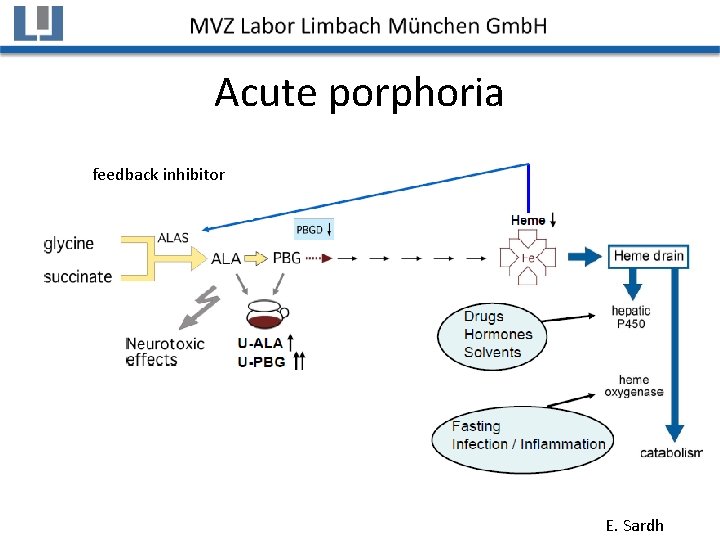
Acute porphoria feedback inhibitor E. Sardh
The Clinical Symptoms of Acute Potphyria: Autonomous Nervous System: Peripheral Nervous System: Abdominal pain (without peritoneal signs) >80% Muscle weakness Constipation Areflexia Vomiting >80% Sensory neuropathy Hypertension Respiratory paralysis Tachycardia >80% Hemi / tetraparesis Muskel pain(Back & thigh) complete paralysis Centrale Nervus System: Psychiatric symptoms : (Anxiety, Hallucinations, Agitation) 40 -60% -> this does not result in chronic psychiatric illness Convulsions(Epilepsy) -> a rapid onset of profound hyponatraemia Metabolic changes: Hyponatremia >60% Hypomagnesemia
Acute Porphyria’s Neuropathy • More common in females than males (5: 1) • Acute attacks are very rare before puberty and less common after menopause. • The peak incidence is in the 3 rd & 4 th decade. • Symptoms/signs • Severe abdominal pain mimicking acute abdomen without localizing features is almost universal. • Vomiting, constipation • Psychiatric symptoms include anxiety, confusion, hallucinations occur during an attack but this does not result in chronic psychiatric illness • Hypertension, tachycardia, due to autonomic dysfunction • Convulsions: may be primary or secondary to a rapid onset of profound hyponatraemia • Motor neuropathy may progress from a mild initial presentation to progressive, severe with complete paralysis
Precipitants (Triggers): • Hormonal fluctuations (e. g. menstrual cycle) - particularly the pre menstrual phase correlating with progesterone levels • Prescription Drugs (e. g. carbamazepine, barbitutates, P 450 inducers. . ) • Infection • Dieting, weight loss and stress • Alcohol (particularly binge drinking), smoking, illicit drugs Pathophysiology of acute attacks The release of ALA from liver results in neuronal toxicity. Neuronal damage to the autonomic, motor and central nervous system results in axonal degeneration and patchy demyelination
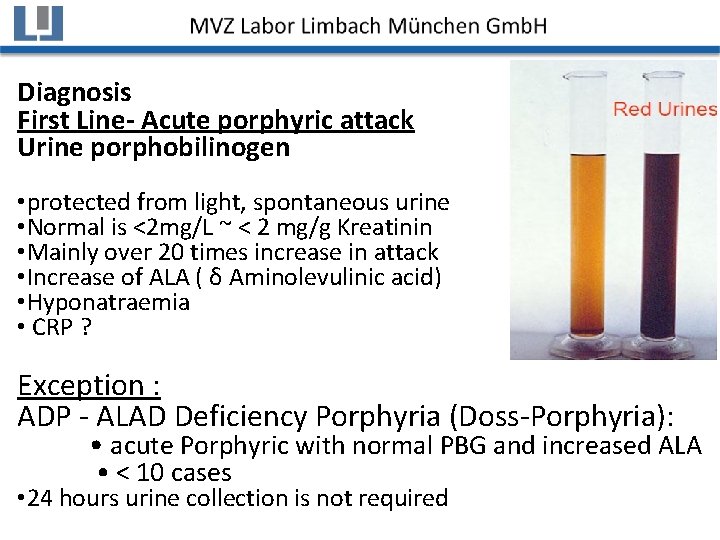
Diagnosis First Line- Acute porphyric attack Urine porphobilinogen • protected from light, spontaneous urine • Normal is <2 mg/L ~ < 2 mg/g Kreatinin • Mainly over 20 times increase in attack • Increase of ALA ( δ Aminolevulinic acid) • Hyponatraemia • CRP ? Exception : ADP - ALAD Deficiency Porphyria (Doss-Porphyria): • acute Porphyric with normal PBG and increased ALA • < 10 cases • 24 hours urine collection is not required
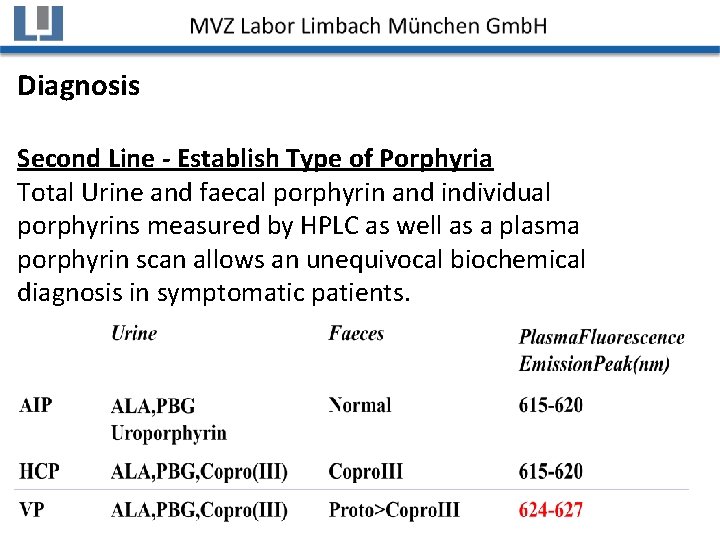
Diagnosis Second Line - Establish Type of Porphyria Total Urine and faecal porphyrin and individual porphyrins measured by HPLC as well as a plasma porphyrin scan allows an unequivocal biochemical diagnosis in symptomatic patients.
Management of acute porphyria attack General: • Remove/treat precipitating factors such as drugs, infection • Symptomatic relief with analgesics (opiates), control of fluid and electrolyte balance • Specific : • heme arginate (Normosang®) in albumin solution, is taken up by the liver and suppresses the metabolic pathway by down regulating ALA Synthase • 3 – 4 mg/kg body weight for four consecutive days • carbohydrates 300 – 500 g per day • Glucose infusion 10 % in saline, 2. 000 m. L/day Prevention: • Identify relatives at risk through family studies. • This requires mutation screening of the proband first and then mutation testing in relatives. • Affected relatives are then advised to avoid known precipitants
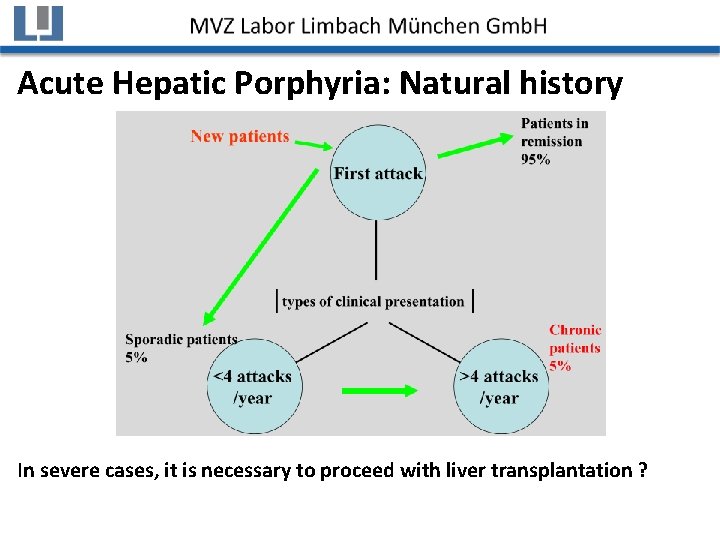
Acute Hepatic Porphyria: Natural history In severe cases, it is necessary to proceed with liver transplantation ?
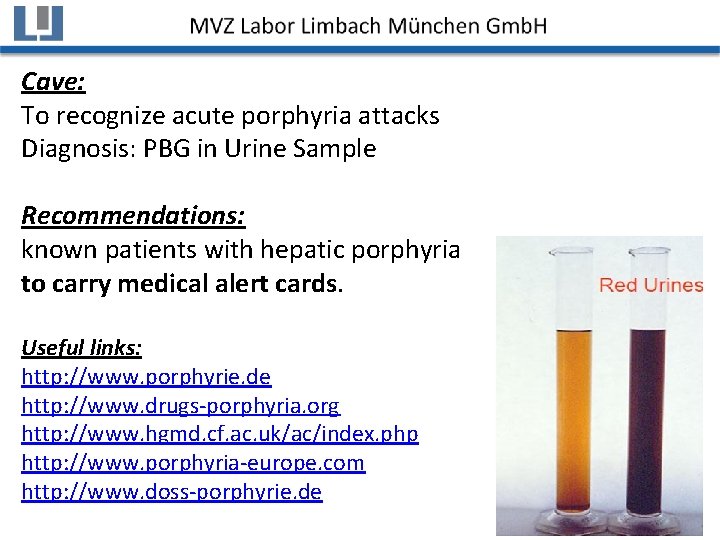
Cave: To recognize acute porphyria attacks Diagnosis: PBG in Urine Sample Recommendations: known patients with hepatic porphyria to carry medical alert cards. Useful links: http: //www. porphyrie. de http: //www. drugs-porphyria. org http: //www. hgmd. cf. ac. uk/ac/index. php http: //www. porphyria-europe. com http: //www. doss-porphyrie. de

I would like to address my special acknowledgment to Dr. Thomas Stauch Labor PD Dr. Volkmann, Karlsruhe, Germany. Thanks for your attention!
- Slides: 30