
Disk fragmentation the Brown Dwarf Desert and the
Disk fragmentation, the Brown Dwarf Desert, and the Stellar Upper Mass Limit Chris Matzner University of Toronto Yuri Levin, U. Leiden Kaitlin Kratter, U. Toronto
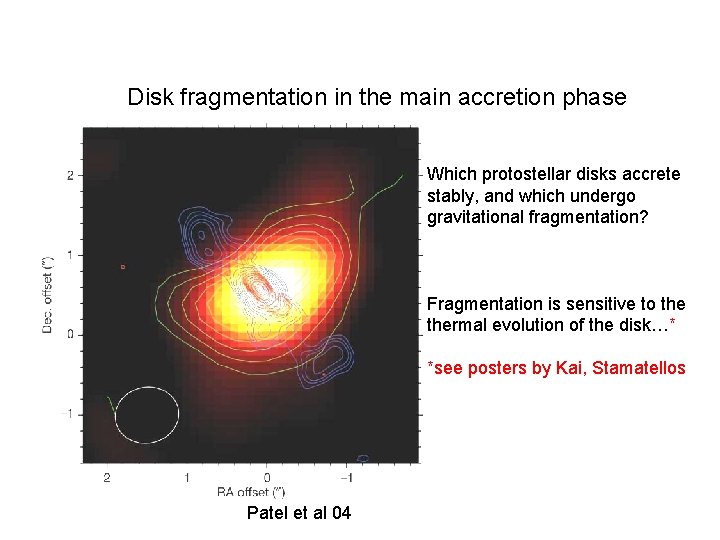
Disk fragmentation in the main accretion phase Which protostellar disks accrete stably, and which undergo gravitational fragmentation? Fragmentation is sensitive to thermal evolution of the disk…* *see posters by Kai, Stamatellos Patel et al 04
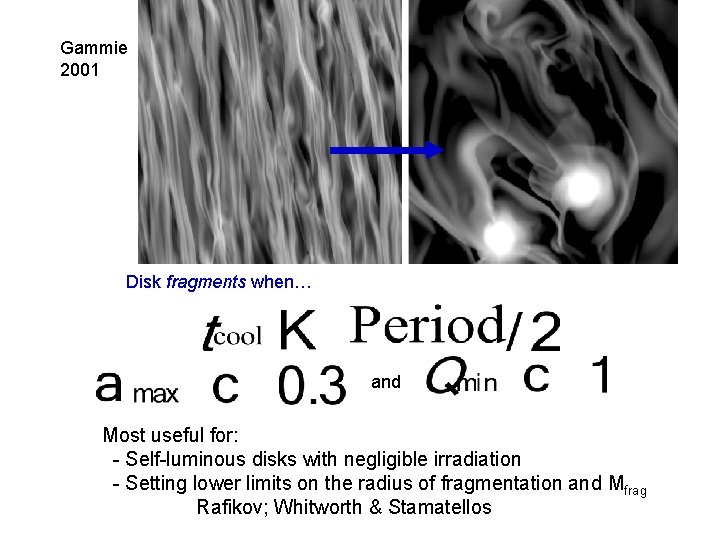
Gammie 2001 Disk fragments when… and Most useful for: - Self-luminous disks with negligible irradiation - Setting lower limits on the radius of fragmentation and Mfrag Rafikov; Whitworth & Stamatellos
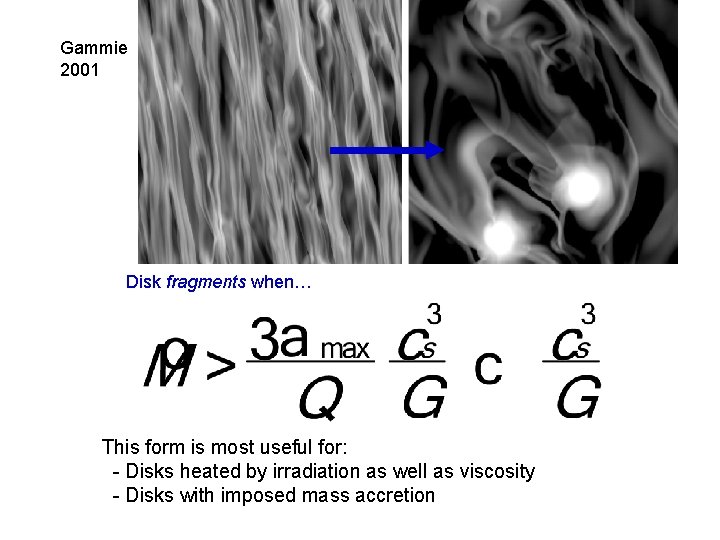
Gammie 2001 Disk fragments when… This form is most useful for: - Disks heated by irradiation as well as viscosity - Disks with imposed mass accretion
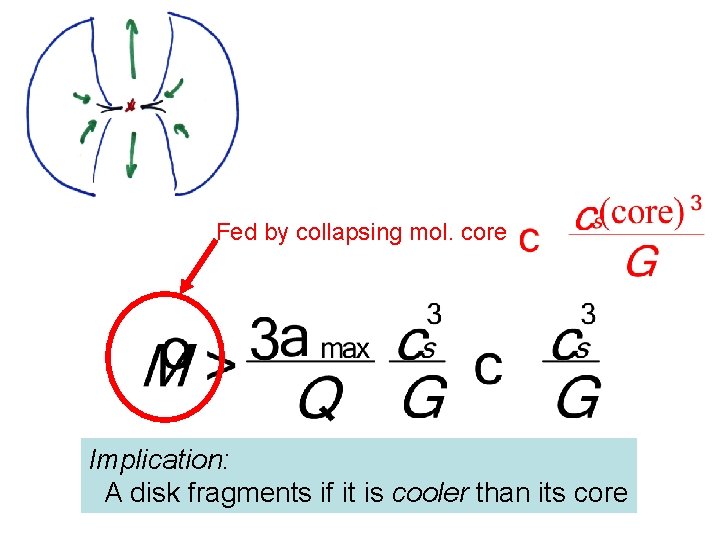
Fed by collapsing mol. core Implication: A disk fragments if it is cooler than its core
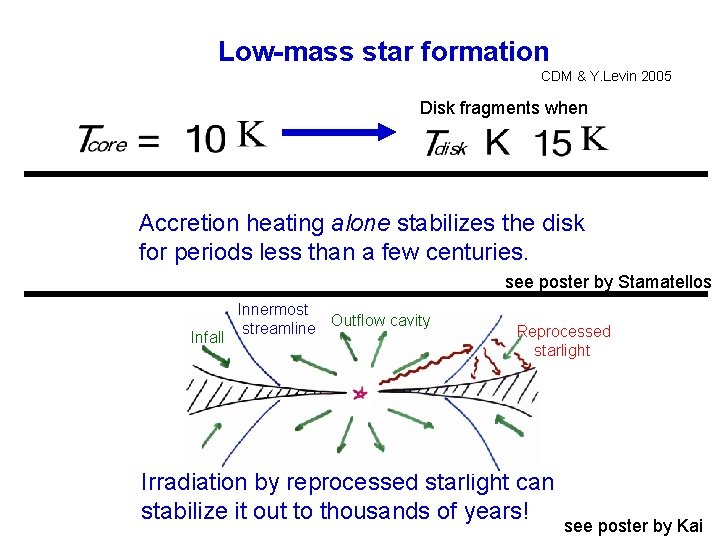
Low-mass star formation CDM & Y. Levin 2005 Disk fragments when Accretion heating alone stabilizes the disk for periods less than a few centuries. see poster by Stamatellos Infall Innermost Outflow cavity streamline Reprocessed starlight Irradiation by reprocessed starlight can stabilize it out to thousands of years! see poster by Kai
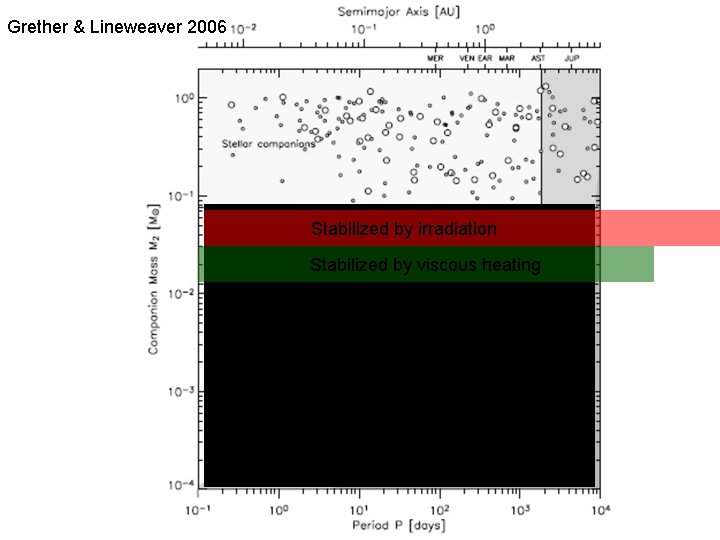
Grether & Lineweaver 2006 Stabilized by irradiation Stabilized by viscous heating
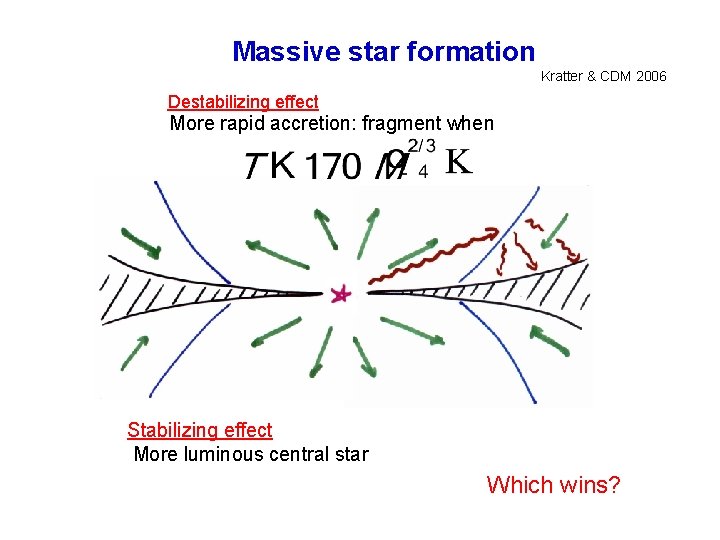
Massive star formation Kratter & CDM 2006 Destabilizing effect More rapid accretion: fragment when Stabilizing effect More luminous central star Which wins?
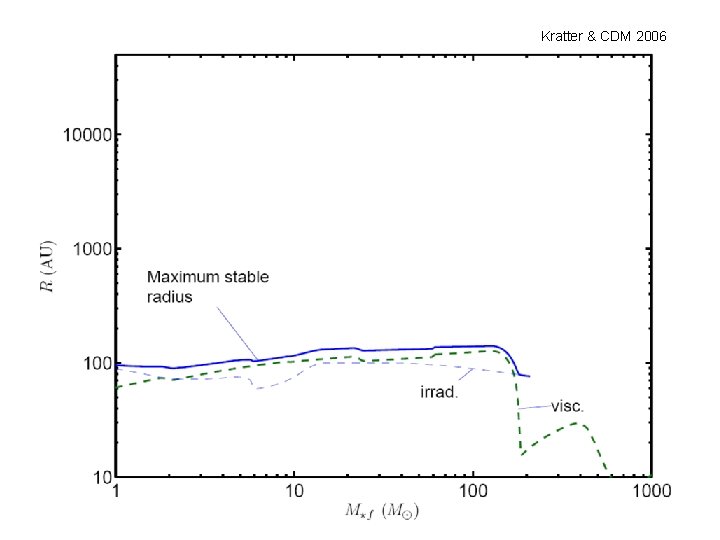
Kratter & CDM 2006
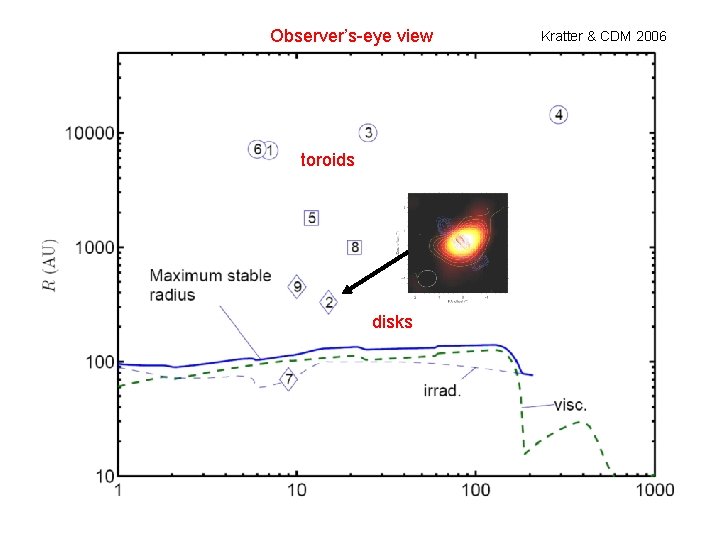
Observer’s-eye view toroids disks Kratter & CDM 2006
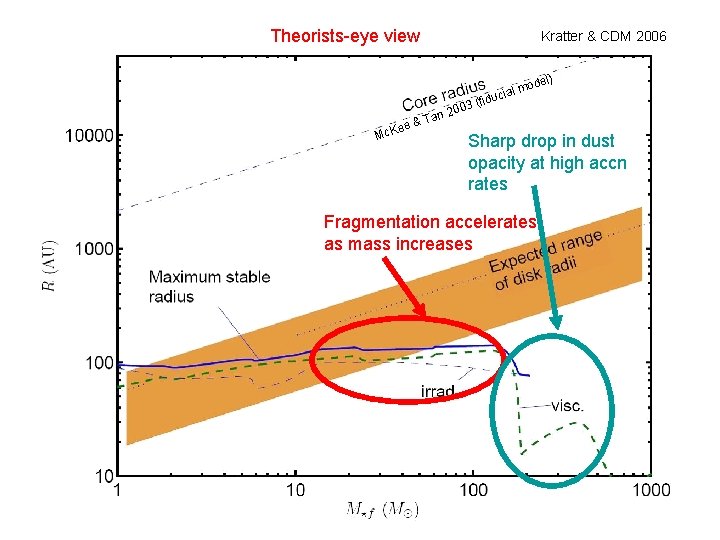
Theorists-eye view Kratter & CDM 2006 del) o al m i c u d fi 03 ( Mc. K ee & 20 Tan Sharp drop in dust opacity at high accn rates Fragmentation accelerates as mass increases
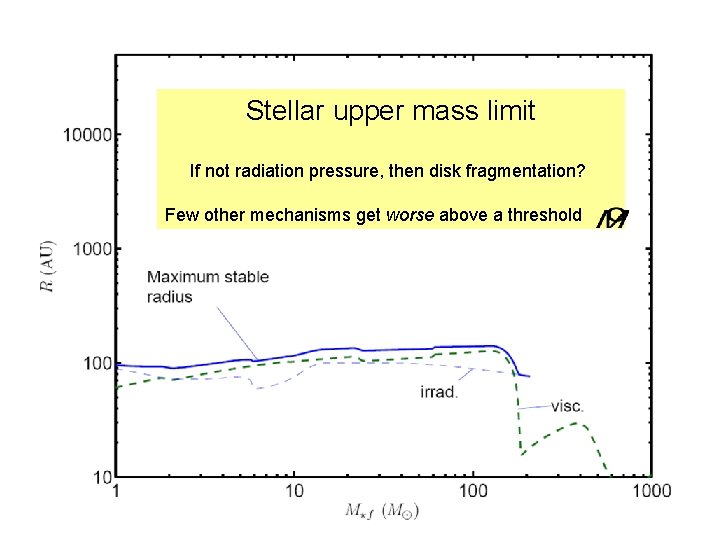
Stellar upper mass limit If not radiation pressure, then disk fragmentation? Few other mechanisms get worse above a threshold
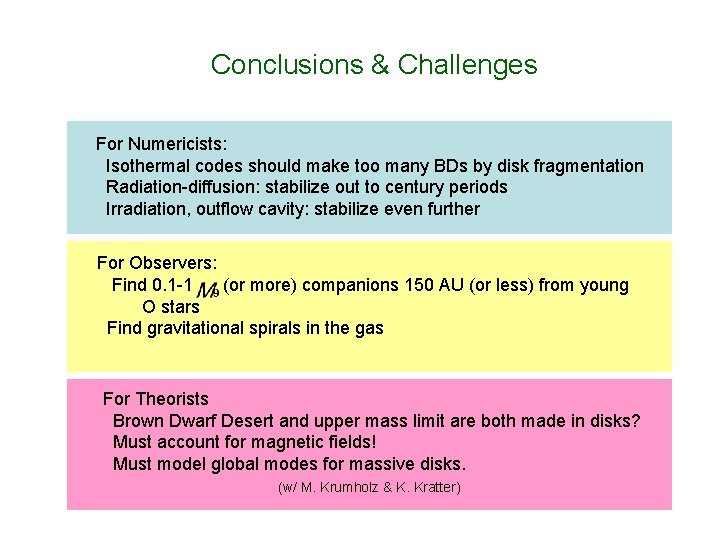
Conclusions & Challenges For Numericists: Isothermal codes should make too many BDs by disk fragmentation Radiation-diffusion: stabilize out to century periods Irradiation, outflow cavity: stabilize even further For Observers: Find 0. 1 -1 (or more) companions 150 AU (or less) from young O stars Find gravitational spirals in the gas For Theorists Brown Dwarf Desert and upper mass limit are both made in disks? Must account for magnetic fields! Must model global modes for massive disks. (w/ M. Krumholz & K. Kratter)
- Slides: 13