
DISINFECTANTS Disinfectants are antimicrobial agents that are applied
DISINFECTANTS

Disinfectants are antimicrobial agents that are applied to the surface of non living objects to destroy microorganisms that are living on the objects.
Sterilization: • Validated process used to render a product free of all forms of viable micro organism including bacterial spores
Anti septic: • Substance that prevents/arrest the action or growth of microbes by inhibiting their activity by destroying them • used for preparations applied topically to living tissues
• Asepsis– prevention of contact with microbes • Sterile – state of being free from all microbes • Sanitizer- agent that reduces bacterial contamination. Used with substances applied to intimate objects • Hospital disinfectant- registered for use in hospitals, clinics, other medical related facility. Efficacy is demonstrated against salmonella, s. aureus, pseudomans etc. • Germicide- agent that destroys microbes (pathogens)
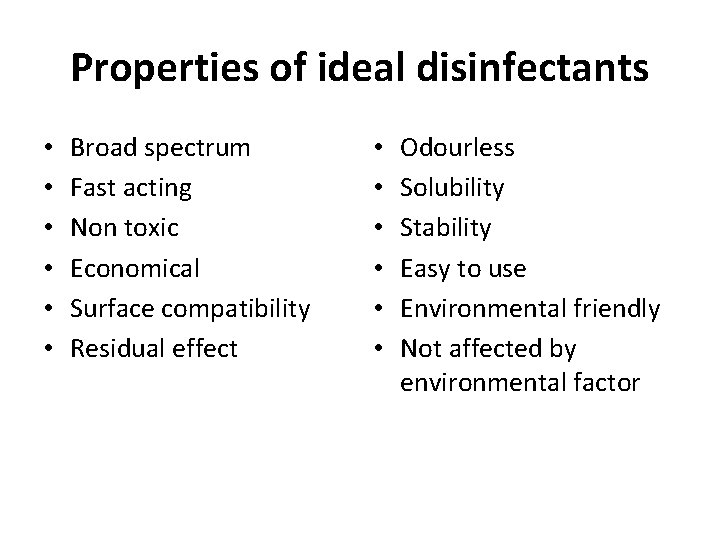
Properties of ideal disinfectants • • • Broad spectrum Fast acting Non toxic Economical Surface compatibility Residual effect • • • Odourless Solubility Stability Easy to use Environmental friendly Not affected by environmental factor
Types of disinfection 1. Prophylactic disinfection 2. Concurrent disinfection 3. Terminal disinfection

Types of disinfection 1. Prophylactic disinfection- to prevent the onset of the disease- chlorination, pasteurization, sterilization 2. Concurrent disinfection – immediate destruction of pathogen - come out of infected person disinfection of urine, sputum, linen clothes, glows 3. Terminal disinfection- after death or discharge of infectious patients

Classification of disinfectants 1. Natural 2. Physical 3. Chemical
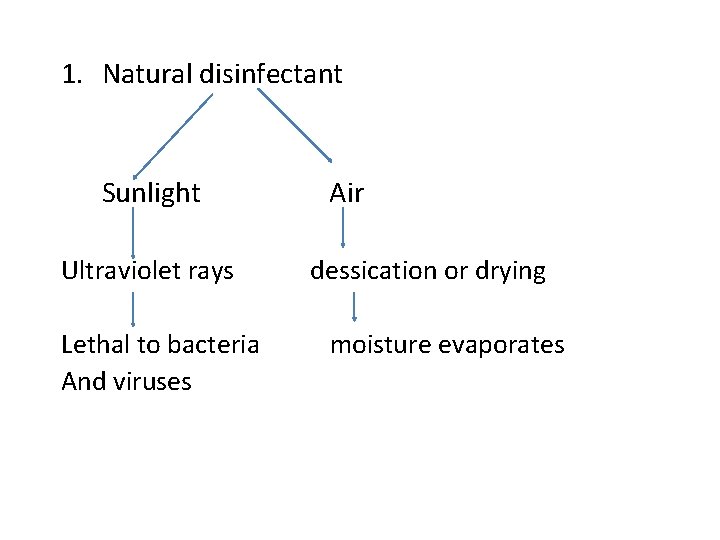
1. Natural disinfectant Sunlight Ultraviolet rays Lethal to bacteria And viruses Air dessication or drying moisture evaporates
1. Physical disinfectant: a. Heat b. Radiation c. Filtration
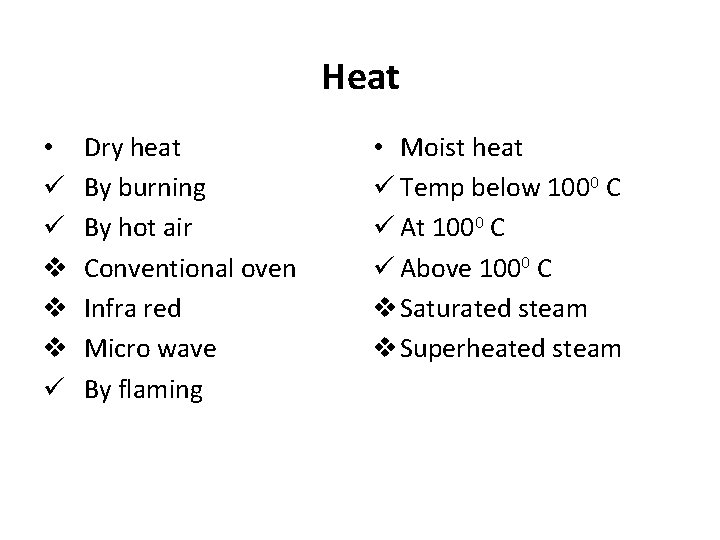
Heat • ü ü v v v ü Dry heat By burning By hot air Conventional oven Infra red Micro wave By flaming • Moist heat ü Temp below 1000 C ü At 1000 C ü Above 1000 C v Saturated steam v Superheated steam
2. Chemical agent: a. Solid b. Liquid c. Gaseous

Properties of chemical disinfectants: 1. Safe, cheap and effective 2. Kill all pathogen but not harmful to man 3. Readily soluble, highly penetrable, reliable, low in toxicity, rapid in action 4. Neither corrode metals nor bleach or stain 5. No unpleasant smell 6. act in both acid and alkaline media
1. Solid disinfectant • Lime • Bleaching powder • Hypochlorite • Potassium permanganate • Halazone tablets • iodophors
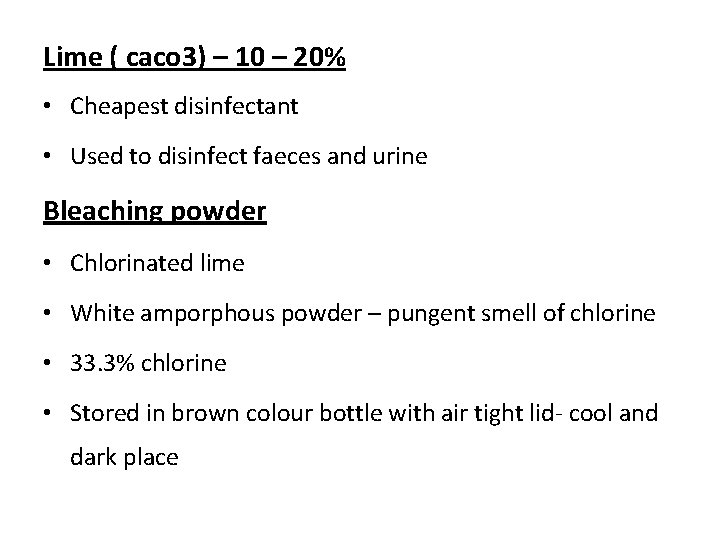
Lime ( caco 3) – 10 – 20% • Cheapest disinfectant • Used to disinfect faeces and urine Bleaching powder • Chlorinated lime • White amporphous powder – pungent smell of chlorine • 33. 3% chlorine • Stored in brown colour bottle with air tight lid- cool and dark place
Bleaching powder (Caocl 2)/ Chlorinated lime • Mode of action- When chlorine is added to water, there is formation of hydrochloric and hypochlorus acids. Disinfecting action is mainly due to the hypochlorus acid, and to a small extent due to hypochlorite ions • Used for disinfection of wells- dose calculated using horrocks apparatus • Stool 400 g/ltr 2 hours , Urine 5 g/ltr 10 hours, Sputum 200 g/ltr 1 hour • Drawback : Unstable compound , Excess lime is added to make it stable compound. Hence known as stabilised bleach
Hypochlorite: • Hypochlorite of sodium, lithium and calcium- act like bleaching powder • Sodium hypochlorite has 5%- chlorine • Calcium hypochlorite- 70% available chlorine
Potassium permanganate: • Weak disinfectant but good oxidizing agent • Used to disinfect fruits and veg • Reddish colour and metallic taste • Treat eczema
Halazone tablet: • Chlorine tablets containing 25% available chlorine • For domestic use- washing dishes, fruits and veg • Small scale chlorination of water • 4 mg of halazone – disinfect 1 L of water in 30 -60 min
Iodophors: • Complexes of iodine releasing free iodine • Broad spectrum germicidal agent- abtibact, fungal, viral • Povidone iodine
Liquid disinfectants. Coal tar compounds • Phenol • Cresol • Hexachlorophene • Chloroxylenol • Chlorhexidine
Quaternary ammonia compounds: • Cetrimide • Savlon • Zephiran Formalin Iodine Alcohol Hydrogen peroxide
Formalin • Solution form of Formaldehyde gas • Used as 2 -3 percentage for spraying rooms, walls and furniture's and 10 % used for disinfecting stool • Effective against bacteria, virus • Not effective against spores and AFB • Formaldehyde gas is used to disinfection of rooms, also for blankets, beds, books and other articles which can’t be boiled
Phenol ( Carbolic acid ) • It is a disinfectant used as a standard to compare the germicidal activity of disinfectants (phenolic coefficient) • It acts by precipitating proteins • It is effective against gram+ve and gram-ve bacteria but only slowly effective against spores and acid fast bacteria

Phenol • Crude phenol is a mixture of phenol and cresol • White crystals – air – pink colour • 10 percentage for disinfecting stool and urine • <5 % strength for mopping floor and cleaning drains, sputum, 0. 2 – 1 % - used as bacteriostatic
Cresol Coal tar disinfectant, 5 -10 % strength for disinfecting urine and stool
Chloroxylenolol (dettol) • Non toxic disinfectant • Effective against streptococci • Suitable for disinfection of instruments and plastic equipment; a contact of 15 minutes will be required
Iodine solution (1 -2%) • Iodine solution or tinctures can be used as antiseptic to skin • Iodine is bactericidal, fungicidal, virucidal and lethal to spores
Alum • It is hydrated potassium aluminium sulphate • Used in water purification before Rapid sand flitration method
Savlon • Combination of cetavlon and hibitane • 1% in 70% alcohol • Used for disinfecting plastic appliances like clinical thermometer • Contact period of at least 20 minutes is required
Potassium Permanganate ( Kmno 4) • It is an oxidising agent • Used to disinfect fruits, vegetables and water • Its the only oxidising agent which kills Vibrio. cholera
Copper sulphate ( Cuso 4) It is a blue coloured mixture It can be used to destroy algae in stagnant water
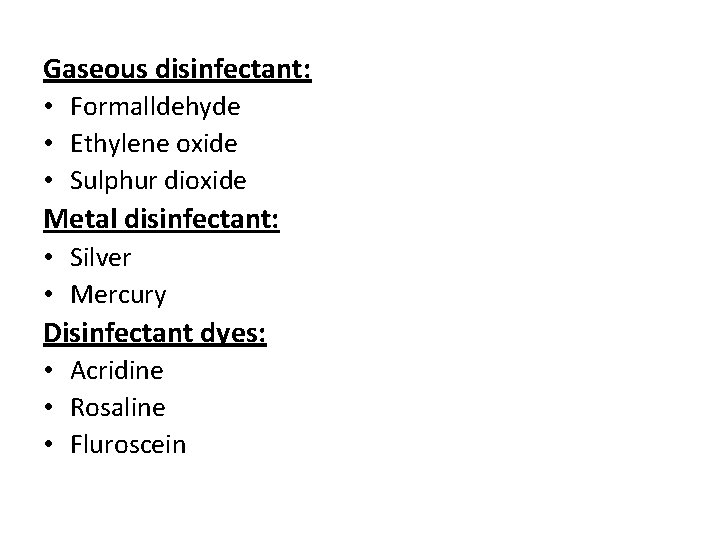
Gaseous disinfectant: • Formalldehyde • Ethylene oxide • Sulphur dioxide Metal disinfectant: • Silver • Mercury Disinfectant dyes: • Acridine • Rosaline • Fluroscein
- Slides: 34