
Disinfectant The ideal disinfectant What properties should a



- Slides: 21
Disinfectant
The ideal disinfectant � What properties should a disinfectant have?
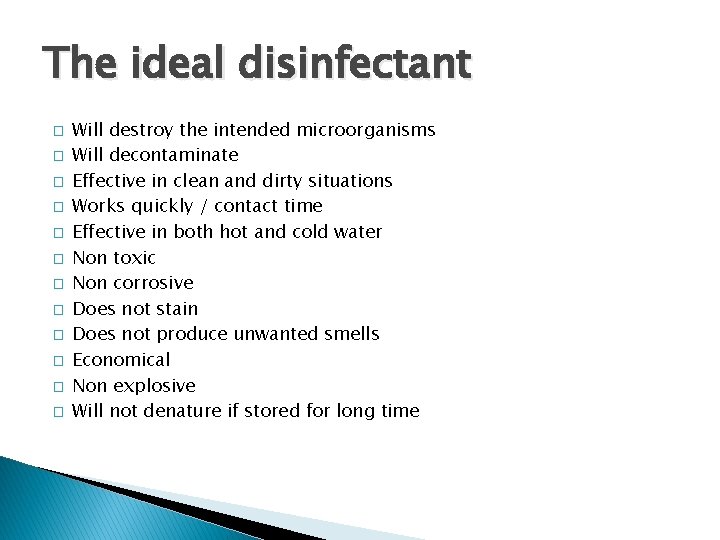
The ideal disinfectant � � � Will destroy the intended microorganisms Will decontaminate Effective in clean and dirty situations Works quickly / contact time Effective in both hot and cold water Non toxic Non corrosive Does not stain Does not produce unwanted smells Economical Non explosive Will not denature if stored for long time
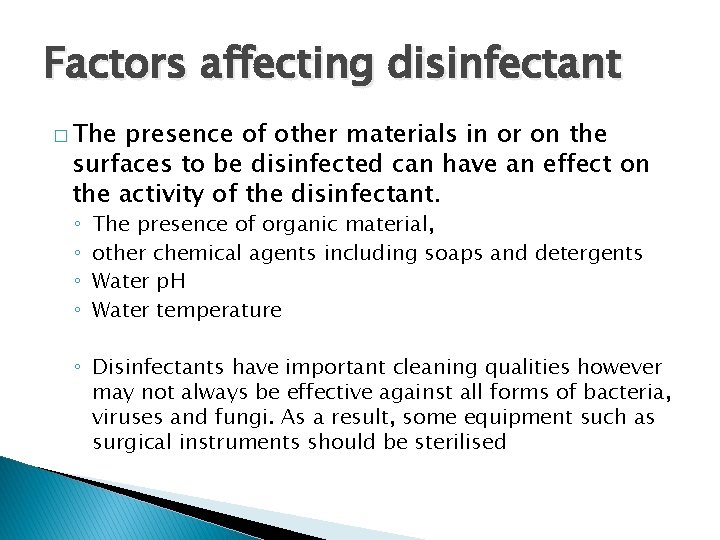
Factors affecting disinfectant � The presence of other materials in or on the surfaces to be disinfected can have an effect on the activity of the disinfectant. ◦ ◦ The presence of organic material, other chemical agents including soaps and detergents Water p. H Water temperature ◦ Disinfectants have important cleaning qualities however may not always be effective against all forms of bacteria, viruses and fungi. As a result, some equipment such as surgical instruments should be sterilised
Safe handling and handling � Keep in correct container � Make sure bottle is kept in safe place � Read data sheet before using � Some disinfectants /alcohols are flammable � Make sure you COSHH and Health and Safety at Work Act are obeyed � Correct PPE � Make sure chemical is made up correctly and not mixed with other chemicals � Make sure temperature of water is correct � Signs should be placed to warn others of potential hazards
Action for spillages � Follow data sheet guidelines � Warn others of spillage – use signs � Usually an absorbent is used to remove chemical pillage � Read recommended way to dispose.
Animal / self Contamination � Read data sheet before use � Wash area with running water � Call for assistance � Seek medical attention
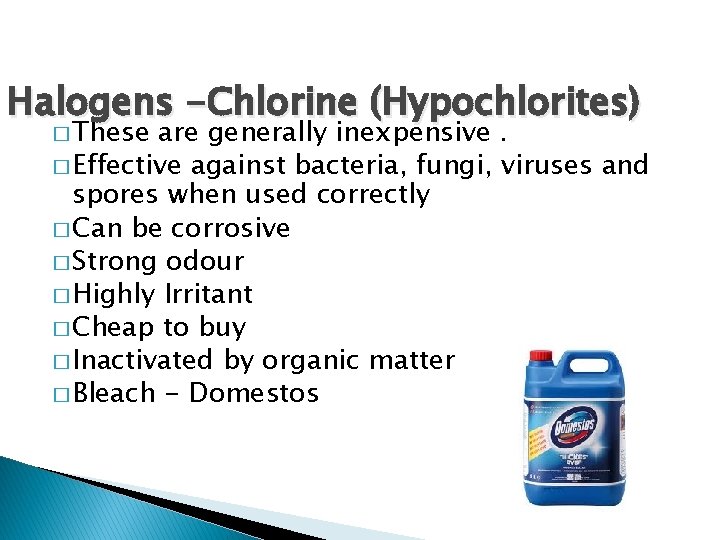
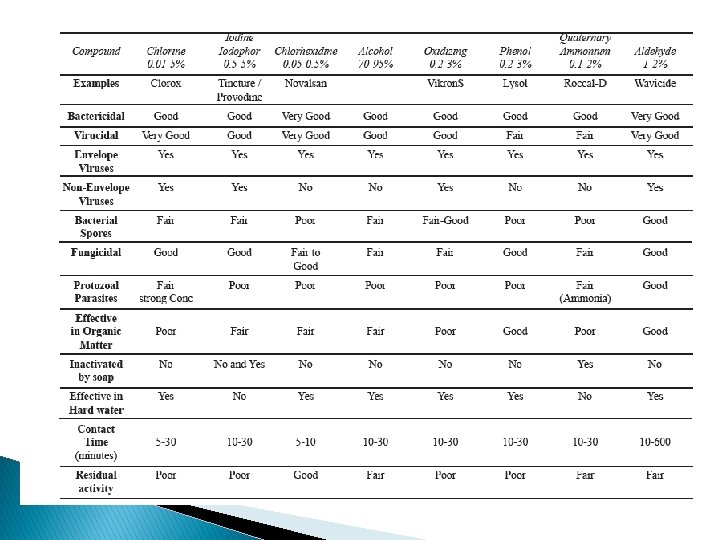
Halogens -Chlorine (Hypochlorites) � These are generally inexpensive. � Effective against bacteria, fungi, viruses and spores when used correctly � Can be corrosive � Strong odour � Highly Irritant � Cheap to buy � Inactivated by organic matter � Bleach - Domestos
Phenols – carbolic acid � � � � - Good against bacteria but can be poor against viruses (eg parvo virus) Fungicidal Cheap to buy Can be toxic and irritant when in contact with skin Works by denaturing protein in cells Effective in hard water Toxic to cats!! Phenols can be divided into: Black/white / clear – used for environment only – jeyes fluid Chlorinated – dettol
Quaternary Ammonium Compounds � Used on skin and environment � Effective on bacteria, spores , fungi and viruses � Trigene, savalon Vetaclean � Cheap, inactivated by hard water, organic matter and soap � Cotton wool left to soak will deactivate solution
Aldehyde (Formaldehyde) � Environmental use only � Used in histological samples – kills micro organisms without properties � Effective against spores � Works by fixing cell proteins � Wide range of bactericidal, spores and viruses. � Used for disinfecting equipment that cannot be heat sterilised. � carinogenic � Parvocide , Formula H
Aldehyde (Glutaraldehyde) � Used for environment only � Wide range of bactericidal, spores and viruses. � Used for disinfecting equipment that cannot be heat sterilised. � Work by protein inactivation � Less irritant than formalderhydes � Cidex
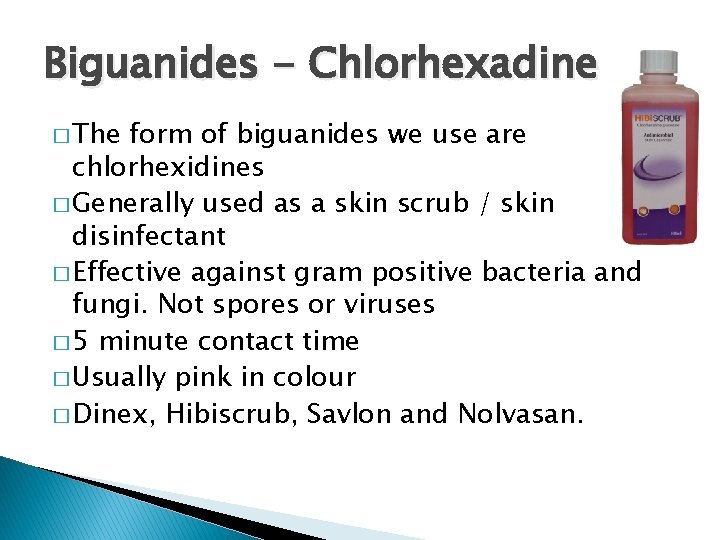
Biguanides - Chlorhexadine � The form of biguanides we use are chlorhexidines � Generally used as a skin scrub / skin disinfectant � Effective against gram positive bacteria and fungi. Not spores or viruses � 5 minute contact time � Usually pink in colour � Dinex, Hibiscrub, Savlon and Nolvasan.
Povidone Iodine � Generally used as a skin scrub / skin disinfectant � Effective on bacteria, fungi, protozoa, and some viruses – not bacterial spores � 10 minute contact time � Usually Dark brown in colour � Pevidine
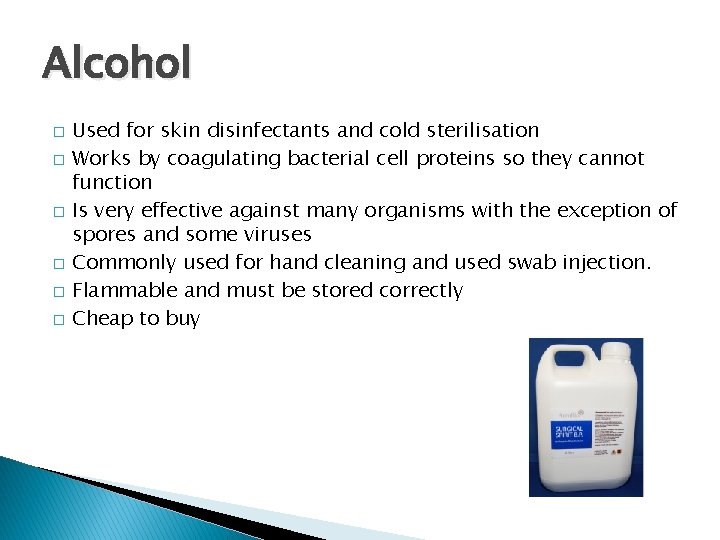
Alcohol � � � Used for skin disinfectants and cold sterilisation Works by coagulating bacterial cell proteins so they cannot function Is very effective against many organisms with the exception of spores and some viruses Commonly used for hand cleaning and used swab injection. Flammable and must be stored correctly Cheap to buy
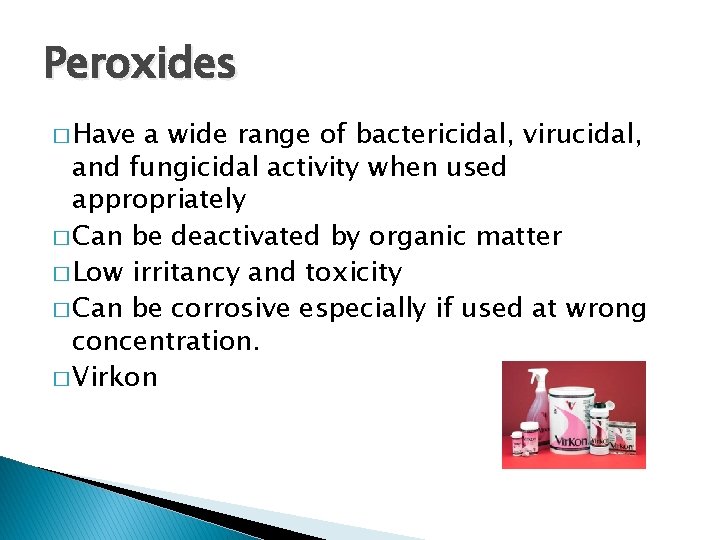
Peroxides � Have a wide range of bactericidal, virucidal, and fungicidal activity when used appropriately � Can be deactivated by organic matter � Low irritancy and toxicity � Can be corrosive especially if used at wrong concentration. � Virkon
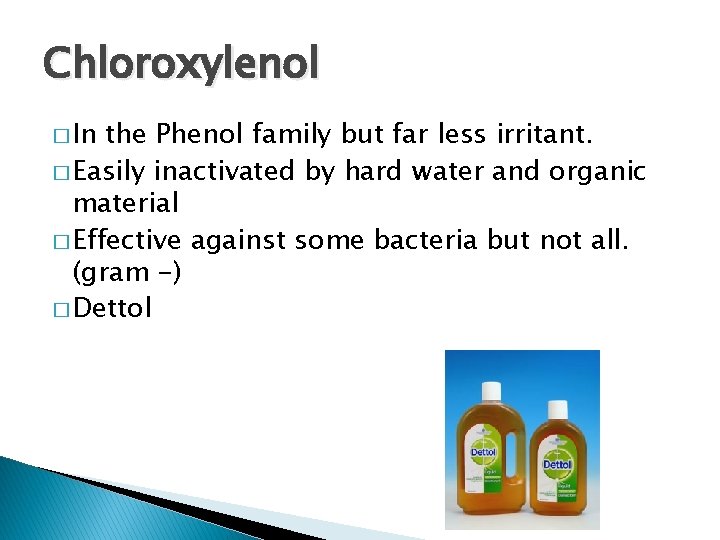
Chloroxylenol � In the Phenol family but far less irritant. � Easily inactivated by hard water and organic material � Effective against some bacteria but not all. (gram -) � Dettol
� http: //www. ianrpubs. unl. edu/epublic/archive /g 1410/build/g 1410. pdf
You are now able to complete task 4 and 5 in your infection control booklet � Please be reminded that there articles on moodle which will also help you.