
Disinfectant Concentration Effects on Bacteria Joey Ziccarelli Grade

Disinfectant Concentration Effects on Bacteria Joey Ziccarelli Grade 9 Central Catholic High School
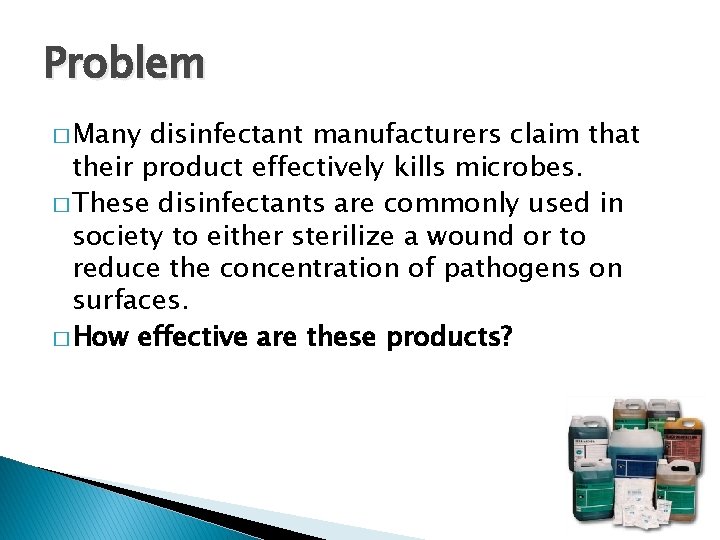
Problem � Many disinfectant manufacturers claim that their product effectively kills microbes. � These disinfectants are commonly used in society to either sterilize a wound or to reduce the concentration of pathogens on surfaces. � How effective are these products?
Purpose � To determine the effects of common antiseptic solutions on the survivorship of a gram positive and gram negative bacteria: specifically Staphylococcus Epidermidis and Escherichia coli � To assess the antibacterial properties of common household disinfectants
Antiseptic Iodine � � Iodine was discovered by the French chemist Barnard Courtois in 1811. Courtois was extracting sodium and potassium compounds from seaweed ash. Iodine is used as an indicator test for starch and turns a deep blue when it comes in contact with it. Potassium iodide (KI) is used to make photographic film. When mixed with iodine in alcohol, as an antiseptic for external wounds.
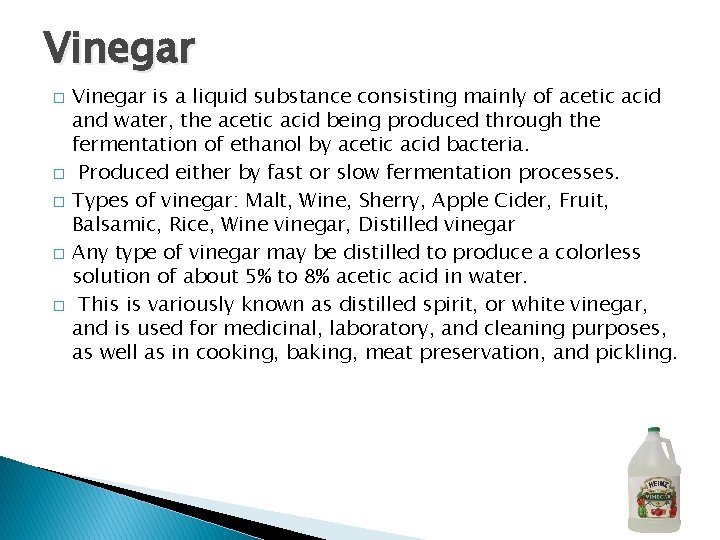
Vinegar � � � Vinegar is a liquid substance consisting mainly of acetic acid and water, the acetic acid being produced through the fermentation of ethanol by acetic acid bacteria. Produced either by fast or slow fermentation processes. Types of vinegar: Malt, Wine, Sherry, Apple Cider, Fruit, Balsamic, Rice, Wine vinegar, Distilled vinegar Any type of vinegar may be distilled to produce a colorless solution of about 5% to 8% acetic acid in water. This is variously known as distilled spirit, or white vinegar, and is used for medicinal, laboratory, and cleaning purposes, as well as in cooking, baking, meat preservation, and pickling.
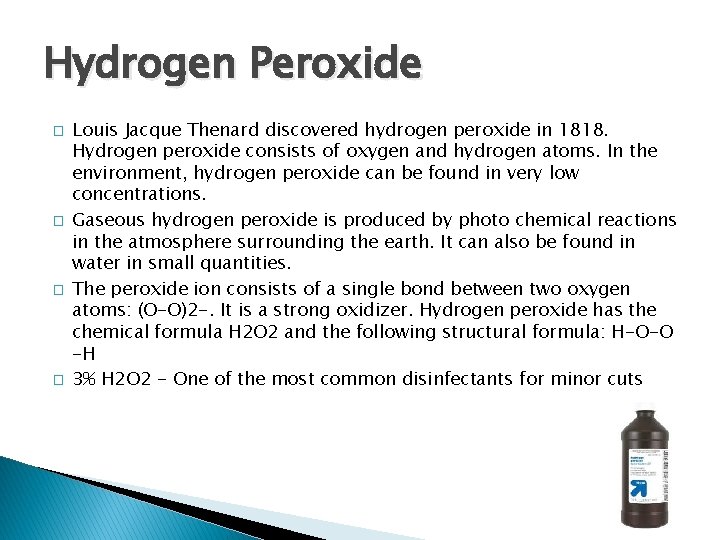
Hydrogen Peroxide � � Louis Jacque Thenard discovered hydrogen peroxide in 1818. Hydrogen peroxide consists of oxygen and hydrogen atoms. In the environment, hydrogen peroxide can be found in very low concentrations. Gaseous hydrogen peroxide is produced by photo chemical reactions in the atmosphere surrounding the earth. It can also be found in water in small quantities. The peroxide ion consists of a single bond between two oxygen atoms: (O-O)2 -. It is a strong oxidizer. Hydrogen peroxide has the chemical formula H 2 O 2 and the following structural formula: H-O-O -H 3% H 2 O 2 - One of the most common disinfectants for minor cuts
Hypothesis � Null Hypothesis: Hydrogen Peroxide, Antiseptic Iodine, Vinegar will have no effect on E. coli and Staph e survivorship. � Alternative Hypothesis: Hydrogen Peroxide, Antiseptic Iodine, Vinegar will significantly reduce survivorship of E. coli and Staph e.
Materials � Glass Test Tubes with SDF (100 m. M KH 2 PO 4, 100 m. M K 2 HPO 4, 10 m. M Mg. SO 4, 1 m. M Na. Cl) � Macropipettes � Micropipettes + tips � Disinfectants (Iodine Antiseptic, Vinegar, Hydrogen Peroxide) � Vortex � Ethanol, Spreaders � LB Agar Plates � LB media (0. 5% yeast extract, 1% tryptone, 1% sodium chloride) � Incubator � Escherichia coli (DH 5 Alpha) � Staphylococcus epidermidis � Test tube rack � Side Arm Flask
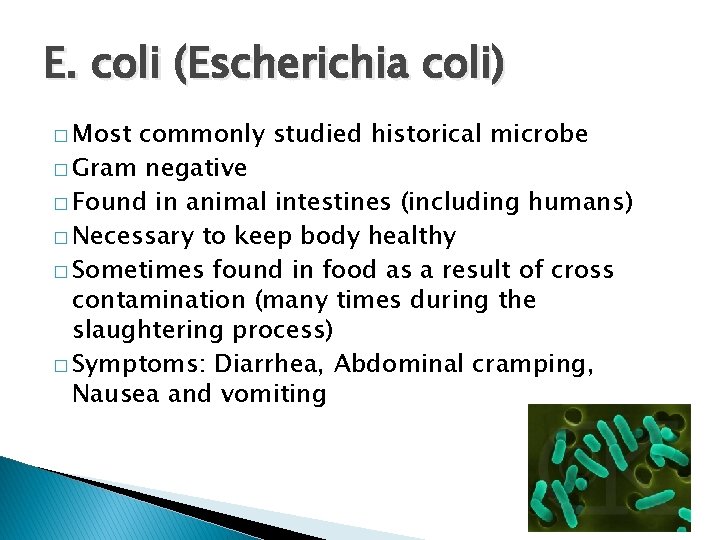
E. coli (Escherichia coli) � Most commonly studied historical microbe � Gram negative � Found in animal intestines (including humans) � Necessary to keep body healthy � Sometimes found in food as a result of cross contamination (many times during the slaughtering process) � Symptoms: Diarrhea, Abdominal cramping, Nausea and vomiting
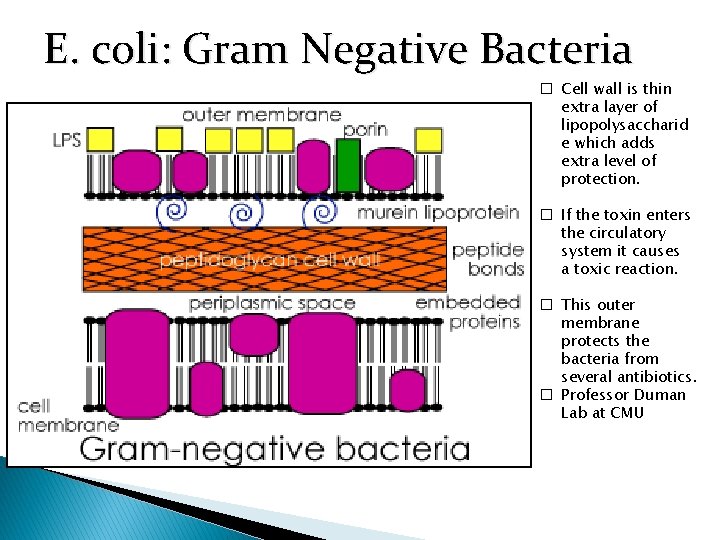
E. coli: Gram Negative Bacteria � Cell wall is thin extra layer of lipopolysaccharid e which adds extra level of protection. � If the toxin enters the circulatory system it causes a toxic reaction. � This outer membrane protects the bacteria from several antibiotics. � Professor Duman Lab at CMU
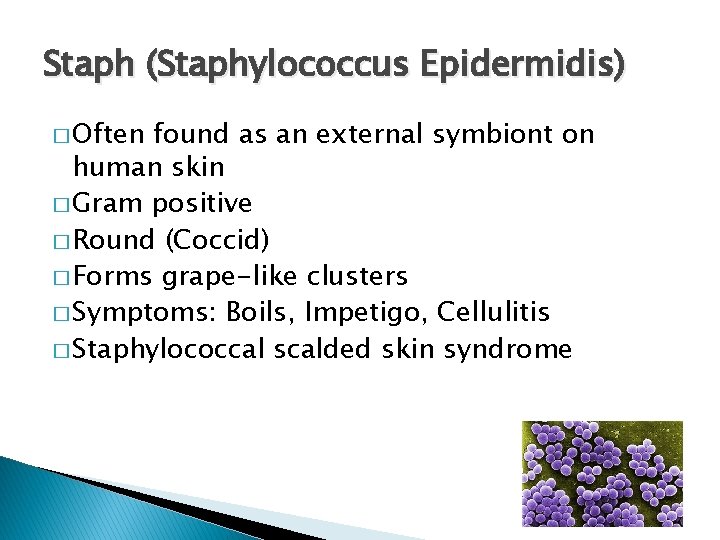
Staph (Staphylococcus Epidermidis) � Often found as an external symbiont on human skin � Gram positive � Round (Coccid) � Forms grape-like clusters � Symptoms: Boils, Impetigo, Cellulitis � Staphylococcal scalded skin syndrome
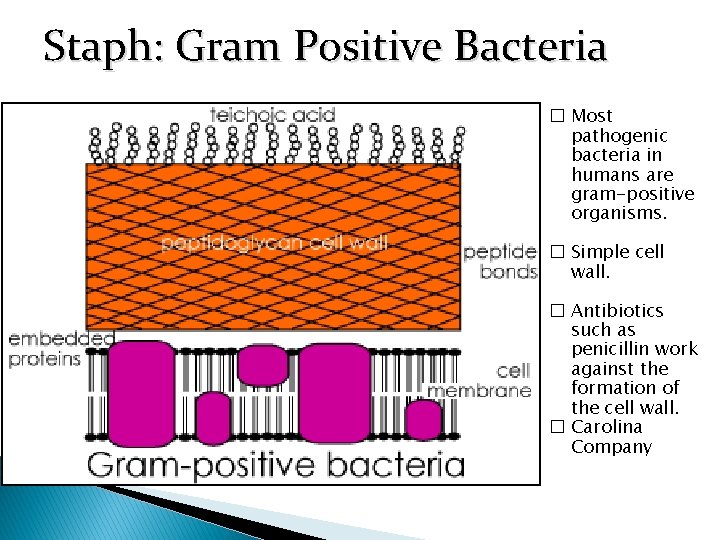
Staph: Gram Positive Bacteria � Most pathogenic bacteria in humans are gram-positive organisms. � Simple cell wall. � Antibiotics such as penicillin work against the formation of the cell wall. � Carolina Company
Procedure � � � � � A: Liquid Exposure Escherichia coli and Staphylococcus epidermidis were grown overnight in sterile LB media. A sample of the overnight culture was added to fresh media in a sterile sidearm flask. The culture was incubated until a density of 50 Klett spectrophotometer units was reached. This represents a cell density of approximately 108109 cells/ml. The culture was diluted in sterile dilution fluid to a concentration of approximately 105 cells/ml. The disinfectants were diluted with sterile dilution fluid to concentrations of 0%, . 1%, and 10% to total 9. 9 ml. 0. 1 ml. of cell culture was then added to the test tubes, yielding a final volume of 10 ml. and a cell density of approximately 103 cells/ml. ] The p. H of each disinfectant was recorded during the experiment. The p. H of antiseptic iodine was 6. The p. H of Hydrogen Peroxide was 6. The p. H of distilled vinegar was 3.
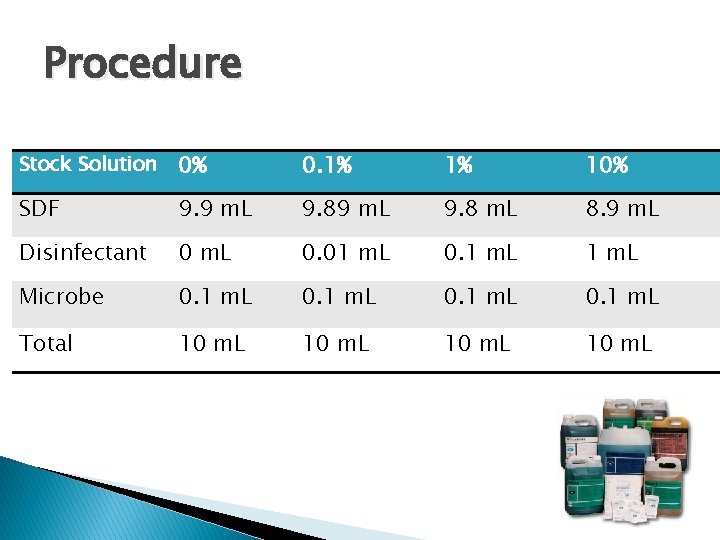
Procedure Stock Solution 0% 0. 1% 1% 10% SDF 9. 9 m. L 9. 8 m. L 8. 9 m. L Disinfectant 0 m. L 0. 01 m. L 0. 1 m. L Microbe 0. 1 m. L Total 10 m. L
Procedure (cont. ) � � � � The tubes were vortexed and allowed to incubate at room temperature for a 20 minute time period. After vortexing to evenly suspend cells, 0. 1 ml. aliquots were removed from the tubes and spread on LB agar plates. B: Infusion Test 200 microliters of disinfectant (or SDF) were spread onto LB agar plates. The plates were inverted and incubated for two hours at 37 C for infusion. As in the liquid experiment, bacteria was spread onto the infused plates. The plates were left to sit overnight. The resulting colonies were counted. Each colony is assumed to have arisen from one cell. It is assumed that the 200 microliters diffused into the agar plate’s 20 milliliters evenly at a 1/100 variable concentration in the agar.
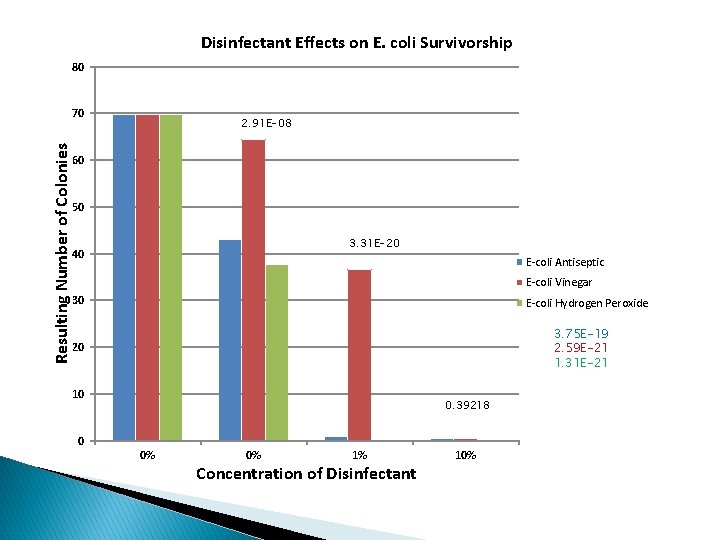
Disinfectant Effects on E. coli Survivorship 80 Resulting Number of Colonies 70 2. 91 E-08 60 50 3. 31 E-20 40 E-coli Antiseptic E-coli Vinegar 30 E-coli Hydrogen Peroxide 3. 75 E-19 2. 59 E-21 1. 31 E-21 20 10 0. 39218 0 0% 0% 1% Concentration of Disinfectant 10%
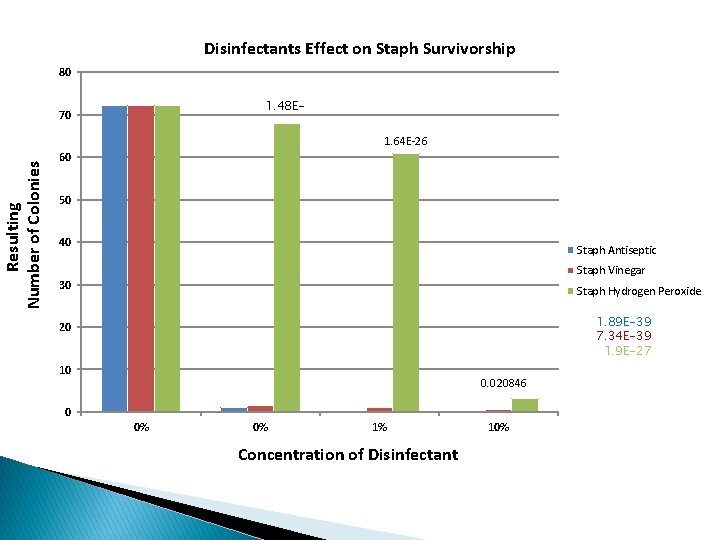
Disinfectants Effect on Staph Survivorship 80 1. 48 E- 70 Resulting Number of Colonies 1. 64 E-26 60 50 40 Staph Antiseptic Staph Vinegar 30 Staph Hydrogen Peroxide 1. 89 E-39 7. 34 E-39 1. 9 E-27 20 10 0. 020846 0 0% 0% 1% Concentration of Disinfectant 10%
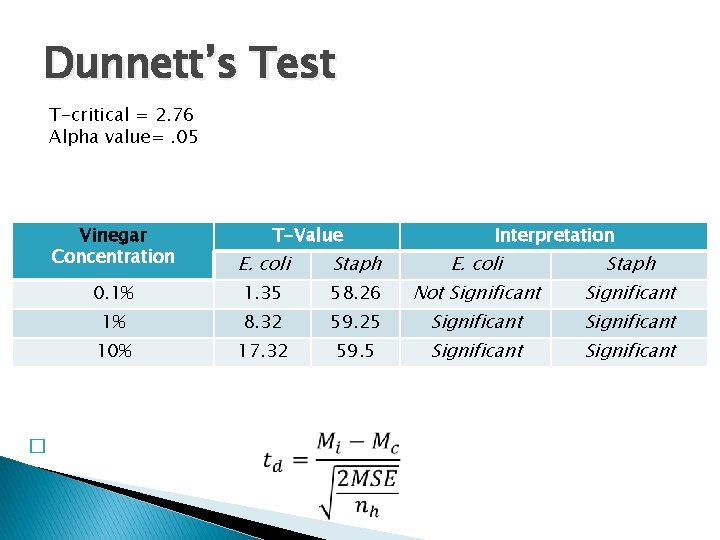
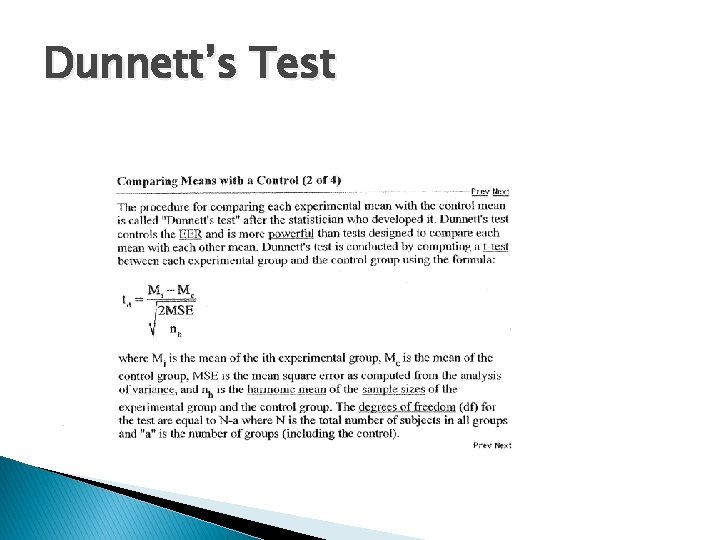
Dunnett’s Test T-critical = 2. 76 Alpha value=. 05 Vinegar Concentration E. coli Staph 0. 1% 1. 35 58. 26 1% 8. 32 59. 25 10% 17. 32 59. 5 � T-Value Interpretation E. coli Staph Not Significant Significant
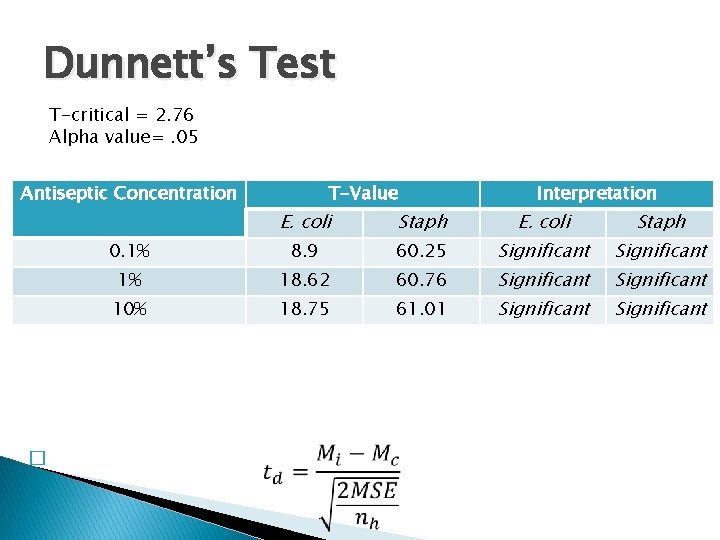
Dunnett’s Test T-critical = 2. 76 Alpha value=. 05 Antiseptic Concentration � T-Value E. coli Staph 0. 1% 8. 9 60. 25 1% 18. 62 60. 76 10% 18. 75 61. 01 Interpretation E. coli Staph Significant Significant
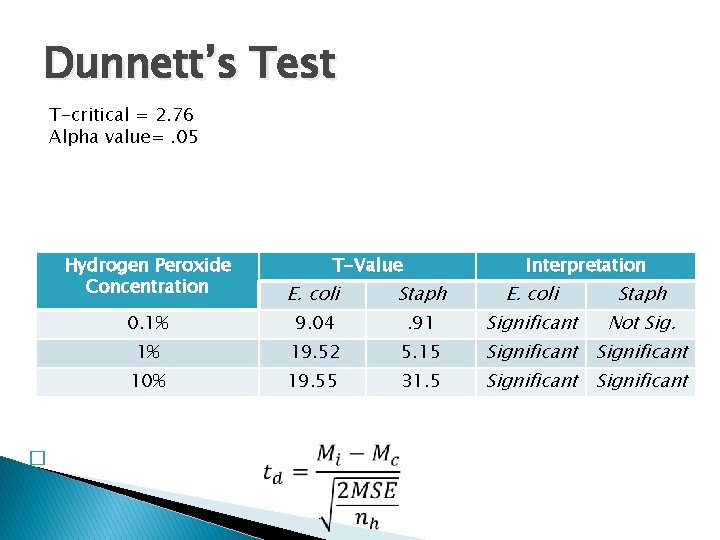
Dunnett’s Test T-critical = 2. 76 Alpha value=. 05 � Hydrogen Peroxide Concentration T-Value Interpretation E. coli Staph 0. 1% 9. 04 . 91 1% 19. 52 5. 15 10% 19. 55 31. 5 E. coli Significant Staph Not Significant
Conclusion � Overall, the three disinfectant variables used in this experiment had a significant effect on the survivorship of Escherichia coli and Staphyloccocus Epidermidis. � Therefore, the null hypothesis was rejected.
Limitations and Future Experimentation Limitations The disinfectants were somewhat insoluble and needed to be inverted repeatedly � Only one time of exposure was utilized � Difficult to synchronize plating � Future Experimentation Test various concentrations of disinfectants � Test the disinfectants effects on numerous cell models (yeast, algae) � Test the effects of different disinfectants �

References � http: //www. ncbi. nlm. nih. gov/pmc/articles/P MC 1057892/ � http: //cmr. asm. org/content/12/1/147. short � http: //www. academicjournals. org/ajpp/pdf/% 20 pdf 2009/May/El. Mahmood%20%20 and%20%20 Doughari. pdf � http: //www. ncbi. nlm. nih. gov/pmc/articles/P MC 88971/ � http: //aem. asm. org/content/10/5/458
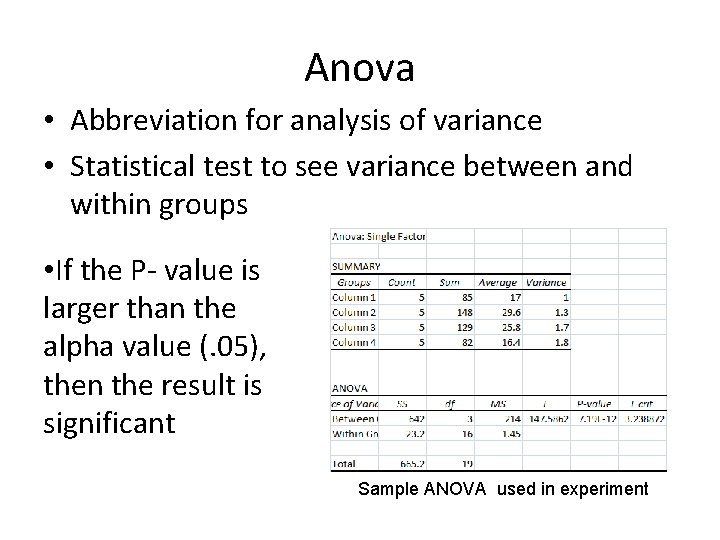
Anova • Abbreviation for analysis of variance • Statistical test to see variance between and within groups • If the P- value is larger than the alpha value (. 05), then the result is significant Sample ANOVA used in experiment
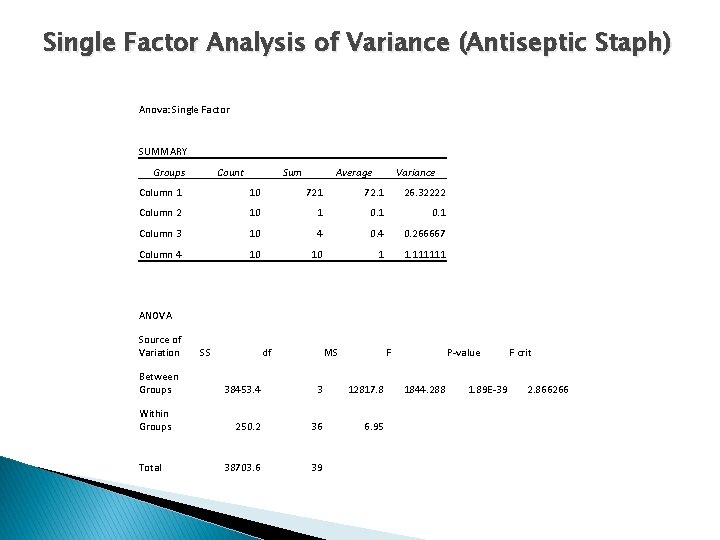
Single Factor Analysis of Variance (Antiseptic Staph) Anova: Single Factor SUMMARY Groups Count Sum Average Variance Column 1 10 721 72. 1 26. 32222 Column 2 10 1 0. 1 Column 3 10 4 0. 266667 Column 4 10 10 1 1. 111111 ANOVA Source of Variation Between Groups Within Groups Total SS df MS F 38453. 4 3 12817. 8 250. 2 36 6. 95 38703. 6 39 P-value 1844. 288 1. 89 E-39 F crit 2. 866266
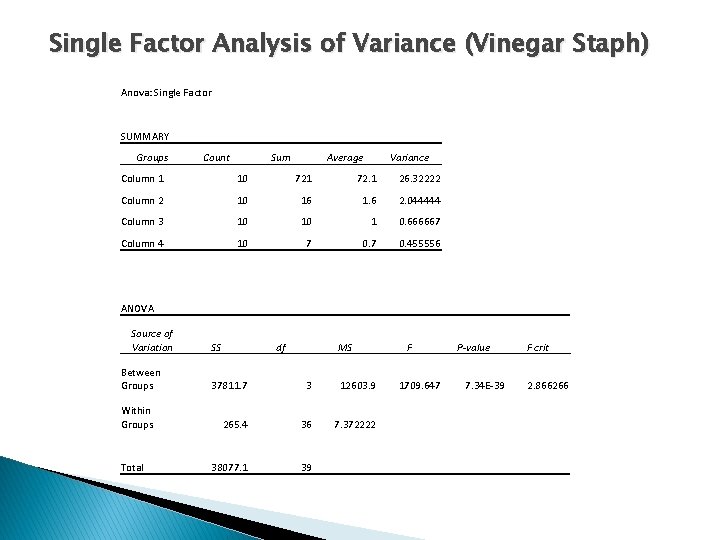
Single Factor Analysis of Variance (Vinegar Staph) Anova: Single Factor SUMMARY Groups Count Sum Average Variance Column 1 10 721 72. 1 26. 32222 Column 2 10 16 1. 6 2. 044444 Column 3 10 10 1 0. 666667 Column 4 10 7 0. 455556 ANOVA Source of Variation Between Groups Within Groups Total SS df MS 37811. 7 3 12603. 9 265. 4 36 7. 372222 38077. 1 39 F P-value 1709. 647 F crit 7. 34 E-39 2. 866266
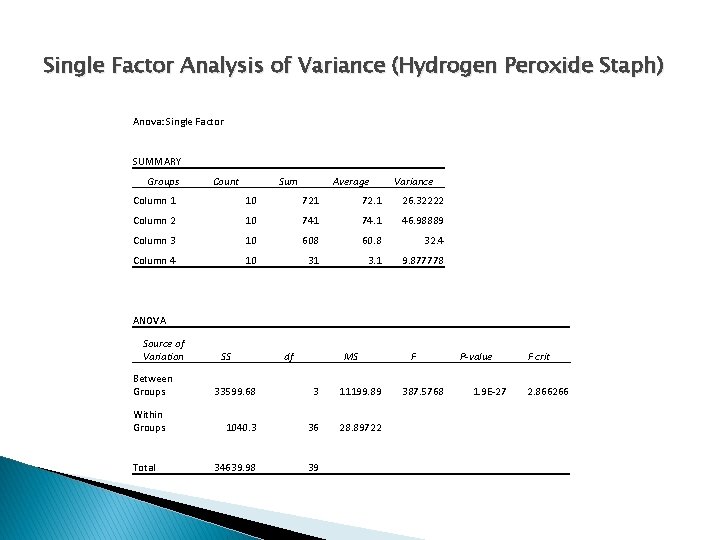
Single Factor Analysis of Variance (Hydrogen Peroxide Staph) Anova: Single Factor SUMMARY Groups Count Sum Average Variance Column 1 10 721 72. 1 26. 32222 Column 2 10 741 74. 1 46. 98889 Column 3 10 608 60. 8 32. 4 Column 4 10 31 3. 1 9. 877778 ANOVA Source of Variation Between Groups Within Groups Total SS df MS 33599. 68 3 11199. 89 1040. 3 36 28. 89722 34639. 98 39 F P-value 387. 5768 F crit 1. 9 E-27 2. 866266
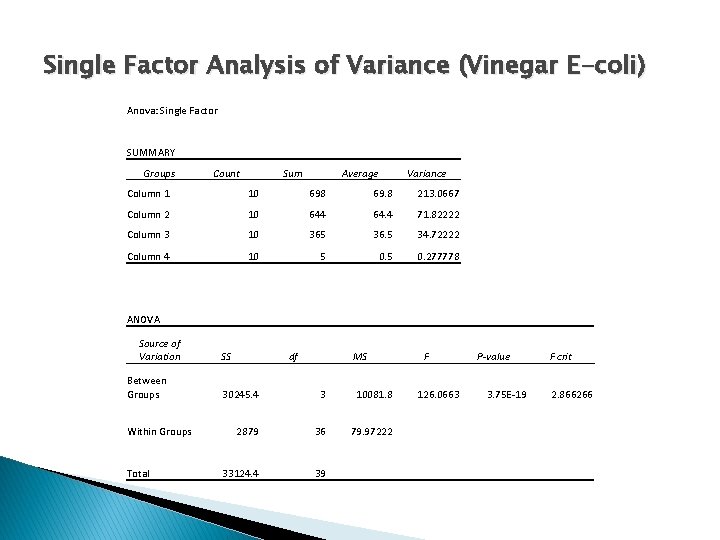
Single Factor Analysis of Variance (Vinegar E-coli) Anova: Single Factor SUMMARY Groups Count Sum Average Variance Column 1 10 698 69. 8 213. 0667 Column 2 10 644 64. 4 71. 82222 Column 3 10 365 36. 5 34. 72222 Column 4 10 5 0. 277778 ANOVA Source of Variation Between Groups Within Groups Total SS df MS 30245. 4 3 10081. 8 2879 36 79. 97222 33124. 4 39 F P-value 126. 0663 F crit 3. 75 E-19 2. 866266
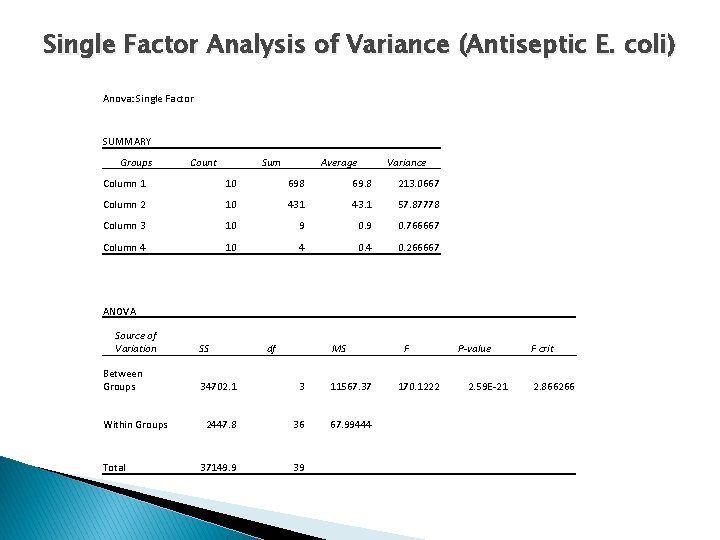
Single Factor Analysis of Variance (Antiseptic E. coli) Anova: Single Factor SUMMARY Groups Count Sum Average Variance Column 1 10 698 69. 8 213. 0667 Column 2 10 431 43. 1 57. 87778 Column 3 10 9 0. 766667 Column 4 10 4 0. 266667 ANOVA Source of Variation Between Groups Within Groups Total SS df MS 34702. 1 3 11567. 37 2447. 8 36 67. 99444 37149. 9 39 F P-value 170. 1222 F crit 2. 59 E-21 2. 866266
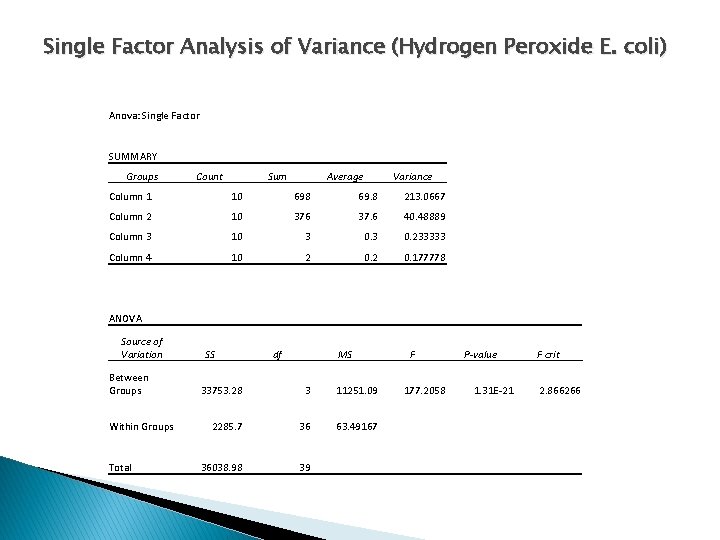
Single Factor Analysis of Variance (Hydrogen Peroxide E. coli) Anova: Single Factor SUMMARY Groups Count Sum Average Variance Column 1 10 698 69. 8 213. 0667 Column 2 10 376 37. 6 40. 48889 Column 3 10 3 0. 233333 Column 4 10 2 0. 177778 ANOVA Source of Variation Between Groups Within Groups Total SS df MS 33753. 28 3 11251. 09 2285. 7 36 63. 49167 36038. 98 39 F P-value 177. 2058 F crit 1. 31 E-21 2. 866266
Dunnett’s Test
- Slides: 31