
DISEASES OF THE INTESTINES Intestinal obstruction Vascular disorders
DISEASES OF THE INTESTINES �Intestinal obstruction �Vascular disorders �Malabsorptive diseases and infections �Inflammatory bowel disease. �Polyps and neoplastic diseases
INFLAMMATORY INTESTINAL DISEASE �Sigmoid Diverticulitis �Chronic Inflammatory bowel diseases (CIBD) - Crohn disease -Ulcerative colitis
SIGMOID DIVERTICULITIS � In general, diverticular disease refers to acquired pseudodiverticular outpouchings of the colonic mucosa and submucosa. � Diverticula generally are multiple, and the condition is referred to as diverticulosis. � Colonic diverticula tend to develop under conditions of elevated intraluminal pressure in the sigmoid colon. � High luminal pressures may be generated by exaggerated peristaltic contractions, with spasmodic sequestration of bowel segments that may be exacerbated by diets low in fiberand constipation , which reduce stool bulk.

MORPHOLOGY �Flasklike outpouchings �Mostly in sigmoid colon. �Thin wall (atrophic mucosa, compressed submucosa) �Attenuated or absent muscularis. �Obstruction leads to diverticulitis. �Risk of perforation. �Recurrent diverticulitis leads to strictures.


� Sigmoid diverticular disease. A, Stool-filled diverticula are regularly arranged. B, Cross-section showing the outpouching of mucosa beneath the muscularis propria. C, Low-power photomicrograph of a sigmoid diverticulum showing protrusion of the mucosa and submucosa through the muscularis propria.
COMPLICATIONS � Obstruction of diverticula leads to inflammatory changes, producing diverticulitis and peridiverticulitis. � Because the wall of the diverticulum is supported only by the muscularis mucosa and a thin layer of subserosal adipose tissue, inflammation and increased pressure within an obstructed diverticulum can lead to perforation.
CLINICAL FEATURES �Mostly asymptomatic. �Intermittent lower abdominal pain �Constipation or diarrhea. Tx �High fiber diet. �Antibiotics in diverticulitis. �Surgery.
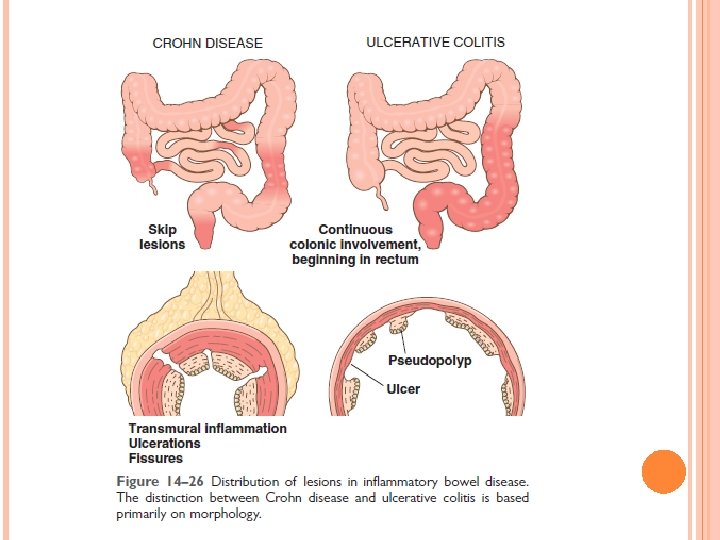
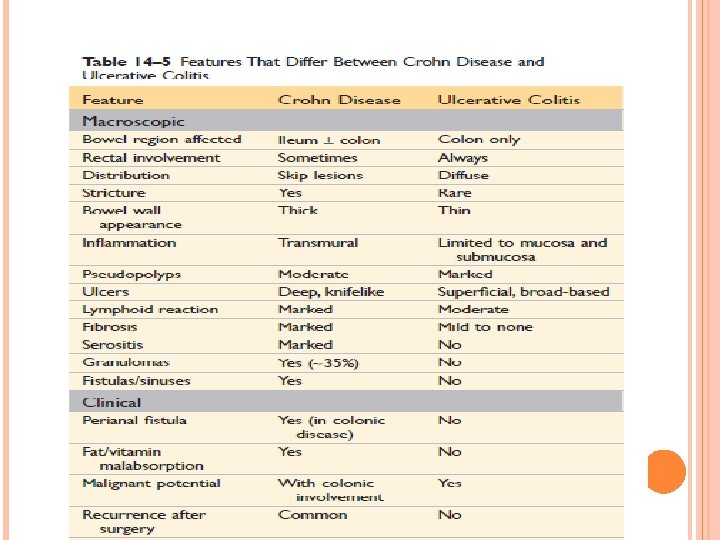
INFLAMMATORY BOWEL DISEASE Inflammatory bowel disease (IBD) is a chronic condition resulting from inappropriate mucosal immune activation. IBD encompasses two major entities, Crohn disease and ulcerative colitis. � � The distinction between ulcerative colitis and Crohn disease is based, in large part, on the distribution of affected sites and the morphologic expression of disease at those site. � Ulcerative colitis is limited to the colon and rectum and extends only into the mucosa and submucosa. By contrast, Crohn disease, which also has been referred to as regional enteritis (because of frequent ileal involvement), may involve any area of the gastrointestinal tract and frequently is transmural.
EPIDEMIOLOGY � Both Crohn disease and ulcerative colitis are more common in females and frequently present during adolescence or in young adults. � Geographic variation. � Hygiene hypothesis: childhood exposure to environmental microbes prevents excessive immune system reactions. Firm evidence is lacking!!!.
PATHOGENESIS � The cause(s) of IBD remains uncertain. �Combined effects. �Genetic factors. �Alterations in host interactions with intestinal microbiota �Intestinal epithelial dysfunction. �Aberrant mucosal immune responses �Altered composition of the gut microbiome.
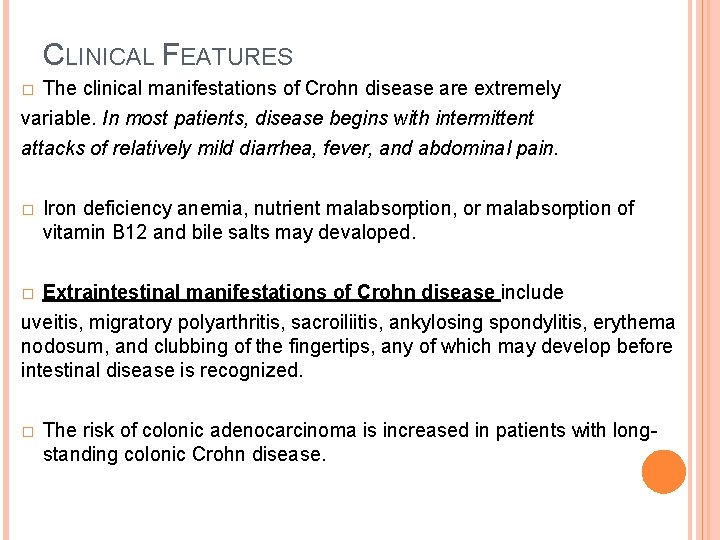
MORPHOLOGY OF CROHN DISEASE � The most common sites involved by Crohn disease at presentation are the terminal ileum, ileocecal valve, and cecum. � The presence of multiple, separate, sharply delineated areas of disease, resulting in skip lesions, is characteristic of Crohn disease. Strictures are common. Sparing of interspersed mucosa results in a coarsely textured, cobblestone appearance in which diseased tissue is depressed below the level of normal mucosa. Fissures frequently develop between mucosal folds and may extend deeply to become sites of perforation or fistula tracts. The intestinal wall is thickened. . In cases with extensive transmural disease, mesenteric fat frequently extends around the serosal surface (creeping fat). � � �
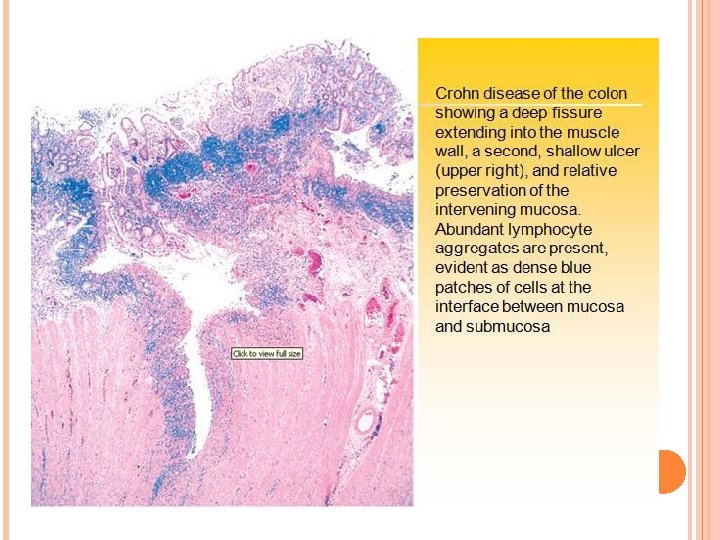
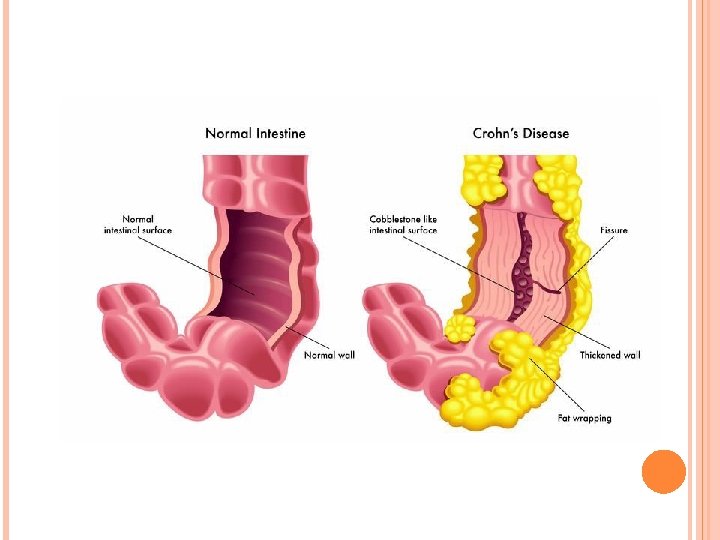
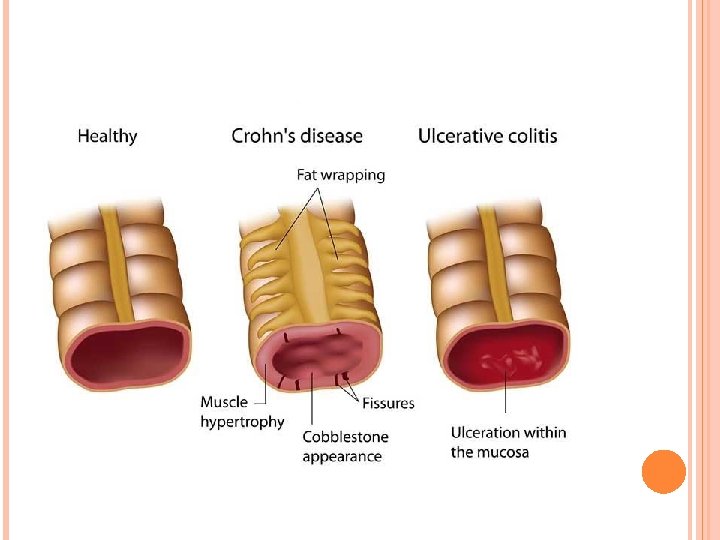

COBBLESTONE APPEARANCE
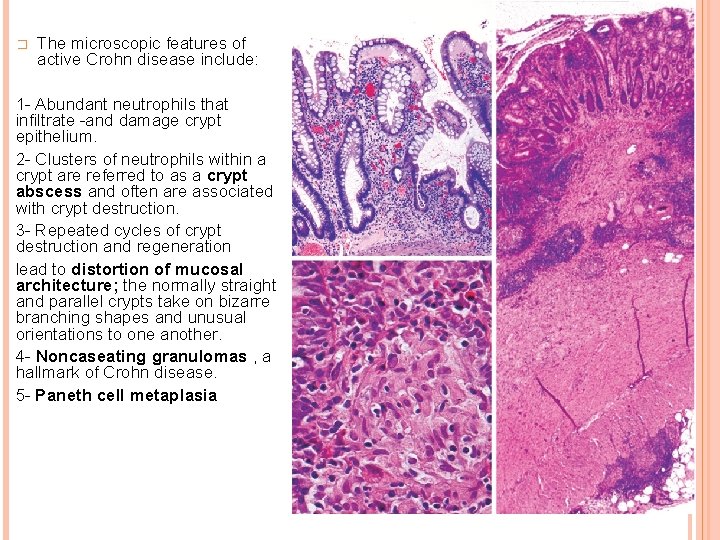
� The microscopic features of active Crohn disease include: 1 - Abundant neutrophils that infiltrate -and damage crypt epithelium. 2 - Clusters of neutrophils within a crypt are referred to as a crypt abscess and often are associated with crypt destruction. 3 - Repeated cycles of crypt destruction and regeneration lead to distortion of mucosal architecture; the normally straight and parallel crypts take on bizarre branching shapes and unusual orientations to one another. 4 - Noncaseating granulomas , a hallmark of Crohn disease. 5 - Paneth cell metaplasia
CLINICAL FEATURES The clinical manifestations of Crohn disease are extremely variable. In most patients, disease begins with intermittent � attacks of relatively mild diarrhea, fever, and abdominal pain. � Iron deficiency anemia, nutrient malabsorption, or malabsorption of vitamin B 12 and bile salts may devaloped. Extraintestinal manifestations of Crohn disease include uveitis, migratory polyarthritis, sacroiliitis, ankylosing spondylitis, erythema nodosum, and clubbing of the fingertips, any of which may develop before intestinal disease is recognized. � � The risk of colonic adenocarcinoma is increased in patients with longstanding colonic Crohn disease.
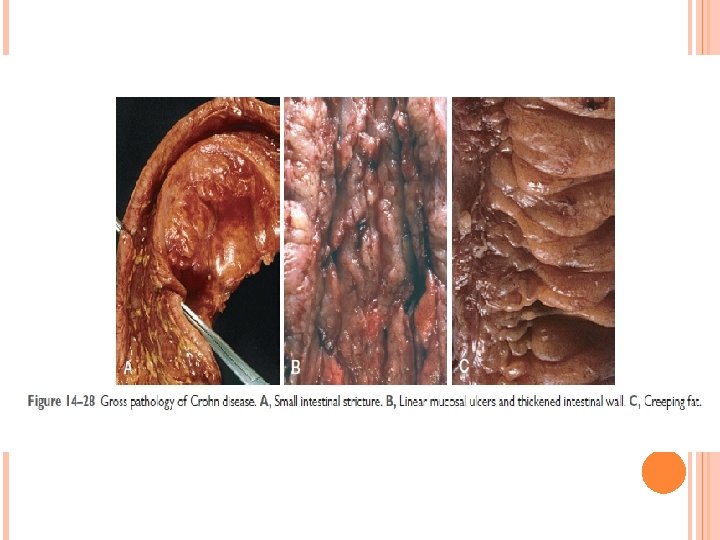
ULCERATIVE COLITIS � Ulcerative colitis is closely related to Crohn disease. � However, ulcerative colitis is limited to the colon and rectum. � Some extraintestinal manifestations of ulcerative colitis overlap with those of Crohn disease, including migratory polyarthritis, sacroiliitis, ankylosing spondylitis, uveitis, skin lesions, pericholangitis, and primary sclerosing cholangitis.
MORPHOLOGY �Always involves the rectum �Extends proximally in continuous pattern. �Pan colitis. �Occasionally focal appendiceal or cecal inflammation. �Ulcerative proctitis or ulcerative proctosigmoiditis �Small intestine is normal (except in backwash ileitis)
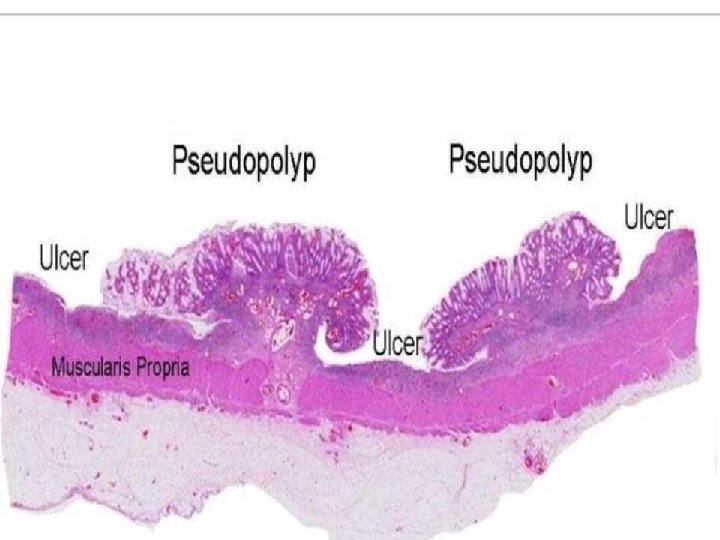
MACROSCOPIC: �Broad-based ulcers. �Pseudopolyps �Mucosal atrophy in long standing �Mural thickening absent �Serosal surface normal �No strictures �Toxic megacolon
�MICROSCOPIC: �Inflammatory infiltrates �Crypt abscesses �Crypt distortion �Epithelial metaplasia �Submucosal fibrosis �Inflammation limited to mucosa and submucosa. �No skip lesions �No granulomas.
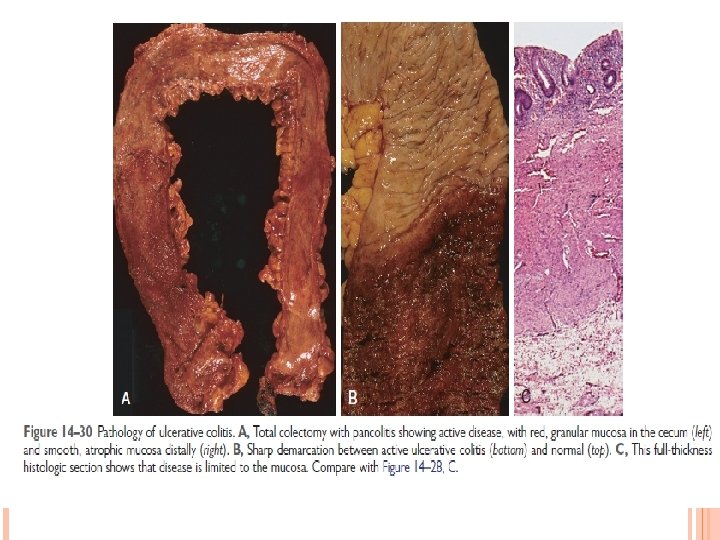

CRYPT ABCESSES.
CLINICAL FEATURES Ulcerative colitis is a relapsing disorder characterized by attacks of bloody diarrhea with expulsion of stringy, mucoid material and lower abdominal pain and cramps that are temporarily relieved by defecation. � These symptoms may persist for days, weeks, or months before they Subside. � � More than half of the patients have mild disease. � The factors that trigger ulcerative colitis are not known, but as noted previously, infectious enteritis precedes disease onset in some cases. � The initial onset of symptoms also has been reported to occur shortly after smoking cessation in some patients, and smoking may partially relieve symptoms.
ISCHEMIC BOWEL DISEASE Ischemic damage to the bowel wall can range from : � Mucosal infarction, extending no deeper than the muscularis mucosa. � Mural infarction of mucosa and submucosa. � Transmural infarction involving all three layers of the wall. � While mucosal or mural infarctions often are secondary to acute or chronic hypoperfusion, transmural infarction is generally caused by acute vascular obstruction.
Clinical Features � � Ischemic bowel disease tends to occur in older persons with coexisting cardiac or vascular disease. Acute transmural infarction typically manifests with sudden, severe abdominal pain and tenderness, sometimes accompanied by nausea, vomiting, bloody diarrhea, or grossly melanotic stool. � Peristaltic sounds diminish or disappear, and muscular spasm creates boardlike rigidity of the abdominal wall. � Mucosal and mural infarctions by themselves may not be fatal. However, these may progress to more extensive, in transmural infarction.
OTHER CAUSES • CMV infection. • Radiation enterocolitis. • Necrotizing enterocolitis. • Angiodysplasia is characterized by malformed submucosal and mucosal blood vessels.
- Slides: 32