
Diseases Objective Compare the different types of diseases
Diseases
Objective Compare the different types of diseases.

Diseases • A disease is a condition which damages or impairs the health of an organism. • Diseases can be classified into four groups: • • Nutritional deficiency diseases Physiological diseases Inherited diseases Infectious diseases
Nutritional deficiency diseases • These diseases are caused by a lack of one or more nutrient e. g. vitamins , minerals. • Nutritional diseases can be treated by eating foods rich in the nutrient that is missing or by taking supplements such as vitamin tablets. • They can be prevented by eating a balanced diet (all food groups in the correct amounts.
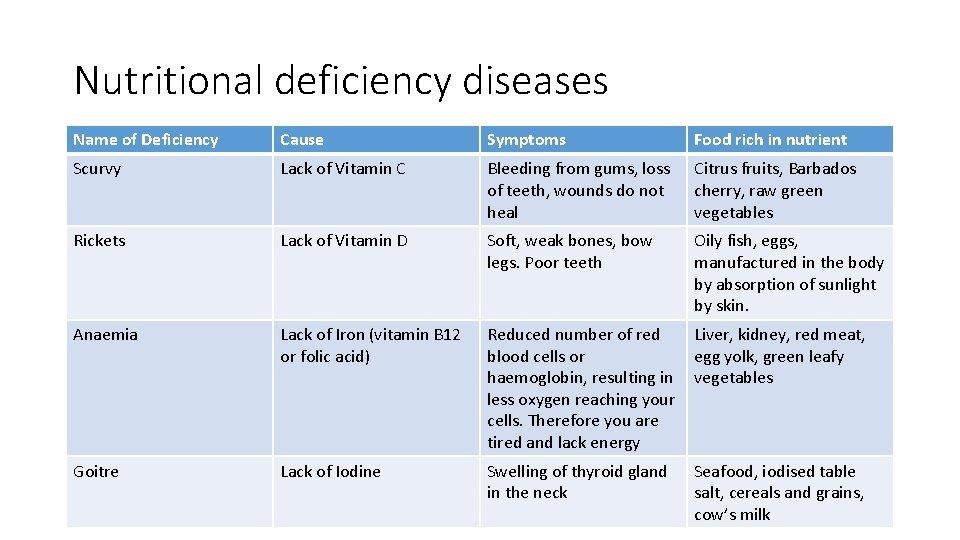
Nutritional deficiency diseases Name of Deficiency Cause Symptoms Food rich in nutrient Scurvy Lack of Vitamin C Bleeding from gums, loss of teeth, wounds do not heal Citrus fruits, Barbados cherry, raw green vegetables Rickets Lack of Vitamin D Soft, weak bones, bow legs. Poor teeth Oily fish, eggs, manufactured in the body by absorption of sunlight by skin. Anaemia Lack of Iron (vitamin B 12 or folic acid) Reduced number of red blood cells or haemoglobin, resulting in less oxygen reaching your cells. Therefore you are tired and lack energy Liver, kidney, red meat, egg yolk, green leafy vegetables Goitre Lack of Iodine Swelling of thyroid gland in the neck Seafood, iodised table salt, cereals and grains, cow’s milk
Physiological diseases • These involve the cells, tissues or organs of the body failing to function properly. • Physiological diseases include: • • • Asthma Diabetes Hypertention Stroke Glaucoma Cancer
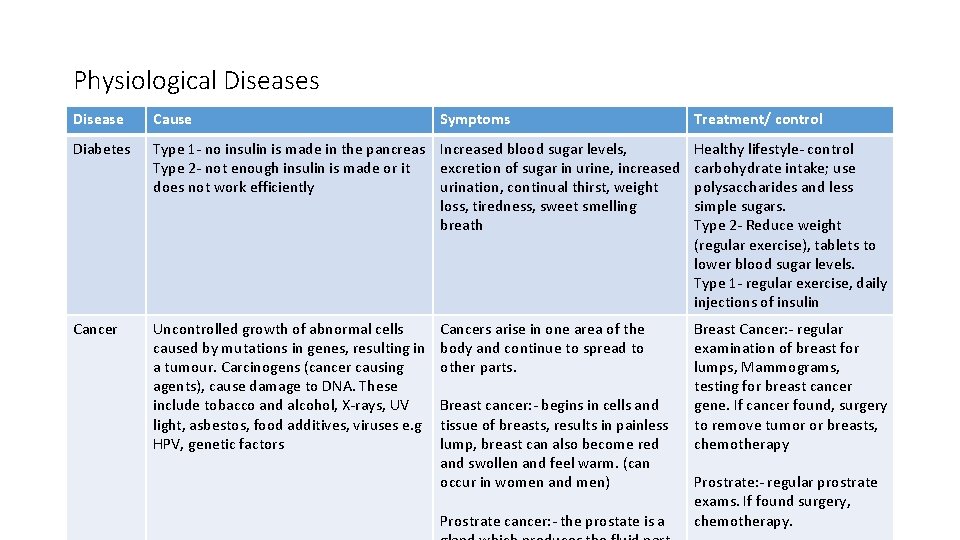
Physiological Diseases Disease Cause Symptoms Diabetes Type 1 - no insulin is made in the pancreas Increased blood sugar levels, Type 2 - not enough insulin is made or it excretion of sugar in urine, increased does not work efficiently urination, continual thirst, weight loss, tiredness, sweet smelling breath Healthy lifestyle- control carbohydrate intake; use polysaccharides and less simple sugars. Type 2 - Reduce weight (regular exercise), tablets to lower blood sugar levels. Type 1 - regular exercise, daily injections of insulin Cancer Uncontrolled growth of abnormal cells caused by mutations in genes, resulting in a tumour. Carcinogens (cancer causing agents), cause damage to DNA. These include tobacco and alcohol, X-rays, UV light, asbestos, food additives, viruses e. g HPV, genetic factors Breast Cancer: - regular examination of breast for lumps, Mammograms, testing for breast cancer gene. If cancer found, surgery to remove tumor or breasts, chemotherapy Cancers arise in one area of the body and continue to spread to other parts. Breast cancer: - begins in cells and tissue of breasts, results in painless lump, breast can also become red and swollen and feel warm. (can occur in women and men) Prostrate cancer: - the prostate is a Treatment/ control Prostrate: - regular prostrate exams. If found surgery, chemotherapy.
Inherited disorders • These are conditions passed on through families by defective genes. • They cannot be cured. • Sickle cell anaemia is an inherited disorder which results in the red blood cells having a sickle shape instead of the normal biconcave shape. • The sickle shaped cells carry little oxygen. • Symptoms include; joint and abdominal pain, high fever and jaundice. It can lead to weakness, wasting away (emaciation), kidney and heart failure. • Treatment & control: during crises patients can be given oxygen, drugs for pain and blood transfusions. They should avoid situations when oxygen supply is reduced. Genetic counselling can be done to determine the probability of passing disease to children.
Haemophilia • This is another genetic disorder. • Haemophiliacs bleed continually when cut because their blood does not clot due to a missing clotting factor. • These persons need to avoid injuries. If they are injured the must be treated with drugs or an artificial clotting factor.
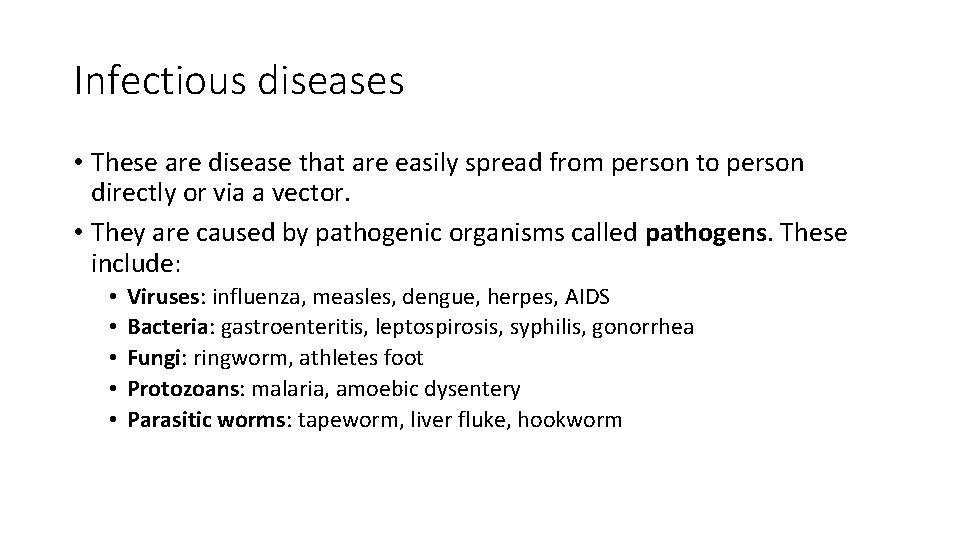
Infectious diseases • These are disease that are easily spread from person to person directly or via a vector. • They are caused by pathogenic organisms called pathogens. These include: • • • Viruses: influenza, measles, dengue, herpes, AIDS Bacteria: gastroenteritis, leptospirosis, syphilis, gonorrhea Fungi: ringworm, athletes foot Protozoans: malaria, amoebic dysentery Parasitic worms: tapeworm, liver fluke, hookworm
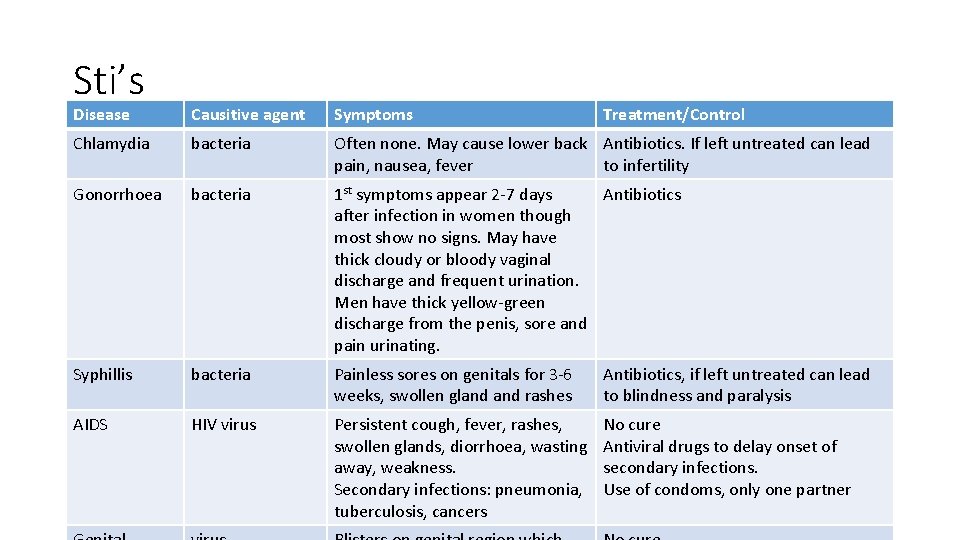
Sti’s Disease Causitive agent Symptoms Treatment/Control Chlamydia bacteria Often none. May cause lower back Antibiotics. If left untreated can lead pain, nausea, fever to infertility Gonorrhoea bacteria 1 st symptoms appear 2 -7 days Antibiotics after infection in women though most show no signs. May have thick cloudy or bloody vaginal discharge and frequent urination. Men have thick yellow-green discharge from the penis, sore and pain urinating. Syphillis bacteria Painless sores on genitals for 3 -6 weeks, swollen gland rashes Antibiotics, if left untreated can lead to blindness and paralysis AIDS HIV virus Persistent cough, fever, rashes, swollen glands, diorrhoea, wasting away, weakness. Secondary infections: pneumonia, tuberculosis, cancers No cure Antiviral drugs to delay onset of secondary infections. Use of condoms, only one partner
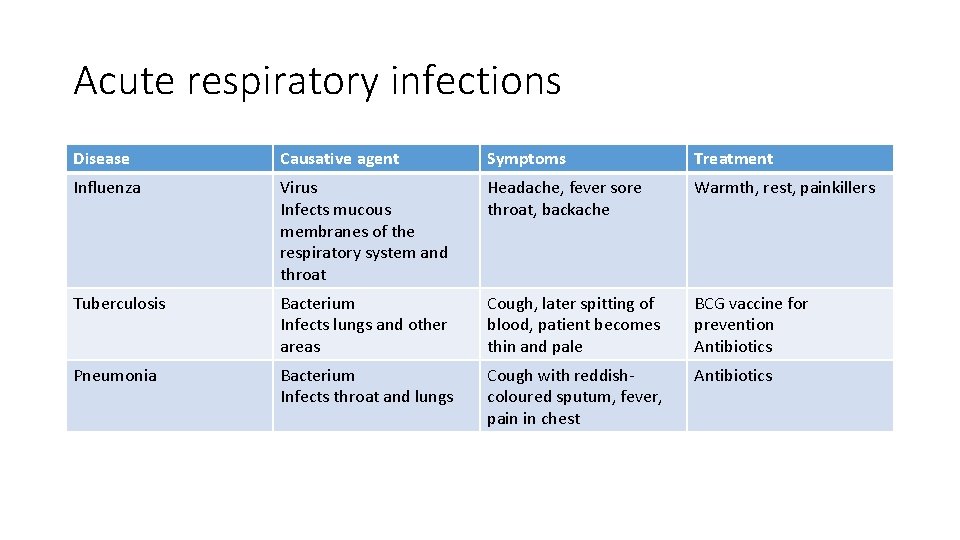
Acute respiratory infections Disease Causative agent Symptoms Treatment Influenza Virus Infects mucous membranes of the respiratory system and throat Headache, fever sore throat, backache Warmth, rest, painkillers Tuberculosis Bacterium Infects lungs and other areas Cough, later spitting of blood, patient becomes thin and pale BCG vaccine for prevention Antibiotics Pneumonia Bacterium Infects throat and lungs Cough with reddishcoloured sputum, fever, pain in chest Antibiotics
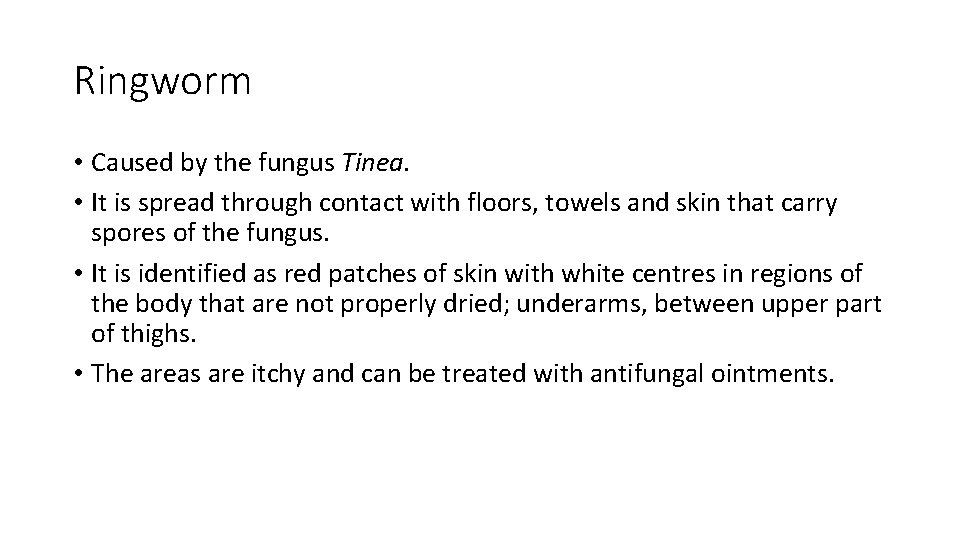
Ringworm • Caused by the fungus Tinea. • It is spread through contact with floors, towels and skin that carry spores of the fungus. • It is identified as red patches of skin with white centres in regions of the body that are not properly dried; underarms, between upper part of thighs. • The areas are itchy and can be treated with antifungal ointments.
Dengue fever and Malaria • These are two infectious diseases transmitted from person to person through a vector; the mosquito. • When the mosquito stings an infected person the blood of the infected person contains the pathogen. • The pathogen replicates inside the mosquito but does not harm it. • However when the mosquito goes to sting another person, it injects saliva to prevent the persons blood from clotting, which also introduces the pathogen into the person, who becomes infected.
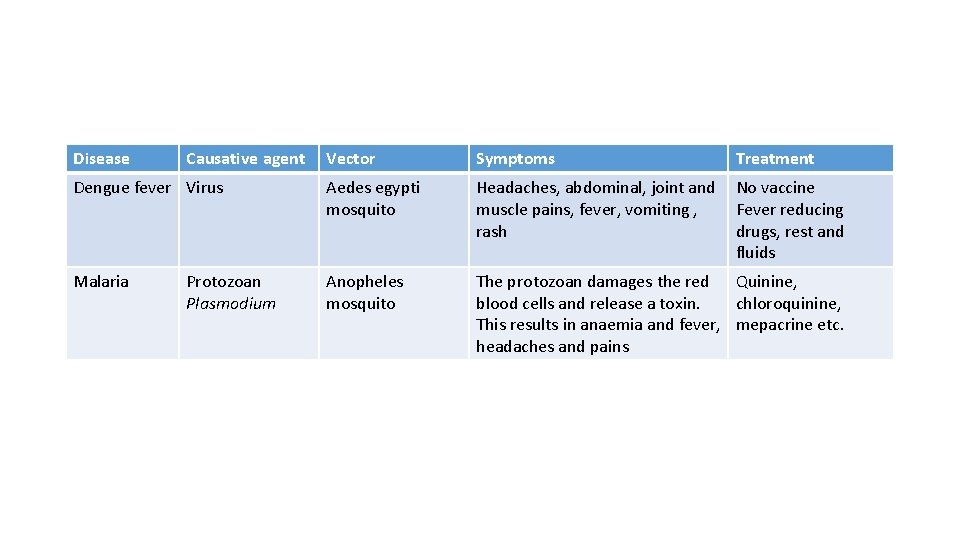
Disease Causative agent Vector Symptoms Treatment Dengue fever Virus Aedes egypti mosquito Headaches, abdominal, joint and muscle pains, fever, vomiting , rash No vaccine Fever reducing drugs, rest and fluids Malaria Anopheles mosquito The protozoan damages the red Quinine, blood cells and release a toxin. chloroquinine, This results in anaemia and fever, mepacrine etc. headaches and pains Protozoan Plasmodium

- Slides: 16