
Diseases Conditions and Syndromes of the Nervous System





- Slides: 22
Diseases, Conditions, and Syndromes of the Nervous System
Epilepsy 2003 -2004
Grand Mal Siezure 2003 -2004
Parkinson’s Disease 2003 -2004
Interview with Michael J. Fox 2003 -2004
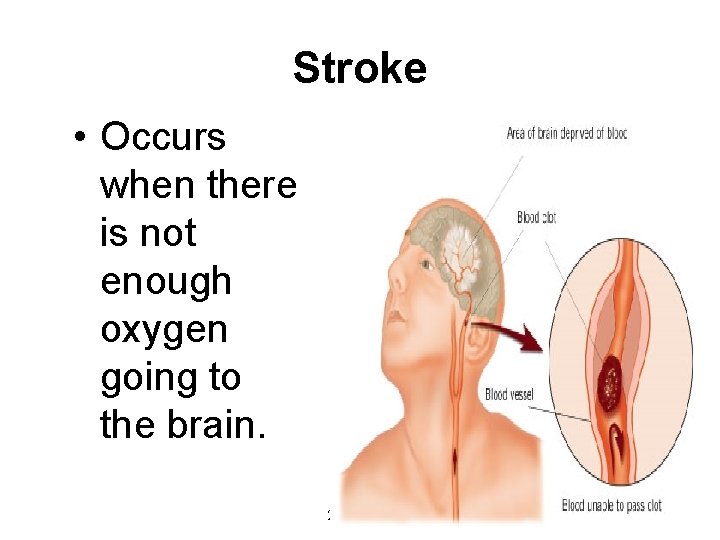
Stroke • Occurs when there is not enough oxygen going to the brain. 2003 -2004
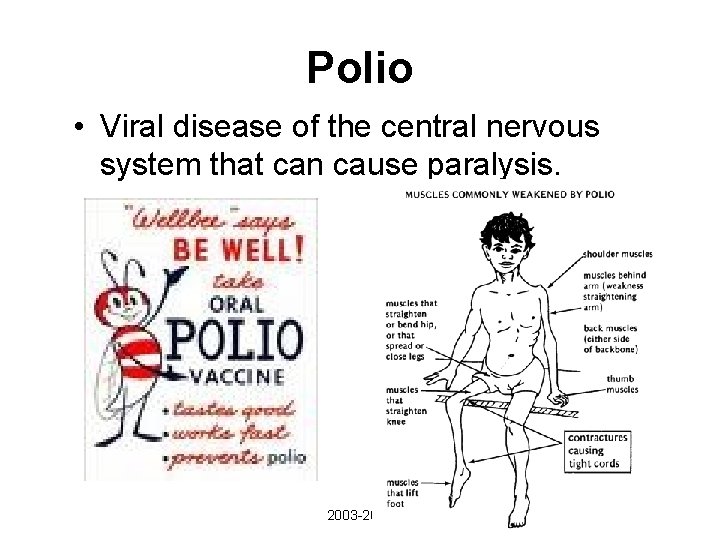
Polio • Viral disease of the central nervous system that can cause paralysis. 2003 -2004
Teacher- Collins Syndrome 2003 -2004
Juliana Whitmore 2003 -2004
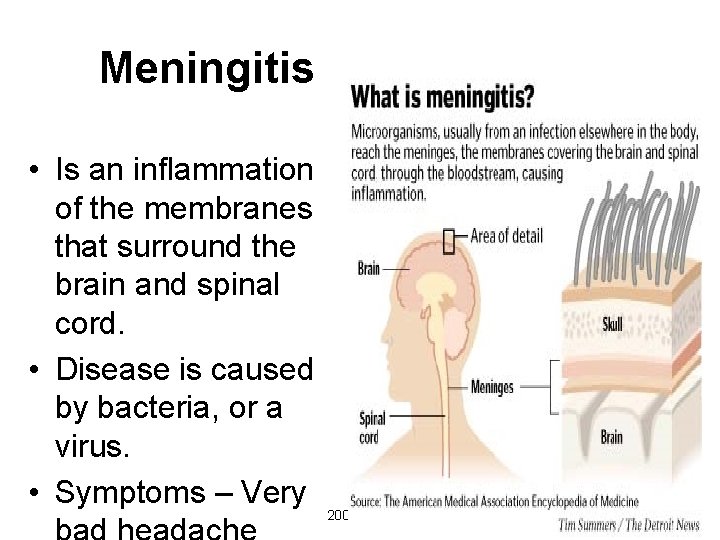
Meningitis • Is an inflammation of the membranes that surround the brain and spinal cord. • Disease is caused by bacteria, or a virus. • Symptoms – Very 2003 -2004
Tourettes Syndrome 2003 -2004
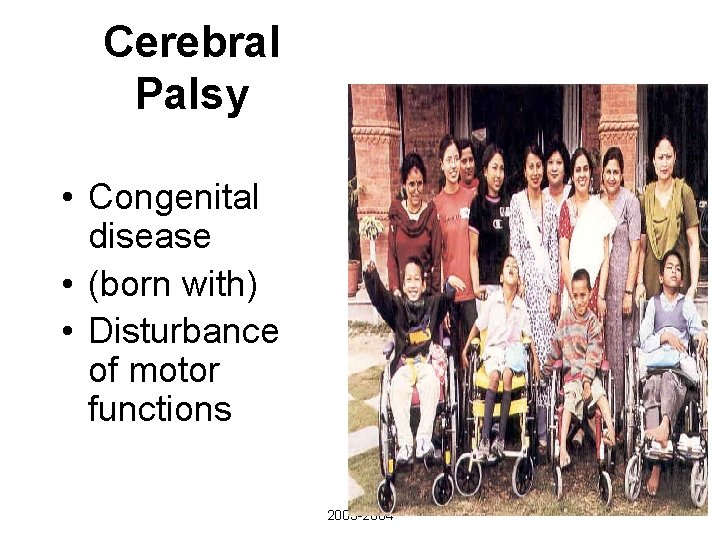
Cerebral Palsy • Congenital disease • (born with) • Disturbance of motor functions 2003 -2004
Autism Overview Autism is a developmental disorder that appears in the first 3 years of life, and affects the brain's normal development of social and communication skills. Symptoms Most parents of autistic children suspect that something is wrong by the time the child is 18 months old and seek help by the time the child is age 2. Children with autism typically have difficulties in: • Pretend play • Social interactions • Verbal and nonverbal communication • Be overly sensitive in sight, hearing, touch, smell, or taste (for example, they may refuse to wear "itchy" clothes and become distressed if they are forced to wear the clothes) • Have unusual distress when routines are changed • Perform repeated body movements • Show unusual attachments to objects
2003 -2004
2003 -2004
2003 -2004
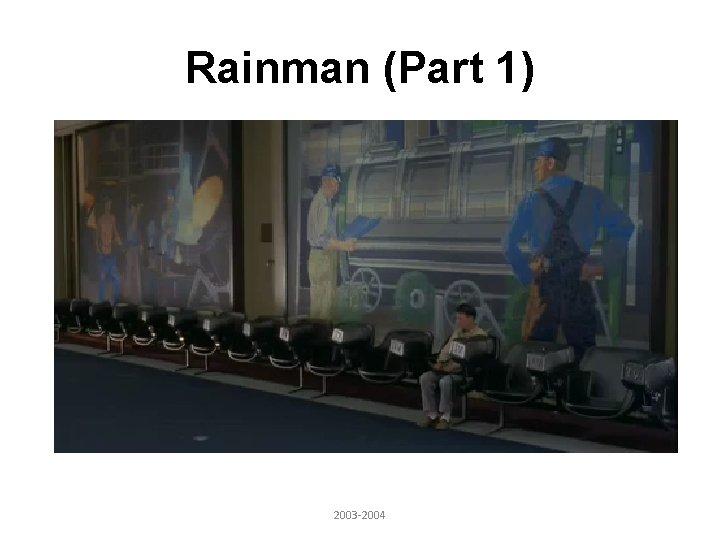
Rainman (Part 1) 2003 -2004
Rainman (Part 2) 2003 -2004
Kim Peek- the “Real Rainman” 1 2003 -2004
Kim Peek- 2 2003 -2004
Kim Peek- 3 2003 -2004
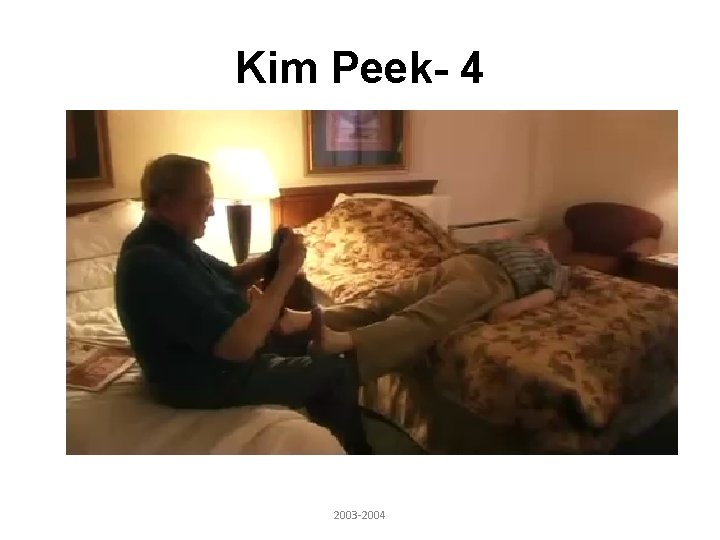
Kim Peek- 4 2003 -2004