
Diseases and Parasites of Beef Cattle Herd Health
Diseases and Parasites of Beef Cattle
Herd Health Plan • Needed to maintain the overall health of the herd • Key to success of the plan is the prevention of problems before they start
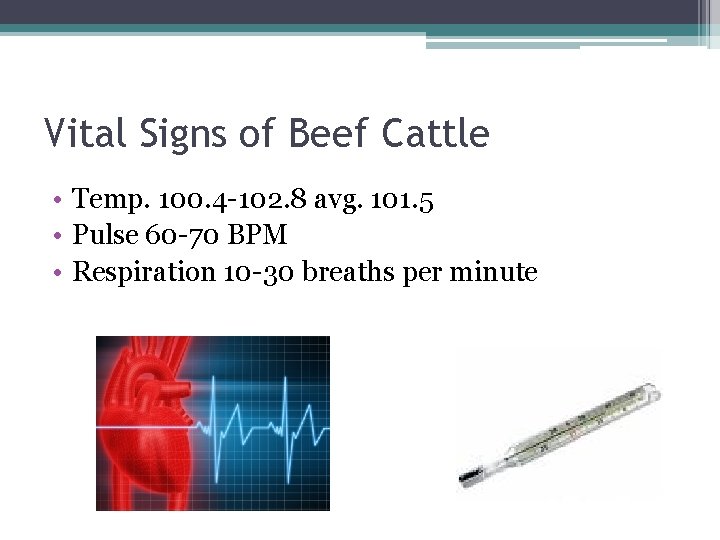
Vital Signs of Beef Cattle • Temp. 100. 4 -102. 8 avg. 101. 5 • Pulse 60 -70 BPM • Respiration 10 -30 breaths per minute
Diseases
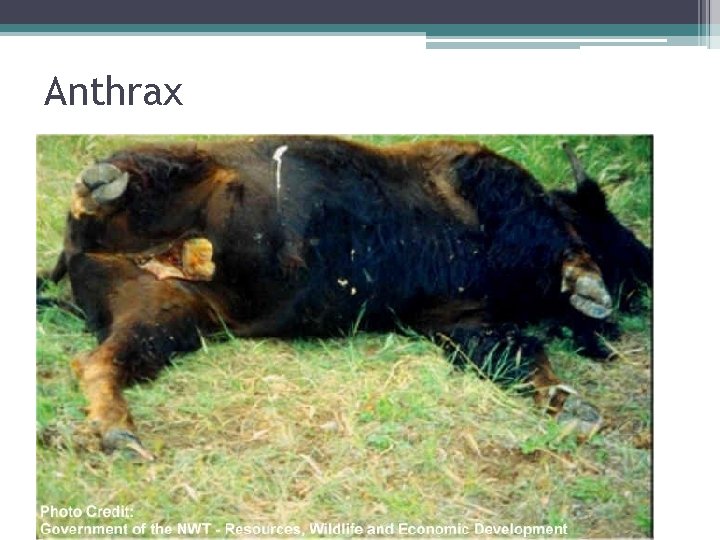
Anthrax • Caused by bacteria that may remain in the soil for 40 years or longer ▫ Bacteria only become active under certain conditions. • Infection results from grazing infected pastures. • Bacteria enter through the mouth, nose or open wounds. • Biting insects, such as horse flies, may spread the disease from one animal to another
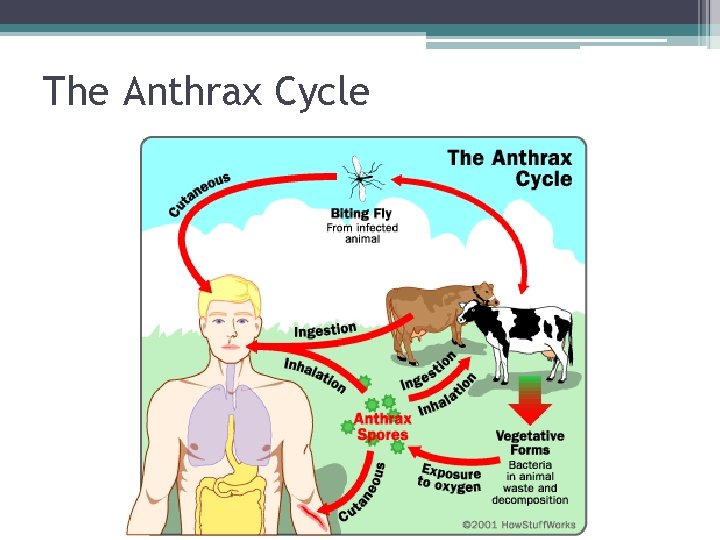
The Anthrax Cycle
Anthrax: Symptoms • Sudden death • Less acute symptoms ▫ ▫ ▫ High fever Sudden staggering Hard breathing Trembling Collapse • Death usually occurs within a few hours of symptoms
Anthrax: What do I do? • Carcasses of dead animals should be burned or buried and covered with quicklime ▫ Take care not to bury the animal near wells or streams. • Use care when handling carcasses as anthrax can be spread to people
Anthrax: Prevention • Vaccines may be used to prevent anthrax • In areas where it is a problem vaccination should occur yearly
Anthrax
Blackleg • Caused by bacteria that grow only in the absence of oxygen • Young animals are more commonly affected
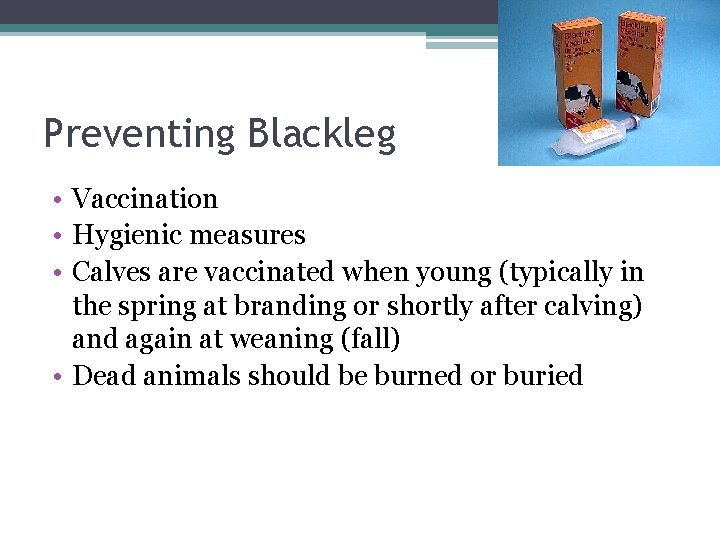
Preventing Blackleg • Vaccination • Hygienic measures • Calves are vaccinated when young (typically in the spring at branding or shortly after calving) and again at weaning (fall) • Dead animals should be burned or buried
Bovine Virus Diarrhea (BVD) • May appear in mild, acute & chronic forms • Spreads by contact Mild BVD • Often no symptoms • If they are present: ▫ ▫ ▫ Fever Coughing Discharge from the nose Slow gains Rapid breathing Mild diarrhea • Animals that have had the mild form of the
Acute BVD • Fever • Difficult breathing • Discharges from the nose and mouth • Possible lameness • Dehydration • Weight loss • Diarrhea after 3 -7 days • Pregnant animals may abort if the disease is contracted with in the first 2 months of pregnancy • Fetus may suffer in later stages of pregnancy ▫ Brain damage ▫ Hairlessness ▫ Underdeveloped lungs
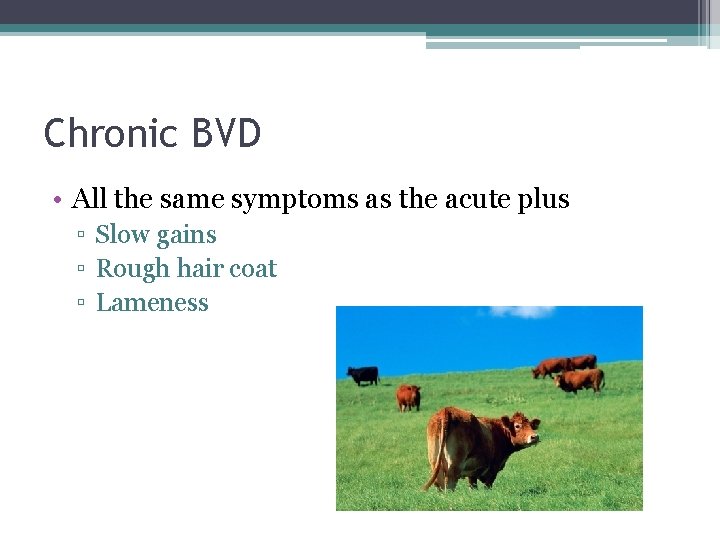
Chronic BVD • All the same symptoms as the acute plus ▫ Slow gains ▫ Rough hair coat ▫ Lameness
Preventing BVD • Modified live virus vaccine used • Calves are vaccinated between 1 day of age and 3 weeks before weaning • May be vaccinated when upon arrival in the feedlot ▫ They should not be vaccinated at the feedlot if they were vaccinated as calves • Pregnant cattle should not be vaccinated • Adult cattle should only be vaccinated ▫ After calving ▫ At least 3 weeks before breeding ▫ 1 vaccination will give immunity for the productive life of the animal • Replacement heifers should be vaccinated between 9 & 12 months of age but not during the last 3 weeks before breeding • There is no cure for BVD
Brucellosis • Caused by microorganisms • Causes heavy economic losses • Dangerous to humans—the germs that cause brucellosis cause undulant (Malta) fever
Brucellosis: Symptoms • Cattle abort during the last ½ of pregnancy • Infected cows retain the after birth (placenta) • Sterility in cows and bulls • Reduced milk flow in cows • Enlarged testicles in bulls • Calves born to infected cows may be weak
How Brucellosis Spreads • Bringing infected cattle into the herd • Fence line contact with infected animals • Aborted fetus’s that carry the Brucella organism being carried to other farms by dogs and other carnivorous animals • Calves being infected by their mothers • Cattle coming in contact with feed or water where the organism is present • Sniffing or licking an aborted fetus or calf from a cow that has the disease
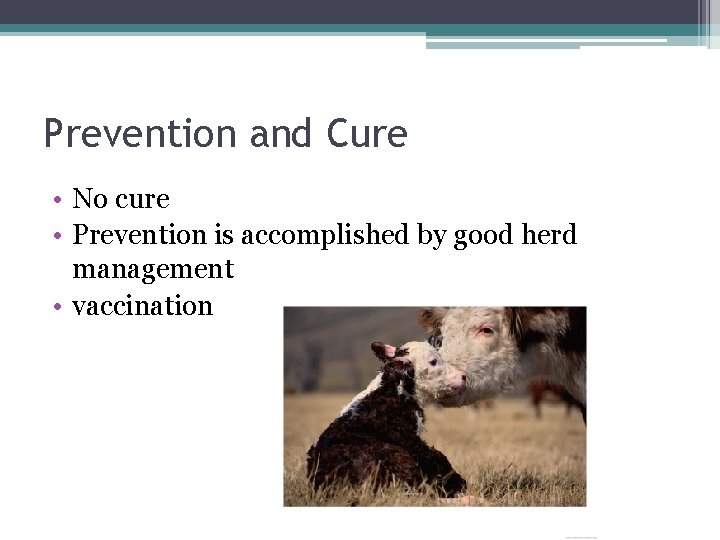
Prevention and Cure • No cure • Prevention is accomplished by good herd management • vaccination
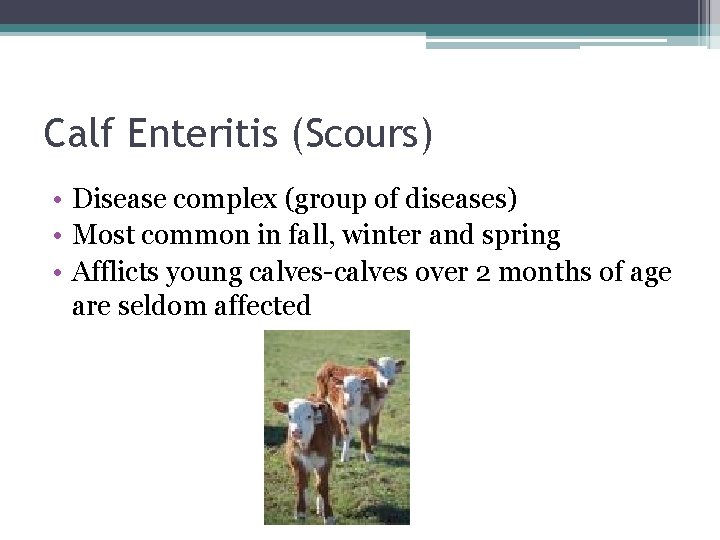
Calf Enteritis (Scours) • Disease complex (group of diseases) • Most common in fall, winter and spring • Afflicts young calves-calves over 2 months of age are seldom affected
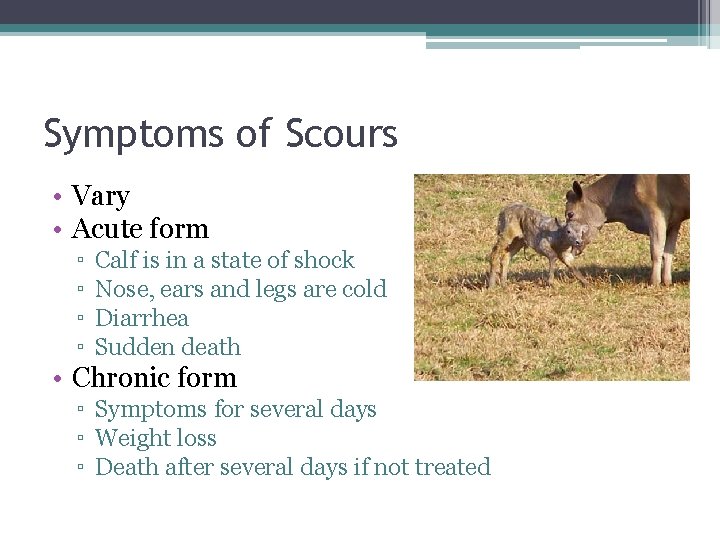
Symptoms of Scours • Vary • Acute form ▫ ▫ Calf is in a state of shock Nose, ears and legs are cold Diarrhea Sudden death • Chronic form ▫ Symptoms for several days ▫ Weight loss ▫ Death after several days if not treated
Preventing Scours • Sanitation is the most important factor! ▫ Clean barns ▫ Clean buckets for bucket calves • Calves need the first milk (colostrums) • Supplement the cows diet with Vitamin A before calving • Most common types of scours can be controlled by vaccines ▫ The dam is vaccinated at least 30 days before calving and passes the antibodies on to her calf
Foot Rot • Caused by a variety of bacteria, fungi and other organisms found in feedlots • They enter the body when the skin of the foot is broken ▫ Typically by sharp objects such as stones, nails, or wire • Muddy, manure filled feedlots only increase the problem
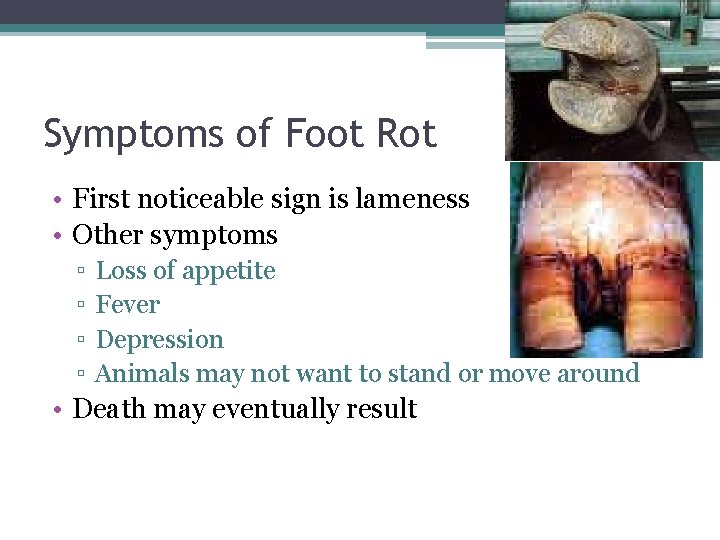
Symptoms of Foot Rot • First noticeable sign is lameness • Other symptoms ▫ ▫ Loss of appetite Fever Depression Animals may not want to stand or move around • Death may eventually result
Prevention • Sanitation and paved lots work best • Good drainage and mounds in the feedlot also help in eliminating conditions that encourage the disease. • Spreading lime and 5% blue vitriol around water tanks and feed bunks help in control. • vaccination
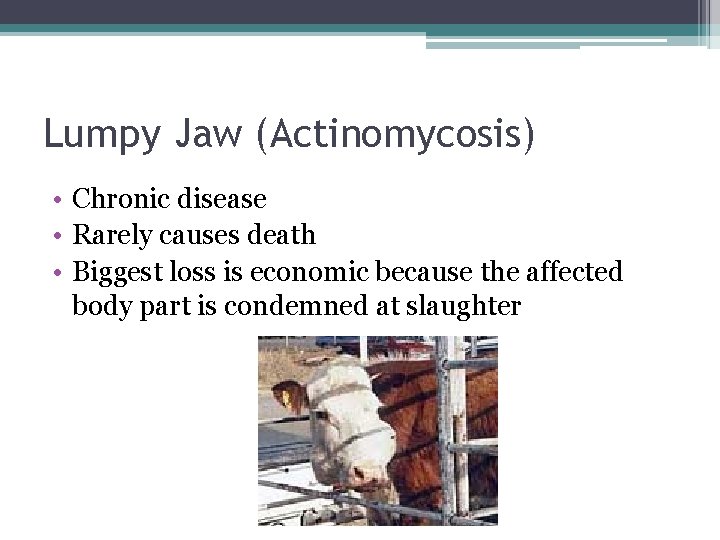
Lumpy Jaw (Actinomycosis) • Chronic disease • Rarely causes death • Biggest loss is economic because the affected body part is condemned at slaughter
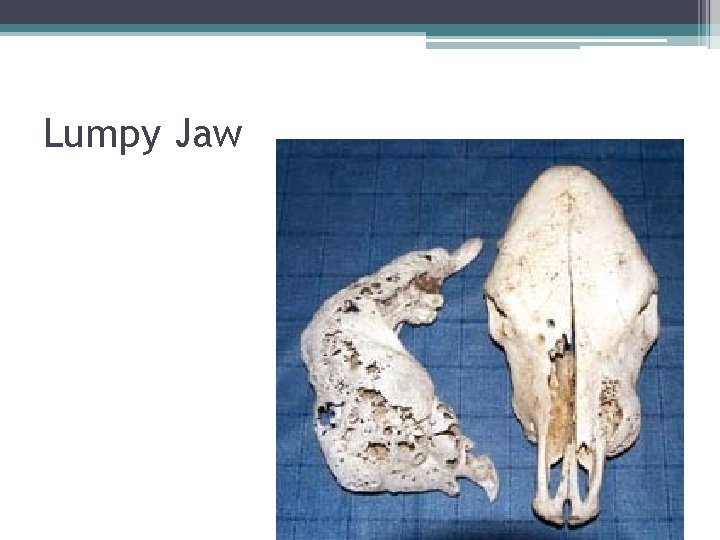
Lumpy Jaw
Symptoms of Lumpy Jaw • Affects the jaw and surrounding bony part of the head. Sometimes it will spread to the muscles and other internal organs. • Symptoms ▫ Tumors or lumps on the jaw. ▫ Loose teeth ▫ The jaw bone becomes spongy resulting in breathing problems. ▫ Weight loss due to difficulty eating
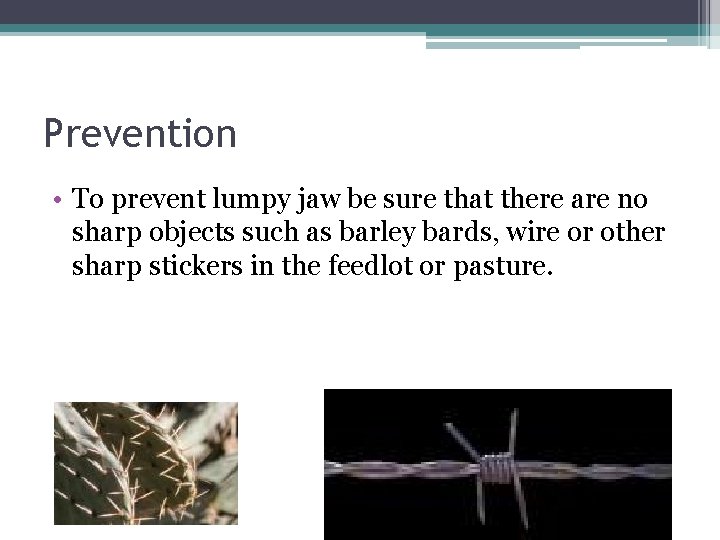
Prevention • To prevent lumpy jaw be sure that there are no sharp objects such as barley bards, wire or other sharp stickers in the feedlot or pasture.
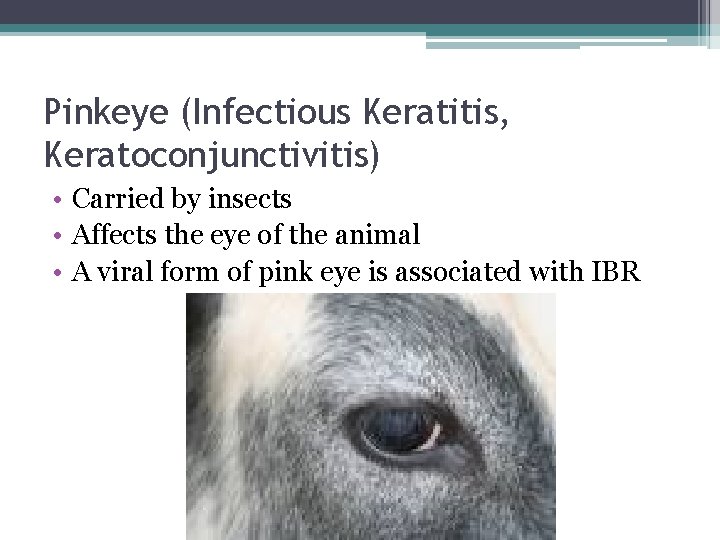
Pinkeye (Infectious Keratitis, Keratoconjunctivitis) • Carried by insects • Affects the eye of the animal • A viral form of pink eye is associated with IBR
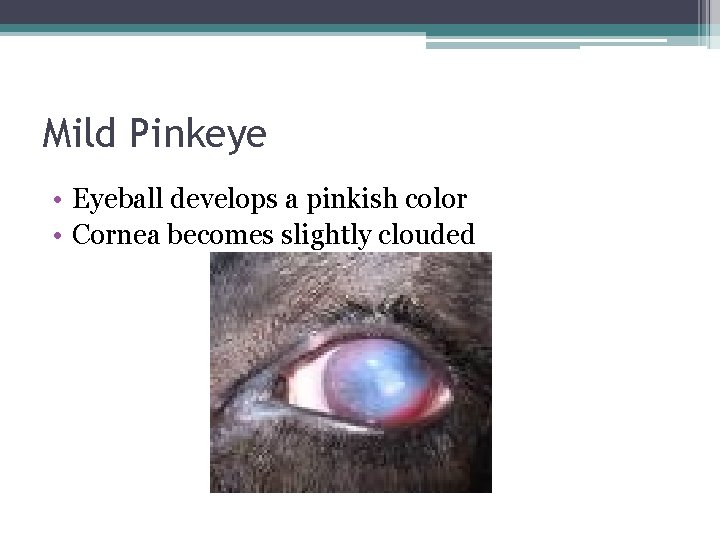
Mild Pinkeye • Eyeball develops a pinkish color • Cornea becomes slightly clouded
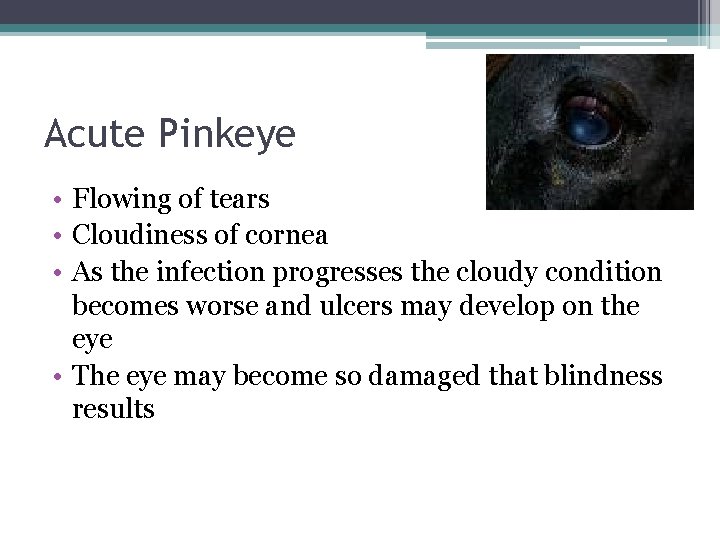
Acute Pinkeye • Flowing of tears • Cloudiness of cornea • As the infection progresses the cloudy condition becomes worse and ulcers may develop on the eye • The eye may become so damaged that blindness results
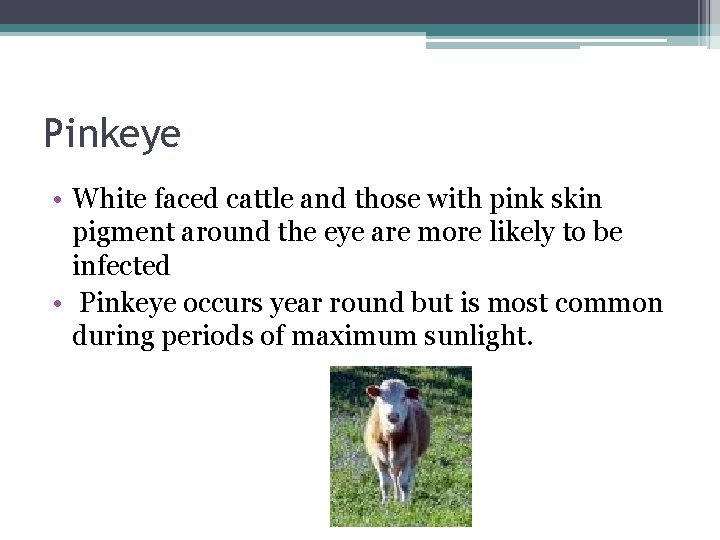
Pinkeye • White faced cattle and those with pink skin pigment around the eye are more likely to be infected • Pinkeye occurs year round but is most common during periods of maximum sunlight.
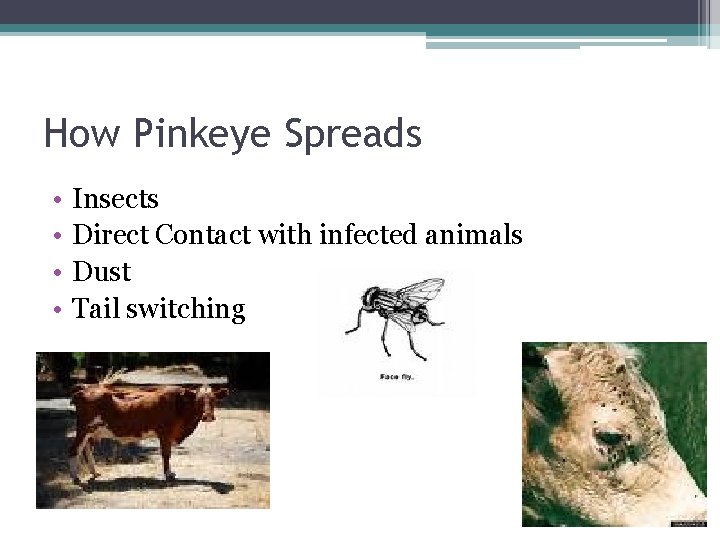
How Pinkeye Spreads • • Insects Direct Contact with infected animals Dust Tail switching
Controlling Pinkeye • Control flies and insects to prevent pinkeye • Vaccinations are available to control Moraxella bovis, the bacteria that is considered to be the main cause of pinkeye
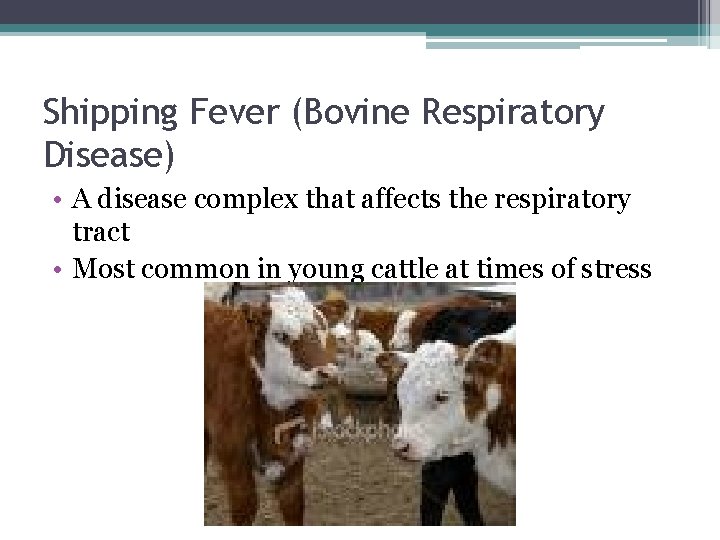
Shipping Fever (Bovine Respiratory Disease) • A disease complex that affects the respiratory tract • Most common in young cattle at times of stress
Stresses • • Moving cattle from range to the feedlot Extremes of heat or cold Exhaust fumes Hunger Fright Rough handling All these things allow bacteria and organisms already present to attack the respiratory tract
Symptoms • Vary from mild to acute • Early symptom is fever • Animal appears depressed with it’s head down and eyes closed • Drooping ears • Discharge from the nose • Watery eyes • Loss of appetite • • Diarrhea Weight loss Difficult breathing Coughing Pneumonia Possibly death If the animal recovers it will be slow to gain
Preventing Shipping Fever • Vaccination may be used. • Vaccination should occur after 4 mo. of age • The best time to vaccinate is 3 -4 weeks before the animal is exposed to the conditions that lead to the disease • Reducing stress and exposure also help in prevention • Good feedlot management and careful handling of new cattle helps reduce shipping fever.
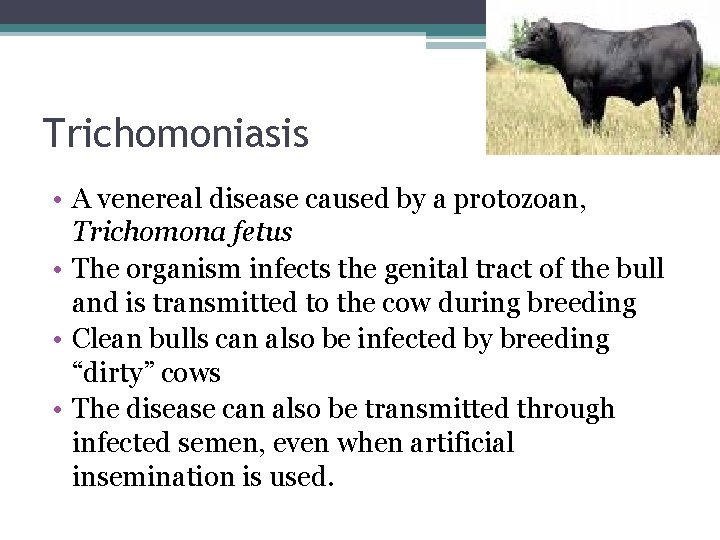
Trichomoniasis • A venereal disease caused by a protozoan, Trichomona fetus • The organism infects the genital tract of the bull and is transmitted to the cow during breeding • Clean bulls can also be infected by breeding “dirty” cows • The disease can also be transmitted through infected semen, even when artificial insemination is used.
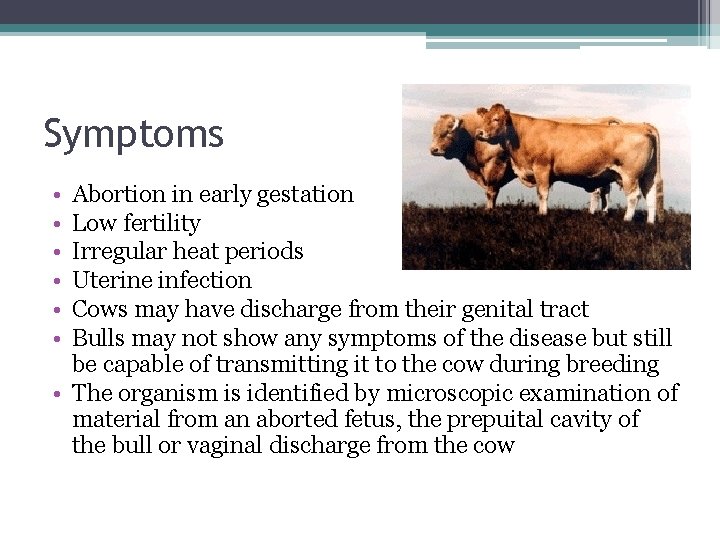
Symptoms • • • Abortion in early gestation Low fertility Irregular heat periods Uterine infection Cows may have discharge from their genital tract Bulls may not show any symptoms of the disease but still be capable of transmitting it to the cow during breeding • The organism is identified by microscopic examination of material from an aborted fetus, the prepuital cavity of the bull or vaginal discharge from the cow
Prevention • • • No treatment or vaccination Infected bulls should be slaughtered Use only clean bulls on clean cows Test bulls to ensure they are free of the disease Use semen from clean bulls
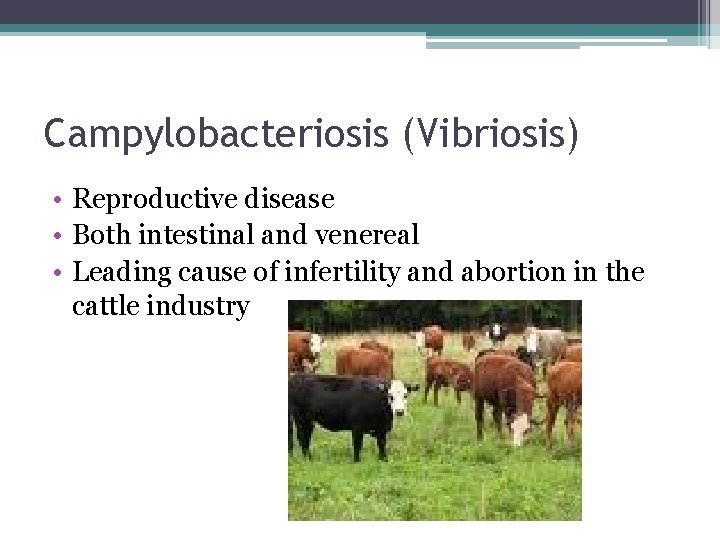
Campylobacteriosis (Vibriosis) • Reproductive disease • Both intestinal and venereal • Leading cause of infertility and abortion in the cattle industry
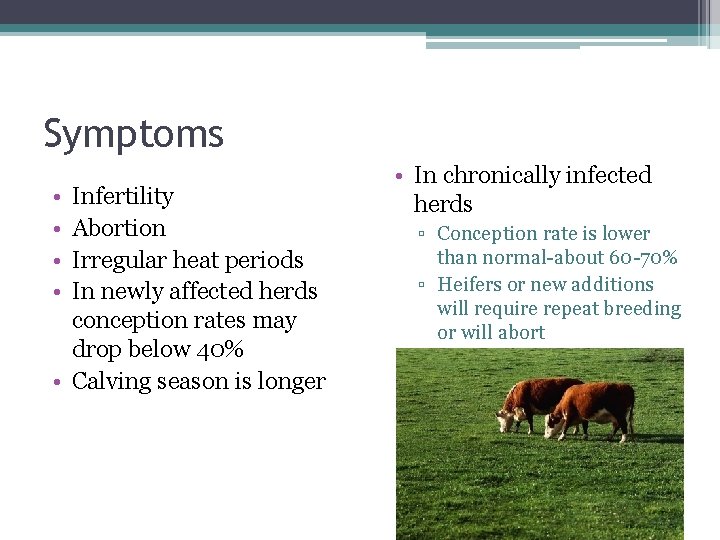
Symptoms • • Infertility Abortion Irregular heat periods In newly affected herds conception rates may drop below 40% • Calving season is longer • In chronically infected herds ▫ Conception rate is lower than normal-about 60 -70% ▫ Heifers or new additions will require repeat breeding or will abort
Prevention • Vaccinate animals 30 days prior to breeding ▫ Vaccination must be repeated every year • The disease is spread from infected bulls to clean cows • The use of AI helps in prevention because the semen used for AI is treated with antibiotics to eliminate disease organisms.
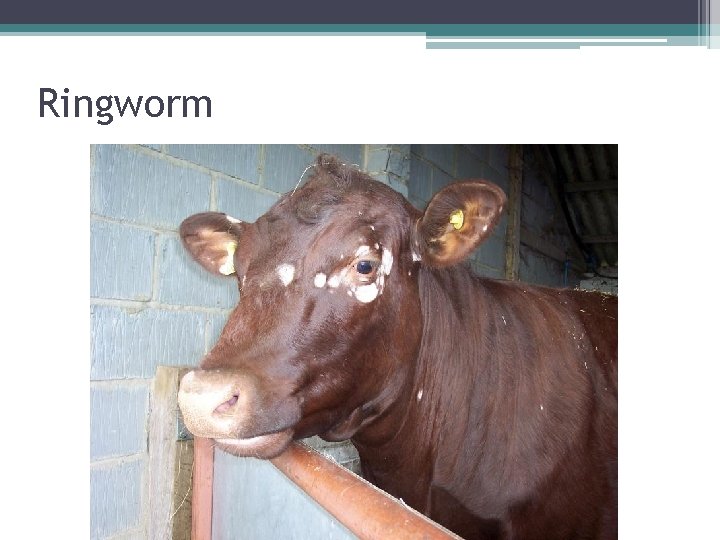
Ringworm • A contagious skin disease that can be spread to other animals and humans • Symptoms ▫ Round, scaly patches of skin that lack hair ▫ May appear on any part of the body • The affected area clears up but moves to another part of the body • Sanitation helps control ringworm • Isolate infected animals
Ringworm
Nutritional Health Problems
Bloat • Occurs when rapid fermentation in the rumen causes to much gas to be produced • The rumen swells and the animal can not get rid of the gas
Bloat • The major cause of bloat is eating to much green legume too fast • Feeding of high concentrate ration • Ways to prevent bloat ▫ Prevent animals from eating to much legume ▫ Feed grain, dry roughage or silage before turning animals onto legume pastures • Free access to water should be provided at all times
Acidosis • Sudden shift from high roughage to a high concentrate ration
Enterotoxaemia (Overeating Disease) • Usually affects cattle on high-concentrate rations • Symptoms ▫ Lameness ▫ Bloody diarrhea ▫ Bloat • The animal may die in 1 -24 hours • Vaccinating calves 2 weeks before putting them on high concentrate rations helps prevent overeating disease • Treatments ▫ Removing concentrates from the diet ▫ Feeding roughage ▫ Vaccinating Animals may gradually be put back on the high concentrate ration after vaccination.
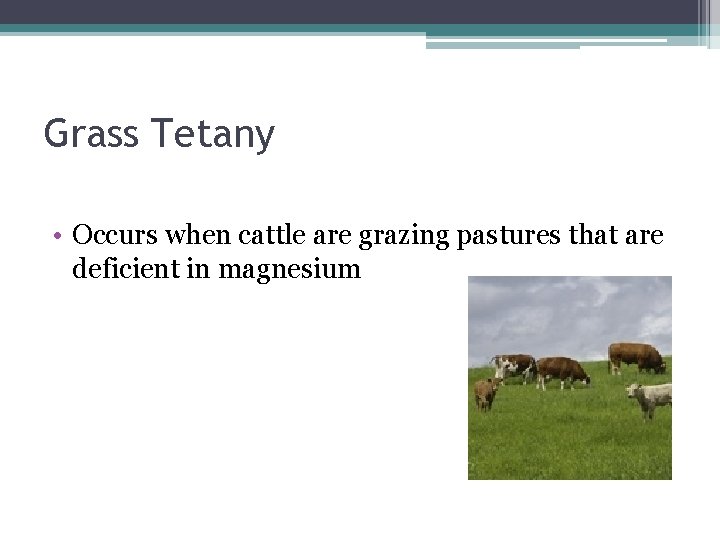
Grass Tetany • Occurs when cattle are grazing pastures that are deficient in magnesium
Symptoms • Early signs ▫ Excitement ▫ Loss of coordination ▫ Loss of appetite • Other signs ▫ ▫ Trembling muscles Convulsions Coma Inability to stand • Death can occur quickly—sometimes within 30 minutes • Animals seldom recover if not treated within 8 -12 hours
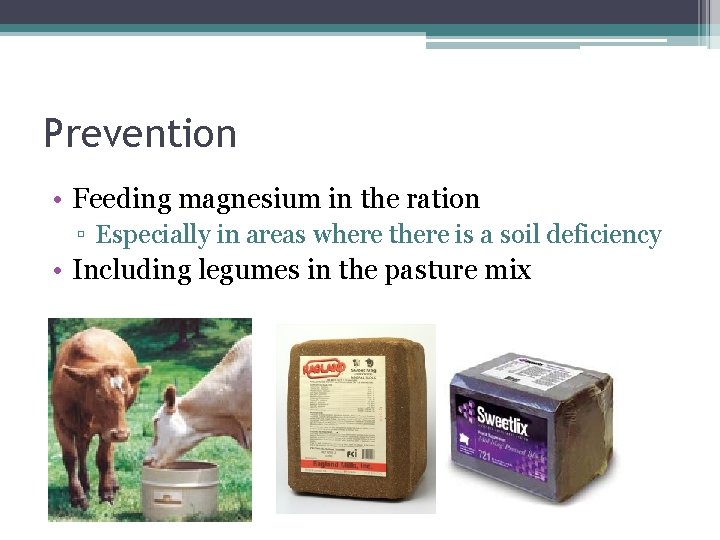
Prevention • Feeding magnesium in the ration ▫ Especially in areas where there is a soil deficiency • Including legumes in the pasture mix
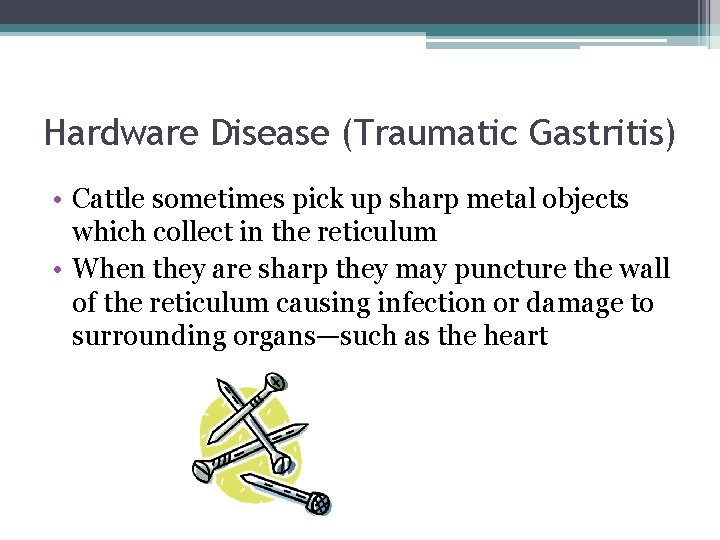
Hardware Disease (Traumatic Gastritis) • Cattle sometimes pick up sharp metal objects which collect in the reticulum • When they are sharp they may puncture the wall of the reticulum causing infection or damage to surrounding organs—such as the heart
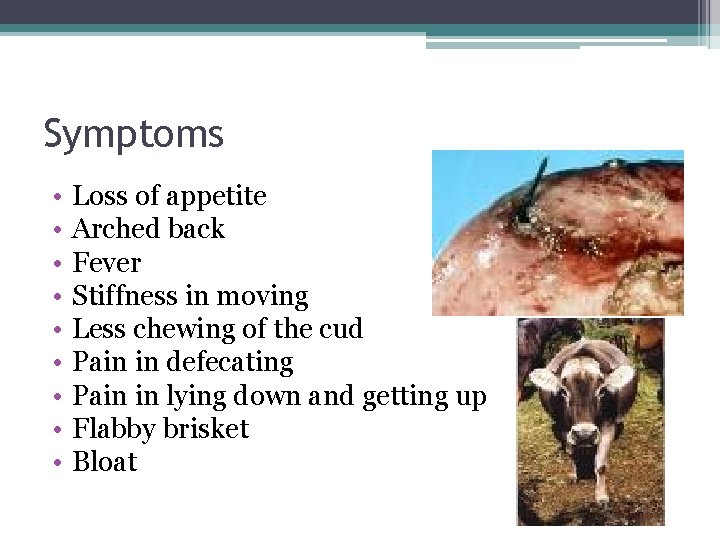
Symptoms • • • Loss of appetite Arched back Fever Stiffness in moving Less chewing of the cud Pain in defecating Pain in lying down and getting up Flabby brisket Bloat
Prevention ▫ Ensuring metal objects do not accidentally become mixed in feed ▫ Keeping loose wire, nails, and other sharp objects cleaned up in areas where cattle are
White Muscle (Selenium Deficiency) • Occurs when cattle are fed in areas where there is a deficiency of the trace element selenium in soil • Muscle damage results • The animal may have difficulty walking, breathing or may die of heart failure • Calves may be born dead or weak • Treatment and prevention consists of giving the animal selenium by injection or orally ▫ NOTE: to much selenium can be harmful as well.
Summary • Diseases and parasites reduce profits. • Good management and sanitation helps prevent health problems • Diseases are prevented by vaccination • Buying animals from disease free herds and isolating animals help in control programs • Controlling insects also helps in preventing the spread of disease.
Summary cont… • Insecticides are used to control insects—flies, lice, mites and ticks are the most common. • Sanitation is the most effective control for internal parasites. • Roundworms, flatworms, coccidia, anaplasma are the most common. Stomach worms are the most serious. • Good management and feeding programs help prevent nutritional health problems
- Slides: 62