
Disease Transmission Deer mouse spreads hantavirus Epidemiology Study

- Slides: 9
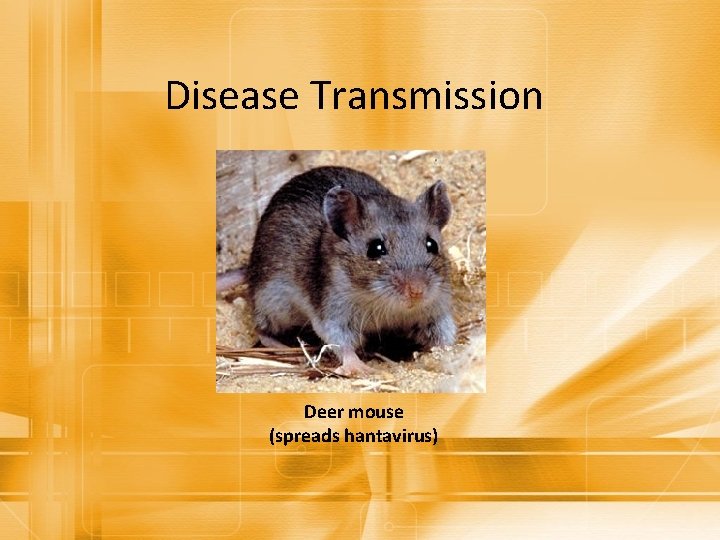
Disease Transmission Deer mouse (spreads hantavirus)
Epidemiology • Study of disease origin (where it started), cause (what organism), and transmission (how it spreads). • Incubation period: the period of time that elapses from the infection of the host to the appearance of symptoms. • Virulence: ability of a pathogen to cause disease
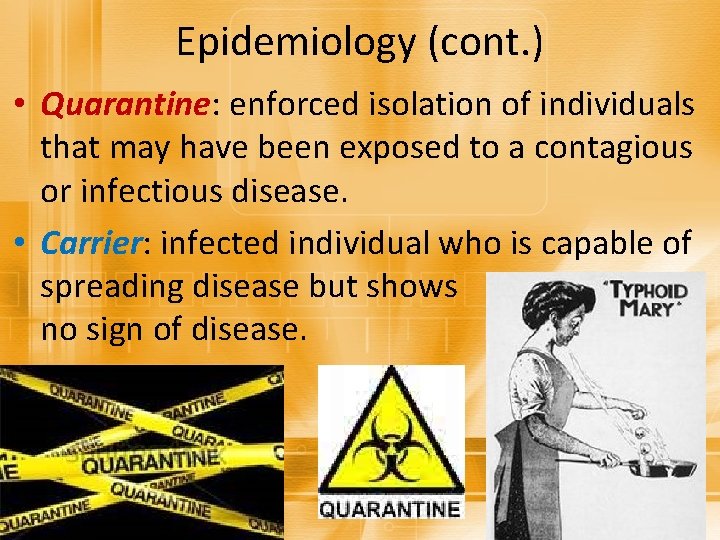
Epidemiology (cont. ) • Quarantine: enforced isolation of individuals that may have been exposed to a contagious or infectious disease. • Carrier: infected individual who is capable of spreading disease but shows no sign of disease.
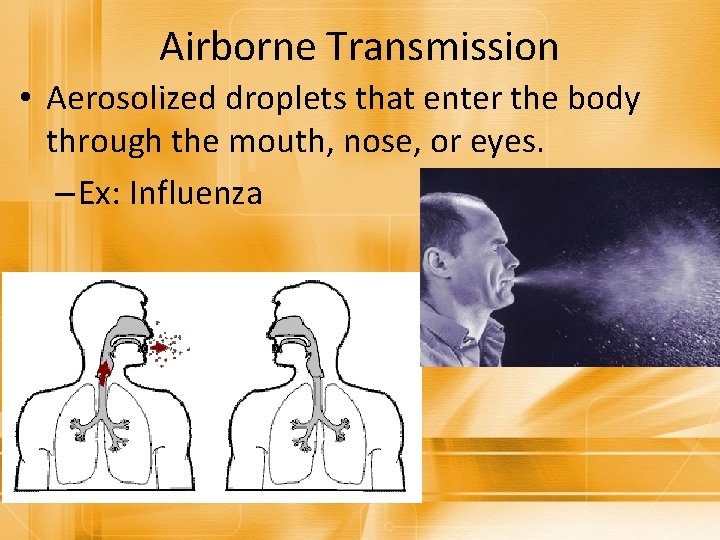
Airborne Transmission • Aerosolized droplets that enter the body through the mouth, nose, or eyes. – Ex: Influenza
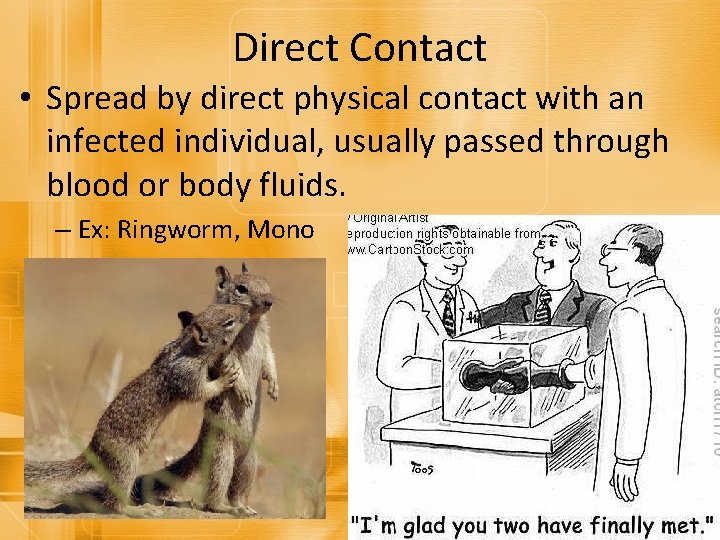
Direct Contact • Spread by direct physical contact with an infected individual, usually passed through blood or body fluids. – Ex: Ringworm, Mono
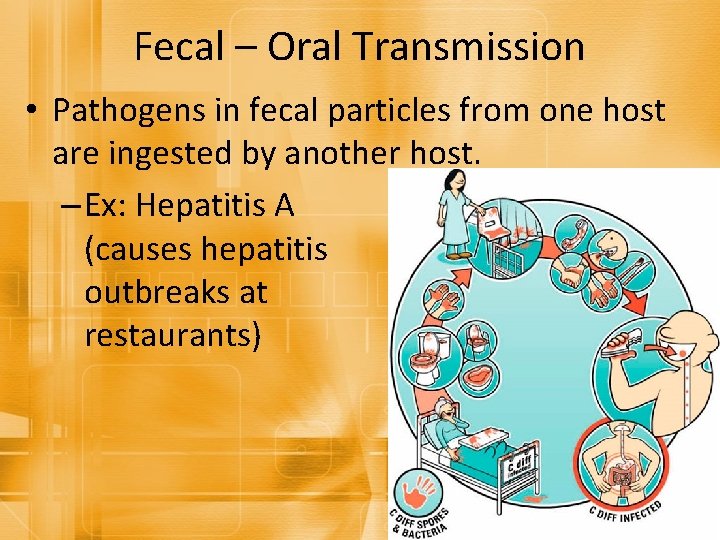
Fecal – Oral Transmission • Pathogens in fecal particles from one host are ingested by another host. – Ex: Hepatitis A (causes hepatitis outbreaks at restaurants)
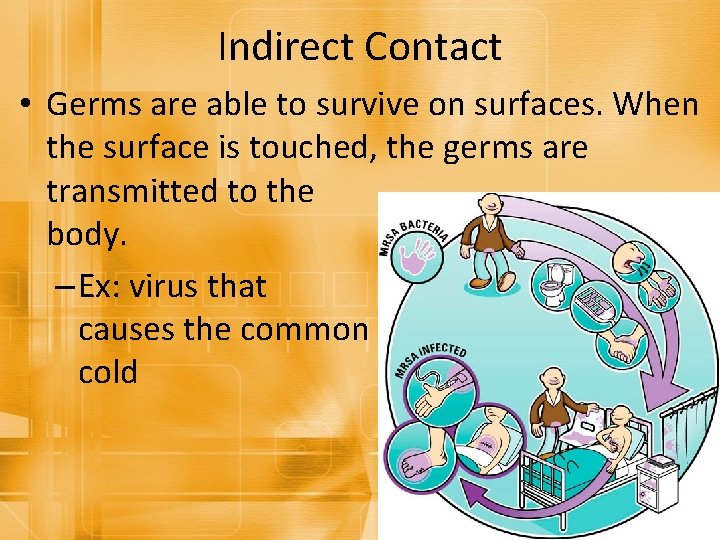
Indirect Contact • Germs are able to survive on surfaces. When the surface is touched, the germs are transmitted to the body. – Ex: virus that causes the common cold
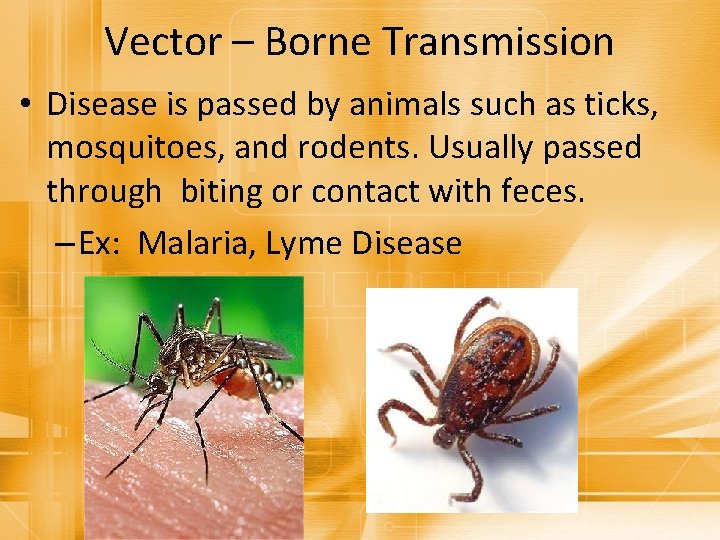
Vector – Borne Transmission • Disease is passed by animals such as ticks, mosquitoes, and rodents. Usually passed through biting or contact with feces. – Ex: Malaria, Lyme Disease