
Disease transmission Contracting Disease Direct Contact between an

Disease transmission
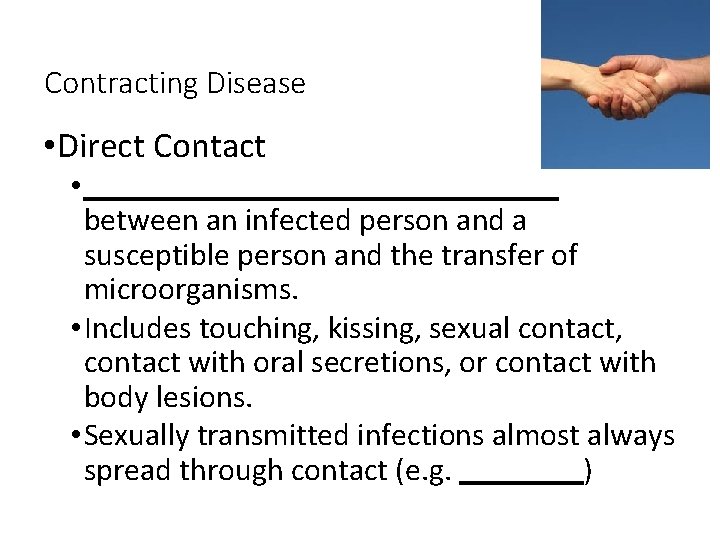
Contracting Disease • Direct Contact • between an infected person and a susceptible person and the transfer of microorganisms. • Includes touching, kissing, sexual contact, contact with oral secretions, or contact with body lesions. • Sexually transmitted infections almost always spread through contact (e. g. )

Contracting Disease • Indirect Contact • A susceptible person is infected from contact with a contaminated surface (e. g. Door knob, chairs, tables, washroom surfaces, etc). • Some microorganisms are capable of surviving on surfaces for an extended period of time (e. g. Norwalk virus)
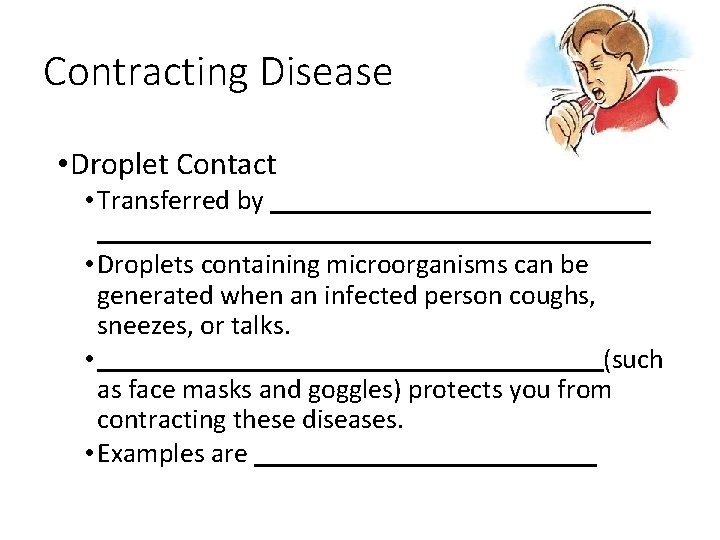
Contracting Disease • Droplet Contact • Transferred by • Droplets containing microorganisms can be generated when an infected person coughs, sneezes, or talks. • (such as face masks and goggles) protects you from contracting these diseases. • Examples are
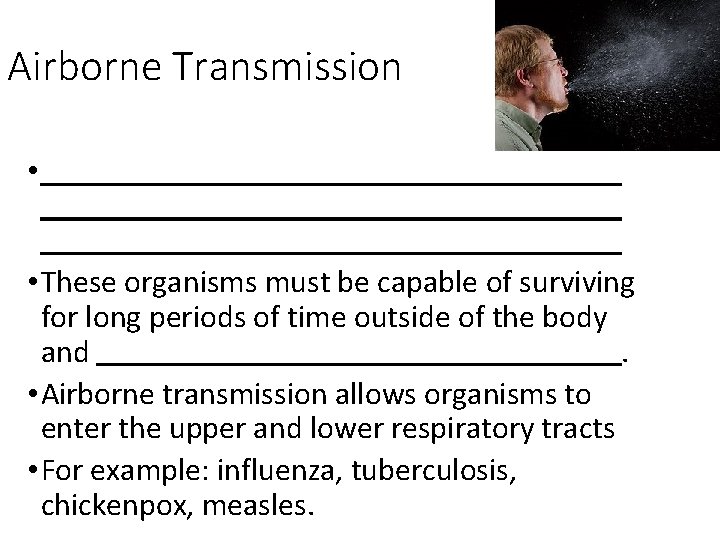
Airborne Transmission • • These organisms must be capable of surviving for long periods of time outside of the body and. • Airborne transmission allows organisms to enter the upper and lower respiratory tracts • For example: influenza, tuberculosis, chickenpox, measles.
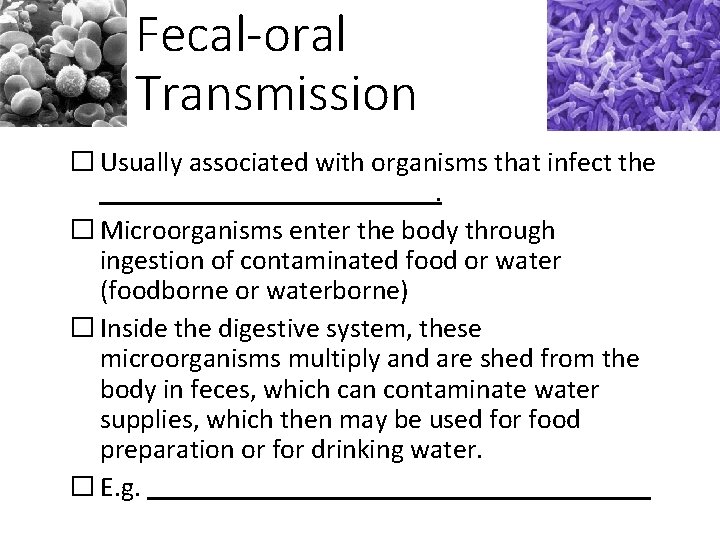
Fecal-oral Transmission � Usually associated with organisms that infect the. � Microorganisms enter the body through ingestion of contaminated food or water (foodborne or waterborne) � Inside the digestive system, these microorganisms multiply and are shed from the body in feces, which can contaminate water supplies, which then may be used for food preparation or for drinking water. � E. g.
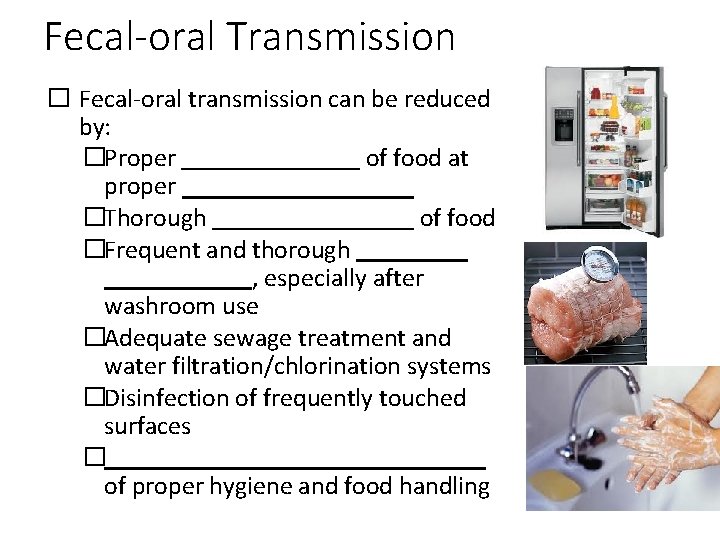
Fecal-oral Transmission � Fecal-oral transmission can be reduced by: �Proper of food at proper �Thorough of food �Frequent and thorough , especially after washroom use �Adequate sewage treatment and water filtration/chlorination systems �Disinfection of frequently touched surfaces � of proper hygiene and food handling
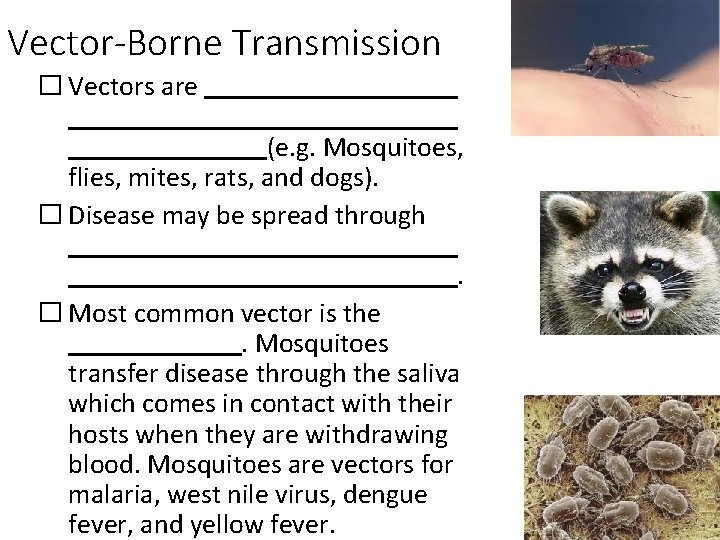
Vector-Borne Transmission � Vectors are (e. g. Mosquitoes, flies, mites, rats, and dogs). � Disease may be spread through. � Most common vector is the. Mosquitoes transfer disease through the saliva which comes in contact with their hosts when they are withdrawing blood. Mosquitoes are vectors for malaria, west nile virus, dengue fever, and yellow fever.
- Slides: 8