
Disease Neosho School District Prefixes and Suffixes Prefix


- Slides: 26
Disease Neosho School District
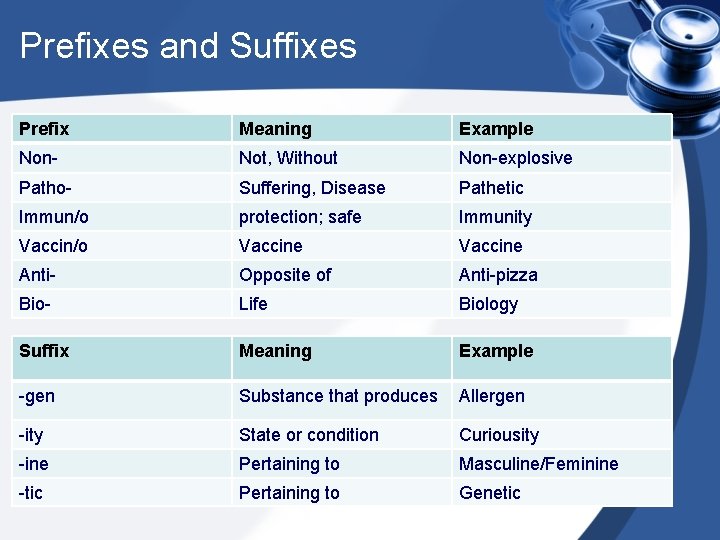
Prefixes and Suffixes Prefix Meaning Example Non- Not, Without Non-explosive Patho- Suffering, Disease Pathetic Immun/o protection; safe Immunity Vaccin/o Vaccine Anti- Opposite of Anti-pizza Bio- Life Biology Suffix Meaning Example -gen Substance that produces Allergen -ity State or condition Curiousity -ine Pertaining to Masculine/Feminine -tic Pertaining to Genetic
Disease When your health is harmed or when the body does not function normally
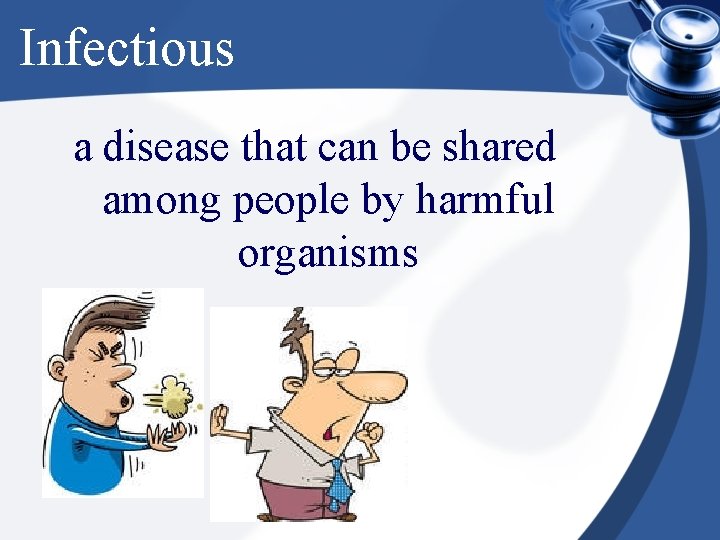
Infectious a disease that can be shared among people by harmful organisms
Non-Infectious A disease when something goes wrong with the body itself and cannot be shared
Pathogens organisms that cause infectious diseases We commonly call them germs.
Pathogen Types • Bacteria • Viruses • Fungi • Protists
Bacteria single-celled, cause infections Strep throat Dysentery Click to watch video
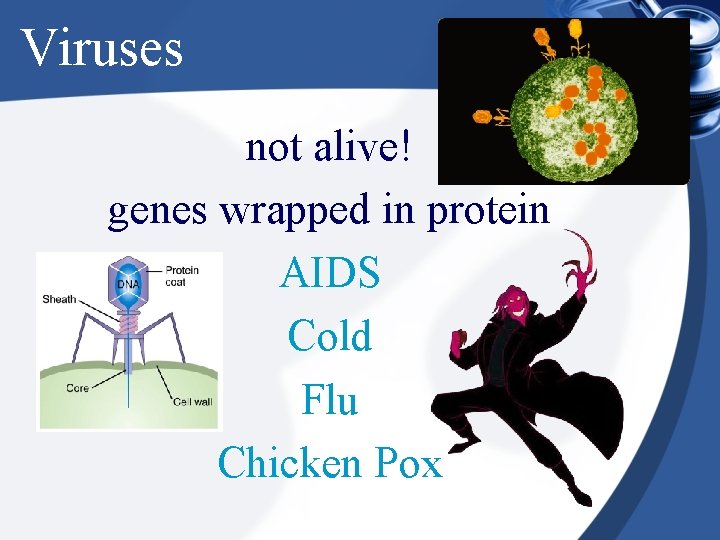
Viruses not alive! genes wrapped in protein AIDS Cold Flu Chicken Pox
Fungi mold or yeast, grow in warm, dark, moist areas Ringworm Athlete’s Foot
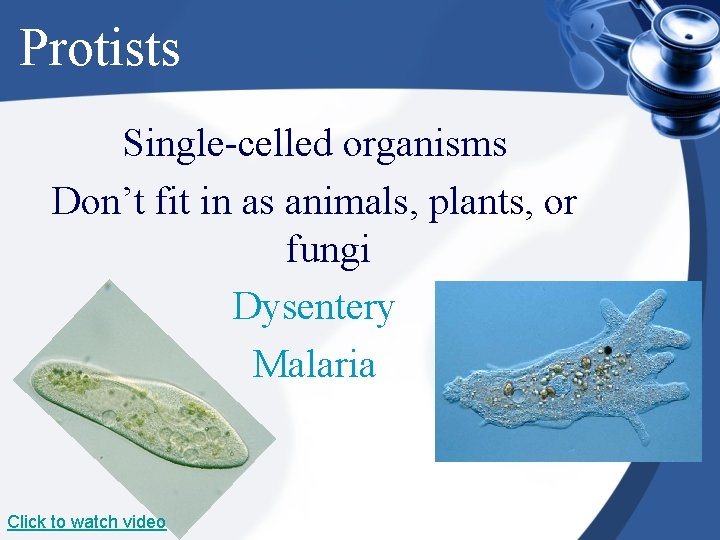
Protists Single-celled organisms Don’t fit in as animals, plants, or fungi Dysentery Malaria Click to watch video
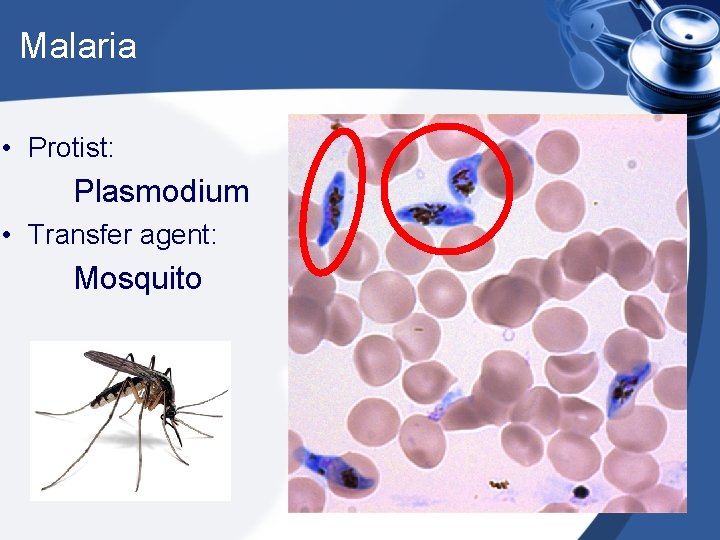
Malaria • Protist: Plasmodium • Transfer agent: Mosquito
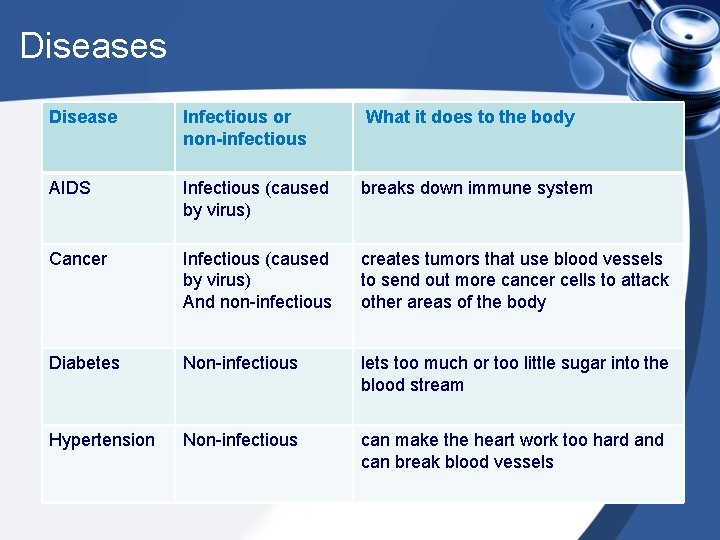
Diseases Disease Infectious or non-infectious What it does to the body AIDS Infectious (caused by virus) breaks down immune system Cancer Infectious (caused by virus) And non-infectious creates tumors that use blood vessels to send out more cancer cells to attack other areas of the body Diabetes Non-infectious lets too much or too little sugar into the blood stream Hypertension Non-infectious can make the heart work too hard and can break blood vessels
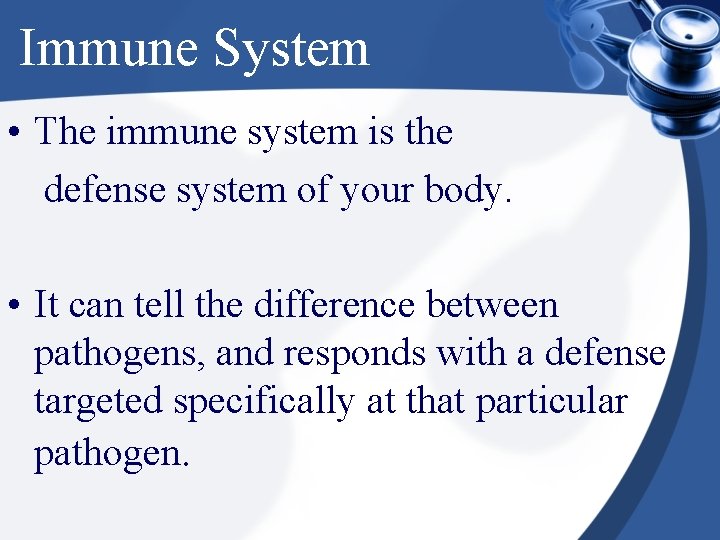
Immune System • The immune system is the defense system of your body. • It can tell the difference between pathogens, and responds with a defense targeted specifically at that particular pathogen.
Lymphocyte • white blood cell that fights pathogens. • T and B cells
T-Cell Also called memory cells Can tell the difference between diseases by recognizing antigens (antigen- marker like a nametag that recognizes body cells vs non body cells).
B-Cell Produce proteins called antibodies. Antibodies and antigens fit together like puzzle pieces. They mark them for destruction by other cells.
Immunity the body’s ability to destroy pathogens before they can cause disease and show symptoms.
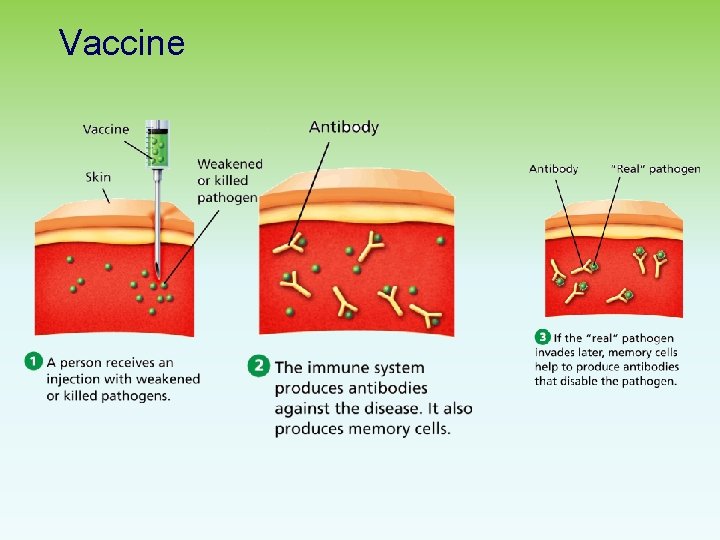
Vaccine Usually consists of weakened or killed pathogens. (measles, tetanus) Tricks the body into thinking it has that disease and starts making antibodies for that disease.
Vaccine
Antibiotic chemical that can kill bacteria without harming a person’s cells Example: penicillin