
Disease does not allow the body to function
Disease does not allow the body to function normally. It can effect one organ or an entire system
Infectious Disease Caused by tiny organisms called pathogens Can be viruses, bacteria, fungi, or protists Can come from a person, contaminated object, animal bite, or the environment. The immune system distinguishes between the different types of pathogens and reacts according to type Once pathogen is in the body, it can damage individual cells in an organ or attack an entire system
Types of Infectious Diseases Common cold Influenza Athlete’s Foot AIDS Strep Throat
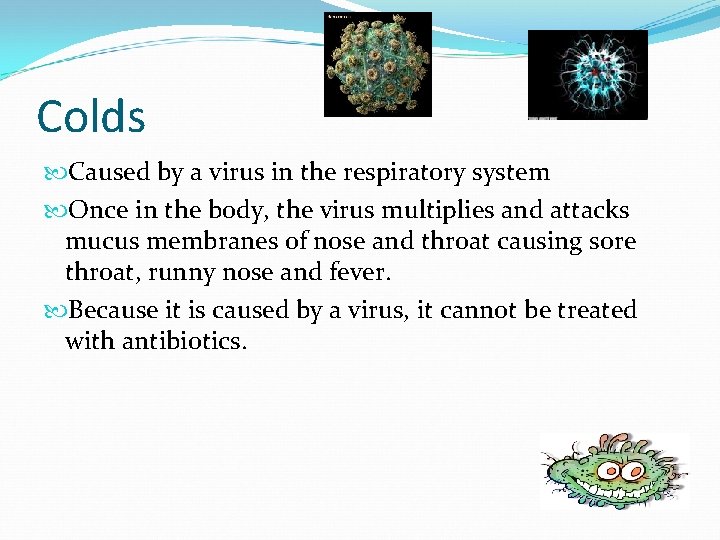
Colds Caused by a virus in the respiratory system Once in the body, the virus multiplies and attacks mucus membranes of nose and throat causing sore throat, runny nose and fever. Because it is caused by a virus, it cannot be treated with antibiotics.
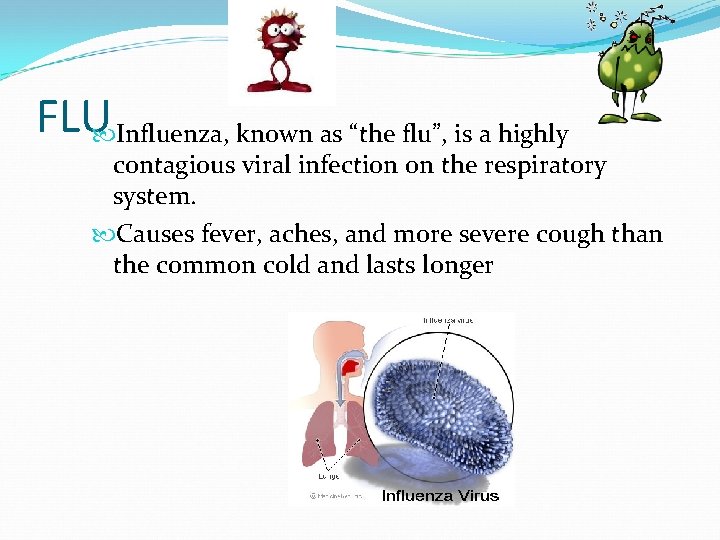
FLU Influenza, known as “the flu”, is a highly contagious viral infection on the respiratory system. Causes fever, aches, and more severe cough than the common cold and lasts longer

Athlete’s Foot A common fungal infection of the skin of the feet Can be contracted from public environments and then it grows in the warm and moist environment usually between the toes. Can be difficult to cure
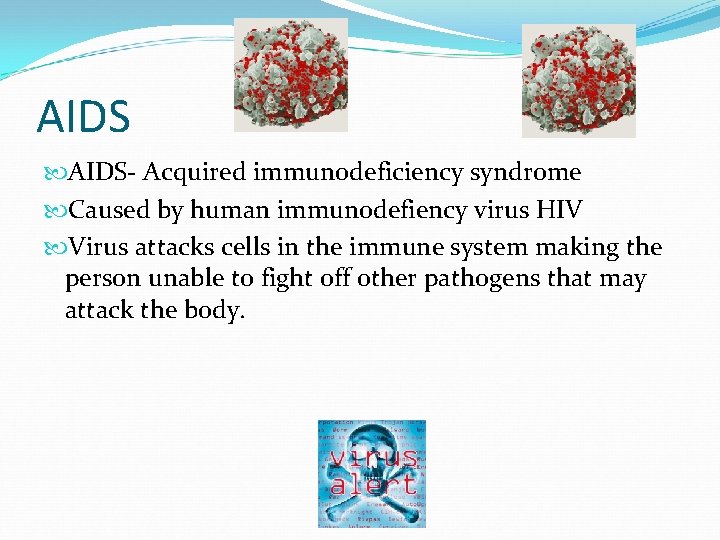
AIDS- Acquired immunodeficiency syndrome Caused by human immunodefiency virus HIV Virus attacks cells in the immune system making the person unable to fight off other pathogens that may attack the body.
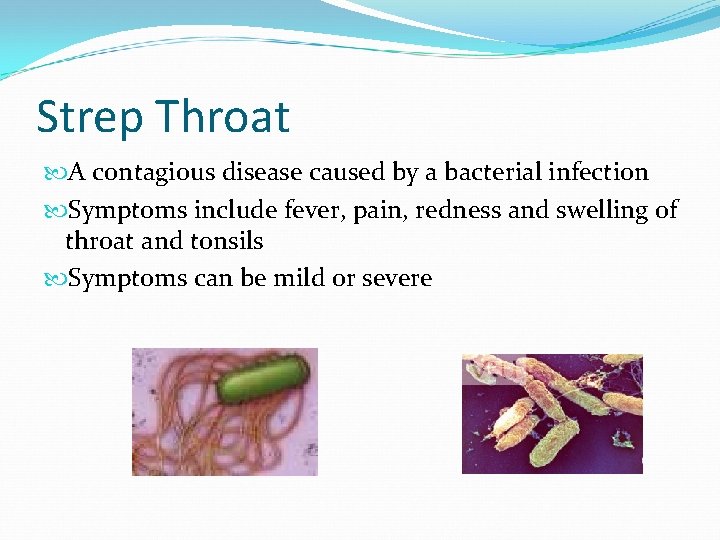
Strep Throat A contagious disease caused by a bacterial infection Symptoms include fever, pain, redness and swelling of throat and tonsils Symptoms can be mild or severe
Non-Infectious Diseases Not caused by pathogens in the body Not spread from organism to organism Caused by malfunctions in the body systems that are either inherited or caused by environmental factors

A List of Non-infectious Diseases Diabetes Parkinson’s Disease Skin cancer Asthma
Diabetes A disease that results in glucose levels of the blood being higher than normal Caused by a person’s inability to produce or use insulin The higher level of blood sugar results in other disorders of the body such as an increase in problems with circulation of the blood Diabetes can lead to kidney disease or heart disease or cause vision problems
Parkinson’s Disease *A disease of the nervous system that occurs when certain nerve cells in the brain stop functioning, affecting the muscular system. *Symptoms are severe shaking and disabilities involving movement
Skin Cancer A disease in which skin cells found in the outer layers of the skin becomes damaged Factors that lead to skin cancer are damaging ultraviolet rays from the Sun, tanning beds or heredity
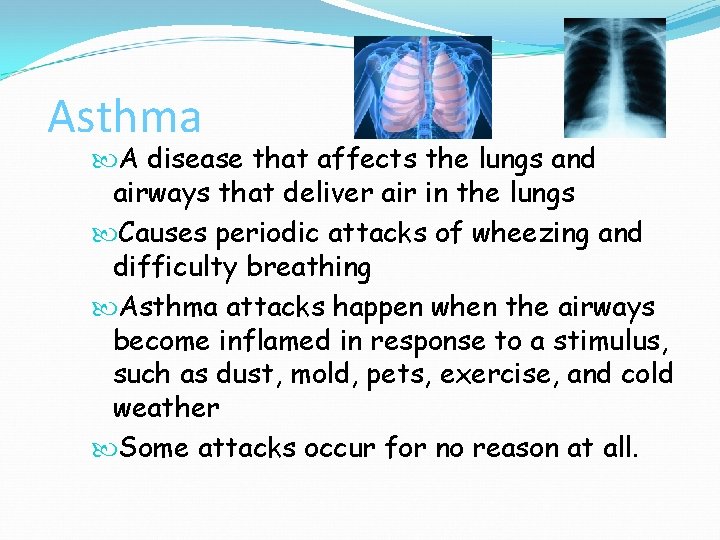
Asthma A disease that affects the lungs and airways that deliver air in the lungs Causes periodic attacks of wheezing and difficulty breathing Asthma attacks happen when the airways become inflamed in response to a stimulus, such as dust, mold, pets, exercise, and cold weather Some attacks occur for no reason at all.
- Slides: 14