
Discussion of Current Account Fact and Fiction Richard
- Slides: 15
Discussion of “Current Account Fact and Fiction” Richard H. Clarida Lowell Harriss Professor of Economics Columbia University NBER
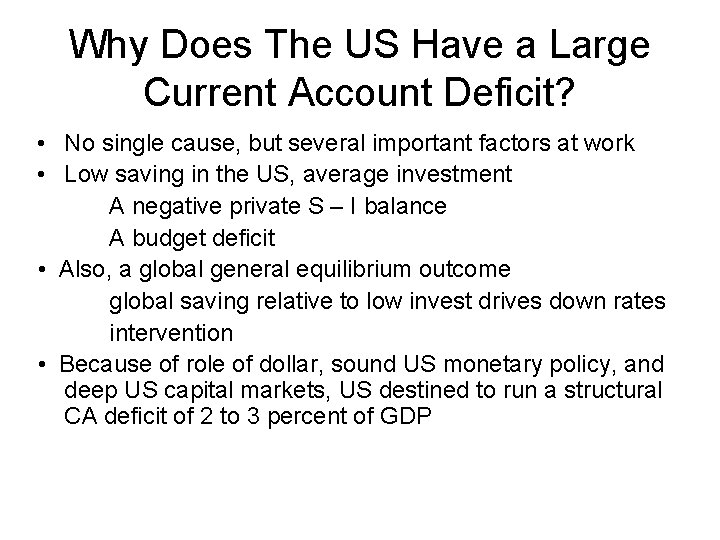
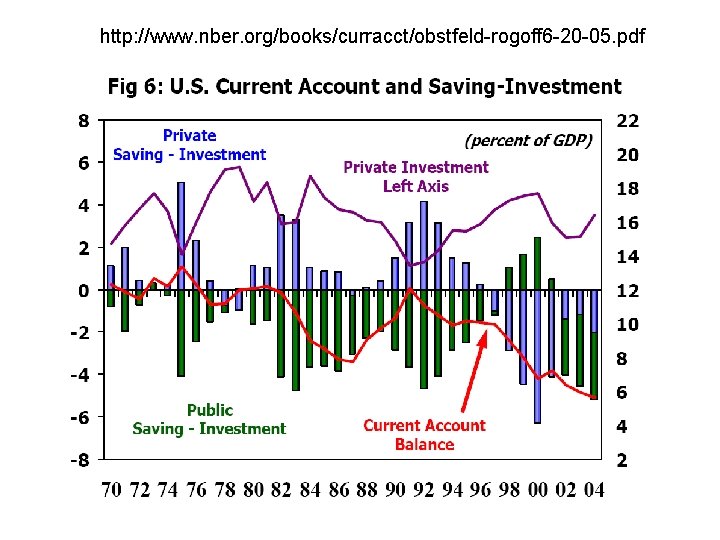
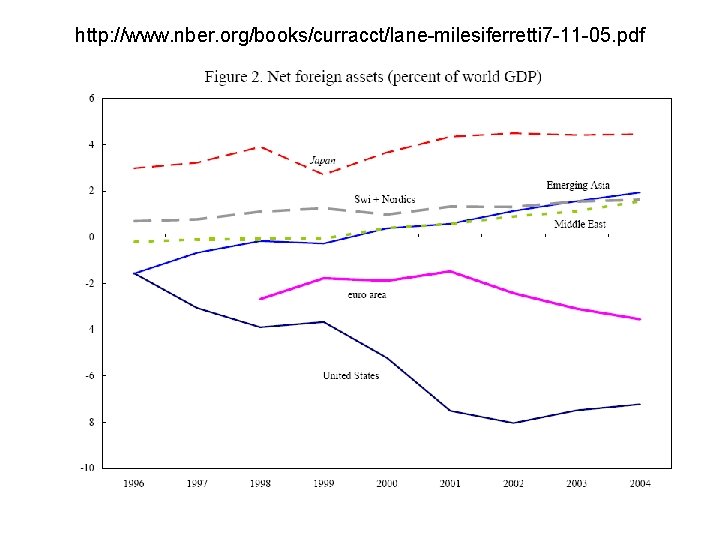
Why Does The US Have a Large Current Account Deficit? • No single cause, but several important factors at work • Low saving in the US, average investment A negative private S – I balance A budget deficit • Also, a global general equilibrium outcome global saving relative to low invest drives down rates intervention • Because of role of dollar, sound US monetary policy, and deep US capital markets, US destined to run a structural CA deficit of 2 to 3 percent of GDP
http: //www. nber. org/books/curracct/obstfeld-rogoff 6 -20 -05. pdf
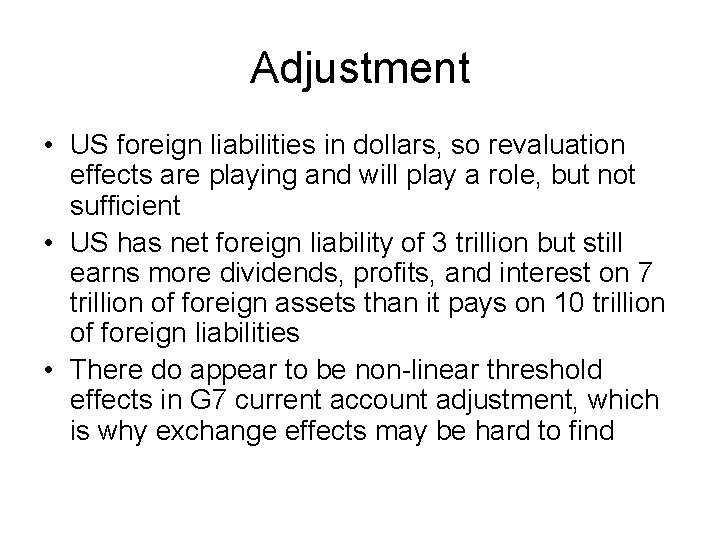
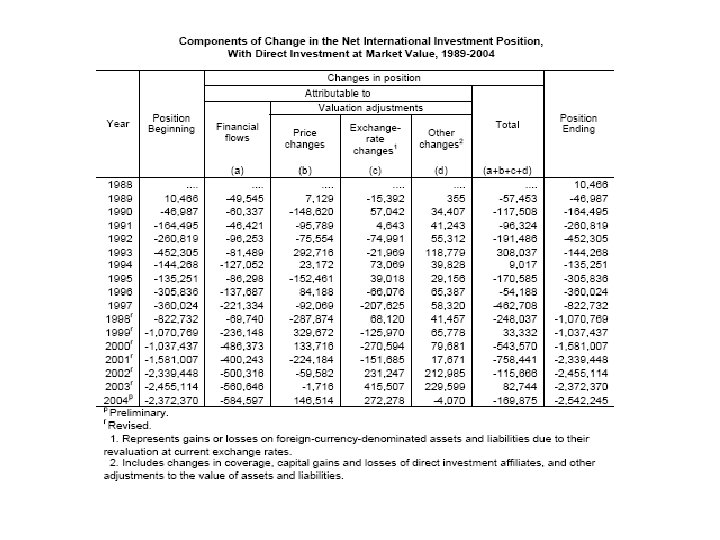
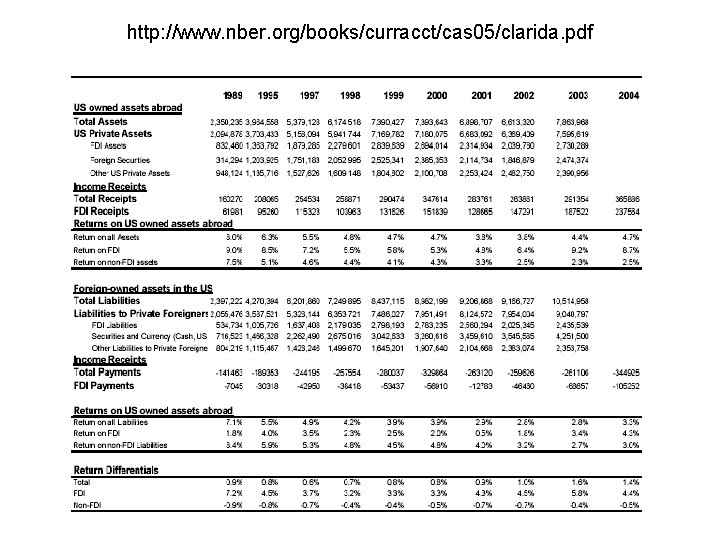
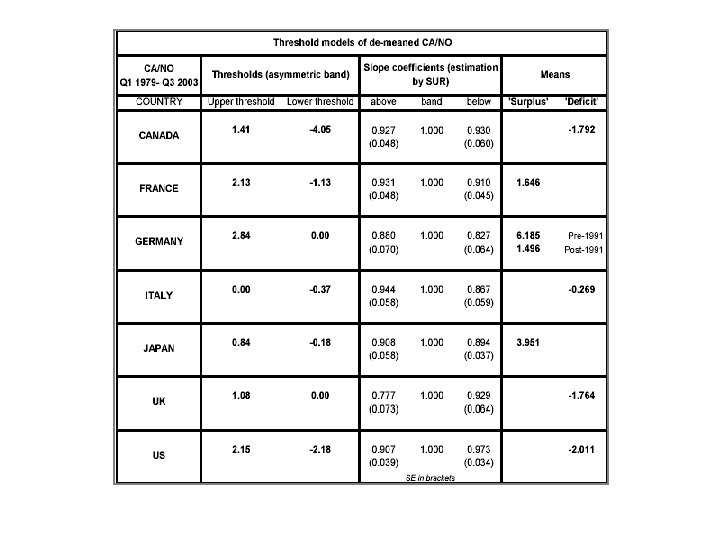
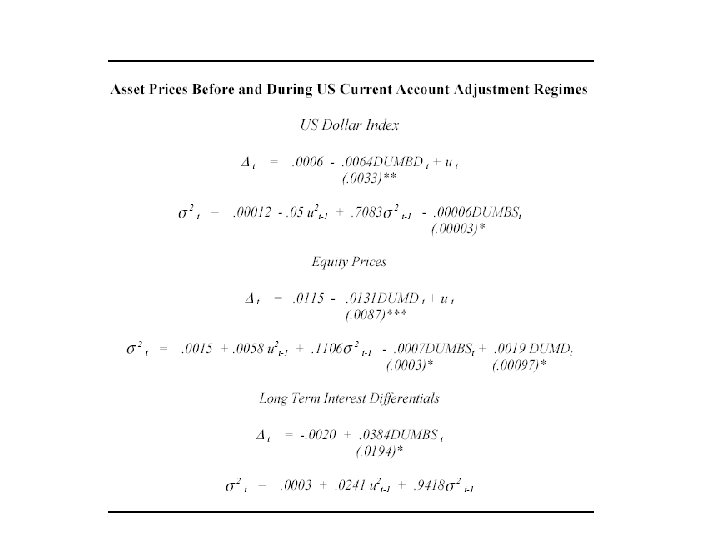
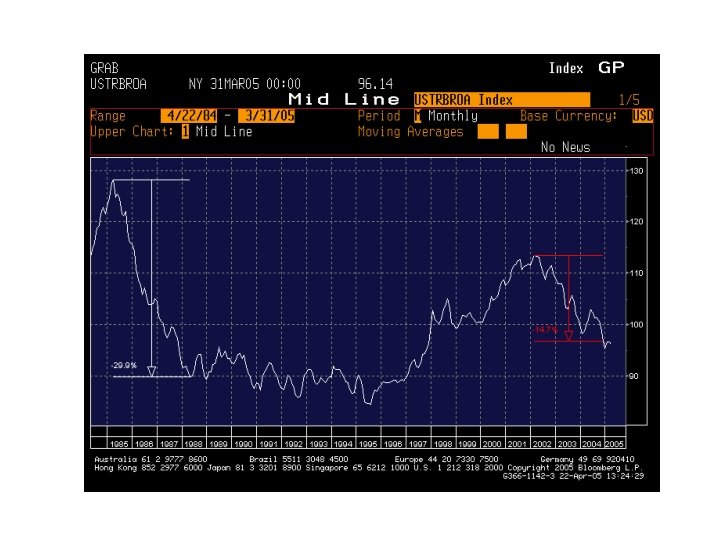
Adjustment • US foreign liabilities in dollars, so revaluation effects are playing and will play a role, but not sufficient • US has net foreign liability of 3 trillion but still earns more dividends, profits, and interest on 7 trillion of foreign assets than it pays on 10 trillion of foreign liabilities • There do appear to be non-linear threshold effects in G 7 current account adjustment, which is why exchange effects may be hard to find
http: //www. nber. org/books/curracct/lane-milesiferretti 7 -11 -05. pdf
http: //www. nber. org/books/curracct/cas 05/clarida. pdf
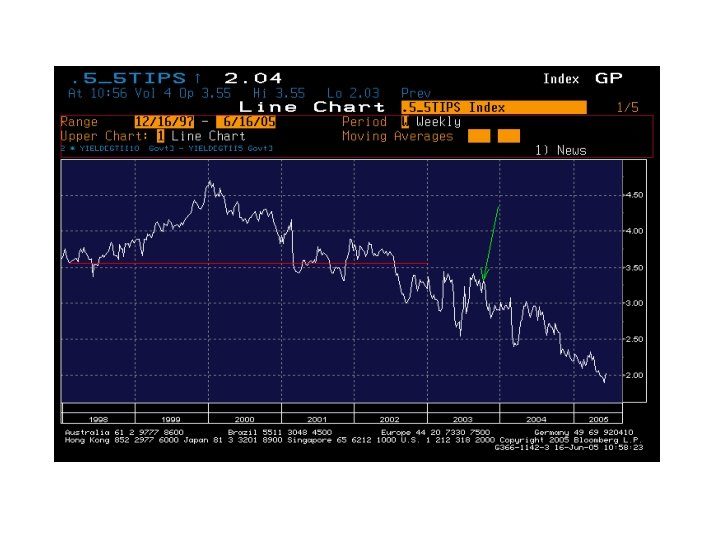
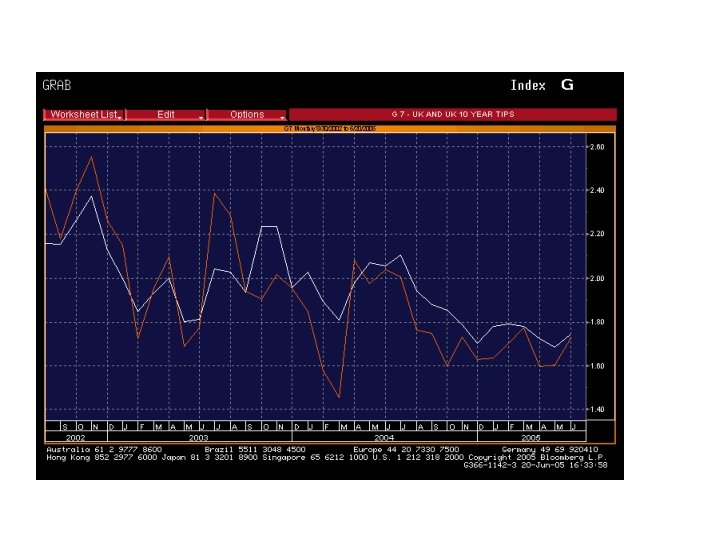
Why I Think the Saving Glut Relative to Investment is part of the Story • If just a US low saving story, we would expect high long term real interest rates, but real long term rates in the US and G 7 are low • If just an intervention story, then why would UK real long rates be falling and low? Instead virtually identical to US • If just a budget deficit story, would have had current account surplus in 2000, not a deficit of 4 percent of GDP
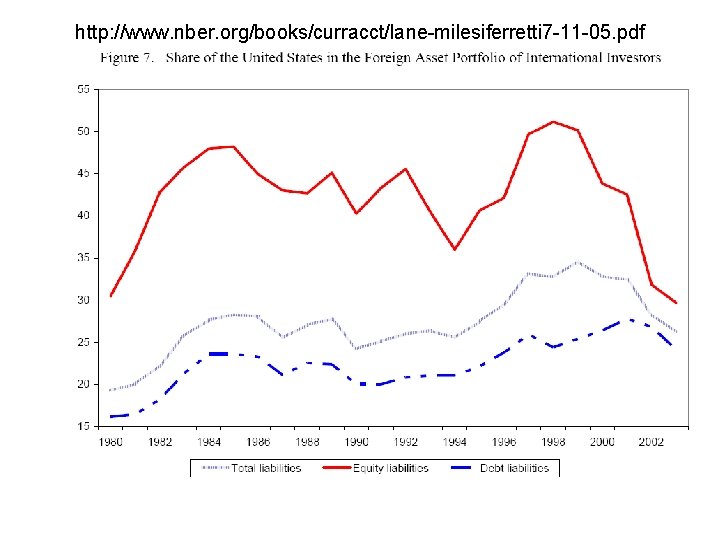
http: //www. nber. org/books/curracct/lane-milesiferretti 7 -11 -05. pdf
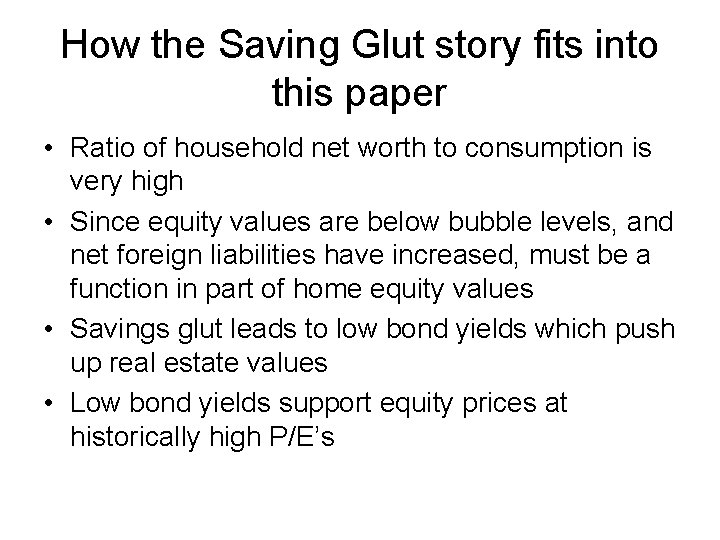
How the Saving Glut story fits into this paper • Ratio of household net worth to consumption is very high • Since equity values are below bubble levels, and net foreign liabilities have increased, must be a function in part of home equity values • Savings glut leads to low bond yields which push up real estate values • Low bond yields support equity prices at historically high P/E’s