
DiscreteTime Signal processing Chapter 3 the Ztransform Zhongguo
- Slides: 95
Discrete-Time Signal processing Chapter 3 the Z-transform Zhongguo Liu Biomedical Engineering School of Control Science and Engineering, Shandong University 山东省精品课程《生物医学信号处理(双语)》 http: //course. sdu. edu. cn/bdsp. html 2021/5/19 1 Zhongguo Liu_Biomedical Engineering_Shandong Univ.
Chapter 3 The z-Transform u 3. 0 Introduction u 3. 1 z-Transform u 3. 2 Properties of the Region of Convergence for the z-transform u 3. 3 The inverse z-Transform u 3. 4 z-Transform Properties 2 2021/5/19 Zhongguo Liu_Biomedical Engineering_Shandong Univ.
3. 0 Introduction u. Fourier transform plays a key role in analyzing and representing discrete-time signals and systems, but does not converge for all signals. u. Continuous systems: Laplace transform is a generalization of the Fourier transform. u. Discrete systems : z-transform, generalization of DTFT, converges for a broader class of signals. 3 2021/5/19 Zhongguo Liu_Biomedical Engineering_Shandong Univ.
3. 0 Introduction u. Motivation of z-transform: u. The Fourier transform does not converge for all sequences and it is useful to have a generalization of the Fourier transform. u. In analytical problems the z-Transform notation is more convenient than the Fourier transform notation. 4 2021/5/19 Zhongguo Liu_Biomedical Engineering_Shandong Univ.
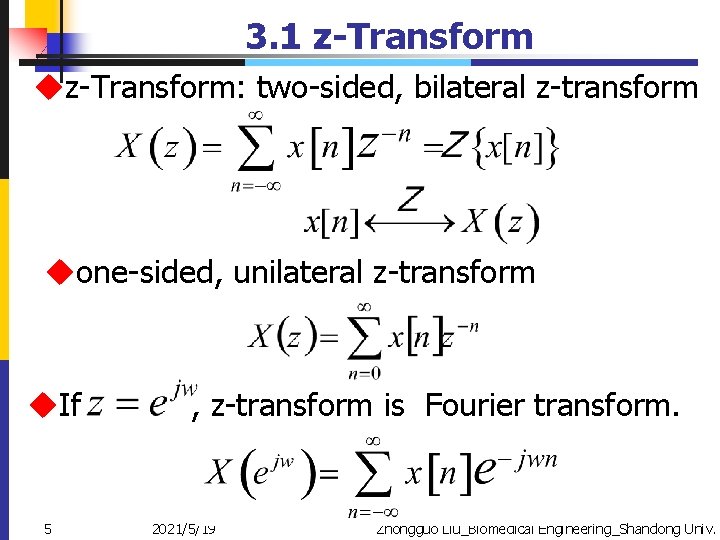
3. 1 z-Transform uz-Transform: two-sided, bilateral z-transform uone-sided, unilateral z-transform u. If 5 , z-transform is Fourier transform. 2021/5/19 Zhongguo Liu_Biomedical Engineering_Shandong Univ.
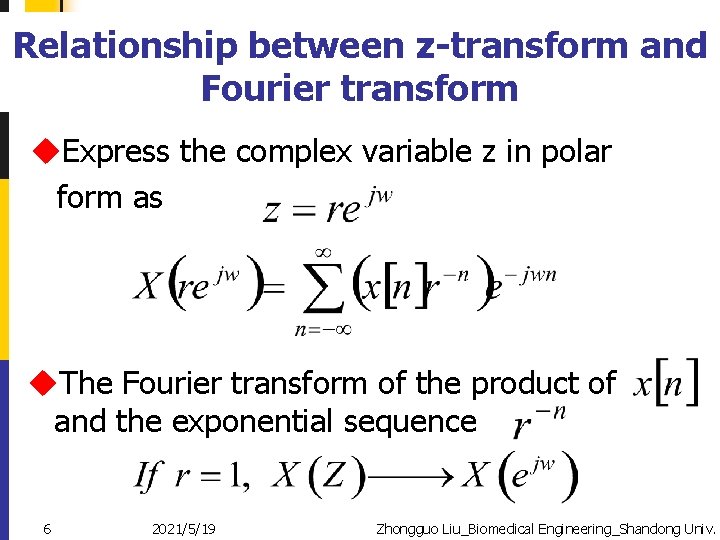
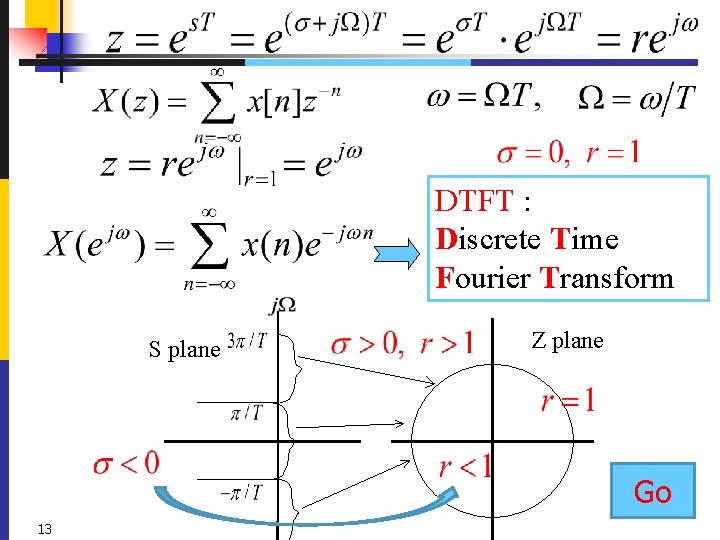
Relationship between z-transform and Fourier transform u. Express the complex variable z in polar form as u. The Fourier transform of the product of and the exponential sequence 6 2021/5/19 Zhongguo Liu_Biomedical Engineering_Shandong Univ.
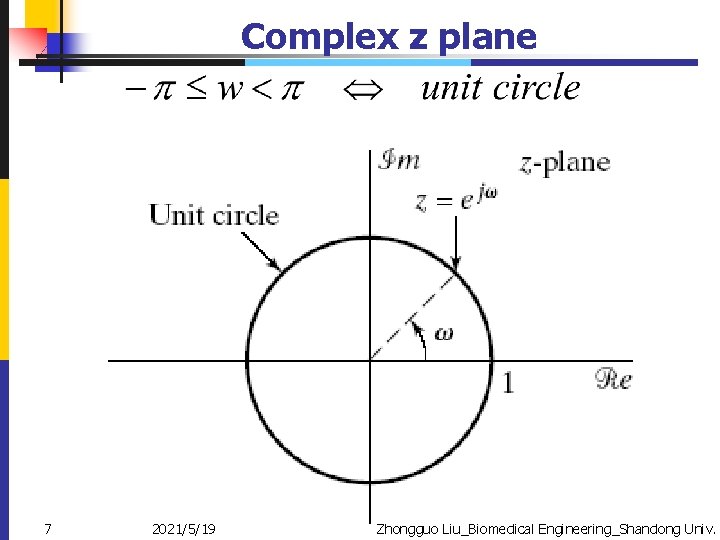
Complex z plane 7 2021/5/19 Zhongguo Liu_Biomedical Engineering_Shandong Univ.
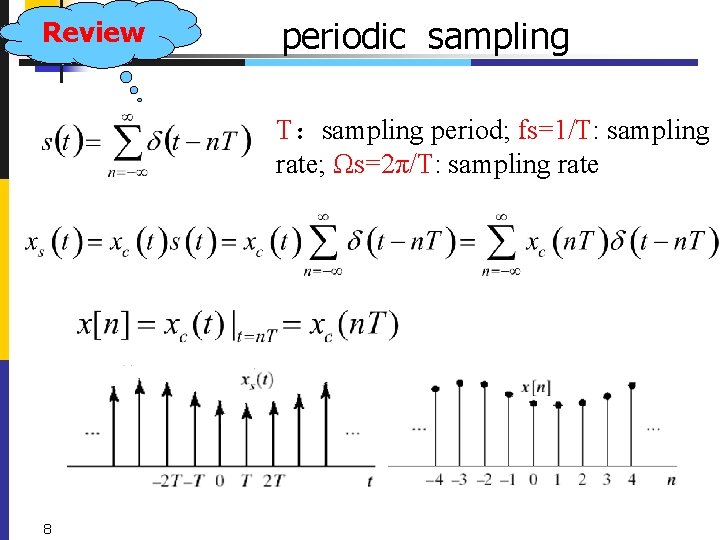
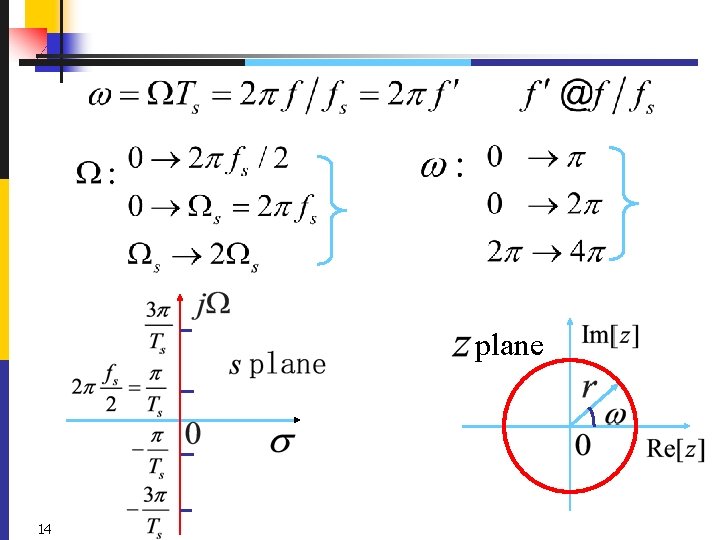
Review periodic sampling T:sampling period; fs=1/T: sampling rate; Ωs=2π/T: sampling rate 8
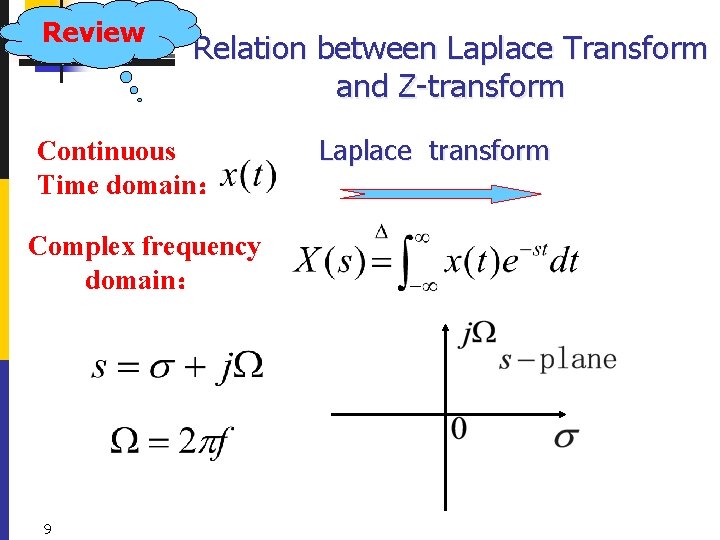
Review Relation between Laplace Transform and Z-transform Continuous Time domain: Complex frequency domain: 9 Laplace transform
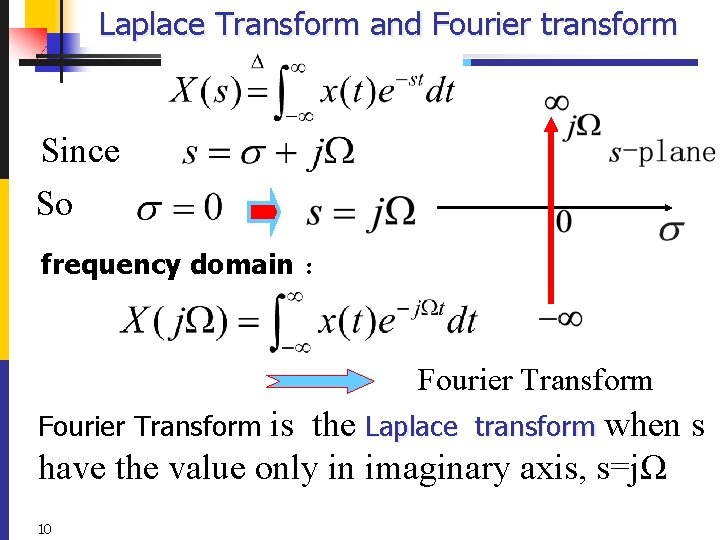
Laplace Transform and Fourier transform Since So frequency domain : Fourier Transform is the Laplace transform when s have the value only in imaginary axis, s=jΩ Fourier Transform 10
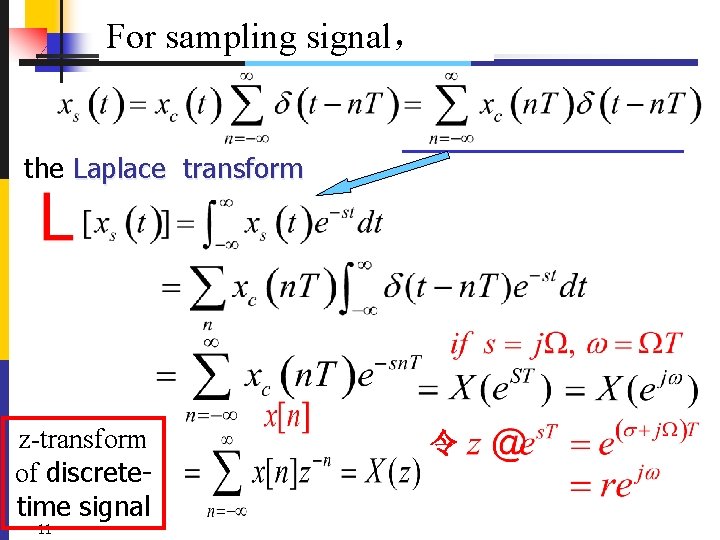
For sampling signal, the Laplace transform z-transform of discretetime signal 11 令
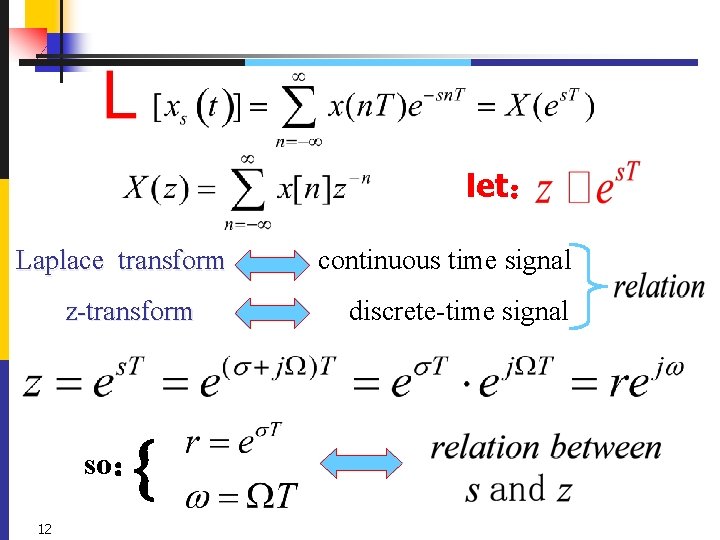
let: Laplace transform z-transform so: 12 continuous time signal discrete-time signal
DTFT : Discrete Time Fourier Transform Z plane S plane 13 Go
plane 14
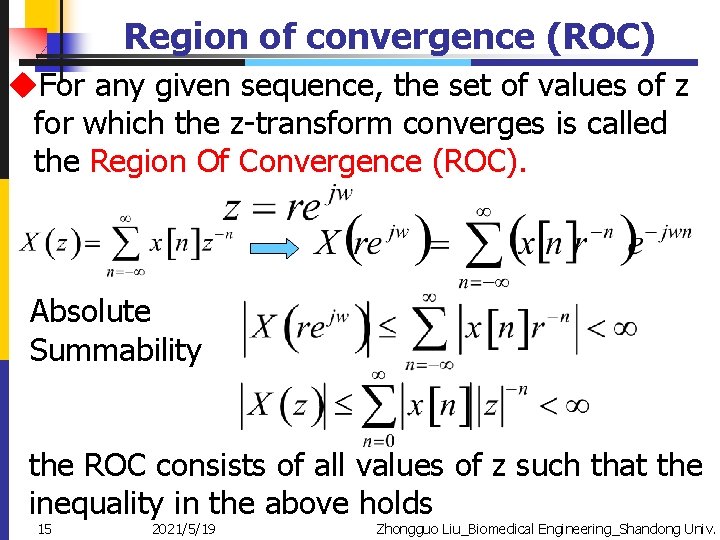
Region of convergence (ROC) u. For any given sequence, the set of values of z for which the z-transform converges is called the Region Of Convergence (ROC). Absolute Summability the ROC consists of all values of z such that the inequality in the above holds 15 2021/5/19 Zhongguo Liu_Biomedical Engineering_Shandong Univ.
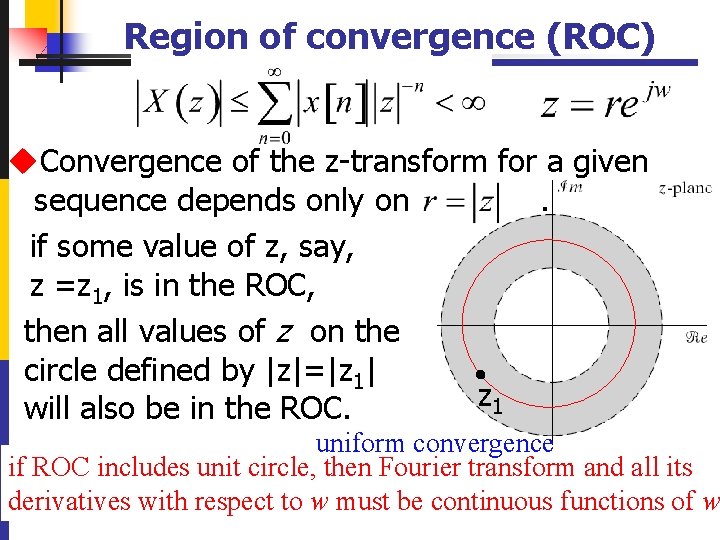
Region of convergence (ROC) u. Convergence of the z-transform for a given sequence depends only on. if some value of z, say, z =z 1, is in the ROC, then all values of z on the circle defined by |z|=|z 1| z 1 will also be in the ROC. uniform convergence if ROC includes unit circle, then Fourier transform and all its derivatives with respect to w must be continuous functions of w
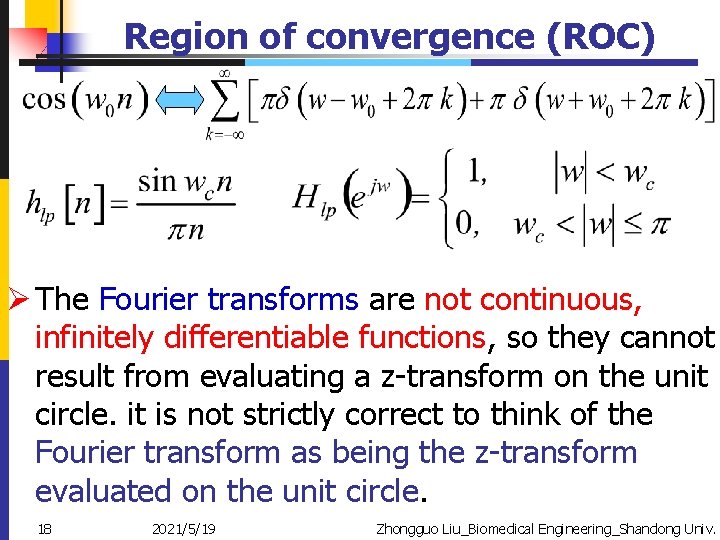
Region of convergence (ROC) Ø The Fourier transforms are not continuous, infinitely differentiable functions, so they cannot result from evaluating a z-transform on the unit circle. it is not strictly correct to think of the Fourier transform as being the z-transform evaluated on the unit circle. 18 2021/5/19 Zhongguo Liu_Biomedical Engineering_Shandong Univ.
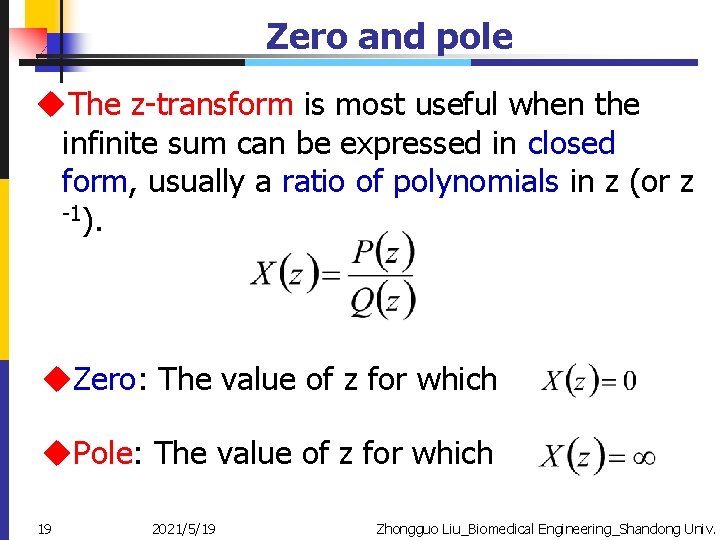
Zero and pole u. The z-transform is most useful when the infinite sum can be expressed in closed form, usually a ratio of polynomials in z (or z -1). u. Zero: The value of z for which u. Pole: The value of z for which 19 2021/5/19 Zhongguo Liu_Biomedical Engineering_Shandong Univ.
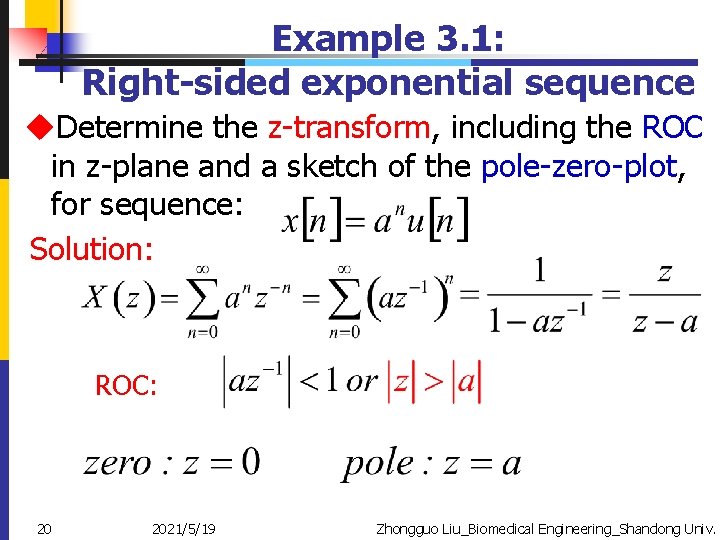
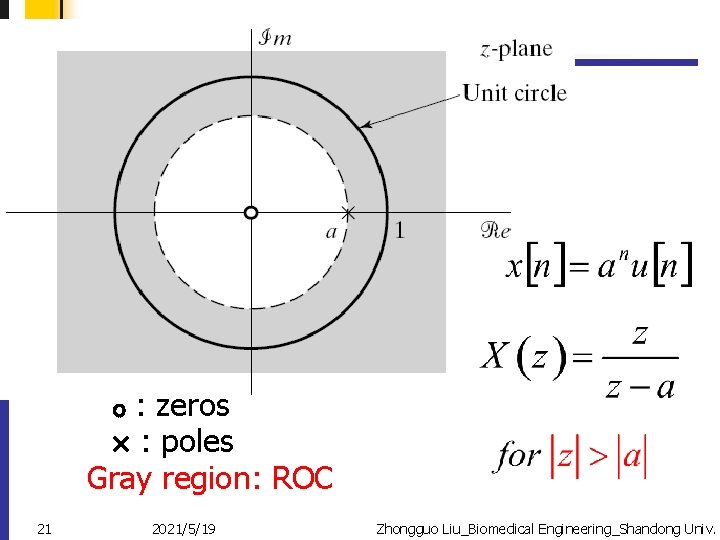
Example 3. 1: Right-sided exponential sequence u. Determine the z-transform, including the ROC in z-plane and a sketch of the pole-zero-plot, for sequence: Solution: ROC: 20 2021/5/19 Zhongguo Liu_Biomedical Engineering_Shandong Univ.
: zeros : poles Gray region: ROC 21 2021/5/19 Zhongguo Liu_Biomedical Engineering_Shandong Univ.
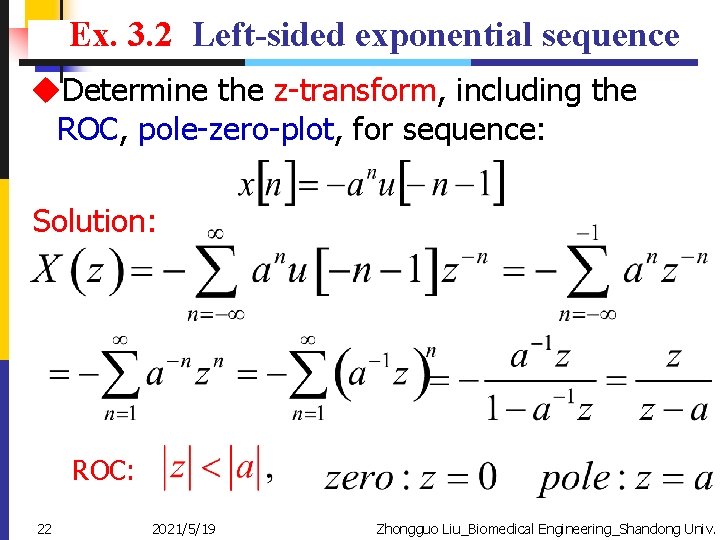
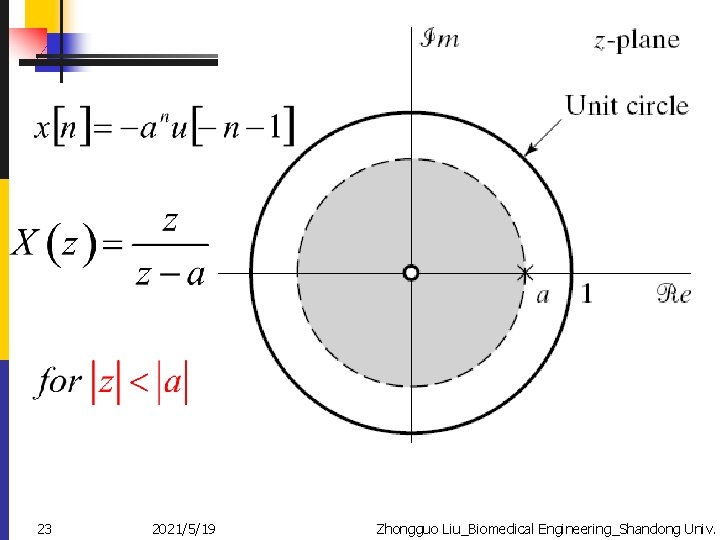
Ex. 3. 2 Left-sided exponential sequence u. Determine the z-transform, including the ROC, pole-zero-plot, for sequence: Solution: ROC: 22 2021/5/19 Zhongguo Liu_Biomedical Engineering_Shandong Univ.
23 2021/5/19 Zhongguo Liu_Biomedical Engineering_Shandong Univ.
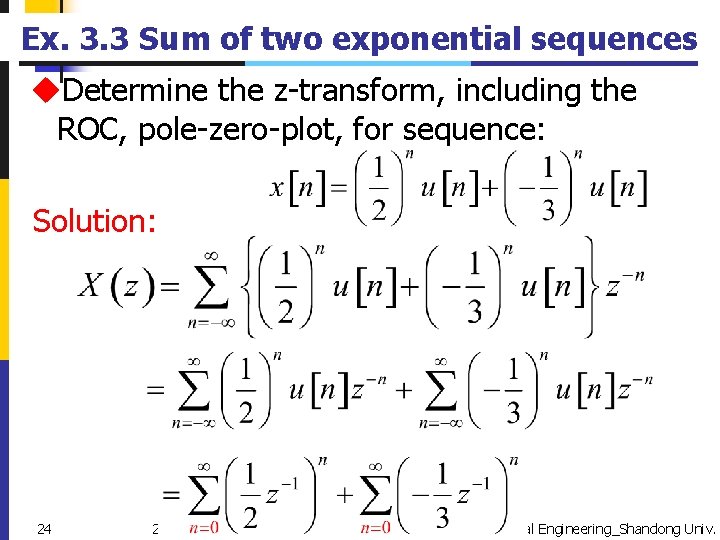
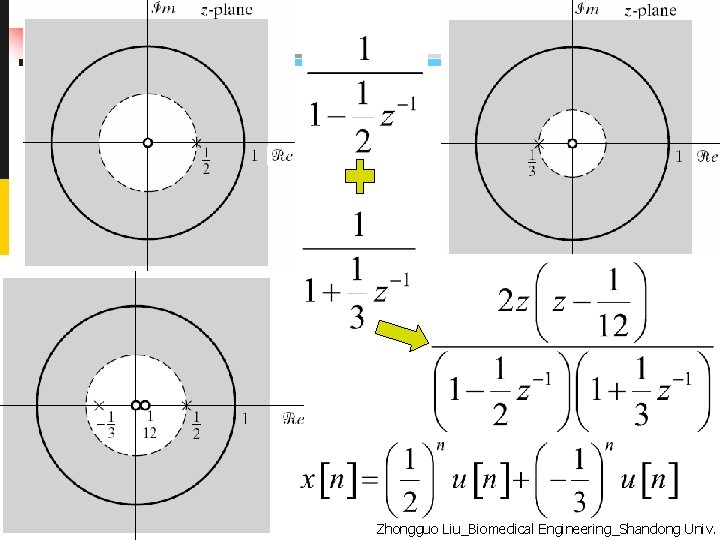
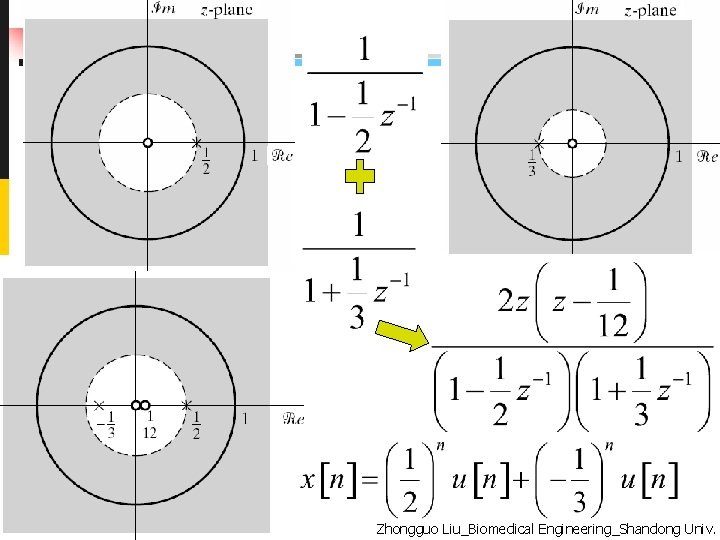
Ex. 3. 3 Sum of two exponential sequences u. Determine the z-transform, including the ROC, pole-zero-plot, for sequence: Solution: 24 2021/5/19 Zhongguo Liu_Biomedical Engineering_Shandong Univ.
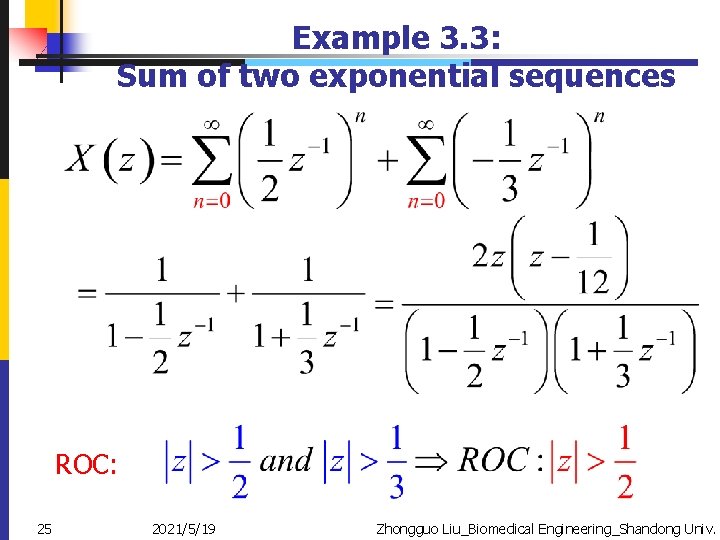
Example 3. 3: Sum of two exponential sequences ROC: 25 2021/5/19 Zhongguo Liu_Biomedical Engineering_Shandong Univ.
26 2021/5/19 Zhongguo Liu_Biomedical Engineering_Shandong Univ.
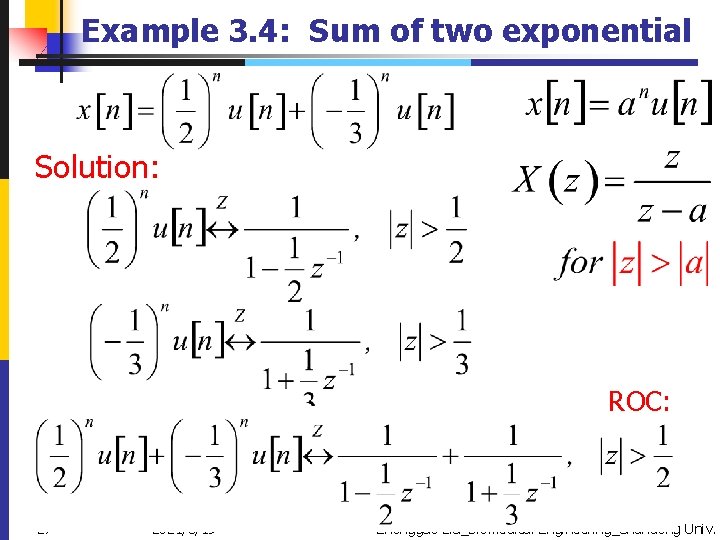
Example 3. 4: Sum of two exponential Solution: ROC: 27 2021/5/19 Zhongguo Liu_Biomedical Engineering_Shandong Univ.
28 2021/5/19 Zhongguo Liu_Biomedical Engineering_Shandong Univ.
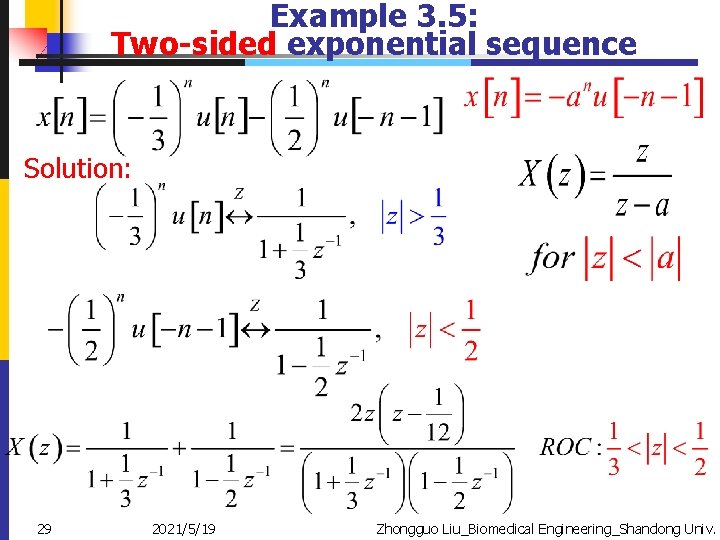
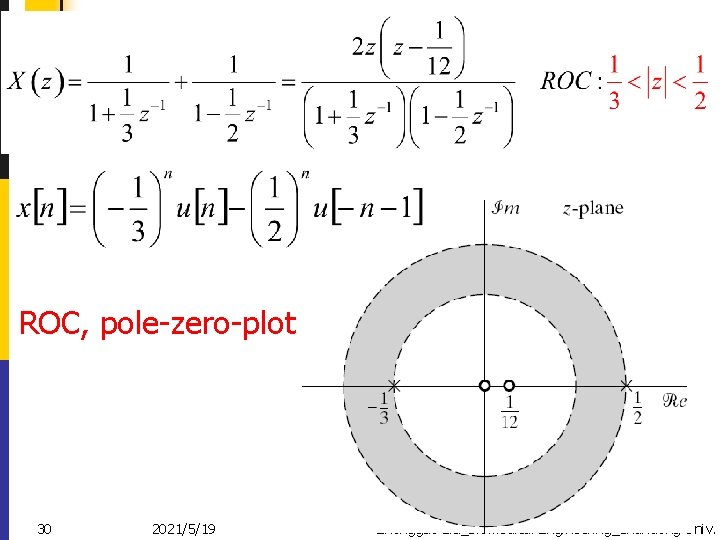
Example 3. 5: Two-sided exponential sequence Solution: 29 2021/5/19 Zhongguo Liu_Biomedical Engineering_Shandong Univ.
ROC, pole-zero-plot 30 2021/5/19 Zhongguo Liu_Biomedical Engineering_Shandong Univ.
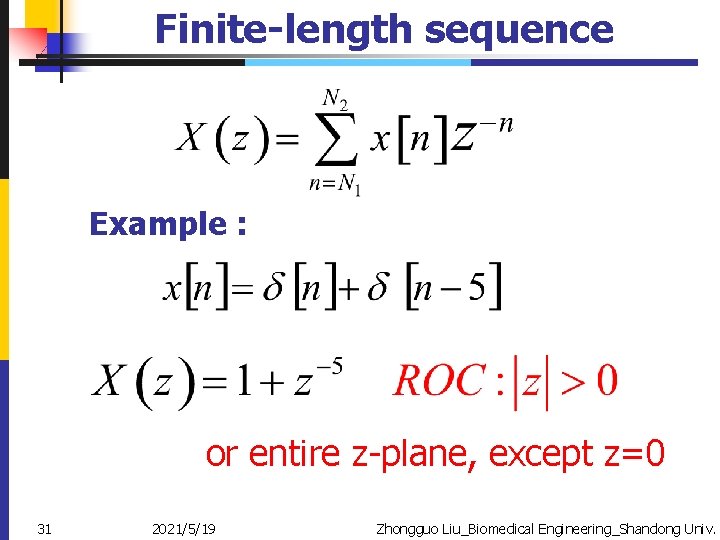
Finite-length sequence Example : or entire z-plane, except z=0 31 2021/5/19 Zhongguo Liu_Biomedical Engineering_Shandong Univ.
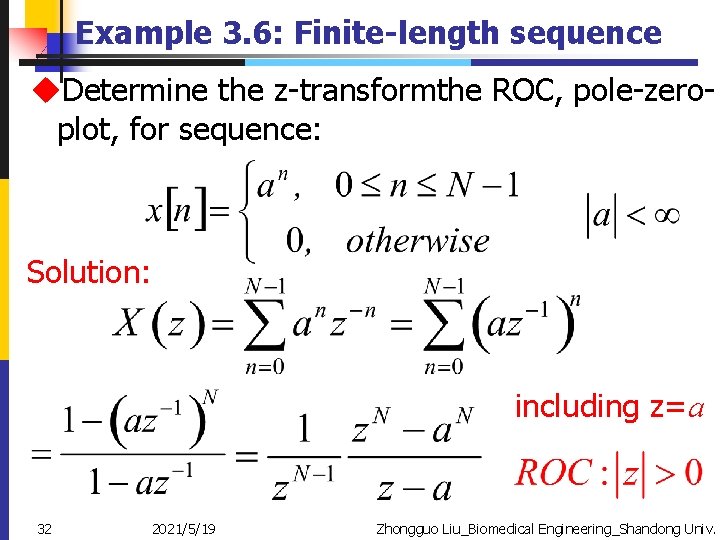
Example 3. 6: Finite-length sequence u. Determine the z-transformthe ROC, pole-zeroplot, for sequence: Solution: including z=a 32 2021/5/19 Zhongguo Liu_Biomedical Engineering_Shandong Univ.
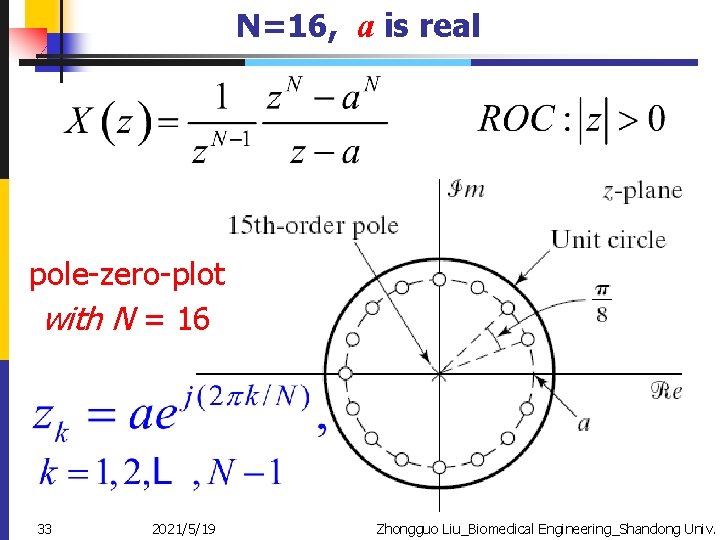
N=16, a is real pole-zero-plot with N = 16 33 2021/5/19 Zhongguo Liu_Biomedical Engineering_Shandong Univ.
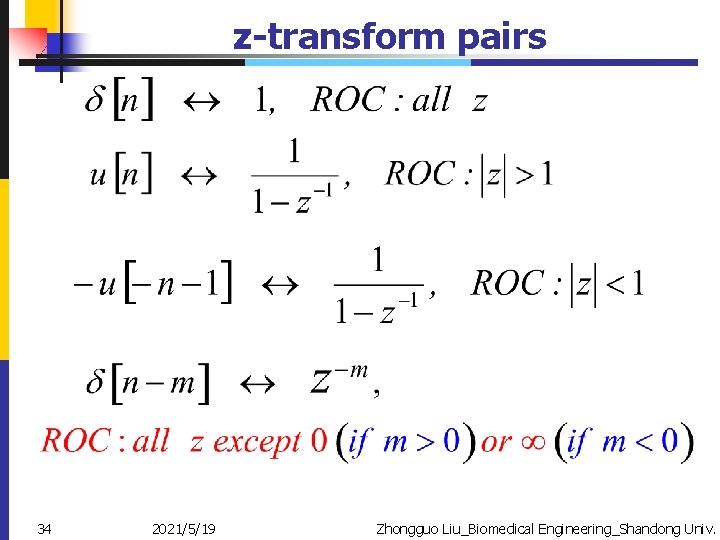
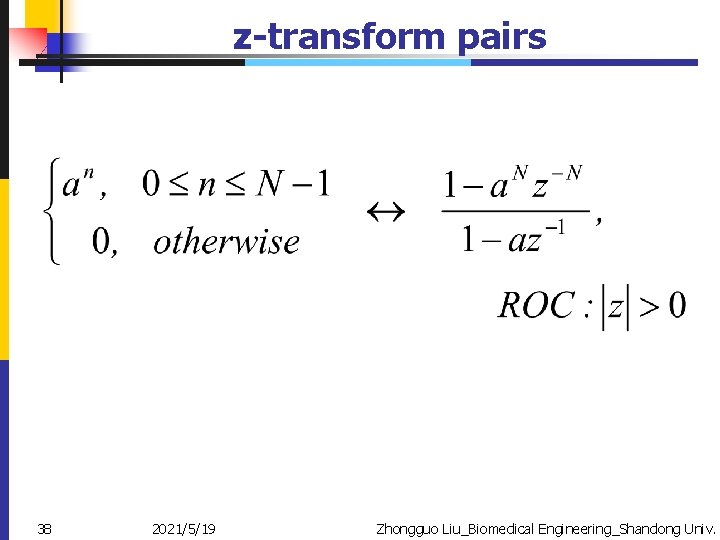
z-transform pairs 34 2021/5/19 Zhongguo Liu_Biomedical Engineering_Shandong Univ.
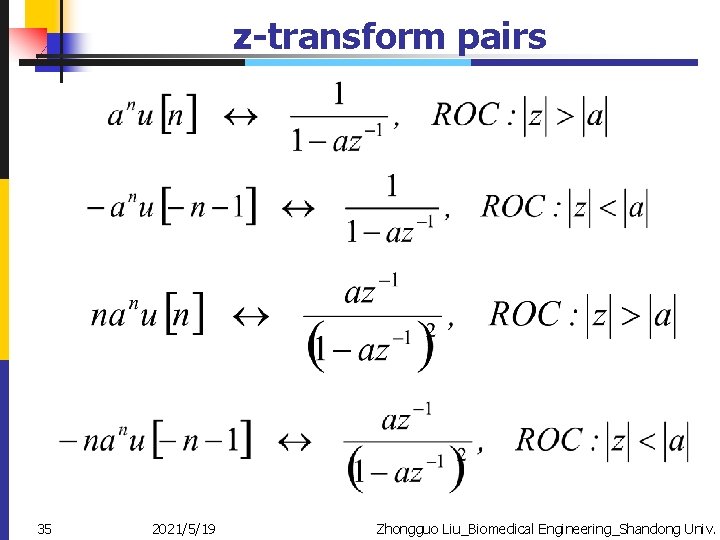
z-transform pairs 35 2021/5/19 Zhongguo Liu_Biomedical Engineering_Shandong Univ.
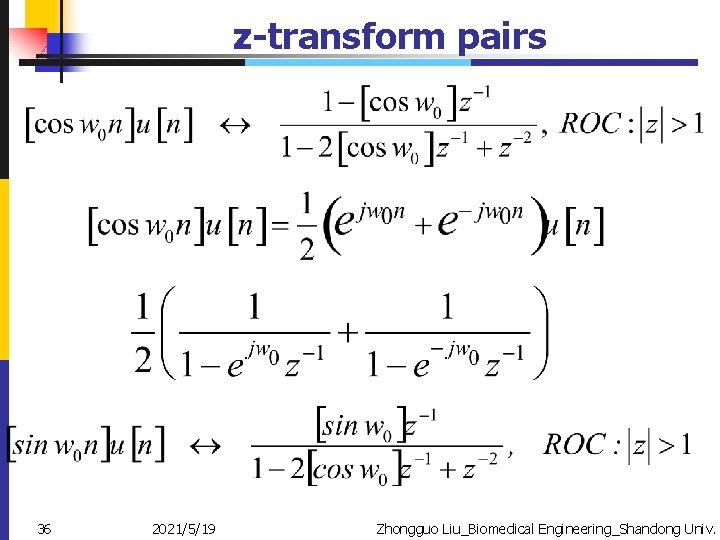
z-transform pairs 36 2021/5/19 Zhongguo Liu_Biomedical Engineering_Shandong Univ.
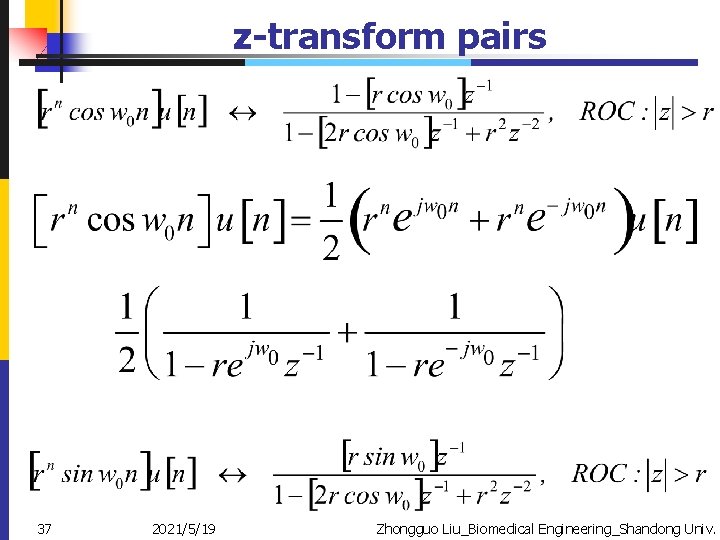
z-transform pairs 37 2021/5/19 Zhongguo Liu_Biomedical Engineering_Shandong Univ.
z-transform pairs 38 2021/5/19 Zhongguo Liu_Biomedical Engineering_Shandong Univ.
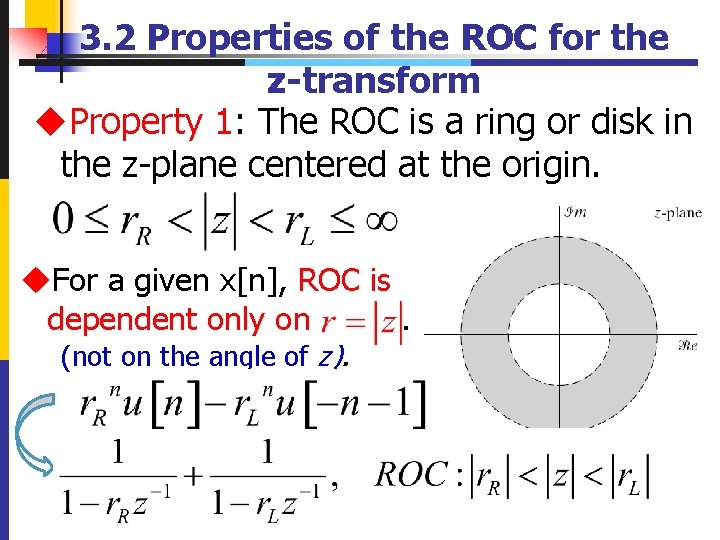
3. 2 Properties of the ROC for the z-transform u. Property 1: The ROC is a ring or disk in the z-plane centered at the origin. u. For a given x[n], ROC is dependent only on. (not on the angle of z).
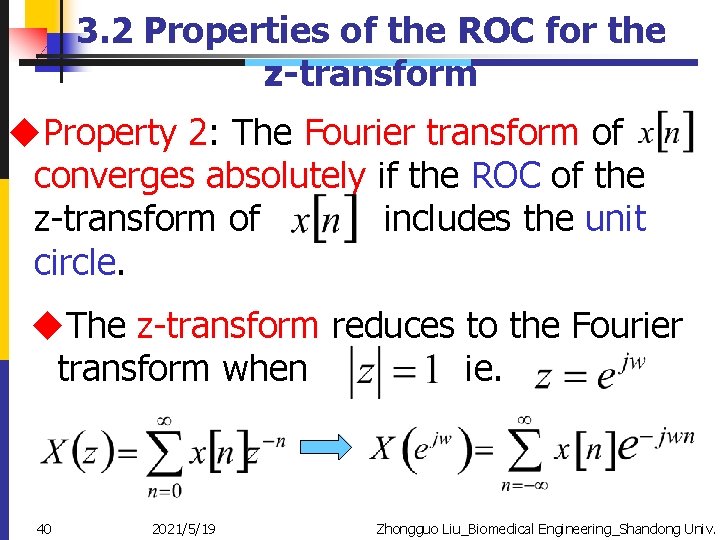
3. 2 Properties of the ROC for the z-transform u. Property 2: The Fourier transform of converges absolutely if the ROC of the z-transform of includes the unit circle. u. The z-transform reduces to the Fourier transform when ie. 40 2021/5/19 Zhongguo Liu_Biomedical Engineering_Shandong Univ.
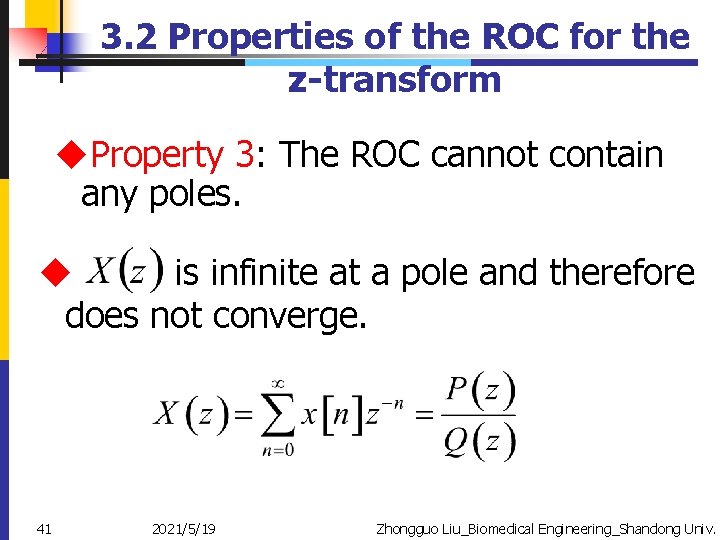
3. 2 Properties of the ROC for the z-transform u. Property 3: The ROC cannot contain any poles. u is infinite at a pole and therefore does not converge. 41 2021/5/19 Zhongguo Liu_Biomedical Engineering_Shandong Univ.
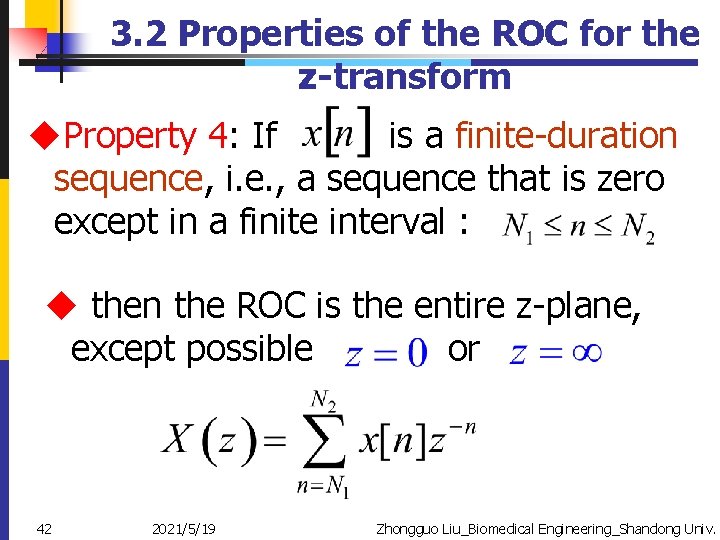
3. 2 Properties of the ROC for the z-transform u. Property 4: If is a finite-duration sequence, i. e. , a sequence that is zero except in a finite interval : u then the ROC is the entire z-plane, except possible or 42 2021/5/19 Zhongguo Liu_Biomedical Engineering_Shandong Univ.
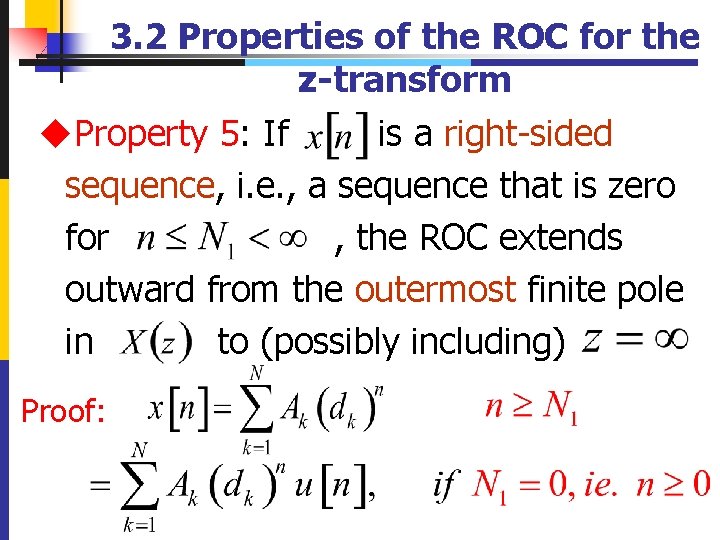
3. 2 Properties of the ROC for the z-transform u. Property 5: If is a right-sided sequence, i. e. , a sequence that is zero for , the ROC extends outward from the outermost finite pole in to (possibly including) Proof:
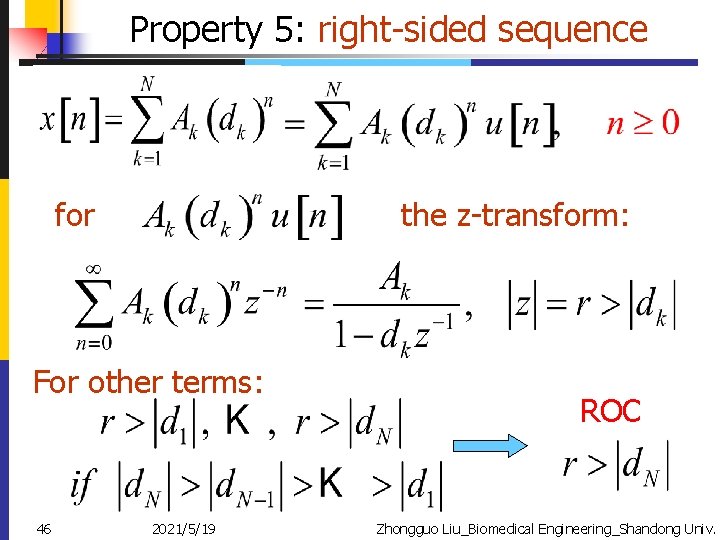
Property 5: right-sided sequence for the z-transform: For other terms: 46 2021/5/19 ROC Zhongguo Liu_Biomedical Engineering_Shandong Univ.
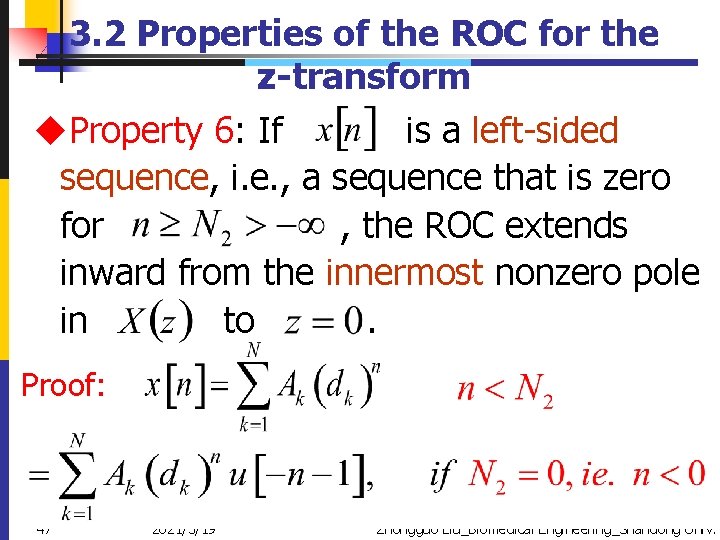
3. 2 Properties of the ROC for the z-transform u. Property 6: If is a left-sided sequence, i. e. , a sequence that is zero for , the ROC extends inward from the innermost nonzero pole in to. Proof: 47 2021/5/19 Zhongguo Liu_Biomedical Engineering_Shandong Univ.
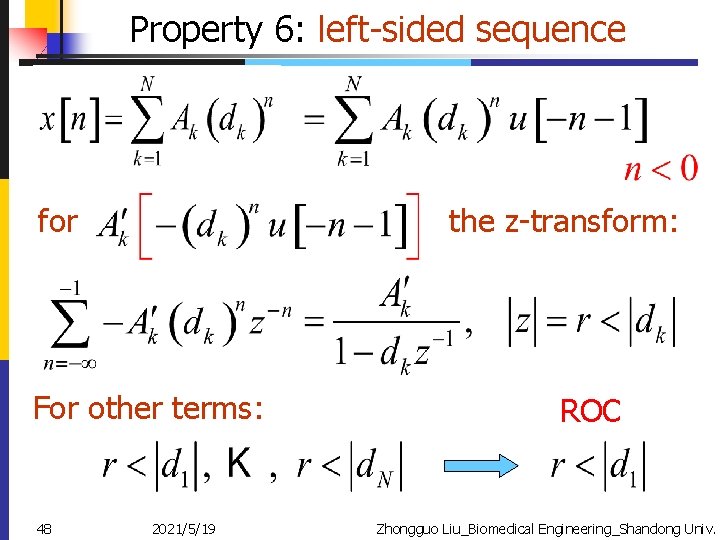
Property 6: left-sided sequence for the z-transform: For other terms: 48 2021/5/19 ROC Zhongguo Liu_Biomedical Engineering_Shandong Univ.
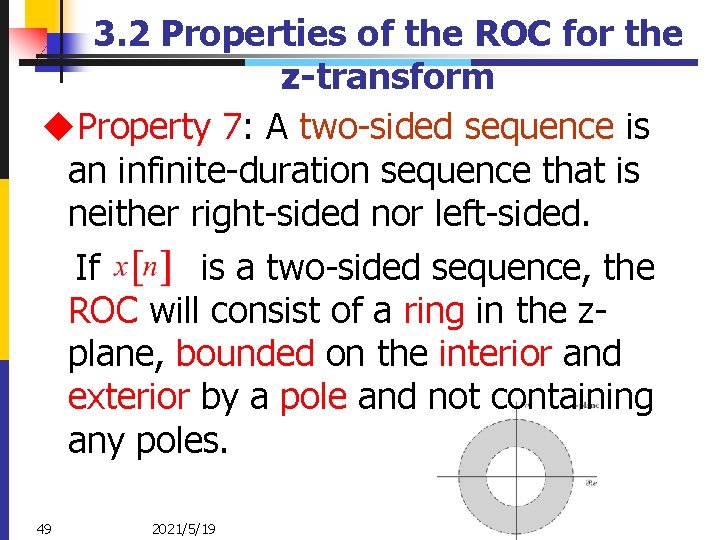
3. 2 Properties of the ROC for the z-transform u. Property 7: A two-sided sequence is an infinite-duration sequence that is neither right-sided nor left-sided. If is a two-sided sequence, the ROC will consist of a ring in the zplane, bounded on the interior and exterior by a pole and not containing any poles. 49 2021/5/19
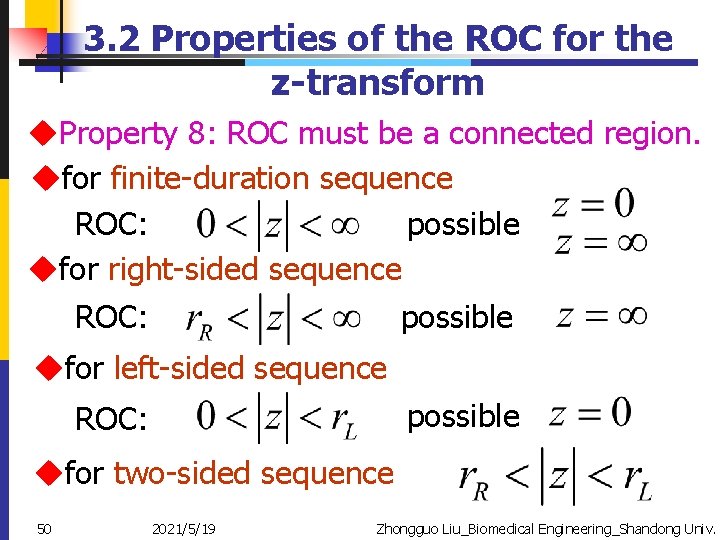
3. 2 Properties of the ROC for the z-transform u. Property 8: ROC must be a connected region. ufor finite-duration sequence possible ROC: ufor right-sided sequence ROC: possible ufor left-sided sequence possible ROC: ufor two-sided sequence 50 2021/5/19 Zhongguo Liu_Biomedical Engineering_Shandong Univ.
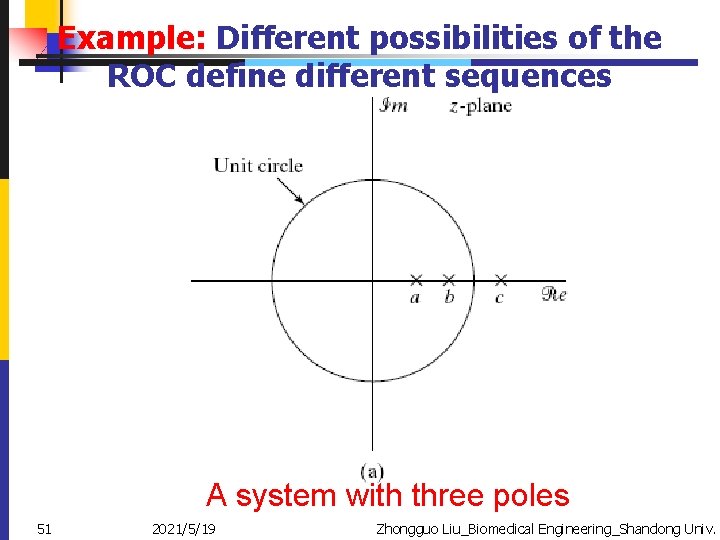
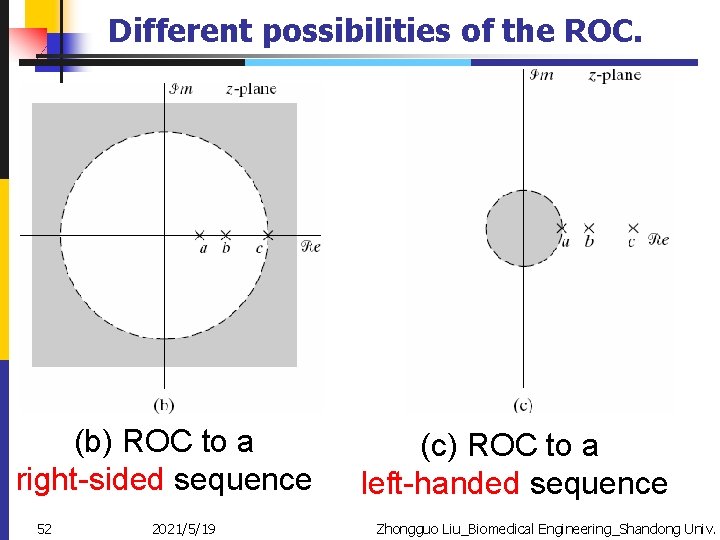
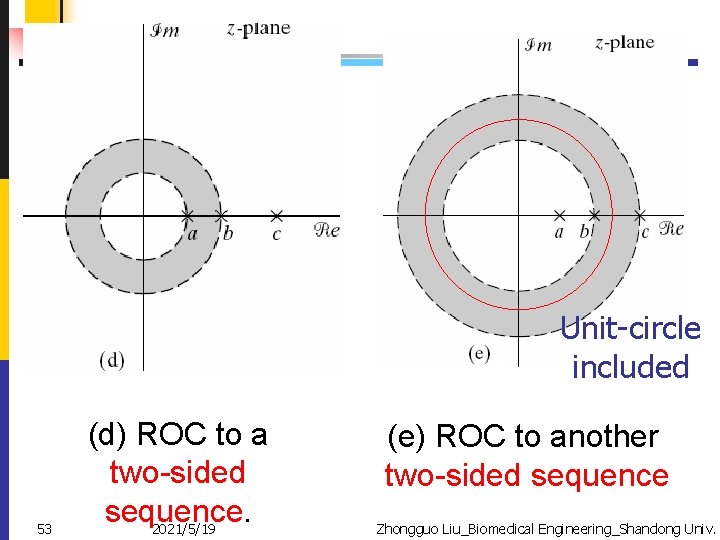
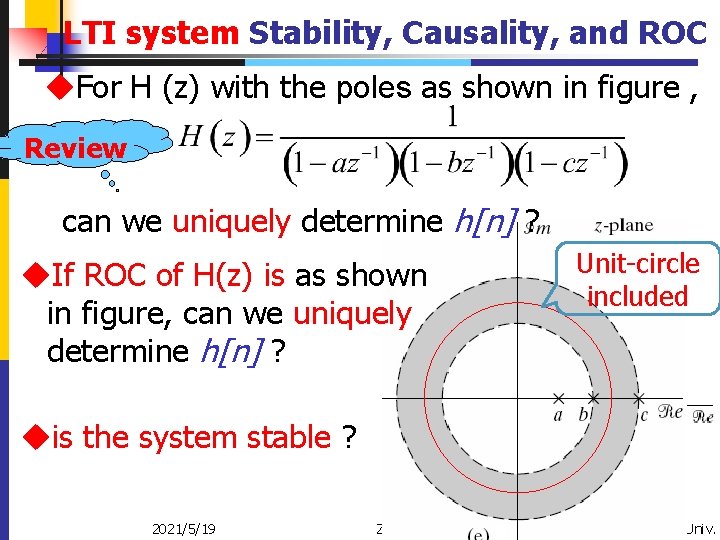
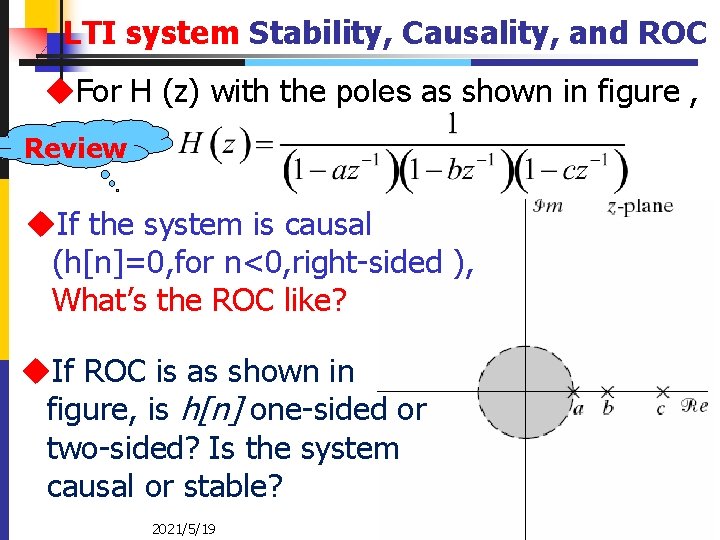
Example: Different possibilities of the ROC define different sequences A system with three poles 51 2021/5/19 Zhongguo Liu_Biomedical Engineering_Shandong Univ.
Different possibilities of the ROC. (b) ROC to a right-sided sequence 52 2021/5/19 (c) ROC to a left-handed sequence Zhongguo Liu_Biomedical Engineering_Shandong Univ.
Unit-circle included 53 (d) ROC to a two-sided sequence. 2021/5/19 (e) ROC to another two-sided sequence Zhongguo Liu_Biomedical Engineering_Shandong Univ.
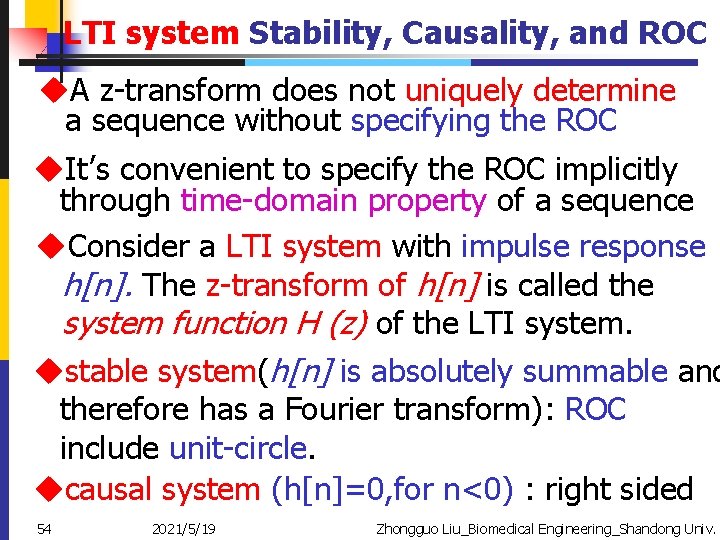
LTI system Stability, Causality, and ROC u. A z-transform does not uniquely determine a sequence without specifying the ROC u. It’s convenient to specify the ROC implicitly through time-domain property of a sequence u. Consider a LTI system with impulse response h[n]. The z-transform of h[n] is called the system function H (z) of the LTI system. ustable system(h[n] is absolutely summable and therefore has a Fourier transform): ROC include unit-circle. ucausal system (h[n]=0, for n<0) : right sided 54 2021/5/19 Zhongguo Liu_Biomedical Engineering_Shandong Univ.
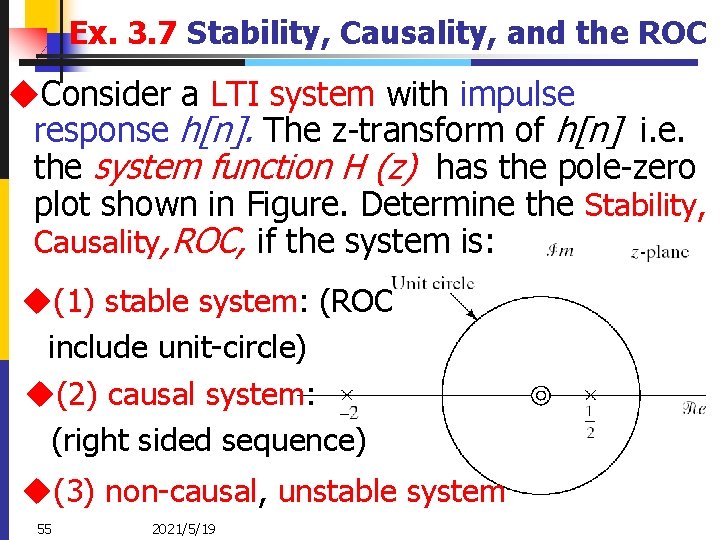
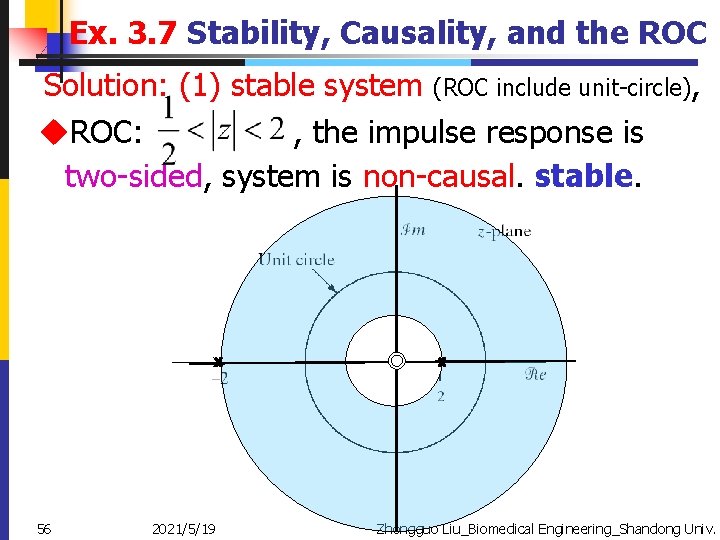
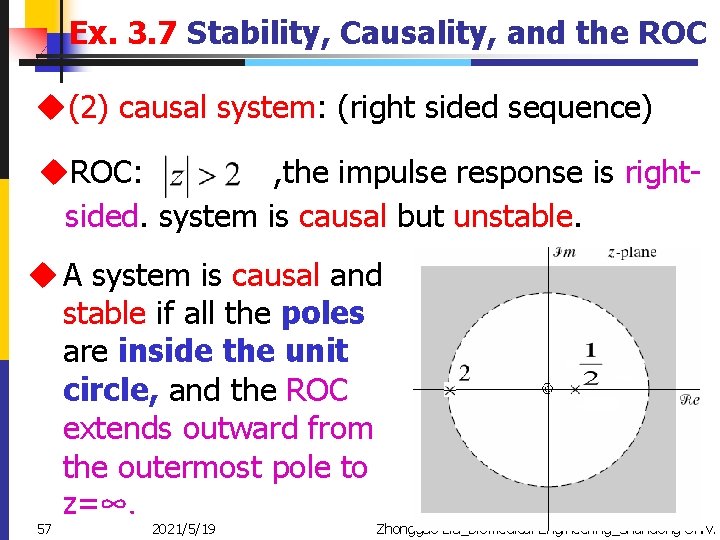
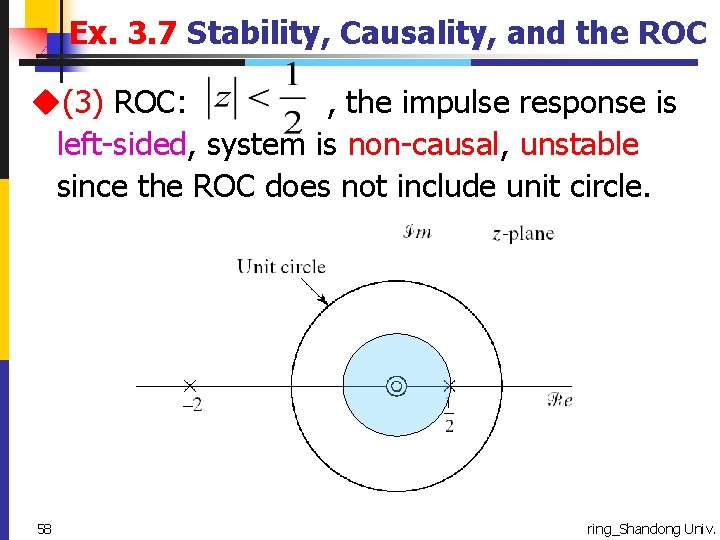
Ex. 3. 7 Stability, Causality, and the ROC u. Consider a LTI system with impulse response h[n]. The z-transform of h[n] i. e. the system function H (z) has the pole-zero plot shown in Figure. Determine the Stability, Causality, ROC, if the system is: u(1) stable system: (ROC include unit-circle) u(2) causal system: (right sided sequence) u(3) non-causal, unstable system 55 2021/5/19 Zhongguo Liu_Biomedical Engineering_Shandong Univ.
Ex. 3. 7 Stability, Causality, and the ROC Solution: (1) stable system (ROC include unit-circle), u. ROC: , the impulse response is two-sided, system is non-causal. stable. 56 2021/5/19 Zhongguo Liu_Biomedical Engineering_Shandong Univ.
Ex. 3. 7 Stability, Causality, and the ROC u(2) causal system: (right sided sequence) u. ROC: , the impulse response is rightsided. system is causal but unstable. u A system is causal and stable if all the poles are inside the unit circle, and the ROC extends outward from the outermost pole to z=∞. 57 2021/5/19 Zhongguo Liu_Biomedical Engineering_Shandong Univ.
Ex. 3. 7 Stability, Causality, and the ROC u(3) ROC: , the impulse response is left-sided, system is non-causal, unstable since the ROC does not include unit circle. 58 2021/5/19 Zhongguo Liu_Biomedical Engineering_Shandong Univ.
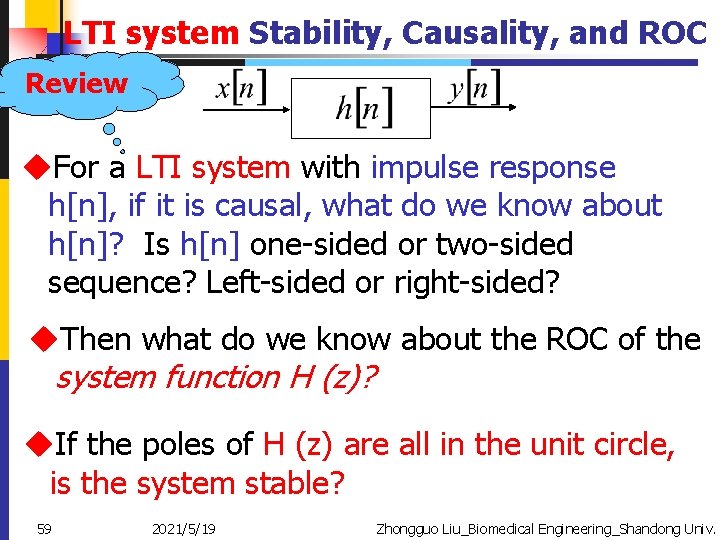
LTI system Stability, Causality, and ROC Review u. For a LTI system with impulse response h[n], if it is causal, what do we know about h[n]? Is h[n] one-sided or two-sided sequence? Left-sided or right-sided? u. Then what do we know about the ROC of the system function H (z)? u. If the poles of H (z) are all in the unit circle, is the system stable? 59 2021/5/19 Zhongguo Liu_Biomedical Engineering_Shandong Univ.
LTI system Stability, Causality, and ROC u. For H (z) with the poles as shown in figure , Review can we uniquely determine h[n] ? u. If ROC of H(z) is as shown in figure, can we uniquely determine h[n] ? Unit-circle included uis the system stable ? 2021/5/19 Zhongguo Liu_Biomedical Engineering_Shandong Univ.
LTI system Stability, Causality, and ROC u. For H (z) with the poles as shown in figure , Review u. If the system is causal (h[n]=0, for n<0, right-sided ), What’s the ROC like? u. If ROC is as shown in figure, is h[n] one-sided or two-sided? Is the system causal or stable? 2021/5/19 Zhongguo Liu_Biomedical Engineering_Shandong Univ.
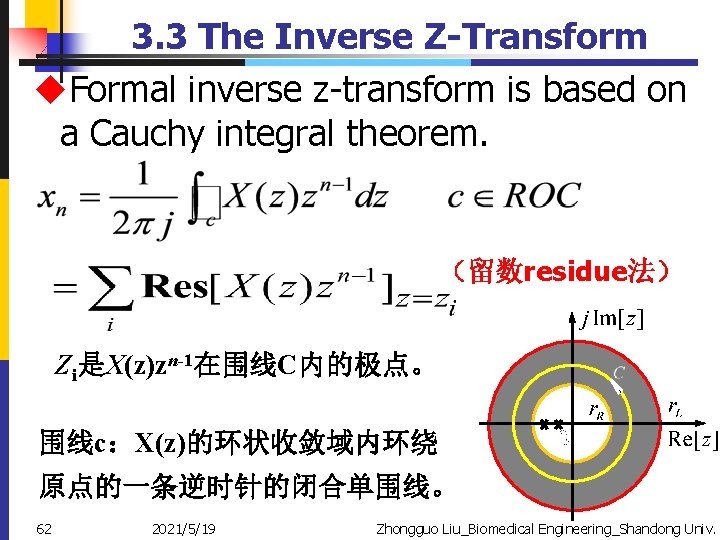
3. 3 The Inverse Z-Transform u. Formal inverse z-transform is based on a Cauchy integral theorem. (留数residue法) Zi是X(z)zn-1在围线C内的极点。 围线c:X(z)的环状收敛域内环绕 原点的一条逆时针的闭合单围线。 62 2021/5/19 Zhongguo Liu_Biomedical Engineering_Shandong Univ.
3. 3 The Inverse Z-Transform u. Less formal ways are sufficient and preferable in finding the inverse z-transform. : u. Inspection method u. Partial fraction expansion u. Power series expansion 63 2021/5/19 Zhongguo Liu_Biomedical Engineering_Shandong Univ.
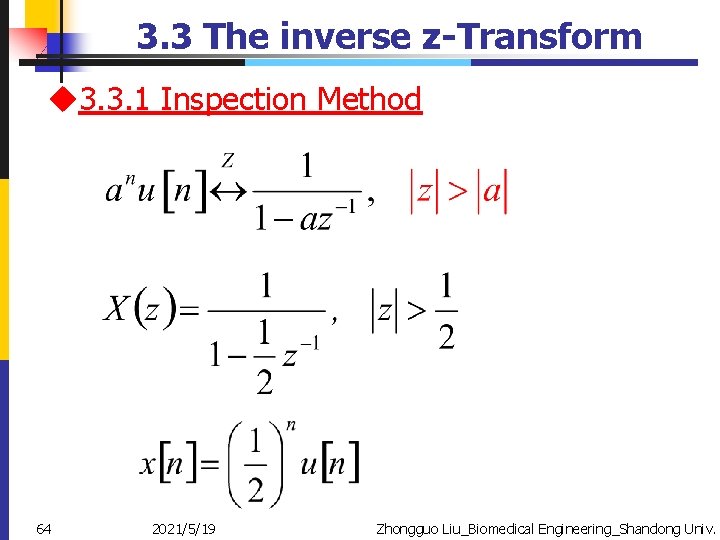
3. 3 The inverse z-Transform u 3. 3. 1 Inspection Method 64 2021/5/19 Zhongguo Liu_Biomedical Engineering_Shandong Univ.
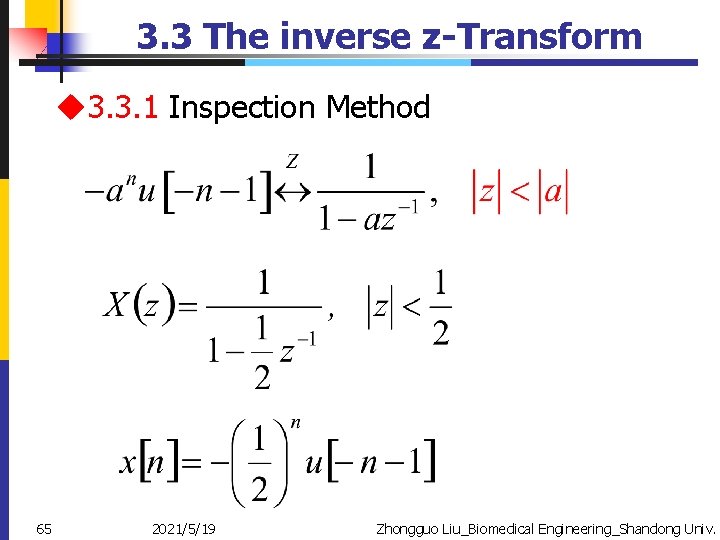
3. 3 The inverse z-Transform u 3. 3. 1 Inspection Method 65 2021/5/19 Zhongguo Liu_Biomedical Engineering_Shandong Univ.
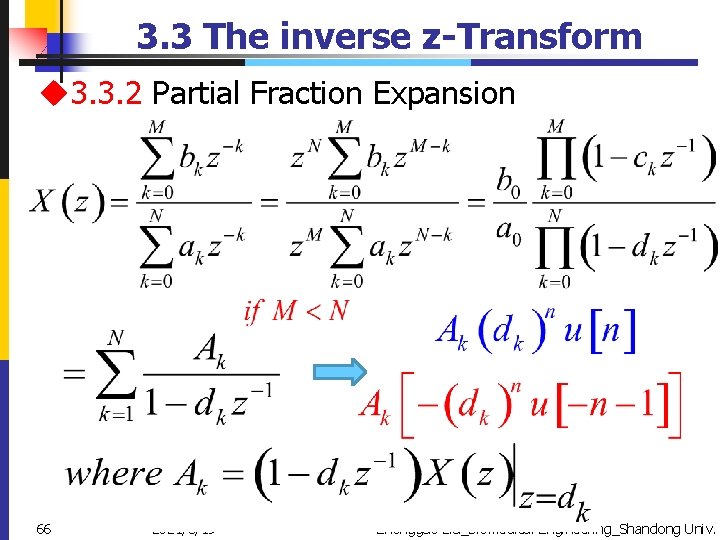
3. 3 The inverse z-Transform u 3. 3. 2 Partial Fraction Expansion 66 2021/5/19 Zhongguo Liu_Biomedical Engineering_Shandong Univ.
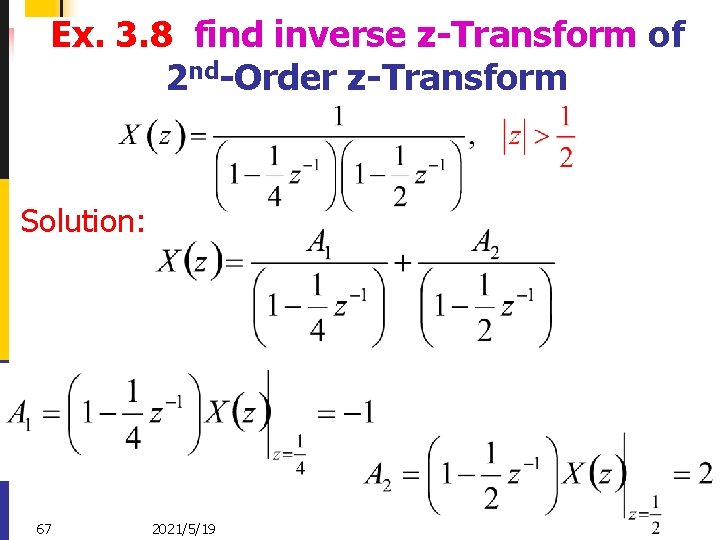
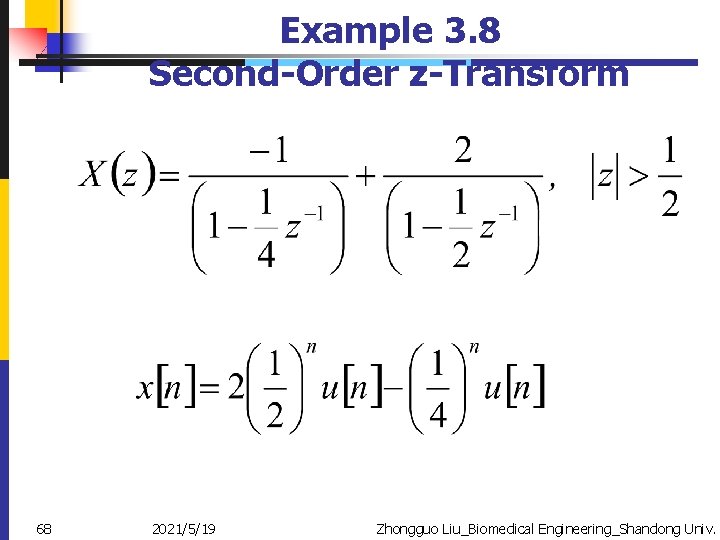
Ex. 3. 8 find inverse z-Transform of 2 nd-Order z-Transform Solution: 67 2021/5/19 Zhongguo Liu_Biomedical Engineering_Shandong Univ.
Example 3. 8 Second-Order z-Transform 68 2021/5/19 Zhongguo Liu_Biomedical Engineering_Shandong Univ.
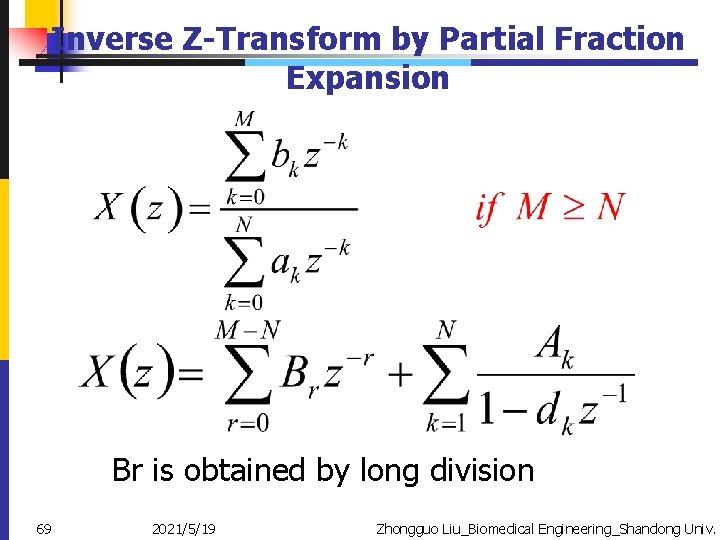
Inverse Z-Transform by Partial Fraction Expansion Br is obtained by long division 69 2021/5/19 Zhongguo Liu_Biomedical Engineering_Shandong Univ.
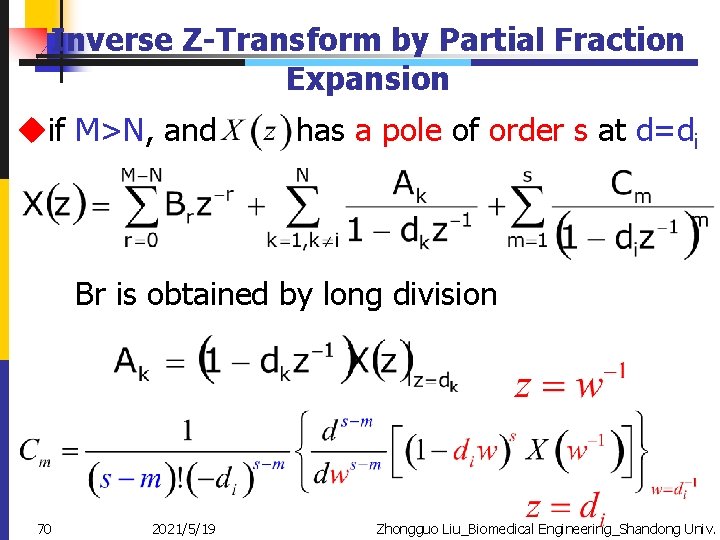
Inverse Z-Transform by Partial Fraction Expansion uif M>N, and has a pole of order s at d=di Br is obtained by long division 70 2021/5/19 Zhongguo Liu_Biomedical Engineering_Shandong Univ.
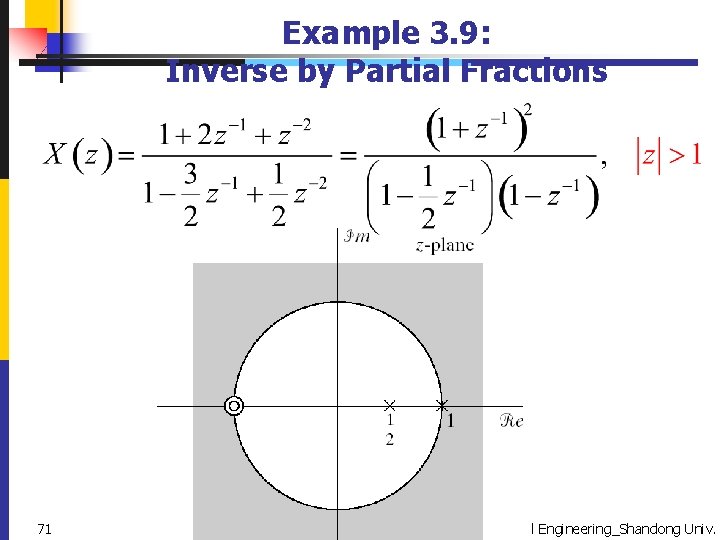
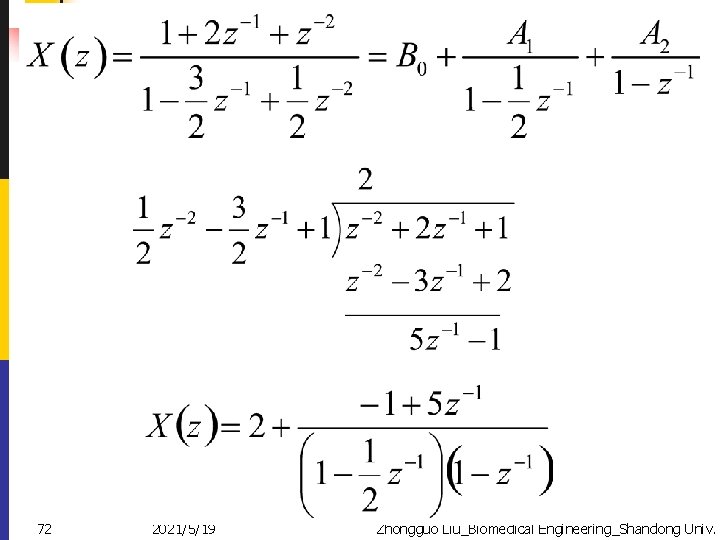
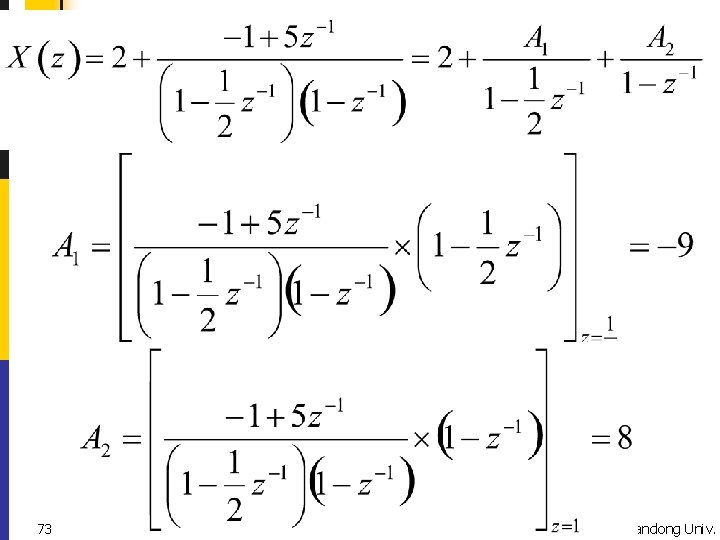
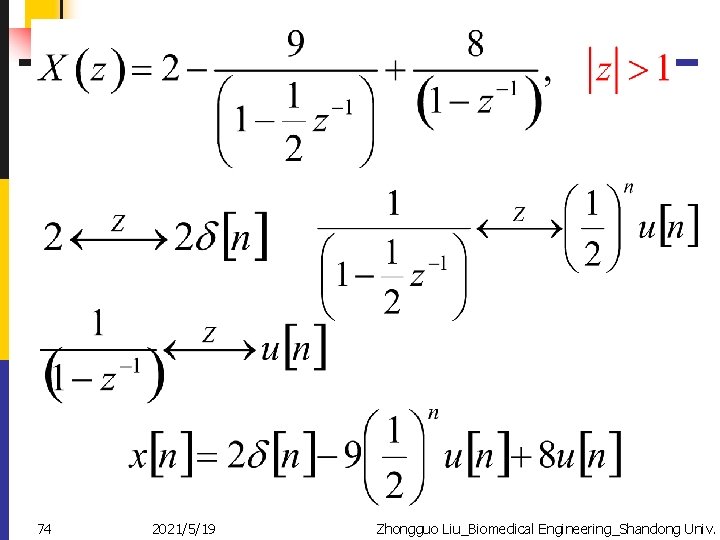
Example 3. 9: Inverse by Partial Fractions 71 2021/5/19 Zhongguo Liu_Biomedical Engineering_Shandong Univ.
72 2021/5/19 Zhongguo Liu_Biomedical Engineering_Shandong Univ.
73 2021/5/19 Zhongguo Liu_Biomedical Engineering_Shandong Univ.
74 2021/5/19 Zhongguo Liu_Biomedical Engineering_Shandong Univ.
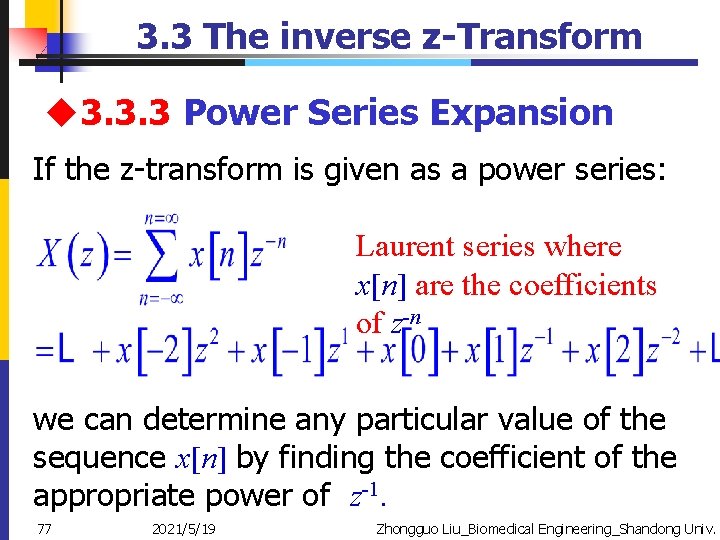
3. 3 The inverse z-Transform u 3. 3. 3 Power Series Expansion If the z-transform is given as a power series: Laurent series where x[n] are the coefficients of z-n we can determine any particular value of the sequence x[n] by finding the coefficient of the appropriate power of z-1. 77 2021/5/19 Zhongguo Liu_Biomedical Engineering_Shandong Univ.
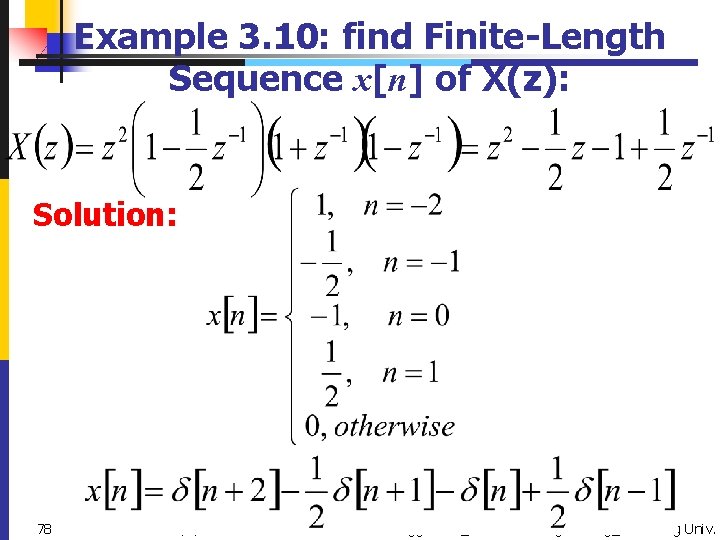
Example 3. 10: find Finite-Length Sequence x[n] of X(z): Solution: 78 2021/5/19 Zhongguo Liu_Biomedical Engineering_Shandong Univ.
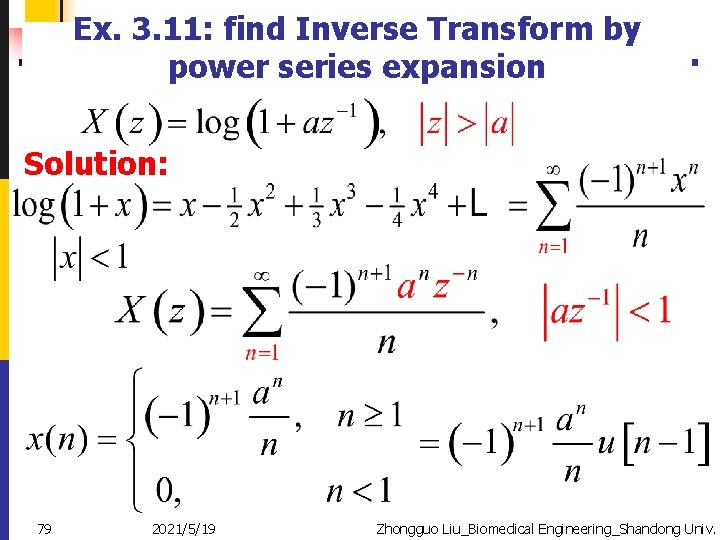
Ex. 3. 11: find Inverse Transform by power series expansion Solution: 79 2021/5/19 Zhongguo Liu_Biomedical Engineering_Shandong Univ.
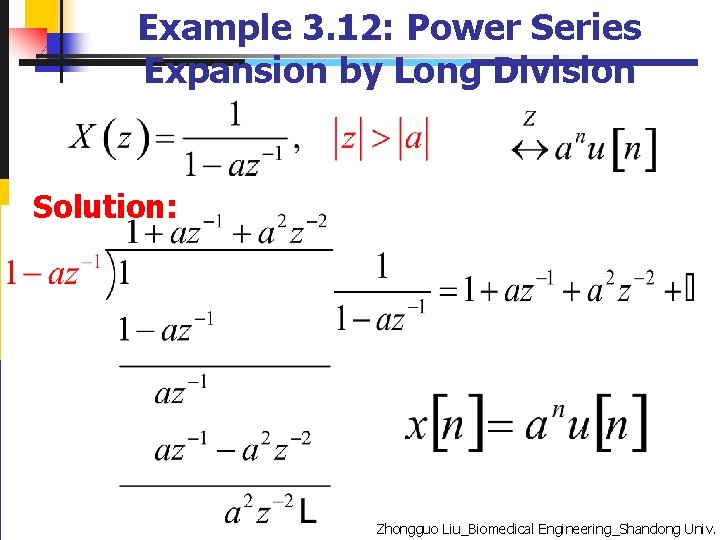
Example 3. 12: Power Series Expansion by Long Division Solution: 80 2021/5/19 Zhongguo Liu_Biomedical Engineering_Shandong Univ.
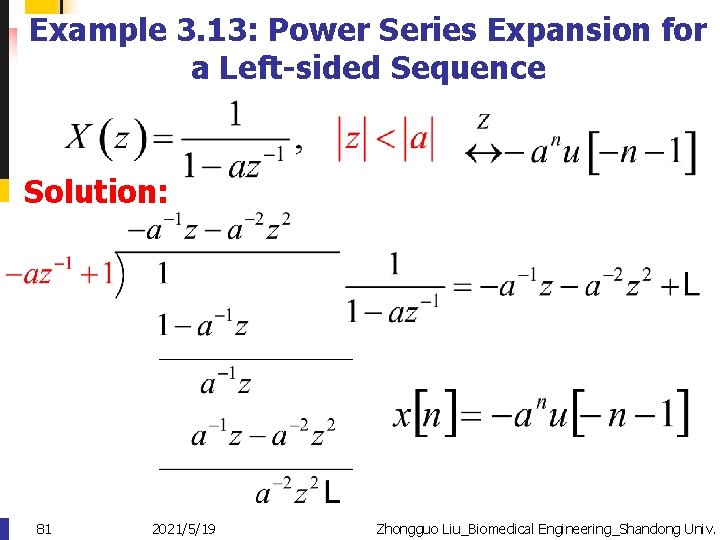
Example 3. 13: Power Series Expansion for a Left-sided Sequence Solution: 81 2021/5/19 Zhongguo Liu_Biomedical Engineering_Shandong Univ.
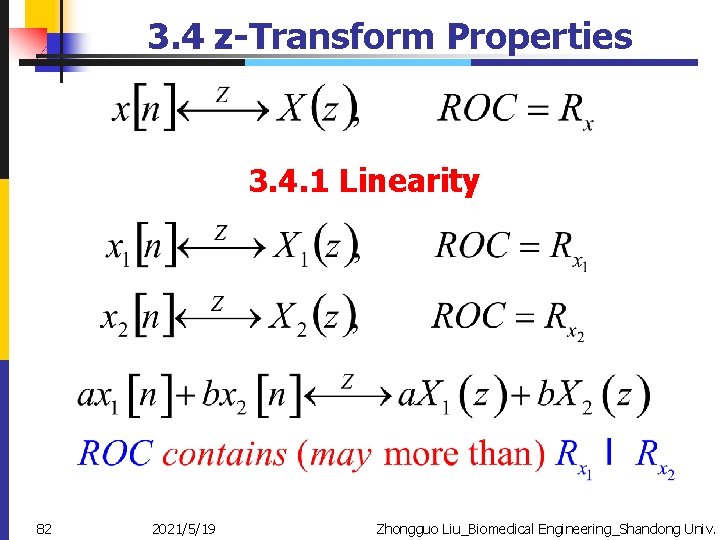
3. 4 z-Transform Properties 3. 4. 1 Linearity 82 2021/5/19 Zhongguo Liu_Biomedical Engineering_Shandong Univ.
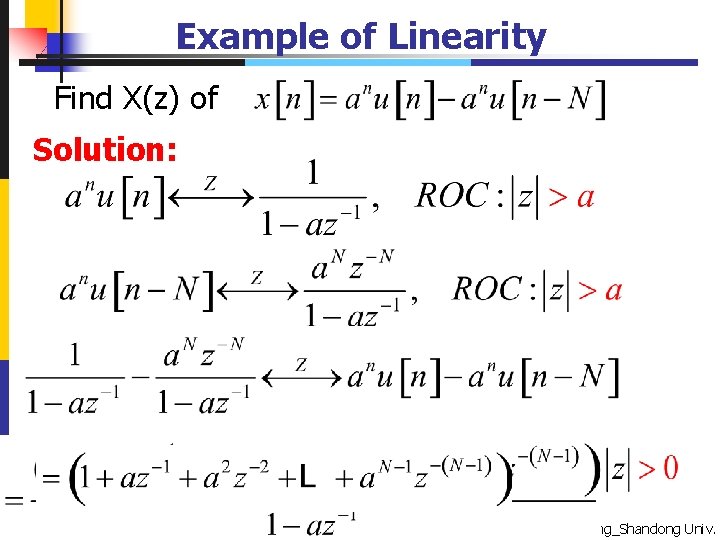
Example of Linearity Find X(z) of Solution: 83 2021/5/19 Zhongguo Liu_Biomedical Engineering_Shandong Univ.
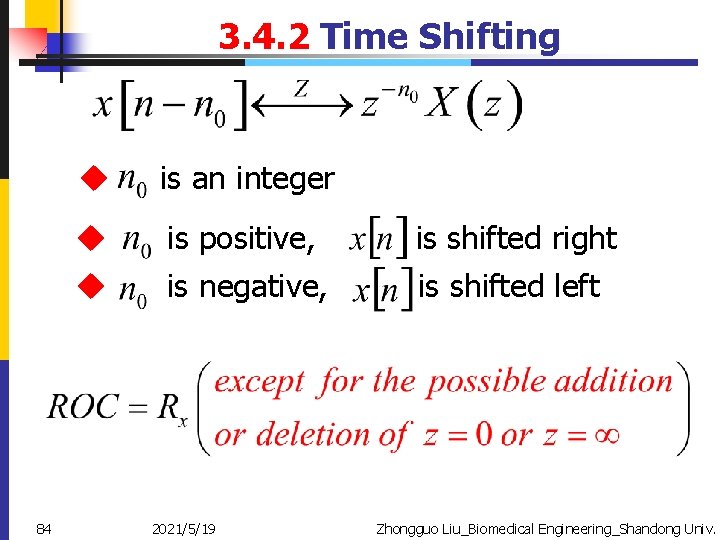
3. 4. 2 Time Shifting 84 u is an integer u u is positive, is negative, 2021/5/19 is shifted right is shifted left Zhongguo Liu_Biomedical Engineering_Shandong Univ.
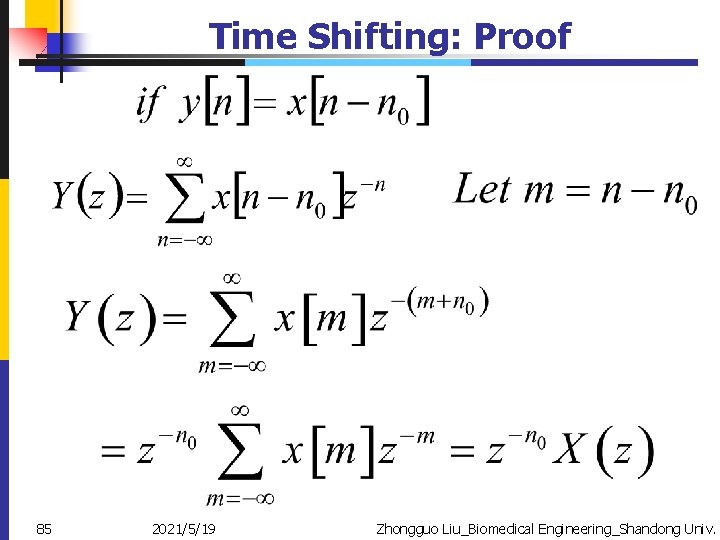
Time Shifting: Proof 85 2021/5/19 Zhongguo Liu_Biomedical Engineering_Shandong Univ.
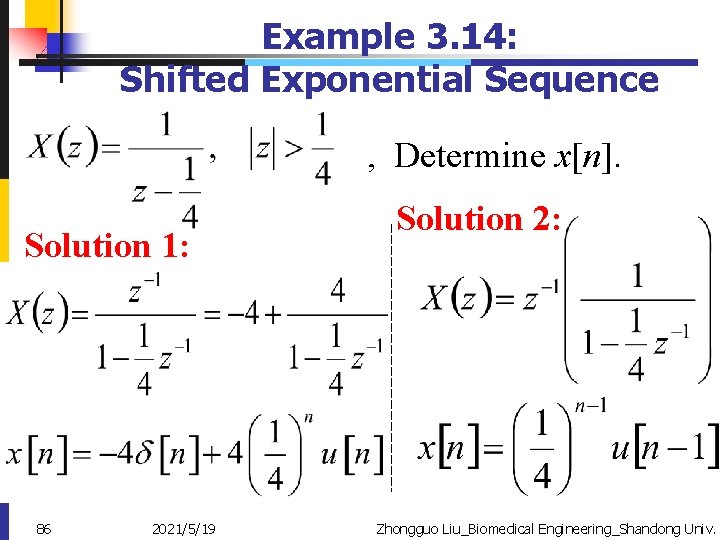
Example 3. 14: Shifted Exponential Sequence , Determine x[n]. Solution 1: 86 2021/5/19 Solution 2: Zhongguo Liu_Biomedical Engineering_Shandong Univ.
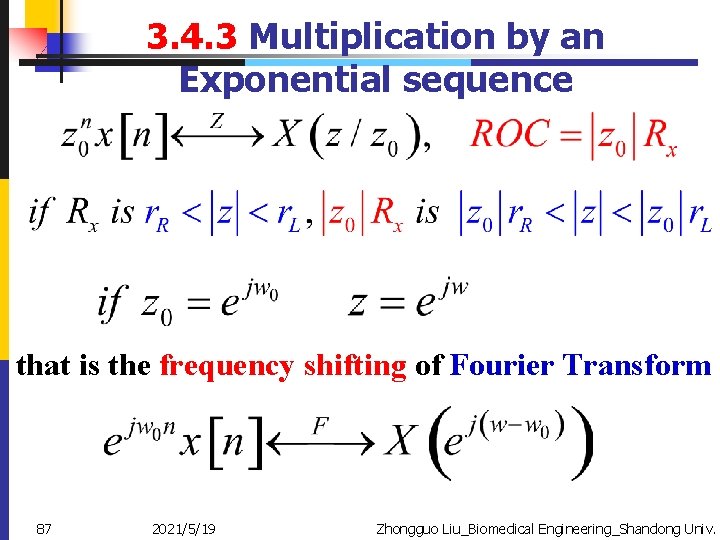
3. 4. 3 Multiplication by an Exponential sequence that is the frequency shifting of Fourier Transform 87 2021/5/19 Zhongguo Liu_Biomedical Engineering_Shandong Univ.
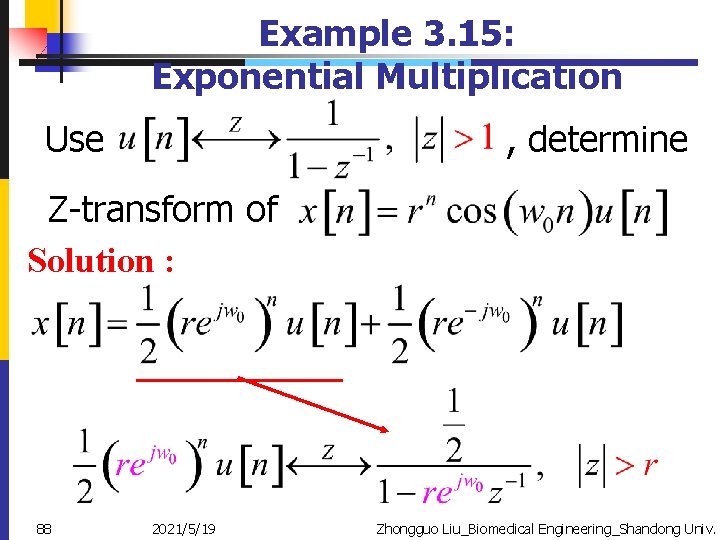
Example 3. 15: Exponential Multiplication Use , determine Z-transform of Solution : 88 2021/5/19 Zhongguo Liu_Biomedical Engineering_Shandong Univ.
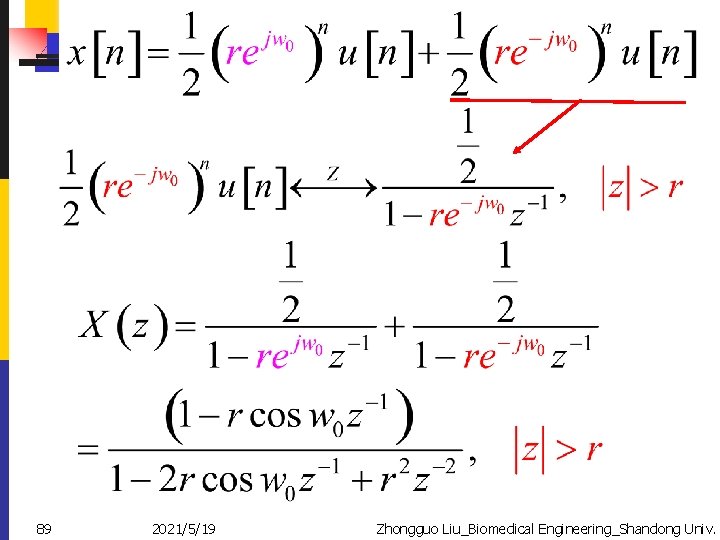
89 2021/5/19 Zhongguo Liu_Biomedical Engineering_Shandong Univ.
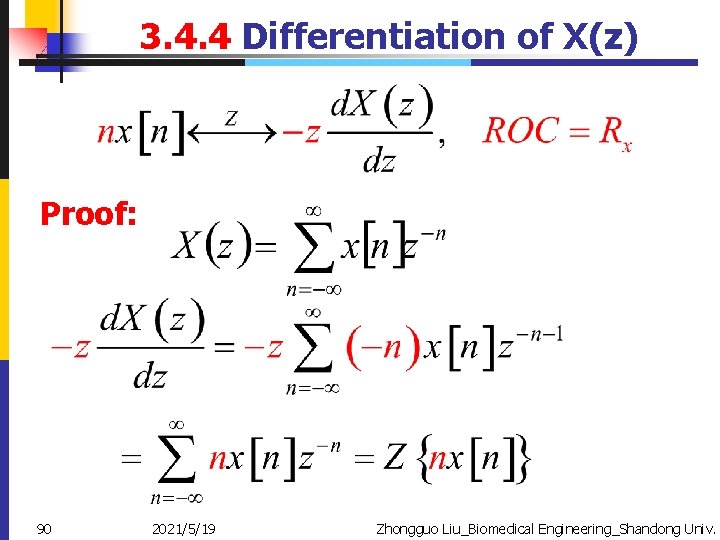
3. 4. 4 Differentiation of X(z) Proof: 90 2021/5/19 Zhongguo Liu_Biomedical Engineering_Shandong Univ.
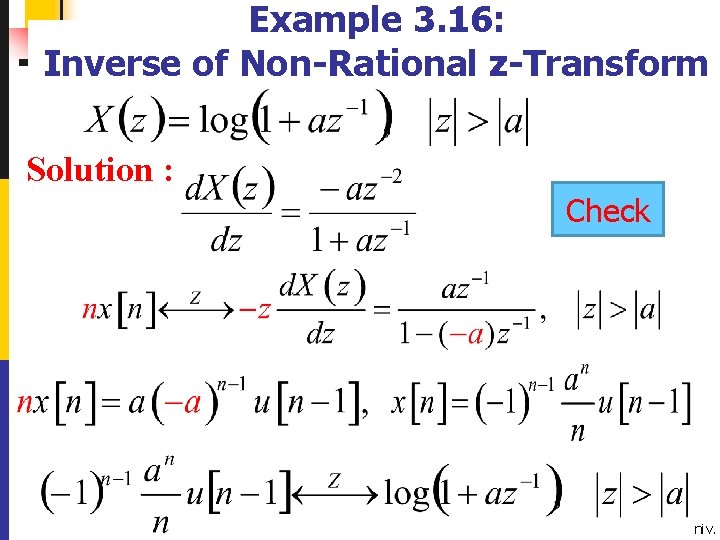
Example 3. 16: Inverse of Non-Rational z-Transform Solution : Check 91 2021/5/19 Zhongguo Liu_Biomedical Engineering_Shandong Univ.
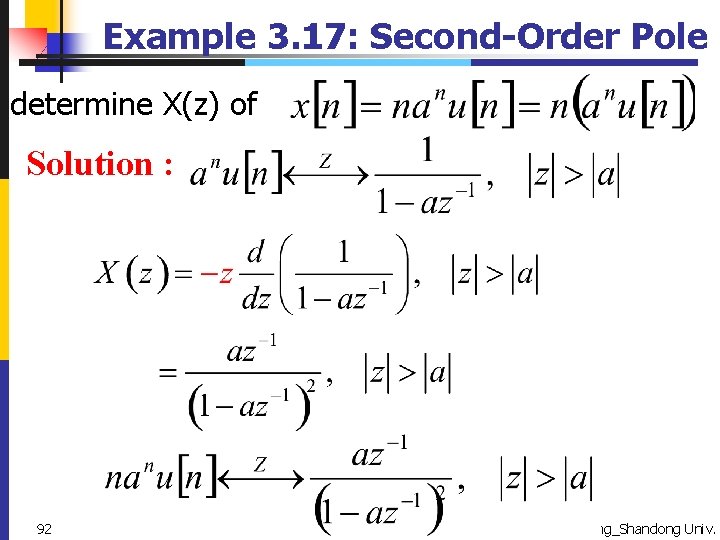
Example 3. 17: Second-Order Pole determine X(z) of Solution : 92 2021/5/19 Zhongguo Liu_Biomedical Engineering_Shandong Univ.
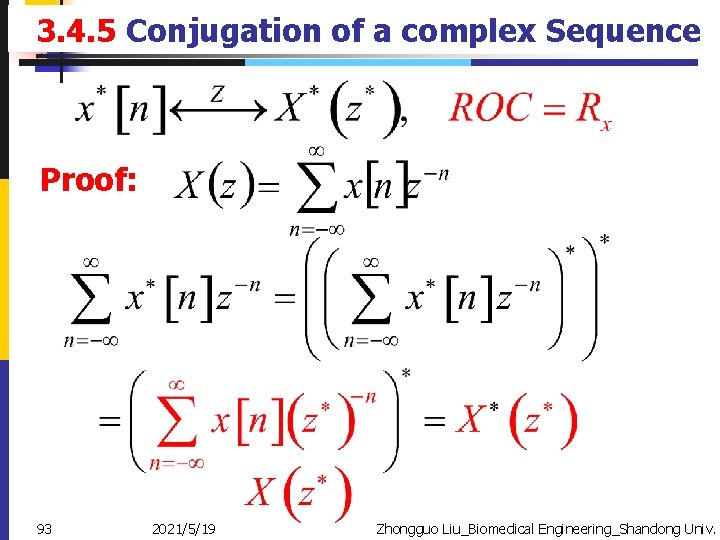
3. 4. 5 Conjugation of a complex Sequence Proof: 93 2021/5/19 Zhongguo Liu_Biomedical Engineering_Shandong Univ.
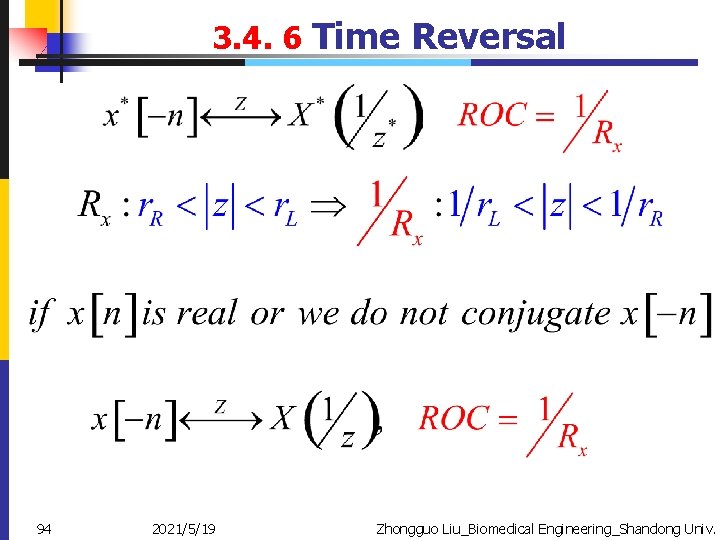
3. 4. 6 Time Reversal 94 2021/5/19 Zhongguo Liu_Biomedical Engineering_Shandong Univ.
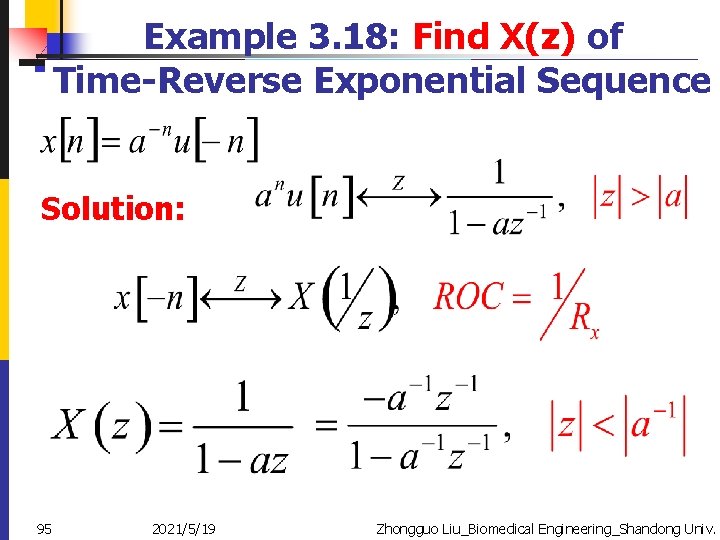
Example 3. 18: Find X(z) of Time-Reverse Exponential Sequence Solution: 95 2021/5/19 Zhongguo Liu_Biomedical Engineering_Shandong Univ.
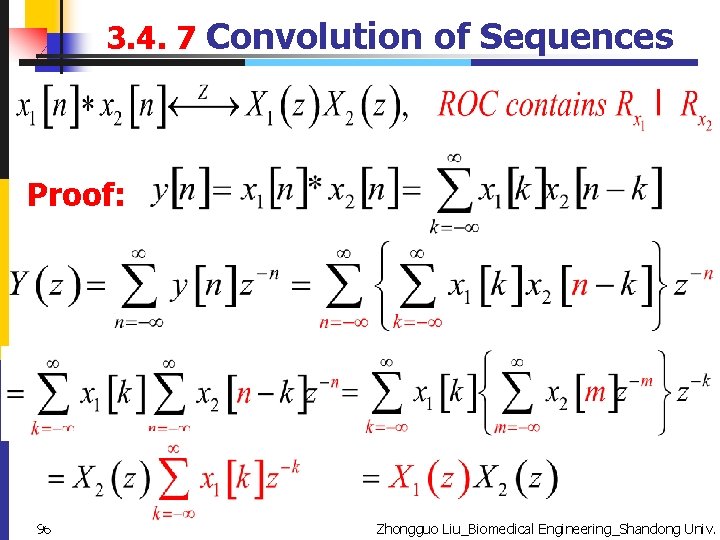
3. 4. 7 Convolution of Sequences Proof: 96 2021/5/19 Zhongguo Liu_Biomedical Engineering_Shandong Univ.
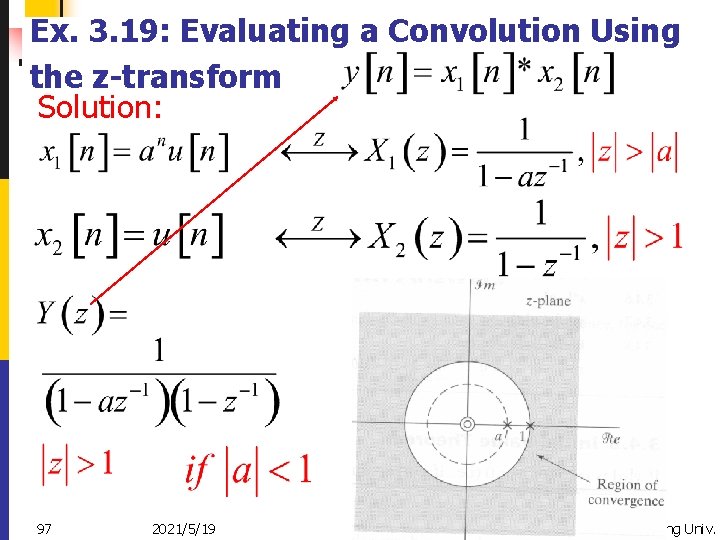
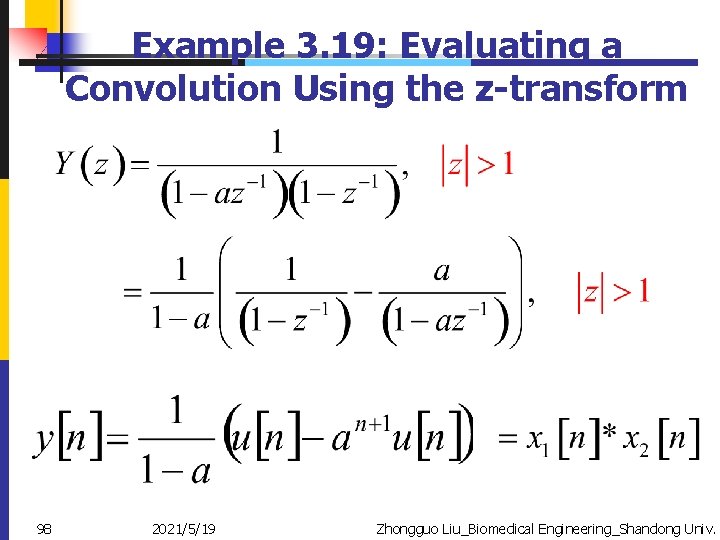
Ex. 3. 19: Evaluating a Convolution Using the z-transform Solution: 97 2021/5/19 Zhongguo Liu_Biomedical Engineering_Shandong Univ.
Example 3. 19: Evaluating a Convolution Using the z-transform 98 2021/5/19 Zhongguo Liu_Biomedical Engineering_Shandong Univ.
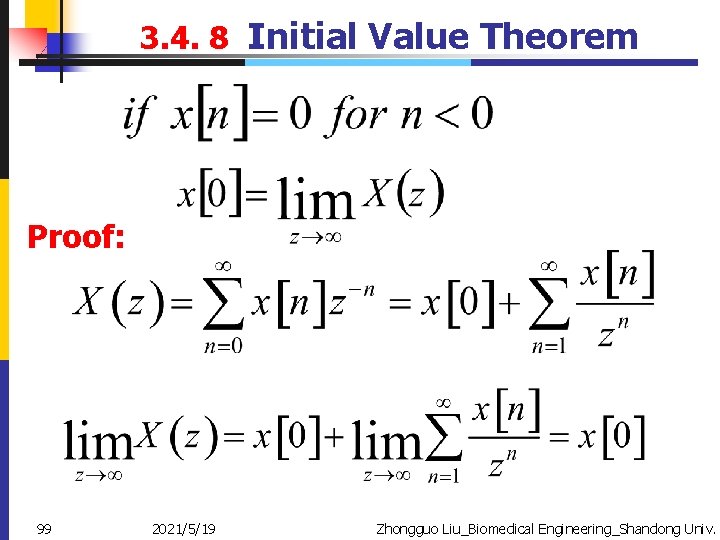
3. 4. 8 Initial Value Theorem Proof: 99 2021/5/19 Zhongguo Liu_Biomedical Engineering_Shandong Univ.
Chapter 3 HW u 3. 3, 3. 4, 3. 9, 3. 16 u 3. 2 , 3. 8, 3. 11, 3. 20 102 返 回 2021/5/19 上一页 Zhongguo Liu_Biomedical Engineering_Shandong Univ. 下一页