
Discovery Settlement of the New World Coach Crews
- Slides: 18
Discovery & Settlement of the New World Coach Crews – AP US History
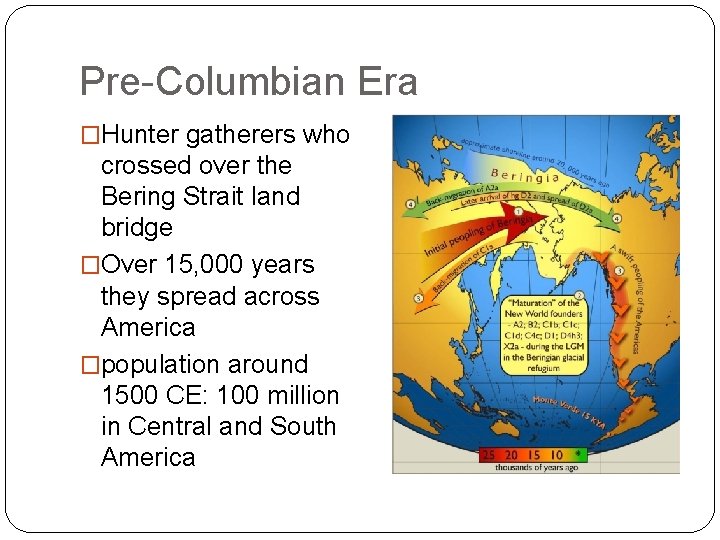
Pre-Columbian Era �Hunter gatherers who crossed over the Bering Strait land bridge �Over 15, 000 years they spread across America �population around 1500 CE: 100 million in Central and South America
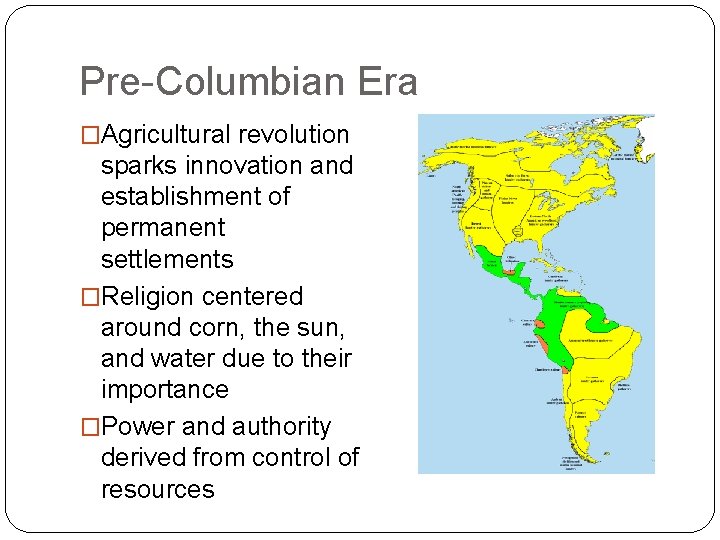
Pre-Columbian Era �Agricultural revolution sparks innovation and establishment of permanent settlements �Religion centered around corn, the sun, and water due to their importance �Power and authority derived from control of resources
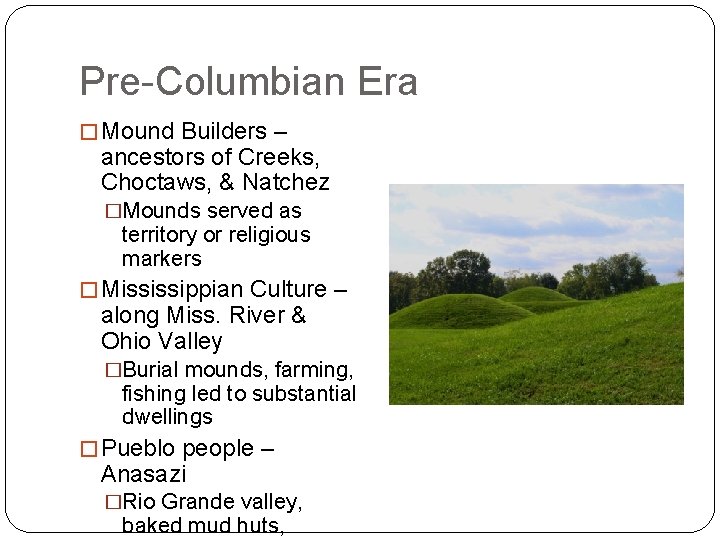
Pre-Columbian Era � Mound Builders – ancestors of Creeks, Choctaws, & Natchez �Mounds served as territory or religious markers � Mississippian Culture – along Miss. River & Ohio Valley �Burial mounds, farming, fishing led to substantial dwellings � Pueblo people – Anasazi �Rio Grande valley, baked mud huts,
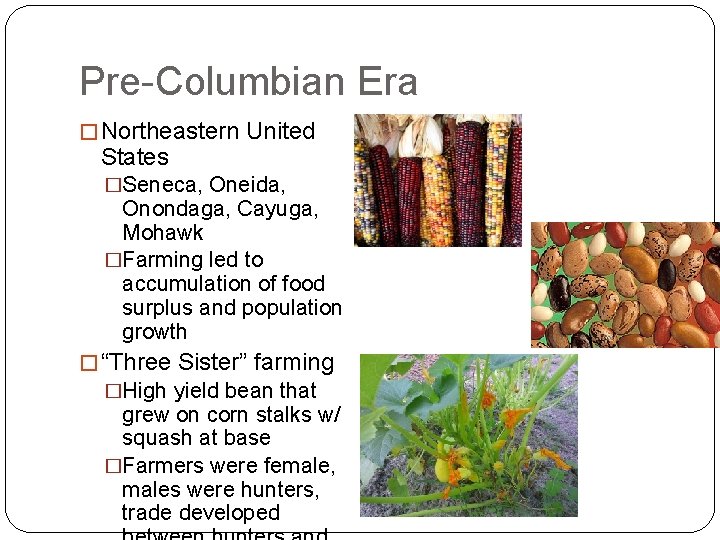
Pre-Columbian Era � Northeastern United States �Seneca, Oneida, Onondaga, Cayuga, Mohawk �Farming led to accumulation of food surplus and population growth � “Three Sister” farming �High yield bean that grew on corn stalks w/ squash at base �Farmers were female, males were hunters, trade developed
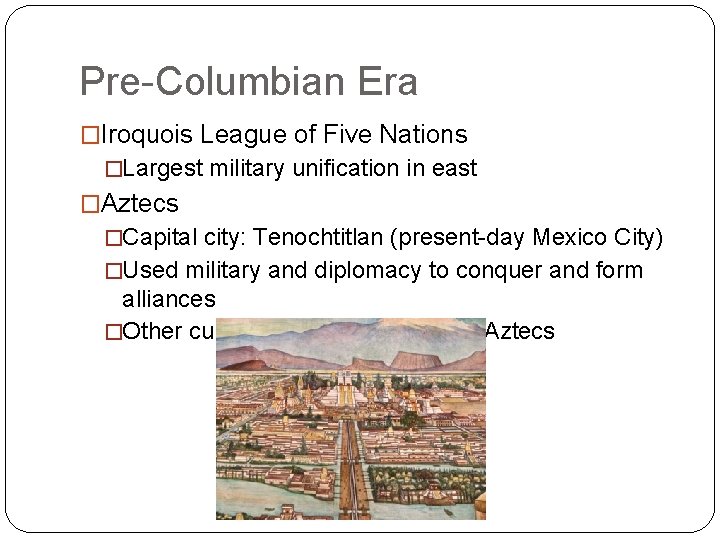
Pre-Columbian Era �Iroquois League of Five Nations �Largest military unification in east �Aztecs �Capital city: Tenochtitlan (present-day Mexico City) �Used military and diplomacy to conquer and form alliances �Other cultures paid tributes to the Aztecs
Pre-Columbian Era �Incas �Empire covered 2, 500 miles; present day Columbia, Ecuador, Peru, Argentina �Massive architecture: buildings and bridges �Largest empire by 1500 CE but allowed local groups to maintain sovereignty �Gave allegiance to Sapa Inca (believed to be descendent of sun-god)
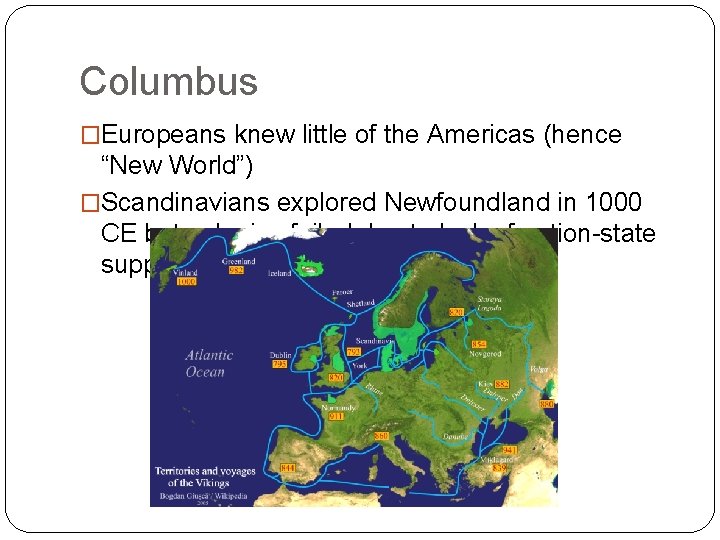
Columbus �Europeans knew little of the Americas (hence “New World”) �Scandinavians explored Newfoundland in 1000 CE but colonies failed due to lack of nation-state support
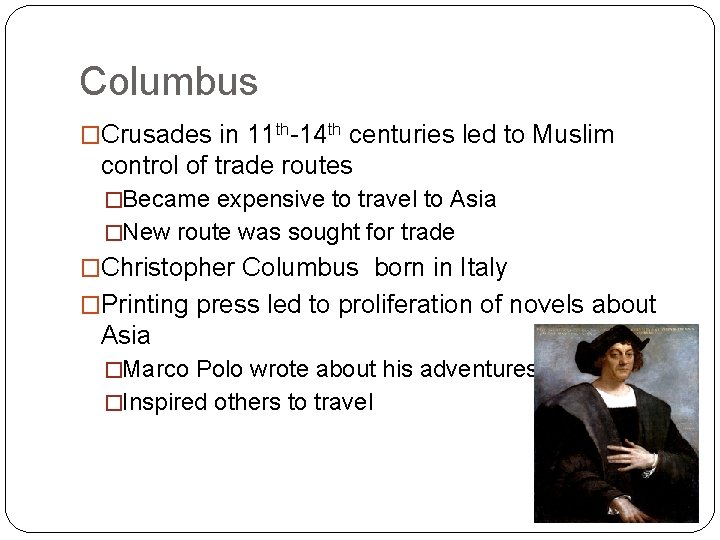
Columbus �Crusades in 11 th-14 th centuries led to Muslim control of trade routes �Became expensive to travel to Asia �New route was sought for trade �Christopher Columbus born in Italy �Printing press led to proliferation of novels about Asia �Marco Polo wrote about his adventures to Asia �Inspired others to travel
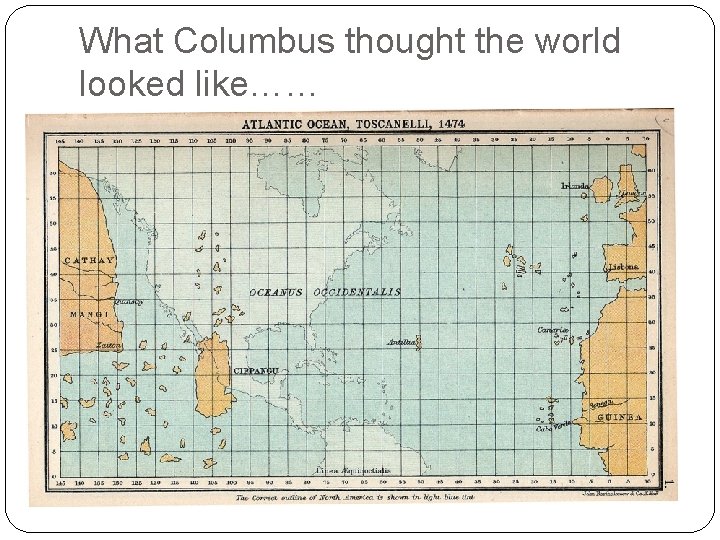
What Columbus thought the world looked like……
Columbus �Columbus became interested; pitched ideas to multiple countries but failed to gain support. �Spain supported him to help spread Christianity �Made many demands in the event he was susccessful �“Tierra, tierra”: land is spotted Oct 12, 1492 �Called it San Salvador; thought he was in the East Indies and called natives Indians �Impressed the king and queen; funded more trips in later years
Cortes Defeats the Aztecs �Conquistador: conqueror �Commissioned with expanding the Spanish empire into Mexico �Formed military alliances with Aztec enemies �Held Montezuma captive and ruled empire through him �Guns, swords, etc impressed and frightened Aztecs
Cortes Defeats the Aztecs � 1520 CE – Aztec people fight back; rebellion is crushed by Cortes �Tenochtitlan was destroyed, Christian churches built in place of temples. �Francisco Pizzaro conquered the Incas in Peru and Spain took control of most of Central and South America
Europe and the Impulse for Exploration
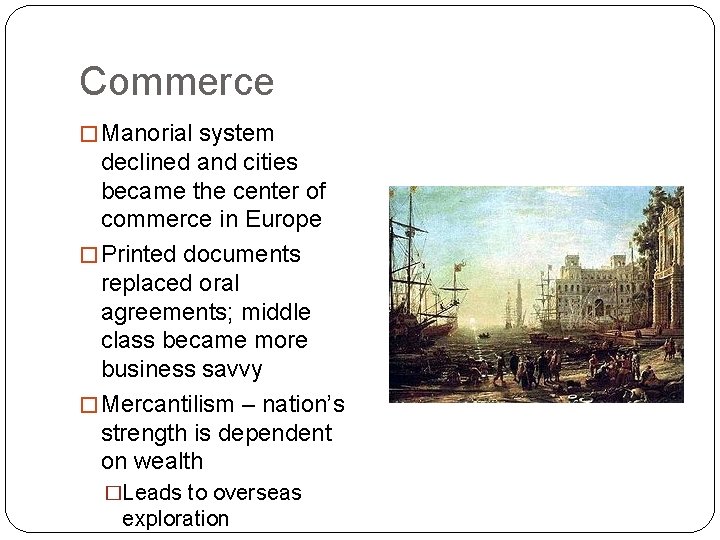
Commerce � Manorial system declined and cities became the center of commerce in Europe � Printed documents replaced oral agreements; middle class became more business savvy � Mercantilism – nation’s strength is dependent on wealth �Leads to overseas exploration
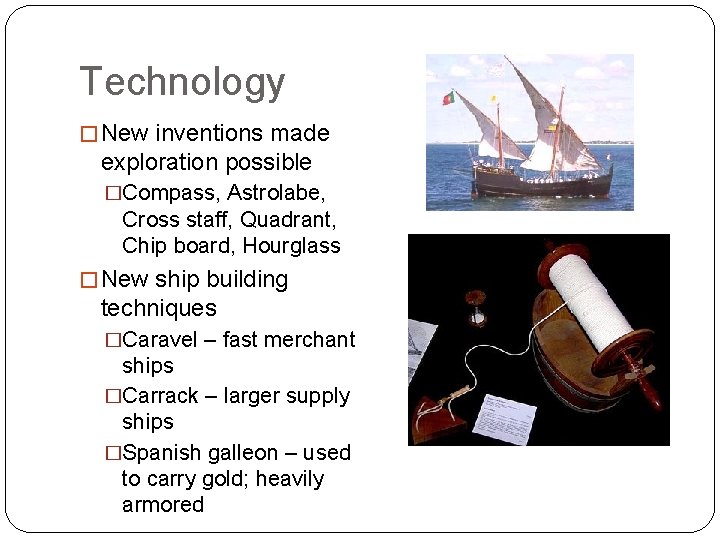
Technology � New inventions made exploration possible �Compass, Astrolabe, Cross staff, Quadrant, Chip board, Hourglass � New ship building techniques �Caravel – fast merchant ships �Carrack – larger supply ships �Spanish galleon – used to carry gold; heavily armored
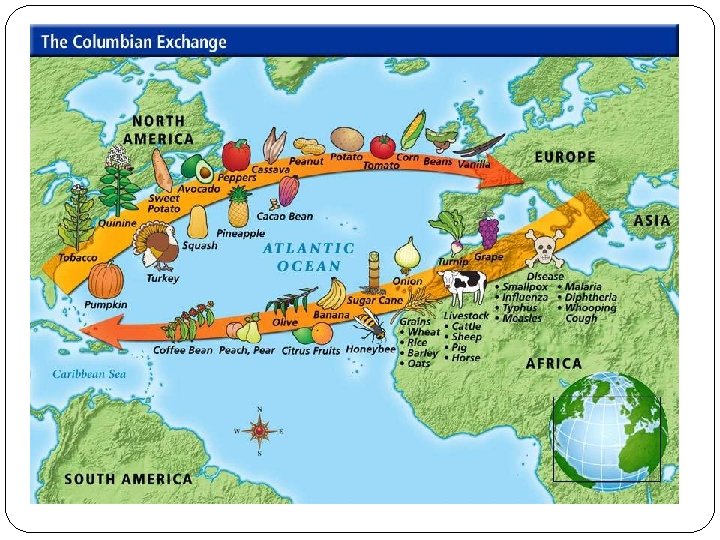
Ride of Nation States & Exchanges �Nations formed around people with common languages, cultures, histories, etc. �Citizens paid taxes for protection and growth of commerce �Columbian exchange – introduction of new ideas, products, diseases between Europe and New World �Led to 90% destruction of Native population.