
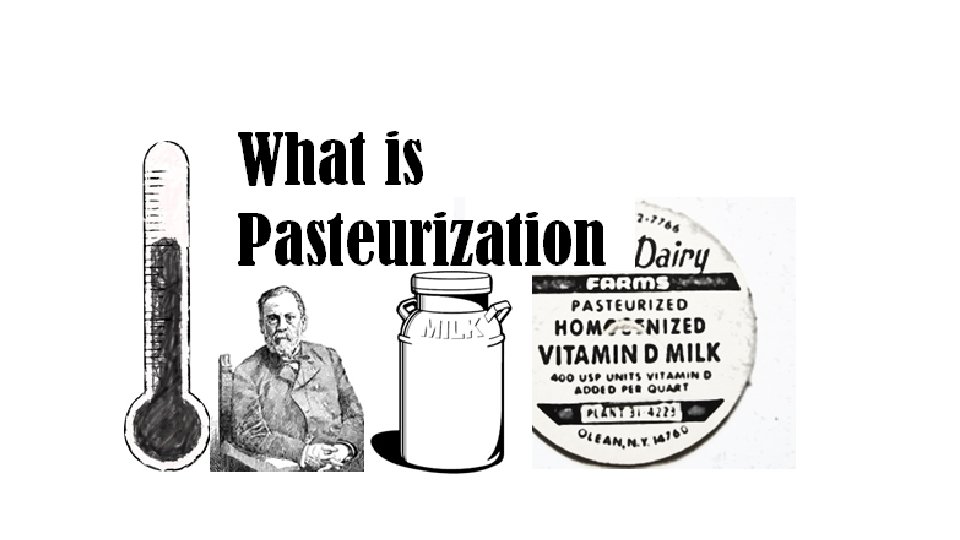
Discovery of Pasteurization The process of pasteurization was
- Slides: 8
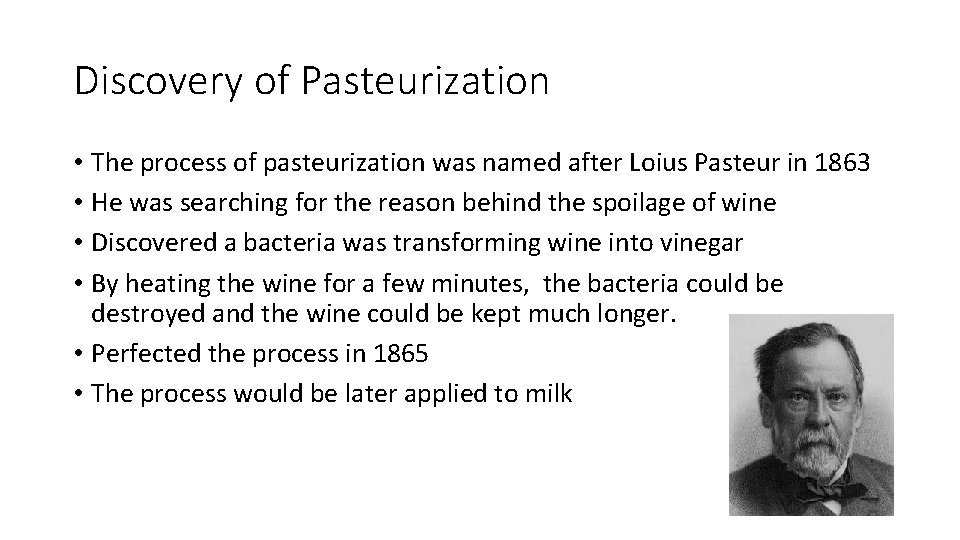
Discovery of Pasteurization • The process of pasteurization was named after Loius Pasteur in 1863 • He was searching for the reason behind the spoilage of wine • Discovered a bacteria was transforming wine into vinegar • By heating the wine for a few minutes, the bacteria could be destroyed and the wine could be kept much longer. • Perfected the process in 1865 • The process would be later applied to milk
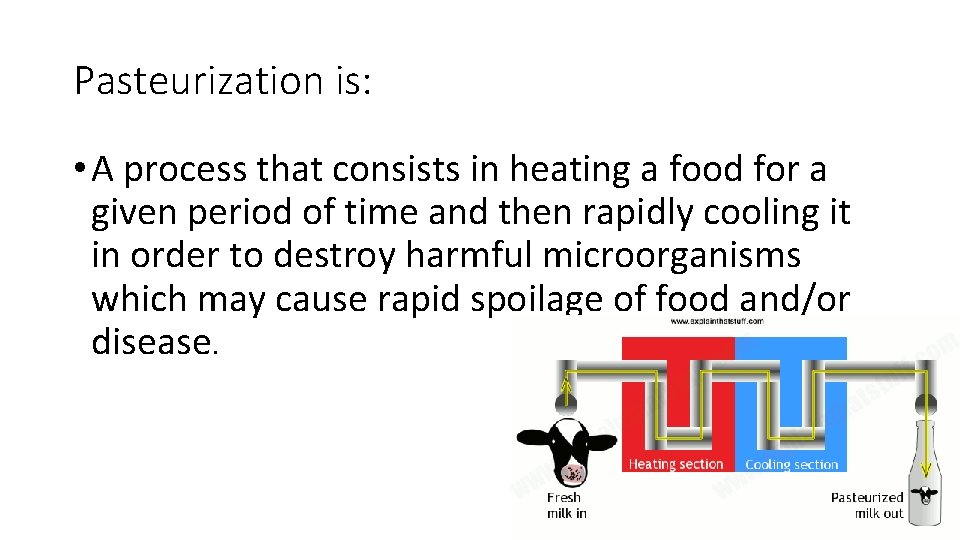
Pasteurization is: • A process that consists in heating a food for a given period of time and then rapidly cooling it in order to destroy harmful microorganisms which may cause rapid spoilage of food and/or disease.
Process of Pasteurization • Micro-organisms such as bacteria are responsible for deterioration of food. • Bacteria cannot survive at temperatures that are too high. • Pasteurized foods are heated between 72 -78 degrees celsius for about 15 seconds. • Rapidly cooled • Destroys harmful bacterias • Preserves food quality
Used for three main reasons • To provide healthier food by eliminating harmful bacteria. Ex: nonpasteurized milk can contain E. Coli which can cause vomitting or diarrhea. • To prolong shelf-life of food by destroying the harmful bacteria. Slows down the deterioration of food, stays fresh longer and thus can be transported over longer distances. Lowers cost of economic loses. • To preserve the nutritional properties of food because pasteurization does not affect the look, taste or nutritional value of food, unlike other preservation processes.
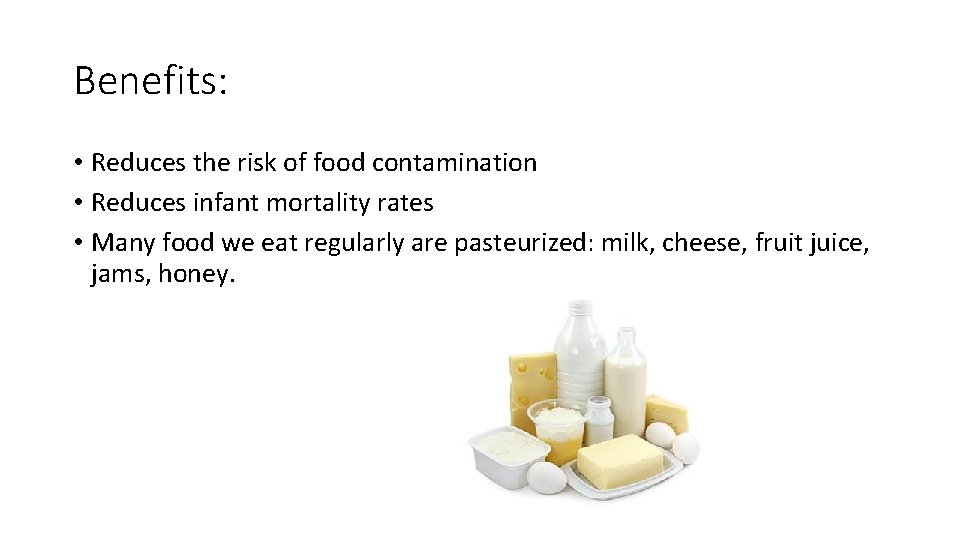
Benefits: • Reduces the risk of food contamination • Reduces infant mortality rates • Many food we eat regularly are pasteurized: milk, cheese, fruit juice, jams, honey.
Concerns • Can destroy useful elements in food, such as “ good ” bacteria and vitamins.
Sterilization • Performed at temperatures over 150 degrees celsius for a few seconds. • Destroys all micro-organisms and modifies chemical integrity, look and taste of food.