
Discovery of Cells First to View Cells In
- Slides: 12
Discovery of Cells
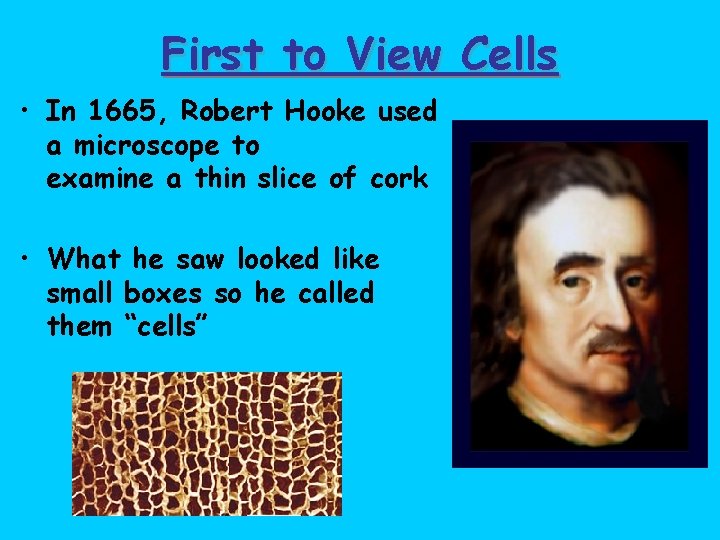
First to View Cells • In 1665, Robert Hooke used a microscope to examine a thin slice of cork • What he saw looked like small boxes so he called them “cells”
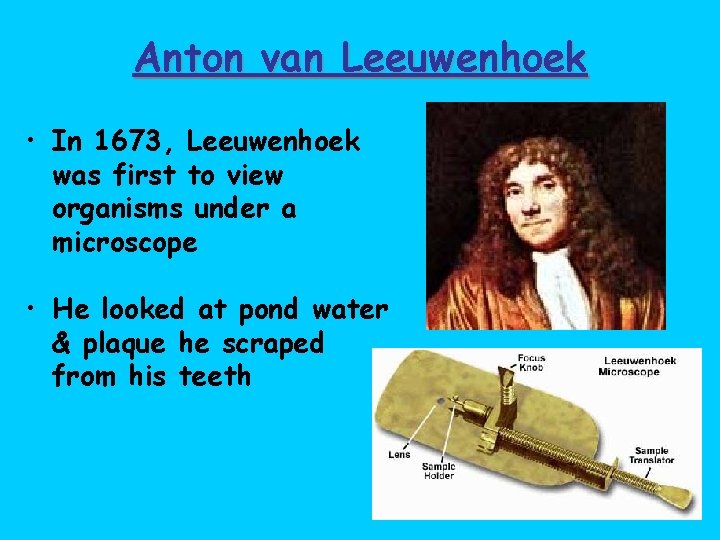
Anton van Leeuwenhoek • In 1673, Leeuwenhoek was first to view organisms under a microscope • He looked at pond water & plaque he scraped from his teeth
Development of Light Microscope • Leeuwenhoek was the first scientist to describe living cells as seen through a simple microscope • Simple Light Microscope - One lens and uses natural light • Compound Light Microscope - More than one lens to magnify – Magnifies up to 1500 times.
TO D E NE !!! W KNO CELL THEORY NEE D TO KNO W!!! • All living things are made of cells • Cells are the basic unit of structure and function in an organism (basic unit of life) • Cells come from the reproduction of existing cells (cell division)
Cell Classification • Prokaryotes – NO Membrane bound organelles – NO nucleus – Bacteria • Eukaryotes – Most cells – True nucleus – Membrane bound organelles – Plants, fungi, animals
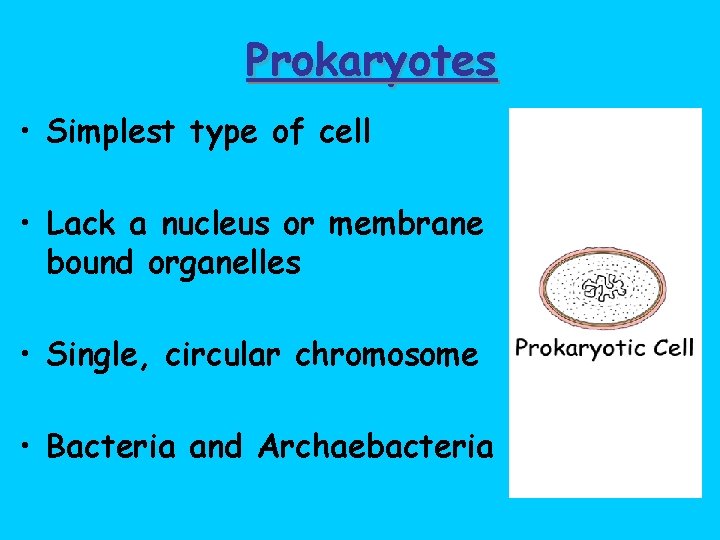
Prokaryotes • Simplest type of cell • Lack a nucleus or membrane bound organelles • Single, circular chromosome • Bacteria and Archaebacteria
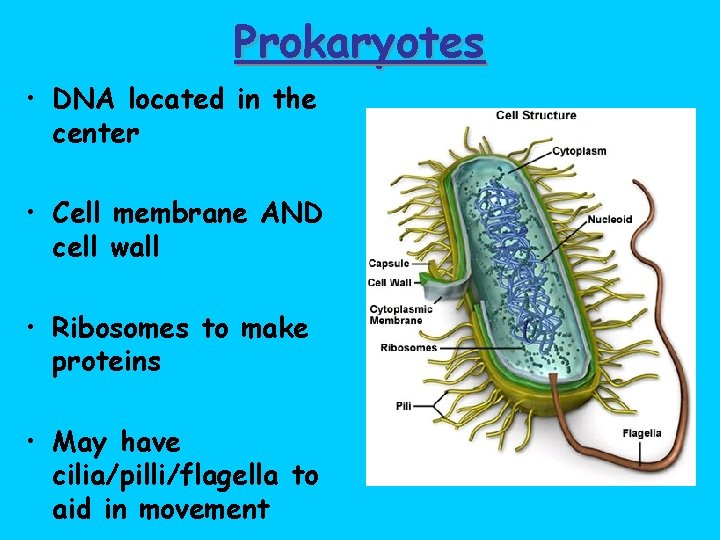
Prokaryotes • DNA located in the center • Cell membrane AND cell wall • Ribosomes to make proteins • May have cilia/pilli/flagella to aid in movement
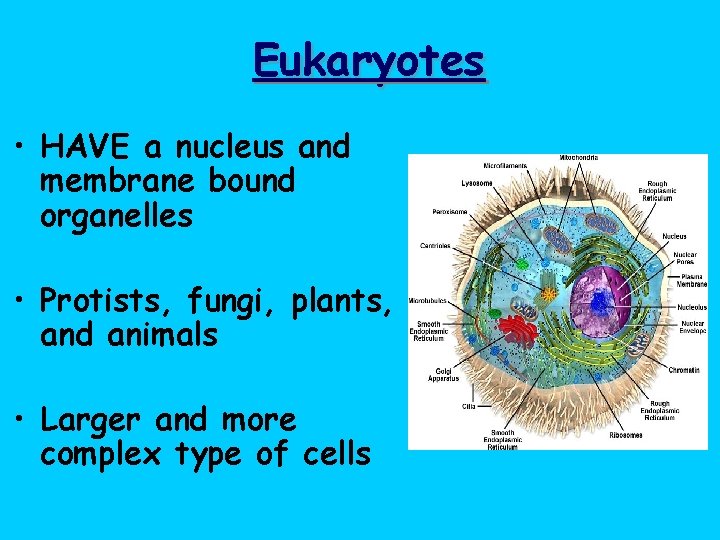
Eukaryotes • HAVE a nucleus and membrane bound organelles • Protists, fungi, plants, and animals • Larger and more complex type of cells
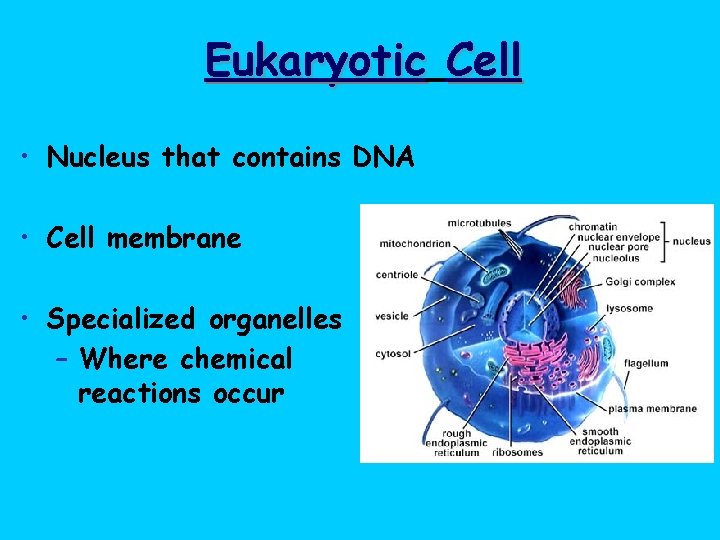
Eukaryotic Cell • Nucleus that contains DNA • Cell membrane • Specialized organelles – Where chemical reactions occur
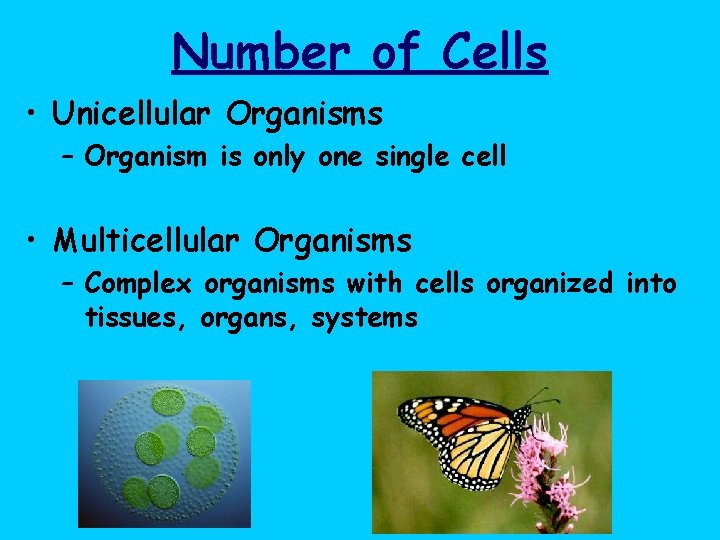
Number of Cells • Unicellular Organisms – Organism is only one single cell • Multicellular Organisms – Complex organisms with cells organized into tissues, organs, systems
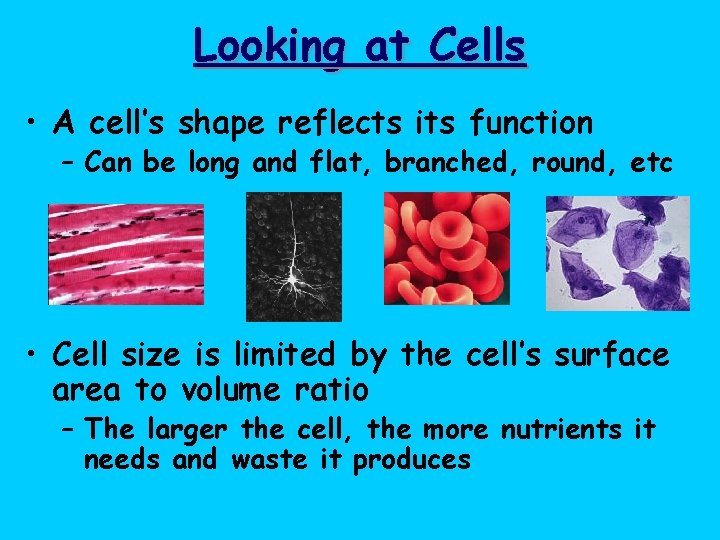
Looking at Cells • A cell’s shape reflects its function – Can be long and flat, branched, round, etc • Cell size is limited by the cell’s surface area to volume ratio – The larger the cell, the more nutrients it needs and waste it produces