
Discovering Your Strengths Addressing Problems and Framing Solutions

Discovering Your Strengths Addressing Problems and Framing Solutions
Addressing Problems and Framing Solutions • Switch: How to Change Things When Change is Hard (Chip and Dan Heath, 2010) ■ Based on model from The Happiness Hypothesis: Applying Ancient Wisdom to Modern Problems (Jonathan Haidt, 2006) ▪ The Adaptation Principle ▪ The voluntary activities you undertake vs. conditions of your life ▪ The Progress Principle: “Things won are done. Joy’s soul lies in the doing” -Shakespeare
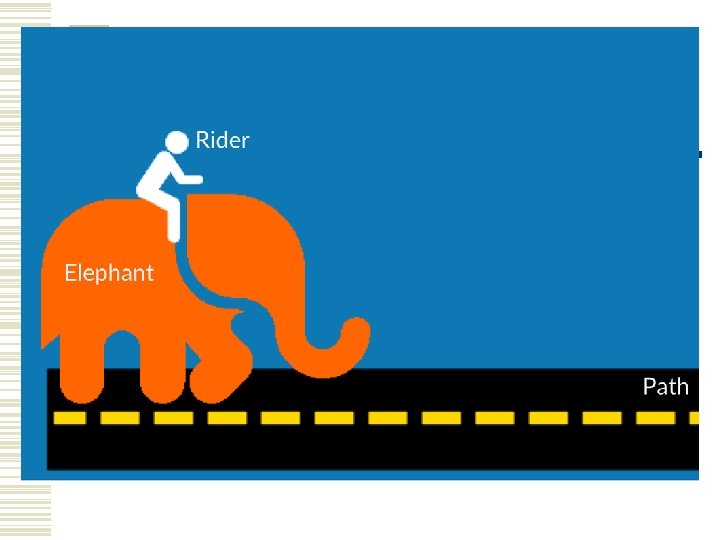
Framework • Direct the Rider – what looks like resistance is often lack of clarity. • If the rider doesn’t have a clear direction it will go in circles.
Framework • Motivate the Elephant – what looks like laziness is often exhaustion • The Elephant wants to feel good, in every situation. . .
Framework • Shape the Path – what looks like a people problem is often a situation problem
Find the Bright Spots • Bright spots are the best hope for the rider to promote change. • Bright spots not only provide direction for the Rider but hope and motivation for the Elephant • Small changes can have a big impact
Script the Critical Moves • Ambiguity exhausts the Rider • Uncertainty makes the Elephant anxious (trainees, employees are usually uncertain and anxious initially) • Schwartz’s research on choice… • Can’t script every move, but can script critical moves • If you seek out a solution as complicated as the problem, nothing will change, Rider will spin wheels • 1% milk, shop in home county…
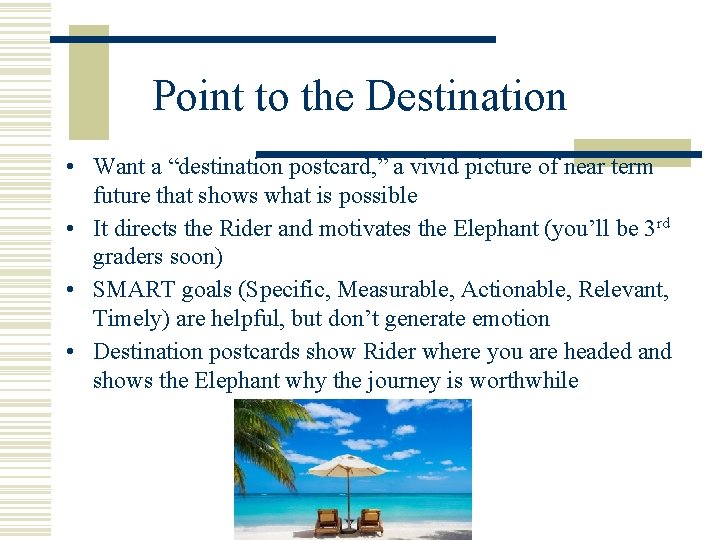
Point to the Destination • Want a “destination postcard, ” a vivid picture of near term future that shows what is possible • It directs the Rider and motivates the Elephant (you’ll be 3 rd graders soon) • SMART goals (Specific, Measurable, Actionable, Relevant, Timely) are helpful, but don’t generate emotion • Destination postcards show Rider where you are headed and shows the Elephant why the journey is worthwhile
Find the Feeling • From Heart of Change by John Kotter and Dan Cohen – people usually believe change happens through: ■ Analyze, Think, Change • They assert successful change efforts are usually: ■ See, Feel, Change • When change works, supervisor speaks to both the Rider and the Elephant
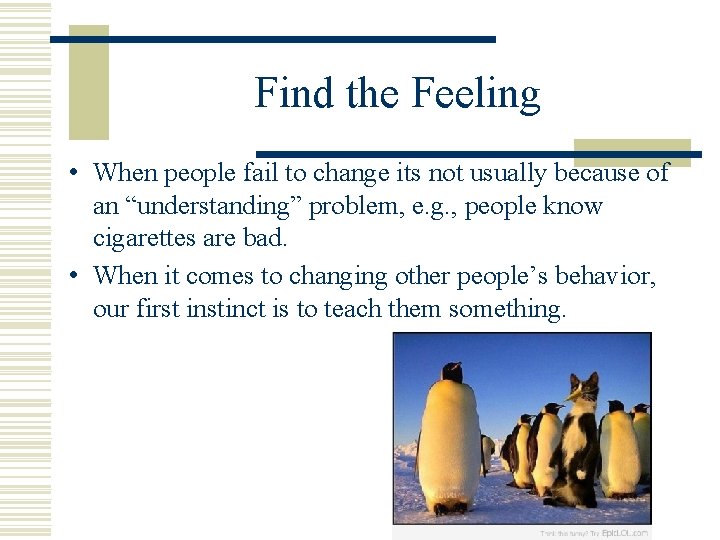
Find the Feeling • When people fail to change its not usually because of an “understanding” problem, e. g. , people know cigarettes are bad. • When it comes to changing other people’s behavior, our first instinct is to teach them something.
Self-Deception • We are all lousy self-evaluators ■ Lake Wobegon effect--overconfidence ■ Dan Gilbert research… • Positive illusions pose major problem regarding change • Most problems are not burning platform situations (just need to buckle down and execute), but are complex, ambiguous, and big. . . So….
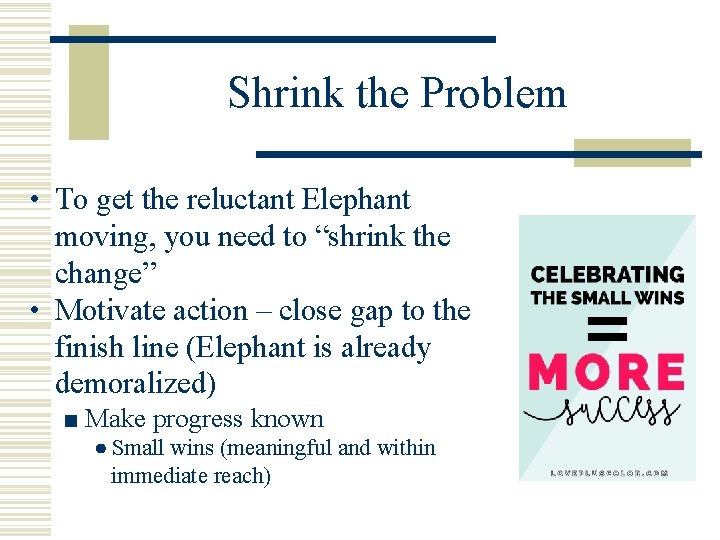
Shrink the Problem • To get the reluctant Elephant moving, you need to “shrink the change” • Motivate action – close gap to the finish line (Elephant is already demoralized) ■ Make progress known ● Small wins (meaningful and within immediate reach)
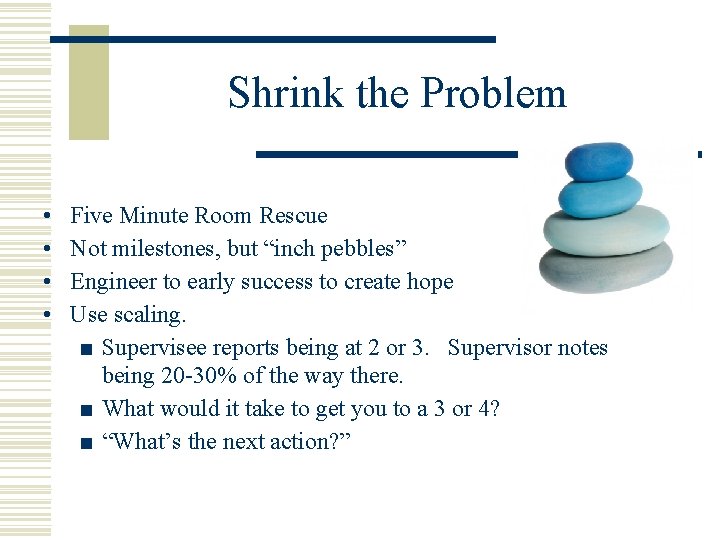
Shrink the Problem • • Five Minute Room Rescue Not milestones, but “inch pebbles” Engineer to early success to create hope Use scaling. ■ Supervisee reports being at 2 or 3. Supervisor notes being 20 -30% of the way there. ■ What would it take to get you to a 3 or 4? ■ “What’s the next action? ”
Grow Your People • Elephant hates to fail, creates flight reaction • Create the expectation of failure along the way • Carol Dweck Mindset ■ Growth mindset ■ Fixed mindset● Junior high students – “brain is like a muscle” training

“Everything can look like a failure in the middle. ” Rosabeth Moss Kanter Harvard professor
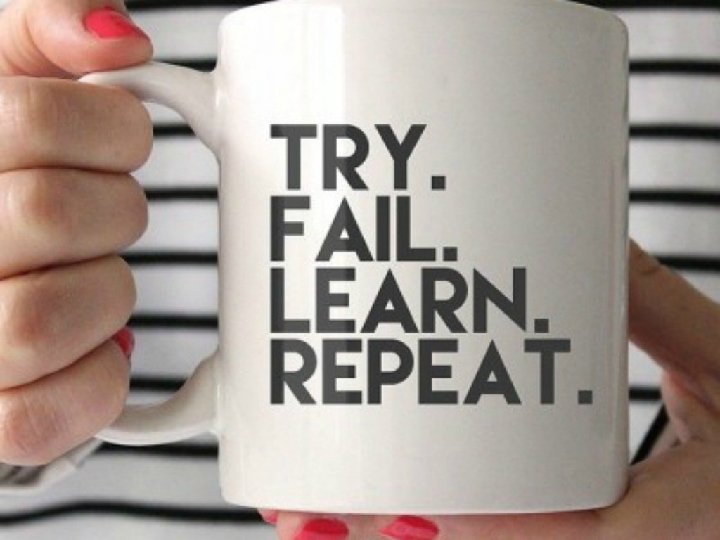
Failure • Tell trainees not to trust the initial good feeling at beginning of learning. • The message paradoxically is optimistic – you will struggle, but succeed in the end. • Special education teacher – only gave A, B, C, and “Not Yet”
Tweak the Environment • What looks like a people problem is often a situation problem • Encourage change by removing friction from the path • Successful tweaking should help the right behavior be easier to perform and wrong behavior tougher to perform.
Build Habits • • Self-control is exhaustible resource Habits – behavioral autopilots “Action triggers” create instant habits Willpower findings—Willpower is the motivation to exercise will. • A person with strong will power will assert decision even if they face strong opposition. • A person with little willpower will give in easily. ■ Willpower and IQ ■ Muscle…
Checklists • Checklist Manifesto ■ Help to avoid blind spots ■ Directs the Rider, shows the right thing to do ■ Not equated with simple • Keeping it simple helps with focus. • Include internals, such as attitude, beliefs, self-talk.
Change • Change tends to follow the pattern: ■ Clear direction ■ Ample motivation ■ Supportive environment • Restated - change occurs because the Rider, the Elephant, and the Path are all aligned and in support of the Switch.
Intention • When things aren’t working, ask about the intention (which is almost always good). • Implementations intentions…
Challenges • Discussion of how to apply concepts…
- Slides: 24