
Discovering the Unknown at the CERN Large Hadron


- Slides: 32
Discovering the Unknown at the CERN Large Hadron Collider (LHC) Amy Gladwin University of Arizona
Introduction ØHigh energy physics or particle physics seeks to understand how the universe works at its most basic level n n What are the fundamental forces? What are the fundamental types of particles (matter)? What is the nature of space and time? Are there additional dimensions? How can we use these answers to understand how the universe works? 2
Introduction ØWhat is the universe made of? n n n Dark energy – 65% Dark matter – 30% Baryons (protons and neutrons) – 4% Stars – 0. 5% Neutrinos – 0. 5% ØDark is just another word for “dunno” so, in short, we don’t know what most of the universe is made of!!! 3
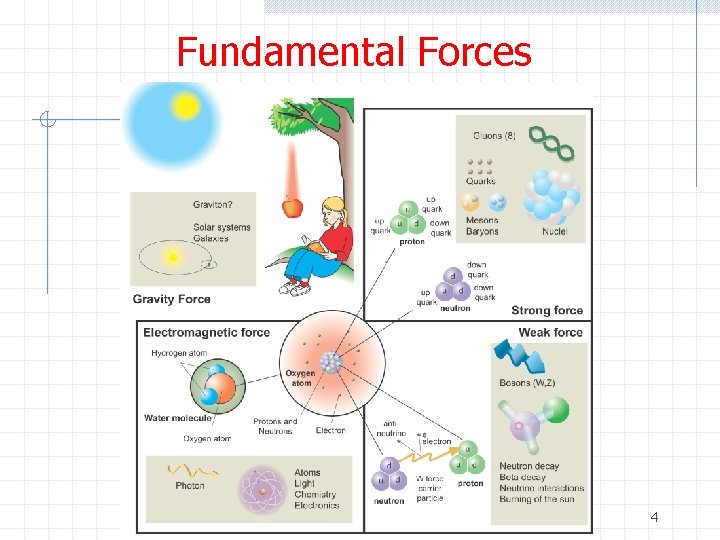
Fundamental Forces 4
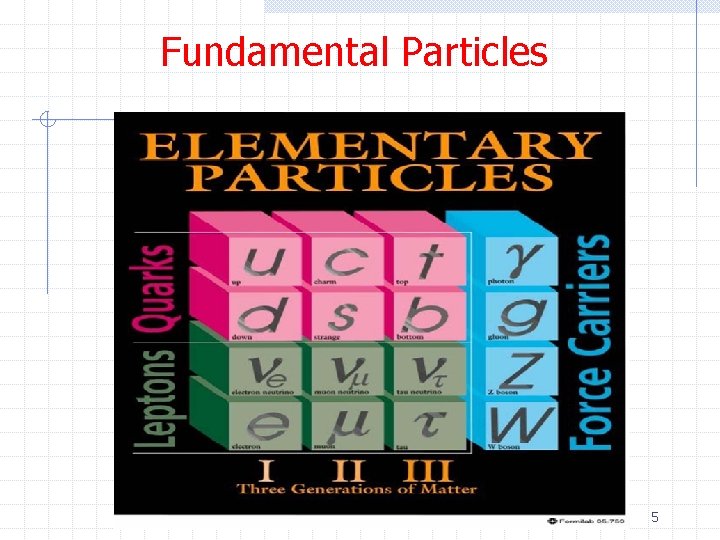
Fundamental Particles 5
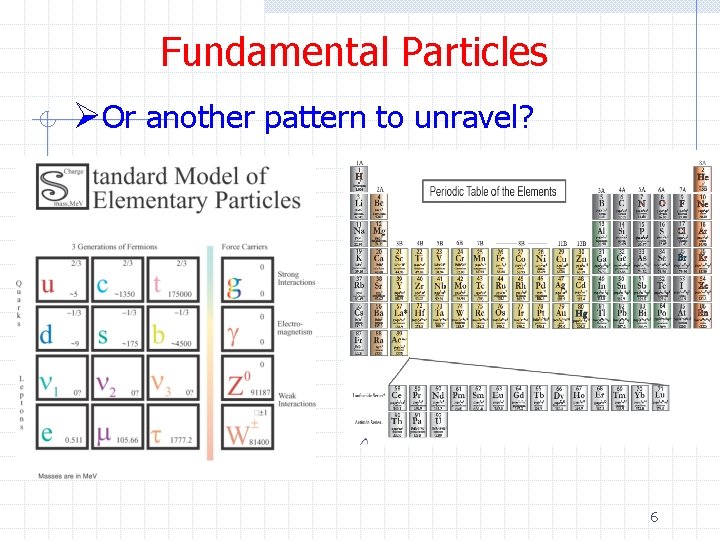
Fundamental Particles ØOr another pattern to unravel? 6
Particle Accelerators ØWe study nature using high energy collisions between particles ØParticle accelerators can be thought of as giant microscopes that are used to study extremely small dimensions n n The higher the energy, the smaller the wavelength the higher the resolving power The higher the energy, the more massive the particles that can be created (E=mc 2) 7
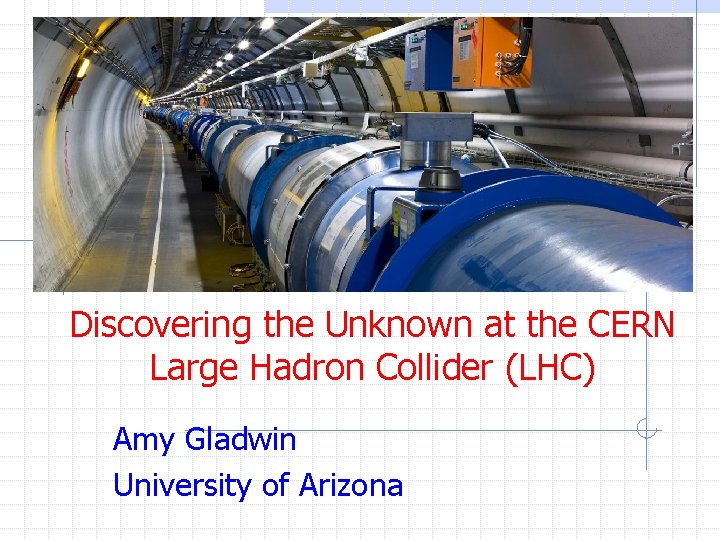
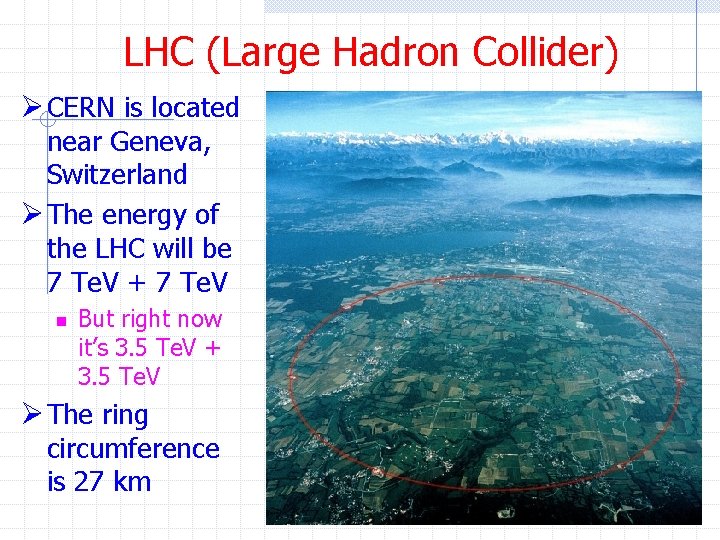
LHC (Large Hadron Collider) Ø CERN is located near Geneva, Switzerland Ø The energy of the LHC will be 7 Te. V + 7 Te. V n But right now it’s 3. 5 Te. V + 3. 5 Te. V Ø The ring circumference is 27 km 8
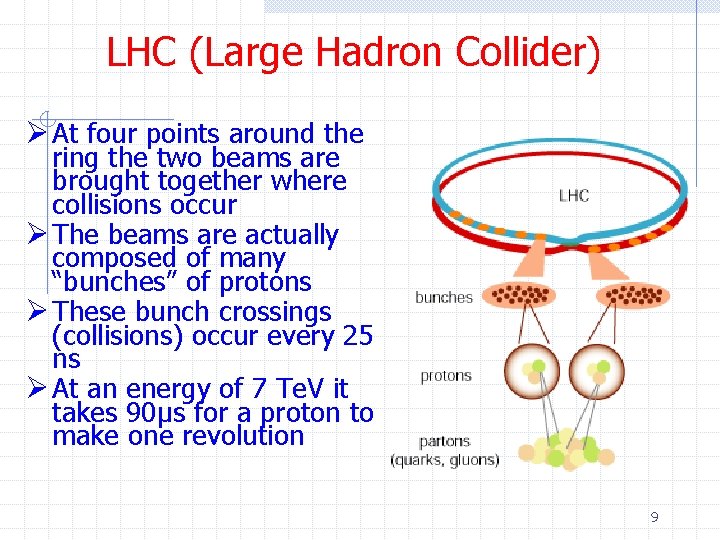
LHC (Large Hadron Collider) Ø At four points around the ring the two beams are brought together where collisions occur Ø The beams are actually composed of many “bunches” of protons Ø These bunch crossings (collisions) occur every 25 ns Ø At an energy of 7 Te. V it takes 90μs for a proton to make one revolution 9
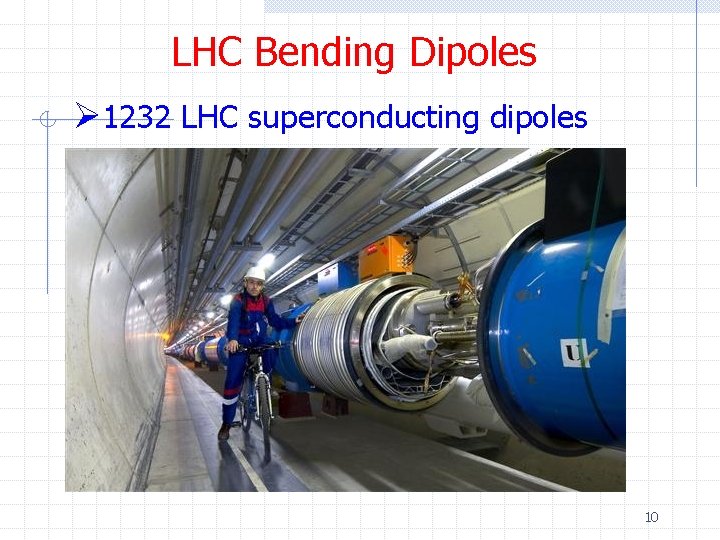
LHC Bending Dipoles Ø 1232 LHC superconducting dipoles 10
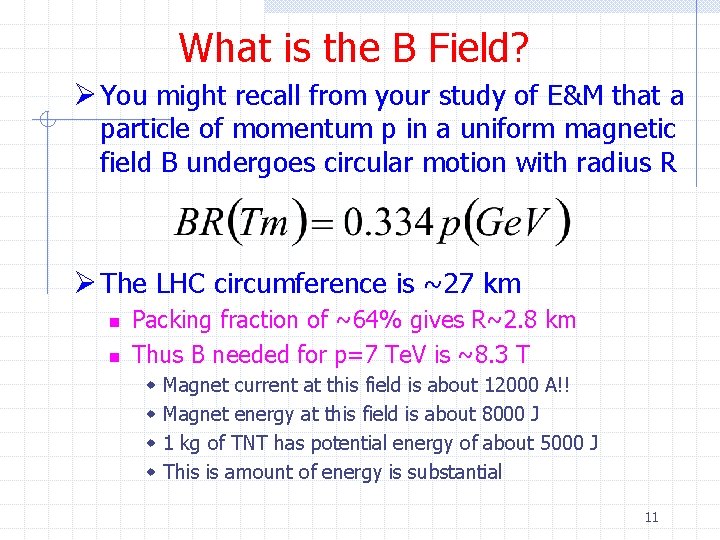
What is the B Field? Ø You might recall from your study of E&M that a particle of momentum p in a uniform magnetic field B undergoes circular motion with radius R Ø The LHC circumference is ~27 km n n Packing fraction of ~64% gives R~2. 8 km Thus B needed for p=7 Te. V is ~8. 3 T w w Magnet current at this field is about 12000 A!! Magnet energy at this field is about 8000 J 1 kg of TNT has potential energy of about 5000 J This is amount of energy is substantial 11
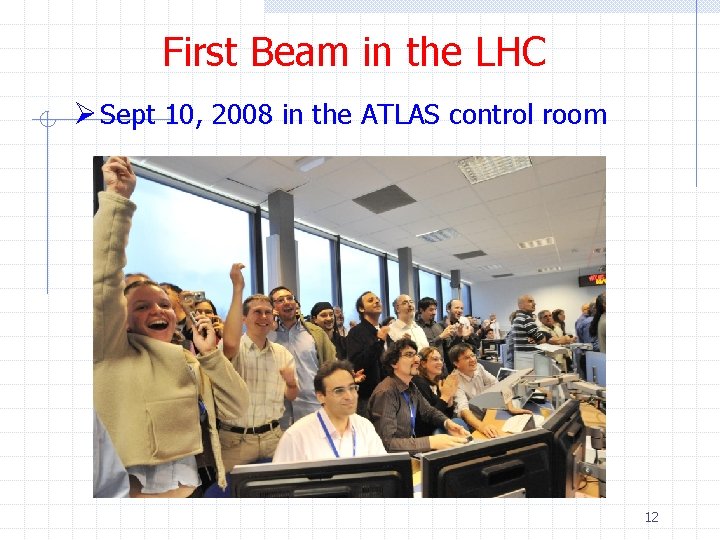
First Beam in the LHC Ø Sept 10, 2008 in the ATLAS control room 12
September 19 th Incident Ø An electrical arc destroyed the busbars 13
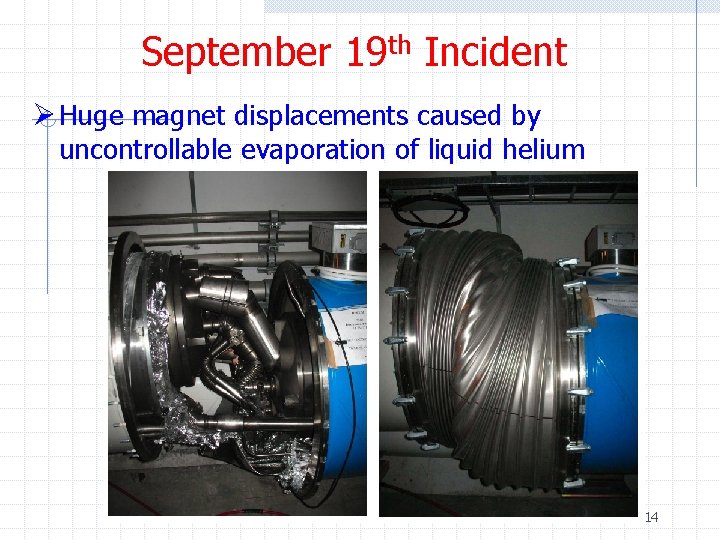
September 19 th Incident Ø Huge magnet displacements caused by uncontrollable evaporation of liquid helium 14
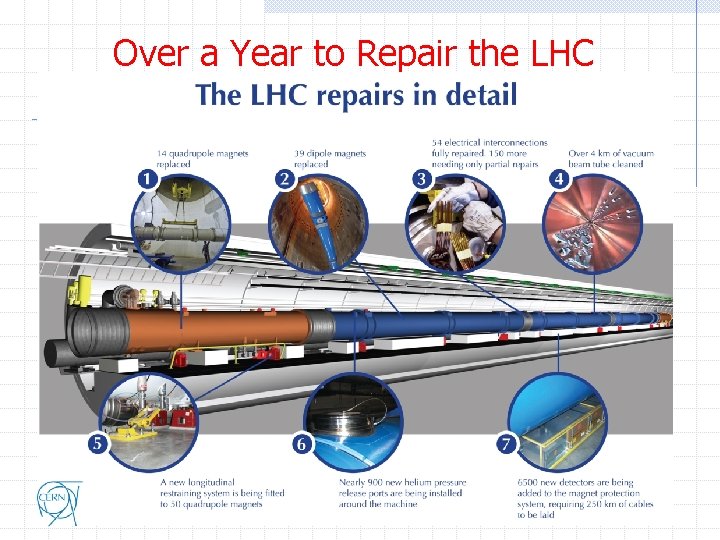
Over a Year to Repair the LHC Øasdf 15
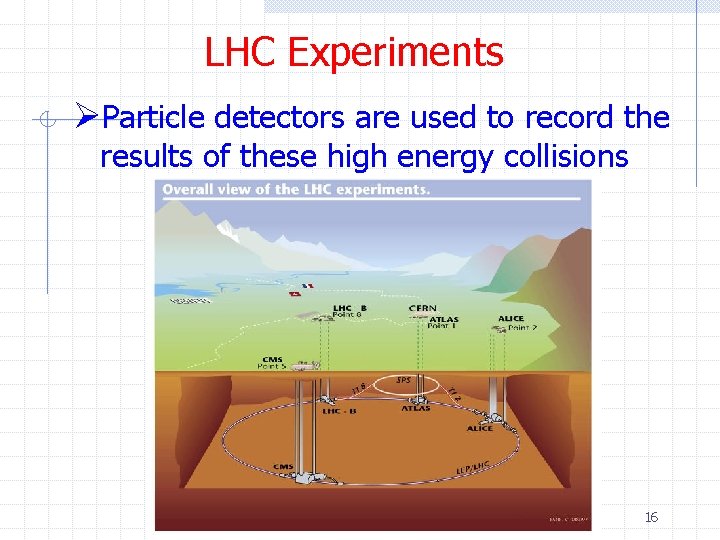
LHC Experiments ØParticle detectors are used to record the results of these high energy collisions 16
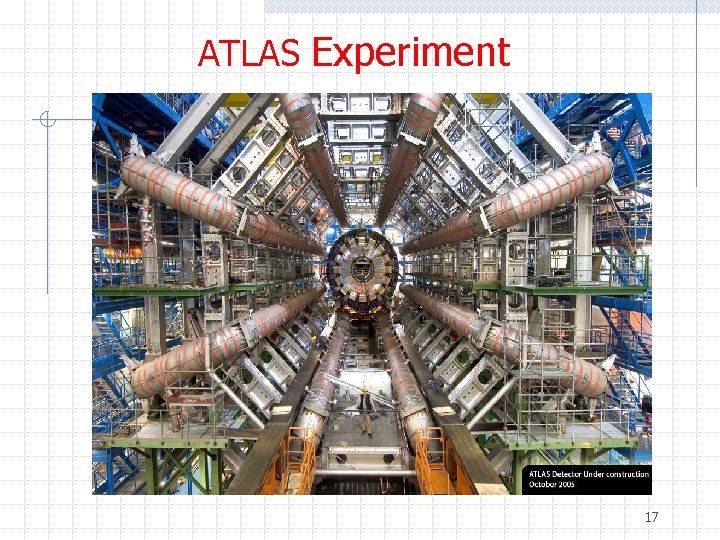
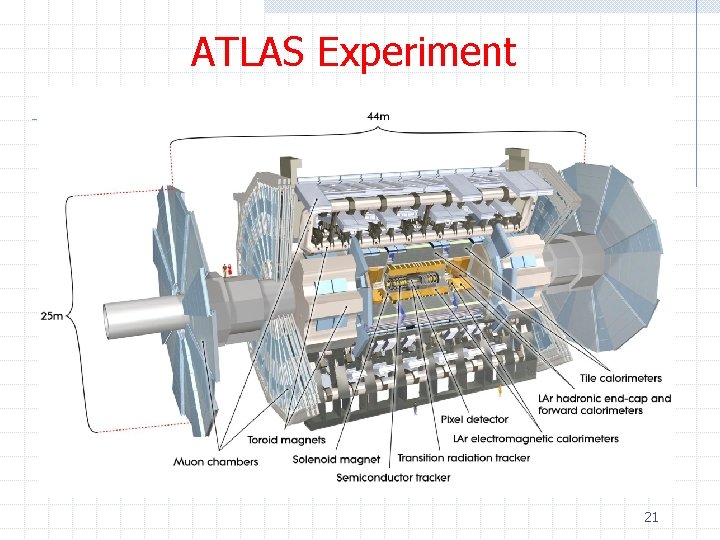
ATLAS Experiment 17
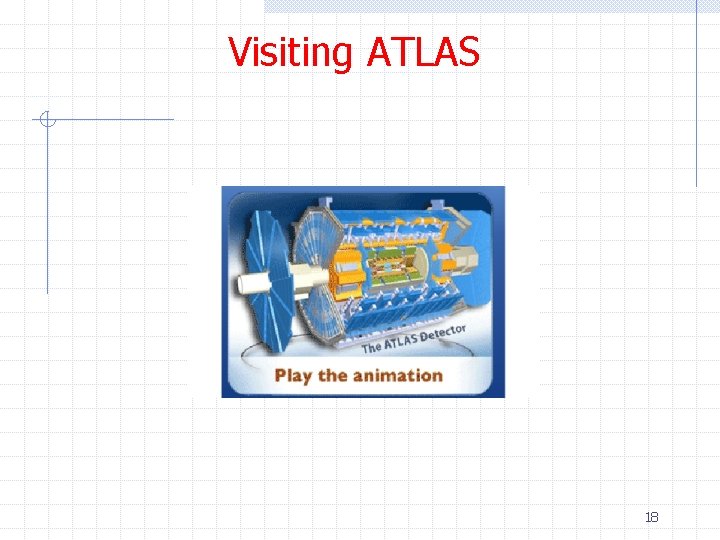
Visiting ATLAS 18
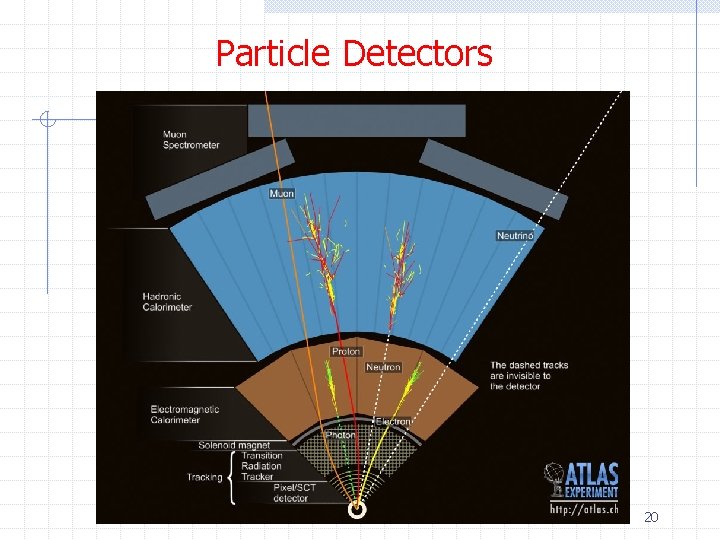
Particle Detectors ØThe type of particles produced are identified by how they interact in the various detectors ØThe momentum of charged particles is determined by their bend in a magnetic field ØThe energy of most particles (except muons and neutrinos) is determined by their deposited energy in calorimenters 19
Particle Detectors 20
ATLAS Experiment 21
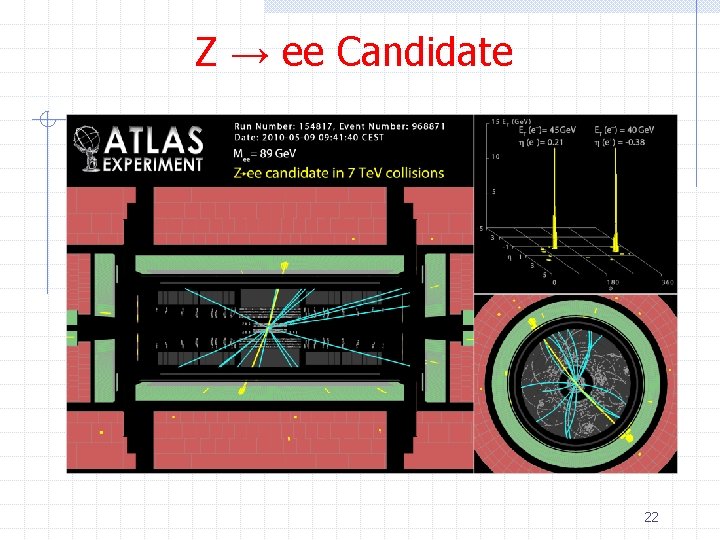
Z → ee Candidate 22
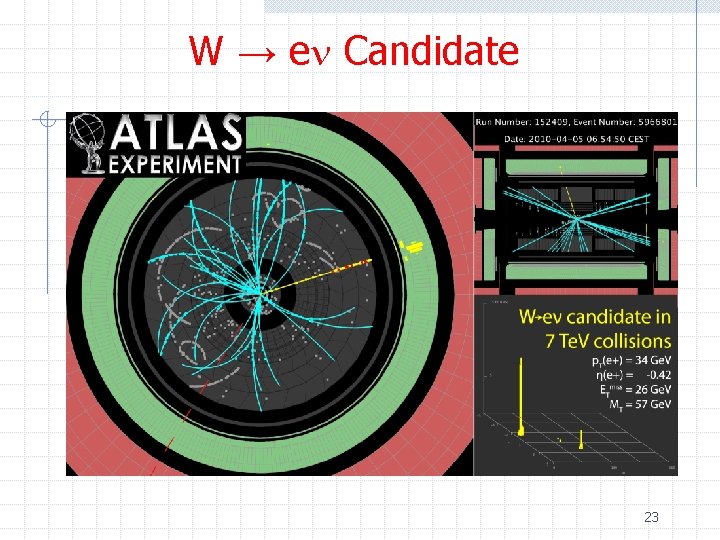
W → en Candidate 23
What’s Happening at the LHC? ØSince late March, the LHC has been running at 7 Te. V n This is only one half the design energy ØThe LHC is now increasing the beam intensity n By adding more protons per bunch, more bunches, and squeezing the beam ØThe LHC will run until the end of 2011 n n Followed by a year shutdown to fix magnet splice problems Followed by running at 14 Te. V 24
What’s Happening at ATLAS Now? Øhttp: //op-webtools. web. cern. ch/op- webtools/vistars. php? usr=LHC 1 Øhttp: //op-webtools. web. cern. ch/opwebtools/vistars. php? usr=LHC 3 Øhttp: //atlas-live. cern. ch/ 25
What Do We Hope to Discover? ØSome (or none!) of the following n n n Higgs boson Supersymmetric particles (dark matter) Extra spatial dimensions Gravitons Evidence for quark substructure Your bright ideas here ØIn the best scenario we will discover phenomena that no one to date has predicted or thought of 26
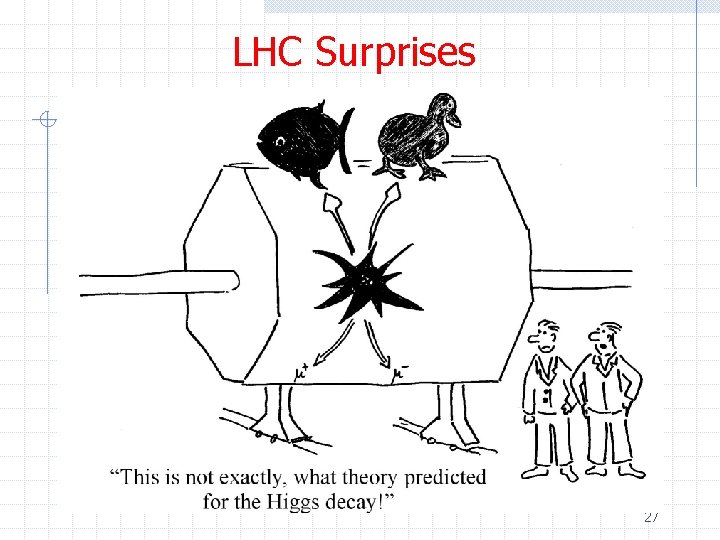
LHC Surprises 27
ATLAS at Arizona ØHere at the University of Arizona we are analyzing data from ATLAS being collected now ØWe are also working on electronics and detectors to be used in the next generation of experiments at the SLHC (Super LHC) n It may seem odd to be working on new electronics for an experiment that has just started to run, but the lead time for developing new ideas and then building and testing them approaches a decade! 28
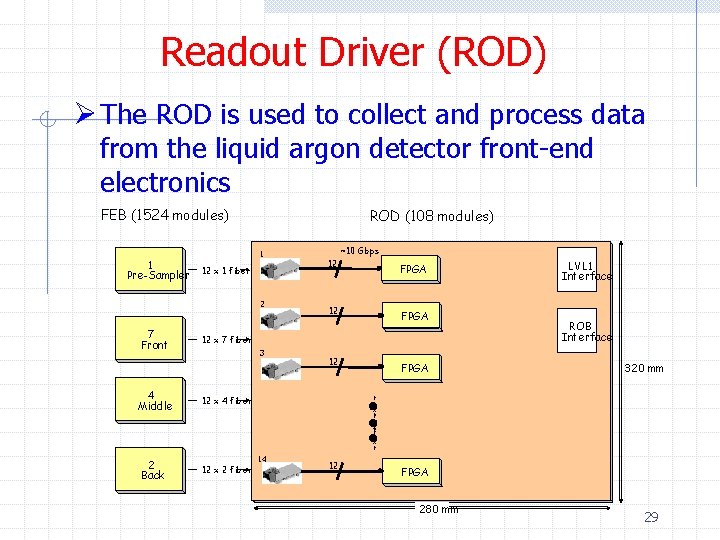
Readout Driver (ROD) Ø The ROD is used to collect and process data from the liquid argon detector front-end electronics FEB (1524 modules) 1 Pre-Sampler ROD (108 modules) 1 12 x 1 fibers 2 7 Front 12 ~10 Gbps FPGA 12 x 7 fibers 3 4 Middle 12 x 4 fibers 2 Back 12 x 2 fibers 12 FPGA LVL 1 Interface ROB Interface 320 mm t e x tt e x t 14 12 FPGA 280 mm 29
Readout Driver (ROD) ØThe ROD must receive and process 1000 Gbits/s = 1 Tbit/s !! n n n Need state-of-the-art optics Need state-of-the-art FPGAs And be able to guess what might be available a few years hence ØIn addition to managing the data, calculations must be performed on the data ØAnd a system architecture developed to 30 handle 200 such ROD cards
Summer Opportunities ØWhile it’s difficult to jump right in and begin working on the ROD design, this summer you will learn basic skills of electronics design including some of n n n Schematic design Layout design FPGA programming Electronics debugging using external and internal logic analyzers Data acquisition software Particle physics at the LHC 31
Summer Opportunities ØData analysis n n If you are a very strong programmer, you may also have an opportunity to analyze LHC data But this demands strong C++ (or C) programming skills 32