
DISCOVERING THE POWER OF LANGUAGE DEFINING LANGUAGE Language
- Slides: 22
DISCOVERING THE POWER OF LANGUAGE
DEFINING LANGUAGE • Language is a system used for human communication • Language consist of specific interrelated components • Oral language: is language spoken or heard rather than written or read.
LANGUAGE HAS RULES • Like other systems, language is governed by rules. These rules are different for written language. • No one explains to a child “ every sentences must have a subject and verb. ” yet the child learns to understand use words and put them together to form complete sentences. You learn rules as you listen and adjust accordingly
LANGUAGE IS LIKE A CODE • A language system is often referred to as a code. • Each code has its own unique system of sounds, symbols, and structures. • Even Sign language has its own code Each language has different systems • Encode: putting data into code • Decode: assign meaning to someone else's words.
DIFFERENCE BETWEEN ORAL AND WRITTEN LANGUAGE • Oral “primary” language: the language that you first learned and use every day. • Writing “secondary” language: based on an attempt to describe speech sounds. It can be used as a substitute of speech is not possible. Standards for oral language are based on appropriateness, while written language is based on correctness.
CHARACTERISTICS OF ORAL LANGUAGE 1) Meaning • The first characteristic of language • We communicate with others based on the meanings we assign to things around us and the symbols we use to communicate those meanings. 2) Vocabulary: all the word symbols that make up a particular language • Is symbolic • Has standards for appropriateness • Adds interest to communication
CHARACTERISTICS OF ORAL LANGUAGE • Word symbols have no meaning of their own; instead , the meaning of a symbol resides within individuals. Symbols are always open to interpretation. • Example: The word “Low” • Can mean a measurement of depth • Can mean a level of sound • Can mean a state of depression What is another word that can have several different interpretations or symbols? • You need a large and flexible vocabulary to communicate appropriately. Why is it important to have a flexible vocabulary?
CHARACTERISTICS OF ORAL LANGUAGE 3) Structure: third characteristic of language, is the way different parts of language arranged. • Sentences must follow a specific structure so that it has meaning. 4) Grammar: fourth characteristic, is the basic understanding and rules that regulate the use of a language. • Spanish: the table large • English: the large table 5) Sound: without sound words cannot convey meaning. • People are often judged based on how their speech sounds.
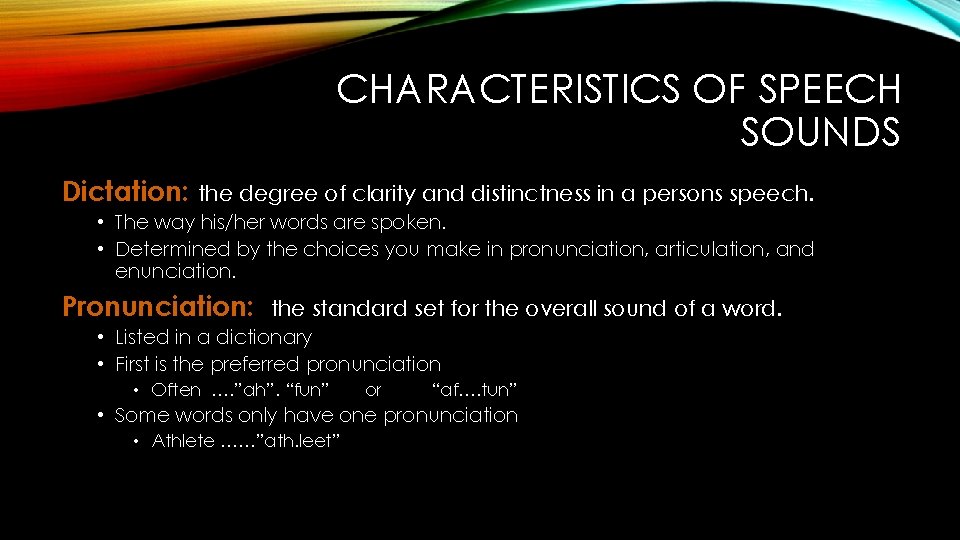
CHARACTERISTICS OF SPEECH SOUNDS Dictation: the degree of clarity and distinctness in a persons speech. • The way his/her words are spoken. • Determined by the choices you make in pronunciation, articulation, and enunciation. Pronunciation: the standard set for the overall sound of a word. • Listed in a dictionary • First is the preferred pronunciation • Often …. ”ah”. “fun” or “af…. tun” • Some words only have one pronunciation • Athlete ……”ath. leet”
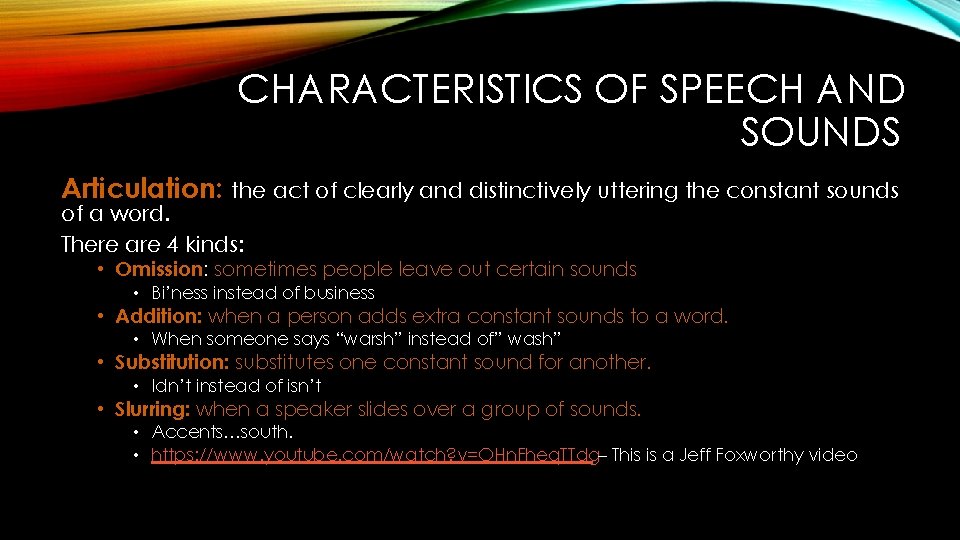
CHARACTERISTICS OF SPEECH AND SOUNDS Articulation: the act of clearly and distinctively uttering the constant sounds of a word. There are 4 kinds: • Omission: sometimes people leave out certain sounds • Bi’ness instead of business • Addition: when a person adds extra constant sounds to a word. • When someone says “warsh” instead of” wash” • Substitution: substitutes one constant sound for another. • Idn’t instead of isn’t • Slurring: when a speaker slides over a group of sounds. • Accents…south. • https: //www. youtube. com/watch? v=OHn. Fheq. TTdg– This is a Jeff Foxworthy video
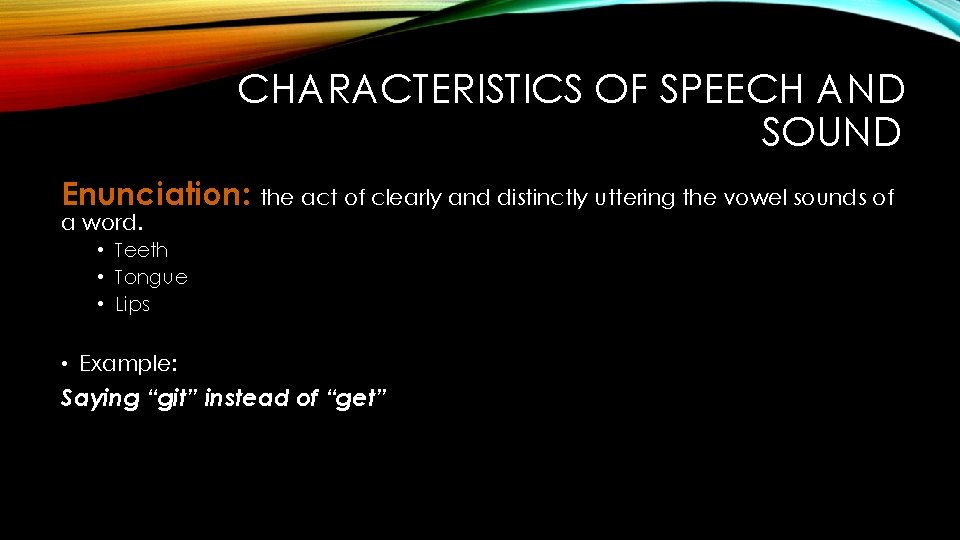
CHARACTERISTICS OF SPEECH AND SOUND Enunciation: the act of clearly and distinctly uttering the vowel sounds of a word. • Teeth • Tongue • Lips • Example: Saying “git” instead of “get”
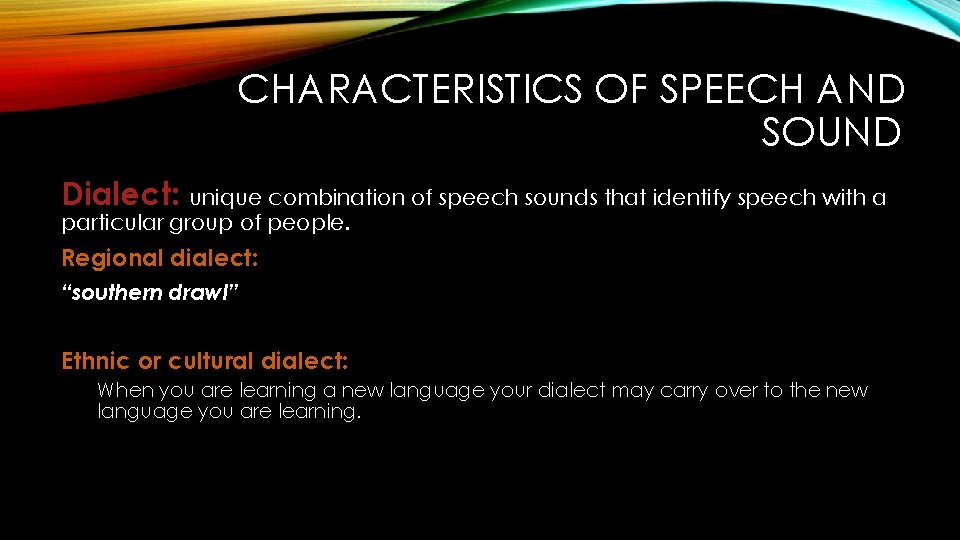
CHARACTERISTICS OF SPEECH AND SOUND Dialect: unique combination of speech sounds that identify speech with a particular group of people. Regional dialect: “southern drawl” Ethnic or cultural dialect: When you are learning a new language your dialect may carry over to the new language you are learning.
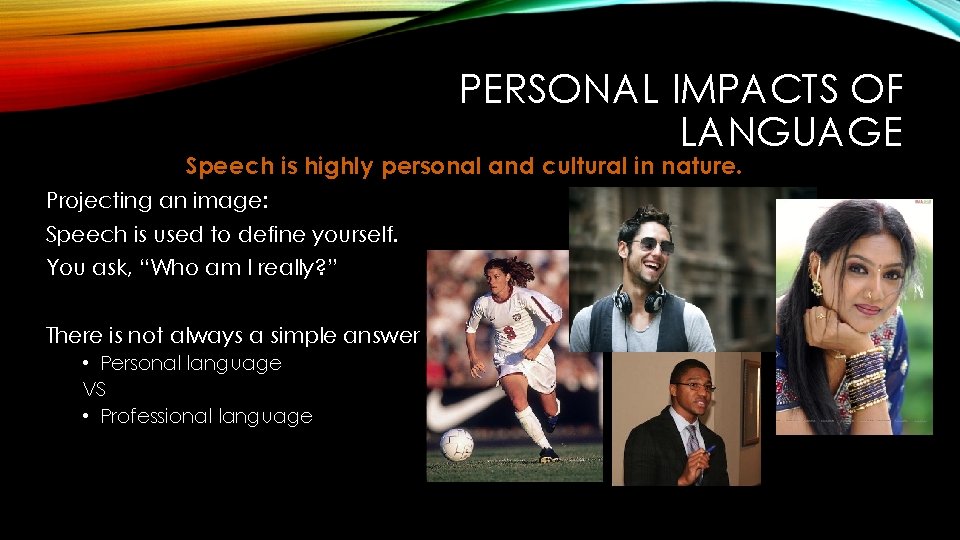
PERSONAL IMPACTS OF LANGUAGE Speech is highly personal and cultural in nature. Projecting an image: Speech is used to define yourself. You ask, “Who am I really? ” There is not always a simple answer • Personal language VS • Professional language
PERSONAL IMPLICATIONS OF LANGUAGE Conveying attitudes • Speech conveys powerful messages about your attitudes and feelings toward your listener. Determining success • Studies show that many employers value strong verbal skills more than any other communication skill in their employees. • As you expand your knowledge you expand your vocabulary.
CULTURAL IMPLICATIONS OF LANGUAGE Language is so closely related to culture that some argue language is culture. Diversity: you encounter diversity between cultures and languages every day.
DEVELOPING SKILLS FOR POWER LANGUAGE Think about the world of nature…. • What is the most sophisticated communication you can think of in the animal kingdom? • How does that compare to the communication skills of a typical human of kindergarten age? • Humans can communicate as no other animal can.
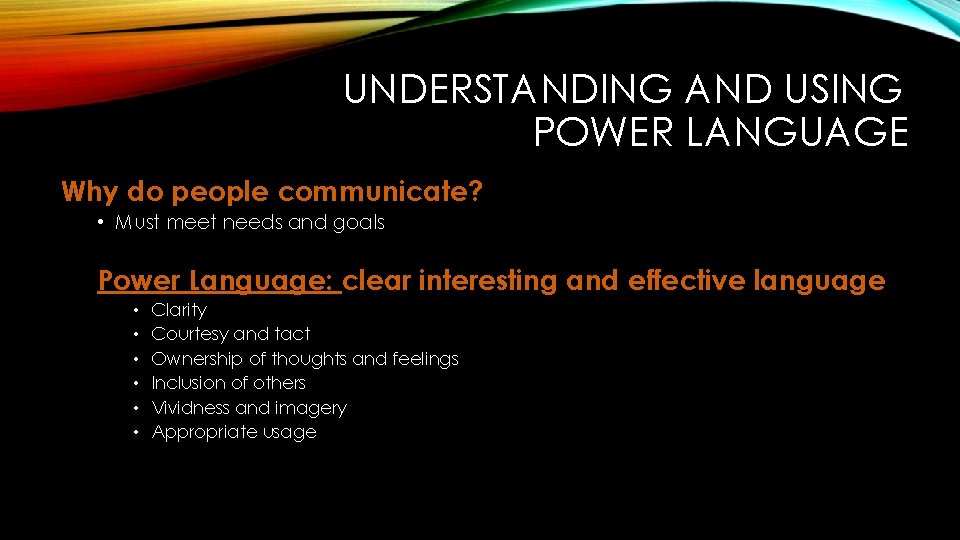
UNDERSTANDING AND USING POWER LANGUAGE Why do people communicate? • Must meet needs and goals Power Language: clear interesting and effective language • • • Clarity Courtesy and tact Ownership of thoughts and feelings Inclusion of others Vividness and imagery Appropriate usage
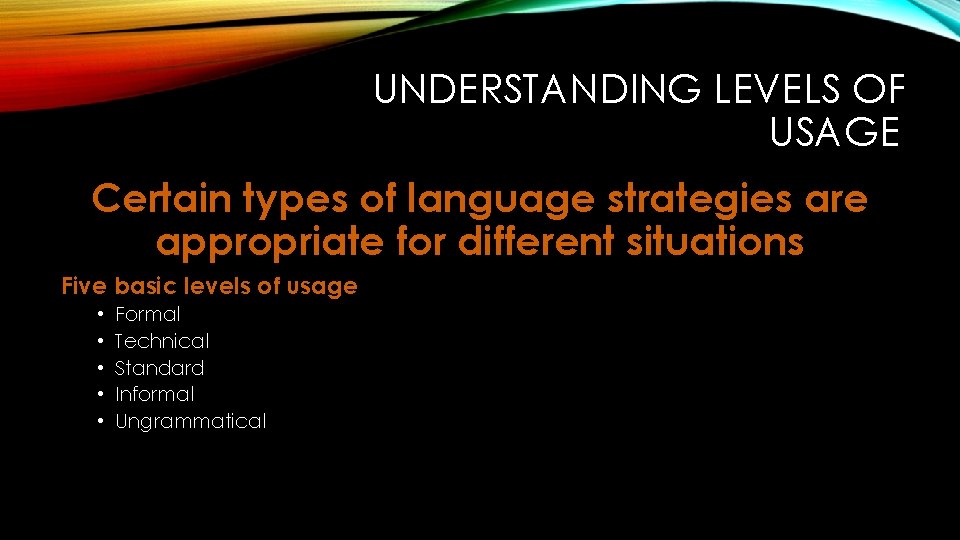
UNDERSTANDING LEVELS OF USAGE Certain types of language strategies are appropriate for different situations Five basic levels of usage • • • Formal Technical Standard Informal Ungrammatical
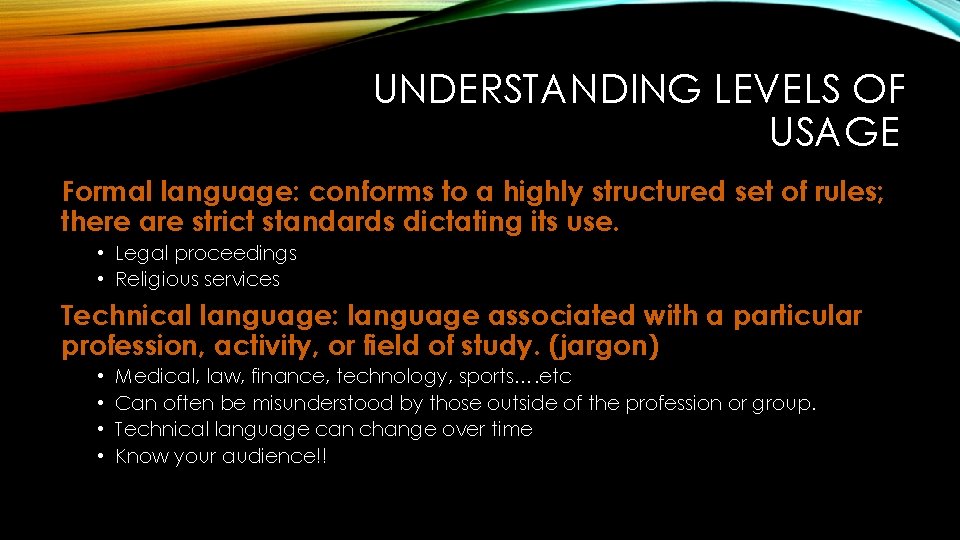
UNDERSTANDING LEVELS OF USAGE Formal language: conforms to a highly structured set of rules; there are strict standards dictating its use. • Legal proceedings • Religious services Technical language: language associated with a particular profession, activity, or field of study. (jargon) • • Medical, law, finance, technology, sports…. etc Can often be misunderstood by those outside of the profession or group. Technical language can change over time Know your audience!!
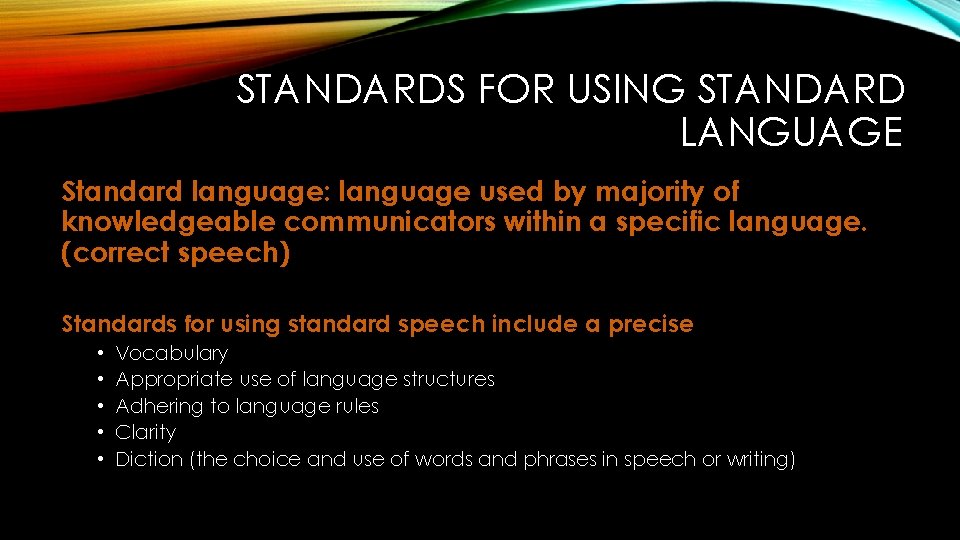
STANDARDS FOR USING STANDARD LANGUAGE Standard language: language used by majority of knowledgeable communicators within a specific language. (correct speech) Standards for using standard speech include a precise • • • Vocabulary Appropriate use of language structures Adhering to language rules Clarity Diction (the choice and use of words and phrases in speech or writing)
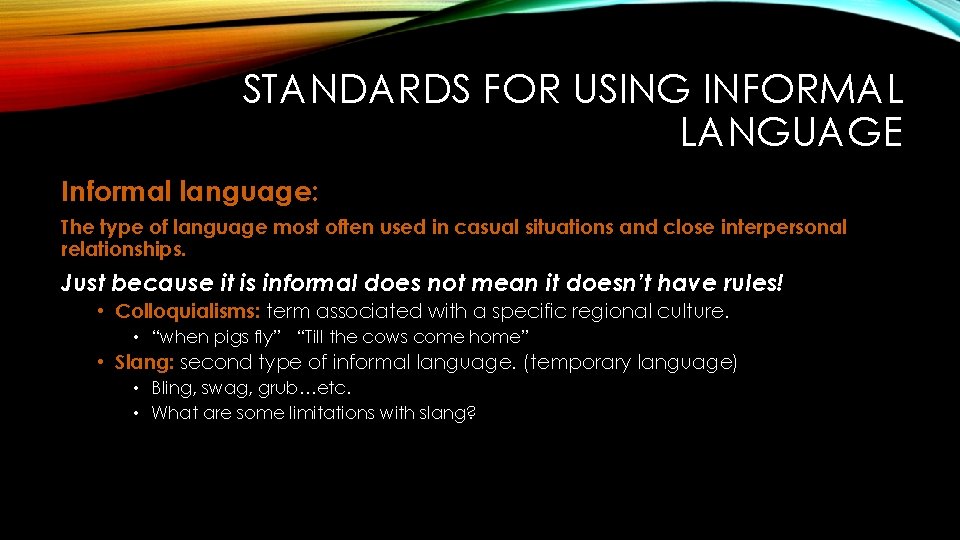
STANDARDS FOR USING INFORMAL LANGUAGE Informal language: The type of language most often used in casual situations and close interpersonal relationships. Just because it is informal does not mean it doesn’t have rules! • Colloquialisms: term associated with a specific regional culture. • “when pigs fly” “Till the cows come home” • Slang: second type of informal language. (temporary language) • Bling, swag, grub…etc. • What are some limitations with slang?
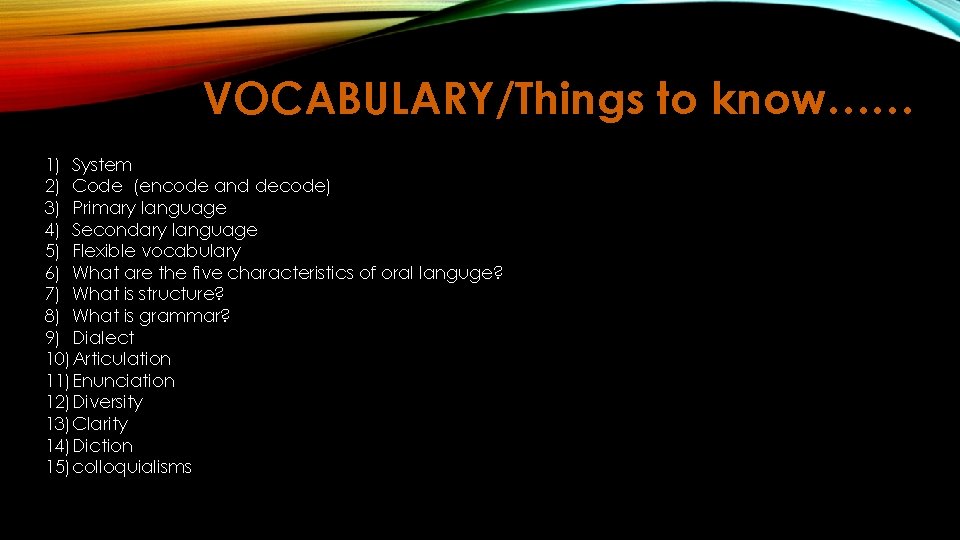
VOCABULARY/Things to know…… 1) System 2) Code (encode and decode) 3) Primary language 4) Secondary language 5) Flexible vocabulary 6) What are the five characteristics of oral languge? 7) What is structure? 8) What is grammar? 9) Dialect 10)Articulation 11)Enunciation 12)Diversity 13)Clarity 14)Diction 15)colloquialisms