
Discovering Declare Maps R P Jagadeesh Chandra Bose

Discovering Declare Maps R. P. Jagadeesh Chandra Bose (JC) Joint Work with Fabrizio M. Maggi and Wil M. P. van der Aalst
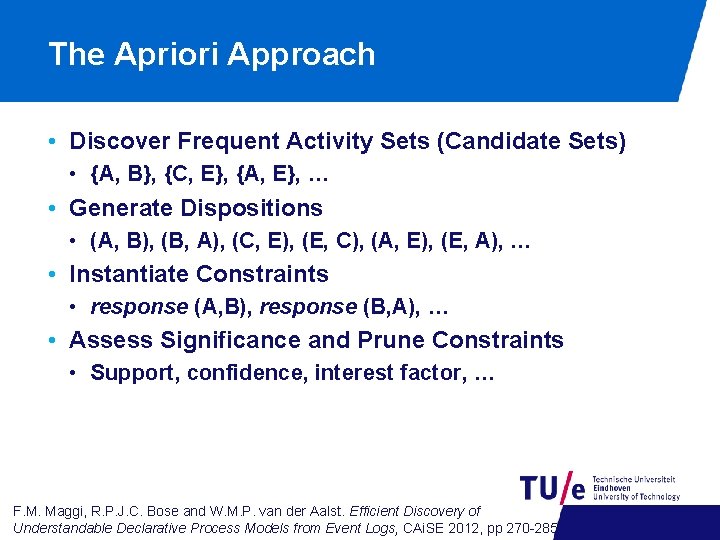
The Apriori Approach • Discover Frequent Activity Sets (Candidate Sets) • {A, B}, {C, E}, {A, E}, … • Generate Dispositions • (A, B), (B, A), (C, E), (E, C), (A, E), (E, A), … • Instantiate Constraints • response (A, B), response (B, A), … • Assess Significance and Prune Constraints • Support, confidence, interest factor, … F. M. Maggi, R. P. J. C. Bose and W. M. P. van der Aalst. Efficient Discovery of Understandable Declarative Process Models from Event Logs, CAi. SE 2012, pp 270 -285
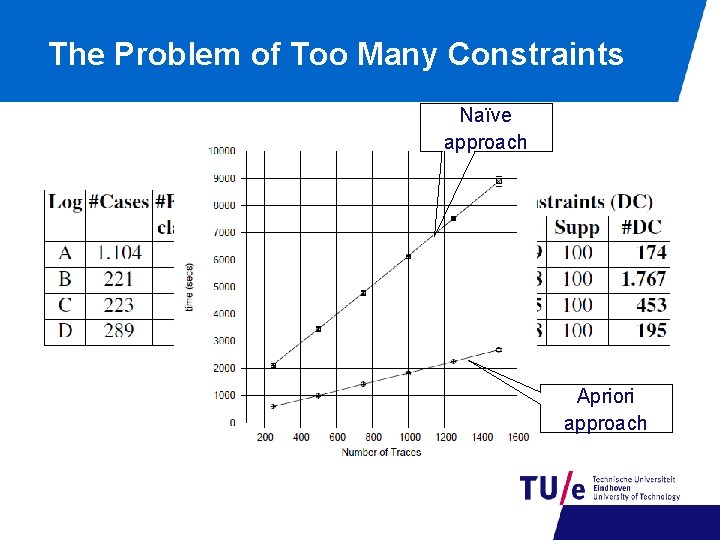
The Problem of Too Many Constraints Naïve approach Apriori approach
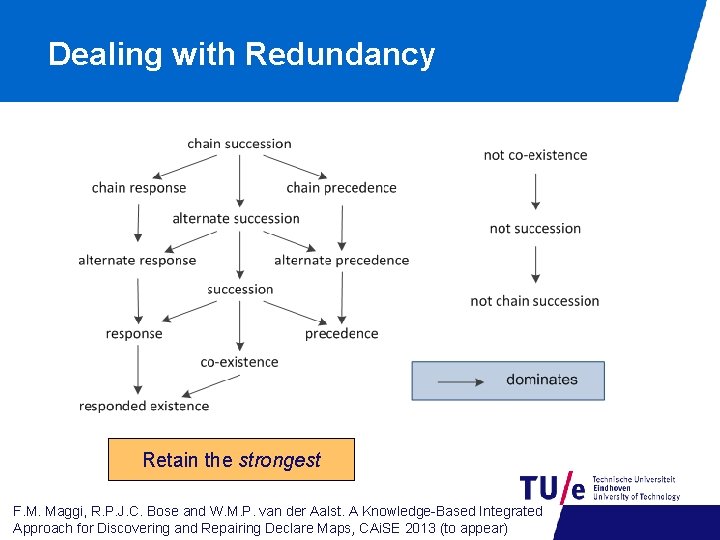
Dealing with Redundancy Retain the strongest F. M. Maggi, R. P. J. C. Bose and W. M. P. van der Aalst. A Knowledge-Based Integrated Approach for Discovering and Repairing Declare Maps, CAi. SE 2013 (to appear)
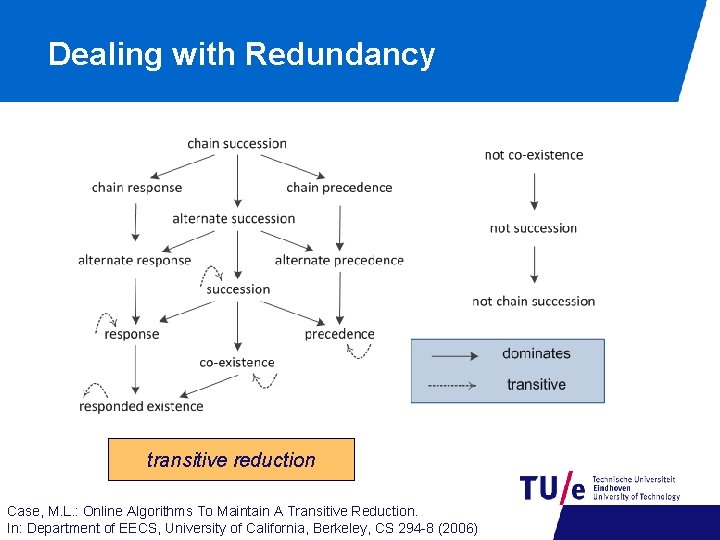
Dealing with Redundancy transitive reduction Case, M. L. : Online Algorithms To Maintain A Transitive Reduction. In: Department of EECS, University of California, Berkeley, CS 294 -8 (2006)
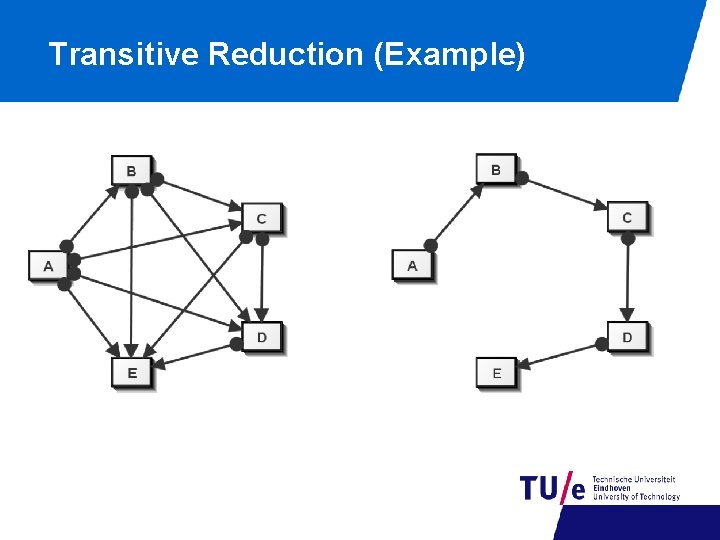
Transitive Reduction (Example)
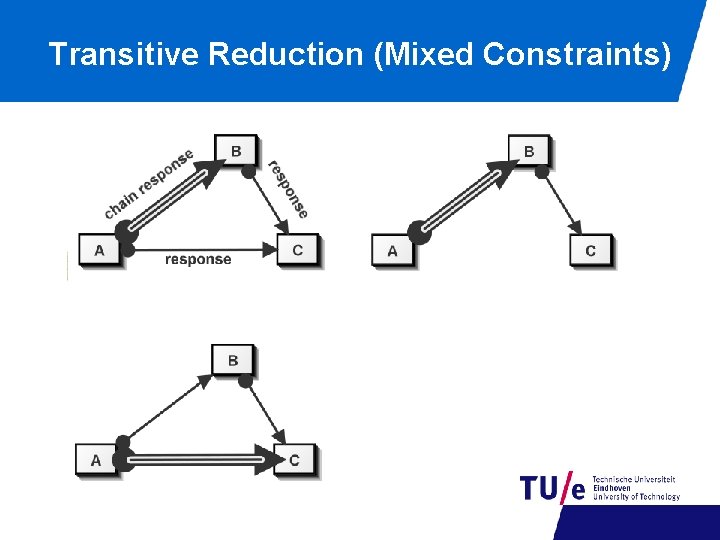
Transitive Reduction (Mixed Constraints)
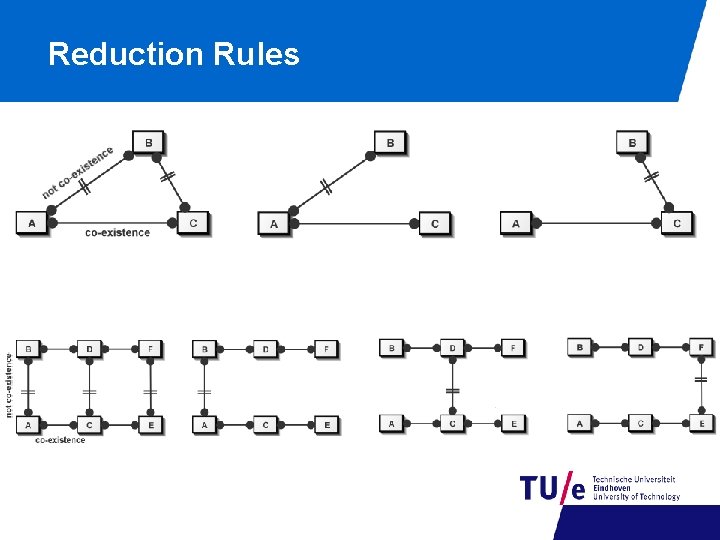
Reduction Rules
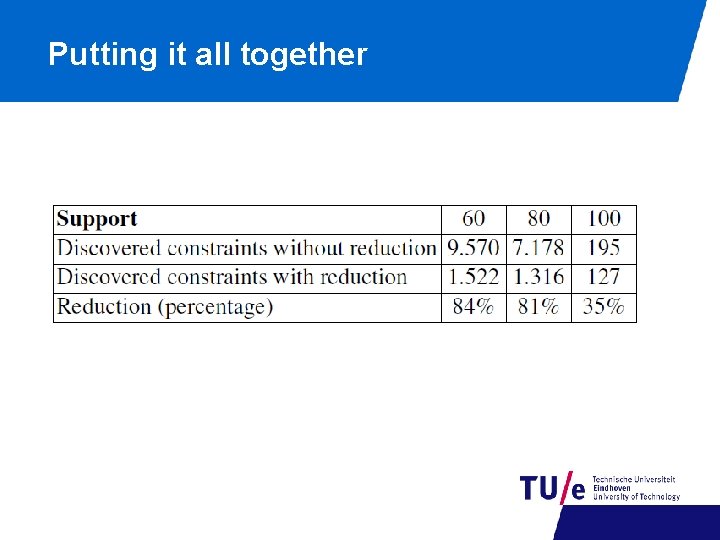
Putting it all together
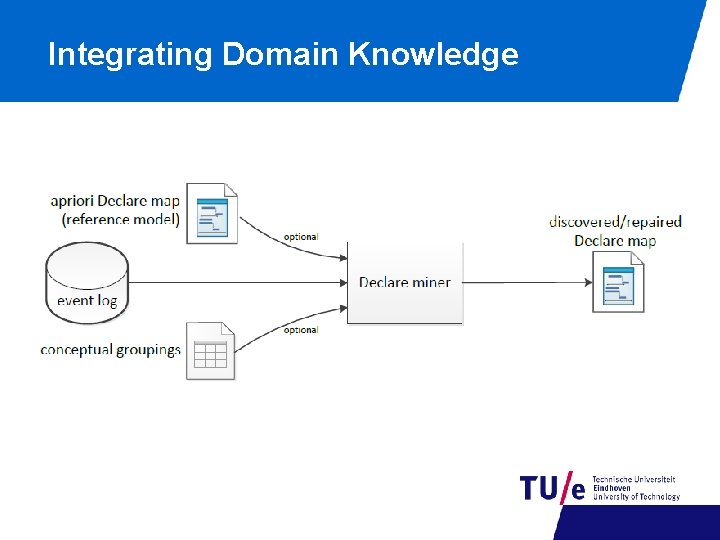
Integrating Domain Knowledge
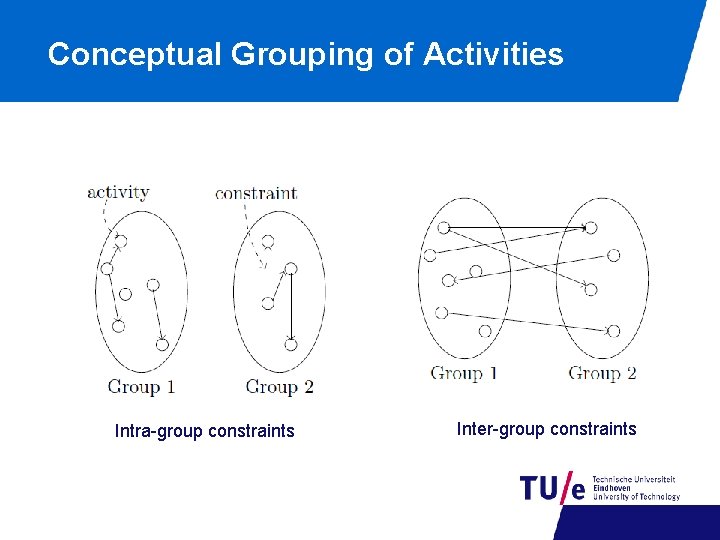
Conceptual Grouping of Activities Intra-group constraints Inter-group constraints
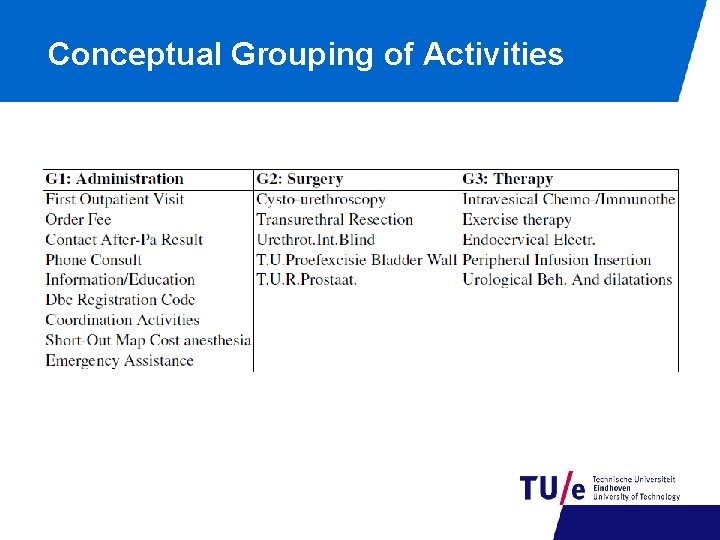
Conceptual Grouping of Activities
Apriori Declare Map • Reference set of templates/activities • Repair the map • add stronger constraints • remove constraints that no longer hold • Use for selecting pruning metric thresholds
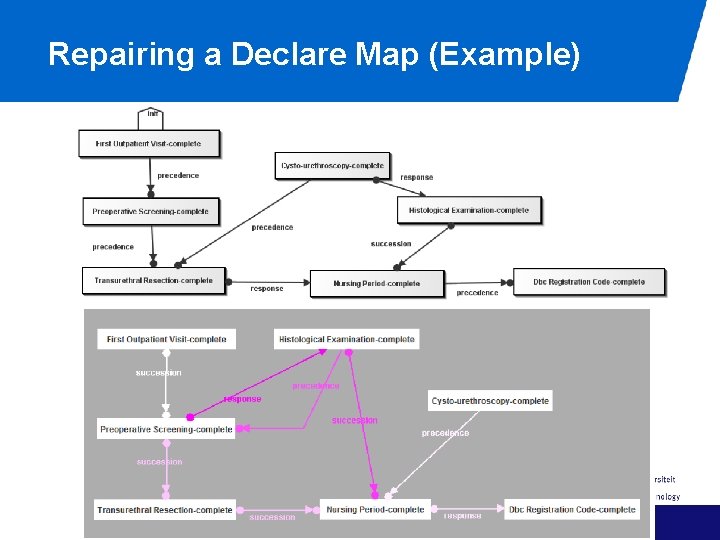
Repairing a Declare Map (Example)
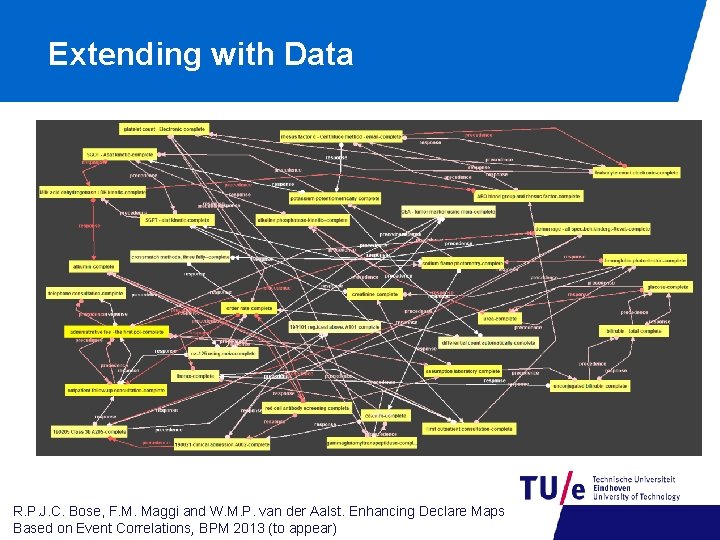
Extending with Data • Issues • Too many constraints (not all may be interesting) • ambiguities in associating events − <a, b, c, b>, <a, b, a, b> • Lack of diagnostic information R. P. J. C. Bose, F. M. Maggi and W. M. P. van der Aalst. Enhancing Declare Maps Based on Event Correlations, BPM 2013 (to appear)
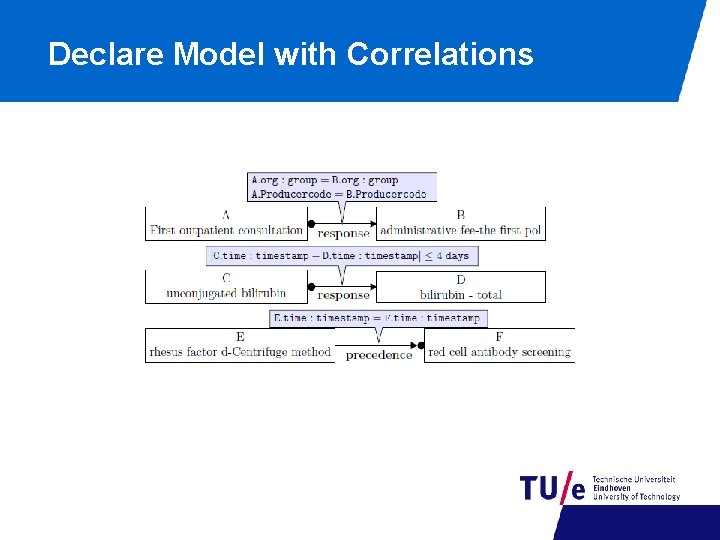
Declare Model with Correlations
Discovering Correlations • Relationship between attributes • continuous (<, <=, >, >=, =, !=) • string/boolean (=, !=) • timestamps (before, after, time diff) • Comparable attributes • apriori knowledge • attributes of the same type
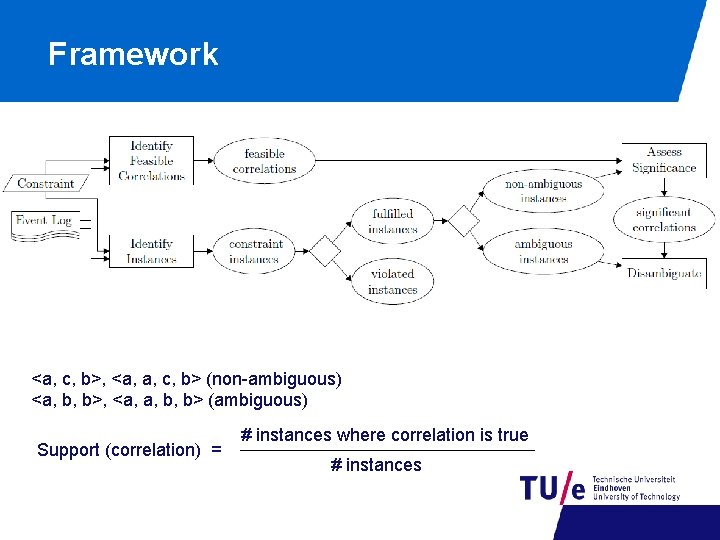
Framework <a, c, b>, <a, a, c, b> (non-ambiguous) <a, b, b>, <a, a, b, b> (ambiguous) Support (correlation) = # instances where correlation is true # instances
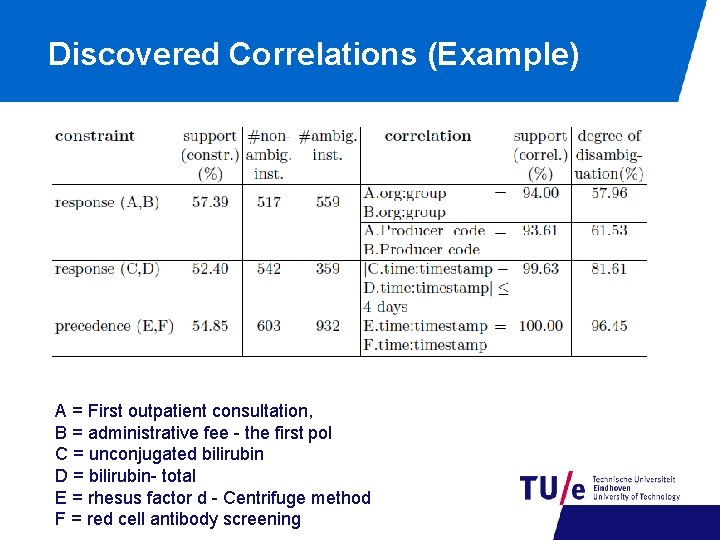
Discovered Correlations (Example) A = First outpatient consultation, B = administrative fee - the first pol C = unconjugated bilirubin D = bilirubin- total E = rhesus factor d - Centrifuge method F = red cell antibody screening
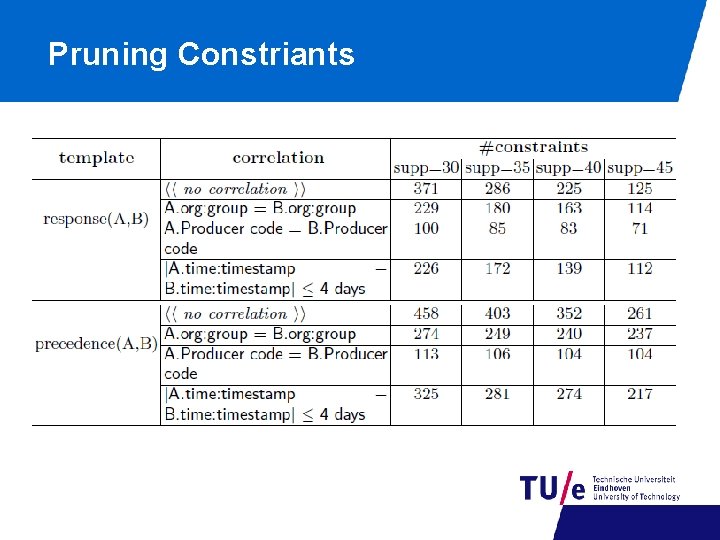
Pruning Constriants
Discriminatory Patterns • Constraint activations can be classified into different categories • conformant vs. non-conformant • slow, medium, fast based on their response times • …
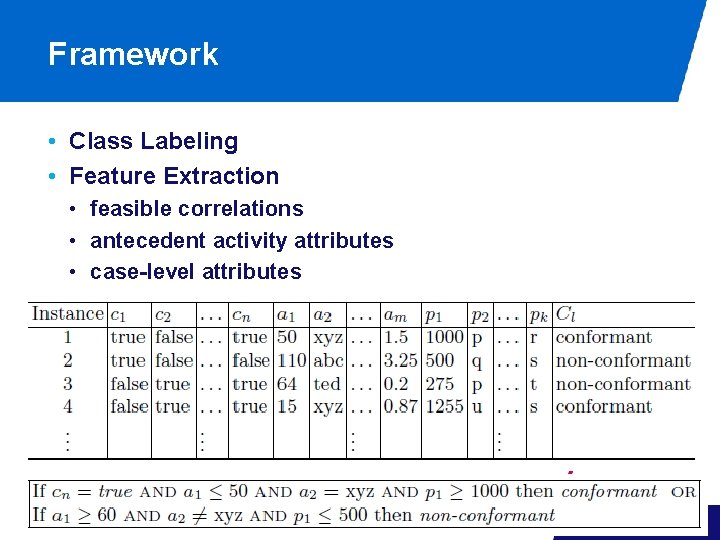
Framework • Class Labeling • Feature Extraction • feasible correlations • antecedent activity attributes • case-level attributes • Discover Patterns
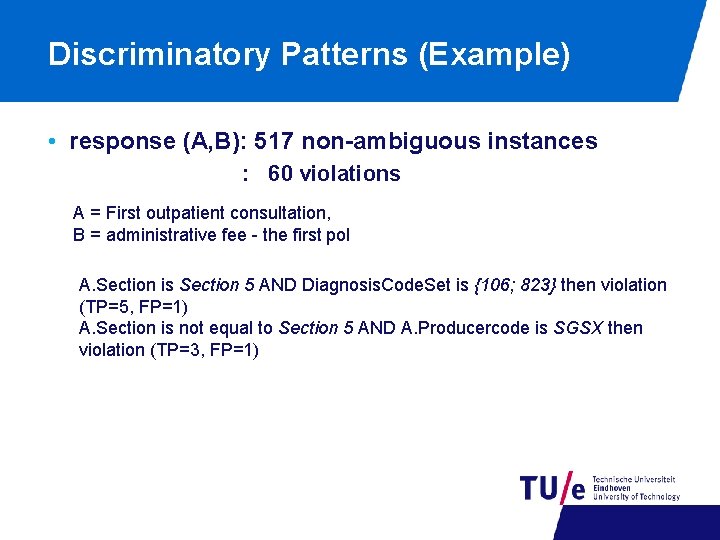
Discriminatory Patterns (Example) • response (A, B): 517 non-ambiguous instances : 60 violations A = First outpatient consultation, B = administrative fee - the first pol A. Section is Section 5 AND Diagnosis. Code. Set is {106; 823} then violation (TP=5, FP=1) A. Section is not equal to Section 5 AND A. Producercode is SGSX then violation (TP=3, FP=1)
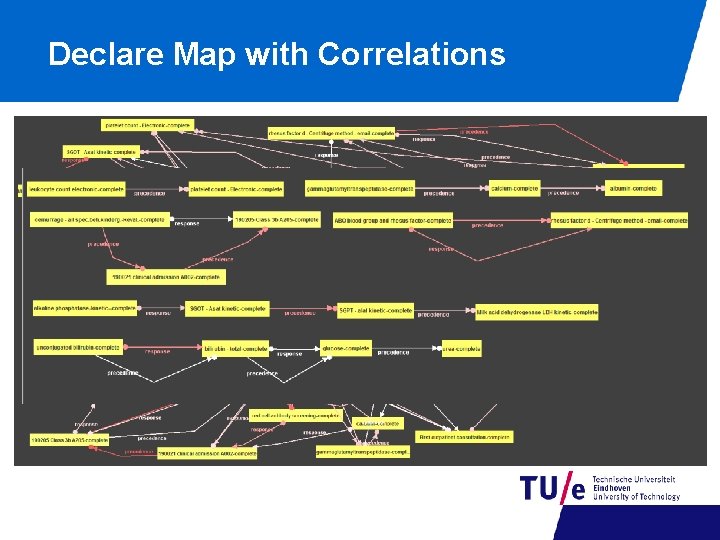
Declare Map with Correlations
- Slides: 24