
Discovering America Explorers John Cabot John Cabot John
Discovering America Explorers
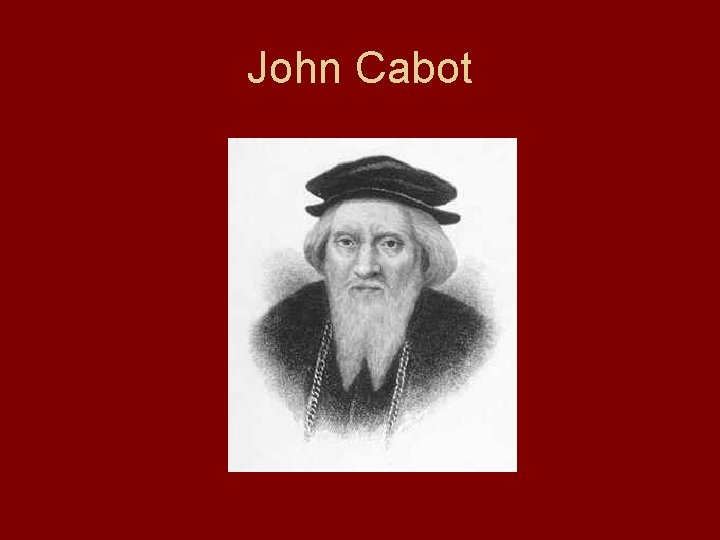
John Cabot
John Cabot • John Cabot was born in Italy. • At the request of King Henry VII of England, Cabot sailed to Canada in 1497 aboard his ship named the “Matthew. ” • John’s son Sebastian accompanied him on this voyage. • The mission’s purpose was to search for a Northwest passage across North America to Asia. Cabot was unsuccessful, although he thought that he had reached northeastern Asia.
• On June 24, 1497 Cabot landed near Cape Brenton Island. Cabot claimed the land for England. • Due to the fact that Cabot was one of the earliest explorers, one of his many obstacles was his lack of maps.
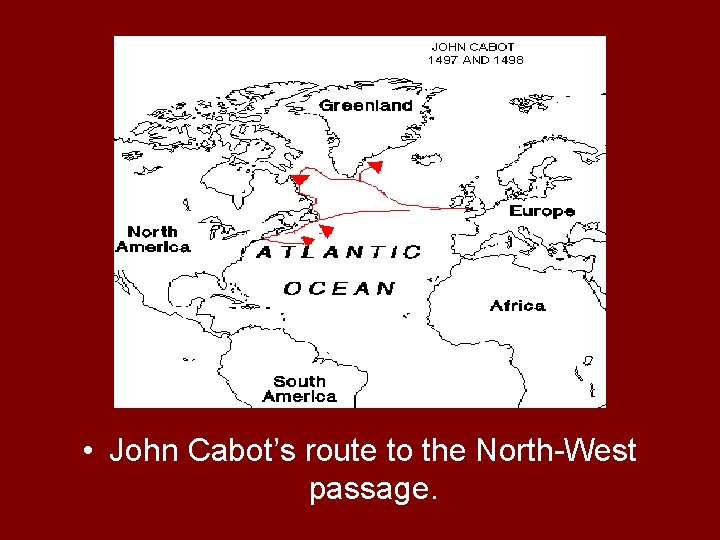
• John Cabot’s route to the North-West passage.
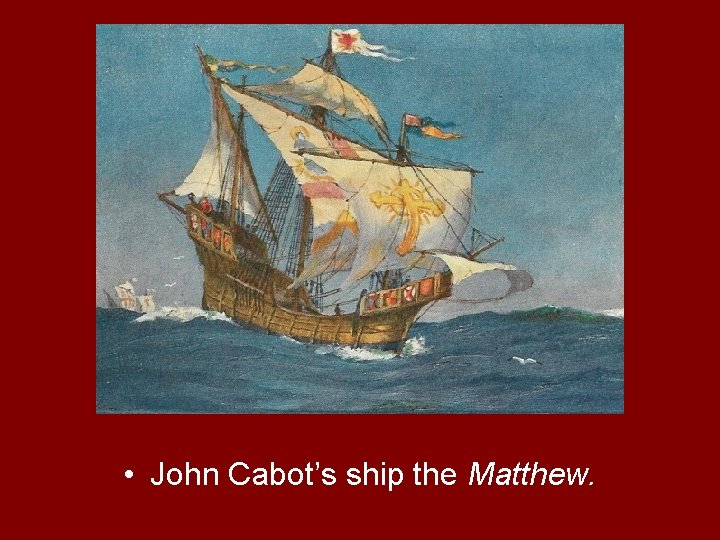
• John Cabot’s ship the Matthew.
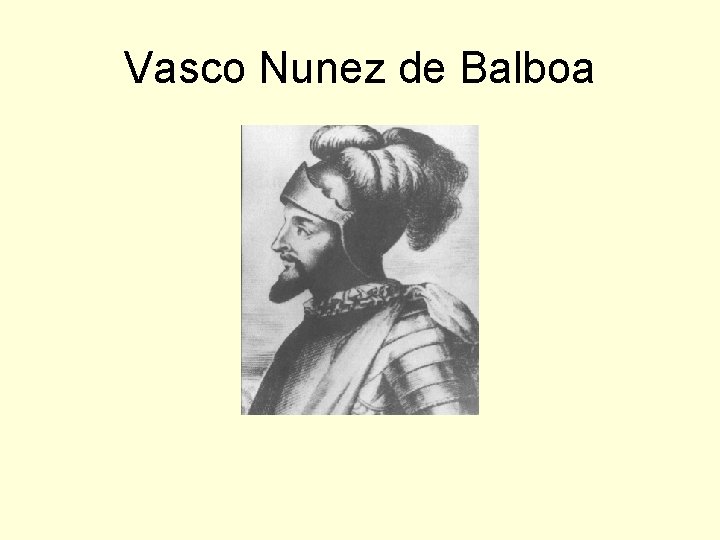
Vasco Nunez de Balboa
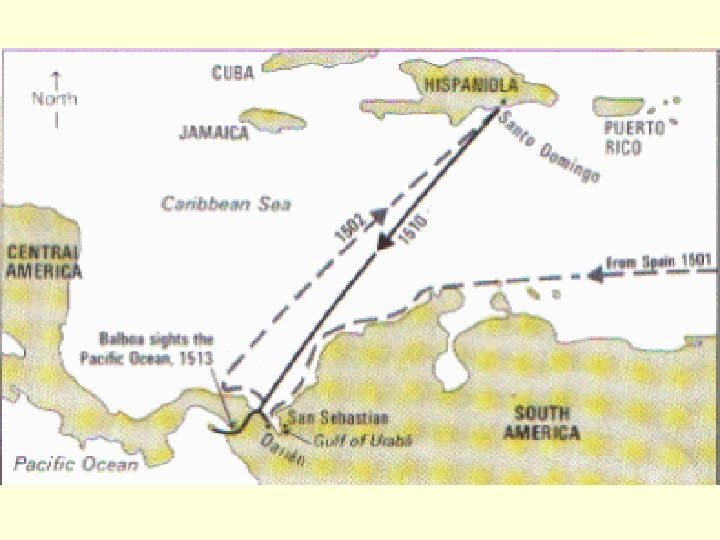
Vasco Nunez de Balboa • Balboa was a Spanish conquistador and explorer. • In 1500 Balboa sailed from Spain to Colombia, South America. • Their mission’s goal was to search for treasures of gold and pearls, as well as claim new lands for Spain.
• In 1511 Balboa founded a colony, the first European settlement in South America – • There he married the daughter of the local Indian chief. • Balboa headed an overland expedition west through very dense rainforests. Along the way he fought many local Indians and destroyed an Indian village. • He was the first European to see the eastern part of the Pacific Ocean.
• Balboa and his men traveled to the ocean and claimed it and all the land that touched it for Spain. • They spent about a month conquering Natives along the Pacific coast and stealing their gold. • Balboa returned to Spain and was framed by his friend for treason. In 1519 he was found guilty and publicly beheaded.
Juan Ponce de Leon
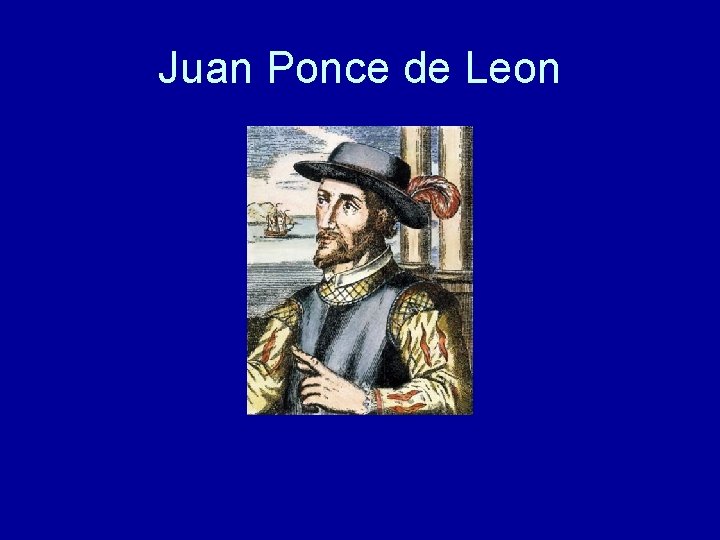
Juan Ponce de Leon • Juan Ponce de Leon was a Spanish explorer and soldier who was the first European to set foot in Florida. • Ponce de Leon was searching for the legendary fountain of youth and other riches. • Ponce de Leon originally sailed with Christopher Columbus’ second expedition. He chose to stay in the Dominican Republic instead of returning to Spain. He later heard of gold in the neighboring island of Puerto Rico. He conquered the island claiming it for Spain after many extremely brutal battles with the Native Americans.
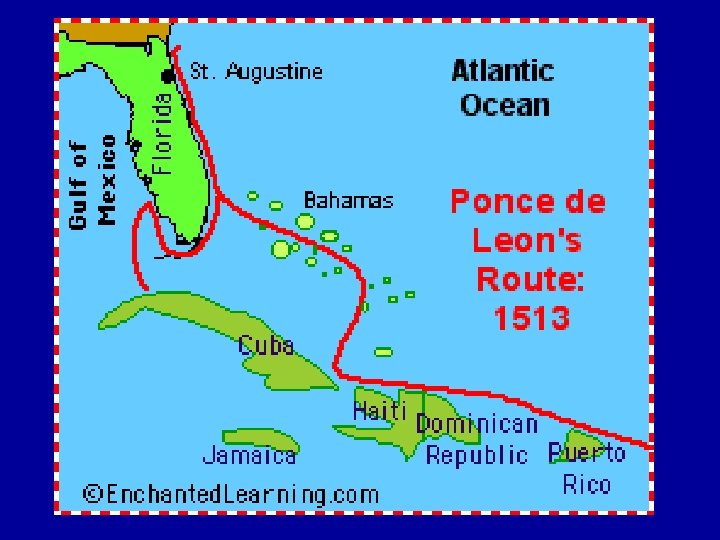
• He sailed from Puerto Rico on March 3, 1513 with three ships, the Santa Maria, the Santiago, and the San Cristobal as well as about 200 men. They reached the east coast of Florida (St Augustine) in April 1513. • Ponce de Leon named the land “Pascua de Florida” (feast of flowers) because they first spotted land on April 2, 1513 which was Palm Sunday. He then claimed the land for Spain.
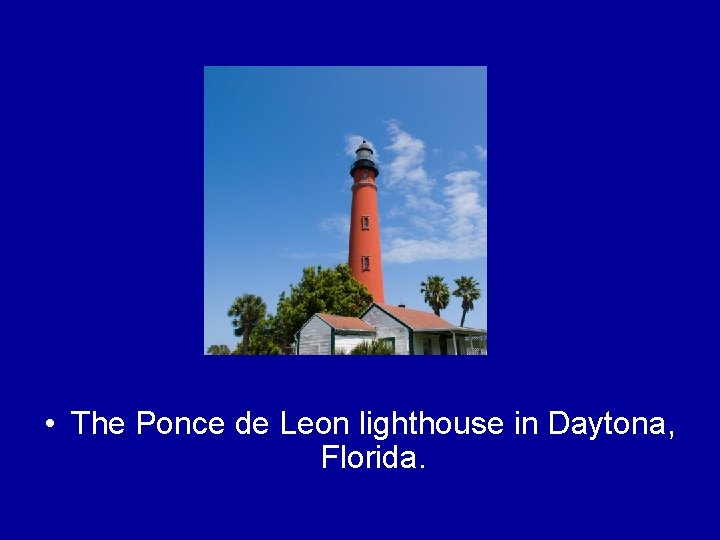
• The Ponce de Leon lighthouse in Daytona, Florida.
Christopher Columbus
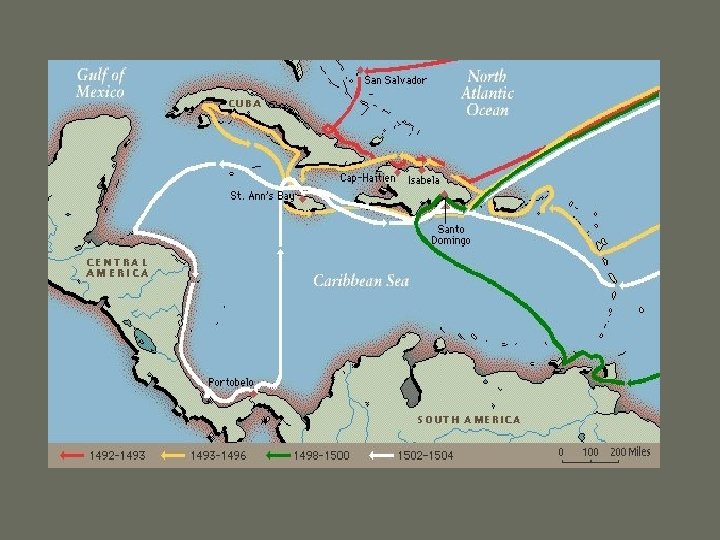
Christopher Columbus • Christopher Columbus was an Italian explorer who sailed across the Atlantic Ocean in 1492 hoping to find a route to India for trade in spices. • It took several attempts to convince the king and queen of Spain to fund these voyages. • Columbus made three major voyages. • The first trip in 1492 he had three ships, the Nina, the Santa Maria, and the Pinta. He landed on the island of San Salvador. They were met by local Taino Indians, many of whom were captured by Columbus’ men and later sold into slavery.
• Columbus thought he had made it to Asia, and called this area the Indies, and called its inhabitants the Indians. • On the return trip, the Santa Maria was wrecked and the captain of the Pinta sailed off on his own to try and beat Columbus back. • The second trip 1493 -1496 sailed with 17 ships and 1200 -1500 men to find gold and capture Indians as slaves in the Indies. • The third trip 1498 -1500 Columbus sailed farther south to Trinidad and Venezuela.
Henry Hudson
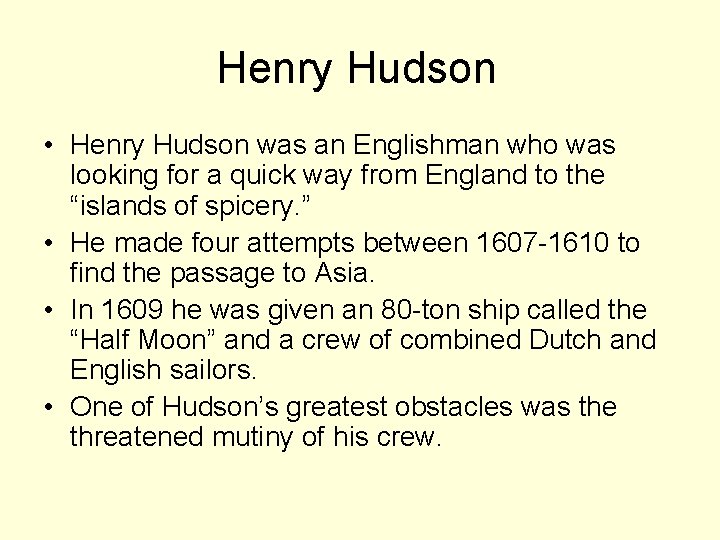
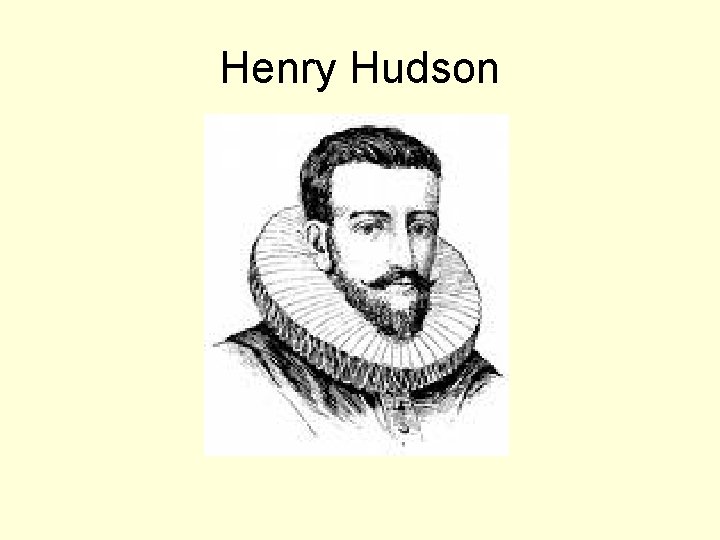
Henry Hudson • Henry Hudson was an Englishman who was looking for a quick way from England to the “islands of spicery. ” • He made four attempts between 1607 -1610 to find the passage to Asia. • In 1609 he was given an 80 -ton ship called the “Half Moon” and a crew of combined Dutch and English sailors. • One of Hudson’s greatest obstacles was the threatened mutiny of his crew.
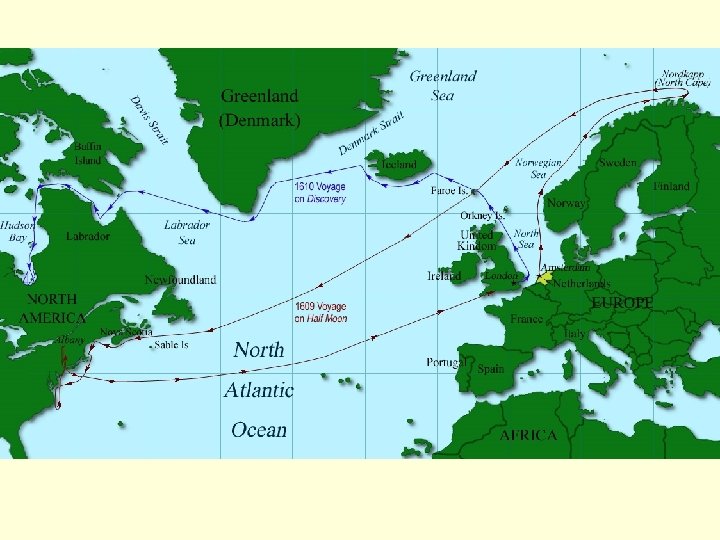
• The quest for the North-West passage led first to the coast of Maine where members of the crew went ashore and cut timber to replace the mast of the Half Moon. They fished and traded with the Native Americans but continued south to the Chesapeake and Delaware Bays. • After Hudson decided they weren’t entrances to the passage he was seeking, the Half Moon sailed north to the mouth of the Hudson River in early September. • On September 12, 1609 Hudson began his exploration of the river. Hudson called the river the “River of Mountains. ”
• The last attempt that Hudson made in 1610 his ship became trapped in ice in the James Bay and was forced to winter over. During this time the crew quarreled and finally as spring began to thaw, they mutinied. The ring leaders set Hudson, his son and some other men adrift in a small open boat and they were never seen again.
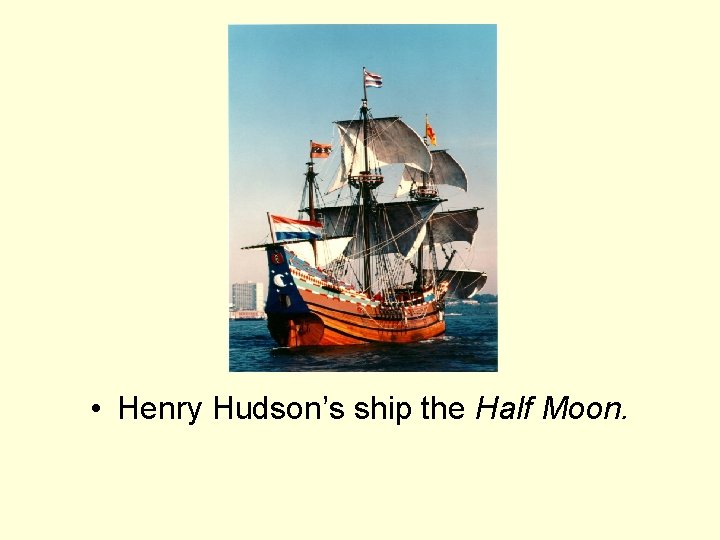
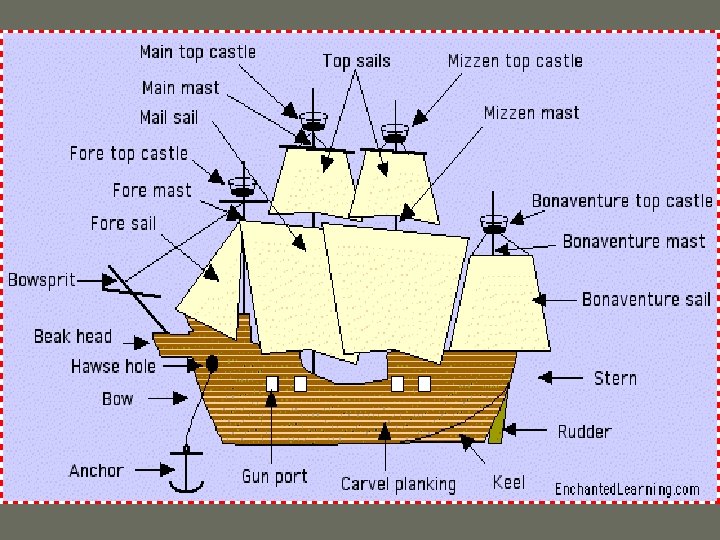
• Henry Hudson’s ship the Half Moon.
Jacques Cartier
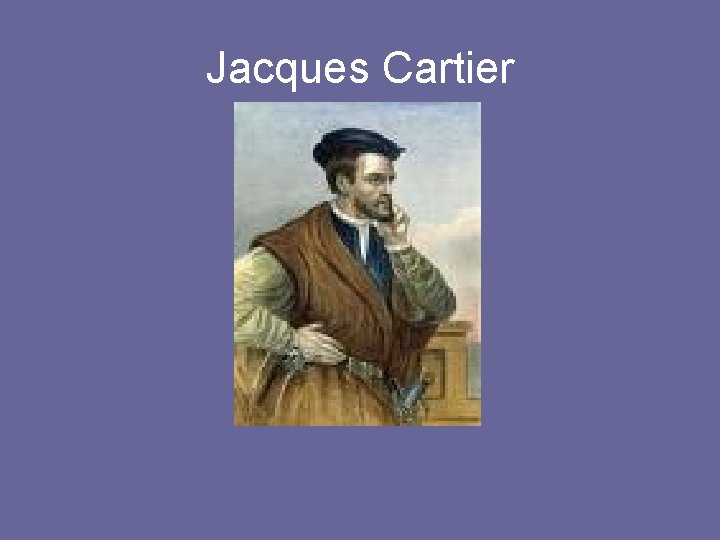
Jacques Cartier • Jacques Cartier was a French navigator. • His first documented voyage to the New World in 1534 where he hoped to discover the Northwest Passage and fabulous wealth like the Spanish explorers before him. • He continued with more expeditions in 1535, and 1541. • He most famous for his explorations throughout Canada and the St Lawrence River.
• He did attempt to create a settlement, however disease killed most of the sailors. • He named the area of Canada “Kanata”, the Iroquois word for “village. ”
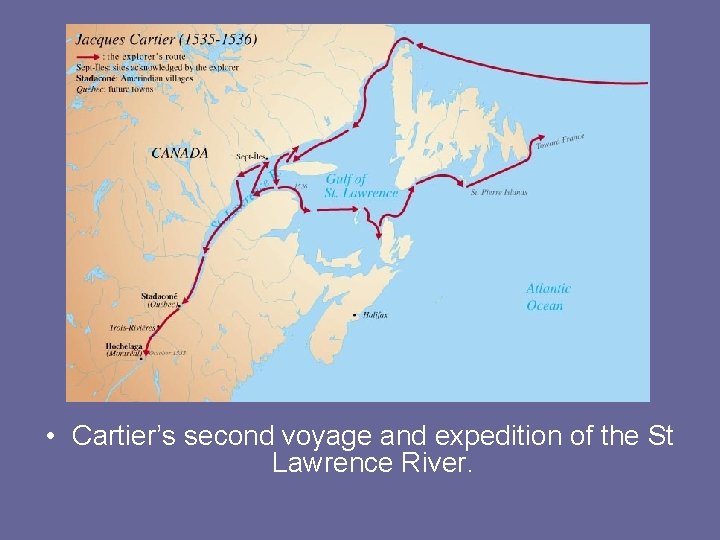
• Cartier’s second voyage and expedition of the St Lawrence River.
- Slides: 31