
DISCover Yourself and Others Mn CCECT Trenton Hightower
- Slides: 23
DISCover Yourself and Others Mn. CCECT Trenton Hightower Paul Kostreski Pro. Train 301. 371. 8559 ofc LLC APK@Tec. Knowledgies. com PPT 1 -1 Mn. CCECT
Objectives Reduce Stress Increase Effectiveness PPT 1 -6
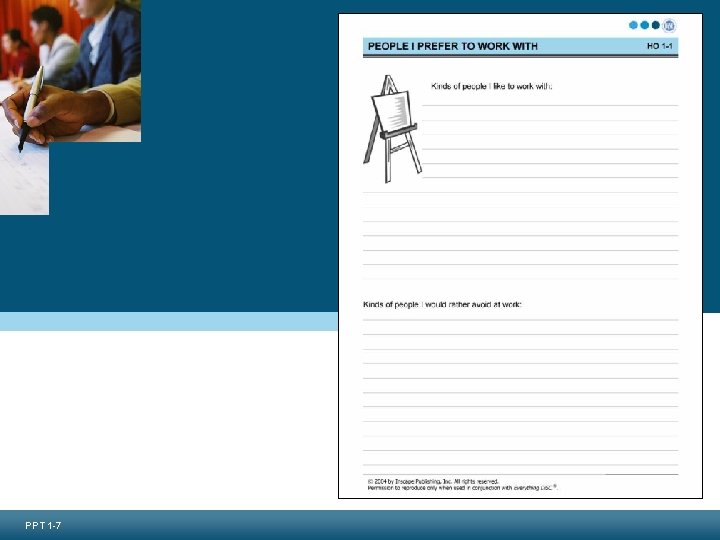
People I Prefer to Work With PPT 1 -7
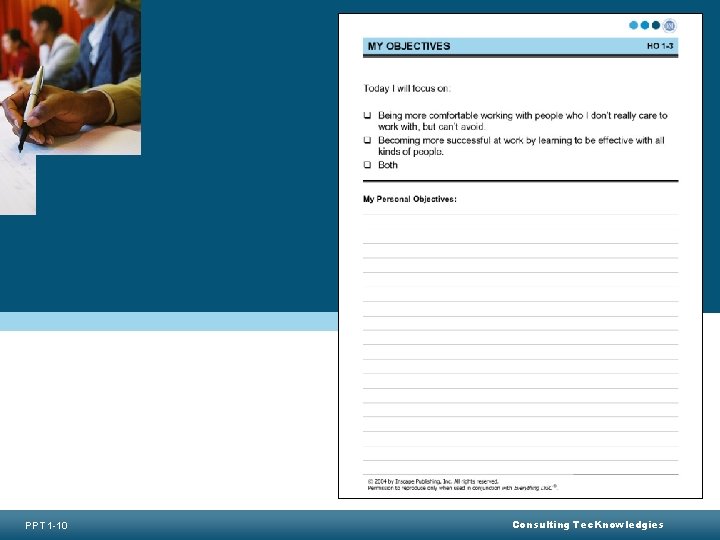
My Objectives Be more comfortable Be more successful Or both! PPT 1 -9
My Objectives PPT 1 -10 Consulting Tec. Knowledgies
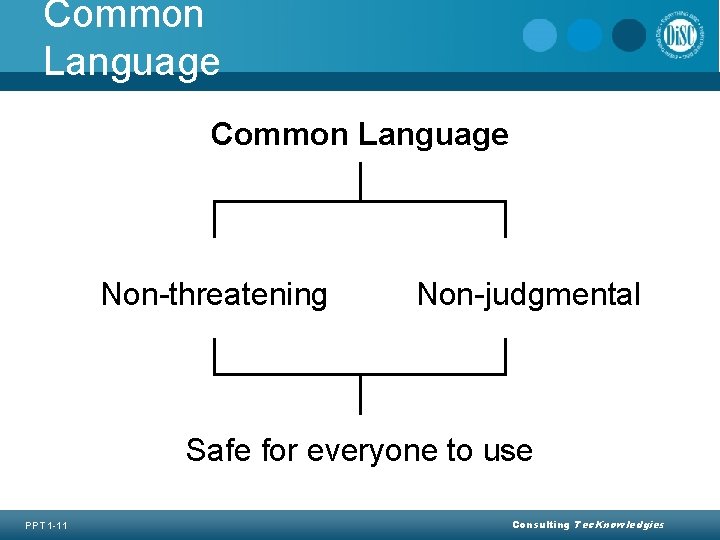
Common Language Non-threatening Non-judgmental Safe for everyone to use PPT 1 -11 Consulting Tec. Knowledgies
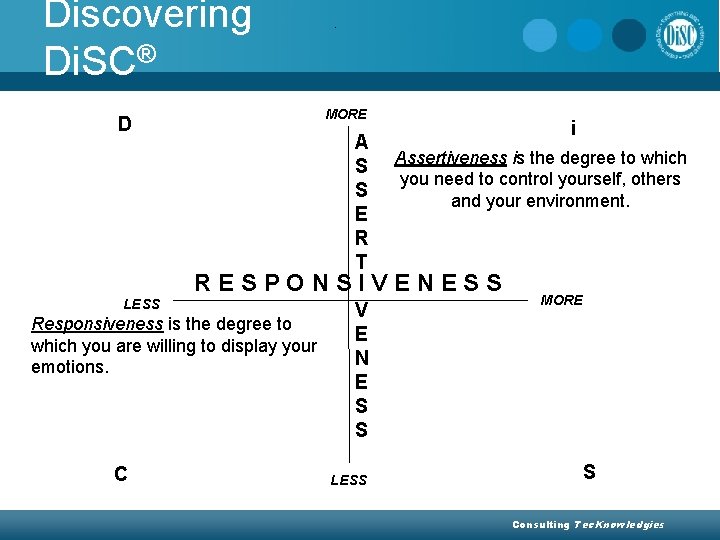
Discovering Di. SC® . MORE D A S S E R T i Assertiveness is the degree to which you need to control yourself, others and your environment. RESPONSIVENESS LESS Responsiveness is the degree to which you are willing to display your emotions. C V E N E S S LESS MORE S Consulting Tec. Knowledgies
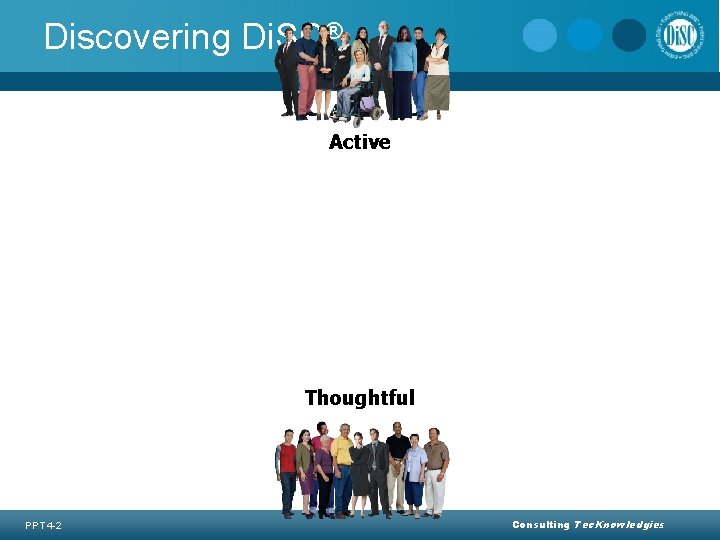
Discovering Di. SC® Active Thoughtful PPT 4 -2 Consulting Tec. Knowledgies
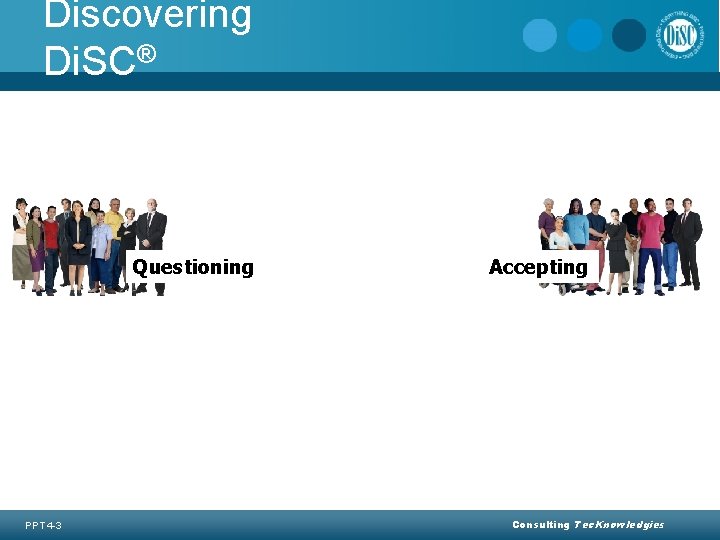
Discovering Di. SC® Questioning PPT 4 -3 Accepting Consulting Tec. Knowledgies
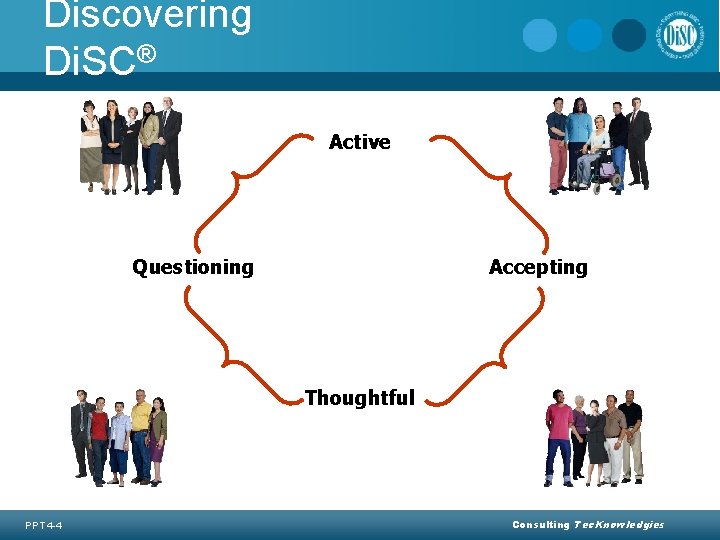
Discovering Di. SC® Active Questioning Accepting Thoughtful PPT 4 -4 Consulting Tec. Knowledgies
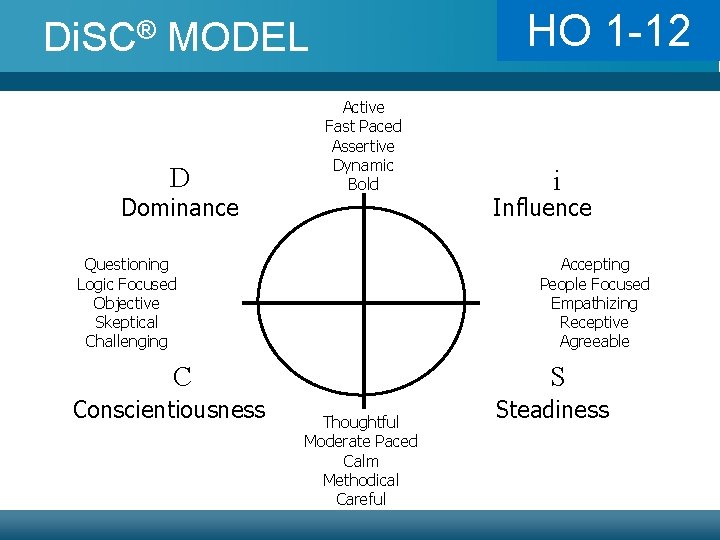
HO 1 -12 Di. SC® MODEL D Dominance Active Fast Paced Assertive Dynamic Bold Questioning Logic Focused Objective Skeptical Challenging Influence Accepting People Focused Empathizing Receptive Agreeable C Conscientiousness i S Thoughtful Moderate Paced Calm Methodical Careful Steadiness
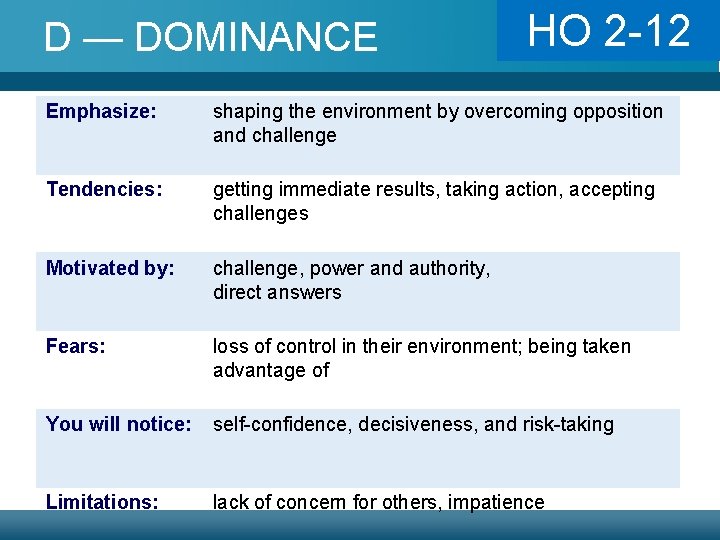
D — DOMINANCE 2 -10 HOHO 2 -12 Emphasize: shaping the environment by overcoming opposition and challenge Tendencies: getting immediate results, taking action, accepting challenges Motivated by: challenge, power and authority, direct answers Fears: loss of control in their environment; being taken advantage of You will notice: self-confidence, decisiveness, and risk-taking Limitations: lack of concern for others, impatience
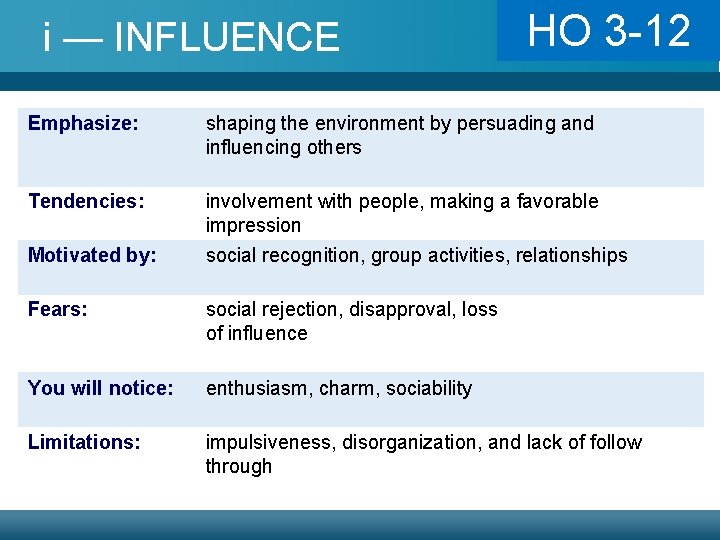
i — INFLUENCE 3 -10 HOHO 3 -12 Emphasize: shaping the environment by persuading and influencing others Tendencies: involvement with people, making a favorable impression social recognition, group activities, relationships Motivated by: Fears: social rejection, disapproval, loss of influence You will notice: enthusiasm, charm, sociability Limitations: impulsiveness, disorganization, and lack of follow through
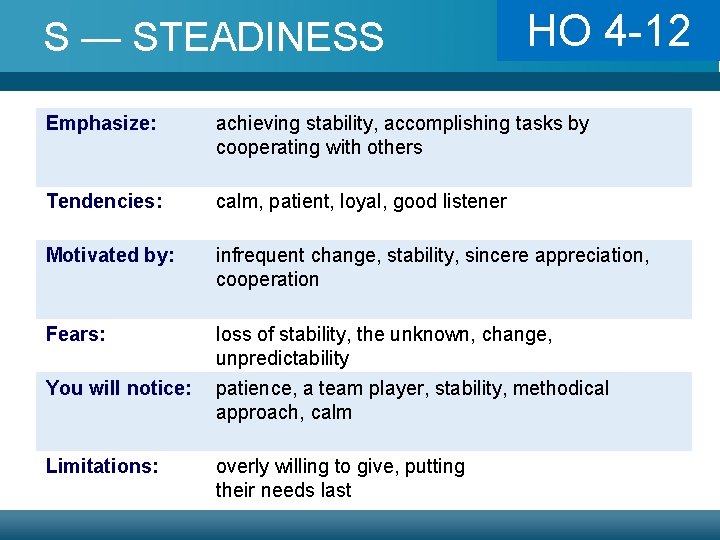
S — STEADINESS 4 -10 HOHO 4 -12 Emphasize: achieving stability, accomplishing tasks by cooperating with others Tendencies: calm, patient, loyal, good listener Motivated by: infrequent change, stability, sincere appreciation, cooperation Fears: loss of stability, the unknown, change, unpredictability patience, a team player, stability, methodical approach, calm You will notice: Limitations: overly willing to give, putting their needs last
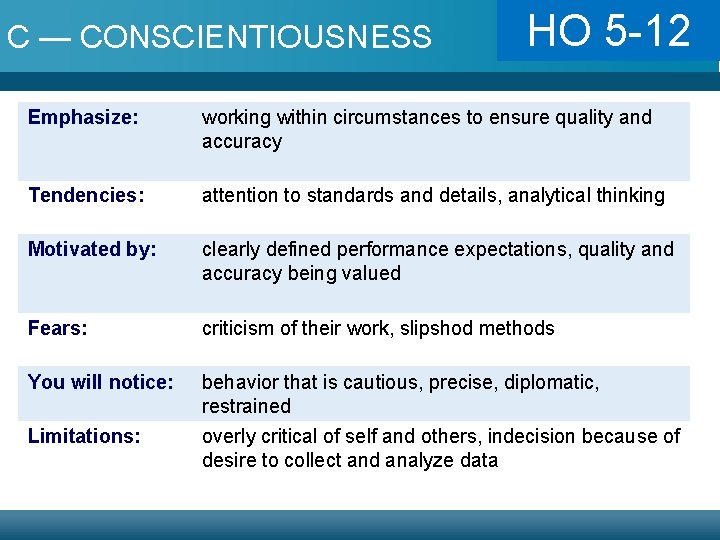
C — CONSCIENTIOUSNESS 5 -10 HOHO 5 -12 Emphasize: working within circumstances to ensure quality and accuracy Tendencies: attention to standards and details, analytical thinking Motivated by: clearly defined performance expectations, quality and accuracy being valued Fears: criticism of their work, slipshod methods You will notice: behavior that is cautious, precise, diplomatic, restrained overly critical of self and others, indecision because of desire to collect and analyze data Limitations:
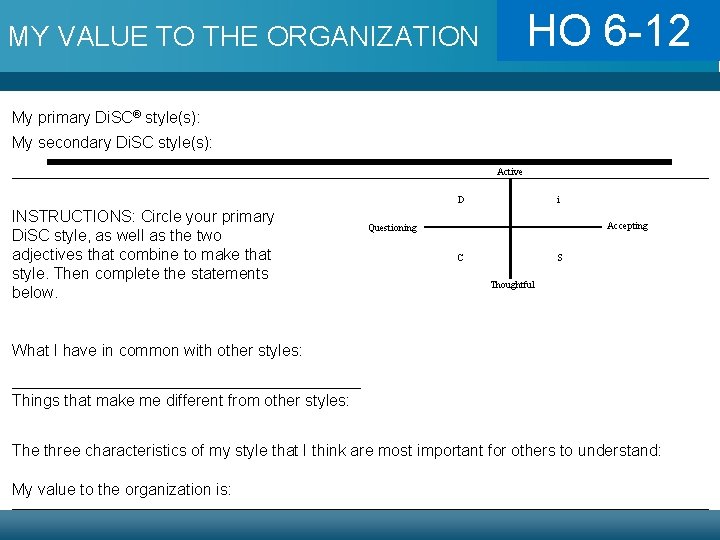
6 -10 HOHO 6 -12 MY VALUE TO THE ORGANIZATION My primary Di. SC® style(s): My secondary Di. SC style(s): Active D INSTRUCTIONS: Circle your primary Di. SC style, as well as the two adjectives that combine to make that style. Then complete the statements below. i Accepting Questioning S C Thoughtful What I have in common with other styles: Things that make me different from other styles: The three characteristics of my style that I think are most important for others to understand: My value to the organization is:
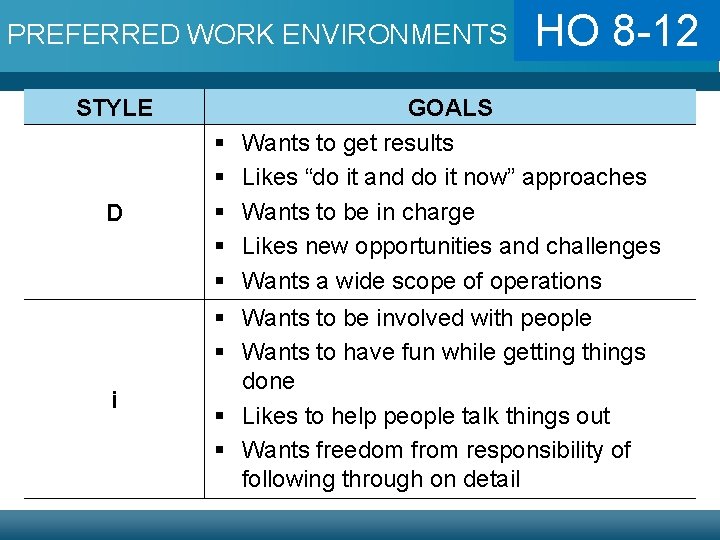
PREFERRED WORK ENVIRONMENTS STYLE HO 8 -12 GOALS Wants to get results Likes “do it and do it now” approaches Wants to be in charge Likes new opportunities and challenges Wants a wide scope of operations D § § § i § Wants to be involved with people § Wants to have fun while getting things done § Likes to help people talk things out § Wants freedom from responsibility of following through on detail
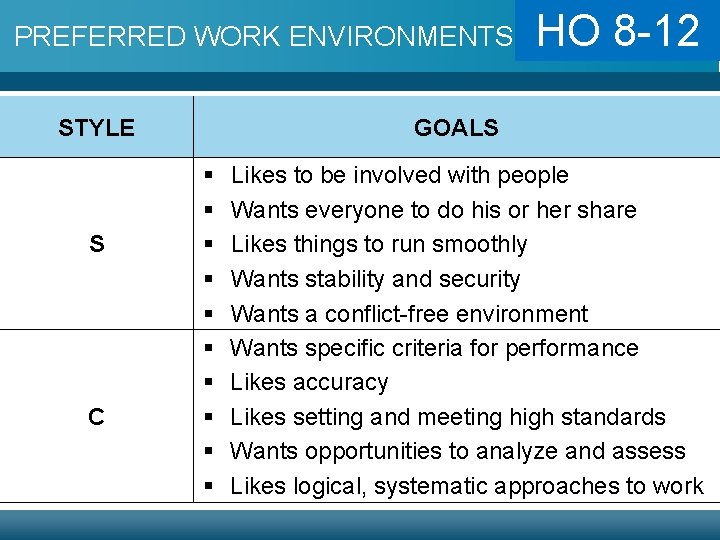
PREFERRED WORK ENVIRONMENTS STYLE S C HO 8 -12 GOALS § § § § § Likes to be involved with people Wants everyone to do his or her share Likes things to run smoothly Wants stability and security Wants a conflict-free environment Wants specific criteria for performance Likes accuracy Likes setting and meeting high standards Wants opportunities to analyze and assess Likes logical, systematic approaches to work
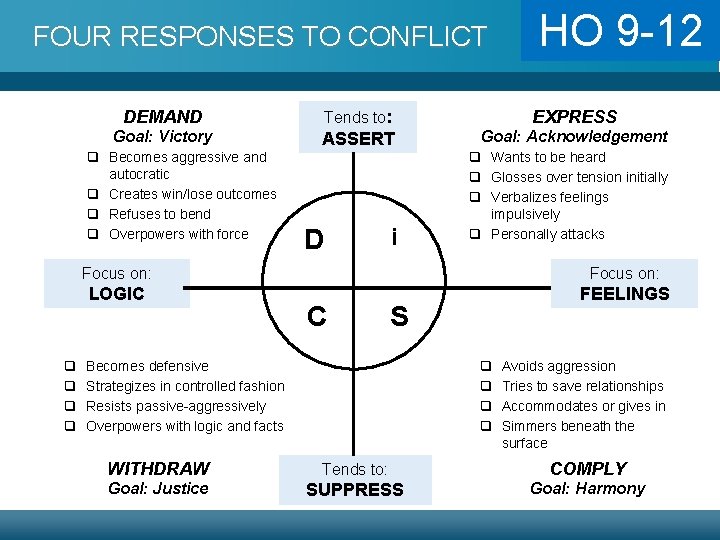
FOUR RESPONSES TO CONFLICT DEMAND Tends to: EXPRESS Goal: Victory ASSERT Goal: Acknowledgement q Becomes aggressive and autocratic q Creates win/lose outcomes q Refuses to bend q Overpowers with force q q HO 9 -12 D i q Wants to be heard q Glosses over tension initially q Verbalizes feelings impulsively q Personally attacks Focus on: LOGIC FEELINGS C S q q Becomes defensive Strategizes in controlled fashion Resists passive-aggressively Overpowers with logic and facts Avoids aggression Tries to save relationships Accommodates or gives in Simmers beneath the surface WITHDRAW Tends to: COMPLY Goal: Justice SUPPRESS Goal: Harmony
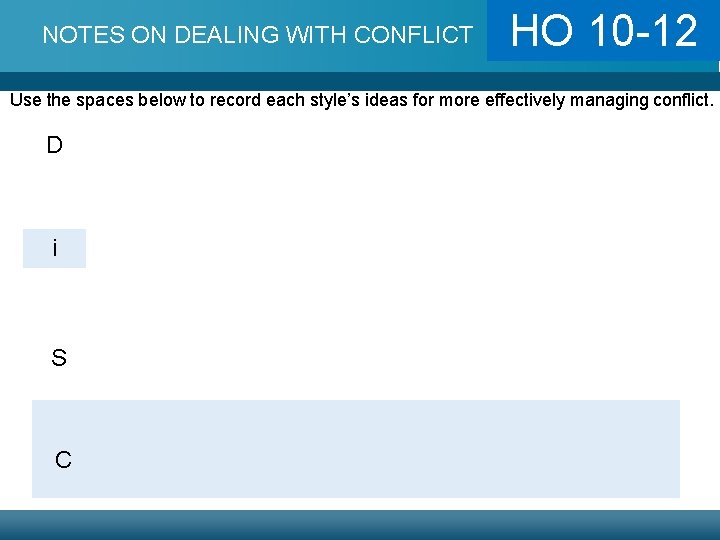
NOTES ON DEALING WITH CONFLICT HO 10 -12 Use the spaces below to record each style’s ideas for more effectively managing conflict. D i S C
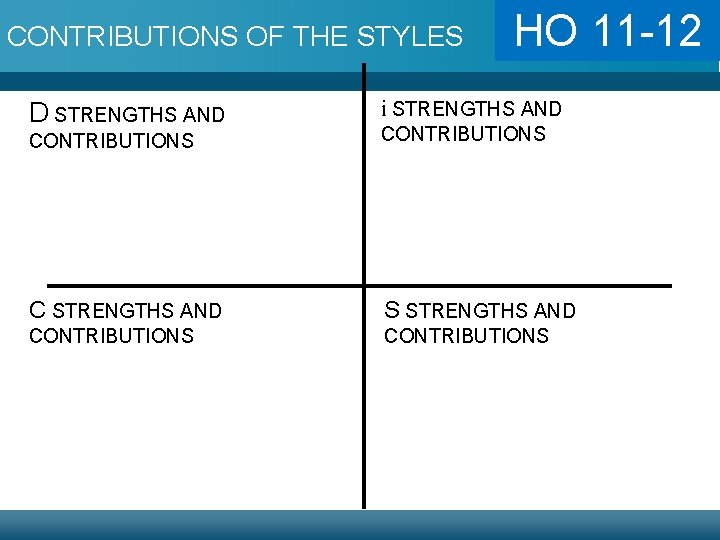
CONTRIBUTIONS OF THE STYLES D STRENGTHS AND HO 11 -12 i STRENGTHS AND CONTRIBUTIONS C STRENGTHS AND S STRENGTHS AND CONTRIBUTIONS
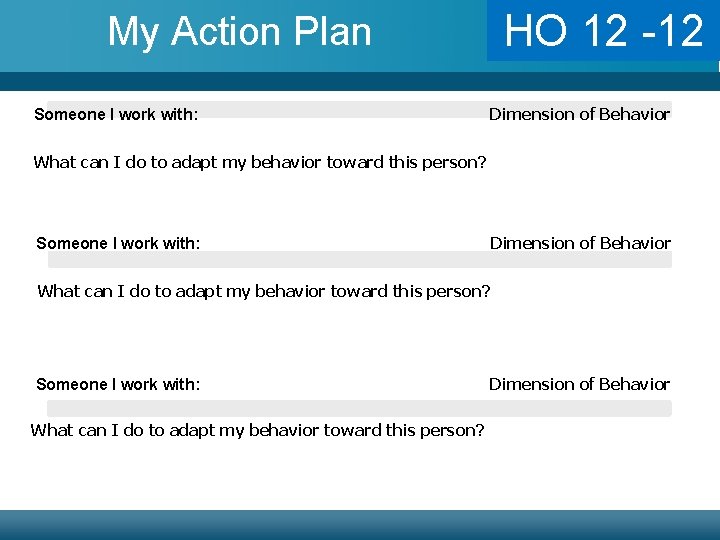
HO 12 -12 My Action Plan Someone I work with: Dimension of Behavior What can I do to adapt my behavior toward this person? Someone I work with: What can I do to adapt my behavior toward this person? Dimension of Behavior
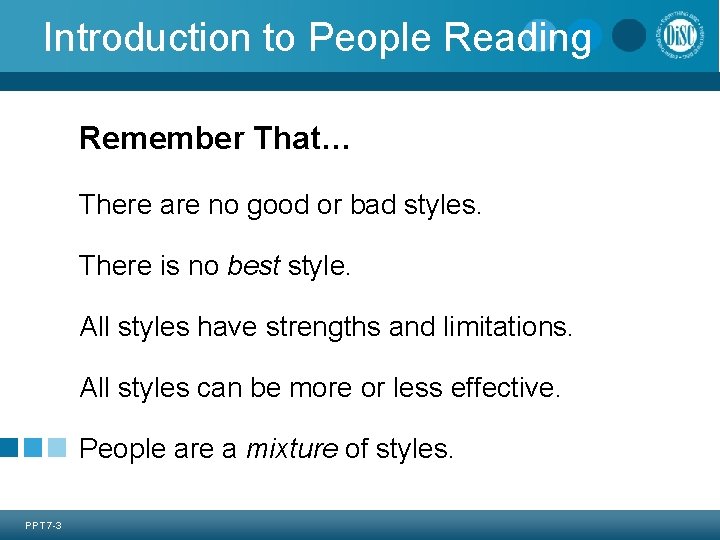
Introduction to People Reading Remember That… There are no good or bad styles. There is no best style. All styles have strengths and limitations. All styles can be more or less effective. People are a mixture of styles. PPT 7 -3