
Discover the Microbes Within The Wolbachia Project Insect
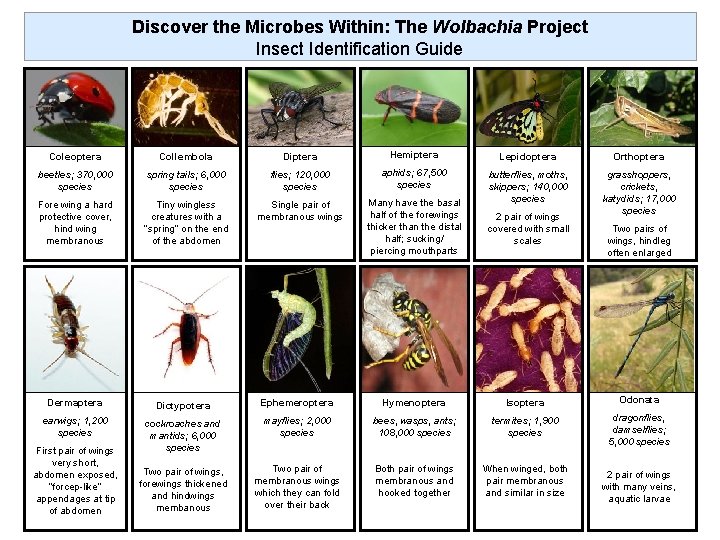
Discover the Microbes Within: The Wolbachia Project Insect Identification Guide Coleoptera Collembola Diptera Hemiptera Lepidoptera Orthoptera beetles; 370, 000 species spring tails; 6, 000 species flies; 120, 000 species aphids; 67, 500 species Fore wing a hard protective cover, hind wing membranous Tiny wingless creatures with a “spring” on the end of the abdomen Single pair of membranous wings Many have the basal half of the forewings thicker than the distal half; sucking/ piercing mouthparts butterflies, moths, skippers; 140, 000 species grasshoppers, crickets, katydids; 17, 000 species 2 pair of wings covered with small scales Two pairs of wings, hindleg often enlarged Dermaptera Dictypotera Ephemeroptera Hymenoptera Isoptera Odonata earwigs; 1, 200 species cockroaches and mantids; 6, 000 species mayflies; 2, 000 species bees, wasps, ants; 108, 000 species termites; 1, 900 species dragonflies, damselflies; 5, 000 species Two pair of wings, forewings thickened and hindwings membanous Two pair of membranous wings which they can fold over their back Both pair of wings membranous and hooked together When winged, both pair membranous and similar in size First pair of wings very short, abdomen exposed, “forcep-like” appendages at tip of abdomen 2 pair of wings with many veins, aquatic larvae
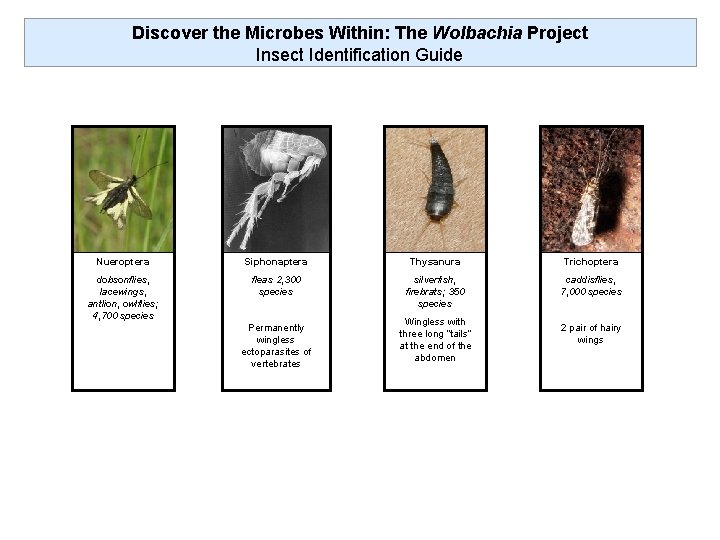
Discover the Microbes Within: The Wolbachia Project Insect Identification Guide Nueroptera Siphonaptera Thysanura Trichoptera dobsonflies, lacewings, antlion, owlflies; 4, 700 species fleas 2, 300 species silverfish, firebrats; 350 species caddisflies, 7, 000 species Permanently wingless ectoparasites of vertebrates Wingless with three long “tails” at the end of the abdomen 2 pair of hairy wings
- Slides: 2