
Discover chemical engineering John Mc Candless Graduate Engineer
- Slides: 18
Discover chemical engineering John Mc. Candless Graduate Engineer at AWE
Introduction Who is John Mc. Candless? What is Chemical Engineering? What do Chemical Engineers do? Where do Chemical Engineers work? What skills do Chemical Engineers have? What are the benefits of a career in Chemical Engineering? • Q&A • • •
John Mc. Candless • Grew up in Ayrshire, south-west of Glasgow • MEng in Chemical Engineering at the University of Strathclyde, 2008 -13 • Worked for Michelin and a sand/quarry company as a student • Now with AWE
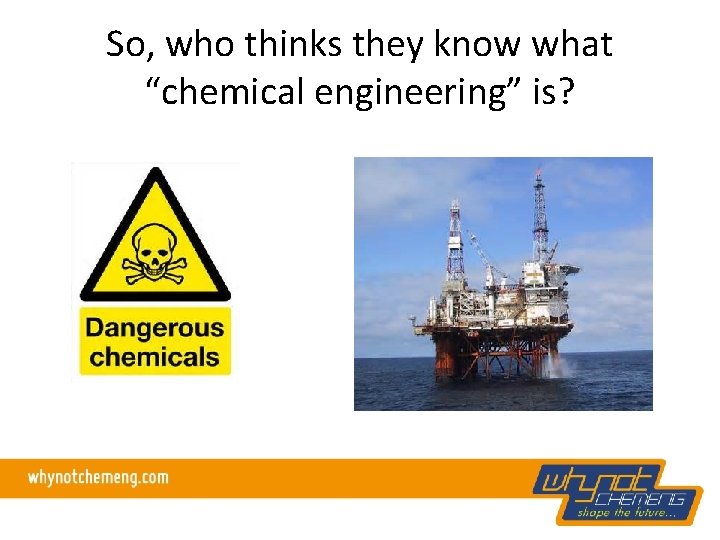
So, who thinks they know what “chemical engineering” is?
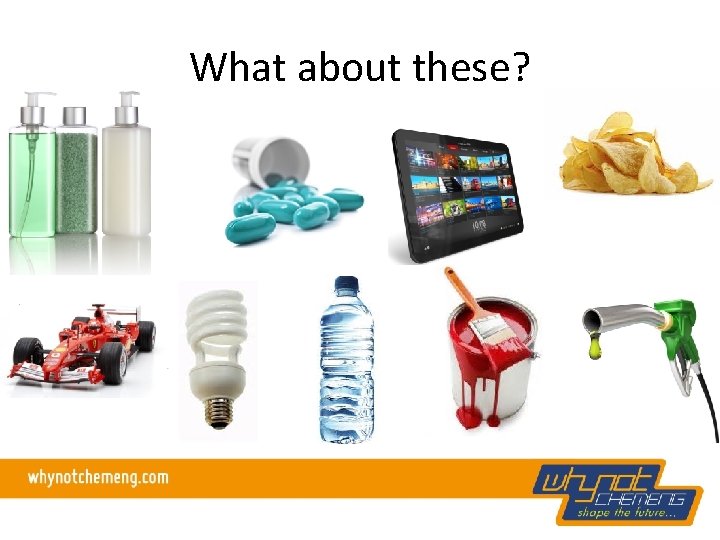
What about these?
So what is chemical engineering? Combines the most exciting elements of science with the real world application of engineering. Creates everything from bio-fuels to beauty products, food to fashion and everything in between.
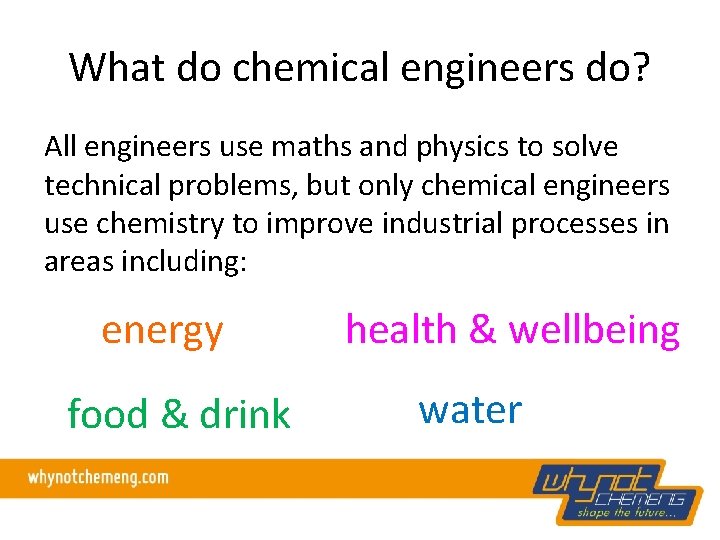
What do chemical engineers do? All engineers use maths and physics to solve technical problems, but only chemical engineers use chemistry to improve industrial processes in areas including: energy food & drink health & wellbeing water
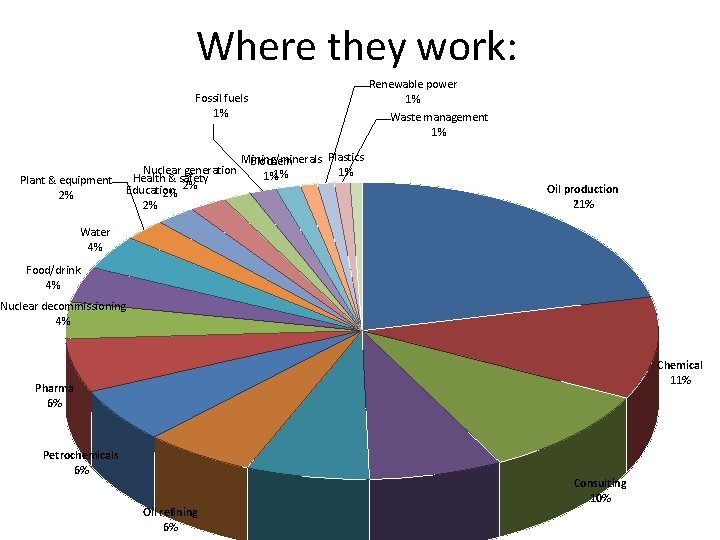
Where they work: Fossil fuels 1% Plant & equipment 2% Nuclear generation Health & safety 2% Education 2% 2% Plastics Mining/minerals Biochem 1% 1%1% Renewable power 1% Waste management 1% Oil production 21% Water 4% Food/drink 4% Nuclear decommissioning 4% Chemical 11% Pharma 6% Petrochemicals 6% Oil refining 6% Consulting 10%
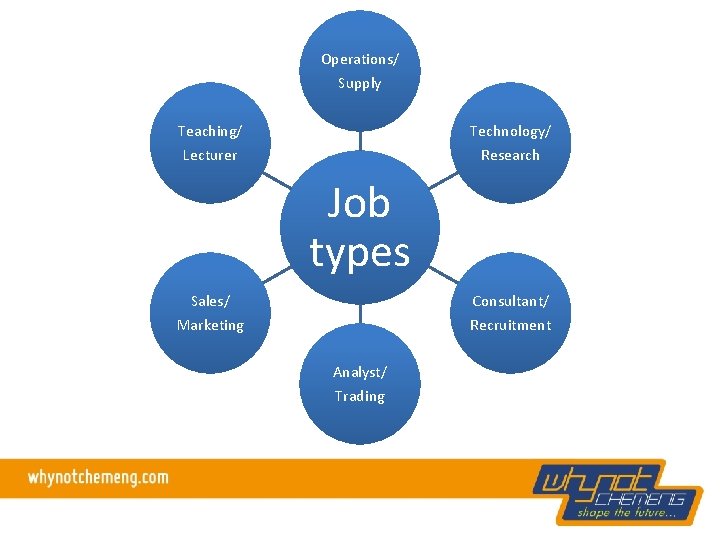
Operations/ Supply Teaching/ Lecturer Technology/ Research Job types Consultant/ Recruitment Sales/ Marketing Analyst/ Trading
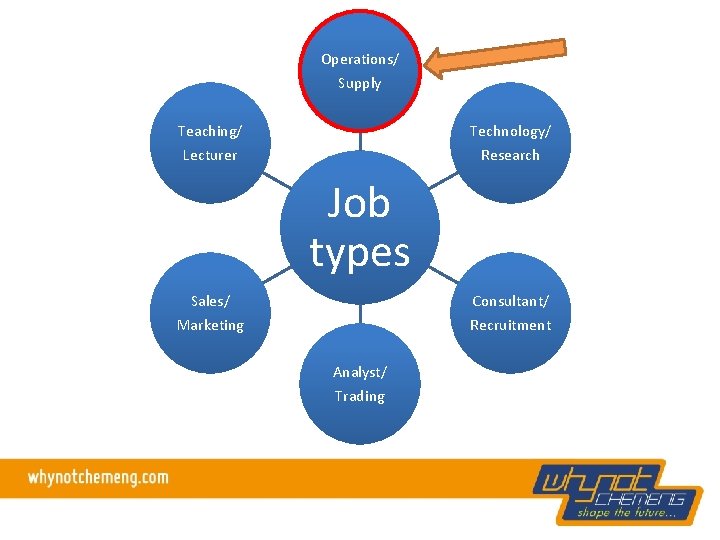
Operations/ Supply Teaching/ Lecturer Technology/ Research Job types Consultant/ Recruitment Sales/ Marketing Analyst/ Trading
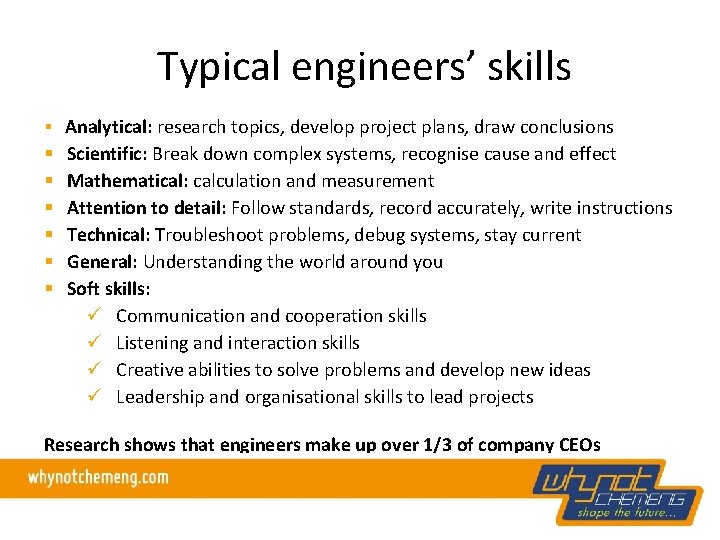
Typical engineers’ skills § Analytical: research topics, develop project plans, draw conclusions § § § Scientific: Break down complex systems, recognise cause and effect Mathematical: calculation and measurement Attention to detail: Follow standards, record accurately, write instructions Technical: Troubleshoot problems, debug systems, stay current General: Understanding the world around you Soft skills: ü Communication and cooperation skills ü Listening and interaction skills ü Creative abilities to solve problems and develop new ideas ü Leadership and organisational skills to lead projects Research shows that engineers make up over 1/3 of company CEOs
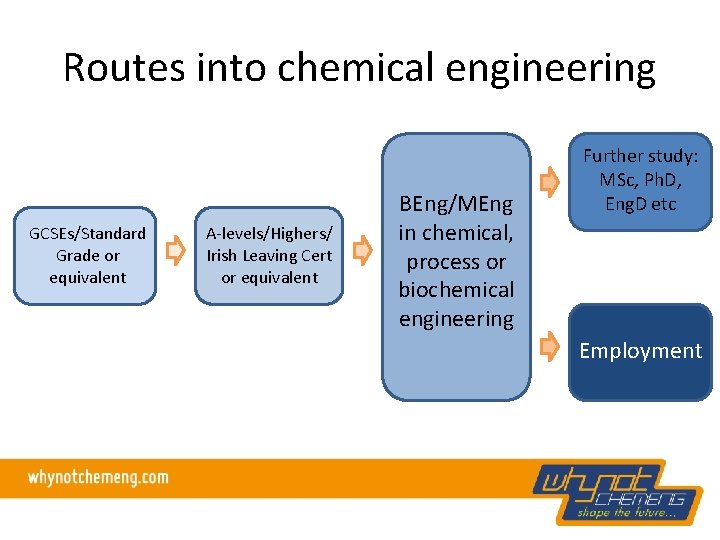
Routes into chemical engineering GCSEs/Standard Grade or equivalent A-levels/Highers/ Irish Leaving Cert or equivalent BEng/MEng in chemical, process or biochemical engineering Further study: MSc, Ph. D, Eng. D etc Employment
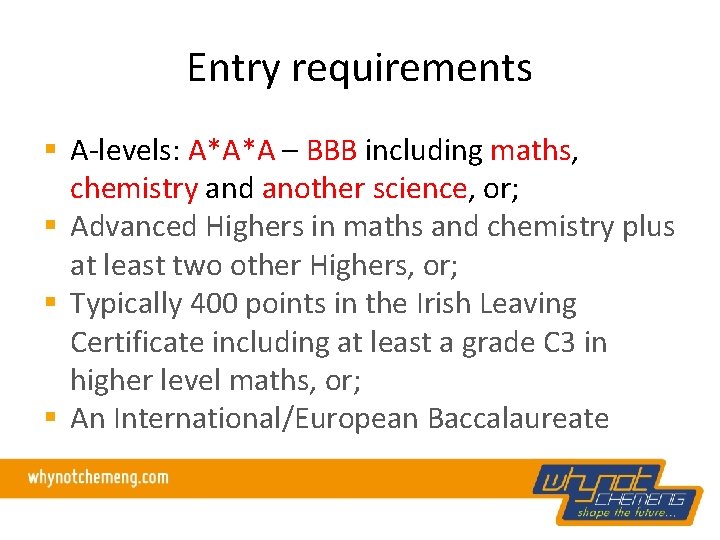
Entry requirements § A-levels: A*A*A – BBB including maths, chemistry and another science, or; § Advanced Highers in maths and chemistry plus at least two other Highers, or; § Typically 400 points in the Irish Leaving Certificate including at least a grade C 3 in higher level maths, or; § An International/European Baccalaureate
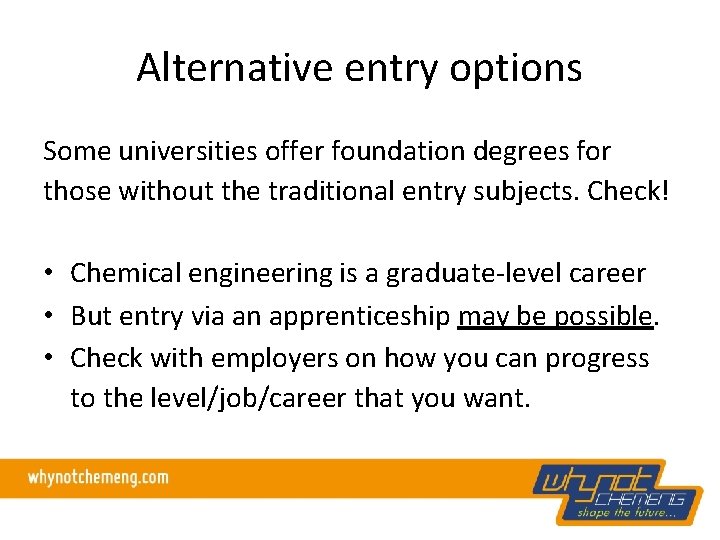
Alternative entry options Some universities offer foundation degrees for those without the traditional entry subjects. Check! • Chemical engineering is a graduate-level career • But entry via an apprenticeship may be possible. • Check with employers on how you can progress to the level/job/career that you want.
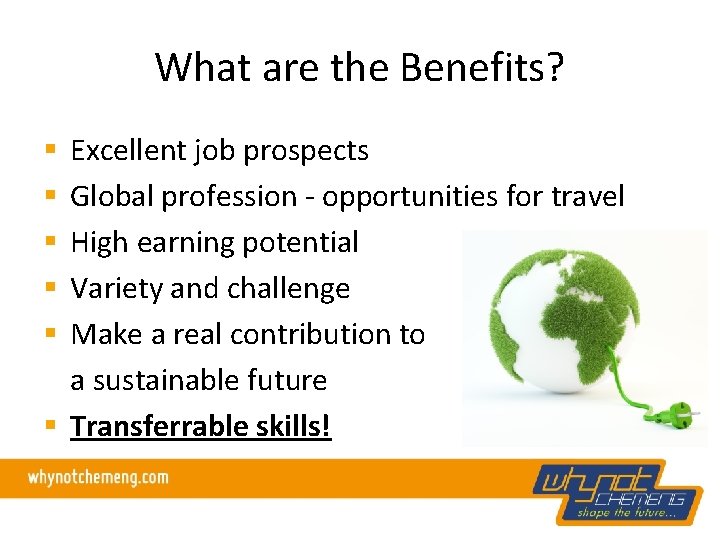
What are the Benefits? Excellent job prospects Global profession - opportunities for travel High earning potential Variety and challenge Make a real contribution to a sustainable future § Transferrable skills! § § §
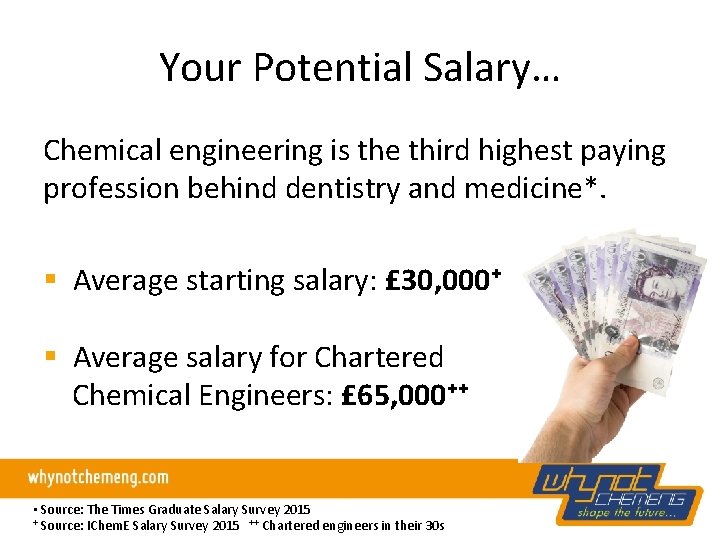
Your Potential Salary… Chemical engineering is the third highest paying profession behind dentistry and medicine*. § Average starting salary: £ 30, 000⁺ § Average salary for Chartered Chemical Engineers: £ 65, 000⁺⁺ • Source: The Times Graduate Salary Survey 2015 ⁺ Source: IChem. E Salary Survey 2015 ⁺⁺ Chartered engineers in their 30 s
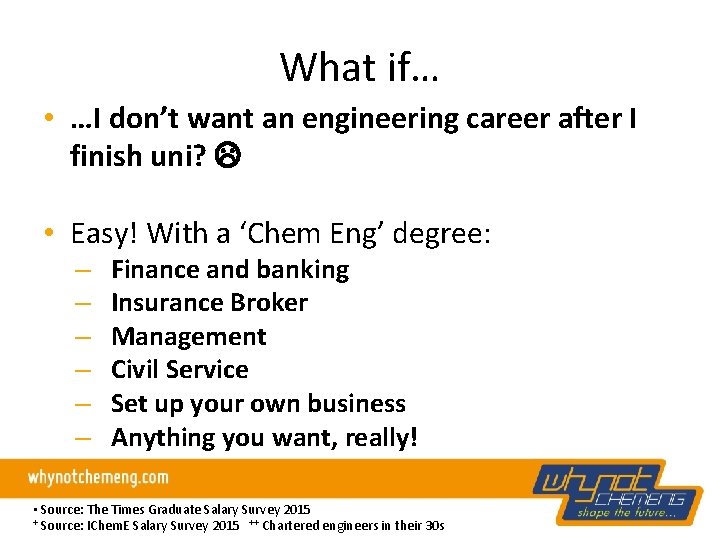
What if… • …I don’t want an engineering career after I finish uni? • Easy! With a ‘Chem Eng’ degree: – – – Finance and banking Insurance Broker Management Civil Service Set up your own business Anything you want, really! • Source: The Times Graduate Salary Survey 2015 ⁺ Source: IChem. E Salary Survey 2015 ⁺⁺ Chartered engineers in their 30 s
Any questions? whynotchemeng campaign supporters: